
lovethailand home >Central Travel Attractions >Bangkok Travel Attractions >Lat Krabang >Thap Yao > Bangkok Suvarnabhumi University
TL;DR: Bangkok Suvarnabhumi University is located at Thap Yao Subdistrict, Lat Krabang District, Bangkok, Thailand. (BSU), known in Thai as Mahawitthayalai Krungthep Suwannaphum, is a private university located at 489 Pracha Phatthana Road, Thap Yao.
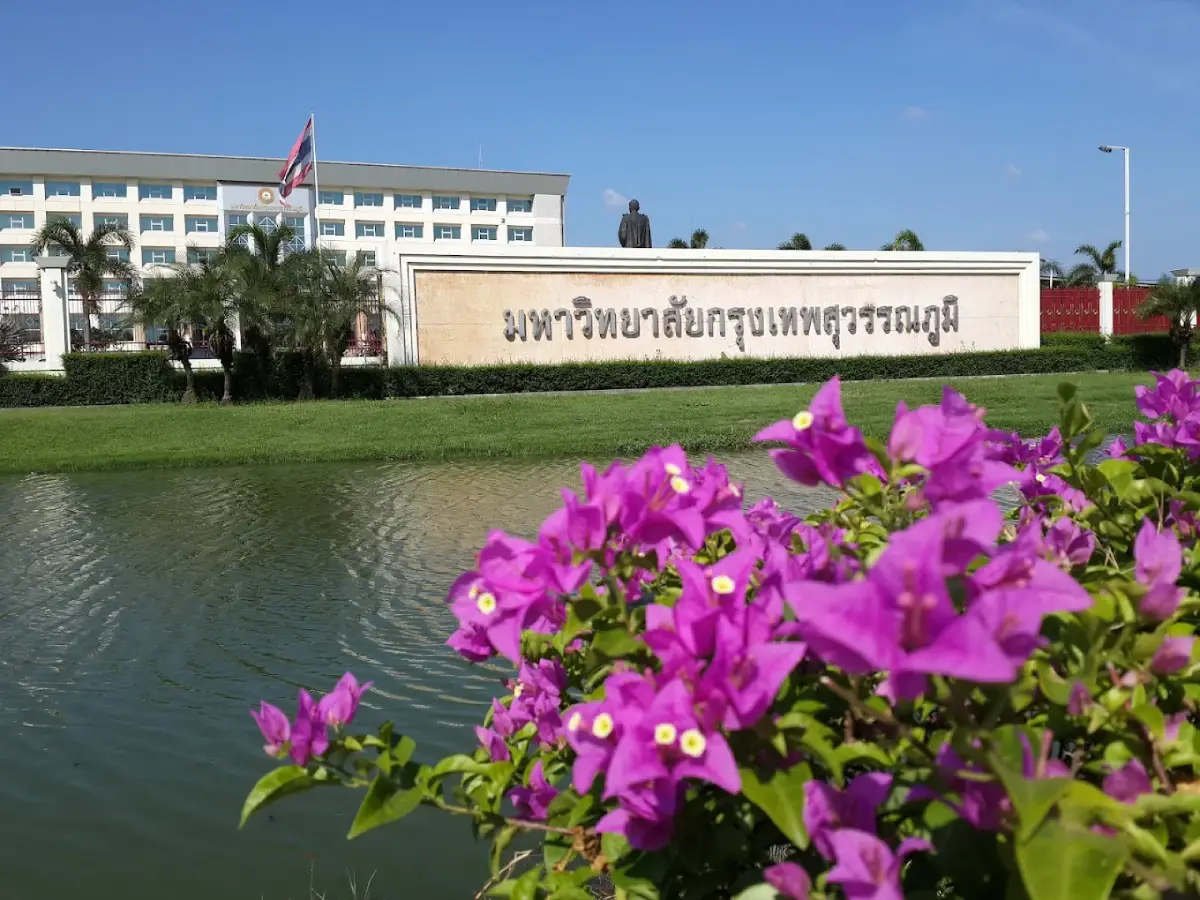
Bangkok Suvarnabhumi University
Registrar's Office Open Days: Daily
Registrar's Office Hours: Sunday – Thursday, 08:00 – 17:00; Friday – Saturday, 08:30 – 16:30
Bangkok Suvarnabhumi University (BSU), known in Thai as Mahawitthayalai Krungthep Suwannaphum, is a private university located at 489 Pracha Phatthana Road, Thap Yao Subdistrict, Lat Krabang District, Bangkok 10520, Thailand. The institution began operating as Bangkok Suvarnabhumi College on 22 February 2006 before officially becoming a university on 31 October 2014. Its academic strengths include business administration, accounting, marketing, digital technology, logistics, industrial management, tourism, and public administration, alongside postgraduate education. The university emphasizes the development of graduates who possess academic knowledge, professional abilities, and ethical values. In 2026, the institution marked 20 years since its original establishment and continued serving students in eastern Bangkok and surrounding areas.
The university is situated in Lat Krabang, one of eastern Bangkok's important districts for transport, industry, logistics, and service businesses. The surrounding area is closely connected to Suvarnabhumi Airport, the Lat Krabang Industrial Estate, major road networks, and a wide range of commercial operations. This location provides a relevant setting for academic subjects such as logistics, business administration, industrial technology, and tourism, all of which are closely associated with the economic activities taking place throughout the district.
The campus contains multi-storey academic buildings, administrative facilities, student activity areas, walkways, and landscaped open spaces. Its main building has a contemporary architectural design and serves as a recognizable feature of the university. Green areas and a pond near the principal buildings contribute to the campus environment. These physical features support the university's function as both an educational institution and an established part of the Lat Krabang community.
The university's origins are associated with the development of private higher education designed to respond to society's needs, particularly in business, management, and technology-related professions. Two important founding figures are Ajarn Udom Saenghirun and Ajarn Pitsamai Saenghirun, whom the university identifies as its founding chairpersons. Their role in establishing the institution helped create an educational foundation centered on knowledge, moral responsibility, and contributions to society.
Bangkok Suvarnabhumi College received permission from the Ministry of Education, following the recommendation of the Office of the Higher Education Commission, to begin teaching on 22 February 2006. This marked the institution's formal beginning as a private higher education college. Its early educational mission emphasized preparing students for employment and professional development through programs that connected academic theory with practical applications.
The college emerged during a period of continued development in Thailand's service industries, manufacturing sector, and transport infrastructure. Lat Krabang was particularly significant because of its relationship with Suvarnabhumi Airport and the surrounding industrial and logistics networks. As businesses increasingly required personnel with knowledge in administration, information technology, industrial operations, and supply chains, the institution developed educational pathways relevant to these areas of employment.
In the 2009 academic year, the Graduate School was established to expand opportunities for advanced study. Its development provided pathways for university graduates, working professionals, managers, and other learners seeking postgraduate qualifications. This was an important stage in the institution's history because it extended its mission beyond undergraduate teaching to more advanced professional knowledge, research, and academic specialization, particularly in business administration, educational administration, and logistics technology.
On 12 November 2011, the college council passed a resolution during meeting No. 4/2554 authorizing the preparation of documents and supporting evidence for an application to change the institution's status from college to university. This administrative decision reflected the institution's intention to expand its academic responsibilities and strengthen its organizational development. The application process required documentation concerning institutional readiness, educational programs, personnel, and administrative structures in accordance with the applicable regulatory standards.
The Ministry of Education subsequently announced the reclassification of Bangkok Suvarnabhumi College as Bangkok Suvarnabhumi University, effective from 31 October 2014. This marked a major milestone in the institution's history. After more than eight years of operating as a private college, it acquired the formal status of a private university. The change reflected the institution's development while preserving its original educational philosophy emphasizing academic knowledge and moral values.
It is important to distinguish the two dates in the university's history. The institution began teaching on 22 February 2006, when it was known as Bangkok Suvarnabhumi College, while 31 October 2014 marks its official transition to university status. Therefore, in 2026 the institution had completed 20 years of operation since its original foundation and more than 12 years under its university designation.
Another significant figure in the university's development is Ajarn Phaophongsan Saenghirun, identified by the institution as President of the University Council. Dr. Wisit Saenghirun is named as Rector in the university's published management information. The University Council and executive administration play important roles in directing educational policies, personnel development, quality assurance, institutional management, and cooperation with external organizations.
The name Bangkok Suvarnabhumi University reflects the institution's geographical relationship with eastern Bangkok and the Suvarnabhumi area, which has become a major transportation and economic center in Thailand. Its location in Lat Krabang links the institution with the area's business and transport environment. Despite sharing the word Bangkok in their names, Bangkok Suvarnabhumi University and Bangkok University are separate private institutions with different histories, campuses, administrations, and official websites.
The university's educational philosophy is expressed through three principles: Morality, Wisdom, and Happiness. Morality refers to ethical behavior, discipline, responsibility, honesty, and respect for others. Wisdom represents genuine knowledge, practical competence, and a commitment to lifelong learning. Happiness emphasizes the ability to apply knowledge to everyday life while maintaining ethical responsibilities toward oneself, family, society, and the nation. Together, these principles describe the qualities the university seeks to develop in its graduates.
The institution's pledge can be translated as “Develop Knowledge Alongside Morality, Live Happily, and Cherish Thai Identity.” Its stated vision is to become a leading university producing graduates of high quality and sound ethical character. Its mission includes providing quality education, developing capable personnel, encouraging discipline and volunteerism, supporting research and innovation, offering academic services to society, and preserving arts and culture. These responsibilities reflect the university's attempt to balance professional education with wider social and cultural values.
The university emblem contains four symbolic elements: a twisted rope, the sun, a book, and the symbol called Tri Ai Wit. Together, they represent the concept of a valuable educational institution on a golden land. The rope symbolizes affection, unity, and mutual support among members of the university community. The sun represents brightness, prosperity, dignity, and institutional reputation. The book signifies knowledge, while Tri Ai Wit represents the power of progress and development associated with the economic foundations of society.
The university's official colors are red, white, and gold. Red represents national identity, prosperity, and gratitude toward the country. White symbolizes purity, transparency, and ethical principles, while gold is associated with respect for the Thai monarchy. The combination of these three colors conveys an educational identity that values knowledge, morality, and contributions to society. Individual academic units are also associated with different colors: light blue for Business Administration, yellow for Science and Technology, dark blue for Political Science, and orange for the Graduate School.
The university's symbolic tree is the Kalapaphruek, commonly known as Pink Cassia or Pink Shower. It is a flowering tree with blossoms that appear in shades of pink before becoming paler or white as they mature. Flowering generally occurs around February and March. In Thai cultural symbolism, the tree is associated with auspiciousness, virtue, peacefulness, and freshness of life. These associations make it a suitable symbol for an institution emphasizing moral character and personal development.
Undergraduate education at Bangkok Suvarnabhumi University is organized through three principal faculties: the Faculty of Business Administration, the Faculty of Science and Technology, and the Faculty of Political Science. Advanced education is provided through the Graduate School. These academic units focus on disciplines related to business organizations, industrial employment, public administration, technological development, and professional learning, reflecting the institution's practice-oriented educational mission.
The Faculty of Business Administration includes programs in Accounting, Marketing, Management, Digital Technology in Business, and Tourism, Meetings, Seminars, and Events. Its teaching covers business operations, organizational planning, resource management, financial analysis, contemporary marketing, and the application of information technology. Students are expected to gain both foundational knowledge and practical skills applicable to professional employment, organizational management, or entrepreneurship.
The Accounting program develops knowledge in accounting principles, financial reporting, financial data analysis, and the use of computerized accounting systems. Students study how accounting information supports organizations and decision-making. The Management program focuses on organizational administration, business planning, human resource development, and management processes. These areas provide foundations for employment in private companies, public organizations, and independently operated businesses.
The Marketing program emphasizes consumer understanding, business environment analysis, marketing planning, and creative problem-solving. Students explore advertising, sales promotion, market research, and contemporary marketing practices. The university's published program information describes the use of case studies, competitions, and educational visits to help students connect academic concepts with practical experiences and professional expectations.
Digital Technology in Business combines business administration with computer systems and information technology. Students learn about software applications, data management, computer networks, programming, and the development of organizational information systems. These skills are valuable to enterprises adapting to digital operations, including customer service, information management, business process improvement, and the use of technology to increase organizational efficiency.
The Tourism, Meetings, Seminars, and Events program is connected with the service sector and the MICE industry, which encompasses meetings, incentive travel, conventions, and exhibitions. The field involves hospitality, event planning, visitor experiences, service communication, and professional organization. The university's location in the broader Suvarnabhumi Airport area provides a relevant regional context for studying travel, hospitality, transportation, and internationally connected service industries.
The Faculty of Science and Technology includes programs related to Logistics Management, Industrial Management Technology, and Information Technology and Digital Innovation. These fields integrate scientific and technological knowledge with organizational management. Students develop abilities involving systems analysis, resource utilization, information management, and the improvement of operational processes. Such competencies are increasingly important to modern industrial enterprises and service organizations.
Logistics Management examines the planning and coordination of transportation, warehousing, inventories, procurement, operational costs, and supply chains. The discipline requires an understanding of the movement of goods, information, and resources through business operations. Students explore how organizations can improve the efficiency of distribution and production while reducing costs and supporting reliable service delivery. Its relevance is particularly evident in industrial and transportation districts such as Lat Krabang.
Industrial Management Technology focuses on production planning, materials management, quality control, manufacturing systems, and the efficient use of industrial resources. Students learn how to improve processes and understand the interaction between technology and workplace management. Information Technology and Digital Innovation, meanwhile, emphasizes application development, databases, information systems, networks, and technological solutions. Both disciplines support the development of professionals prepared for industrial transformation and the digital economy.
The Faculty of Political Science offers Public Administration, a field concerned with government organization, public policy, human resource management, and administrative systems. Students study the principles and methods of managing public institutions and the relationships between government agencies, businesses, and communities. The knowledge acquired can be applied in public organizations, local government administration, private companies, and professional roles involving organizational policy and management.
The Graduate School provides postgraduate education in Educational Administration, Business Administration, and Logistics Technology. These programs are designed for learners seeking advanced professional knowledge and analytical abilities. Graduate-level education involves deeper engagement with theories, research methods, organizational problems, and practical professional development. It is particularly relevant to graduates and working professionals who wish to advance their qualifications or strengthen their expertise in a specialized field.
A notable characteristic of the university's academic approach is its emphasis on connecting theoretical knowledge with professional practice. Published program descriptions refer to practical exercises, case studies, educational visits, activities, and professional experience. These learning methods help students understand workplace expectations and recognize how their academic disciplines relate to actual employment. Such experiences can strengthen problem-solving abilities and provide a foundation for professional development after graduation.
Research and academic development are also part of the university's mission. Its research-related services include academic publications, research management resources, theses, and opportunities for scholarly exchange. The university has participated in and supported academic conferences, including the Benjamitra Academic Conference, which provides a forum for the presentation and discussion of research. These academic activities support collaboration among educational institutions, researchers, instructors, and graduate students.
The Saenghirun Library serves as an important academic resource for the university community. Libraries support study, research, independent learning, and access to educational information. The university also provides online student registration and academic document services, helping students manage aspects of their academic records and administrative requirements. Such digital services demonstrate the role of information technology in modern university administration.
Student activities are another significant element of campus life. The university has documented orientation ceremonies, Wai Khru ceremonies honoring teachers, sports competitions, student gatherings, and activities associated with Thai cultural traditions. These events support communication, social participation, and relationships between students and teaching staff. They also provide opportunities for students to develop teamwork, leadership, and interpersonal skills beyond the classroom.
Wai Khru is a traditional Thai educational ceremony in which students express gratitude and respect toward their teachers. Within the university environment, such ceremonies reflect the value placed on education, ethical conduct, and the relationship between learners and educators. Orientation activities likewise help new students understand the university's academic procedures, student services, institutional expectations, and available opportunities for participation in campus life.
The Kalapaphruek Games, named after the university's symbolic tree, appear in the historical records of student sporting activities. The use of the tree's name reinforces the connection between university identity and student traditions. Sports activities promote physical well-being, teamwork, friendship, and sportsmanship. The university has also presented creative and entrepreneurship-related activities under the BSU STARTUP name, including events involving crafts, student creativity, and experiential learning.
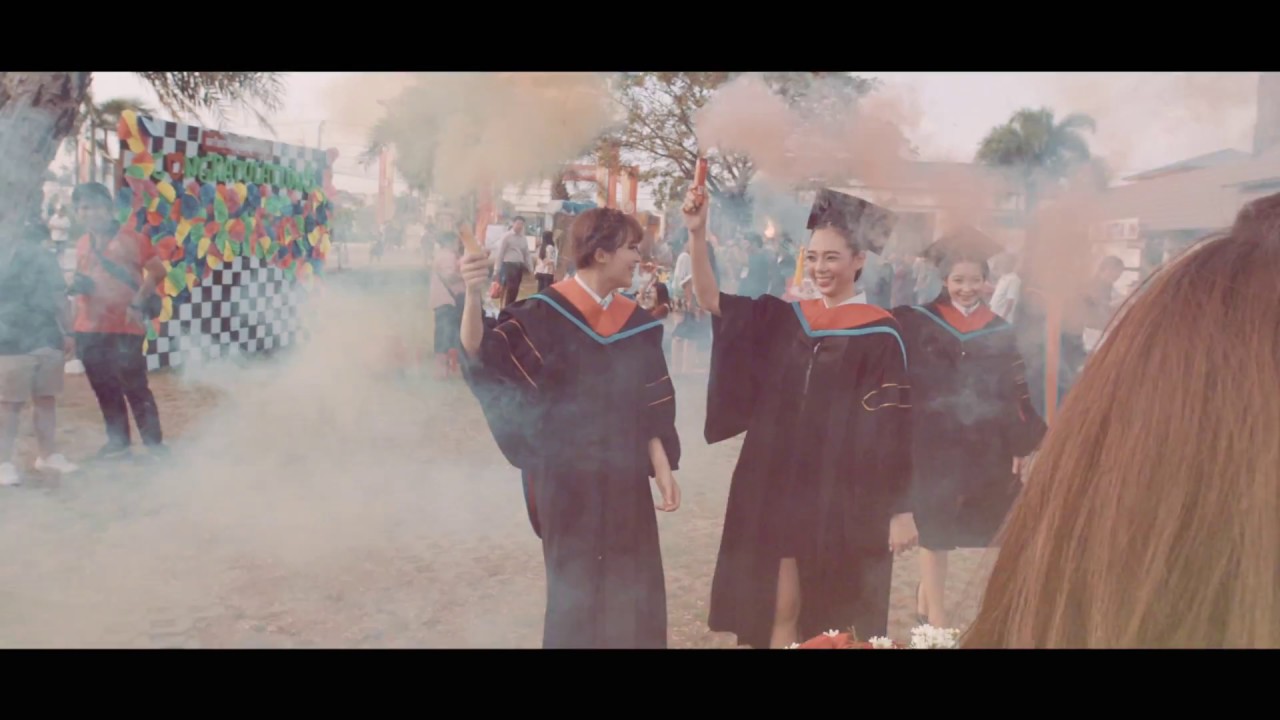
Graduation ceremonies are important milestones for students and their families. The university has published photographs documenting commencement-related activities and rehearsals, reflecting its academic ceremonies and traditions. Such events recognize students' completion of their degree requirements and symbolize the transition from academic life into professional and social responsibilities.
The preservation of Thai arts and culture is one of the university's stated responsibilities. Its documented student activities include Buddhist Lent candle processions, traditional merit-making, and events associated with Thai cultural observances. These activities demonstrate how cultural education and community participation can complement academic study, encouraging students to appreciate local traditions and understand their wider social significance.
Prospective students can explore the university's admission information and online application system through its official website. Program selection should consider the applicant's interests, educational qualifications, preferred schedule, and career goals. Admissions procedures and study arrangements vary according to the program and academic term. Working adults interested in continuing their education should pay particular attention to the schedules of special programs and graduate study options.
For educational visitors, Bangkok Suvarnabhumi University provides an opportunity to learn about private higher education in Thailand, particularly in business, technology, logistics, and public administration. School groups, prospective students, and individuals interested in observing campus life should contact the relevant university office before arranging a visit. Access to classrooms, laboratories, library facilities, and certain academic areas may be subject to institutional rules and scheduled activities.
The surrounding Lat Krabang district also offers several places of historical and cultural interest. Hua Takhe Old Market is a traditional canalside community known for its wooden buildings and local shops along the Prawet Buri Rom Canal. Wat Suthapot is associated with local religious and cultural life, while the Bangkok Local Museum for Lat Krabang District provides information about the area's history and community heritage. These attractions offer visitors a broader understanding of eastern Bangkok beyond its modern transport and industrial functions.
Getting There is possible by private car, local taxi, or public transportation. The university's address is 489 Pracha Phatthana Road, Thap Yao, Lat Krabang, Bangkok 10520. Travelers driving from other areas of Bangkok can use the road network connecting Lat Krabang Road with Pracha Phatthana Road. Public bus services stop near the university entrance, and visitors arriving by train can use Hua Takhe Railway Station before continuing to the campus by local transport or taxi.
Travelers arriving at Suvarnabhumi Airport can continue by car or taxi toward Lat Krabang and Pracha Phatthana Road. Travel planning should take account of traffic conditions, particularly during busy periods near major road junctions and routes serving the airport. Students and visitors traveling for registration, admissions, or administrative services should confirm the relevant office and its operating hours before departure.
The university registrar's published service information lists Sunday through Thursday from 08:00 to 17:00 and Friday through Saturday from 08:30 to 16:30. These are registrar's office hours, not a universal opening schedule for every classroom or university department. For administrative inquiries and confirmation of specific service arrangements, visitors can contact the university at +66 2 172 9888 or visit its official website at www.bsu.ac.th.
Bangkok Suvarnabhumi University represents the development of a private higher education institution from its beginnings as a college in 2006 to its recognition as a university in 2014. Throughout this development, the institution has retained an educational philosophy centered on knowledge, morality, and personal well-being. Its academic programs reflect the needs of contemporary business, technology, industry, and public administration. The university's wider significance lies in expanding educational opportunities, supporting professional development, and connecting academic knowledge with the economic and social life of eastern Bangkok and surrounding communities.
| University Name | Bangkok Suvarnabhumi University (BSU) |
| Thai Name | มหาวิทยาลัยกรุงเทพสุวรรณภูมิ |
| Institution Type | Private University |
| Location | Thap Yao Subdistrict, Lat Krabang District, Bangkok, Thailand |
| Full Address | 489 Pracha Phatthana Road, Thap Yao, Lat Krabang, Bangkok 10520, Thailand |
| Former Name | Bangkok Suvarnabhumi College |
| Original Foundation Date | 22 February 2006 |
| University Status Date | 31 October 2014 |
| Institutional Age | 20 Years in 2026, Counting from Its Establishment as a College |
| Founding Figures | Ajarn Udom Saenghirun and Ajarn Pitsamai Saenghirun |
| President of University Council | Ajarn Phaophongsan Saenghirun |
| Rector | Dr. Wisit Saenghirun |
| Educational Philosophy | Morality, Wisdom, and Happiness |
| Institutional Pledge | Develop Knowledge Alongside Morality, Live Happily, and Cherish Thai Identity |
| Official Colors | Red, White, and Gold |
| Symbolic Tree | Kalapaphruek (Pink Cassia / Pink Shower) |
| University Emblem | Twisted Rope, Sun, Book, and Tri Ai Wit Symbol |
| Faculties | Faculty of Business Administration, Faculty of Science and Technology, and Faculty of Political Science |
| Graduate Education | Graduate School |
| Academic Levels | Bachelor's and Master's Degrees in Published Academic Programs |
| Academic Strengths | Business Administration, Accounting, Marketing, Digital Technology, Logistics, Industrial Management, Tourism, Public Administration, and Educational Administration |
| Notable Facilities and Services | Academic and Administrative Buildings, Saenghirun Library, Research Office, Graduate School, Student Activity Spaces, and Online Registration Services |
| University Activities | Student Orientation, Wai Khru Ceremonies, Graduation Ceremonies, Cultural Activities, Kalapaphruek Games, and BSU STARTUP Events |
| Registrar's Office Open Days | Daily, According to the Registrar's Published Service Information |
| Registrar's Office Hours | Sunday – Thursday: 08:00 – 17:00 Friday – Saturday: 08:30 – 16:30 |
| Telephone | +66 2 172 9888 |
| Fax | +66 2 172 9620 |
| info@bsu.ac.th | |
| Official Website | https://www.bsu.ac.th/ |
| Getting There | Private Car, Local Taxi, Public Buses Along Pracha Phatthana Road, or Railway Services to Hua Takhe Station Followed by Local Transport |
| Places of Interest in the Area | 1. Wat Phon Mani 2. Wat Suthapot 3. Bangkok Local Museum, Lat Krabang District 4. Hua Takhe Old Market 5. Lat Krabang Park (Suan Phra Nakhon) |
| Restaurants in Lat Krabang | 1. Krua Ban R – +66 62 172 9048 2. Sampao Thong Restaurant – +66 94 334 6442 3. Khom Restaurant – +66 83 698 6555 4. Krua Rabieng Nam – +66 82 469 9664 5. Sathani Tit Saep – +66 84 243 7841 |
| Accommodation in Lat Krabang and Suvarnabhumi | 1. Mada Apartment – +66 82 935 9556 2. Miloft Suvarnabhumi Airport Hotel – +66 2 136 2424 3. Golden Foyer Suvarnabhumi Airport Hotel – +66 2 056 4255 4. At Residence Suvarnabhumi – +66 2 737 1505 5. Canalis Suvarnabhumi Airport Hotel – +66 2 327 1555 |
| Current Status | Operating as a Private University in 2026 |
Academic Programs and Fields of Study at Bangkok Suvarnabhumi University, Published Information for Academic Year 2026
| Faculty / Academic Unit | Academic Programs and Fields of Study |
| Faculty of Business Administration | Bachelor's Degree Programs 1. Bachelor of Accountancy – Accounting 2. Bachelor of Business Administration – Marketing 3. Bachelor of Business Administration – Management 4. Bachelor of Business Administration – Digital Technology in Business 5. Bachelor of Arts – Tourism, Meetings, Seminars, and Events |
| Faculty of Science and Technology | Bachelor's Degree Programs 1. Bachelor of Science – Logistics Management 2. Bachelor of Science – Industrial Management Technology 3. Bachelor of Science – Information Technology and Digital Innovation |
| Faculty of Political Science | Bachelor's Degree Program 1. Bachelor of Public Administration – Public Administration |
| Graduate School | Master's Degree Programs 1. Master of Education – Educational Administration (M.Ed.) 2. Master of Business Administration – Business Administration (M.B.A.) 3. Master of Science – Logistics Technology (M.Sc.) |
Frequently Asked Questions (FAQ)
Q: Where is Bangkok Suvarnabhumi University located?
A: Bangkok Suvarnabhumi University is located at 489 Pracha Phatthana Road, Thap Yao, Lat Krabang, Bangkok 10520, Thailand.
Q: What are the opening hours of Bangkok Suvarnabhumi University?
A: The registrar's published service schedule lists Sunday through Thursday from 08:00 to 17:00 and Friday through Saturday from 08:30 to 16:30. Other departments may have different schedules.
Q: When was Bangkok Suvarnabhumi University established?
A: The institution began operating as Bangkok Suvarnabhumi College on 22 February 2006 and officially became Bangkok Suvarnabhumi University on 31 October 2014.
Q: Who founded Bangkok Suvarnabhumi University?
A: The institution identifies Ajarn Udom Saenghirun and Ajarn Pitsamai Saenghirun as its founding chairpersons.
Q: What faculties does Bangkok Suvarnabhumi University have?
A: The university has the Faculty of Business Administration, Faculty of Science and Technology, and Faculty of Political Science, together with a Graduate School.
Q: Does Bangkok Suvarnabhumi University offer Logistics programs?
A: Yes. The university lists an undergraduate Logistics Management program and has also published information about a master's degree in Logistics Technology.
Q: Is Bangkok Suvarnabhumi University the same as Bangkok University?
A: No. Bangkok Suvarnabhumi University is an independent private university in Lat Krabang, Bangkok, with its own institutional history and official website at www.bsu.ac.th.
Q: Can visitors reach Bangkok Suvarnabhumi University by public transport?
A: Yes. Public buses serve Pracha Phatthana Road near the university, and visitors can also travel to Hua Takhe Railway Station before continuing to campus by local transport or taxi.
 Category: ●University
 Group: ●Private University
Last Update : 2 DayAgo
 Last Update : 2 DayAgo
 Click to Access the Navigation Map GPS
Bangkok Suvarnabhumi University Map
Recommend

 Art, Culture and Heritage
 Historical Sites and Monuments(3)
 Landmarks and Memorials(23)
 Royal Palace(13)
 Art, Craft Centres, Tradition(35)
 Museums(59)
 Historic Homes and Cities(3)
 Art Gallery(16)
 Educational Places
 Museum for Study(6)
 Library(4)
 Public university(8)
 Autonomous Universities(8)
 Rajamangala University of Technology(6)
 Rajabhat University(6)
Private University(22)
 Places of Worship
 Temple(72)
 Church(2)
 Mosque(67)
 Other Sacred Sites(8)
 Research and Development
 Royal Project(1)
 Suburban Living
 Village, Community(5)
 Local Market(9)
 Floating Market(2)
 Nature and Wildlife
 River, Canal(3)
 Bays and Beaches(1)
 Other natural attractions(1)
 Entertainment and Agricultural
 Zoos and Aquariums(5)
 Animal camps and shows(5)
 Stadium(9)
 Farms, Parks and Ecotourism(20)
 Amusement Park(1)
 Waterpark(4)
 Theater(7)
 Cinema(1)
 Shopping
 Shopping and Night Market(20)
 Department Store(7)
 Spas and Wellness
 Spas and Wellness(1)
 Restaurant
 Michelin Star(5)
 Accommodation
 Hotel(3)
 Call Customer Service in Tourism
 Call Customer Service in Tourism(1)
 Travel Articles, Recipes
 Travel Review, Food Review(43)
 Royal Thai Desserts and Recipes(56)


