
lovethailand home >Central Travel Attractions >Phranakhon Si Ayutthaya Travel Attractions >Phranakhon Si Ayutthaya >Ho Rattana Chai > Wat Suwandararam Ratchaworawihan
TL;DR: Wat Suwandararam Ratchaworawihan is located at Ayutthaya Island (Southeastern Zone, North of Pom Phet Fort), Phra Nakhon Si Ayutthaya District, Phra Nakhon Si Ayutthaya, Thailand, open Daily, hours 08:30 – 17:00.
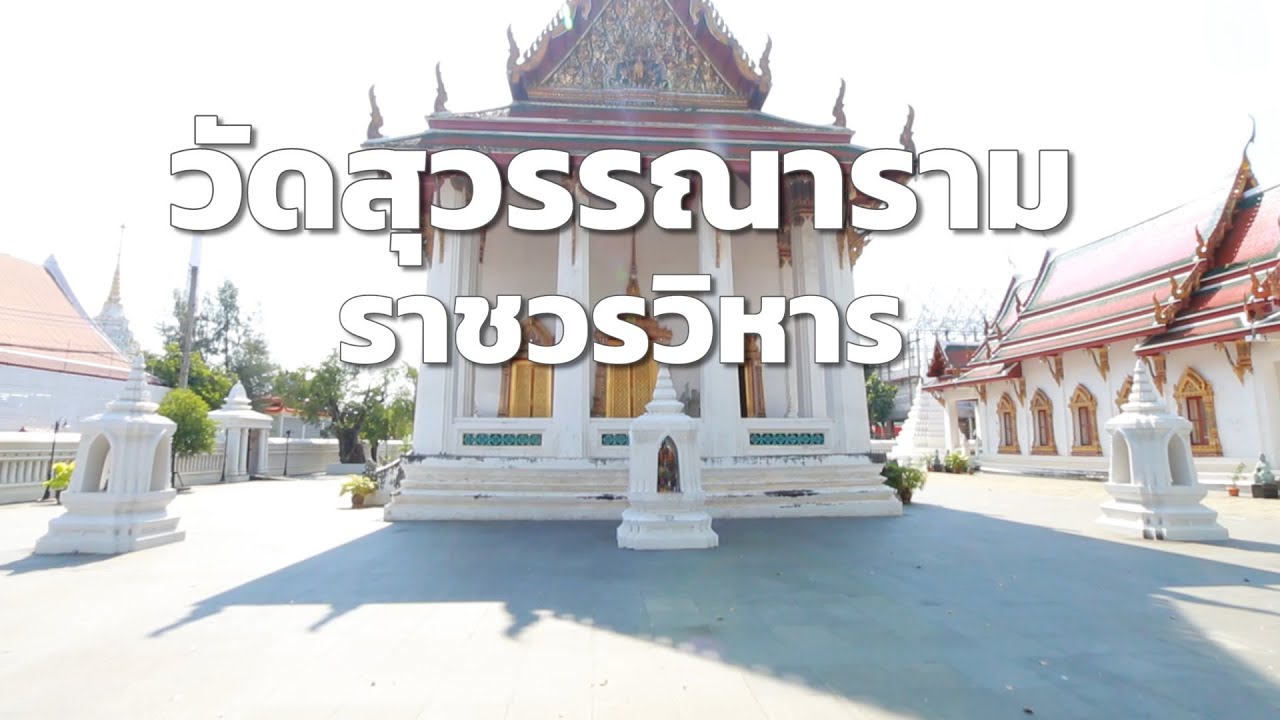
Wat Suwandararam Ratchaworawihan

Open Days: Daily
Opening Hours: 08:30 – 17:00
Wat Suwandararam Ratchaworawihan is one of Ayutthaya’s most rewarding temples if you want to “read the old capital in layers” within a single place. It carries the story of an earlier Ayutthaya-era temple, the moment it was re-established in the early Rattanakosin period, and a rich collection of art that lets you see how taste, belief, and craftsmanship evolved across different reigns. If you’ve visited the island city before and felt that some famous temples can get so crowded that it’s hard to find your rhythm, this temple often feels more balanced. It’s easy to reach, but it doesn’t push you into a quick, photo-only visit. Wat Suwandararam works beautifully for visitors who want a peaceful worship experience as well as those who enjoy studying architectural details and mural paintings with real focus.
The temple sits on the southeastern side of Ayutthaya Island, just north of Pom Phet Fort, and the route is straightforward because you can follow the same direction used for the Chankasem National Museum. The simple landmark to remember is: “when you reach the three-way junction, turn right.” From there, continue for about 1 kilometer and you will see the temple entrance sign on the right-hand side. Because of this easy access, Wat Suwandararam fits naturally into an itinerary around the eastern zone of the island city, whether you’re visiting for history, photography, or a relaxed day of walking near the river.
The temple was originally known as “Wat Thong” (the “Golden Temple”), and tradition says it was established in the Ayutthaya period by the royal grandfather of King Rama I (Phra Phutthayotfa Chulalok the Great). After Rama I ascended the throne, he ordered the temple to be re-established and bestowed the new name “Wat Suwandararam” as a memorial to his royal father and mother. The meaning is closely tied to their former names, “Thongdee” and “Dao Rueang.” This “name story” is more than a charming anecdote; it helps us understand how the early Rattanakosin court intentionally linked royal family memory with sacred landscapes in the old capital. In that sense, the temple becomes both a spiritual space and a carefully placed site of political and familial remembrance.
As you enter the grounds, the first structure that usually stops visitors is the ordination hall (ubosot), because it retains architectural characteristics associated with the late Ayutthaya period. The most distinctive feature is the base, which gently curves downward at the center, resembling the prow of a Chinese junk. This subtle design choice makes the building feel lighter and more rhythmic when viewed at an angle. Walking around the ubosot is surprisingly engaging because the curve reads differently depending on where you stand. Morning and late-afternoon light can emphasize the shadows along the base and make the form even more apparent.
The ubosot pediment is carved with the motif of “Narayana riding Garuda,” a theme often associated with protection, auspicious power, and symbolic authority in Thai art. Inside, the mural paintings are the artistic heart of the temple. The upper portion shows a “gathering of celestial beings” (thep chum nun), while the lower portion illustrates key Jataka tales, including the Vessantara Jataka, the Temiya Jataka, and the Suvannasama Jataka. This composition gently guides the viewer: the upper zone evokes a heavenly realm, while the lower zone offers moral teachings rooted in the human world, creating a visual pathway that lifts attention and reflection from everyday life toward Buddhist principles.
On the wall in front of the principal Buddha image is the “Victory over Mara” scene, with Phra Mae Thorani (the Earth Goddess) wringing water from her hair at the center. Many people recognize this scene from textbooks, but seeing it in the real sacred setting feels different. Here, it is not simply an illustration—it functions as a devotional image that strengthens focus for worshippers. The principal Buddha image itself is said to have been commissioned by King Rama I as an enlarged replica based on the Emerald Buddha’s proportions. That link adds another layer of meaning, because referencing the Emerald Buddha in form and symbolism carries weight in both faith and state identity in the early Rattanakosin era.
Another key structure is the viharn. Unlike the ubosot, it uses a straight base line rather than the soft, curved Ayutthaya-style base, and the column capitals feature the elongated lotus form often called “bua waeng.” The viharn was built in the reign of King Rama II, a period known for refined craftsmanship and evolving architectural taste in royal temples. What makes this viharn especially remarkable is a set of color paintings from the reign of King Rama VII depicting episodes from the life of King Naresuan the Great, including the famous elephant duel. This mural set is widely admired for its outstanding artistry and historical value, and it is noted that the Fine Arts Department made copies of these paintings for display at the Don Chedi Memorial in Suphan Buri. That detail reinforces an important point: Wat Suwandararam is not only “old,” but also home to nationally significant art that has been preserved and referenced beyond the temple itself.
In front of the ubosot you will also see the platform for the Sacred Bodhi Tree (Phra Si Maha Bodhi). The base is formed with inverted and upright lotus moldings, and the Bodhi tree is said to have been grown from a cutting brought from India by King Mongkut (Rama IV). This small corner of the temple carries real historical weight because it symbolizes a deliberate link between the Thai Buddhist world and the Bodh Gaya tradition, reflecting how Siam in the reign of Rama IV increasingly systematized knowledge, religion, and international connections.
Nearby stands a bell tower with an especially striking form: it shows Western architectural influence. Built of brick and plaster in a two-story square plan, the lower level has pointed-arch door openings, while the upper level holds the bell chamber. It is believed to have been constructed in the reign of King Rama IV during a major restoration of the temple. This is another reminder that the old capital in the Rattanakosin period was not frozen in time; it absorbed new ideas and shapes, then adapted them into a distinctly Thai temple setting.
If you want to experience the temple fully, a practical approach is “outside first, then inside.” Begin by walking around the ubosot and viharn to take in the overall architecture, the base forms, the pediment, and surrounding features like the Bodhi tree platform and the bell tower. Then step inside to devote time to the murals, especially the celestial assembly and the Jataka scenes, because many details sit at eye level and reward slow, careful viewing. For photography, morning light is ideal for the ubosot frontage, while late-afternoon light often highlights the texture of brick-and-plaster surfaces and the dimensionality of the architectural base.
As a royal monastery that remains active, Wat Suwandararam still hosts religious activities. Visitors should dress modestly, keep noise low, avoid using flash in areas with murals or in worship zones, and be careful not to lean on walls or touch painted surfaces. Visiting with respect is the simplest way to help preserve both the temple’s beauty and its atmosphere over the long term.
Getting There If you drive, set your map pin for Wat Suwandararam Ratchaworawihan on Ayutthaya Island, in the southeastern zone just north of Pom Phet Fort. The easy route is to follow the direction toward Chankasem National Museum; when you reach the three-way junction, turn right and continue for about 1 kilometer. You will see the temple entrance sign on the right. If you arrive by train, get off at Ayutthaya Railway Station and continue into the island city by taxi, local transport, or a ride-hailing app. If you come by van or intercity bus from Bangkok, you can transfer to local transport into the island area without difficulty.
In a few words without flattening its character: Wat Suwandararam is a temple where “stories” and “visible evidence” meet. From the original name Wat Thong and its link to King Rama I’s family history, to the late-Ayutthaya style ubosot base shaped like a ship’s prow, the powerful mural programs of celestial beings and Jataka tales, the Victory-over-Mara scene, the viharn with Rama VII-era murals of King Naresuan’s life, the Bodhi tree grown from an Indian cutting, and the Western-influenced bell tower from Rama IV’s restoration—this is an Ayutthaya visit that goes beyond check-ins. If you want to walk slowly, look closely, and understand meaning through details, this temple is a genuinely worthwhile choice.
| Place Name | Wat Suwandararam Ratchaworawihan |
| Place Summary | A royal monastery on Ayutthaya Island, notable for a late-Ayutthaya style ubosot, important mural cycles, and architectural elements from multiple reigns (Rama I, II, IV, and murals from Rama VII), ideal for both worship and art appreciation. |
| Key Highlights | Ubosot base with a gentle curve like a junk-boat prow – Narayana riding Garuda pediment – murals of celestial beings and major Jataka tales – Victory-over-Mara scene with the Earth Goddess – Rama II-era viharn and Rama VII-era murals of King Naresuan (including the elephant duel) – Sacred Bodhi Tree platform – Western-influenced bell tower from Rama IV restoration. |
| Period | Originally known as “Wat Thong” from the Ayutthaya period – re-established and renamed “Wat Suwandararam” in the reign of Rama I – viharn built in the reign of Rama II – major restoration and bell tower in the reign of Rama IV – viharn paintings from the reign of Rama VII. |
| Key Evidence | Late-Ayutthaya architectural base form and craftsmanship – mural programs (celestial assembly, Jataka tales, Victory-over-Mara) – Rama VII-era murals of King Naresuan – Sacred Bodhi Tree platform (cutting from India) – Western-influenced bell tower from Rama IV restoration. |
| Name Origin | Formerly “Wat Thong,” later re-established and renamed “Wat Suwandararam” by King Rama I as a memorial to his royal parents, linked to their former names “Thongdee” and “Dao Rueang.” |
| Abbot / Current Custodian | Phra Methee Wachirathada (Wechayan Wechayanto) |
| Address | Ayutthaya Island (Southeastern Zone, North of Pom Phet Fort), Phra Nakhon Si Ayutthaya District, Phra Nakhon Si Ayutthaya, Thailand |
| Travel | Follow the route toward Chankasem National Museum – at the three-way junction, turn right – continue about 1 km to the entrance sign on the right – from Ayutthaya Railway Station, continue by taxi, local transport, or ride-hailing apps into the island city. |
| Facilities | Worship and merit-making areas – architecture and mural viewing spots (flash is not recommended in mural areas). |
| Fees | Free entry (donations welcome). |
| Current Status | Open to visitors and active for religious activities (no indication of permanent closure). |
| Contact Number | 081-373-7430 |
| Nearby Tourist Attractions With Distance | 1) Wat Phra Ram – Approx. 0.2 km 2) Chao Sam Phraya National Museum – Approx. 0.3 km 3) Wat Mahathat – Approx. 0.8 km 4) Ayutthaya Historical Palace Area – Approx. 0.8 km 5) Wat Phra Si Sanphet – Approx. 0.9 km |
| Popular Restaurants Nearby With Distance And Phone Number | 1) Kuay Tiew Phak Wan Ayutthaya – Approx. 0.2 km – 089-539-9427 2) Pae Krung Kao – Approx. 0.3 km – 035-241-555, 088-649-1347 3) Mae Pom Roti Sai Mai (Branch) – Approx. 0.3 km – 089-789-6931 4) Coffeenity Coffee Bar & Roaster Ayutthaya – Approx. 0.4 km – 081-947-2067 5) Baan Pomphet – Approx. 0.3 km – 035-246-076 |
| Popular Accommodations Nearby With Distance And Phone Number | 1) Aiyara House – Approx. 0.6 km – 035-241-353 2) Classic Kameo Hotel & Serviced Apartments, Ayutthaya – Approx. 2.0 km – 035-212-535 3) sala ayutthaya – Approx. 2.4 km – 035-242-588 4) Ayutthaya Hotel – Approx. 1.2 km – 035-907-600, 086-399-0063 5) Centara Ayutthaya – Approx. 3.8 km – 035-243-555 |
Frequently Asked Questions (FAQ)
Q: Where is Wat Suwandararam Ratchaworawihan located on Ayutthaya Island?
A: It is located on the southeastern side of Ayutthaya Island, north of Pom Phet Fort, and it can be reached easily via the same route used for Chankasem National Museum.
Q: Can I visit Wat Suwandararam without a private car?
A: Yes. Get off at Ayutthaya Railway Station and continue by taxi, local transport, or a ride-hailing app into the island city. Follow the route toward Chankasem National Museum; at the three-way junction, turn right and continue about 1 km until you see the entrance sign on the right.
Q: What is the single best highlight to see if I have limited time?
A: Focus on the ubosot with its gently curved base like a ship’s prow, the Narayana riding Garuda pediment, and the murals (celestial beings, Jataka tales, and the Victory-over-Mara scene). If you have extra time, visit the viharn to see the Rama VII-era paintings about King Naresuan.
Q: Is there an entrance fee to visit Wat Suwandararam?
A: Entry is generally free, and visitors may donate according to personal faith.
Q: What should I be careful about when visiting a temple with mural paintings?
A: Dress modestly, keep noise low, avoid using flash in mural areas, and do not touch or lean on painted walls to help preserve the artworks.
 Category: ●Places of Worship
 Group: ●Temple
Last Update : 10 MonthAgo
 Last Update : 10 MonthAgo
 Click to Access the Navigation Map GPS
Wat Suwandararam Ratchaworawihan Map
Recommend

 Art, Culture and Heritage
 Historical Sites and Monuments(7)
 Landmarks and Memorials(6)
 Royal Palace(4)
 Art, Craft Centres, Tradition(6)
 Museums(9)
 Educational Places
 Museum for Study(1)
 Educational Gardens, Farm(2)
 Training Center(1)
 University
 Autonomous Universities(2)
 Rajamangala University of Technology(2)
 Rajabhat University(1)
Temple(134)
 Church(2)
 Mosque(2)
 Other Sacred Sites(15)
 Research and Development
 Royal Project(4)
 Suburban Living
 Village, Community(10)
 Local Market(7)
 Floating Market(3)
 Nature and Wildlife
 Dam, Reservoir, Lake(1)
 River, Canal(3)
 Islands(2)
 Other natural attractions(1)
 Entertainment and Agricultural
 Animal camps and shows(2)
 Farms, Parks and Ecotourism(4)
 Waterpark(1)
 Travel Articles, Recipes
 Travel Review, Food Review(3)


