
lovethailand home >North Travel Attractions >Chiang Mai Travel Attractions >Doi Tao >Pong Thung > Wat Tha Krang
TL;DR: Wat Tha Krang is located at Ban Pong Thung, Moo 5, Pong Thung Subdistrict, Doi Tao District, Chiang Mai Province 50260, Thailand.

Wat Tha Krang
Operating day: Daily
Operating time: 08.00 - 17.00
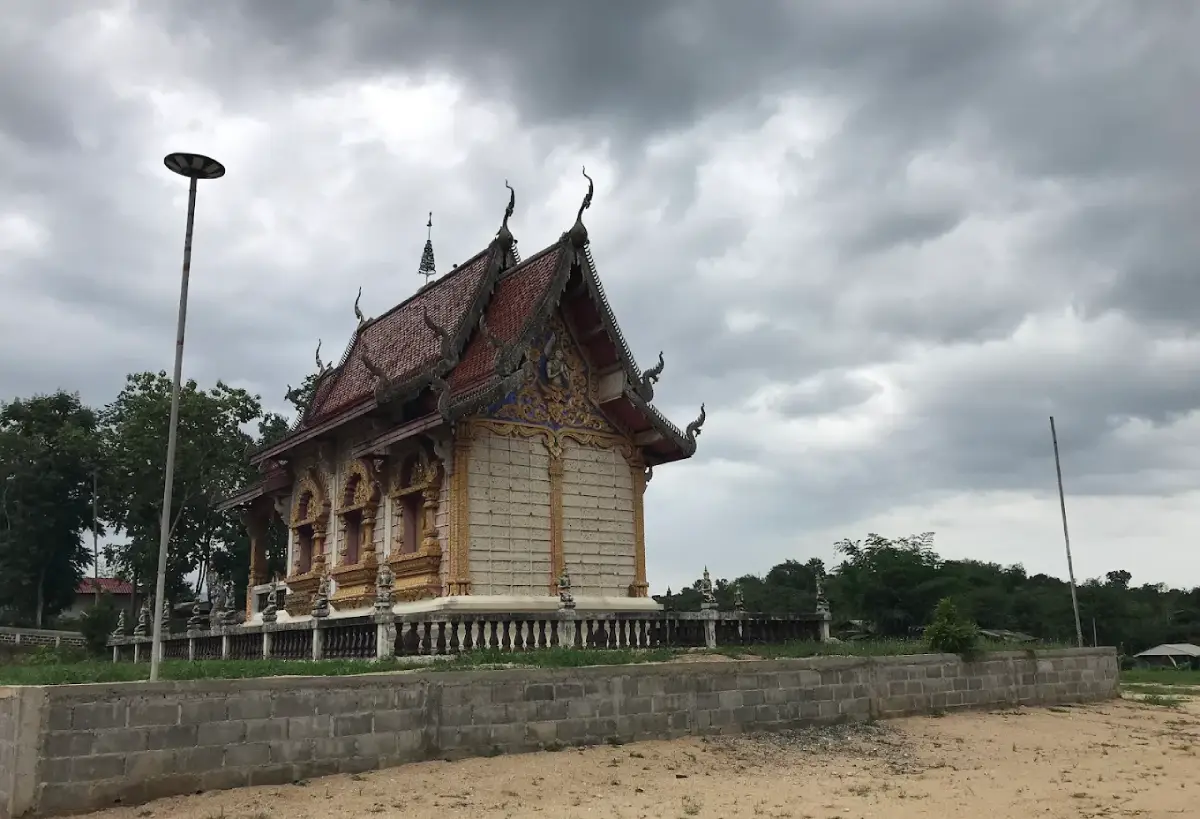
Wat Tha Khrang is located in Ban Pong Thung, Moo 5, Pong Thung Subdistrict, Doi Tao District, Chiang Mai Province 50260. It is a local Buddhist temple under the Maha Nikaya order. The temple land covers 6 rai, 1 ngan, and 50 square wah under Nor Sor 3 land documentation. The temple was officially permitted as a temple in 1907 and received its royal grant of Wisungkhamasima in 1990. Wat Tha Khrang is the spiritual center of Ban Pong Thung and an important community temple connected with the old Tha Khrang riverside settlement, the lacquer trade, the changing course of the Ping River, relocation after the flooding caused by Bhumibol Dam, and the rebuilding of local Buddhist life in the present village.
The name Tha Khrang reflects the older riverside community that once lived along the Ping River and was connected with the trade of lac. Old Ban Tha Khrang was formerly in the Tha Duea area of Hot District, Chiang Mai, before the landscape was transformed by the reservoir above Bhumibol Dam. The old village had a riverside landing, water transport, and trade activities in which lac was bought and sent onward to other regions. Lac was therefore not only a local product; it became part of the identity of the village, the temple name, and the economic memory of the Doi Tao communities along the Ping River.
Local history describes old Ban Tha Khrang as a community with rice farming, tobacco cultivation, vegetable farming, garlic and shallot growing, buffalo raising, and lac-related livelihood. Household textile production was also important, especially local woven cloth associated with the pre-flood community. This background shows that the temple was once part of a living riverside economy shaped by farming, river travel, trade, and Lanna household craftsmanship.
The roots of Wat Tha Khrang are connected with an older temple known as Wat Ban I Kom. During the flood season, the Ping River changed its course and cut through the middle of the temple, damaging the old site. Villagers then moved the temple to a new location on the eastern bank of the Ping River and later used the name Wat Tha Khrang. Khru Ba Panya is remembered as an important monk who led the building of the temple during that riverside period. This story shows that Wat Tha Khrang had already adapted to the force of the river even before the construction of Bhumibol Dam.
In 1964, the rising water above Bhumibol Dam flooded many former Ping River communities in Doi Tao. Wat Tha Khrang and its villagers had to relocate from the old riverside settlement. The relocation was not simply the moving of houses. It was the movement of faith, sacred objects, community memory, and social relationships from the old Ping River landscape to a new settlement area.
During the relocation, villagers placed great importance on preserving Buddha images and old sacred objects. Local history records that devotees brought Buddha images and ancient objects from Wat Ban Chang, Wat Tha Khrang, and Wat Nong Bua Kham together before the Wat Tha Khrang community later agreed to rebuild the temple at Ban Pong Thung, Moo 5, Pong Thung Subdistrict, in 1970. The present temple therefore carries the memory of the old riverside temple and the sacred objects moved with the community.
The present temple land covers 6 rai, 1 ngan, and 50 square wah. Its northern boundary is about 71 wah adjoining public land, the southern boundary is about 72 wah adjoining public land, the eastern boundary is about 22 wah adjoining private land, and the western boundary is about 53 wah adjoining private land. These details show that Wat Tha Khrang is embedded within the Ban Pong Thung community and has a defined space for worship, merit-making, and village religious life.
Important temple structures include a Thai-style sermon hall, kitchen, dining hall, and 6 monks’ residences. The Thai-style sermon hall is especially significant because its interior contains murals depicting the Vessantara Jataka and the life of the Buddha. These murals make the hall more than a community gathering space. It becomes a place of visual Buddhist learning, where visitors can encounter religious stories through local artistic expression.
Important sacred objects at Wat Tha Khrang include a golden Buddha image, stucco Buddha image, Phra Kaeo of the Phut Si Prathip tradition, Phra Kaeo of the Thewa Prathip tradition, Phra Kaeo of the Neramit Prathip tradition in royal-attire style, Phra Phuttha Chinnarat, and a marble-style stucco Buddha image. This variety of Buddha images and sacred objects reflects the devotion preserved by the community through relocation, rebuilding, and continued temple care.
The golden Buddha image and stucco Buddha image represent the continuity of faith from the old temple to the present temple. Phra Phuttha Chinnarat and the various Phra Kaeo images add layers of devotional and artistic meaning. Together with the murals in the sermon hall, these sacred objects make Wat Tha Khrang a meaningful place for visitors interested in Buddhist art, community history, and local faith.
Phra Khru Suchitthammasan, also known as Khru Ba Suchai Khemacharo, is an important figure in the history of Wat Tha Khrang and Doi Tao District. He was a former abbot of Wat Tha Khrang and a former district ecclesiastical head of Doi Tao. Local people affectionately knew him as “Luang Pho Arom Dee” because of his smiling, kind, and approachable manner. His name remains closely connected with the modern memory of Wat Tha Khrang and the faith of its devotees.
After the passing of Phra Khru Suchitthammasan in 2021, Wat Tha Khrang continued to be a place where disciples and local devotees remembered his contribution. The memorial ceremonies held for him reflected the strong connection between the temple, the Sangha, and the wider community. Wat Tha Khrang is therefore meaningful not only as a village temple of Ban Pong Thung, but also as a temple associated with a respected monk who played an important role in Doi Tao Buddhism.
Pong Thung Subdistrict is a large subdistrict of Doi Tao District, located about 153 kilometers south of Chiang Mai city. It covers about 236 square kilometers, or approximately 131,326 rai, and consists of 11 villages: Ban Ko Luang, Ban San Bo Yen, Ban Nong Men, Ban Pong, Ban Pong Thung, Ban Ngio Sung, Ban Kong Wa, Ban Mae Buan Nuea, Ban Mae Tup, Ban Mae Buan Tai, and Ban Pong Khong. Wat Tha Khrang stands in Moo 5, Ban Pong Thung, within this broad rural landscape of villages, agriculture, and hill communities.
Ban Pong Thung is important because it became the new home of Wat Tha Khrang’s faith after the old riverside settlement was lost to the rising reservoir. The temple gave relocated villagers a shared spiritual center, a place for preserving sacred objects, and a space where Buddhist ceremonies could continue. It also links the memory of old Ban Tha Khrang with the life of the present Ban Pong Thung community.
Religious traditions at Wat Tha Khrang follow the rhythm of a northern Thai local temple: Buddhist holy days, Makha Bucha, Visakha Bucha, Asalha Bucha, Buddhist Lent, the end of Lent, Kathin, robe-offering ceremonies, memorial merit-making, and community merit events. These activities bring monks, elders, families, young people, and villagers together and help maintain Buddhist values in the community.
The main appeal of Wat Tha Khrang lies in its layered story: an old Ping River community, lac trade, river erosion, relocation after Bhumibol Dam, rebuilding at Ban Pong Thung, a Thai-style sermon hall with murals, and many important sacred objects. Visitors therefore experience not only a peaceful village temple but also a living record of Doi Tao’s community history.
Wat Tha Khrang is suitable for travelers interested in community temples, Doi Tao history, Buddhist murals, sacred images, and stories of relocation after Bhumibol Dam. A meaningful visit can begin with paying respect to the Buddha images and sacred objects, then observing the Thai-style sermon hall and its murals, and finally connecting the temple story with the old Tha Khrang riverside settlement and present Ban Pong Thung.
Getting There is most convenient by private car, rental car, or local hired transport. From Chiang Mai city, travel south on Highway 108 through Hang Dong, San Pa Tong, Chom Thong, and Hot District. From there, continue toward Doi Tao District and Pong Thung Subdistrict, heading to Ban Pong Thung, Moo 5. Using the names Wat Tha Khrang, Ban Pong Thung, and Doi Tao District together in a navigation app is recommended.
A meaningful route can begin at Wat Tha Khrang for worship, murals, and community history, then continue to Wat Ban Pong, Wat Phra Phutthabat Tamo, Wat Mae Tup, or other villages in Pong Thung Subdistrict. Travelers can also continue toward Doi Tao Lake, Phra Borommathat Doi Koeng, and the lakeside restaurants and accommodations in Tha Duea Subdistrict. This route combines temples, community history, relocation memory, and the landscape of Doi Tao.
Visitors should dress modestly, keep noise low, and respect monks and local residents. If a merit-making event or ceremony is taking place, local worshippers should be given priority. Photography of murals and sacred objects should be done respectfully and without disrupting the religious space. Wat Tha Khrang is a living community temple, so a meaningful visit should respect both the sacred space and the village that maintains it.
Overall, Wat Tha Khrang is a Maha Nikaya local temple of Ban Pong Thung, Pong Thung Subdistrict, Doi Tao District, Chiang Mai Province. It was officially established in 1907 and received its Wisungkhamasima in 1990. Its value lies in its roots in the old Ping River community, the relocation caused by Bhumibol Dam, the preservation of sacred objects, the Thai-style sermon hall with Buddhist murals, and its continuing role as the spiritual center of Ban Pong Thung. For travelers seeking a deeper cultural route in southern Chiang Mai, Wat Tha Khrang is one of Doi Tao’s most meaningful community temples.
| Name | Wat Tha Khrang |
| Type | Local Buddhist Temple, Maha Nikaya Order |
| Location | Ban Pong Thung, Moo 5, Pong Thung Subdistrict, Doi Tao District, Chiang Mai Province 50260, Thailand |
| Temple Code | 350170601 |
| Temple Area | 6 Rai, 1 Ngan, 50 Square Wah, Nor Sor 3 Land Document |
| Boundaries | North: About 71 Wah, Public Land; South: About 72 Wah, Public Land; East: About 22 Wah, Private Land; West: About 53 Wah, Private Land |
| History | Officially established in 1907 and granted Wisungkhamasima in 1990. The temple has roots in the old Tha Khrang riverside community and was rebuilt at Ban Pong Thung after Bhumibol Dam-related flooding affected the former settlement. |
| Former Roots | Connected with Wat Ban I Kom and old Ban Tha Khrang, a Ping River community known for a river landing and lac trade. |
| Important Historical Figures | Khru Ba Panya, who led temple building during the riverside period, and Phra Khru Suchitthammasan / Khru Ba Suchai Khemacharo, former abbot of Wat Tha Khrang and former district ecclesiastical head of Doi Tao |
| Important Structures | Thai-Style Sermon Hall, Kitchen, Dining Hall, And 6 Monks’ Residences |
| Important Murals | Murals inside the sermon hall depicting the Vessantara Jataka and the life of the Buddha |
| Important Sacred Objects | Golden Buddha Image, Stucco Buddha Image, Phra Kaeo Of The Phut Si Prathip Tradition, Phra Kaeo Of The Thewa Prathip Tradition, Phra Kaeo Of The Neramit Prathip Tradition In Royal-Attire Style, Phra Phuttha Chinnarat, And Marble-Style Stucco Buddha Image |
| Related Communities | Old Ban Tha Khrang, Ban Pong Thung Moo 5, And Communities In Pong Thung Subdistrict |
| Community Role | Spiritual center of Ban Pong Thung, used for Buddhist ceremonies, Dhamma listening, Kathin, robe offerings, annual merit-making, and preserving the memory of old Ban Tha Khrang |
| Travel Information | From Chiang Mai, take Highway 108 through Hang Dong, San Pa Tong, Chom Thong, and Hot, then continue toward Doi Tao District and Pong Thung Subdistrict, heading to Ban Pong Thung, Moo 5. |
| Current Status | Active local Buddhist temple listed in temple databases of Pong Thung Subdistrict, Doi Tao District, Chiang Mai Province |
| Facilities | Temple grounds, courtyard, sermon hall, kitchen, dining hall, monks’ residences, and spaces for community Buddhist activities |
| Nearby Tourist Attractions | 1. Wat Ban Pong, about 6 km 2. Wat Phra Phutthabat Tamo, about 12 km 3. Wat Mae Tup, about 14 km 4. Doi Tao Lake, about 30 km 5. Phra Borommathat Doi Koeng, about 35 km |
| Nearby Restaurants | 1. Check In Doi Tao Cafe’ And Resort, about 30 km, Tel. 062-969-8264 2. Krua Than Thip And Ruean Pha Than Thip, about 30 km, Tel. 091-026-4970 3. Ruean Pha Luk Mae Ping, about 30 km, Tel. 081-993-4162, 081-724-5470 4. Ruean Pha Doi Tao Rim Ping, about 30 km, Tel. 081-961-1854, 084-885-5982 5. Ueang Doi Cafe, about 30 km, Tel. 080-730-4285 |
| Nearby Accommodations | 1. Check In Doi Tao Cafe’ And Resort, about 30 km, Tel. 062-969-8264 2. Ruean Pha Than Thip, about 30 km, Tel. 091-026-4970 3. Ruean Pha Luk Mae Ping, about 30 km, Tel. 081-993-4162, 081-724-5470 4. Ruean Pha Doi Tao Rim Ping, about 30 km, Tel. 081-961-1854, 084-885-5982 5. The Creek Resort, about 40 km, Tel. 097-282-8982 |
Frequently Asked Questions (FAQ)
Q: Where Is Wat Tha Khrang Located?
A: Wat Tha Khrang is located in Ban Pong Thung, Moo 5, Pong Thung Subdistrict, Doi Tao District, Chiang Mai Province 50260, Thailand.
Q: When Was Wat Tha Khrang Officially Established?
A: Wat Tha Khrang was officially established in 1907 and received its Wisungkhamasima in 1990.
Q: How Is Wat Tha Khrang Connected With Old Ban Tha Khrang?
A: The temple has roots in the old Ban Tha Khrang riverside community, which was known for a river landing and lac trade before the community rebuilt the temple at Ban Pong Thung after Bhumibol Dam-related flooding.
Q: What Important Structures Are Found At Wat Tha Khrang?
A: Important structures include a Thai-style sermon hall, kitchen, dining hall, and 6 monks’ residences. The sermon hall contains murals of the Vessantara Jataka and the life of the Buddha.
Q: What Important Sacred Objects Are Found At Wat Tha Khrang?
A: Important sacred objects include a golden Buddha image, stucco Buddha image, several Phra Kaeo images, Phra Phuttha Chinnarat, and a marble-style stucco Buddha image.
Q: Who Was Phra Khru Suchitthammasan?
A: Phra Khru Suchitthammasan, or Khru Ba Suchai Khemacharo, was a former abbot of Wat Tha Khrang and former district ecclesiastical head of Doi Tao, widely respected by local devotees.
Q: What Nearby Places Can Be Visited With Wat Tha Khrang?
A: Nearby places include Wat Ban Pong, Wat Phra Phutthabat Tamo, Wat Mae Tup, Doi Tao Lake, and Phra Borommathat Doi Koeng.
 Category: ●Places of Worship
 Group: ●Temple
Last Update : 2 MonthAgo
 Last Update : 2 MonthAgo
 Click to Access the Navigation Map GPS

 Muang Chiang Mai(121)Chom Thong(47)Mae Chaem(25)Chiang Dao(33)Doi Saket(68)Mae Taeng(85)Mae Rim(69)Samoeng(29)Fang(71)Mae Ai(59)Phrao(70)San Pa Tong(103)San Kamphaeng(66)San Sai(73)Hang Dong(73)Hot(32)Doi Tao(22)Omkoi(11)Saraphi(74)Wiang Haeng(15)Chai Prakan(28)Mae Wang(32)Mae On(22)Doi Lo(33)Galyani Vadhana(1)


