
lovethailand home >North Travel Attractions >Phrae Travel Attractions >Sung Men >Hua Fai > Wat Sri Dok
TL;DR: Wat Sri Dok, open Daily, hours 08.00 - 17.00.
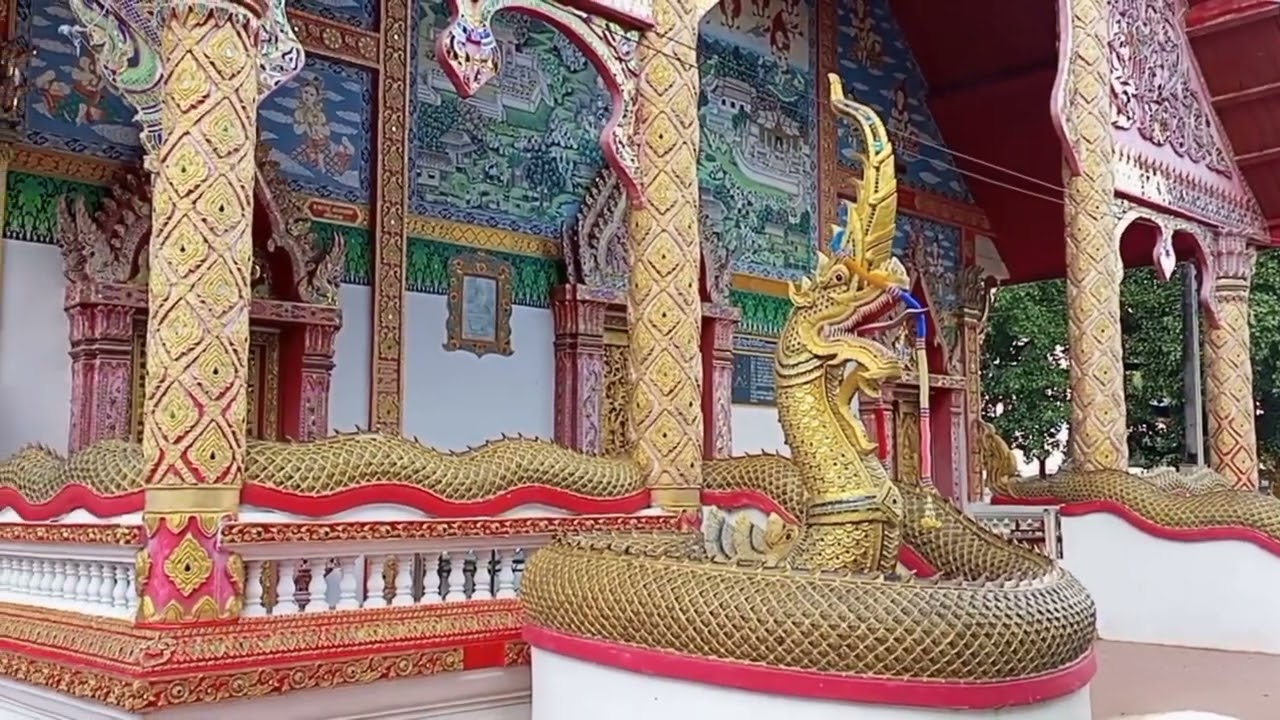
Wat Sri Dok

Open Days: Daily
Opening Hours: 08.00 - 17.00
Wat Si Dok, also widely known as Wat Phra Chao Nang Din, is an old temple in Hua Fai Subdistrict, Sung Men District, Phrae Province. What makes this temple stand out from other temples in Phrae is the presence of the revered Buddha image called “Phra Chao Nang Din,” a seated Buddha image installed low to the ground. This unusual form of enshrinement has become the temple’s defining identity and one of the reasons why the site continues to attract worshippers and cultural travelers.
For travelers looking for a meaningful place to visit in Phrae, Wat Si Dok offers more than a quiet stop for merit-making. It combines local belief, long-told legend, community memory, and the calm atmosphere of a northern Thai village temple. The setting is peaceful and shaded, with large trees and a simple temple environment that gives visitors a strong sense of stillness from the moment they arrive.
The spiritual heart of Wat Si Dok is Phra Chao Nang Din, the seated Buddha image that rests unusually close to the ground. This distinctive feature makes it different from the principal Buddha images seen in most temples. The image is widely respected by local residents and visiting devotees, and many people come here specifically to pay respects, make merit, and seek blessings. In cultural tourism terms, this makes Wat Si Dok one of the more distinctive temple experiences in Phrae.
The temple is also enriched by a deeply rooted local legend. Oral tradition says that the Buddha once passed through this area and rested beneath a bodhi tree. Local people who had never seen him before were frightened, but the Buddha revealed a miracle by causing the sacred tree, or “ton si,” to bloom beautifully and spread a fragrant scent. This event inspired faith among the people and became one of the core stories linked to the sacredness of the site. The temple name “Si Dok” is closely associated with this legend of the blossoming sacred tree.
Although no clear construction year is publicly confirmed, Wat Si Dok is recognized as an old temple of Phrae Province. Local accounts describe the area as once being dense forest before a Buddha image and a small viharn were built there. Over time, the surrounding settlement grew into a stable community, and the temple became a religious and cultural center for local residents. This reflects the traditional role of rural temples in northern Thailand, where temples serve not only as sacred places but also as anchors of community life.
A key moment in the temple’s modern identity came on 14 February 1971, when Somdet Phra Wanarat visited the temple and observed the distinctive way the Buddha image was installed low to the ground. He then gave it the name “Phra Phuttharup Nang Din,” or the seated Buddha on the ground. Since then, that name has become central to the temple’s reputation. The image remains in its original style of enshrinement, and the instruction not to raise or relocate it has continued to define how it is preserved today.
Phra Chao Nang Din is a meditation Buddha image with a lap width of 60 inches and an approximate height of 2 meters. Beyond its physical form, what truly gives the image significance is the continuing faith surrounding it. Visitors do not come here only to admire something visually unusual. They come because the site still carries a living spiritual meaning in the everyday life of the community.
The atmosphere of Wat Si Dok is another reason it deserves attention. Rather than presenting itself as a grand monumental complex, the temple feels intimate, calm, and rooted in local life. Large trees around the temple grounds create shade and a sense of age. The quiet environment makes the temple well suited for travelers who prefer reflective cultural visits instead of crowded tourist stops. It is the kind of place where a short visit can naturally turn into a longer and more thoughtful stay.
Wat Si Dok also carries layers of local belief beyond the seated Buddha image itself. Community narratives speak of remarkable elements connected with the temple grounds, including stories of a pond, a golden gong, and a mysterious sacred crystal that is said to appear at auspicious moments. These beliefs belong to the world of local faith and folklore, but they are part of what gives the temple its cultural depth and makes it especially interesting for readers who want to understand how religion and local imagination are woven together in provincial Thailand.
The temple is also associated with a traditional rocket-offering ceremony connected with prayers for rain and agricultural abundance. This connection shows that Wat Si Dok has long been linked not only with worship in the formal religious sense, but also with the seasonal rhythm of village life. For anyone interested in the relationship between temples, agricultural belief, and local ritual in northern Thailand, this is an especially valuable detail.
From a travel planning perspective, Wat Si Dok works very well as part of a wider cultural route through Phrae. Visitors can come here for a peaceful temple stop and then continue to better-known attractions in and around the city, such as Wat Phra That Cho Hae, Khum Chao Luang, Baan Wongburi, or the old town area of Phrae. This makes the temple suitable for both half-day and full-day itineraries.
Getting to Wat Si Dok is most convenient by private car. The temple is in Hua Fai Subdistrict, Sung Men District, not far from Phrae town. Travelers coming from central Phrae can head toward Sung Men and continue into Hua Fai. Those relying on public transport should first reach Phrae town or Sung Men District and then arrange a local ride or hired vehicle for the final stretch. This is often the easiest approach for visitors without their own car.
Wat Si Dok is especially appealing for travelers who enjoy discovering places with a strong sense of identity rather than simply checking off famous landmarks. The phrase “Nang Din” immediately sparks curiosity, and seeing the image in person gives visitors a much clearer understanding of why this temple remains memorable. The experience is shaped not only by the sacred image but by the quietness of the site, the surrounding community, and the continuity of faith that still defines the temple today.
For cultural readers and heritage-focused travelers, Wat Si Dok offers a meaningful example of how local temples preserve both religious practice and oral tradition. Its significance does not rest on monumental scale, but on the living relationship between sacred space and community memory. That is precisely what gives it value as one of Phrae’s more distinctive temple destinations.
Visitors should dress respectfully, behave calmly, and treat the viharn and worship areas with care. Since Wat Si Dok is first and foremost a functioning temple and a place of faith for the local community, respectful conduct is essential. Photography should be done appropriately, especially if religious activities are taking place during the visit.
Recent public information also indicates that the temple continues to host religious activities and annual events, reinforcing the fact that Wat Si Dok is still an active sacred place rather than a historical remnant. For anyone searching for a temple in Phrae that combines spiritual atmosphere, community tradition, and a unique sacred icon, Wat Si Dok remains one of the province’s most compelling places to visit.
| Name | Wat Si Dok (Wat Phra Chao Nang Din) |
| Location | Hua Fai Subdistrict, Sung Men District, Phrae Province |
| Address | Moo 3, Hua Fai Subdistrict, Sung Men District, Phrae 54130 |
| Highlights | Phra Chao Nang Din, a meditation Buddha image enshrined low to the ground, is the temple’s signature highlight |
| History | An old temple of Phrae Province with long-standing oral tradition, though no clearly published founding year is confirmed |
| Name Origin | Linked to the local legend of the sacred “Si” tree blooming in flowers |
| Distinctive Features | A seated Buddha image with a 60-inch lap width, about 2 meters high, set low to the ground in a rare style |
| Travel Information | Most convenient by private car from Phrae town to Sung Men and Hua Fai; public transport users should continue by local ride from Phrae town or Sung Men |
| Current Status | An active temple with ongoing religious functions and annual temple events |
| Open Days | No officially published open days were found |
| Opening Hours | No officially published opening hours were found |
| Fees | No officially published admission fee was found |
| Facilities | Temple grounds, worship areas, viharn space, and parking according to local temple conditions |
| Main Areas / Zones | Phra Chao Nang Din viharn, stupa area, temple grounds, and shaded tree zone |
| Abbot / Caretaker | Phra Athikan Worawut Mahawuttho |
| Official Website / Official Page | Facebook: Wat Si Dok |
| Nearby Tourist Attractions | 1) Wat Phra That Cho Hae Phra Aram Luang – approx. 15 km – Tel. 054-599-209, 081-993-0137 2) Khum Wichairacha – approx. 12 km – Tel. 096-080-2380 3) Khum Chao Luang – approx. 12 km 4) Baan Wongburi – approx. 12 km 5) Thung Hong Indigo Village – approx. 13 km |
| Nearby Restaurants | 1) Khao Soi Jae Lek – approx. 10 km – Tel. 089-490-3526, 054-620-113 2) Gingerbread House Gallery & Cafe – approx. 12 km – Tel. 054-523-671 3) Panjai Restaurant – approx. 12 km – Tel. 054-620-727, 081-885-8727 4) Jok Jae Sri Pratu Chai – approx. 12 km 5) Restaurants Around Pratu Chai Area – approx. 12 km |
| Nearby Accommodations | 1) Huen Aumpron Resort – approx. 9 km – Tel. 083-605-1877, 081-530-5939 2) Maeyom Palace Hotel – approx. 12 km – Tel. 054-521-028 3) Taris Art Hotel Phrae – approx. 13 km – Tel. 054-511-122, 088-252-3098 4) Come Moon Loft Hotel – approx. 14 km – Tel. 096-698-2294 5) Huernnana Boutique Hotel – approx. 12 km – Tel. 054-524-800 |
Frequently Asked Questions (FAQ)
Q: Where is Wat Si Dok located?
A: Wat Si Dok is located in Moo 3, Hua Fai Subdistrict, Sung Men District, Phrae Province, Thailand.
Q: Why is Wat Si Dok well known?
A: The temple is best known for Phra Chao Nang Din, a seated Buddha image enshrined low to the ground, which is unusual and highly revered.
Q: Is Wat Si Dok a historical temple?
A: Yes. It is recognized as an old temple of Phrae Province and is closely tied to local oral tradition and long-standing community faith.
Q: What kind of traveler would enjoy Wat Si Dok?
A: It suits cultural travelers, temple visitors, merit-makers, and anyone interested in local legends and peaceful religious sites in Phrae.
Q: How do I get to Wat Si Dok?
A: The easiest way is by private car from Phrae town to Sung Men District and then into Hua Fai. Public transport users should continue by local ride from town.
Q: Is Wat Si Dok still active today?
A: Yes. Publicly available recent information shows that the temple continues to host religious activities and annual temple events.
 Category: ●Places of Worship
 Group: ●Temple
Last Update : 7 MonthAgo
 Last Update : 7 MonthAgo
 Click to Access the Navigation Map GPS
Wat Sri Dok Map
Recommend

 Art, Culture and Heritage
 Historical Sites and Monuments(4)
 Landmarks and Memorials(5)
 Art, Craft Centres, Tradition(3)
 Museums(6)
 Historic Homes and Cities(2)
 Educational Places
 Museum for Study(1)
 Educational Gardens, Farm(2)
 University
 Public university(2)
 Autonomous Universities(1)
Temple(31)
 Other Sacred Sites(8)
 Suburban Living
 Village, Community(6)
 Local Market(1)
 Nature and Wildlife
 National Parks and Marine Reserves(4)
 Dam, Reservoir, Lake(14)
 Waterfalls(6)
 Hot Springs(1)
 Caves(5)
 River, Canal(3)
 Islands(1)
 Other natural attractions(5)
 Entertainment and Agricultural
 Farms, Parks and Ecotourism(5)
 Outdoor and Adventure Activities(1)
 Travel Articles, Recipes
 Travel Review, Food Review(2)


