
lovethailand home >Northeastern Travel Attractions >Bueng Kan Travel Attractions >Mueang Bueng Kan >Bueng Kan > Chao Mae Song Nang Shrine
TL;DR: Chao Mae Song Nang Shrine is located at Moo 1, Ban Bueng Kan Klang, Bueng Kan Subdistrict, Mueang Bueng Kan District, Bueng Kan 38000, Thailand, open Daily, hours 07.30 – 19.00.
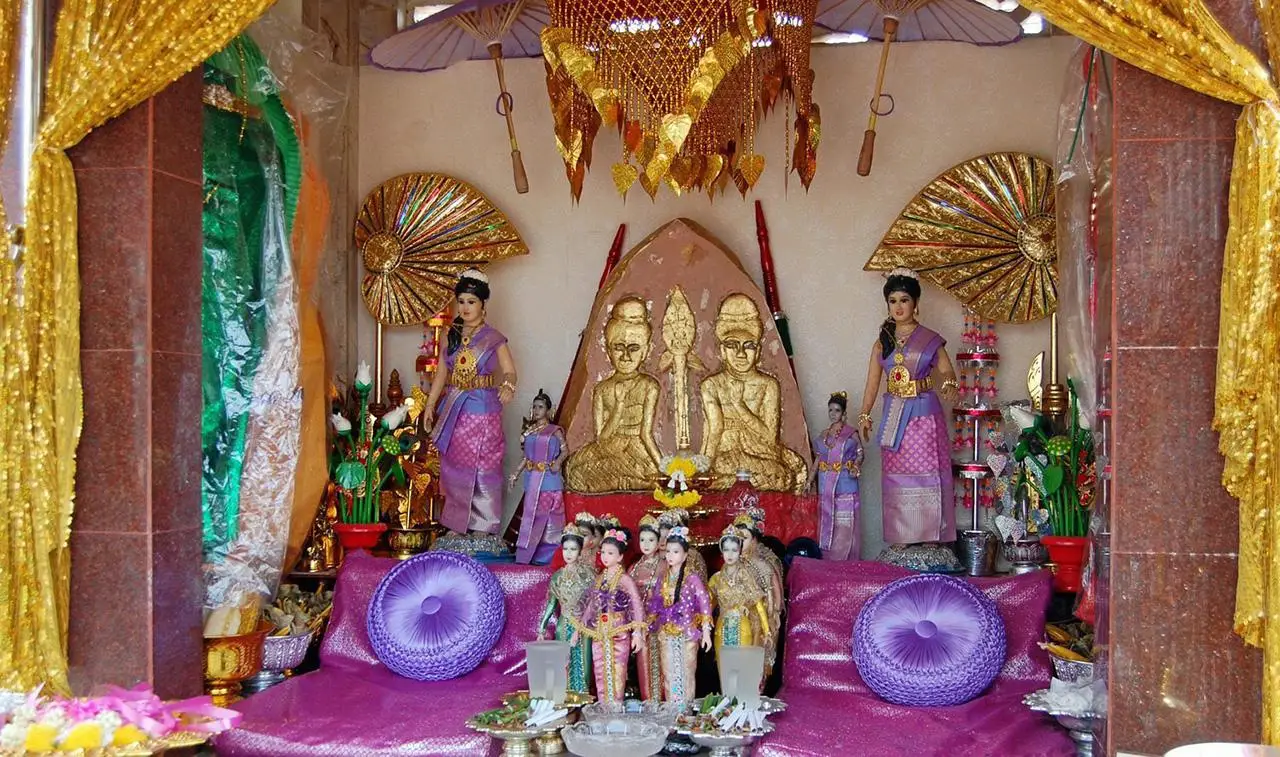
Chao Mae Song Nang Shrine
Open Days: Daily
Opening Hours: 07.30 – 19.00
Chao Mae Song Nang Shrine in Bueng Kan Province is one of the most meaningful sacred community shrines in northeastern Thailand. Located in Moo 1, Ban Bueng Kan Klang, Bueng Kan Subdistrict, Mueang Bueng Kan District, Bueng Kan 38000, the shrine stands in the town area near Bueng Kan Hospital. Its central location makes it an easy and worthwhile stop for visitors who want to understand the spiritual identity of Bueng Kan before continuing to the Mekong riverside, local markets, temples, wetlands, and natural attractions around the province.
This shrine is deeply connected with the way of life of people living along the Mekong River. For generations, the communities of Bueng Kan have relied on water for fishing, farming, river travel, local trade, and everyday living. Chao Mae Song Nang is therefore not only a sacred figure people visit for personal blessings, but also a symbol of the relationship between the community, the river, nature, and traditional moral order. The shrine reflects how local people respect water as both a life-giving force and a powerful natural presence.
For travelers who want to experience Bueng Kan beyond scenic viewpoints, Chao Mae Song Nang Shrine offers a valuable cultural starting point. The Mekong River is not merely a landscape here. It is a route of movement, a source of food, a borderland, a commercial path, and a spiritual space. In local belief, dangers connected with the river were often understood through the presence of sacred water spirits and protective forces. This belief helped shape rituals, offerings, and community practices that continue to influence local identity.
The main story of Chao Mae Song Nang is linked with Chao Pu Pha Khao Kut Thing and the family of Chi Pha Khao Phrom. According to community oral history, during a period when people migrated along the Mekong River to escape conflict, one group settled around the fertile water sources of Bueng Kan. The area offered good conditions for farming, fishing, and community life. Among the early family lines remembered in the story were Khun Han, Ya Pho Phrom, and Ya Pho Pho. Over time, the settlement expanded into local neighborhoods known by direction, including the northern, central, and southern community clusters.
Phor Thao Phrom is an important figure in the local narrative. He was remembered as a man with spiritual knowledge who helped people suffering from illness and hardship. During the migration along the Mekong River, his elderly wife passed away, leading him to live as a white-robed ascetic. After arriving in Bueng Kan, he settled in the central community area. He was later associated with Kut Thing, a wetland area that was once covered with dense forest and surrounded by beliefs about spirits and unseen forces. Local people invited him to stay near Don Ho close to Kut Thing to help protect the area and calm harmful forces.
After Phor Thao Phrom passed away, villagers built a shrine for the spirit of Chi Pha Khao Phrom. His 2 daughters, Nang Sao Phao and Nang Sao Lao, lived in the community until old age and eventually passed away as well. The villagers then built a shrine for the spirits of the 2 women, and the place became known as San Song Nang, or the Shrine of the Two Ladies. Over time, it became widely known as Chao Mae Song Nang Shrine.
The sacred reputation of Chao Mae Song Nang remains strong among local residents. People visit the shrine to seek protection, safe journeys, good health, family well-being, good fortune, and success in work or business. The shrine is especially meaningful for people whose lives are connected with the Mekong River and water-based occupations. For visitors passing through Bueng Kan town, paying respect here is a common way to begin a trip with a sense of blessing and cultural connection.
What makes Chao Mae Song Nang Shrine distinctive is its role as a living cultural space. Visitors do not come only to make offerings; they also encounter a belief system that reveals how people in a Mekong border town understand land, water, ancestry, community ethics, and protection. The belief in Chao Mae Song Nang has helped local people maintain respect for public waterways, wetlands, canals, and natural surroundings. In this sense, the shrine is connected not only with faith, but also with local environmental awareness and community order.
The shrine is associated with important seasonal rituals. Two traditional practices are known as Liang Long and Liang Khuen. Liang Long takes place before the rice farming season, around the sixth lunar month, when villagers ask Chao Mae Song Nang to protect their fields, rainfall, water sources, and crops. Liang Khuen takes place after the harvest, when the community gives thanks for protection and agricultural abundance. These rituals show how strongly the shrine is tied to farming cycles and the seasonal rhythm of rural life.
In addition to the seasonal rituals, an annual worship ceremony is held around November. This gathering brings together devotees, local residents, officials, and community groups. The ceremony is not only about personal wishes; it is a collective act of gratitude, remembrance, and cultural continuity. It keeps the story of Chao Mae Song Nang alive while strengthening the shared identity of Bueng Kan people.
Visitors usually come to the shrine to pray for safe travel, protection, health, family happiness, prosperity, and a smooth life path. The shrine is also a convenient stop before visiting other key attractions in and around Bueng Kan, such as Wat Photharam, Nong Kut Thing, Kaeng A Hong, the Mekong riverside, and Bueng Kan Walking Street. Because the shrine is located in town, it can easily be included in a half-day or full-day itinerary.
The atmosphere around the shrine is practical and accessible. It is set within an urban community area close to roads, the hospital, local shops, government offices, restaurants, accommodation, and transport connections. Travelers arriving by private car can navigate toward Bueng Kan Hospital and Chao Mae Song Nang Road. Those arriving by bus can continue from Bueng Kan Bus Terminal by local transport or taxi. The short distance from the town center makes the shrine suitable for families, elderly travelers, and first-time visitors.
Getting There is straightforward. From Bueng Kan town or Bueng Kan Bus Terminal, head toward Bueng Kan Hospital and the Chao Mae Song Nang Road area. The shrine is in a visible community location near the hospital. Visitors traveling along the Mekong riverside can stop here before continuing to the riverside walking area, the Thai-Lao Market, Wat Photharam, or Nong Kut Thing.
The best time to visit is in the morning or late afternoon, when the weather is more comfortable and the visit can be combined with a riverside walk. Travelers who want to experience local culture more deeply may visit during the annual ceremony in November, while general worship can be done daily during opening hours. Visitors should dress politely, behave respectfully, and remember that this is a sacred place for the local community rather than a purely touristic landmark.
Culturally, Chao Mae Song Nang Shrine helps explain Bueng Kan in a way that famous natural attractions alone cannot. While many visitors know the province for Phu Tok, Hin Sam Wan, wetlands, and the Mekong River, this shrine reveals the spiritual foundation of the town. Its story brings together migration, settlement, ancestral memory, protective spirits, water-based livelihoods, and moral customs. For foreign visitors, it can be understood as a sacred community shrine associated with local guardians, ancestral reverence, and seasonal rituals.
Chao Mae Song Nang Shrine works well as the first stop on a Bueng Kan town itinerary. Visitors can begin with worship at the shrine, continue to the Mekong riverside and the local walking street, visit Wat Photharam and Luang Pho Phra Yai, and then travel onward to Nong Kut Thing, a major wetland area. With more time, travelers can continue to Kaeng A Hong, Wat Ahong Silawat, Hin Sam Wan, or Wat Phu Tok in nearby districts.
For practical travel planning, the shrine is surrounded by useful services. Restaurants, cafés, accommodation, the hospital, and the bus station are all within easy reach. Nearby hotels such as The One Hotel Bueng Kan, B2 Bueng Kan Boutique and Budget Hotel, The Wisdom Residence, Century Grand Hotel, and M Grand Hotel make it convenient for travelers who want to stay overnight in town before continuing to more distant attractions the next morning.
Another important reason to visit this shrine is that it remains active in present-day community life. The annual ceremony, regular worship, local care, and continued public recognition show that Chao Mae Song Nang Shrine is not just a memory from the past. It continues to serve as a spiritual anchor for the people of Bueng Kan. Visitors should therefore approach the shrine as a meaningful cultural site and not merely as a quick photo stop.
During ordinary days, a visit can be short and simple, with time for worship and respectful observation. During the annual ceremony, visitors should allow more time because more people gather for offerings, rituals, merit-making, and local cultural activities. This is the best period to see the living connection between the shrine and the people of Bueng Kan.
Respectful conduct is essential. Visitors should keep their voices low, avoid obstructing pathways with offerings, take photographs appropriately, and help keep the area clean. Chao Mae Song Nang Shrine is a public sacred space valued by local residents. A respectful visit allows travelers to experience the shrine in both spiritual and cultural dimensions.
In summary, Chao Mae Song Nang Shrine is one of the clearest places to understand Bueng Kan through the beliefs of Mekong riverside communities. It brings together oral history, local faith, ritual practice, ancestral memory, water culture, and the identity of a border town. A visit here adds depth to any journey in Bueng Kan and prepares travelers to appreciate the province’s temples, wetlands, markets, and Mekong riverside life with greater cultural understanding.
| Name | Chao Mae Song Nang Shrine |
| Location | Moo 1, Ban Bueng Kan Klang, Bueng Kan Subdistrict, Mueang Bueng Kan District, Bueng Kan 38000, Thailand |
| Address | Near Bueng Kan Hospital in the town market area of Mueang Bueng Kan |
| Highlights | A sacred community shrine of Bueng Kan, closely connected with Mekong River life, local protection beliefs, safe travel, health, fortune, and blessings |
| History | The shrine is linked with local stories of early Mekong River migration, Chao Pu Pha Khao Kut Thing, Chi Pha Khao Phrom, and his 2 daughters, Nang Sao Phao and Nang Sao Lao, for whom villagers built the shrine known as San Song Nang |
| Name Origin | The name means the Shrine of the Two Ladies, referring to Nang Sao Phao and Nang Sao Lao, the 2 daughters of Chi Pha Khao Phrom |
| Distinctive Features | A living shrine connected with riverside faith, farming, fishing, seasonal rituals, and the moral customs of the Bueng Kan community |
| Important Rituals | Liang Long before the rice farming season, Liang Khuen after harvest, and the annual worship ceremony around November |
| Travel Information | Accessible by private car, taxi, or local transport in Bueng Kan town; the shrine is near Bueng Kan Hospital and a short ride from Bueng Kan Bus Terminal |
| Current Status | Open for public worship and recognized as an important attraction by Bueng Kan Municipality |
| Open Days | Daily |
| Opening Hours | 07.30 – 19.00 |
| Facilities | Urban shrine area close to Bueng Kan Hospital, restaurants, accommodation, transport links, and the Mekong riverside route |
| Main Areas / Zones | Shrine area, worship area, and ceremonial space used during annual rites |
| Caretaker / Related Organizations | Bueng Kan Municipality and Chao Mae Song Nang Shrine Association |
| Main Contact Number | 042-491-897 |
| Official Website / Official Page | Bueng Kan Municipality Website |
| Nearby Tourist Attractions | 1. Bueng Kan Hospital, about 0 km 2. Bueng Kan Mekong Walking Street, about 1 km 3. Thai-Lao Market Bueng Kan, about 2 km 4. Nong Kut Thing, about 5 km 5. Wat Photharam or Wat Luang Pho Phra Yai, about 5 km 6. Kaeng A Hong and Wat Ahong Silawat, about 21 km |
| Nearby Restaurants | 1. Noi Som Tum in Front of Bueng Kan Hospital, about 0 km, Tel. 081-546-7734 2. Nicha Steamed Dumplings & Buns in Front of Bueng Kan Hospital, about 0 km, Tel. 099-027-3785 3. Tam Yum Yua by Miki, Rim Khong Bueng Kan Branch, about 1 km, Tel. 082-689-1316 4. Riverside Restaurant & Bar Bungkan, about 2 km, Tel. 042-082-082, 087-222-9899 5. Krua Savoey, about 3 km, Tel. 091-363-1495 |
| Nearby Accommodations | 1. The One Hotel Bueng Kan, about 1 km, Tel. 042-492-234 2. B2 Bueng Kan Boutique and Budget Hotel, about 1 km, Tel. 052-009-161, 088-263-2897 3. Century Grand Hotel, about 1 km, Tel. 081-956-9141 4. The Wisdom Residence, about 2 km, Tel. 042-086-977 5. M Grand Hotel, about 7 km, Tel. 095-146-5363 |
Frequently Asked Questions (FAQ)
Q: Where is Chao Mae Song Nang Shrine located?
A: Chao Mae Song Nang Shrine is located in Moo 1, Ban Bueng Kan Klang, Bueng Kan Subdistrict, Mueang Bueng Kan District, Bueng Kan 38000, near Bueng Kan Hospital.
Q: What are the opening hours of Chao Mae Song Nang Shrine?
A: The shrine is open daily from 07.30 to 19.00.
Q: Why is Chao Mae Song Nang Shrine important to Bueng Kan?
A: It is a sacred community shrine connected with Mekong River life, local protection beliefs, safe travel, farming, fishing, and the spiritual identity of Bueng Kan.
Q: What does the name Chao Mae Song Nang mean?
A: The name refers to the 2 daughters of Chi Pha Khao Phrom, Nang Sao Phao and Nang Sao Lao, for whom villagers built a shrine known as San Song Nang.
Q: Are there annual rituals at the shrine?
A: Yes. The shrine is associated with seasonal rituals before rice farming and after harvest, as well as an annual worship ceremony around November.
Q: How can travelers get to the shrine?
A: Travelers can reach the shrine by private car, taxi, or local transport within Bueng Kan town by heading toward Bueng Kan Hospital and Chao Mae Song Nang Road.
Q: Which nearby attractions can be combined with a visit?
A: Visitors can combine the shrine with Bueng Kan Mekong Walking Street, the Thai-Lao Market, Nong Kut Thing, Wat Photharam, and Kaeng A Hong.
 Category: ●Places of Worship
 Group: ●Other Sacred Sites
Last Update : 2 MonthAgo
 Last Update : 2 MonthAgo
 Click to Access the Navigation Map GPS
Chao Mae Song Nang Shrine Map
Recommend

 Art, Culture and Heritage
 Landmarks and Memorials(1)
 Museums(1)
 Temple(12)
Other Sacred Sites(4)
Temple(12)
Other Sacred Sites(4)
 Suburban Living
 Local Market(1)
 Nature and Wildlife
 National Parks and Marine Reserves(1)
 Mountain (Doi)(3)
 Waterfalls(5)
 Caves(1)
 River, Canal(4)
 Bays and Beaches(1)
 Islands(1)
 Entertainment and Agricultural
 Waterpark(1)
 Shopping
 Shopping and Night Market(1)
 Travel Articles, Recipes
 Travel Review, Food Review(1)


