
lovethailand home >South Travel Attractions >Surat Thani Travel Attractions >Chai Ya >Wiang > Wat Phra Borommathat Chaiya Ratchaworawihan
TL;DR: Wat Phra Borommathat Chaiya Ratchaworawihan is located at Moo 3, Wiang Subdistrict, Chaiya District, Surat Thani Province, Thailand, open Daily, hours Temple Grounds 08.00 – 16.00; Chaiya National Museum 09.00 – 16.00.
Wat Phra Borommathat Chaiya Ratchaworawihan
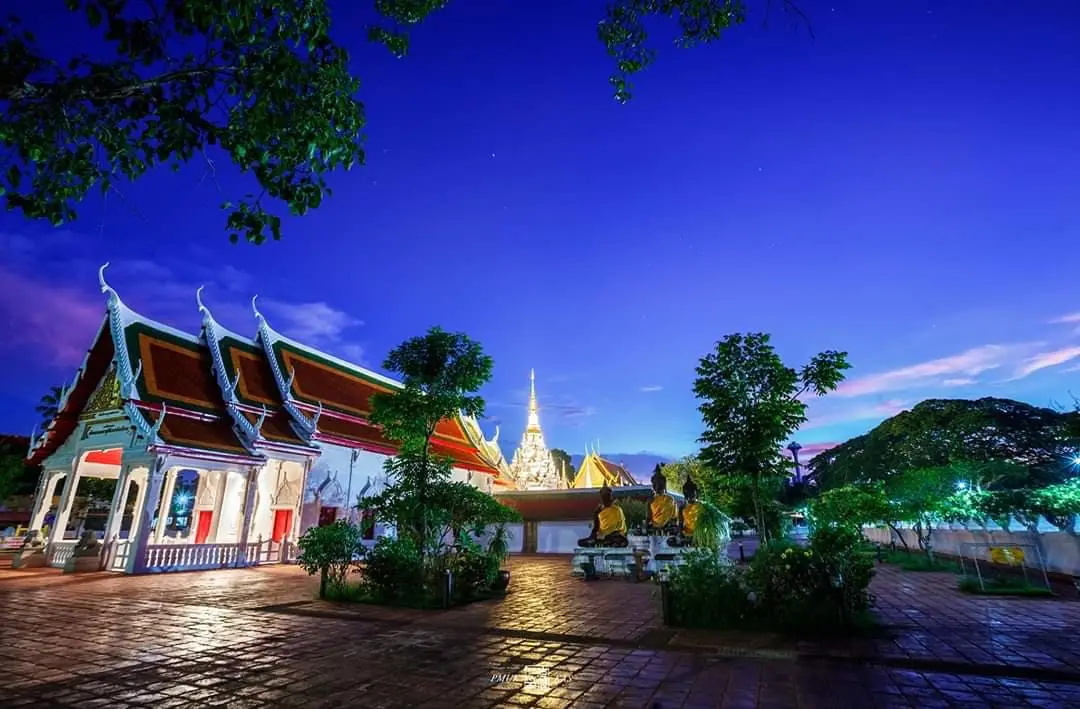
Open Days: Daily
Opening Hours: Temple Grounds 08.00 – 16.00; Chaiya National Museum 09.00 – 16.00, Wednesday–Sunday
Wat Phra Borommathat Chaiya Ratchaworawihan in Surat Thani Province is a first-class royal temple and one of the most important Buddhist sacred sites in southern Thailand. Located at No. 50, Rak Norakit Road, Moo 3, Wiang Subdistrict, Chaiya District, the temple enshrines Phra Borommathat Chaiya, a Srivijaya-style relic pagoda containing relics of the Buddha. The site is a major religious landmark, a key archaeological monument, and one of the clearest surviving examples of Srivijaya Buddhist art in Thailand.
The temple is deeply connected with the history of ancient Chaiya, a major cultural and religious center in the southern peninsula. The central chedi reflects Mahayana Buddhist influence during the Srivijaya period, when Chaiya was linked to maritime trade routes and Buddhist networks across Southeast Asia. For this reason, Wat Phra Borommathat Chaiya is not only a place for worship but also an important site for understanding the early cultural development of Surat Thani and the wider southern region.
The temple stands in Wiang Subdistrict, about 50–54 kilometers from Surat Thani city. It is accessible by Highway 41 and Highway 4011, or by train to Chaiya Railway Station followed by local transport. The site lies within an old settlement landscape connected with Khlong Chaiya, which runs along the southern and western sides of the temple area. This relationship between temple, waterway, and ancient community helps explain why Chaiya became such an important historical center.
The central Phra Borommathat Chaiya chedi is the heart of the temple. It is a brick-built Buddhist pagoda in the Srivijaya style, traditionally associated with Mahayana Buddhism. The structure has a cruciform square base, four projecting porticoes, tiers that rise in decreasing stages, and a distinctive upper section ending in an octagonal bell-shaped element and spire. Around it are smaller stupas at the cardinal directions and a cloistered gallery that houses old Buddha images on all four sides.
The visual power of the chedi comes from both its form and its meaning. The white structure with golden details stands in the open courtyard as the focal point of the temple. It is not merely decorative architecture; it is a sacred reliquary containing Buddha relics and a living focus of local devotion. Visitors often walk around the courtyard, make offerings, pay respect, and take time to observe the architectural details that distinguish this monument from later central Thai temple architecture.
Wat Phra Borommathat Chaiya is recognized as one of the most complete surviving examples of Srivijaya art in Thailand. The central chedi is built of brick and decorated with lacquer, gilding, and ornamental details. Its stepped form, cruciform plan, and layered superstructure connect the monument to architectural traditions across maritime Southeast Asia. For travelers interested in Buddhist art, the site is one of the most rewarding temples in southern Thailand.
The cloister surrounding the chedi gives the temple a strong ritual and spatial structure. It frames the sacred area and provides a place for visitors to walk, reflect, and pay respect to Buddha images placed around the four sides. This enclosed layout creates a sense of moving inward toward the sacred center. It also allows visitors to experience the temple not only as a monument to be photographed, but as a functioning Buddhist space designed for worship.
The ordination hall of the temple was completed in 1958. It is built in Thai architectural form and follows the line of an older ordination area, but with an enlarged plan. A notable feature is that the hall faces west, unlike many ordination halls that face east. This orientation allows worshippers, when bowing to the principal Buddha image, to also direct their reverence toward the Buddha relics enshrined in the central chedi behind it. This planning reinforces the central role of the relic pagoda within the temple.
The central viharn stands to the east of the chedi and extends into the cloistered area. It underwent major restoration in the time of Phra Chayaphiwat in 1901 and was later rebuilt on the same site in 1959, while preserving key Buddha images and wall elements behind them. The structure shows how the temple has been repaired and renewed across time while still preserving its relationship with the sacred chedi.
The archaeological value of Wat Phra Borommathat Chaiya is high. The site was registered as an ancient monument by the Fine Arts Department in 1936. Archaeological data indicates use of the area from around the 14th–15th Buddhist centuries, followed by later use during the Ayutthaya period and multiple restorations in subsequent periods. This long continuity makes the temple an important record of religion, settlement, and cultural change in Chaiya.
Many scholars and historians have studied Phra Borommathat Chaiya, including Thai religious figures, members of the royal scholarly tradition, and international researchers of Southeast Asian art. Their studies have examined the architecture, sculptures, inscriptions, and associated monuments in Chaiya, including Wat Kaeo, Wat Long, and other nearby ancient sites. Together, these studies confirm Chaiya as a major center of Srivijaya-period culture in southern Thailand.
One of the most important figures in the preservation of the temple was Phra Chayaphiwat Suphatrasangkhapamok, also known as Nu Tisso. He played a major role in restoring Phra Borommathat Chaiya during 1896–1901. Without such restoration efforts, the chedi might not have remained in the strong and graceful condition seen today. His contribution is therefore central to the modern preservation history of the site.
Inside the temple compound is the Chaiya National Museum, which gives visitors a deeper understanding of the historical context. The museum displays stone and bronze sculptures, Hindu and Buddhist objects, images connected with Avalokitesvara, Buddha images, ceramics, ornaments, and fine art objects found in the Chaiya area. A visit to the museum is highly recommended after seeing the chedi because it explains the wider Srivijaya and ancient Chaiya context through objects and interpretation.
Wat Phra Borommathat Chaiya remains an active religious center. It hosts important ceremonies, especially the annual cloth-wrapping procession for the chedi and candlelight procession during Visakha Bucha. The temple is also used for cultural tourism events connected with Srivijaya heritage. These activities keep the site alive as a place of worship and community identity, not merely an ancient monument.
The current abbot is Phra Khru Phithak Chetayanukun. The temple continues to house resident monks and support religious education, including a Buddhist scripture school. The compound includes the chedi courtyard, cloister, ordination hall, central viharn, preaching hall, monks’ residences, Chaiya National Museum, parking area, restrooms, and visitor service points. This makes the temple suitable for both religious visits and structured cultural learning.
A meaningful visit should begin at Phra Borommathat Chaiya itself. After paying respect to the relic pagoda, visitors can walk around the cloister, observe the old Buddha images, visit the ordination hall and central viharn, and then continue to the Chaiya National Museum. This order of visiting helps reveal the temple in three layers: devotion, architecture, and historical context.
The best time to visit is in the morning, when the weather is cooler and the light falls gently on the white and gold chedi. Visitors who want to enter the Chaiya National Museum should check museum opening days, as it operates separately from the temple grounds. The temple area is open daily, while the museum normally opens Wednesday to Sunday from 09.00 to 16.00.
Visitors should dress respectfully, speak quietly, and avoid touching old Buddha images or archaeological elements unnecessarily. Do not climb on the chedi base, place items on ancient structures, or disturb worshippers. Wat Phra Borommathat Chaiya is both an active temple and a nationally important heritage site, so proper conduct is part of preserving the dignity of the place.
Getting There from Surat Thani city is straightforward. Take Highway 41 toward Chaiya District, then turn onto Highway 4011 toward Chaiya town. The temple is on the right-hand side after entering the town route. Visitors traveling by train can get off at Chaiya Railway Station and continue by local transport. The temple can be combined easily with Chaiya National Museum, Wat Long, Wat Rattanaram or Wat Kaeo, Suan Mokkhaphalaram, and Phumriang community.
Wat Phra Borommathat Chaiya Ratchaworawihan is worth visiting in every season. It offers a complete cultural experience: sacred worship, Srivijaya architecture, archaeological depth, museum learning, and the atmosphere of old Chaiya. For travelers who want to understand Surat Thani beyond beaches, islands, and natural attractions, this temple is one of the most important places in the province.
| Name | Wat Phra Borommathat Chaiya Ratchaworawihan |
| Location | Moo 3, Wiang Subdistrict, Chaiya District, Surat Thani Province, Thailand |
| Address | No. 50, Rak Norakit Road, Moo 3, Wiang Subdistrict, Chaiya District, Surat Thani 84110, Thailand |
| Coordinates | 9.384551, 99.184365 |
| Highlights | Phra Borommathat Chaiya, Srivijaya-style relic chedi, Buddha relics, cloistered gallery, old Buddha images, Chaiya National Museum, and annual cloth-wrapping ceremony |
| History | A Srivijaya-period ancient site with evidence of use from around the 14th–15th Buddhist centuries, with later use and restoration during subsequent periods |
| Temple Status | First-Class Royal Temple, Ratchaworawihan type, under the Mahanikaya order, and a registered ancient monument of the Fine Arts Department |
| Distinctive Features | Srivijaya-style brick chedi with a cruciform square base, four porticoes, three rising tiers, an octagonal bell-shaped element, and a cloister on all four sides |
| Important Sacred Objects | Phra Borommathat Chaiya, Buddha relics, ordination hall, central viharn, main viharn, cloister, old Buddha images, preaching hall, Buddhist scripture school, and Chaiya National Museum |
| Main Areas / Zones | Relic Chedi Courtyard, Cloister, Ordination Hall, Central Viharn, Chaiya National Museum, Preaching Hall, Monks’ Residences, Parking Area, Restrooms, Visitor Service Point |
| Temple Area | About 42 rai and 1 ngan |
| Current Abbot | Phra Khru Phithak Chetayanukun |
| Traditions / Activities | Annual cloth-wrapping procession for Phra Borommathat Chaiya, Visakha Bucha candlelight ceremony, and Srivijaya cultural tourism events |
| Current Status | Open for worship, merit-making, relic veneration, Srivijaya art study, and cultural visits |
| Open Days | Daily |
| Opening Hours | Temple Grounds 08.00 – 16.00; Chaiya National Museum 09.00 – 16.00, Wednesday–Sunday |
| Admission Fee | Temple grounds are free; Chaiya National Museum is separately ticketed |
| Main Contact Number | 077-431-090, 077-431-402, 086-591-0979 |
| Travel Information | From Surat Thani city, take Highway 41 toward Chaiya District, then Highway 4011 into Chaiya town. The temple is about 50–54 km from Surat Thani city |
| Nearby Tourist Attractions | 1. Chaiya National Museum, about 100 m 2. Wat Long, about 700 m 3. Wat Rattanaram / Wat Kaeo, about 1 km 4. Suan Mokkhaphalaram, about 4 km 5. Phumriang Community / Phumriang Silk, about 8 km 6. Laem Pho / Laem Chui, about 12 km |
| Nearby Restaurants | 1. Krua Phi Yoon Chaiya, about 100 m, Tel. 084-625-9929 2. Sabiang Chaiya, about 200 m, Tel. 093-357-3753 3. Baan Phak Wan Cafe & Restaurant, about 2 km, Tel. 063-242-6595, 077-431-500 4. Krua Manorom, about 2 km, Tel. 095-418-9515 5. Ruean Chaiya, about 3 km, Tel. 081-821-9022 |
| Nearby Accommodations | 1. JP Place, about 1 km, Tel. 096-296-4246 2. Suwan Wan Resort, about 5 km, Tel. 077-310-393 3. Krua Chaiya Surat Thani, about 5 km, Tel. 086-316-8888 4. Happy House Resort, about 6 km, Tel. 086-685-9459 5. Phupha Resort Chaiya, about 8 km, Tel. 085-785-0671 |
Frequently Asked Questions (FAQ)
Q: Where is Wat Phra Borommathat Chaiya Ratchaworawihan located?
A: The temple is located at No. 50, Rak Norakit Road, Moo 3, Wiang Subdistrict, Chaiya District, Surat Thani Province, about 50–54 kilometers from Surat Thani city.
Q: What are the opening days and hours of Wat Phra Borommathat Chaiya?
A: The temple grounds are open daily from 08.00 to 16.00. Chaiya National Museum is open Wednesday to Sunday from 09.00 to 16.00.
Q: Is there an admission fee at Wat Phra Borommathat Chaiya?
A: The temple grounds are free to enter. Chaiya National Museum, located in the temple compound, is separately ticketed.
Q: Why is Phra Borommathat Chaiya important?
A: It is a Srivijaya-style relic chedi enshrining Buddha relics, a major sacred site of Surat Thani, and one of Thailand’s most important surviving examples of Srivijaya Buddhist art.
Q: What can visitors see inside the temple compound?
A: Visitors can see Phra Borommathat Chaiya, the cloister, old Buddha images, the ordination hall, the central viharn, the Buddhist scripture school, and Chaiya National Museum.
Q: What is the main annual ceremony at the temple?
A: The important ceremony is the cloth-wrapping procession for Phra Borommathat Chaiya and the Visakha Bucha candlelight ceremony.
Q: How can visitors get to Wat Phra Borommathat Chaiya?
A: From Surat Thani city, take Highway 41 toward Chaiya District, then Highway 4011 into Chaiya town. Visitors can also travel by train to Chaiya Railway Station and continue by local transport.
Q: What nearby places can be visited with Wat Phra Borommathat Chaiya?
A: Nearby places include Chaiya National Museum, Wat Long, Wat Rattanaram or Wat Kaeo, Suan Mokkhaphalaram, Phumriang community, and Laem Pho.
Tel : 077431090, 077431402
 Tel : 077431090, 077431402
Mobile : 0865910979
 Mobile : 0865910979
 Category: ●Places of Worship
 Group: ●Temple
Last Update : 2 MonthAgo
 Last Update : 2 MonthAgo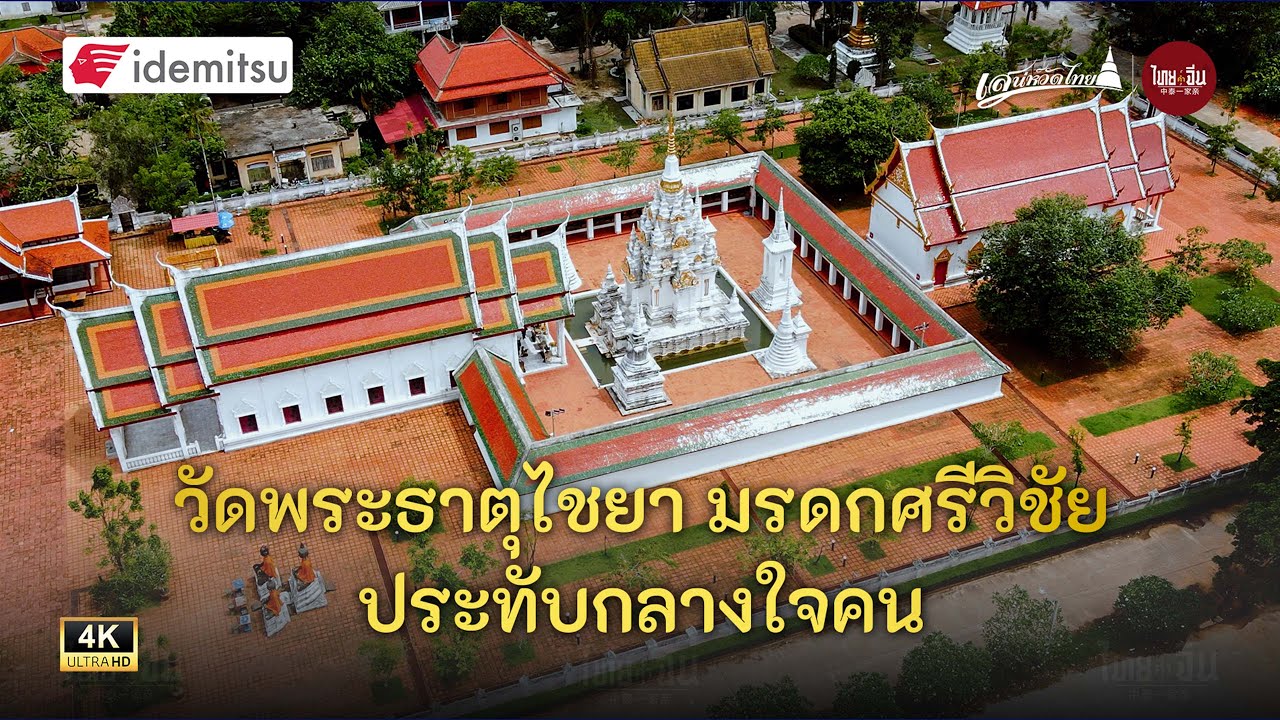
 Click to Access the Navigation Map GPS
Wat Phra Borommathat Chaiya Ratchaworawihan Map
Gellery
Recommend

 Art, Culture and Heritage
 Landmarks and Memorials(1)
 Art, Craft Centres, Tradition(8)
 Museums(5)
 Educational Places
 Educational Gardens, Farm(1)
Temple(32)
Educational Gardens, Farm(1)
Temple(32)
 Other Sacred Sites(8)
 Research and Development
 Royal Project(1)
 Suburban Living
 Village, Community(6)
 Local Market(1)
 Nature and Wildlife
 National Parks and Marine Reserves(8)
 Mountain (Doi)(2)
 Dam, Reservoir, Lake(8)
 Waterfalls(34)
 Hot Springs(7)
 Caves(18)
 River, Canal(11)
 Bays and Beaches(30)
 Islands(16)
 Other natural attractions(10)
 Entertainment and Agricultural
 Animal camps and shows(6)
 Farms, Parks and Ecotourism(7)
 Outdoor and Adventure Activities(2)
 Shopping
 Shopping and Night Market(1)
 Travel Articles, Recipes
 Travel Review, Food Review(1)
 Southern Food Menu, Southern Food Recipes(1)


