
lovethailand home >South Travel Attractions >Songkhla Travel Attractions >Muang Songkhla >Koh Yo > Wat Thai Yo
TL;DR: Wat Thai Yo is located at Moo 8, Ko Yo Subdistrict, Mueang Songkhla District, Songkhla Province, open Daily, hours 08.00–17.00.
Wat Thai Yo
Open Days: Daily
Opening Hours: 08.00–17.00
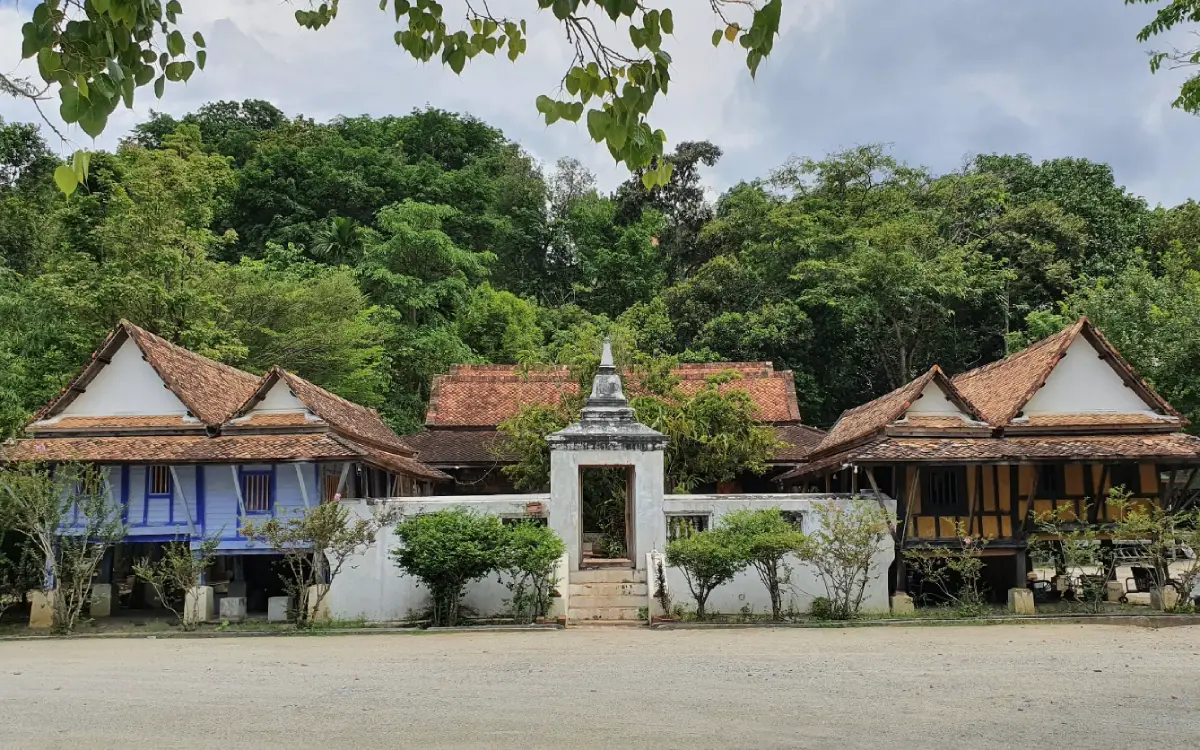
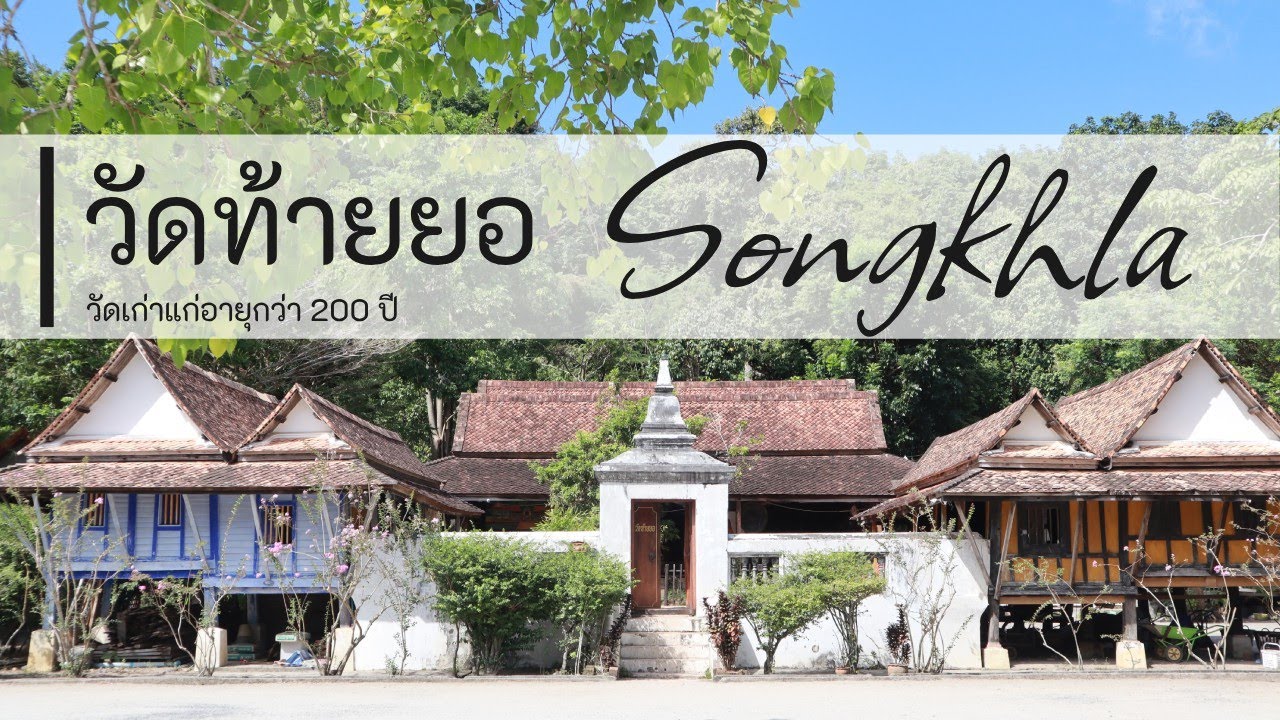
Wat Thai Yo in Songkhla Province is one of the most important historic temples on Ko Yo, an island community in Songkhla Lake. Located in Moo 8, Ko Yo Subdistrict, Mueang Songkhla District, the temple was officially recognized as a Buddhist monastery in 1768. Wat Thai Yo is valued for its old Southern Thai architecture, its more-than-200-year-old Thai-style timber monk residence with a hip roof, its ancient wells and pond, its boat house, its bell tower, traces of an old pier, and the Lanka-style chedi on Khao Phehan or Khao Wihan behind the temple.
Wat Thai Yo is best suited for travelers who want to understand Ko Yo beyond lakeside restaurants and scenic views. The temple tells the story of an island community shaped by Buddhism, local craftsmanship, lake transportation, clay roof tiles, timber architecture, and the cultural landscape of Songkhla Lake. It is not a large and flashy attraction. Its value lies in quiet details: the way the old monk residence is built, the use of Ko Yo clay tiles, the position of the temple near the lake, and the hilltop chedi that connects faith with the natural terrain.
The most distinctive feature of Wat Thai Yo is the old Thai-style monk residence with a panya, or hip, roof. The building is more than 200 years old and preserves a Southern Thai construction method that is increasingly rare. Its roof uses Ko Yo clay tiles and old corrugated tiles. The support posts are not buried into the ground; instead, they stand on separate footings. This method helped protect wooden structures from moisture and reflects practical local knowledge developed for a landscape of rain, wind, humidity, and lakeside settlement.
The old monk residence is also connected with traditional ideas of house-building known as ruean sut, mongkhon sut, and mattra sut. These principles shaped the proportions, orientation, timing, and symbolic qualities of traditional buildings. At Wat Thai Yo, the monk residence is described as a group of 3 houses known in local interpretation as the father, mother, and child form. In earlier times, such carefully constructed houses were usually associated with people of status, local leaders, or abbots rather than ordinary houses. Its survival inside an active temple gives the building architectural, social, and cultural importance.
The use of Ko Yo clay roof tiles is another important detail. These tiles connect the temple to local craft production and the island’s material culture. The old roof materials show that temple architecture on Ko Yo was not only influenced by religious belief but also by local resources, local makers, and practical adaptation to climate. Visitors should look closely at the roof form, the timber structure, the raised posts, and the relationship between the residence and the surrounding temple courtyard.
Behind Wat Thai Yo rises Khao Phehan, also called Khao Wihan. On this hill stands an elegant Lanka-style chedi, one of the temple’s most important historic monuments. The chedi is a brick-and-plaster bell-shaped structure decorated with stucco patterns created by southern local craftsmen. On the eastern side, an entrance leads into a chamber containing a Buddha image. The hilltop setting gives the monument a sacred presence and helps visitors understand how older temple landscapes often used elevated ground for religious structures.
The chedi on Khao Phehan was registered as a national historic monument on 15 September 1997. It was later restored and the surrounding landscape was improved during 2001–2002. This official recognition confirms that Wat Thai Yo is not only a community temple but also a heritage site of national importance. Visitors walking up to the chedi should be careful, respect the sacred area, and avoid touching or climbing on historic structures.
Local historical interpretation suggests that the hilltop area may once have been the site of an older ordination hall. Around the middle of the 25th Buddhist century, the ordination hall was moved down to the lower area at the foot of the hill. A chedi was then built over Luang Pho Dam, the principal Buddha image of the former ordination hall. This gives Wat Thai Yo archaeological and historical depth, because the temple layout reflects change over time in response to use, terrain, and religious practice.
The present ordination hall of Wat Thai Yo has a simple and dignified character. It fits the atmosphere of an old island temple rather than a heavily decorated urban monastery. The interior of the ordination hall is not normally open at all times. Visitors who wish to see the inside should contact the temple in advance. This is important because the building remains a religious space and must be treated with respect.
The old wells and ancient pond inside the temple compound are important evidence of community life. In old village temples, water sources were not only practical facilities but part of a shared social system. They supported daily life, religious ceremonies, gatherings, and community use. At Wat Thai Yo, these water features remind visitors that the temple once functioned as a center of life for the island community, not only as a place for worship.
The boat house and traces of an old pier are especially meaningful because they connect Wat Thai Yo with the historical role of Songkhla Lake as a transportation route. Before roads and bridges made travel easier, people on Ko Yo relied heavily on boats to reach Songkhla town and other lakeside communities. The old pier area shows a time when water was the road, the temple was a landing point, and the lake shaped daily movement, trade, and community contact.
The bell tower completes the atmosphere of the old temple compound. Temple bells traditionally marked time, announced religious activities, and gathered the community. Seen together with the timber monk residence, ordination hall, chedi, wells, pond, boat house, and old pier, the bell tower helps visitors understand Wat Thai Yo as a complete local monastery shaped by both faith and everyday island life.
For cultural travelers, Wat Thai Yo is a valuable open-air learning site. It explains Southern Thai timber architecture, Ko Yo clay tiles, sacred hilltop space, local water management, and old lake transportation in a single location. Students, architecture enthusiasts, heritage travelers, and visitors interested in local history should allow enough time to walk slowly through the compound and read the temple through its details.
Wat Thai Yo is open daily from 08.00 to 17.00. The chedi can be visited daily, while the ordination hall and abbot’s residence should be approached with permission from the temple if visitors wish to see the interior. This distinction is important because Wat Thai Yo is both a heritage attraction and an active Buddhist monastery. Visitors should respect public areas and monastic areas differently.
Wat Thai Yo remains a living temple with ongoing Buddhist activities for the Ko Yo community. Phra Khru Phimonthamprayut serves as the abbot of Wat Thai Yo. The temple continues to support merit-making, Buddhist observances, and local religious activities. This continuity gives the temple life beyond its historic buildings. Wat Thai Yo is not an abandoned monument; it is a working monastery with important heritage value.
Visitors should follow proper temple etiquette. Dress modestly, keep voices low, avoid climbing on old buildings or the chedi, do not touch old timber or stucco details unnecessarily, and do not enter the monk residence or ordination hall without permission. If taking photographs near monastic areas, ask first. Responsible behavior helps preserve both the temple’s heritage and its role as a place of worship.
The best time to visit Wat Thai Yo is in the morning or late afternoon, when the weather is more comfortable and the light is suitable for viewing timber architecture and lake scenery. Ko Yo can be sunny and humid, so visitors planning to walk to the hilltop chedi should bring drinking water, wear comfortable shoes, and be careful on wet paths after rain.
A visit to Wat Thai Yo fits naturally into a Ko Yo cultural route. Travelers can start with Wat Phra Non Laem Pho or Tinsulanonda Bridge, continue to Wat Thai Yo, then visit the Institute for Southern Thai Studies, Ko Yo viewpoints, Wat Khao Bo, and lakeside restaurants. This route gives a full picture of Ko Yo through temples, local architecture, lake scenery, food, and community life.
Getting There is easiest by private car or local hired transport. From Songkhla city, take Highway 408, also known as Kanchanawanit Road, toward Ko Yo. After crossing the first section of Tinsulanonda Bridge onto Ko Yo, continue for about 1.2 km. At the junction, turn left onto Rural Road SK 3068 and continue for about 2.1 km. At the next junction connected to Rural Road SK 3069, turn left and continue for about 500 meters to reach Wat Thai Yo. The route passes through local community roads, so visitors should drive carefully.
Travelers coming from Hat Yai can drive toward Songkhla, enter Ko Yo via Tinsulanonda Bridge, and follow the island road to Wat Thai Yo. A private car is the most convenient option because Ko Yo’s temples, viewpoints, restaurants, and cultural sites are spread across different parts of the island.
Wat Thai Yo offers a different experience from Songkhla’s more famous attractions. It does not have the beach atmosphere of Samila Beach, the colorful street scenes of Songkhla Old Town, or the large visual landmark of Wat Phra Non Laem Pho. Instead, it offers depth: old Southern Thai architecture, a rare timber monk residence, a hilltop chedi, traces of lake transport, and a strong relationship between temple and community.
The importance of Wat Thai Yo lies in how it preserves Ko Yo’s cultural memory. The old panya-roof monk residence tells the story of Southern Thai building wisdom. The Khao Phehan chedi tells the story of faith and sacred geography. The ancient wells and pond tell the story of community life. The boat house and old pier tell the story of lake travel. Together, these elements make Wat Thai Yo one of the most meaningful cultural stops in Songkhla Province.
| Name | Wat Thai Yo |
| Location | Moo 8, Ko Yo Subdistrict, Mueang Songkhla District, Songkhla Province |
| Address | 19 Moo 8, Ko Yo Subdistrict, Mueang Songkhla District, Songkhla 90100, Thailand |
| Coordinates | 7.155148, 100.532383 |
| Highlights | More-than-200-year-old Thai-style monk residence with a hip roof, Ko Yo clay tiles, Khao Phehan chedi, ancient wells, old pond, boat house, bell tower, and traces of an old pier |
| History | Officially recognized as a temple in 1768, with historic structures more than 200 years old and a hilltop chedi linked to Rattanakosin-period local craftsmanship |
| Name Origin | The name Wat Thai Yo is associated with its position toward the end of Ko Yo. Other names found in historical references include Wat Thai So and Wat Khongkhawadi. |
| Distinctive Features | Historic island temple beside Songkhla Lake, known for Southern Thai timber architecture, a hilltop chedi, and evidence of old lake transportation |
| Travel Information | From Songkhla city, take Highway 408 across Tinsulanonda Bridge to Ko Yo, then continue via Rural Roads SK 3068 and SK 3069 to reach the temple. |
| Current Status | An active Buddhist temple and cultural heritage attraction of Ko Yo |
| Open Days | Daily |
| Opening Hours | 08.00–17.00 |
| Fees | Free admission |
| Main Areas / Zones | Thai-style panya-roof monk residence, ordination hall, timber monk residences, ancient wells, old pond, boat house, stupa, bell tower, old pier traces, Khao Phehan or Khao Wihan, and the Lanka-style hilltop chedi |
| Abbot / Caretaker | Phra Khru Phimonthamprayut |
| Main Contact Number | 074-893-354 |
| Visitor Notes | The chedi is open daily. The ordination hall and abbot’s residence should be entered only after contacting the temple. |
| Nearby Tourist Attractions | 1. Institute for Southern Thai Studies, about 3 km 2. Ko Yo Viewpoint, about 3 km 3. Wat Phra Non Laem Pho, about 5 km 4. Tinsulanonda Bridge, about 5 km 5. Wat Khao Bo, about 6 km 6. Samila Beach, about 16 km |
| Nearby Restaurants | 1. Koh Yor De Lagoon Restaurant, about 1 km, Tel. 090-676-2404 2. Rai Thong Restaurant Ko Yo, about 4 km, Tel. 062-359-9963 3. Mahadsajan Ko Yo, about 5 km, Tel. 095-632-4466 4. Khunjit Seaview, about 5 km, Tel. 074-591-556 5. Sirada Ko Yo, about 6 km, Tel. 074-450-235, 081-963-8135 6. Nam Kieng Din Ko Yo, about 7 km, Tel. 082-179-9709 |
| Nearby Accommodations | 1. Rueanraek Homestay Ko Yo, about 1 km, Tel. 081-898-3341 2. Greenery Hill Resort @ Koyo, about 3 km, Tel. 082-889-9941 3. The Lake House Ko Yo, about 5 km, Tel. 086-965-2382 4. Laguna Grand Hotel & Spa Songkhla, about 12 km, Tel. 074-272-100 5. Songkhla KeeRee Resort, about 16 km, Tel. 099-163-3310 6. B Brand Hotel, about 17 km, Tel. 093-615-6688 |
Frequently Asked Questions (FAQ)
Q: Where is Wat Thai Yo located?
A: Wat Thai Yo is located at 19 Moo 8, Ko Yo Subdistrict, Mueang Songkhla District, Songkhla Province 90100, on Ko Yo in Songkhla Lake.
Q: Is Wat Thai Yo open daily?
A: Yes. Wat Thai Yo is open daily from 08.00 to 17.00.
Q: Is there an admission fee?
A: No. Admission is free.
Q: What is Wat Thai Yo best known for?
A: Wat Thai Yo is best known for its more-than-200-year-old Thai-style panya-roof monk residence, Ko Yo clay tiles, support posts resting on footings, the Lanka-style chedi on Khao Phehan, and traces of the old pier used by the Ko Yo community.
Q: Why is Khao Phehan important?
A: Khao Phehan is the hill behind the temple where a Lanka-style chedi stands. The hilltop chedi is a registered national historic monument and an important example of southern local craftsmanship.
Q: Can visitors enter the ordination hall and abbot’s residence?
A: The ordination hall is not normally open at all times, and the abbot’s residence is part of the monastic area. Visitors should contact the temple before entering these interiors.
Q: Who is the abbot of Wat Thai Yo?
A: Phra Khru Phimonthamprayut serves as the abbot of Wat Thai Yo.
Q: What nearby places can visitors see after Wat Thai Yo?
A: Nearby places include the Institute for Southern Thai Studies, Ko Yo Viewpoint, Wat Phra Non Laem Pho, Tinsulanonda Bridge, Wat Khao Bo, lakeside restaurants on Ko Yo, and Samila Beach.
 Category: ●Places of Worship
 Group: ●Temple
Last Update : 3 MonthAgo
 Last Update : 3 MonthAgo
 Click to Access the Navigation Map GPS
Wat Thai Yo Map
Recommend

 Art, Culture and Heritage
 Historical Sites and Monuments(2)
 Landmarks and Memorials(7)
 Royal Palace(1)
 Art, Craft Centres, Tradition(4)
 Museums(4)
 Art Gallery(1)
 Educational Places
 Library(1)
 Educational Gardens, Farm(3)
 University
 Public university(2)
 Autonomous Universities(1)
 Rajamangala University of Technology(1)
 Rajabhat University(1)
 Private University(1)
Temple(52)
 Mosque(2)
 Other Sacred Sites(11)
 Suburban Living
 Village, Community(4)
 Local Market(3)
 Floating Market(2)
 Nature and Wildlife
 National Parks and Marine Reserves(5)
 Mountain (Doi)(7)
 Dam, Reservoir, Lake(5)
 Waterfalls(12)
 Caves(4)
 River, Canal(2)
 Bays and Beaches(13)
 Islands(3)
 Other natural attractions(2)
 Entertainment and Agricultural
 Zoos and Aquariums(2)
 Animal camps and shows(1)
 Farms, Parks and Ecotourism(6)
 Waterpark(1)
 Shopping
 Department Store(3)
 Travel Articles, Recipes
 Travel Review, Food Review(1)
 Southern Food Menu, Southern Food Recipes(2)


