
lovethailand home >South Travel Attractions >Songkhla Travel Attractions >Muang Songkhla >Bo Yang > Khao Kao Seng
TL;DR: Khao Kao Seng is located at Moo 3, Khao Rup Chang Subdistrict, Mueang Songkhla District, Songkhla Province, open Daily, hours Open All Day.
Khao Kao Seng
Open Days: Daily
Opening Hours: Open All Day
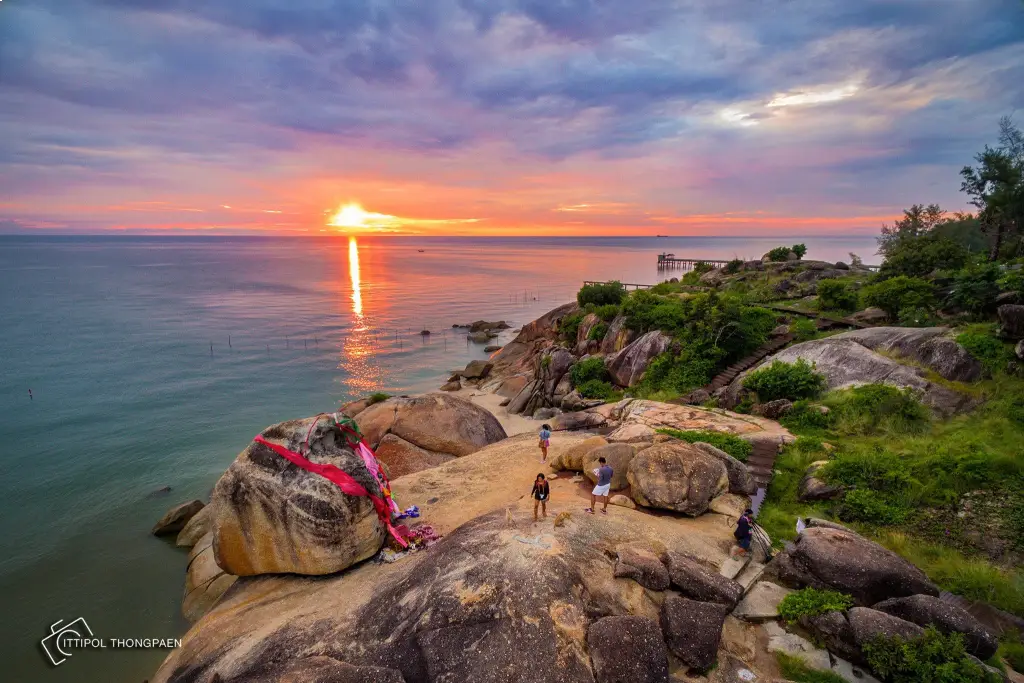
Khao Kao Seng, also known as Khao Kao Saen and Hua Nai Raeng, is one of Songkhla’s most distinctive seaside hill and folklore landmarks. Located in Khao Rup Chang Subdistrict, Mueang Songkhla District, it sits south of Chalathat Beach and about 3 kilometers from Samila Beach. The site is known for its rocky coastal landscape, the famous Hua Nai Raeng boulder, the legend of Nai Raeng, Wat Khao Kao Saen, the hilltop chedi, the local fishing community, and wide views of the Gulf of Thailand, including Ko Nu and Ko Maeo on clear days.
The appeal of Khao Kao Seng does not come from size. The hill itself is small, but its cultural and scenic value is unusually rich. Visitors can see the sea, rocks, temple grounds, fishing boats, local homes, and a legendary boulder in one compact area. This makes Khao Kao Seng an important stop for travelers who want to understand Songkhla beyond Samila Beach and the old town. It is a place where landscape, belief, community life, and local storytelling meet.
Khao Kao Seng is located by the Gulf of Thailand, where the beach line continues southward from Chalathat Beach toward a smaller bay and a rocky coastal end point. The hill is made up of rocks and low coastal slopes rather than dense forest. From the Hua Nai Raeng area, visitors can see the curve of the shoreline, waves breaking against the rocks, small fishing boats, and, on clear days, the silhouettes of Ko Nu and Ko Maeo in the distance. The view clearly shows the seaside identity of Songkhla.
The name Khao Kao Seng is closely tied to the older name Khao Kao Saen. According to local legend, Nai Raeng was a ruler with deep Buddhist faith. When Nakhon Si Thammarat prepared to enshrine sacred relics in its great chedi and hold a grand celebration, southern tributary towns brought money and valuables to take part in the merit-making ceremony. Nai Raeng carried wealth said to be worth nine hundred thousand on a junk boat, along with his followers, intending to join the ceremony in Nakhon Si Thammarat.
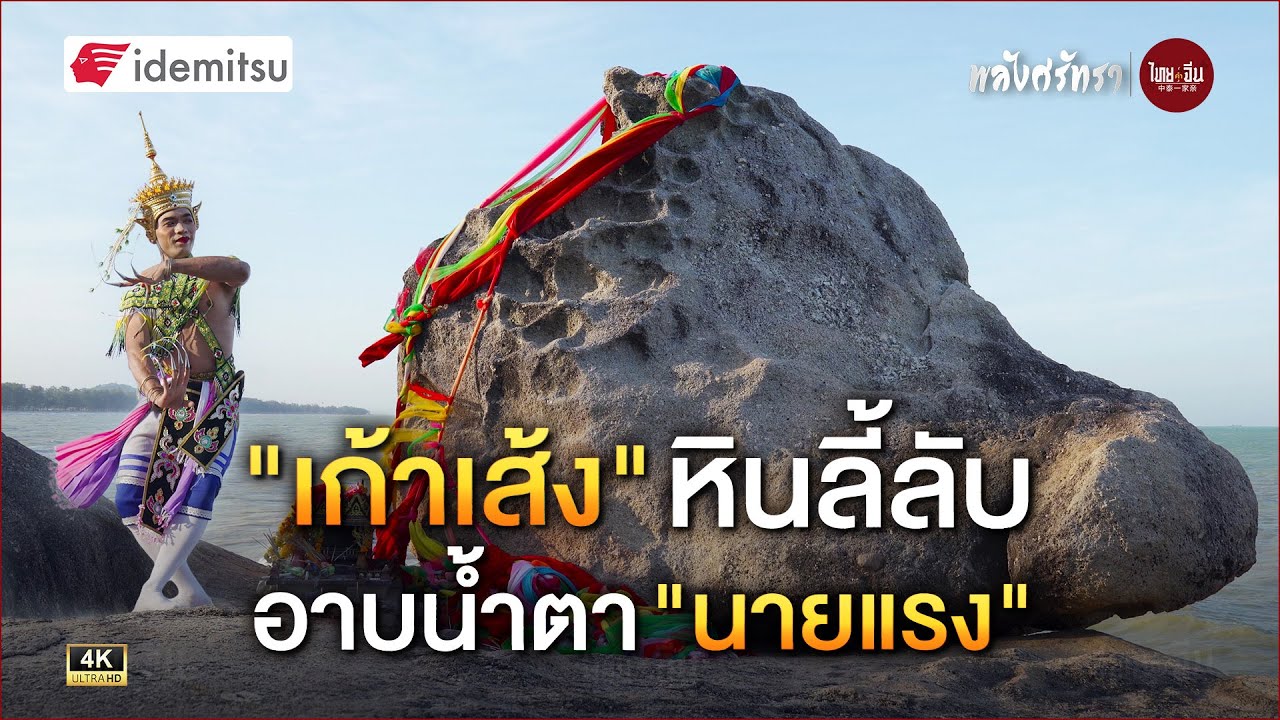
During the journey, Nai Raeng’s boat was damaged by wind and waves, so it stopped along the Songkhla coast for repairs. After the repairs, Nai Raeng learned that the relic enshrinement ceremony in Nakhon Si Thammarat had already been completed. Deeply saddened that he had missed the important merit-making event, he ordered his followers to carry the wealth up to a hill and place it there. He then ordered them to cut off his head and place it on the hilltop. After his death, the hill became known as Khao Kao Saen, meaning the hill of nine hundred thousand, and the name later shifted in local pronunciation to Khao Kao Seng. The large boulder on the hill became known as Hua Nai Raeng, or Nai Raeng’s Head.
The Hua Nai Raeng legend remains deeply rooted in Songkhla’s cultural memory. The story is not only about hidden treasure. It also reflects faith, intention, loss, and the belief in a guardian spirit watching over treasure. The boulder is therefore more than a natural rock formation. It is a cultural symbol that gives this small seaside hill its identity and makes it one of Songkhla’s most memorable folklore sites.
Khao Kao Seng also has an important religious dimension through Wat Khao Kao Saen, a local temple in Khao Rup Chang Subdistrict. The temple area includes Wihan Phra Phuttha Marada, a birth-posture Buddha image, Phra Phuttha Metta, Phra Sangkachai, the shrine of Pu Thuat Nai Raeng, and the hilltop chedi of Khao Kao Seng. From the temple, visitors can follow the walking path and stone steps toward the rocky hill and the seaside viewpoint.
The chedi on Khao Kao Seng is a Lanka-style brick-and-plaster structure associated with early Rattanakosin art. Its presence gives the hill a sacred quality in addition to its scenic value. Visitors should treat the area with respect because it is both a viewpoint and a religious site. Modest behavior, quiet movement around temple buildings, and respectful conduct near shrines are important.
Wat Khao Kao Saen remains active in the community. Recent religious activities have included merit-making, sacred-object ceremonies, and restoration efforts connected with the temple’s ordination hall. This shows that the site is not merely a preserved legend from the past. It continues to serve as a spiritual center and a living cultural space for local residents.
The Kao Seng community adds another layer to the experience. The beach and surrounding area are closely connected with local fishing life. Visitors may see small boats, fishing gear, boat repairs, and daily work along the shore. These scenes make Khao Kao Seng different from beaches developed mainly for tourism. It is still a lived-in community landscape, and its value comes partly from that everyday authenticity.
For travelers, the main activities at Khao Kao Seng are walking, sightseeing, photography, paying respect at the temple, and learning the Nai Raeng legend. The most recognizable point is the Hua Nai Raeng boulder, which stands above the coastal rocks near the sea. Many visitors photograph this spot together with the sea, rocks, and colorful sacred cloths around the shrine area. The view makes the legend visually memorable.
The best times to visit are early morning and late afternoon. Morning offers softer light, cooler air, and a chance to see the first light over the sea. Late afternoon is good for sea breeze, fishing-boat scenes, and warm light across the water. On clear days, the coastline, Chalathat Beach, Samila Beach, Ko Nu, and Ko Maeo can be seen more clearly. Good timing makes the visit more comfortable and improves photography conditions.
Although Khao Kao Seng is easy to reach, visitors should be careful when walking on rocks, steps, and coastal paths. Some surfaces can be slippery after rain or when sea spray reaches the rocks. Visitors should wear shoes with good grip, avoid climbing risky rocks, stay away from exposed edges, and supervise children closely. The site is scenic but still a natural rocky coastline.
The Hua Nai Raeng area is suitable for several types of photography: the sacred boulder, coastal rocks, waves, fishing boats, community scenes, temple details, and open sea views. Morning and late afternoon are the most useful periods for soft light. Midday can be bright and hot, so visitors should bring water, sun protection, and enough time to walk slowly.
Khao Kao Seng is easy to combine with nearby Songkhla attractions. A half-day route can begin at Samila Beach and the Golden Mermaid Statue, continue along Chalathat Beach, then end at Khao Kao Seng and Wat Khao Kao Saen. Travelers can then continue to Songkhla Old Town for food, street art, and heritage buildings. This route gives a compact but varied view of the city.
For a full-day itinerary, start with Khao Tang Kuan in the morning for city views, continue to Songkhla Old Town for cultural sightseeing and local food, then visit Samila Beach, Chalathat Beach, and Khao Kao Seng in the late afternoon. This route combines hilltop views, old-town culture, seaside scenery, fishing-community life, and folklore in one day without traveling far from the city.
Getting There is easiest by private car, motorcycle, or local hired transport. From Songkhla city, take Chalathat Road southward to the curve where it meets Kao Saen Road. Turn into the local road and continue across the small concrete bridge toward the National Institute of Coastal Aquaculture area. The access to Khao Kao Seng and Wat Khao Kao Saen is on the left. The site is about 5 kilometers from central Songkhla and about 3 kilometers from Samila Beach.
Travelers without a private vehicle can use a local taxi, tuk-tuk, motorcycle taxi, or hired vehicle from Songkhla Old Town or Samila Beach. Because the distance is short, it is easy to include Khao Kao Seng in a city itinerary. If visiting near sunset, arranging a return ride in advance is practical.
There is no general admission fee for the main beach, hill, and temple areas. Visitors may want to carry small cash for temple donations, drinks, local food, parking in some areas, or purchases from small local shops. Spending locally also supports the Kao Seng community.
Khao Kao Seng suits many kinds of visitors. Families can introduce children to Songkhla folklore and coastal community life. Photographers can capture rocks, sea, boats, and shrine details. Cultural travelers can learn the Nai Raeng legend and local beliefs about the guardian spirit. Visitors looking for a quieter seaside stop can enjoy a place that feels more local than the main tourist beaches.
Important visitor etiquette includes not littering, not writing on rocks, not climbing dangerous sections, not making loud noise in the temple area, and not disturbing local fishing activities. When photographing boats, homes, or local residents, visitors should be polite and respectful. Good cultural travel means understanding that this is both a tourist site and a living community.
Compared with other attractions in Songkhla city, Khao Kao Seng has a clear identity. Samila Beach is known for the Golden Mermaid and open urban beach scenery. Khao Tang Kuan is known for hilltop views and sacred monuments. Songkhla Old Town is known for heritage buildings and food. Khao Kao Seng is known for the Nai Raeng legend, the sacred boulder, fishing-community life, and rocky seaside views. Adding it to a Songkhla itinerary gives the trip a stronger local and folkloric dimension.
Overall, Khao Kao Seng is a small place with strong cultural weight. It offers sea views, rocks, a temple, a fishing community, and one of Songkhla’s most memorable legends in a single stop. With good timing, careful walking, and respect for the local setting, Khao Kao Seng can become one of the most meaningful stops in Songkhla city.
| Name | Khao Kao Seng / Khao Kao Saen / Hua Nai Raeng |
| Location | Moo 3, Khao Rup Chang Subdistrict, Mueang Songkhla District, Songkhla Province |
| Address | Wat Khao Kao Saen Area, Khao Rup Chang Subdistrict, Mueang Songkhla District, Songkhla Province 90000, Thailand |
| Coordinates | 7.1817548, 100.6195106 |
| Highlights | Hua Nai Raeng boulder, rocky seaside view, Nai Raeng legend, Wat Khao Kao Saen, Khao Kao Seng hilltop chedi, fishing community, and Gulf of Thailand views toward Ko Nu and Ko Maeo |
| History / Legend | The site is linked with the legend of Nai Raeng, who carried wealth worth nine hundred thousand to join the relic enshrinement ceremony in Nakhon Si Thammarat but missed it after his boat was damaged. The hill became known as Khao Kao Saen, later pronounced Khao Kao Seng. |
| Name Origin | The name comes from Khao Kao Saen, referring to Nai Raeng’s nine-hundred-thousand treasure. The local pronunciation later shifted to Khao Kao Seng, while the large hilltop boulder is called Hua Nai Raeng. |
| Distinctive Features | A small rocky hill by the Gulf of Thailand, surrounded by a fishing community and known for its sacred boulder, temple area, and coastal viewpoint |
| Travel Information | From Songkhla city, take Chalathat Road south to the curve at Kao Saen Road, turn toward the National Institute of Coastal Aquaculture area, and continue to Wat Khao Kao Saen. The site is about 5 km from central Songkhla and about 3 km from Samila Beach. |
| Current Status | Open as a seaside nature, culture, viewpoint, and religious site in Mueang Songkhla District |
| Open Days | Daily |
| Opening Hours | Open All Day |
| Fees | No Admission Fee |
| Facilities | Parking area, walking path, steps, pavilion, toilets, waste bins, monks’ residence area, and seaside viewpoint |
| Main Areas / Zones | Wat Khao Kao Saen, Wihan Phra Phuttha Marada, Phra Phuttha Metta, Pu Thuat Nai Raeng Shrine, Khao Kao Seng hilltop chedi, walking path, Hua Nai Raeng boulder, and rocky coastline |
| Abbot | Phra Khru Palat Phithak Khemachitto |
| Caretaker / Related Agencies | Wat Khao Kao Saen and Khao Rup Chang Municipality, Tel. 074-302-555 |
| Nearby Tourist Attractions | 1. Wat Khao Kao Saen, about 0 km 2. Kao Seng Beach, about 0.3 km 3. Chalathat Beach, about 2 km 4. Samila Beach And Golden Mermaid Statue, about 3 km 5. Ko Nu And Ko Maeo, about 3 km From The Coastal Viewpoint 6. Khao Tang Kuan, about 5 km |
| Nearby Restaurants | 1. Cha BB Kao Seng, about 1 km, Tel. 094-684-9297 2. DeepAlley Burger Kao Seng, about 1 km, Tel. 088-199-3553 3. Ibrahim Restaurant Kao Seng, about 1 km, Tel. 087-398-3528 4. Hajja Rofiyah Restaurant, about 1 km, Tel. 080-702-8288 5. Kaprao Halal Kao Saen, about 1 km, Tel. 098-045-7209 |
| Nearby Accommodations | 1. Kaoseng Rockhill Hotel, about 1 km, Tel. 074-300-033 2. Sun Inn, about 2 km 3. Songkhla KeeRee Resort, about 3 km 4. L Residence Hotel, about 3 km 5. The Bed Vacation Rajamangala Hotel, about 4 km, Tel. 090-674-4444, 087-674-4444 6. Songkhla Tae Raek Antique Hotel, about 5 km, Tel. 094-317-3338 |
Frequently Asked Questions (FAQ)
Q: Where Is Khao Kao Seng Located?
A: Khao Kao Seng is located around Wat Khao Kao Saen, Moo 3, Khao Rup Chang Subdistrict, Mueang Songkhla District, Songkhla Province. It is south of Chalathat Beach and about 3 km from Samila Beach.
Q: What Are The Main Highlights Of Khao Kao Seng?
A: The main highlights are the Hua Nai Raeng boulder, the Nai Raeng legend, Wat Khao Kao Saen, the hilltop chedi, the fishing community, rocky seaside views, and views toward Ko Nu and Ko Maeo.
Q: Why Is Khao Kao Seng Called Hua Nai Raeng?
A: According to local legend, Nai Raeng carried wealth to join a sacred relic ceremony in Nakhon Si Thammarat but arrived too late. He placed the treasure on the hill and ordered his head to be placed there, giving rise to the name Hua Nai Raeng.
Q: Is There An Admission Fee For Khao Kao Seng?
A: No. There is no admission fee for visiting the main beach, hill, and temple areas.
Q: When Is The Best Time To Visit Khao Kao Seng?
A: Early morning and late afternoon are the best times because the weather is cooler, the light is softer, and the sea views are more comfortable for walking and photography.
Q: Is Khao Kao Seng Suitable For Children And Elderly Visitors?
A: The temple and main walking areas are suitable for general visitors, but rocky sections and some paths require caution. Children and elderly visitors should be supervised closely.
Q: How Can Travelers Get To Khao Kao Seng From Samila Beach?
A: From Samila Beach, travel south along Chalathat Road for about 3 km, then turn onto Kao Saen Road toward the National Institute of Coastal Aquaculture and Wat Khao Kao Saen.
Q: What Nearby Places Can Be Visited With Khao Kao Seng?
A: Nearby places include Samila Beach, Chalathat Beach, Khao Tang Kuan, Songkhla Old Town, Songkhla City Pillar Shrine, and Songkhla National Museum.
 Category: ●Nature and Wildlife
 Group: ●Mountain (Doi)
Last Update : 2 MonthAgo
 Last Update : 2 MonthAgo
 Click to Access the Navigation Map GPS
Khao Kao Seng Map
Recommend

 Art, Culture and Heritage
 Historical Sites and Monuments(2)
 Landmarks and Memorials(7)
 Royal Palace(1)
 Art, Craft Centres, Tradition(4)
 Museums(4)
 Art Gallery(1)
 Educational Places
 Library(1)
 Educational Gardens, Farm(3)
 University
 Public university(2)
 Autonomous Universities(1)
 Rajamangala University of Technology(1)
 Rajabhat University(1)
 Private University(1)
 Places of Worship
 Temple(52)
 Mosque(2)
 Other Sacred Sites(11)
 Suburban Living
 Village, Community(4)
 Local Market(3)
 Floating Market(2)
 National Parks and Marine Reserves(5)
Mountain (Doi)(7)
 Dam, Reservoir, Lake(5)
 Waterfalls(12)
 Caves(4)
 River, Canal(2)
 Bays and Beaches(13)
 Islands(3)
 Other natural attractions(2)
 Entertainment and Agricultural
 Zoos and Aquariums(2)
 Animal camps and shows(1)
 Farms, Parks and Ecotourism(6)
 Waterpark(1)
 Shopping
 Department Store(3)
 Travel Articles, Recipes
 Travel Review, Food Review(1)
 Southern Food Menu, Southern Food Recipes(2)


