
lovethailand home >South Travel Attractions >Satun Travel Attractions >Khuan Don >Wang Prachan > Wang Pra Grassland
TL;DR: Wang Pra Grassland is located at Inside Thale Ban National Park, Wang Prachan Subdistrict, Khuan Don District, Satun Province, Thailand, open Daily, hours 08.30 – 16.30.

Wang Pra Grassland
Open Days: Daily
Opening Hours: 08.30 – 16.30
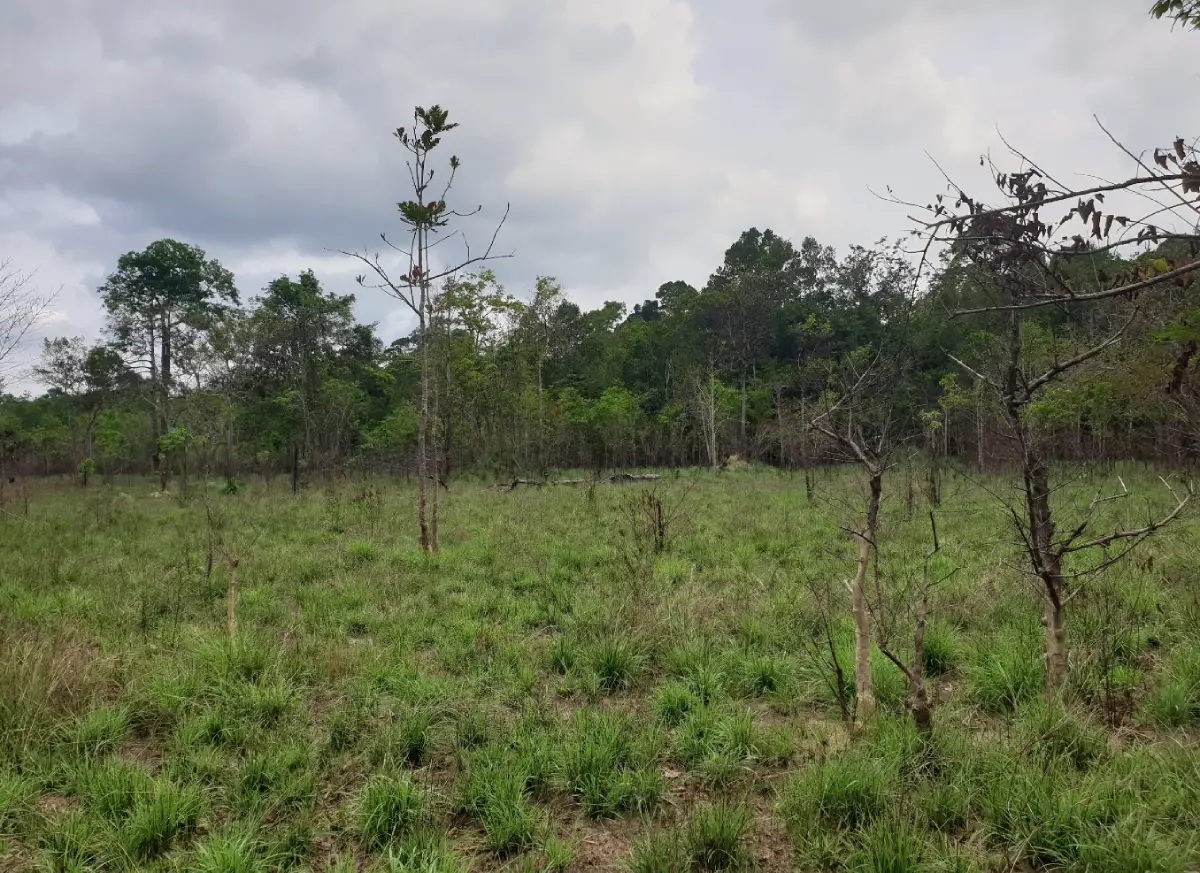
Wang Pra Grassland in Satun Province is a wide natural grassland inside Thale Ban National Park, located in Wang Prachan Subdistrict, Khuan Don District. The site is known for its open valley landscape, surrounding mountains, forest edges, and wildlife habitat. It is one of the more nature-focused places in Satun for travelers who want to go beyond beaches and islands and experience the inland forest landscape of southern Thailand. The grassland is associated with wildlife such as tapirs, mouse deer, porcupines, junglefowl, and forest birds, making it suitable for nature observation, birdwatching, ecological study, and slow travel in a protected national park area.
Wang Pra Grassland forms part of Thale Ban National Park, a land-based national park in Satun. Although the word “Thale” often makes travelers think of the sea, Thale Ban is not a marine park. Its key landscape includes a freshwater lake in a mountain valley, rainforest, waterfalls, caves, limestone terrain, granite mountains, and natural grassland. Wang Pra Grassland adds an important dimension to the park because it represents an open habitat within the larger forest ecosystem. It shows that Thale Ban is not only about Bueng Thale Ban Lake or waterfalls, but also about the relationship between grassland, forest, mountains, and wildlife.
The main attraction of Wang Pra Grassland is its broad open terrain surrounded by forested hills. This type of habitat is valuable for both tourism and conservation because it provides feeding and movement areas for wildlife. The open grassland, forest edges, and nearby denser forest create a varied ecological zone where animals can move, feed, and take shelter. Travelers who enter the area properly with guidance from park officers can observe animal traces, listen to bird calls, and understand how an open grassland functions within a protected forest landscape.
The name Wang Pra is connected with the wider Wang Prachan area near the Thailand–Malaysia border. Thale Ban National Park lies close to Perlis, Malaysia, and covers mountain forest, streams, caves, and borderland ecosystems in Satun. The best-known visitor area is Bueng Thale Ban near the park headquarters, while Wang Pra Grassland requires more preparation because it lies deeper within the park and is accessed by a rough laterite road. For this reason, it is best suited to travelers who understand protected-area travel and are willing to follow national park regulations closely.
The route to Wang Pra Grassland is more demanding than a normal sightseeing stop. From the park headquarters, travelers use Highway 4184 on the Khuan Sato–border route and drive back toward the junction for about 8 km. A sign marks the turnoff to Wang Pra Grassland on the left, followed by a laterite road of about 10.5 km. Road conditions vary by season. The dry season is generally more practical because the road surface is firmer, while the rainy season can make the track muddy, slippery, and difficult for unsuitable vehicles.
Travelers should contact Thale Ban National Park before entering Wang Pra Grassland. The grassland is inside a protected national park zone and is not the same as a public viewpoint that visitors can freely enter at any time. Contacting park officers helps travelers confirm road conditions, access rules, visitor safety, and the need for staff guidance. This is especially important because the area is used by wildlife and has limited facilities compared with the visitor zone near the park headquarters.
Wildlife is the central reason Wang Pra Grassland is important. The area is associated with animals such as tapirs, mouse deer, porcupines, junglefowl, and many forest birds. Seeing wildlife depends on timing, silence, weather, and respect for the animals’ behavior. Visitors should use the grassland as a place for quiet observation rather than actively approaching animals. Feeding, chasing, calling, or attempting to photograph animals too closely can disturb the natural behavior that makes this habitat valuable.
Wang Pra Grassland is also interesting for birdwatching. The open field, forest edge, and surrounding woodland create different layers of habitat. Birds may feed in the open area, perch along the edge, or move between forested zones. Early morning and late afternoon are the most suitable times for bird activity. Birdwatchers should use binoculars, wear muted colors, move slowly, and avoid loud sounds. The experience here is quieter and more natural than visiting a built viewpoint or a busy tourist area.
The atmosphere at Wang Pra Grassland differs from Bueng Thale Ban near the headquarters. Bueng Thale Ban offers a freshwater lake, boardwalks, waterside pavilions, bakong plants, and the sound of the local “khiat wak” or water dog frog. Wang Pra Grassland offers a broader, quieter, and more remote natural scene: open grass, forest edges, mountain views, insects, birds, and the stillness of the protected forest. Travelers with limited time may prefer the lake and nature trail near the headquarters, while those seeking a deeper natural experience can plan specifically for Wang Pra Grassland.
The beauty of Wang Pra Grassland lies in simplicity. There are no elaborate structures or urban-style attractions. The open field allows visitors to see the form of the valley, the curve of the mountains, and the transition between grassland and forest. Morning and late-afternoon light gives the landscape depth and texture, while midday can be hot and exposed. Photographers should prepare for strong sun, changing weather, and a rugged setting. Water, sun protection, suitable shoes, and a fully charged phone or camera battery are practical essentials.
Season affects the travel experience strongly. The dry season makes the laterite road easier to use, but the grassland can be hot and more vulnerable to fire risk. Visitors must not light fires, drop cigarette ends, or bring activities that create sparks or flames. During the rainy season, the forest becomes greener and the ecosystem feels more alive, but the road can become muddy and difficult. For safety, travelers should check weather conditions and consult park officers before deciding to enter the route.
Wang Pra Grassland is best for prepared travelers rather than visitors seeking maximum convenience. A pickup truck or a vehicle suitable for rough ground is safer than a normal sedan. Travelers should check tires, brakes, fuel, and vehicle condition before entering the route. It is better to travel in a group, stay on the main track, avoid entering unmarked areas, and inform park officers before and after visiting. These simple steps improve safety and reduce the risk of getting stranded on a remote forest road.
Visitors should not make loud noise, play music, leave litter, feed wildlife, hunt, collect plants, collect stones, or walk off the route without permission. Wang Pra Grassland is part of a national park whose primary purpose is conservation. Travelers should follow low-impact travel principles, carry all waste out, avoid damaging vegetation, and keep a safe distance from wildlife. The quality of the experience depends on keeping the habitat quiet and undisturbed.
Understanding Thale Ban National Park helps travelers appreciate Wang Pra Grassland more deeply. The park was declared on 27 October 1980 and covers about 196 square kilometers, or approximately 122,500 rai. Its landscape includes mountain forest, limestone terrain, granite and granodiorite areas, caves, waterfalls, a freshwater lake, and diverse wildlife habitats. Wang Pra Grassland is one part of this larger ecological system, linking open ground with surrounding forests and providing an important natural space for wildlife movement.
Bueng Thale Ban, the park’s main landmark, was formed by land subsidence between Khao Chin and Khao Mot Daeng. The name Thale Ban is linked to Malay wording referring to a collapsed body of water or land subsidence. Around the lake, bakong plants grow densely, and the area is known for the khiat wak, a frog-like amphibian whose call resembles a puppy. When travelers understand this lake ecosystem together with Wang Pra Grassland, they can see how water, rainforest, mountains, and open grassland all form part of the same protected landscape.
From an ecological point of view, Wang Pra Grassland is useful for explaining how animals use different habitats. Open grassland can provide feeding areas, forest edges provide cover and movement routes, and dense rainforest offers shade, water, breeding areas, and long-term habitat. Seeing the grassland only as an empty field misses its real value. In the context of Thale Ban National Park, Wang Pra Grassland is an ecological connector between mountains, forest, and wildlife.
For general travelers, Wang Pra Grassland works best as part of a wider Thale Ban itinerary. Nearby park attractions include Bueng Thale Ban, Yaroi Waterfall, Ton Plio Waterfall, Ton Din Cave, Puyu Cave, and Wang Prachan Border Market. A practical route is to start at the park headquarters, visit the lake and nature trail, ask officers about the latest road conditions, and then decide whether the grassland route is suitable for the day. This approach keeps the trip flexible and avoids forcing the route when weather or road conditions are not appropriate.
Facilities at Wang Pra Grassland are more limited than at the park headquarters. Visitors should bring drinking water, snacks, personal medicine, a hat, rain protection, insect protection, a waste bag, a flashlight, and a power bank. Main facilities such as toilets, visitor information, food service, accommodation, and camping areas are available around Thale Ban National Park headquarters, not in the middle of the grassland. Preparing before entering the route makes the trip smoother and safer.
Wang Pra Grassland also teaches the importance of responsible tourism. Its value depends on keeping the natural condition intact. Driving off track, leaving rubbish, lighting fires, or disturbing animals can damage the area quickly. Travelers who enter respectfully help preserve the grassland as a wildlife habitat and a nature-learning site for future visitors. The best travel experience here comes from patience, quiet observation, and respect for the park’s rules.
This destination is different from ordinary tourist attractions because it asks visitors to slow down. It is not a place designed for quick photo stops, cafés, or built viewpoints. Instead, it rewards travelers who listen, observe, and spend time with the landscape. Some visitors may find it simple, but nature-focused travelers will appreciate the mountain backdrop, open field, wildlife traces, bird activity, and forest silence.
Safety should come first when planning a visit. Travelers should avoid entering the route during heavy rain or immediately after rain, when the laterite road can become slippery. Before leaving, check the weather and confirm the latest road condition with park officers. Drive slowly, keep distance from other vehicles, and do not continue if the track becomes unsafe. If walking is required in some sections, use shoes suitable for mud, grass, and forest ground.
Wang Pra Grassland is most suitable for birdwatchers, nature photographers, students, ecology groups, and travelers who want to see Satun’s forest side. Families with small children or elderly travelers may find the lake area and nature trail near the park headquarters more convenient. The grassland is better for visitors who are comfortable with rougher access, limited facilities, and a quieter form of nature travel.
Within the wider travel identity of Satun, Wang Pra Grassland helps show that the province is more than islands, beaches, and coral reefs. Satun also has forests, border mountains, caves, waterfalls, historic communities, mosques, temples, museums, and inland ecosystems. Including Wang Pra Grassland in a Satun travel plan gives visitors a broader understanding of the province’s natural diversity and the importance of protected areas beyond the coastline.
To make the visit worthwhile, travelers should not rush. The key is to choose the right season, contact park officers, prepare the vehicle and equipment, and spend time observing the place respectfully. Once in the grassland, visitors can watch the changing light, look across the surrounding mountains, listen to forest sounds, and understand why this quiet open habitat matters inside a large national park ecosystem.
Getting There starts from Thale Ban National Park headquarters. Use Highway 4184 on the Khuan Sato–border route and drive back toward the junction for about 8 km. A sign to Wang Pra Grassland appears on the left, followed by a laterite road of about 10.5 km. The route is more practical in dry weather and is best accessed by a vehicle suitable for rough roads. From Satun town, take Highway 406 toward Khuan Don District, then continue to Highway 4184 toward Thale Ban National Park and Wang Prachan Subdistrict before coordinating with park officers for safe access to the grassland.
Wang Pra Grassland is therefore a meaningful destination for travelers who want to experience a deeper and quieter side of Satun. It is valuable as an open grassland habitat, a wildlife observation area, a nature-learning site, and part of Thale Ban National Park’s wider protected landscape. With proper planning, officer coordination, and respect for conservation rules, a visit to Wang Pra Grassland can reveal Satun’s mountain, forest, and wildlife character in a way that ordinary sightseeing routes rarely provide.
| Name | Wang Pra Grassland |
| Location | Inside Thale Ban National Park, Wang Prachan Subdistrict, Khuan Don District, Satun Province, Thailand |
| Contact Address | Thale Ban National Park, Moo 4, Samantrattawithi Road, Wang Prachan Subdistrict, Khuan Don District, Satun 91160, Thailand |
| Thale Ban National Park Coordinates | 6.7095737, 100.1678272 |
| Highlights | Wide grassland in a mountain valley, suitable for birdwatching, wildlife observation, nature study, and landscape photography |
| History | Part of Thale Ban National Park, which was declared on 27 October 1980 and covers about 196 square kilometers or 122,500 rai |
| Distinctive Features | Open grassland between mountains, surrounded by forest and used as habitat by wildlife such as tapirs, mouse deer, porcupines, junglefowl, and forest birds |
| Travel Information | From Thale Ban National Park headquarters, use Highway 4184 for about 8 km toward the junction, then turn left onto a laterite road for about 10.5 km |
| Current Status | Located inside Thale Ban National Park, which is open to visitors under national park rules; visitors should contact park officers before entering Wang Pra Grassland |
| Open Days | Daily |
| Opening Hours | 08.30 – 16.30 |
| Fees | National park entrance fee, Group 2: Thai adults 40 THB, Thai children 20 THB / foreign adults 200 THB, foreign children 100 THB |
| Facilities | Visitor center, park accommodation, campground, welfare shop, toilets, and rest areas at Thale Ban National Park headquarters |
| Main Areas / Zones | Wang Pra Grassland, Bueng Thale Ban, nature trail, Yaroi Waterfall, Ton Plio Waterfall, Ton Din Cave, Puyu Cave, and Ranger Station TB.5 Wang Pra Grassland |
| Caretaker / Related Agency | Thale Ban National Park, Department of National Parks, Wildlife and Plant Conservation |
| Main Contact Number | 083-533-1710, 074-750-758 |
| Official Website / Official Page | Thale Ban National Park page and Department of National Parks information system |
| Nearby Tourist Attractions | 1. Ton Plio Waterfall, about 14 km 2. Yaroi Waterfall, about 15 km 3. Ton Din Cave, about 16 km 4. Bueng Thale Ban, about 18 km 5. Wang Prachan Border Market, about 20 km 6. Wang Prachan Border Checkpoint, about 20 km 7. Puyu Cave, about 45 km |
| Nearby Restaurants | 1. Baan Suan Tondin, about 18 km, Tel. 065-142-6422 2. Makan Restaurant, about 18 km, Tel. 086-481-3314 3. Kin Tam Pak Zaap Tam Jai Khuan Don, about 28 km, Tel. 098-308-9047, 092-452-2784 4. Berger Burger Khuan Don Branch, about 28 km, Tel. 065-608-8985 5. Dok Kradon Restaurant, about 28 km, Tel. 082-827-3921 6. Kopi Rim Khlong, about 30 km, Tel. 088-791-1972 |
| Nearby Accommodations | 1. Baan Suan Tondin, about 18 km, Tel. 065-142-6422 2. Wichuda Fishing Park & Homestay, about 26 km, Tel. 082-429-6055 3. Satun Premium Resort, about 32 km, Tel. 081-896-7902 4. Naris Phu View Resort, about 34 km, Tel. 074-795-428 5. Sinkiat Thani Hotel, about 45 km, Tel. 074-711-336 6. Thale Ban National Park Accommodation and Campground, about 18 km, Tel. 083-533-1710, 074-750-758 |
Frequently Asked Questions (FAQ)
Q: Where is Wang Pra Grassland located?
A: Wang Pra Grassland is located inside Thale Ban National Park in Wang Prachan Subdistrict, Khuan Don District, Satun Province, southern Thailand.
Q: What kind of trip is Wang Pra Grassland suitable for?
A: It is suitable for nature travel, birdwatching, wildlife observation, ecological study, landscape photography, and travelers who want a quieter inland nature experience in Satun.
Q: How do travelers get to Wang Pra Grassland?
A: From Thale Ban National Park headquarters, use Highway 4184 for about 8 km toward the junction, then turn left onto a laterite road for about 10.5 km. Visitors should contact park officers before entering.
Q: Can a normal sedan reach Wang Pra Grassland?
A: The access road is a laterite forest road and conditions change by season. A pickup truck or a vehicle suitable for rough ground is safer than a normal sedan.
Q: When is the best time to visit Wang Pra Grassland?
A: The dry season is more practical for road access. Early morning and late afternoon are the best times for birdwatching, nature observation, and photography.
Q: What wildlife can be found around Wang Pra Grassland?
A: The area is associated with wildlife such as tapirs, mouse deer, porcupines, junglefowl, and many forest birds. Visitors should observe quietly from a safe distance.
Q: Is there an entrance fee for Wang Pra Grassland?
A: Wang Pra Grassland is inside Thale Ban National Park, so the national park entrance fee applies: Thai adults 40 THB, Thai children 20 THB, foreign adults 200 THB, and foreign children 100 THB.
Q: What should visitors prepare before going to Wang Pra Grassland?
A: Visitors should bring drinking water, snacks, a hat, sun and rain protection, personal medicine, shoes suitable for dirt roads, a waste bag, binoculars, and a vehicle suitable for laterite-road conditions.
 Category: ●Nature and Wildlife
 Group: ●Other natural attractions
Last Update : 3 MonthAgo
 Last Update : 3 MonthAgo
 Click to Access the Navigation Map GPS
Wang Pra Grassland Map
Recommend

 Art, Culture and Heritage
 Historical Sites and Monuments(1)
 Landmarks and Memorials(1)
 Art, Craft Centres, Tradition(5)
 Museums(3)
 Places of Worship
 Temple(3)
 Mosque(27)
 Other Sacred Sites(1)
 Suburban Living
 Village, Community(1)
 Local Market(2)
 National Parks and Marine Reserves(7)
 Mountain (Doi)(1)
 Dam, Reservoir, Lake(2)
 Waterfalls(9)
 Hot Springs(1)
 Caves(9)
 Bays and Beaches(10)
 Islands(16)
Other natural attractions(5)
 Entertainment and Agricultural
 Zoos and Aquariums(1)
 Farms, Parks and Ecotourism(4)
 Outdoor and Adventure Activities(1)
 Shopping
 Department Store(2)
 Travel Articles, Recipes
 Travel Review, Food Review(1)


