
lovethailand home >South Travel Attractions >Satun Travel Attractions >Muang Satun >Koh Sarai > Koh Khai
TL;DR: Koh Khai, Satun attractions : Nature and Wildlife, Islands.
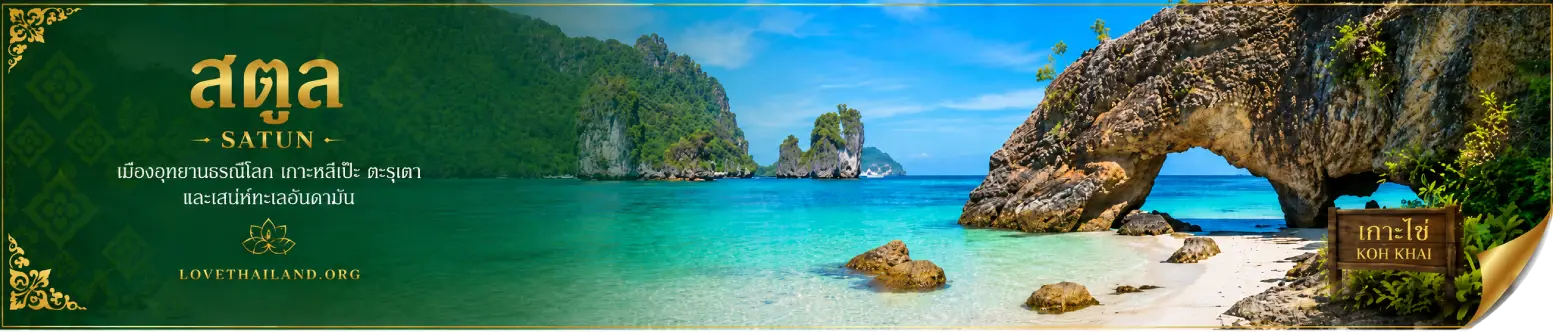
Koh Khai
Open Days: Open according to Tarutao National Park announcements. The 2026 notice lists Koh Khai as an area that remains open for visitation.
Opening Hours: Subject to boat schedules, weather, tide conditions, and boat routing from Pak Bara Pier or Koh Lipe
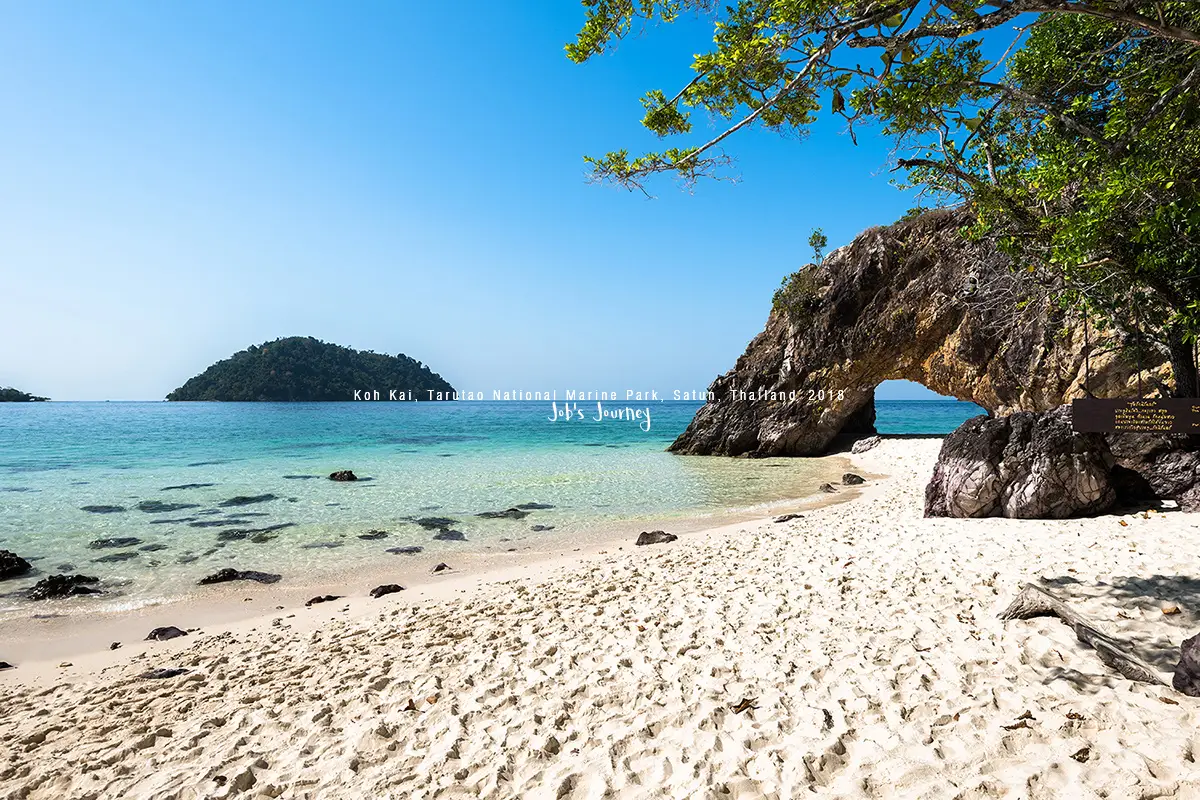
Koh Khai in Satun is a small island within Tarutao National Park, located between Koh Tarutao and the Adang-Rawi island group in Ko Sarai Subdistrict, Mueang Satun District, Satun Province. The island is best known for its natural rock arch by the sea, a landmark that has become one of the most recognizable symbols of Tarutao National Park and a classic stop on the boat route from Pak Bara Pier to Koh Lipe. Koh Khai combines fine white sand, clear Andaman water, surrounding coral reefs, and a coastal rock formation shaped naturally by waves and wind.
Koh Khai is best visited as a short scenic stop rather than an overnight island destination. The island is small, and overnight stays are not permitted by Tarutao National Park. Most travelers come here to photograph the natural rock arch, walk along the beach, enjoy the clear water where conditions are safe, and understand the geological value of a sea arch created by long-term coastal erosion.
Koh Khai is also known as Koh Tarang. It covers about 60,000 square meters and lies about 20 km west of Koh Tarutao. The island sits in a strategic position on the sea route between Pak Bara Pier and Koh Lipe. From an aerial perspective, local descriptions compare the shape of the island to a bird, with the head and beak toward the north and the legs toward the west. One of those western “legs” is where the famous natural rock arch is located.
The rock arch on Koh Khai is a natural coastal sculpture formed from sandstone of the Kaeng Krachan rock group. Over a long period, waves, wind, and changing sea levels eroded the coastal rock until a passage opened through it. This type of landform is known as a sea arch. From the beach, the arch frames the sea and sky beyond, creating one of the most photogenic views in the Tarutao island route.
The arch is widely known as the “Arch of Eternal Love.” Local belief says that couples who walk through the arch together will find lasting love and happiness. This belief has made Koh Khai a popular photo stop for couples, and the island has also been associated with Valentine’s Day wedding activities. The arch is therefore more than a scenic landmark; it is a natural feature carrying local romance, cultural memory, and tourism identity.
Koh Khai’s beauty is not limited to the arch. The beach has soft pale sand, and the water around the island can appear clear turquoise during the travel season. In some areas, shallow reef and sandy seabed can be seen through the water. Coral reefs are found around the island, with staghorn coral mentioned among the notable coral types. This gives Koh Khai value as a scenic stop, a photography point, and part of the marine ecosystem of Tarutao National Park.
On the southern side of Koh Khai, a sandy formation extends toward rocks at the end of the island and is often described as resembling a small sea-split feature. This gives the island more variety than a simple beach stop. Visitors can observe the relationship between sand, rock, tide, coral, and shallow sea in a compact area. However, movement around this zone should follow tide conditions and the guidance of boat operators or park officers.
The name “Koh Khai” is linked with sea turtles coming ashore to lay eggs during the nesting season, especially around November. This gives the island ecological importance beyond tourism. Its beach is not only a place for visitors to walk and take photos; it is also part of a natural life cycle for marine animals. Visitors should therefore avoid disturbing the sand, leaving trash, entering protected sections, or interfering with any area marked by park officers.
Koh Khai is part of Tarutao National Park, Thailand’s first marine national park. The park includes many islands divided broadly into the Tarutao group and the Adang-Rawi group. Koh Khai sits between these two major island areas, making it a natural midway point for boat travel. Many visitors first encounter the island as a stop before continuing to Koh Lipe, which has more accommodation, restaurants, and visitor services.
For trip planning, Koh Khai should be treated as a short stop in a boat itinerary. It is not a full-day beach base or a place for overnight accommodation. A suitable visit includes photographing the arch, walking along the beach, enjoying the view, and swimming only where conditions are safe. Understanding the island’s role helps travelers plan realistically, avoid expecting facilities that are not available, and make the most of the limited stopover time.
Permanent facilities on Koh Khai are very limited. There are no overnight accommodations, permanent restaurants, or village-style visitor services on the island. Travelers should prepare drinking water, personal medication, sun protection, and essential items before boarding the boat from Pak Bara or Koh Lipe. All trash should be taken away from the island because small islands are especially vulnerable to marine debris, plastic waste, and food scraps.
The main modern gateway to Koh Khai is Pak Bara Pier in La-ngu District, Satun Province, the principal pier for travel to Koh Tarutao and Koh Lipe. Boats that stop at Koh Khai vary by operator, season, weather, and route. Some services from Pak Bara to Koh Lipe include stops at Koh Tarutao and Koh Khai for photos, while some direct services do not. Travelers should confirm the exact route before departure.
Getting There from Bangkok or other provinces is most convenient by flying to Hat Yai Airport, then continuing by van, taxi, or rental car to Pak Bara Pier. From there, take a boat on the Koh Tarutao-Koh Khai-Koh Lipe route when available. Travelers driving from Bangkok can use the southern highway network into Satun and continue to La-ngu District, while train travelers can get off at Hat Yai Railway Station and continue by road to Pak Bara. Timing the land transfer with the boat schedule is essential because missing the last boat may require an overnight stay on the mainland.
Current main departures published by Pak Bara Pier include 11:30 a.m. from Pak Bara to Koh Tarutao and Koh Lipe, and 1:30 p.m. from Pak Bara to Koh Lipe. Key return departures from Koh Lipe to Pak Bara include 9:30 a.m. and 11:30 a.m. Travelers who specifically want to visit Koh Khai should ask whether the booked boat stops at the island because routes may vary between direct services and sightseeing services.
Older route descriptions mention that travel from Koh Tarutao to Koh Khai can take around 40 minutes on certain boat programs, while current local information places Koh Khai about 20 km west of Koh Tarutao. The actual travel time depends on boat type, departure point, route, stops, and sea conditions. Travelers should use the published boat schedule and operator confirmation as the practical decision-making information for the travel day.
The best period to visit Koh Khai is during the Andaman Sea travel season, generally from November to May. November to April usually offers calmer sea, clearer water, and more boat services. From mid-year to the late third quarter, travelers must check weather and park notices carefully because several areas in Tarutao National Park and the Adang-Rawi group close annually for safety and ecological recovery.
The 2026 Tarutao National Park announcement lists several areas closed from 1 June to 30 September 2026, including Koh Adang, Jabang Channel, Hat Sai Khao on Koh Rawi, the southern snorkeling area of Koh Hin Ngam, Koh Phueng, Koh Dong, Koh Ro-Kloi, Koh Hin Son, and some camping areas. Koh Khai remains listed among the areas that can still be visited normally. Nevertheless, actual access still depends on waves, weather, and park officer decisions on the day of travel.
Koh Khai is within Tarutao National Park, so visitors should prepare for the national park entrance fee. Published rates are 40 baht for Thai adults and 20 baht for Thai children, while foreign adults pay 200 baht and foreign children pay 100 baht. Other expenses such as boats from Pak Bara, boats to Koh Lipe, longtail boat trips, snorkeling gear, meals, and accommodation depend on operator, route, season, and group size.
Recommended activities on Koh Khai include photographing the natural rock arch, walking on the beach, swimming in safe shallow areas, viewing the emerald-colored sea, taking couple photos at the Arch of Eternal Love, observing the sea-arch landform, viewing the southern sandy section and rock area, and resting briefly during a boat trip to Koh Lipe or Koh Tarutao. Families should watch children closely because landing conditions may involve shallow water, wet sand, and waves.
Koh Khai is especially good for photography. The arch naturally combines rock, sand, sea, and sky in one frame. Popular angles include photographing through the arch toward the water, or from the side to show the curved rock stretching toward the sea. Morning and late afternoon light can soften the color of the sand and water, but safety around waves, wet rocks, and changing tides should always come first.
For couples, Koh Khai is one of Satun’s most romantic natural landmarks because of its association with lasting love. Walking through the arch together is a meaningful moment for many visitors. However, visitors should avoid climbing on the rock, blocking the photo area for too long when other groups are waiting, or leaving props and waste behind. The island’s beauty depends on respectful use.
Geologically, Koh Khai is valuable because its sea arch demonstrates the power of coastal erosion. The arch shows how waves, wind, rock structure, and changing sea levels can reshape an island over time. Seeing the arch helps visitors understand that the sea is not only a scenic background, but also a natural force that can sculpt landforms. This connects Koh Khai with the wider geological value of Satun UNESCO Global Geopark.
Ecologically, Koh Khai must be visited with care. Beach, coral, fish, and sea turtles are all connected. Visitors should not step on coral, collect coral or shells, feed fish, leave food waste in the sea, or swim in unsafe currents. The smaller the island, the more visible the impact of visitor behavior. Responsible travel is essential for keeping Koh Khai clean, safe, and naturally beautiful.
Another practical point is that stopover time on Koh Khai is often limited. Visitors should listen carefully to the boat crew’s meeting time, stay with the group, avoid swimming too long, and not walk beyond areas where the crew can see them. A simple order of activities works best: walk to the arch, take photos, enjoy the view, and return to the boat on time.
Older travelers, young children, and anyone with balance issues should be careful when boarding or leaving the boat. Koh Khai does not have a large permanent pier like a mainland port. On some days, visitors may need to walk through shallow water or wet sand. If waves are strong or the boat operator says landing is not suitable, the route should be adjusted. In a marine national park, safety is more important than completing every planned stop.
A practical Koh Khai trip can be arranged in several ways. The most common plan is to stop at Koh Khai while traveling from Pak Bara Pier to Koh Lipe. Another option is to combine Koh Khai with Koh Tarutao and Ao Pante Malacca. Travelers staying on Koh Lipe may also ask local operators about routes in the wider Adang-Rawi area, although Koh Khai is usually easiest to visit as part of the mainland-to-Lipe route.
For a smoother trip, stay on Koh Lipe for at least 2 nights. On the first day, travel from Pak Bara and stop at Koh Tarutao or Koh Khai if the boat route includes it, then check in on Koh Lipe. On the second day, take a snorkeling route around Adang-Rawi, such as Jabang Channel, Koh Hin Ngam, Koh Yang, and Koh Rawi. On the third day, rest at Sunrise Beach or cross to Koh Adang before returning to Pak Bara. This makes Koh Khai part of a complete Satun sea journey rather than a rushed photo stop.
Nearby restaurants and accommodations in practical travel terms are mainly on Koh Lipe or at Pak Bara because Koh Khai has no permanent restaurants and no overnight accommodation. Travelers should plan meals before or after the stop and use Koh Lipe as the main base for accommodation, food, longtail boats, snorkeling trips, and visitor services. Bringing light snacks and water is acceptable, but all packaging must be taken back.
Koh Khai is therefore more than a short photo stop before Koh Lipe. This small island brings together white sand, clear sea, a natural rock arch, romantic local belief, coral reefs, and a nesting-season connection with sea turtles. The best way to appreciate Koh Khai is to see both its beauty and its fragility. Visitors who understand this will experience the island as one of the most meaningful natural stops in Tarutao National Park.
In summary, Koh Khai is a small but highly significant island on the Satun sea route. Its main landmark is the natural rock arch, a symbol of Tarutao National Park and the famous Arch of Eternal Love. The island also has white sand, clear water, surrounding coral, and ecological importance for marine life. Access is possible according to national park announcements, but travelers must check boat schedules, weather, and stopping conditions before departure. With good planning and responsible behavior, Koh Khai becomes one of the most memorable highlights of a journey to Koh Lipe and Tarutao National Park.
| Name | Koh Khai |
| Related Names | Koh Khai Satun, Ko Tarang, Koh Khai Rock Arch, Arch Of Eternal Love |
| Location | Between Koh Tarutao And The Adang-Rawi Islands, Ko Sarai Subdistrict, Mueang Satun District, Satun Province |
| Address | Tarutao National Park, Ko Sarai Subdistrict, Mueang Satun District, Satun 91000, Thailand |
| Area Size | About 60,000 Square Meters |
| Highlights | Natural rock arch, fine white sand, clear sea, surrounding coral reefs, romantic local belief, and a major stop on the Pak Bara-Koh Lipe route |
| Distinctive Features | A small island with a sandstone sea arch shaped by waves and wind, a southern sand formation resembling a small sea-split feature, and coral around the island |
| History / Name Meaning | The name Koh Khai is linked with sea turtles laying eggs on the island during the nesting season. The island is also known as Ko Tarang. |
| Main Areas / Zones | Natural rock arch, beach in front of the arch, southern sandy section, rock area at the end of the island, and surrounding coral reef areas |
| Current Status | A tourism area within Tarutao National Park. The 2026 announcement lists Koh Khai as open for visitation, while actual access depends on boat schedules, sea conditions, and park guidance. |
| Open Days | Open according to Tarutao National Park announcements and sea conditions |
| Opening Hours | Subject to boat schedules, weather, tide conditions, and tourism boat routing |
| Best Travel Season | November–May, especially November–April when the sea is generally calmer, visibility is better, and boat services are more available |
| National Park Entrance Fee | Thai Adults 40 Baht, Thai Children 20 Baht Foreign Adults 200 Baht, Foreign Children 100 Baht |
| Travel Information | Travel to Pak Bara Pier in La-ngu District, Satun, then take a boat on the Koh Tarutao-Koh Khai-Koh Lipe route when available. Travelers may also use Koh Lipe as a base and ask local boat operators according to sea conditions. |
| Facilities | Natural beach landing area, rock arch viewpoint, and tourism boat stop. No overnight accommodation is allowed on the island; accommodations, restaurants, and boat services are based mainly at Pak Bara or Koh Lipe. |
| Caretaker / Related Authority | Tarutao National Park, Department Of National Parks, Wildlife And Plant Conservation, and Ko Sarai Subdistrict Administrative Organization |
| Head Of Tarutao National Park | Mr. Surachai Thathes |
| Main Contact Number | Tarutao National Park Visitor Center, Tel. 0-7478-3485 Tarutao National Park Office, Tel. 0-7478-3597 Ko Sarai Subdistrict Administrative Organization, Tel. 074-750905 Pak Bara Pier, Tel. 074-712380 Ext. 1111 |
| Nearby Tourist Attractions | 1. Koh Tarutao, about 20 km by sea, Tel. 0-7478-3485 2. Ao Pante Malacca On Koh Tarutao, about 20 km by sea, Tel. 0-7478-3485 3. Koh Lipe, about 25 km by sea, Tel. 074-750905 4. Koh Adang, about 25 km by sea, Tel. 0-7478-3485 5. Jabang Channel, about 28 km by sea, Tel. 0-7478-3485 6. Koh Hin Ngam, about 30 km by sea, Tel. 0-7478-3485 7. Koh Rawi, about 35 km by sea, Tel. 0-7478-3485 8. Pak Bara Pier, about 45 km by sea, Tel. 074-712380 Ext. 1111 |
| Nearby Restaurants | 1. Elephant Cafe & Bar, Koh Lipe, about 25 km by sea, Tel. 089-657-2178 2. Papaya Mom, Koh Lipe Walking Street, about 25 km by sea, Tel. 062-997-9492, 062-365-6195 3. On The Rocks Restaurant At Serendipity, Koh Lipe, about 25 km by sea, Tel. 088-395-5158, 082-734-8633 4. Bundhaya Restaurant, Koh Lipe, about 25 km by sea, Tel. 084-722-6699, 089-451-4599 5. Elephant Beach Bar & Restaurant At Lipe Beach Resort, Koh Lipe, about 25 km by sea, Tel. 099-265-0808 |
| Nearby Accommodations | 1. Tarutao National Park Accommodation On Koh Tarutao, about 20 km by sea, Tel. 0-7478-3485, 0-7478-3597 2. Akira Lipe Resort, Koh Lipe, about 25 km by sea, Tel. 074-750777, 091-301-3012, 091-301-3013 3. Serendipity Beach Resort, Koh Lipe, about 25 km by sea, Tel. 088-395-5158, 082-734-8633 4. Bundhaya Resort, Koh Lipe, about 25 km by sea, Tel. 084-722-6699, 089-451-4599 5. Zodiac Seesun Resort, Koh Lipe, about 25 km by sea, Tel. 084-996-6179, 081-767-5764 6. Idyllic Concept Resort, Koh Lipe, about 25 km by sea, Tel. 088-227-5389, 081-802-5453 7. Lipe Beach Resort, Koh Lipe, about 25 km by sea, Tel. 099-265-0808 |
Frequently Asked Questions (FAQ)
Q: Where is Koh Khai located?
A: Koh Khai is located within Tarutao National Park, Ko Sarai Subdistrict, Mueang Satun District, Satun Province. It lies between Koh Tarutao and the Adang-Rawi island group and is a key stop on the boat route to Koh Lipe.
Q: What is Koh Khai famous for?
A: Koh Khai is famous for its natural rock arch, a symbol of Tarutao National Park. The island also has white sand, clear water, surrounding coral reefs, and the local belief in the Arch of Eternal Love.
Q: Can travelers stay overnight on Koh Khai?
A: No. Overnight stays are not allowed on Koh Khai. Travelers should stay on Koh Lipe, Koh Tarutao, or near Pak Bara on the mainland instead.
Q: How do travelers get to Koh Khai?
A: Travel to Pak Bara Pier in La-ngu District, Satun, then take a boat on the Koh Tarutao-Koh Khai-Koh Lipe route when available. Confirm before booking because not every boat route stops at Koh Khai.
Q: Is there an entrance fee for Koh Khai?
A: Koh Khai is inside Tarutao National Park. Published entrance fees are 40 baht for Thai adults, 20 baht for Thai children, 200 baht for foreign adults, and 100 baht for foreign children. Boat and activity fees depend on operators.
Q: When is the best time to visit Koh Khai?
A: November to May is the main travel season, especially November to April when the sea is generally calmer, water visibility is better, and boat services are more available. During the monsoon period, check park announcements and weather before traveling.
Q: Why is Koh Khai connected with sea turtles?
A: The name Koh Khai is associated with sea turtles laying eggs on the island during the nesting season, especially around November. Visitors should respect the beach environment and avoid disturbing natural areas.
Q: What should visitors be careful about on Koh Khai?
A: Visitors should check boat schedules and weather, follow boat crew and park officer guidance, avoid climbing the rock arch, avoid stepping on coral, never collect natural objects, never litter, and return to the boat on time.
 Category: ●Nature and Wildlife
 Group: ●Islands
Last Update : 1 MonthAgo
 Last Update : 1 MonthAgo
 Click to Access the Navigation Map GPS
Koh Khai Map
Gellery
Recommend

 Art, Culture and Heritage
 Historical Sites and Monuments(1)
 Landmarks and Memorials(1)
 Art, Craft Centres, Tradition(5)
 Museums(3)
 Places of Worship
 Temple(3)
 Mosque(27)
 Suburban Living
 Village, Community(1)
 Local Market(2)
 National Parks and Marine Reserves(7)
 Mountain (Doi)(1)
 Dam, Reservoir, Lake(2)
 Waterfalls(9)
 Hot Springs(1)
 Caves(9)
 Bays and Beaches(10)
Islands(16)
Bays and Beaches(10)
Islands(16)
 Other natural attractions(5)
 Entertainment and Agricultural
 Zoos and Aquariums(1)
 Farms, Parks and Ecotourism(4)
 Outdoor and Adventure Activities(1)
 Travel Articles, Recipes
 Travel Review, Food Review(1)


