
lovethailand home >South Travel Attractions >Satun Travel Attractions >Khuan Don >Wang Prachan > Thale Ban National Park
TL;DR: Thale Ban National Park is located at Ban Wang Prachan, Wang Prachan Subdistrict, Khuan Don District, Satun Province, near the Thailand–Malaysia border, open Daily, hours 08.30 – 16.30.

Thale Ban National Park
Open Days: Daily
Opening Hours: 08.30 – 16.30
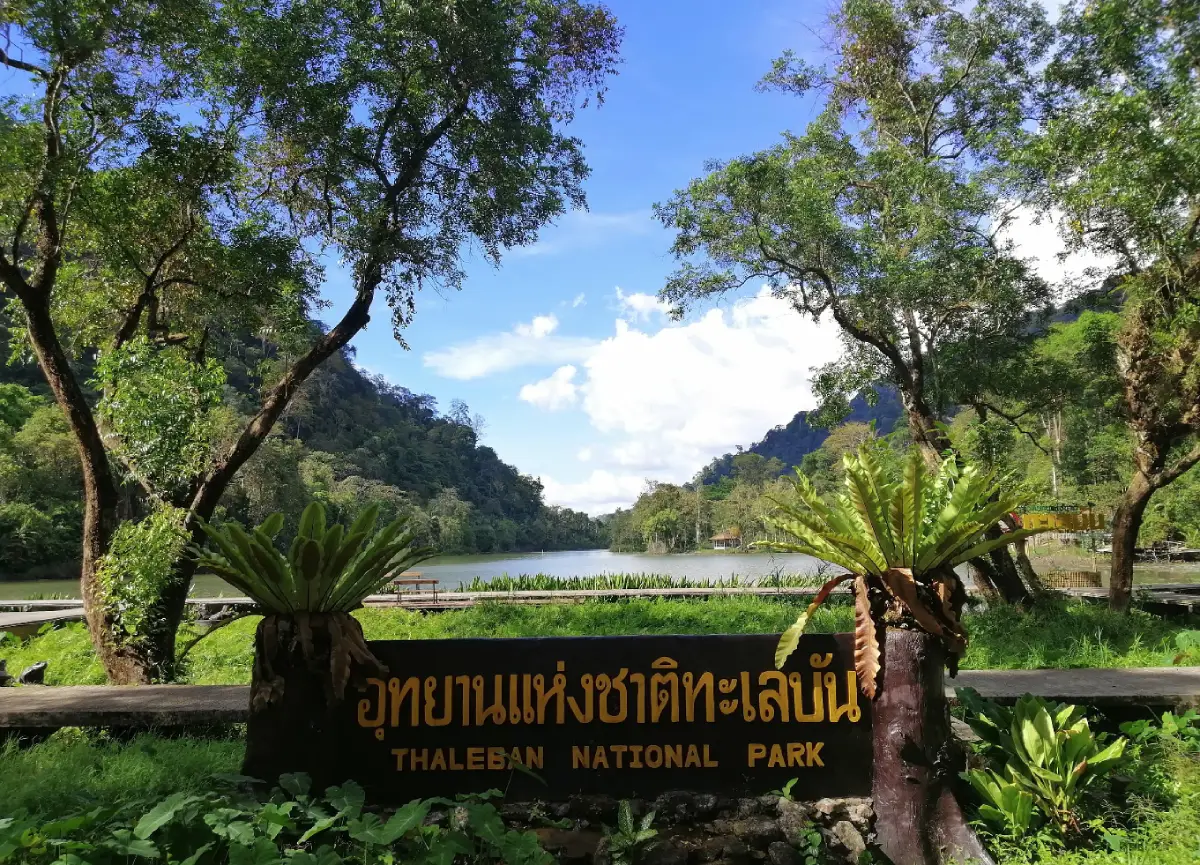
Thale Ban National Park in Satun Province is a land-based national park known for its freshwater lake, rainforest, mountain scenery, waterfalls, caves, mangrove-connected landscapes, and rich wildlife. It is located at Ban Wang Prachan, Wang Prachan Subdistrict, Khuan Don District, Satun Province, close to the Thailand–Malaysia border and about 40 km from Satun town. The most important feature is Bueng Thale Ban, a freshwater lake in a mountain valley formed by the collapse of land between Khao Chin and Khao Mot Daeng. Surrounded by dense forest and quiet hills, the lake has become one of Satun’s most distinctive inland natural landmarks.
Although the Thai word “Thale” often means sea, Thale Ban is not a marine park. It is a forest and wetland national park where the central identity is a lake, not the ocean. The name Thale Ban comes from Malay wording meaning a collapsed sea or a body of water formed by land subsidence. This meaning matches the geography of the park clearly, because the lake lies in a valley and is associated with the natural sinking of land. The result is a broad freshwater wetland enclosed by forested mountains.
Thale Ban National Park covers about 122,500 rai and includes parts of the Kupang Putoh and Hua Kraming National Forest Reserves, as well as the Khuan Bo Nam Puyu forest area in Ban Khuan and Puyu subdistricts of Mueang Satun District. It was declared a national park on 27 October 1980. Its main conservation value lies in protecting watershed forest, mountain ecosystems, wetlands, freshwater habitats, caves, waterfalls, and wildlife habitats in the lower southern region of Thailand.
The landscape of the park is made up of mountain ranges, especially Khao Chin, Khao Mot Daeng, Khao Wang Pra, and forested ridges near the Thailand–Malaysia border. Most of the park is rugged and mountainous, with dense forest and streams that feed the surrounding areas. This healthy forest system makes Thale Ban an important watershed and wildlife refuge, supporting mammals, birds, reptiles, amphibians, fish, molluscs, insects, and many other organisms that depend on forest and wetland habitats.
Bueng Thale Ban is the main attraction and the most recognizable image of the park. The freshwater lake covers about 125 rai and sits between mountain slopes, with Khao Chin and Khao Wang Pra framing the scenery. Around the lake, visitors can see dense stands of bakong plants, aquatic vegetation, fish, molluscs, and wetland life. The park has built a lakeside pavilion and a wooden boardwalk for visitors to rest, take photographs, observe nature, and enjoy the still atmosphere of the water and surrounding forest.
The bakong plant is closely connected with the identity of Thale Ban Lake. It grows densely along the wet edges of the lake and creates the distinctive wetland scenery that visitors see from the wooden walkway. The view combines floating plants, open water, forest edges, and mountain backdrops. This is one of the reasons the lake is memorable: it does not rely on artificial structures, but on a quiet natural composition of water, plants, forest, and light.
The “khiat wak” or local “water dog” is the park’s best-known amphibian. It resembles a frog or toad, has a distinctive tail-like feature, and is known for a call that sounds similar to a young dog. It is most associated with the moist lake-edge habitat, especially during the rainy season. Its unusual sound has become part of the natural character of Bueng Thale Ban and is one of the reasons nature-focused visitors should spend time quietly around the lake.
Wildlife in the park includes serows, elephants, tapirs, wild boar, monkeys, gibbons, and many smaller animals. This diversity reflects the quality of the forest and the importance of the park as a natural habitat. Visitors should remember that this is not a zoo. Wildlife sightings depend on time, season, quiet conditions, and animal behaviour. The correct way to enjoy the area is to keep distance, avoid feeding animals, stay quiet, and follow park instructions.
For birdwatchers, Thale Ban National Park is one of Satun’s notable inland birding areas. The park supports forest birds and wetland-related species, including birds such as whiskered treeswifts, striped-throated bulbuls, chestnut-naped forktails, and woodpeckers. Early morning and late afternoon are the best times for bird activity. Birdwatchers should wear muted colours, walk quietly, and use binoculars or zoom lenses instead of approaching birds too closely.
Yaroi Waterfall is another important attraction in the park. It originates from the Hua Kraming forest area and has nine tiers, with pools where visitors can rest or play in the water when conditions are safe. It is popular with local travellers because it is accessible from the Wang Prachan route and offers a humid forest atmosphere, multi-tiered falls, and clear streams. Visitors should be careful of slippery rocks, strong currents, and heavy rain conditions.
Ton Pliw Waterfall is fed by streams from Khao Chin and is known as a large multi-tiered waterfall flowing down forested cliffs. It is suitable for travellers who want to see another side of the park’s water system. The access route uses Highway 4184 around km 9-10, about 10 km from the park office, followed by an additional side road of about 3 km. Visitors should check road and weather conditions before entering, especially during periods of heavy rain.
Puyu Cave is part of the broader Thale Ban National Park context, but it is reached differently from the main lake area. Visitors travel to Tammalang Pier or a local pier in Puyu Subdistrict and continue by boat through mangrove waterways. The cave is a limestone tunnel with water passing through, mangrove scenery, and stalactite formations. A trip to Puyu Cave connects the mountain forest identity of Wang Prachan with the mangrove and coastal ecosystem of Satun.
Nature trails in the park allow visitors to learn about rainforest and wetland ecology without taking on a difficult hike. Near the park office, there are short trails of about 600 metres and 1.3 km, suitable for families, students, and visitors who want a manageable forest walk. More experienced hikers can ask park staff about longer routes, including the trail from the park office area to the protection unit near Yaroi Waterfall, which is about 14 km and requires proper planning.
Thale Ban National Park is closely linked with Wang Prachan Subdistrict and the Thailand–Malaysia border route. Nearby areas include fruit orchards, rubber plantations, local communities, Wang Prachan Border Market, Wang Prachan Border Checkpoint, and the road toward Perlis in Malaysia. This makes the park easy to combine with a border-route itinerary. Travellers can spend the morning around the lake and forest, then continue to the border market or local restaurants in Khuan Don.
The best times to visit Bueng Thale Ban are morning and late afternoon. Morning offers cool air, soft light, and better bird activity. Late afternoon is good for lakeside photography and reflections on the water. During the rainy season, visitors may hear the distinctive sounds of the local amphibians around the lake. Midday visits are possible, but the weather can be hot or change quickly, so drinking water, a hat, and rain protection are useful.
Facilities in the park include a visitor centre, bungalows, welfare shop, camping ground, toilets, lakeside pavilion, wooden boardwalk, and nature trails. The bungalows suit travellers who want to stay close to the lake and experience a simple forest atmosphere. Campers should prepare their own equipment and check current conditions with the park before travelling. The welfare shop operates during official service hours, so visitors should plan food and drinking water in advance.
Visitors staying overnight should bring essential items such as personal medicine, a flashlight, mosquito repellent, rainwear, shoes suitable for damp ground, a dry bag, and a personal trash bag. Staying in a national park is simpler than staying in a resort, but it gives travellers a more direct experience of forest sounds, insects, streams, and the night atmosphere around the lake.
The entrance fee follows the national park fee group that includes Thale Ban. Thai visitors pay 40 baht for adults and 20 baht for children. Foreign visitors pay 200 baht for adults and 100 baht for children. This fee covers park entry only and does not include accommodation, meals, transport, or activity-related expenses. Carrying cash is recommended, especially for families and travellers continuing to waterfalls or other park service points.
Getting There from Satun town is straightforward. Take Highway 406 toward Khuan Don District. At the Khuan Don junction, follow the signs to Highway 4184 on the Khuan Sato-Wang Prachan route, then continue toward Ban Wang Prachan and the park office. This road links Satun town with the Wang Prachan border area. Travellers using a private car can search for Thale Ban National Park or use the coordinates 6.7095737, 100.1678272 for navigation.
Travellers without a private vehicle can take public transport toward Satun and get off around the Khuan Sato or Khuan Don connection point, then continue by local songthaew on the Satun-Wang Prachan route. Public transport requires more time and schedule checking. For those who want to visit several places in one day, such as Yaroi Waterfall, Ton Pliw Waterfall, and Wang Prachan Border Market, a private car or rented vehicle is more practical.
A half-day visit can begin at the visitor centre, continue along the wooden boardwalk around the lake, include time at the lakeside pavilion, and finish with photography and a simple meal at or near the park. A full-day route can add Yaroi Waterfall, Ton Pliw Waterfall, Wang Pra Grassland, and Wang Prachan Border Market. This creates a complete itinerary with lake scenery, forest, waterfalls, border culture, and local food.
Important visitor rules are simple: do not feed monkeys or wildlife, do not make loud noise, do not collect plants or animals, do not leave rubbish, do not swim in unsafe areas, and do not leave designated trails. The park includes wildlife habitats, wetland plants, wooden walkways, forest trails, and streams, so visitors should move carefully. Families with children or older travellers should focus on the lake area and short trails near the visitor centre.
Thale Ban National Park is suitable for families, students, birdwatchers, nature photographers, hikers, and travellers who want to experience Satun’s inland forest environment. Its strength lies in the combination of an accessible lake, forested mountains, waterfalls, caves, and a nearby border route. It is a quiet destination that adds ecological depth to a Satun trip.
Compared with Satun’s famous islands and beaches, Thale Ban offers a very different experience. There are no white beaches or snorkelling boats here. Instead, visitors find a freshwater lake, rainforest humidity, wildlife sounds, wetland plants, and mountains surrounding the water. This makes the park an important complement to Satun’s marine attractions and shows that the province has strong natural value on the mainland as well as at sea.
The real value of Thale Ban National Park is that every part of the landscape still performs an ecological function. The lake stores water, the forest shelters wildlife, the mountains form a watershed, the waterfalls show the movement of streams, the caves reveal limestone geology, and the trails help people understand nature. Visiting Thale Ban is therefore not only about photography; it is also a way to understand how forests, wetlands, mountains, and communities are connected.
Thale Ban National Park is a worthwhile stop for travellers visiting Khuan Don District or the Wang Prachan border route. Bueng Thale Ban, bakong plants, the local “khiat wak,” Yaroi Waterfall, Ton Pliw Waterfall, Puyu Cave, and the park’s forest trails give the destination a complete identity of nature, learning, and quiet recreation.
| Name | Thale Ban National Park |
| Location | Ban Wang Prachan, Wang Prachan Subdistrict, Khuan Don District, Satun Province, near the Thailand–Malaysia border |
| Address | Moo 4, Samantrattawithi Road, Wang Prachan Subdistrict, Khuan Don District, Satun 91160, Thailand |
| Coordinates | 6.7095737, 100.1678272 |
| Highlights | Freshwater lake in a mountain valley, rainforest, waterfalls, caves, nature trails, bakong plants, the local “khiat wak,” forest birds, and the Thailand–Malaysia border atmosphere |
| Area | About 122,500 Rai |
| National Park Declaration | 27 October 1980 |
| Name Origin | The name Thale Ban comes from Malay wording meaning a collapsed sea or a body of water formed by land subsidence |
| Distinctive Features | A land-based national park with rugged mountains, rainforest, a freshwater lake, waterfalls, caves, mangrove-linked areas, and diverse wildlife |
| Travel Information | From Satun town, take Highway 406 toward Khuan Don District, then enter Highway 4184 on the Khuan Sato-Wang Prachan route toward Ban Wang Prachan and the park office |
| Current Status | Open as a national park and conservation-based nature attraction in Satun Province |
| Open Days | Daily |
| Opening Hours | 08.30 – 16.30 |
| Fees | Thai Visitors: Adult 40 Baht, Child 20 Baht Foreign Visitors: Adult 200 Baht, Child 100 Baht |
| Facilities | Visitor centre, bungalows, welfare shop, camping ground, toilets, lakeside pavilion, wooden boardwalk, and nature trails |
| Main Areas / Zones | Bueng Thale Ban, park office zone, 600-metre nature trail, 1.3-km nature trail, Yaroi Waterfall, Ton Pliw Waterfall, Puyu Cave, Ton Din Cave, bungalow area, camping area, and the Wang Prachan border area |
| Caretaker / Local Authority | Thale Ban National Park, Department Of National Parks, Wildlife And Plant Conservation |
| Main Contact Number | 083-533-1710, 074-750-758 |
| Nearby Tourist Attractions | 1. Bueng Thale Ban, about 0 km 2. Lakeside Nature Trail, about 0 km 3. Wang Prachan Border Market, about 2 km 4. Yaroi Waterfall, about 7 km 5. Ton Pliw Waterfall, about 10 km 6. Puyu Cave, about 55 km, accessed by boat from Tammalang Pier |
| Nearby Restaurants | 1. Makan Restaurant, about 2 km, Tel. 086-481-3314 2. Baan Suan Tondin, about 5 km, Tel. 082-614-6422 3. Nari Nari Cafe, about 20 km, Tel. 074-740-234 4. Jungle Cafe Khuan Don Satun Branch, about 20 km, Tel. 087-473-3319 5. D' Andaman Thaifood Restaurant, about 25 km, Tel. 064-591-9939 6. Kopi Rim Khlong, about 27 km, Tel. 088-791-1972 |
| Nearby Accommodations | 1. Thale Ban National Park Bungalows, about 0 km, Tel. 083-533-1710 2. Baan Suan Tondin Restaurant And Resort, about 5 km, Tel. 065-142-6422 3. Wichuda Fishing Park & Homestay, about 17 km, Tel. 082-429-6055 4. Satun Premium Resort, about 20 km, Tel. 081-896-7902 5. Naris Phu View Resort, about 21 km, Tel. 074-795-428, 090-712-2391 6. MEESUK Hotel, about 32 km, Tel. 081-907-3355 |
Frequently Asked Questions (FAQ)
Q: Where is Thale Ban National Park located?
A: Thale Ban National Park is located at Ban Wang Prachan, Wang Prachan Subdistrict, Khuan Don District, Satun Province, near the Thailand–Malaysia border and about 40 km from Satun town.
Q: When is Thale Ban National Park open?
A: The park is open daily from 08.30 to 16.30.
Q: How much is the entrance fee for Thale Ban National Park?
A: Thai visitors pay 40 baht for adults and 20 baht for children. Foreign visitors pay 200 baht for adults and 100 baht for children.
Q: What is the main highlight of Thale Ban National Park?
A: The main highlight is Bueng Thale Ban, a freshwater lake in a mountain valley formed by land subsidence, with bakong plants, rainforest, waterfalls, caves, and the distinctive local “khiat wak” amphibian.
Q: What activities are suitable at Thale Ban National Park?
A: Suitable activities include walking around the lake, birdwatching, nature photography, short nature trails, waterfall visits, lakeside relaxation, and learning about forest and wetland ecology.
Q: How do travellers get to Thale Ban National Park?
A: From Satun town, take Highway 406 toward Khuan Don District, then turn onto Highway 4184 on the Khuan Sato-Wang Prachan route and continue to the park office.
Q: Is accommodation available inside Thale Ban National Park?
A: Yes. The park provides bungalows, a camping area, and a welfare shop. Travellers should contact the park before departure, especially during holidays or peak travel periods.
Q: What nearby places can travellers visit after Thale Ban National Park?
A: Nearby options include Wang Prachan Border Market, Yaroi Waterfall, Ton Pliw Waterfall, Puyu Cave, and travel routes back toward Satun town.
 Category: ●Nature and Wildlife
 Group: ●National Parks and Marine Reserves
Last Update : 1 WeekAgo
 Last Update : 1 WeekAgo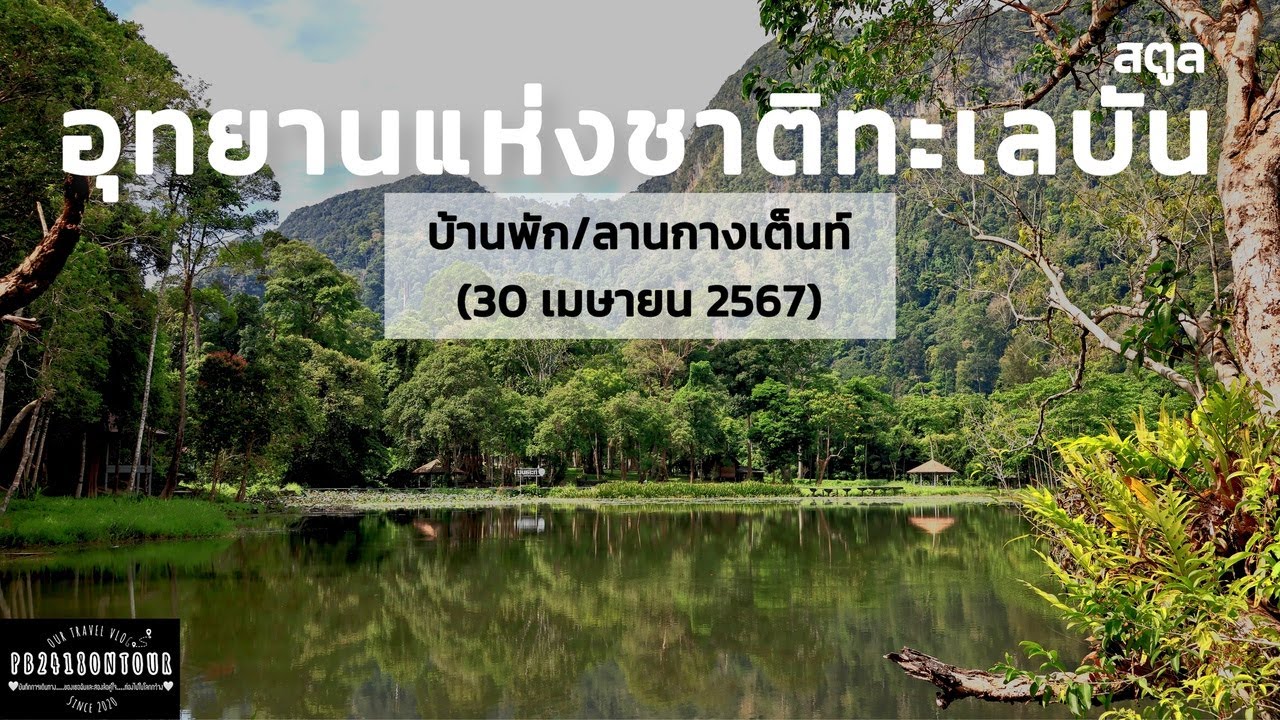
 Click to Access the Navigation Map GPS
Thale Ban National Park Map
Recommend

 Art, Culture and Heritage
 Historical Sites and Monuments(1)
 Landmarks and Memorials(1)
 Art, Craft Centres, Tradition(5)
 Museums(3)
 Places of Worship
 Temple(3)
 Mosque(27)
 Suburban Living
 Village, Community(1)
 Local Market(2)
National Parks and Marine Reserves(7)
Local Market(2)
National Parks and Marine Reserves(7)
 Mountain (Doi)(1)
 Dam, Reservoir, Lake(2)
 Waterfalls(9)
 Hot Springs(1)
 Caves(9)
 Bays and Beaches(10)
 Islands(16)
 Other natural attractions(5)
 Entertainment and Agricultural
 Zoos and Aquariums(1)
 Farms, Parks and Ecotourism(4)
 Outdoor and Adventure Activities(1)


