
lovethailand home >South Travel Attractions >Ranong Travel Attractions >Suk Samran >Kam Phuan > Ko Kam Nui
TL;DR: Ko Kam Nui is located at Mu Ko Kam, Laem Son National Park, Ranong Province, open Open for marine travel seasonally from 15 October to 15 May, and closed for, hours Laem Son National Park headquarters 08.30 – 16.30; visits to Ko Kam Nui are.
Ko Kam Nui
Open Days: Open for marine travel seasonally from 15 October to 15 May, and closed for monsoon recovery from 16 May to 14 October
Opening Hours: Laem Son National Park headquarters 08.30 – 16.30; visits to Ko Kam Nui are daytime boat trips subject to sea conditions and national park instructions
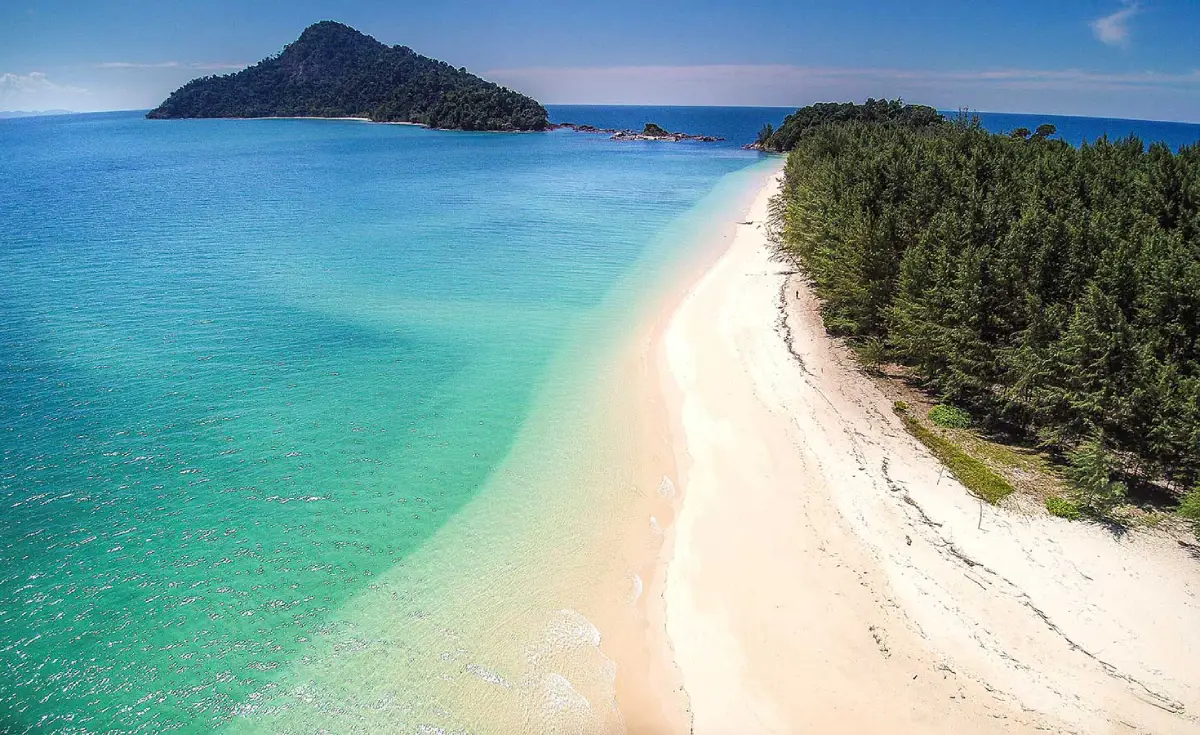
Ko Kam Nui in Ranong Province is a small island in Mu Ko Kam, within Laem Son National Park, Kapoe District. Located near the Ko Kam Yai island group and surrounded by several smaller islets, it is known for having a beach on only one side, clear Andaman water, quiet scenery, and a simple natural atmosphere. It is best visited as a daytime boat trip combined with Ko Kam Yai, Ko Kam Tok, Ko Khang Khao, or Ko Yi Pun, using Bang Ben Beach and Laem Son National Park as the main mainland base.
Ko Kam Nui, Ranong, is a small island in Mu Ko Kam, an island group protected by Laem Son National Park on Thailand’s Andaman coast. The island is distinctive because it has a sandy beach on only one side and is accompanied by several small satellite islets. Compared with better-known islands in the same marine route, such as Ko Khang Khao, Ko Kam Tok or Ao Khao Khwai, and Ko Kam Yai, Ko Kam Nui feels smaller, quieter, and more suitable for careful low-impact visits rather than heavy use.
The key feature of Ko Kam Nui is its single-sided beach. This makes the usable visitor area limited. Unlike Ko Kam Yai, which is known for white sand around much of the island, or Ko Khang Khao, which offers both a white-sand beach and a northern stone beach, Ko Kam Nui has a simpler and more delicate coastal setting. Visitors should use the beach lightly, avoid crowding, and leave no waste because a small beach is more vulnerable to visitor impact than a large mainland shoreline.
Ko Kam Nui should be understood within the wider context of Laem Son National Park. The park protects coastal and island areas along the Andaman Sea in Ranong and Phang Nga. It includes Bang Ben Beach, Laem Son Beach, Praphat Beach, Ko Khang Khao, Mu Ko Kam, and several satellite islands. Ko Kam Nui is important not because it is large or heavily developed, but because it forms part of a larger coastal ecosystem where beaches, forests, shallow waters, islands, and marine life are connected.
Mu Ko Kam is a varied island group. Ko Kam Tok is known for Ao Khao Khwai, a curved bay with a viewpoint. Ko Khang Khao is known for fine white sand, clear water, shallow coral, and Hat Hin Ngam on the northern side. Ko Yi Pun or Ko Kam Klang is often used as a beach and swimming stop. Ko Kam Yai is known for its broad white-sand character. Ko Kam Nui completes the group with its smaller scale, single-sided beach, and surrounding islets, adding another layer to the marine geography of Ranong.
The appeal of Ko Kam Nui does not come from having many activities. It comes from quiet scenery and small-island nature. Visitors may notice the relationship between sand, shoreline vegetation, water color, nearby islets, and the open Andaman Sea. Around parts of Mu Ko Kam, the sea is relatively shallow, and in good light the water can show changing shades of pale blue, turquoise, and deeper blue according to depth, tide, and sunlight.
The single beach on Ko Kam Nui is the island’s most important visitor area. It is also a natural shoreline affected by tide, waves, wind, and seasonal changes. Shell fragments, coral pieces, driftwood, and natural tide-line materials are part of the beach environment. Visitors should not remove these natural elements or rearrange the beach for photographs. The beach should be treated as a living coastal zone rather than a decorative surface.
Because of its size and limited beach area, Ko Kam Nui is best approached as a short stop within a boat route rather than a place for long stays. Landing depends on sea level, wave conditions, the boat landing point, and the judgment of boat operators or rangers. On some days, it may be suitable to land briefly. On other days, the boat operator may choose to view the island from the boat or adjust the route to a safer nearby island. Flexibility is normal in Ranong marine travel.
Ko Kam Nui has no permanent village, no hotel, no regular restaurant, and no large tourist-service system on the island. Visitor facilities should be arranged on the mainland, especially at Bang Ben Beach and Laem Son National Park headquarters. These mainland areas provide park accommodation, camping areas, toilets, visitor services, some food options, and boat contact points for Mu Ko Kam trips.
Getting There starts from Ranong town. Travelers drive south toward Kapoe District, continue to Bang Ben Beach or Laem Son National Park headquarters, and then arrange a boat trip to Mu Ko Kam. Ko Kam Nui is usually planned together with Ko Kam Yai or other islands in the group. It should not be treated as an island with a regular public ferry. Travel is normally by local charter boat or marine tour route based on sea conditions on the day.
The road from Ranong town to Bang Ben Beach follows Highway 4 toward Kapoe District before turning into Muang Kluang Subdistrict and the Laem Son National Park area. Travelers should leave early because time is needed for the drive, boat coordination, national park fee payment, food and water preparation, safety briefing, and sea-condition checks. Visitors without a private vehicle should arrange transfers in advance because local transport is not as frequent as in major tourist towns.
A Ko Kam Nui trip should be planned according to actual sea conditions, not fixed old timetables. Small islands in Mu Ko Kam are affected by landing points, tides, wind, waves, and the amount of usable beach on each day. One day may be good for a Ko Kam Nui stop, while another may be better for Ko Khang Khao, Ko Yi Pun, or Ko Kam Tok. Boat operators and park staff are the best people to decide the safe route before departure.
The best period to visit is the open marine season from 15 October to 15 May, especially during calmer months from late year to early year. The period from 16 May to 14 October is the monsoon recovery season, when marine travel areas are closed for safety and ecological recovery. Visitors should not attempt to enter closed marine zones because the closure protects both travelers and the natural environment.
Suitable activities on Ko Kam Nui include viewing the single-sided beach, taking nature photographs, resting briefly by the sea, swimming only in safe areas, and enjoying the scenery of the nearby satellite islets. If included in a wider Mu Ko Kam boat route, Ko Kam Nui may serve as a quiet stop between larger highlights such as Ko Kam Yai, Ko Kam Tok, Ko Khang Khao, or Ko Yi Pun. Visitors should avoid staying too long or using the small beach too heavily.
Snorkeling around Mu Ko Kam should be done only where rangers or boat operators recommend. Coral, shallow-water habitats, and currents differ from island to island. Visitors should not stand on coral, touch marine life, feed fish, collect shells or coral, or use sunscreen that harms the sea. Protecting the underwater environment is essential because the beauty of Mu Ko Kam depends on clean water, healthy sand, and balanced marine habitats.
Swimming near Ko Kam Nui requires care. Even when the water looks clear and calm, Andaman Sea conditions can change with wind, tide, waves, and current. Weak swimmers should wear life jackets. Children should remain close to adults. No one should swim far from the boat or beyond the area visible to the crew. A good island visit must be safe as well as beautiful.
Visitors should prepare essential items before boarding the boat. Useful items include drinking water, a packed lunch, a hat, sunglasses, sun-protective clothing, a waterproof bag, towel, beach shoes, personal medication, seasickness medicine when needed, and a personal trash bag. Ko Kam Nui has no shops, no freshwater service for visitors, and no waste-disposal system. Good preparation reduces both inconvenience and environmental pressure.
Food and drinks should be arranged on the mainland before departure. Travelers can eat near Bang Ben Beach or order packed meals from mainland restaurants. All containers, bottles, plastic bags, and food scraps must be carried back to the mainland. Food waste left on a small island can attract animals, change natural behavior, and create litter problems quickly.
Bang Ben Beach is the most practical mainland base for a Ko Kam Nui trip. It is one of the key visitor areas of Laem Son National Park, with a wide beach, natural casuarina shade, and a view toward offshore islands on clear days. Staying near Bang Ben Beach or in Kapoe District the night before a boat trip allows an easier morning departure and reduces pressure on the travel schedule.
Ko Kam Yai is the island most naturally paired with Ko Kam Nui because both belong to the broader Mu Ko Kam setting. Ko Kam Yai offers a wider white-sand character, while Ko Kam Nui is smaller, has a beach on only one side, and is surrounded by satellite islets. Visiting both helps travelers understand how different the islands in the same group can be.
Ko Kam Tok or Ao Khao Khwai is another common highlight in Mu Ko Kam because of its curved bay and viewpoint. Ko Khang Khao offers white sand, clear water, shallow coral, and a northern stone beach. Ko Yi Pun or Ko Kam Klang is often used as a peaceful beach stop. Combining Ko Kam Nui with these islands creates a more complete marine day trip, with beaches, viewpoints, clear water, and varied island shapes.
Public information specifically about Ko Kam Nui is more limited than information about the main islands in Mu Ko Kam. A reliable article should therefore avoid adding unsupported details. It should not claim that the island has accommodation, restaurants, fixed ferry times, or large facilities unless verified. The safest and most accurate approach is to travel through Laem Son National Park and local boat operators, then confirm the actual route before departure.
For photography, Ko Kam Nui works best as a quiet natural scene. The single beach, water color, shoreline vegetation, and nearby islets are the main subjects. Photos from the boat may show the island shape and surrounding seascape better than photos taken only from the beach. Visitors should not climb unsafe areas, step on shoreline plants, or move stones, shells, or natural objects to create artificial compositions.
For overnight planning, travelers should stay on the mainland at Laem Son National Park, Bang Ben Beach, Kapoe District, or Ranong town, then visit Ko Kam Nui as a daytime boat trip. Park accommodation and private stays in Kapoe make early departure easier. Travelers staying in Ranong town should allow additional travel time to reach Bang Ben Beach in the morning.
Travelers who need high convenience should understand that Ko Kam Nui is not a full-service island. Its beauty lies in its limited footprint and natural setting. Visitors who need cafés, easy toilets, restaurants, or accommodation should rely on Bang Ben Beach or Kapoe District instead. Setting the right expectations makes the island experience more satisfying and prevents disappointment.
Responsible behavior on Ko Kam Nui means using as little space as possible and leaving as little trace as possible. Do not leave trash, cigarette butts, sand, shells, rocks, coral, or food waste behind. Do not break branches, feed fish, play loud music, disturb wildlife, or enter areas not permitted by boat operators or park staff. Small islands have lower visitor capacity than large beaches, so each action matters.
Overall, Ko Kam Nui is suited to travelers who appreciate quiet Ranong seascapes and understated natural beauty. It is not a destination built around many activities. It is a small island with a single beach, surrounding islets, clear water, and a peaceful setting inside Mu Ko Kam. Travelers who arrive with respect and flexibility will understand why this small island is part of the wider charm of Laem Son National Park.
In summary, Ko Kam Nui is a small natural island in Laem Son National Park that should be visited carefully and responsibly. Its highlights are the single-sided beach, surrounding islets, clear water, and quiet Andaman scenery. It is best planned as a daytime boat trip combined with Ko Kam Yai, Ko Kam Tok, Ko Khang Khao, or Ko Yi Pun. Visitors should travel during the open marine season, prepare food and water on the mainland, contact the park or local boat operators in advance, and carry all waste back to shore.
| Name | Ko Kam Nui, Ranong |
| Location | Mu Ko Kam, Laem Son National Park, Ranong Province |
| Address | Ko Kam Nui, Muang Kluang Subdistrict, Kapoe District, Ranong Province 85120, Thailand |
| Coordinates | 9.40028, 98.39215 |
| Highlights | A small island in Mu Ko Kam, near the Ko Kam Yai group, with a beach on only one side, several satellite islets, clear water, and a quiet natural atmosphere |
| History / Area Context | Located within Laem Son National Park, which was declared a national park on 19 August 1983 and covers coastal and island areas in Ranong and Phang Nga. |
| Distinctive Features | A small natural island with limited beach space, no permanent village, no hotel, and no regular restaurant, suitable for daytime boat-route stops. |
| Travel Information | Travel from Ranong town to Bang Ben Beach or Laem Son National Park headquarters, then take a local Mu Ko Kam boat trip. Ko Kam Nui is best planned with Ko Kam Yai or other islands according to sea conditions. |
| Current Status | A seasonal marine attraction within Laem Son National Park, open during the marine travel season and closed during the monsoon recovery period. |
| Open Days | Open for marine travel seasonally from 15 October to 15 May, and closed for monsoon recovery from 16 May to 14 October |
| Opening Hours | Laem Son National Park headquarters 08.30 – 16.30; Ko Kam Nui visits operate as daytime boat trips subject to sea conditions and park instructions. |
| Fees | Thai adult 40 baht, Thai child 20 baht / foreign adult 200 baht, foreign child 100 baht. Boat and other service fees are charged separately. |
| Facilities | Use mainland facilities at Bang Ben Beach and Laem Son National Park headquarters, including visitor services, park accommodation, mainland restaurants, toilets, camping areas, boat contact points, and park staff support. |
| Main Areas / Zones | Single-sided sandy beach, shoreline vegetation, coastal area, nearby satellite islets, and boat landing points permitted by rangers or boat operators |
| Caretaker / Related Authorities | Laem Son National Park, Department of National Parks, Wildlife and Plant Conservation |
| Main Contact Number | Laem Son National Park Tel. 077-861-431 / Conservation Boat Tourism Community Enterprise Tel. 089-594-1363, 077-861-439 |
| Official Website / Official Page | Laem Son National Park and Department of National Parks, Wildlife and Plant Conservation |
| Nearby Tourist Attractions | 1. Ko Kam Yai, about 11 km by boat 2. Ko Kam Tok or Ao Khao Khwai, about 14 km by boat 3. Ko Khang Khao, about 19 km by boat 4. Bang Ben Beach, about 20 km by boat and road 5. Laem Son Beach, about 24 km by boat and road 6. Praphat Beach, about 30 km from Kapoe District 7. Suksamran Pier, about 3 km by boat |
| Nearby Restaurants | 1. Yadda Chim Kon Prung, about 1 km from Laem Son National Park headquarters, Tel. 085-796-2374 2. Baan Rai I Arun, about 22 km from Laem Son National Park headquarters, Tel. 096-938-2981 3. Krua Suksamran, about 30 km from Laem Son National Park headquarters, Tel. 077-893-186 4. OK Seafood Ranong, about 57 km from Laem Son National Park headquarters, Tel. 093-686-9595 5. Torfun Seafood, about 60 km from Laem Son National Park headquarters, Tel. 081-536-9885 |
| Nearby Accommodations | 1. Laem Son National Park accommodation, about 0 km, Tel. 077-861-431 2. Andaman Peace Resort, about 2 km from Laem Son National Park headquarters, Tel. 077-820-239 3. Ranong Resort and Laguna, about 14 km from Laem Son National Park Pier, Tel. 081-397-8859 4. SS Kapoe Resort, about 14 km from Kapoe District, Tel. 085-797-4746 5. DD Resort Kapoe, about 15 km from Kapoe District, Tel. 080-610-1733, 082-808-9951 6. Baan Rai I Arun, about 22 km from Laem Son National Park headquarters, Tel. 096-938-2981 |
Frequently Asked Questions (FAQ)
Q: Where is Ko Kam Nui in Ranong located?
A: Ko Kam Nui is located in Mu Ko Kam within Laem Son National Park, Ranong Province. It is a small Andaman island best reached by local boat from the Bang Ben Beach or Laem Son National Park area.
Q: When is Ko Kam Nui open for visitors?
A: Ko Kam Nui is open for marine travel seasonally from 15 October to 15 May and closed for monsoon recovery from 16 May to 14 October.
Q: Is there an entrance fee for Ko Kam Nui?
A: Yes. The Laem Son National Park entrance fee is 40 baht for Thai adults, 20 baht for Thai children, 200 baht for foreign adults, and 100 baht for foreign children. Boat fees are charged separately.
Q: Are there hotels or restaurants on Ko Kam Nui?
A: No. Ko Kam Nui has no regular hotel or restaurant on the island. Travelers should stay and eat on the mainland, then visit as a daytime boat trip.
Q: What is Ko Kam Nui known for?
A: Ko Kam Nui is known as a small island with a beach on only one side, several nearby satellite islets, clear water, and a quiet natural atmosphere.
Q: How do travelers get to Ko Kam Nui?
A: Travelers go from Ranong town to Bang Ben Beach or Laem Son National Park headquarters, then arrange a local Mu Ko Kam boat trip through the park or local operators.
Q: What should visitors bring to Ko Kam Nui?
A: Useful items include drinking water, lunch, a hat, sunglasses, waterproof bag, beach shoes, personal medication, life jacket when needed, and a personal trash bag.
Q: Which nearby places pair well with Ko Kam Nui?
A: Ko Kam Yai, Ko Kam Tok or Ao Khao Khwai, Ko Khang Khao, Ko Yi Pun, Bang Ben Beach, and Laem Son Beach can be planned together depending on boat route and sea conditions.
 Category: ●Nature and Wildlife
 Group: ●Islands
Last Update : 2 MonthAgo
 Last Update : 2 MonthAgo
 Click to Access the Navigation Map GPS

 Art, Culture and Heritage
 Historical Sites and Monuments(4)
 Landmarks and Memorials(1)
 Royal Palace(1)
 Art, Craft Centres, Tradition(4)
 Educational Places
 Educational Gardens, Farm(1)
 Places of Worship
 Temple(12)
 Other Sacred Sites(2)
 Suburban Living
 Village, Community(2)
 National Parks and Marine Reserves(6)
 Mountain (Doi)(4)
 Waterfalls(15)
 Hot Springs(3)
 Caves(4)
 River, Canal(2)
 Bays and Beaches(10)
Islands(8)
 Other natural attractions(3)
 Travel Articles, Recipes
 Travel Review, Food Review(1)


