
lovethailand home >South Travel Attractions >Ranong Travel Attractions >Muang Ranong >Hat Som Paen > Wat Hat Som Paen
TL;DR: Wat Hat Som Paen is located at Moo 3, Hat Som Paen Subdistrict, Mueang Ranong District, Ranong Province, open Daily, hours 09.00 AM - 04.00 PM.
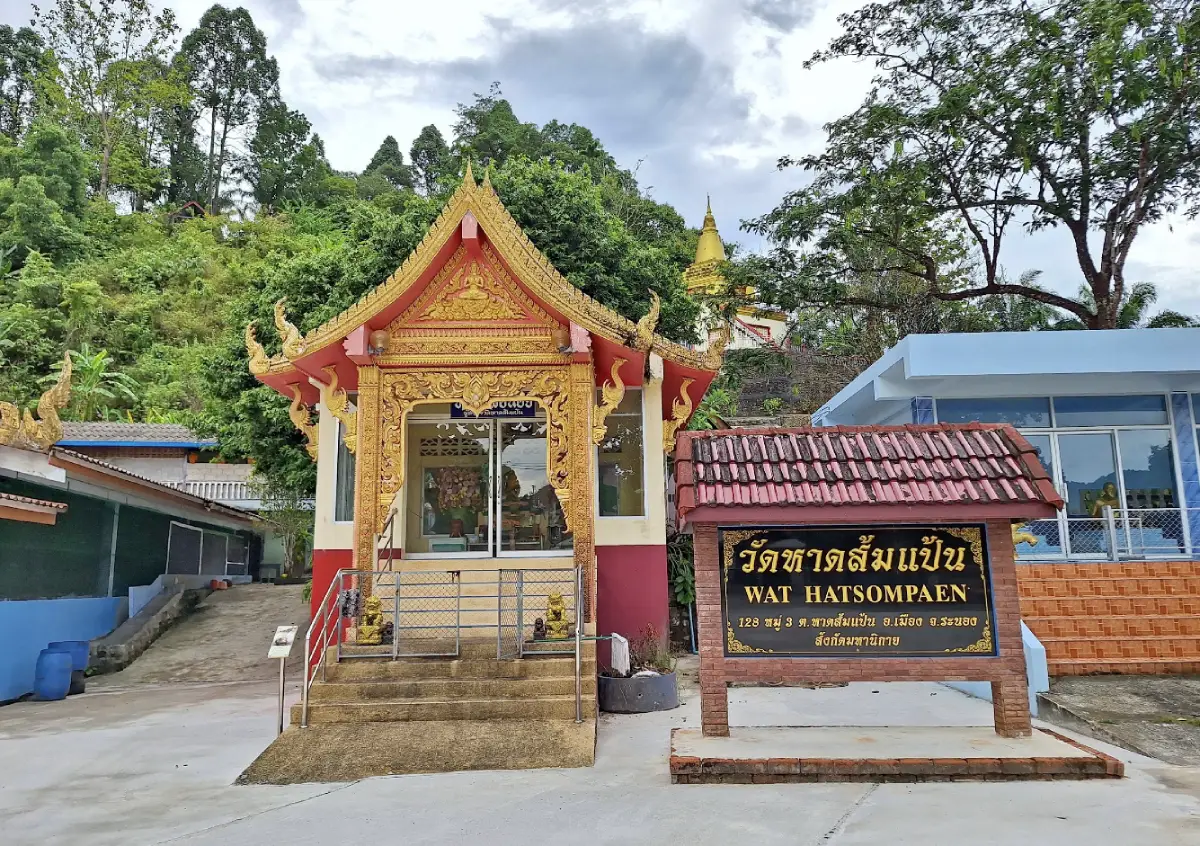
Wat Hat Som Paen
Open Days: Daily
Opening Hours: 09.00 AM - 04.00 PM
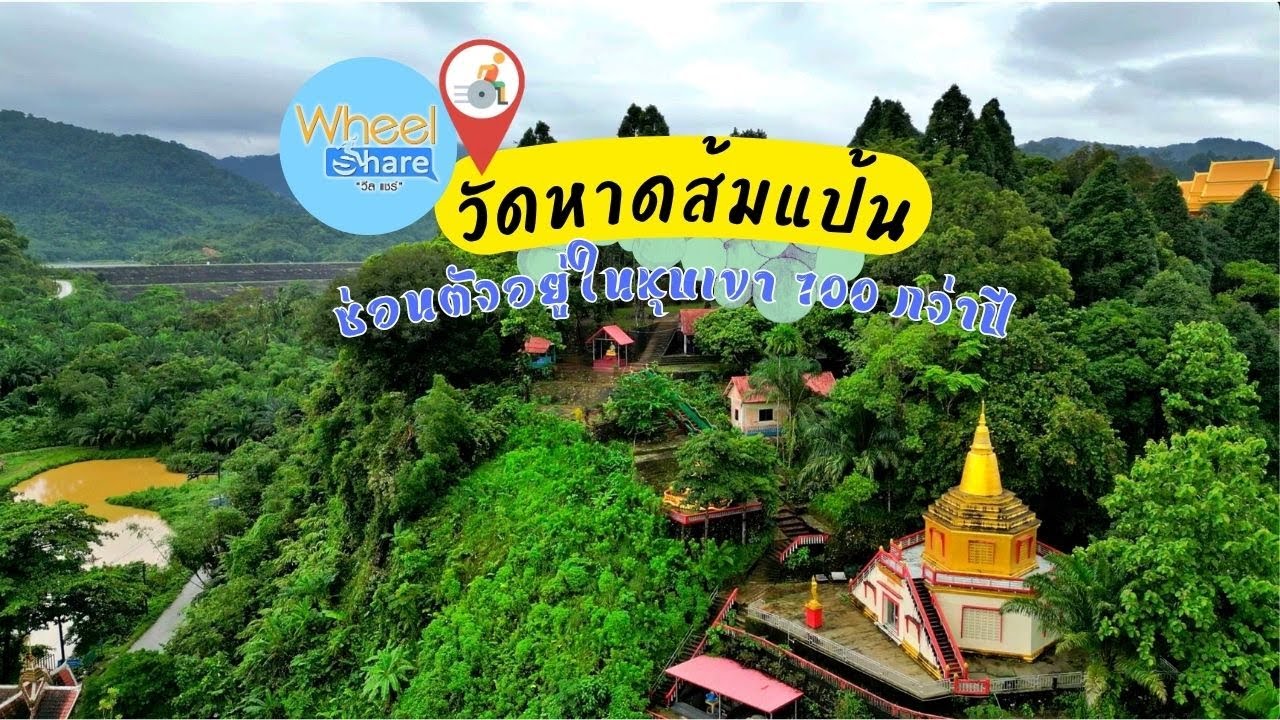
Wat Hat Som Paen is located in Moo 3, Hat Som Paen Subdistrict, Mueang Ranong District, Ranong Province. It is an important community temple and one of Ranong’s most meaningful faith-and-nature attractions. The temple is reached by following the uphill route from Raksawarin Hot Springs toward Hat Som Paen village. A clear mountain stream, Khlong Hat Som Paen, flows through the temple area and is home to large schools of phluang fish, locally respected as sacred fish. Important features include the pavilion housing the life-size image of Luang Pho Klai, a monk deeply revered by Ranong residents, a relic pagoda, a replica Buddha footprint, a red bridge across the stream, riverside resting pavilions, and a peaceful valley atmosphere. Visitors can pay respect, feed the fish, walk quietly along the stream, and combine the visit with Ranong Canyon, Hat Som Paen Reservoir, the community mineral-panning learning center, and other attractions in Ranong town.
Wat Hat Som Paen is more than a quiet village temple. It represents the identity of Hat Som Paen community through Buddhist faith, old tin-mining history, mountain landscape, clear streams, sacred fish, and the memory of a highly respected monk. The temple stands in Moo 3, Hat Som Paen Subdistrict, not far from central Ranong and Raksawarin Hot Springs. The route gradually changes from town scenery into a valley setting with canals, hills, local houses, and lush greenery. This transition is part of the experience, because it introduces travelers to another side of Ranong: not the sea, islands, or hot springs alone, but the inland world of streams, mountains, minerals, and community heritage.
The name Hat Som Paen can be confusing for first-time visitors because the word may sound like a beach destination. In reality, Hat Som Paen is a mountain and stream community rather than a seaside beach. Historically, the area was associated with tin mining, mineral panning, clay resources, and settlement in the valley. This background gives the temple a strong local context. Wat Hat Som Paen should therefore be understood together with the community’s old mining culture, mineral-panning wisdom, ceramic crafts, clean mountain water, and Buddhist faith.
The temple began as a small monastic residence before local people built more permanent structures and it became a formal temple in 1930. Its setting includes flat land, hillside areas, and a stream close to the temple compound. In earlier times, Hat Som Paen was a remote village, and travel from Ranong town was difficult. The temple became a spiritual anchor and resting place for the community. It grew alongside the villagers, whose lives depended on natural resources, local cooperation, and strong religious faith.
One of the early important figures was Luang Pho Noi, who helped establish the temple’s early religious foundation. Later, several monks resided at the temple before the time of Luang Pho Klai Punnasuwanno, the monk most closely associated with Wat Hat Som Paen today. Luang Pho Klai lived and passed away at this temple, making it a place of devotion for followers who continue to pay respect to his image.
Luang Pho Klai is remembered as a disciplined, modest, and compassionate monk who lived closely with the natural environment of Hat Som Paen. Local memory describes him as a monk who helped villagers and cared deeply for the phluang fish in the stream in front of the temple. He regarded the fish as a precious asset of the Hat Som Paen community. This belief became one of the roots of local fish protection. The fish were not captured, and over time they became both a sacred symbol and a natural highlight of the temple.
The pavilion housing the image of Luang Pho Klai is the first place many visitors stop. Devotees come to pay respect, make merit, and remember his virtues. The pavilion atmosphere is calm and suitable for quiet reflection. Visiting this space is most meaningful when travelers understand that Luang Pho Klai was not only a revered monk but also a spiritual figure deeply connected with local people, the stream, the fish, and the temple’s identity.
The relic pagoda is another important feature. In 1992, a new pagoda was built to cover the older structure. The new pagoda has a hexagonal form, with each side measuring about three meters. The pagoda enshrines sacred relics and represents the continuing devotion of the community. It gives the temple a strong religious focus beyond its natural setting and makes Wat Hat Som Paen an important local Buddhist site.
The replica Buddha footprint adds another sacred element to the compound. Together with the relic pagoda and the image of Luang Pho Klai, it allows visitors to experience the temple through several layers of devotion: reverence for the Buddha, respect for local monks, and faith rooted in community memory. This combination is typical of many rural Thai temples, where religion, nature, and everyday village life are closely connected.
Khlong Hat Som Paen is central to the atmosphere of the temple. The clear stream flows through the temple area and is home to large schools of phluang fish. These freshwater fish are known for living in clean mountain streams and moving together in groups. Seeing the fish gather near the riverside pavilion is one of the most memorable experiences at the temple, especially for families and children.
Local people regard the phluang fish in the temple stream as sacred and do not catch them. This belief has helped protect the fish over generations. It also shows how religious faith can function as community-based conservation. The fish are not only wildlife; they are part of the temple’s sacred landscape and shared community identity.
The riverside pavilion is a pleasant place to sit, rest, and feed the fish. Visitors should feed them responsibly, avoid littering, and keep plastic bags or food containers away from the water. The appeal of Wat Hat Som Paen depends on clean water, healthy fish, and a calm temple environment. Responsible behavior is therefore essential.
The red bridge across Khlong Hat Som Paen is one of the most photogenic points in the temple area. It allows visitors to see the stream, fish, trees, and riverside pavilion from a different angle. The red structure stands out against the green landscape and clear water. Visitors should use the bridge carefully, avoid blocking the walkway, and watch children closely near the stream.
Wat Hat Som Paen is also connected with annual community traditions. Local events include the yearly robe-wrapping ceremony for the relic pagoda, the celebration of Luang Pho Klai’s image held every three years, and the annual ritual for Pho Ta Luang Kaew. These traditions show that the temple remains a living ceremonial center for the subdistrict, not merely a tourist stop. Visiting during a community event reveals the relationship between the temple, local faith, and village participation more clearly.
The temple is part of the wider Hat Som Paen community route. Nearby experiences include the mineral-panning learning center, Baan Hat Som Paen ceramics group, Hat Som Paen Reservoir, and Ranong Canyon. This makes the area suitable for a half-day or full-day cultural route. Travelers can learn about old tin-mining life, try mineral-panning activities, see clay-based local crafts, pay respect at the temple, feed sacred fish, and enjoy the mountain reservoir and canyon scenery in one trip.
Ranong Canyon is one of the best places to combine with Wat Hat Som Paen. It is an old mining pit that has become a scenic green-water pond surrounded by hills and trees. Visiting the canyon before or after the temple helps travelers understand how the area’s mining past has shaped today’s landscape. It also gives the trip a good balance of nature, history, and local culture.
Hat Som Paen Reservoir is another suitable stop. Surrounded by hills, it offers a calm landscape and is especially pleasant in the morning or late afternoon. In suitable weather, light mist may appear around the hills and water surface. Combining the reservoir with Wat Hat Som Paen helps visitors understand the importance of water to the community: as a sacred stream, a place of rest, a natural resource, and a scenic attraction.
Getting There from Ranong town is straightforward. Follow Phet Kasem Road and continue onto Chon Ra U Road, passing Raksawarin Hot Springs and following the route along Khlong Hat Som Paen. At the junction toward La-un District, turn right through the village and continue to Wat Hat Som Paen. The temple is about 7 to 8 kilometers from central Ranong, or about 7 kilometers uphill from the hot spring area. A private car, rental car, motorcycle, or local hired transport is the most convenient option. During rainy weather, drive carefully because Ranong has frequent rain and parts of the route pass through hilly terrain.
The best time to visit is in the morning or afternoon. The weather is more comfortable, the light is good for photography, and the streamside atmosphere is pleasant. Visitors who want to capture mist and valley scenery should start early and combine the temple with nearby viewpoints or Hat Som Paen Reservoir. Those who prefer a slower visit can arrive later in the morning or afternoon and continue to Ranong Canyon or Raksawarin Hot Springs on the same route.
Temple etiquette is important. Visitors should dress modestly, remove shoes before entering sacred pavilions or temple buildings, avoid loud behavior, avoid touching sacred images without permission, and be considerate of people praying or meditating. Around the stream, visitors should keep the area clean, avoid throwing containers into the water, and avoid overfeeding fish.
For families, Wat Hat Som Paen is a simple but valuable learning stop. Children can learn about phluang fish, community conservation, Buddhist compassion, sacred space, and the relationship between a temple and its natural environment. Adults can explain the stories of Luang Pho Klai, local mining heritage, clean waterways, and the importance of protecting shared community resources.
Travelers interested in local history should also spend time in the Hat Som Paen community. The mineral-panning learning center explains the old mining way of life, while the ceramics group shows how local white clay has been developed into contemporary craft products. Combining these stops with the temple makes the journey more meaningful than a quick photo visit.
Overall, Wat Hat Som Paen is one of Ranong’s most distinctive community temples. It offers the image of Luang Pho Klai, a sacred relic pagoda, a replica Buddha footprint, a clear mountain stream, phluang fish, riverside resting areas, a red bridge, and a valley community shaped by old mining culture. It is not a large urban temple, but it has a dense and memorable sense of place. Visitors who want to understand Ranong through faith, water, nature, and community life should include this temple in their itinerary.
| Name | Wat Hat Som Paen |
| Thai Name | วัดหาดส้มแป้น |
| Category | Local Buddhist Temple, Religious Site, Community Heritage Site, Faith And Nature Attraction |
| Location | Moo 3, Hat Som Paen Subdistrict, Mueang Ranong District, Ranong Province |
| Address Summary | Hat Som Paen Subdistrict, Mueang Ranong District, Ranong 85000, Thailand |
| Coordinates | 9.9518480848, 98.6839525003 |
| Established As A Temple | 1930 |
| Current Abbot Found | Phra Khru Wachira Winai Sunthon |
| Highlights | Luang Pho Klai Image Pavilion, Relic Pagoda, Replica Buddha Footprint, Khlong Hat Som Paen, Phluang Fish, Riverside Pavilion, Red Bridge, And Peaceful Valley Setting |
| Significance | A spiritual center of Hat Som Paen community, the temple where Luang Pho Klai passed away, and a site combining Buddhist faith, clear streams, sacred fish, and Ranong’s old mining-community history |
| Key Features | Image Of Luang Pho Klai, Relic Pagoda, Replica Buddha Footprint, Riverside Pavilion, Hat Som Paen Stream, And Fish-Feeding Area |
| Phluang Fish | Freshwater fish living in large schools in the stream in front of the temple; local people regard them as sacred and do not catch them |
| Related Community Traditions | Annual robe-wrapping ceremony for the relic pagoda, Luang Pho Klai image celebration every three years, and annual Pho Ta Luang Kaew ritual |
| Current Status | Open as an active Buddhist temple and community tourism site with resident monks and religious activities |
| Open Days | Daily |
| Opening Hours | 09.00 AM - 04.00 PM |
| Admission Fee | Free Admission |
| Facilities | Riverside Pavilion, Resting Area, Fish-Feeding Area, Stream Bridge, 3 Toilets, And Parking Areas Around The Temple |
| Main Areas / Zones | Luang Pho Klai Image Pavilion, Relic Pagoda, Replica Buddha Footprint, Riverside Pavilion, Khlong Hat Som Paen, Phluang Fish-Feeding Area, Red Bridge, Peaceful Temple Grounds |
| Local Authority | Hat Som Paen Subdistrict Administrative Organization |
| Hat Som Paen SAO Contact | 077-862509 |
| Community Contact | 090-424-8513 |
| Travel Information | From Ranong town, follow Phet Kasem Road to Chon Ra U Road, pass Raksawarin Hot Springs, and continue toward Hat Som Paen Subdistrict. The temple is about 7 - 8 km from central Ranong and about 7 km uphill from the hot spring area. |
| Nearby Tourist Attractions | 1. Ranong Canyon, about 2 km 2. Hat Som Paen Reservoir, about 2 km 3. Raksawarin Hot Springs, about 6 km 4. Ranong City Pillar Shrine, about 7 km 5. Rattanarangsan Palace, about 7 km 6. Khaw Soo Cheang Monument, about 7 km 7. Ranong Governor’s Grave, about 8 km |
| Nearby Restaurants | 1. Chatbatt@Ranong, about 2 km, Tel. 095-260-3070 2. Ban Kamnan Tuan, about 2 km, Tel. 081-476-6333 3. Suan Tor Restaurant Ranong, about 2 km, Tel. 077-833-166 4. Som Tam Nai Fun, about 2 km, Tel. 083-555-1056 5. C’est Bien @ Baanchuengkao Resort, about 5 km, Tel. 091-035-0978, 077-985-229 6. Khun Lin Ranong, about 6 km, Tel. 077-822-863 |
| Nearby Accommodations | 1. U Sabai Ranong Resort & Travel, about 3 km, Tel. 077-810-337, 091-424-9191 2. Baan Hat Som Paen Homestay, about 3 km, Tel. 093-624-5478 3. Les Robinsons De Ranong Resort, about 5 km, Tel. 077-810-990 4. The Hidden Resort & Restaurant, about 5 km, Tel. 077-821-900 5. Ranong Gable, about 6 km, Tel. 077-810-789, 093-582-7893 6. Sook Hotel Ranong, about 8 km, Tel. 077-812-555-8, 093-581-2500 |
Frequently Asked Questions (FAQ)
Q: Where is Wat Hat Som Paen located?
A: Wat Hat Som Paen is located in Moo 3, Hat Som Paen Subdistrict, Mueang Ranong District, Ranong Province, on the uphill route from Raksawarin Hot Springs toward Hat Som Paen village.
Q: What are the main highlights of Wat Hat Som Paen?
A: The main highlights are the Luang Pho Klai image pavilion, the relic pagoda, the replica Buddha footprint, Khlong Hat Som Paen, large schools of phluang fish, the riverside pavilion, and the red bridge across the stream.
Q: Why are the phluang fish at Wat Hat Som Paen famous?
A: The fish live in large schools in the clear stream in front of the temple. Local people regard them as sacred and do not catch them, making them a symbol of the temple and Hat Som Paen community.
Q: When is Wat Hat Som Paen open?
A: Wat Hat Som Paen is open daily from 09.00 AM to 04.00 PM. Morning and afternoon are suitable times for worship, walking, and feeding the fish.
Q: Is there an admission fee?
A: No. Wat Hat Som Paen has free admission. Visitors should keep the temple clean and follow normal temple etiquette.
Q: How is Luang Pho Klai connected with Wat Hat Som Paen?
A: Luang Pho Klai was a revered monk who lived and passed away at Wat Hat Som Paen. His image is enshrined in a pavilion inside the temple for devotees to pay respect.
Q: How do travelers get to Wat Hat Som Paen?
A: From Ranong town, follow Phet Kasem Road to Chon Ra U Road, pass Raksawarin Hot Springs, and continue toward Hat Som Paen Subdistrict. The temple is about 7 to 8 kilometers from central Ranong.
Q: What nearby places can be combined with this visit?
A: Nearby places include Ranong Canyon, Hat Som Paen Reservoir, Raksawarin Hot Springs, Ranong City Pillar Shrine, Rattanarangsan Palace, Khaw Soo Cheang Monument, and other central Ranong attractions.
 Category: ●Places of Worship
 Group: ●Temple
Last Update : 3 MonthAgo
 Last Update : 3 MonthAgo
 Click to Access the Navigation Map GPS
Wat Hat Som Paen Map
Recommend

 Art, Culture and Heritage
 Historical Sites and Monuments(4)
 Landmarks and Memorials(1)
 Royal Palace(1)
 Art, Craft Centres, Tradition(4)
 Educational Places
 Educational Gardens, Farm(1)
Temple(12)
 Other Sacred Sites(2)
 Suburban Living
 Village, Community(2)
 Nature and Wildlife
 National Parks and Marine Reserves(6)
 Mountain (Doi)(4)
 Waterfalls(15)
 Hot Springs(3)
 Caves(4)
 River, Canal(2)
 Bays and Beaches(10)
 Islands(8)
 Other natural attractions(3)
 Travel Articles, Recipes
 Travel Review, Food Review(1)


