
lovethailand home >South Travel Attractions >Narathiwat Travel Attractions >Su Ngai Ko Lok >Su Ngai Ko Lok > Chao Mae To Mo Shrine
TL;DR: Chao Mae To Mo Shrine is located at Soi Phuthon, Charoen Khet Road, Su-ngai Kolok Municipality, Su-ngai Kolok District, Narathiwat Province, open Daily, hours 06:00–19:00.
Chao Mae To Mo Shrine
Open Days: Daily
Opening Hours: 06:00–19:00
Chao Mae To Mo Shrine, also known as Toh Moh Goddess Shrine of Su-ngai Kolok, is located on Soi Phuthon, Charoen Khet Road, in Su-ngai Kolok Municipality, Narathiwat Province. It is one of the most important Chinese shrines in Thailand’s southern border region and a major spiritual landmark for local residents, Thai-Chinese communities, visitors from nearby provinces, and Chinese devotees from Malaysia. The shrine is known not only for its colorful Chinese architecture but also for its long legend connected with Ban To Mo in Sukhirin District and its annual festival, one of the most vibrant cultural events in Su-ngai Kolok.
Chao Mae To Mo is closely associated with Mazu, also known in Thai-Chinese communities as Chao Mae Thapthim, the sea goddess believed to protect travelers, merchants, and people seeking safety during journeys. The local history of the shrine is connected with the gold-mining area of Khao To Mo in Sukhirin District. The deity was originally enshrined in Ban To Mo before being brought to Su-ngai Kolok, where a new shrine was established. The name “To Mo” therefore preserves the shrine’s place of origin and links the present-day border town with the older gold-mining community inland.
Su-ngai Kolok is a border town shaped by railway travel, commerce, hotels, restaurants, religious diversity, and movement between Thailand and Malaysia. Chao Mae To Mo Shrine stands in this context as a spiritual and cultural center. Visitors who come here can see how Chinese belief, border trade, local community life, and cross-border devotion meet in one place. The shrine is especially meaningful because it remains active throughout the year and becomes the center of a major annual celebration.
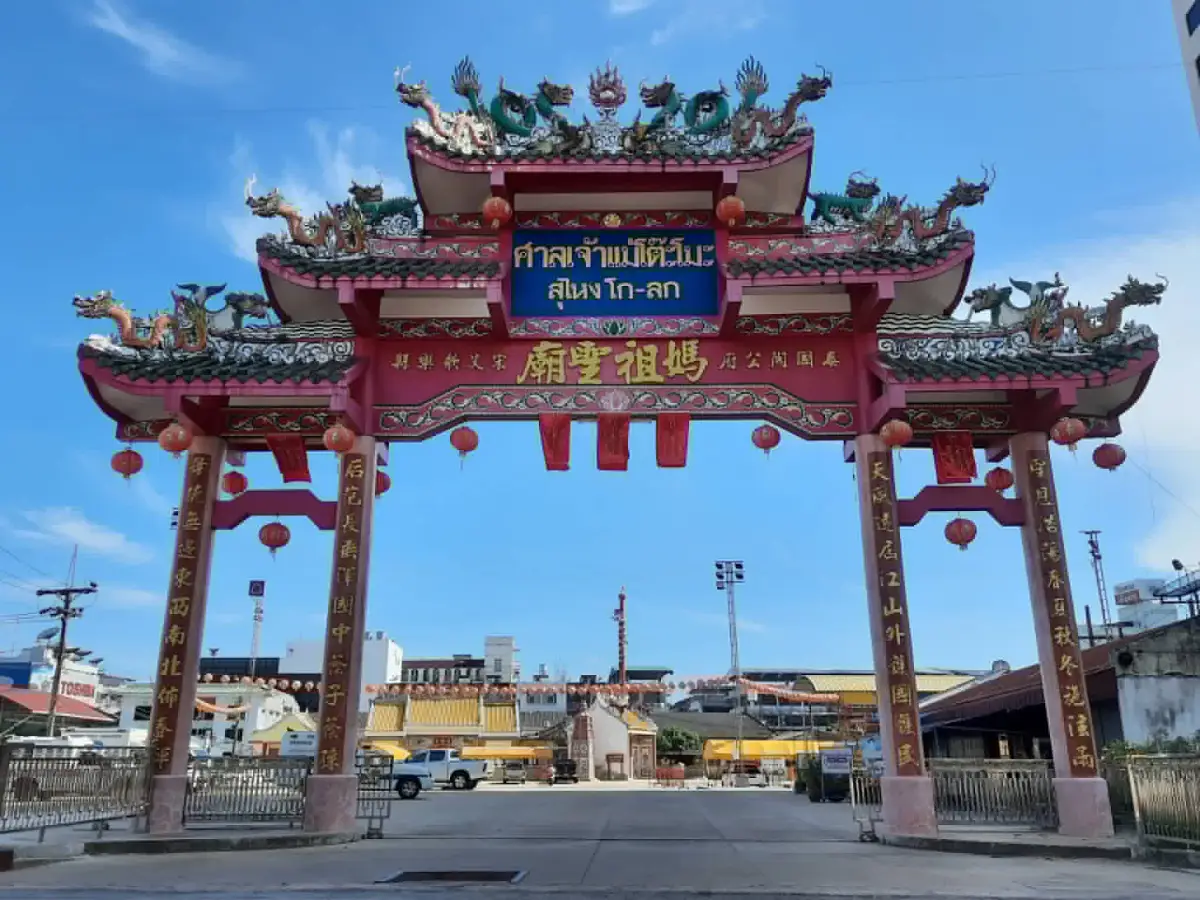
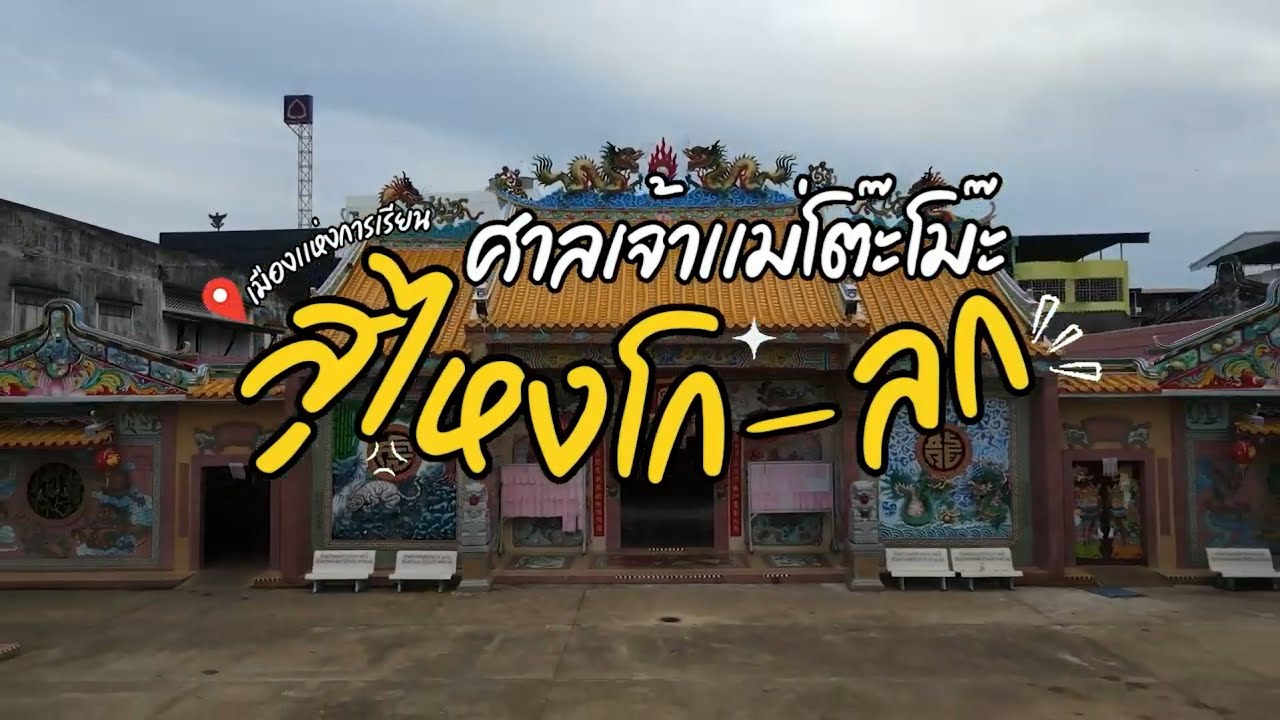
The shrine building is richly decorated in Chinese style. Notable features include orange-red roof tiles, dragon ornaments, red lanterns, Chinese signboards, incense burners, painted panels, and an ornate altar dedicated to the goddess and other deities. The atmosphere inside the shrine is solemn yet colorful, with the scent of incense and the visual detail of Chinese devotional art. Visitors can pay respect, make merit, and observe the craftsmanship that reflects the care of the local shrine committee and community.
The faith surrounding Chao Mae To Mo extends beyond Su-ngai Kolok. Devotees come from Narathiwat, nearby southern provinces, Malaysia, and other places connected with Thai-Chinese communities. Many visitors come to pray for safe travel, good business, family well-being, health, and general auspiciousness. The shrine therefore serves as a shared spiritual space for people who live, trade, travel, and cross borders in this part of southern Thailand.
The most important annual event is the Chao Mae To Mo Shrine Festival, held according to the Chinese calendar on the 23rd day of the third lunar month, usually around April or a nearby period depending on the year. The festival includes the procession of the goddess, deity palanquins, lion dances, golden dragon performances, Eng Ko parade, long-drum processions, fire-walking rituals, firecracker ceremonies, and cultural performances. It is not only a religious event but also a border-town cultural festival that brings people together through faith, performance, food, and local economy.
In 2026, the 74th anniversary celebration of Chao Mae To Mo Shrine was held from 4 to 11 May at the shrine and Maharat Square area. The event included processions through Su-ngai Kolok, deity palanquins, lion and dragon performances, Eng Ko processions, fire-walking rituals, charity activities, opera, and cultural shows. This confirms that the shrine remains a living religious and cultural institution, not merely a historical monument.
On normal visiting days, visitors should begin by paying respect at the front incense area before entering the main shrine hall. Dress modestly, speak softly, avoid blocking worshippers, and do not touch ritual objects without permission. Photography should be done respectfully, especially inside the shrine. If there are signs restricting photography or rituals are taking place, visitors should follow the shrine staff’s guidance.
The best time to visit is in the morning or late afternoon. Morning is suitable for a quiet visit, photography of the shrine exterior, and a slower walk around the area. Late afternoon is convenient for combining the shrine with food, local markets, the railway station, and central Su-ngai Kolok. During the annual festival, visitors should allow much more time because streets around the shrine may be crowded or temporarily closed for processions and public activities.
Chao Mae To Mo Shrine pairs naturally with Su-ngai Kolok Railway Station. The station is one of the main symbols of the town and an important endpoint of the southern railway line. Combining the railway station and the shrine helps visitors understand Su-ngai Kolok as a town of movement, trade, faith, and cross-border connection. Travelers arriving by train can visit the shrine as one of their first cultural stops in the city.
Ruen Arun Park is another nearby place that can be combined with the shrine. This public park includes green space, a children’s playground, outdoor exercise equipment, a public library, a stage, and a multipurpose activity ground. Visiting both sites gives travelers two views of Su-ngai Kolok: a Chinese faith landmark and an everyday public recreation space used by local residents.
The Su-ngai Kolok border checkpoint is also closely connected with the shrine’s broader role. Many Malaysian Chinese devotees know and visit Chao Mae To Mo Shrine, especially during important festivals. A route that includes the shrine, the railway station, the commercial district, and the border checkpoint gives visitors a clear picture of how faith, trade, tourism, and cross-border movement shape the city.
Travelers who want to extend the trip from the town to nature can add Sirindhorn Peat Swamp Forest Nature Research and Study Center, also known as Pa Phru To Daeng. This allows a single itinerary to include Chinese shrine culture, border-town life, and one of Narathiwat’s important peat-swamp ecosystems. Visiting the shrine in the morning and the peat swamp later in the day creates a balanced cultural and nature-based route.
Food is one of Su-ngai Kolok’s strengths. Around the shrine and central town, visitors can find Thai, Chinese, Muslim, café, bakery, and local food options. Popular dining areas include Charoen Khet Road, Wong Wiwat Road, Prachawiwat Road, and the railway-station zone. The city’s border setting gives its food scene a wider cultural mix than many smaller districts in Narathiwat.
Accommodation is convenient because several hotels are located near the shrine, railway station, Asia Road, Prachawiwat Road, and the city center. Visitors coming for the annual shrine festival should book in advance because rooms can fill quickly when devotees, performers, and tourists arrive from other districts and neighboring countries. Staying in Su-ngai Kolok town makes it easy to visit the shrine, restaurants, railway station, and border area.
Getting There is straightforward. Chao Mae To Mo Shrine is located on Soi Phuthon, Charoen Khet Road, in Su-ngai Kolok town. From Su-ngai Kolok Railway Station or the central commercial area, travelers can use local motorcycle taxis, hired vehicles, or private cars. Drivers should use Charoen Khet Road and enter Soi Phuthon near the shrine. During festival periods, parking and traffic restrictions may change because of processions and public ceremonies.
Visitors should behave respectfully inside the shrine, keep the area clean, avoid loud conversation, and keep a safe distance from rituals such as firecracker ceremonies or fire-walking. During major festivals, follow the routes and viewing areas arranged by organizers. This helps protect both visitor safety and the sacred order of the event.
Chao Mae To Mo Shrine is one of the most meaningful places to visit in Su-ngai Kolok. It combines the legend of Ban To Mo, Mazu worship, Chinese shrine architecture, cross-border devotion, annual processions, lion and dragon performances, Eng Ko parade, fire-walking ritual, and the living identity of a Thai-Malaysian border town. When combined with Su-ngai Kolok Railway Station, Ruen Arun Park, the border checkpoint, and Pa Phru To Daeng, the shrine helps visitors understand the city through faith, culture, food, travel, and nature.
| Name | Chao Mae To Mo Shrine / Toh Moh Goddess Shrine, Su-ngai Kolok |
| Location | Soi Phuthon, Charoen Khet Road, Su-ngai Kolok Municipality, Su-ngai Kolok District, Narathiwat Province |
| Address | Chao Mae To Mo Shrine, Soi Phuthon, Charoen Khet Road, Su-ngai Kolok Subdistrict, Su-ngai Kolok District, Narathiwat 96120, Thailand |
| Reference Coordinates | Central Su-ngai Kolok, near Su-ngai Kolok Railway Station and Charoen Khet Road |
| Highlights | A major Chinese shrine of Su-ngai Kolok, dedicated to Chao Mae To Mo, associated with Mazu or Chao Mae Thapthim, and known for its annual shrine festival |
| History / Context | The deity was originally enshrined at Ban To Mo in Sukhirin District before being brought to Su-ngai Kolok, where the shrine became an important spiritual center for local and cross-border devotees |
| Name Origin | Named after Khao To Mo or Ban To Mo, the original area of the shrine’s faith tradition in Sukhirin District, now associated with Phukhao Thong Subdistrict |
| Distinctive Features | Chinese shrine architecture, dragon roof ornaments, red lanterns, altar of the goddess, incense area, Chinese archway, and strong border-town devotional atmosphere |
| Travel Information | From Su-ngai Kolok Railway Station or the town center, travel to Charoen Khet Road and enter Soi Phuthon by local hired transport or private vehicle |
| Current Status | An active shrine open for worship and still used for major annual processions and cultural ceremonies |
| Open Days | Daily |
| Opening Hours | 06:00–19:00 |
| Fees | Free admission |
| Management / Caretaker | Shrine foundation and Chao Mae To Mo Shrine Committee, with support from the local community and local government agencies |
| Contact | Chao Mae To Mo Shrine, Tel. 073-611-521 |
| Main Festival | Annual Chao Mae To Mo Shrine Festival on the 23rd day of the third Chinese lunar month, with goddess procession, lion dance, dragon dance, Eng Ko parade, long-drum procession, fire-walking ritual, firecracker ceremony, and cultural performances |
| Facilities | Shrine courtyard, worship area, incense burners, donation point, annual festival space, nearby parking areas, shops, and restaurants in central Su-ngai Kolok |
| Main Areas / Zones | Chinese archway zone, front incense area, main goddess altar, inner deity area, ceremony courtyard, festival procession area, and Charoen Khet Road connection zone |
| Nearby Tourist Attractions | 1. Su-ngai Kolok Railway Station, About 0.5 km 2. Ruen Arun Park, About 1 km 3. Su-ngai Kolok Border Checkpoint, About 2 km 4. Sirindhorn Park Su-ngai Kolok, About 3 km 5. Kolok Golf Club And Resort, About 4 km 6. Sirindhorn Peat Swamp Forest Nature Research And Study Center / Pa Phru To Daeng, About 8 km |
| Nearby Restaurants | 1. Kab Khao Mae Su-ngai Kolok, About 0 km 2. Khao Man Kai Ban 1000% Su-ngai Kolok, About 1 km, Tel. 086-965-3124 3. Chef D’ Boyd, About 1 km, Tel. 092-429-6642 4. Auan Bak Kut Teh Su-ngai Kolok, About 1 km 5. De Butter, About 1 km 6. Hong Huad Bakery Center, About 2 km, Tel. 073-612-402, 073-611-290 |
| Nearby Accommodations | 1. Genting Hotel, About 0.5 km, Tel. 073-613-231 2. Krung Tong Hotel Kolok, About 1 km, Tel. 064-042-0362 3. The Sekret Hotel, About 1 km, Tel. 073-700-181 4. Grand Garden Hotel, About 2 km, Tel. 073-613-501 5. Green View Boutique Hotel, About 2 km, Tel. 098-671-7037 6. Kolok Golf Club And Resort, About 4 km, Tel. 081-898-0470 |
Frequently Asked Questions (FAQ)
Q: Where is Chao Mae To Mo Shrine located?
A: Chao Mae To Mo Shrine is located on Soi Phuthon, Charoen Khet Road, in Su-ngai Kolok Municipality, Su-ngai Kolok District, Narathiwat Province.
Q: What are the opening hours?
A: Chao Mae To Mo Shrine is open daily from 06:00 to 19:00.
Q: Who is Chao Mae To Mo?
A: Chao Mae To Mo is associated with Mazu, also known as Chao Mae Thapthim, a Chinese sea goddess revered for protection, safe travel, trade, and auspiciousness.
Q: What is the history of the shrine?
A: The deity was originally enshrined at Ban To Mo in Sukhirin District before being brought to Su-ngai Kolok. The shrine’s name preserves the original To Mo place name.
Q: When is the annual Chao Mae To Mo festival held?
A: The annual festival is held on the 23rd day of the third Chinese lunar month, usually around April or a nearby period depending on the lunar calendar.
Q: What happens during the festival?
A: The festival includes the goddess procession, deity palanquins, lion dance, dragon dance, Eng Ko parade, long-drum procession, fire-walking ritual, firecracker ceremony, and cultural performances.
Q: How do travelers get there?
A: From Su-ngai Kolok Railway Station or the town center, travel to Charoen Khet Road and enter Soi Phuthon by local transport or private vehicle.
Q: What nearby places can be combined with the shrine?
A: Nearby places include Su-ngai Kolok Railway Station, Ruen Arun Park, Su-ngai Kolok Border Checkpoint, Sirindhorn Park, and Pa Phru To Daeng.
Tel : 073611521
 Tel : 073611521
 Category: ●Places of Worship
 Group: ●Other Sacred Sites
Last Update : 3 MonthAgo
 Last Update : 3 MonthAgo
 Click to Access the Navigation Map GPS
Chao Mae To Mo Shrine Map

 Art, Culture and Heritage
 Landmarks and Memorials(8)
 Royal Palace(1)
 Art, Craft Centres, Tradition(7)
 Museums(4)
 Art Gallery(1)
 University
 Public university(1)
 Temple(16)
 Mosque(23)
Other Sacred Sites(5)
 Research and Development
 Royal Project(1)
 Suburban Living
 Village, Community(9)
 Local Market(1)
 Nature and Wildlife
 National Parks and Marine Reserves(5)
 Mountain (Doi)(2)
 Dam, Reservoir, Lake(2)
 Waterfalls(16)
 River, Canal(3)
 Bays and Beaches(5)
 Islands(1)
 Other natural attractions(4)
 Entertainment and Agricultural
 Stadium(1)
 Farms, Parks and Ecotourism(7)
 Shopping
 Shopping and Night Market(1)
 Travel Articles, Recipes
 Travel Review, Food Review(1)


