
lovethailand home >South Travel Attractions >Nakhon Si Thammarat Travel Attractions >Chian Yai >Mae Chao Yu Hua > Wat Mae Chao Yu Hua
TL;DR: Wat Mae Chao Yu Hua is located at Mae Chao Yu Hua Subdistrict, Chian Yai District, Nakhon Si Thammarat 80190, open Daily, hours 06.00 – 18.00.
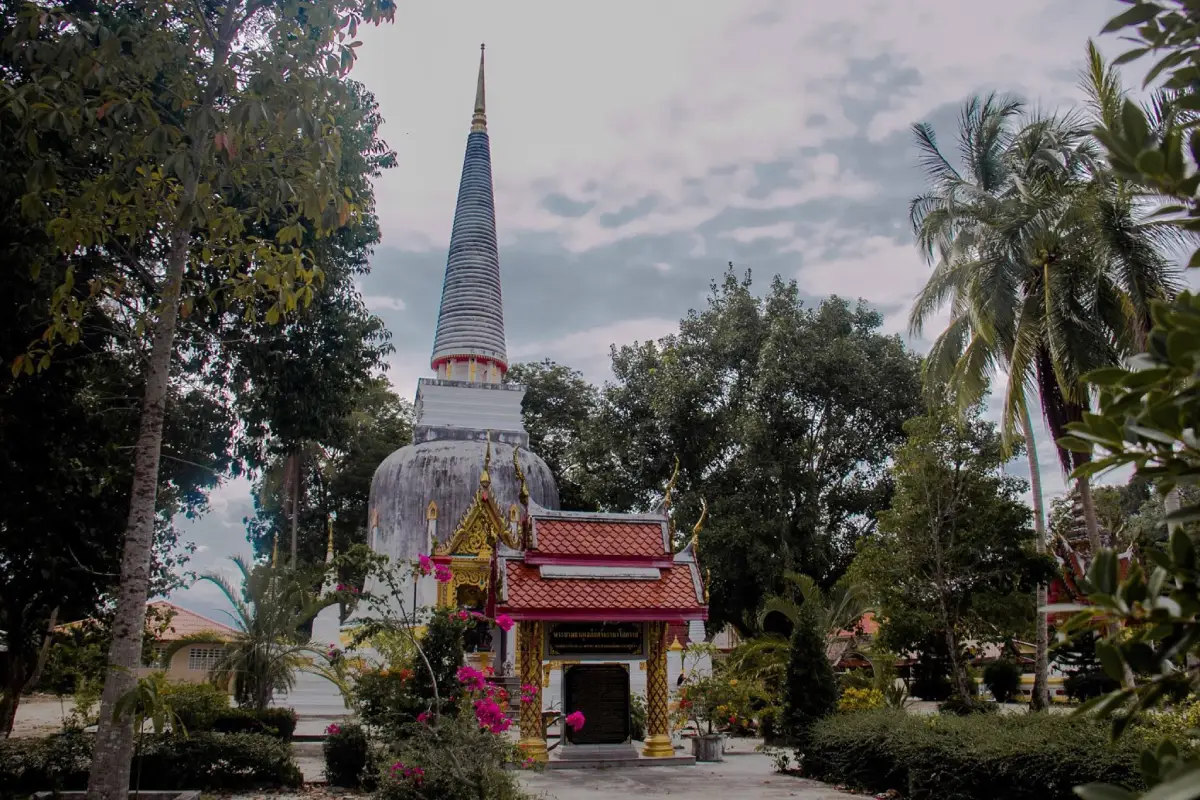
Wat Mae Chao Yu Hua
Open Days: Daily
Opening Hours: 06.00 – 18.00
Wat Mae Chao Yu Hua in Nakhon Si Thammarat is an old Buddhist temple beside Khlong Khong in Mae Chao Yu Hua Subdistrict, Chian Yai District. The temple is an important spiritual destination for visitors who wish to pay respect to Mae Chao Yu Hua, also known as Phra Nang Lueat Khao, the White-Blooded Queen. She is remembered in local tradition as a woman of great merit, compassion, and devotion to Buddhism. Within the temple grounds, visitors can worship her statue, see the large ceremonial gong, and experience the calm atmosphere of a rural southern Thai temple closely tied to local history and belief.
The temple’s main appeal lies in the way it combines faith, local history, and the riverside landscape of Khlong Khong. Wat Mae Chao Yu Hua is not only a place for Buddhist practice within the community; it is also a living cultural memory of Phra Nang Lueat Khao. Her story is connected with King Si Thamma Sokarat, the old city of Nakhon Si Thammarat, the patronage of Buddhism, and generations of local devotion that continue to shape the identity of Mae Chao Yu Hua Subdistrict today.
Upon arrival, travelers will notice the character of a local village temple rather than a heavily commercialized tourist site. The atmosphere is quiet, modest, and rooted in community life. This makes the temple especially suitable for travelers who want to understand Thai cultural belief beyond major city landmarks. Visitors can make merit, pay respect to Mae Chao Yu Hua, walk around the temple grounds, observe the riverside setting, and learn why the legend of the White-Blooded Queen remains meaningful to people in Chian Yai District.
Mae Chao Yu Hua, or Phra Nang Lueat Khao, holds a special place in the cultural memory of Nakhon Si Thammarat. Local narratives describe her as a compassionate woman devoted to Buddhism and loved by the people. The name “White-Blooded Queen” is linked to the legend of white blood appearing when she was injured while helping with community work. This extraordinary story spread through local tradition and later became connected with King Si Thamma Sokarat and the wider historical imagination of Nakhon Si Thammarat.
Local tradition remembers Phra Nang Lueat Khao as Mae Chao Yu Hua, a noble woman associated with religious merit, generosity, and service to the people. She is regarded as a symbol of compassion, moral beauty, and devotion to Buddhism. For this reason, the temple is more than a place to worship a sacred statue. It is a cultural site where visitors can see how a local legend becomes part of geography, community identity, and everyday religious practice.
The statue of Mae Chao Yu Hua is the spiritual center of the temple. Local people and visitors come to make offerings, ask for blessings, and fulfill vows according to their faith. This form of devotion is common in many parts of southern Thailand, yet Wat Mae Chao Yu Hua has a distinctive identity because the belief is connected to a female figure remembered for her merit and kindness. The temple therefore offers both a sacred experience and a chance to understand the emotional landscape of local faith.
Another point of interest is the large gong within the temple grounds. In Thai Buddhist culture, a gong is associated with auspicious sound, merit, and ceremonial presence. At Wat Mae Chao Yu Hua, the large gong stands alongside the statue of the White-Blooded Queen and the riverside environment, creating a memorable identity for the temple. Many visitors stop to see the gong, take photographs, and then continue to the main worship area.
Khlong Khong is an important part of both the temple’s landscape and its local narratives. In the past, canals were essential routes for travel, trade, and daily life. Local stories describe boat travelers slowing down as they passed the temple to pay respect to Mae Chao Yu Hua and ask for safety, smooth journeys, and prosperity. This makes the canal more than a waterway; it is part of the temple’s cultural meaning and a reminder of how faith was woven into everyday movement through the landscape.
The riverside setting gives Wat Mae Chao Yu Hua a different feeling from temples in the provincial city center. The quietness of the community, the simplicity of the temple, and the presence of the canal help visitors understand the slower rhythm of rural Nakhon Si Thammarat. This is a place best appreciated without rushing. Each area of the temple has a story, and the real value of the visit comes from observing details and allowing time for the local atmosphere to unfold.
The history of Mae Chao Yu Hua is linked with King Si Thamma Sokarat, a name that appears in the traditional narratives of Nakhon Si Thammarat. In these stories, the White-Blooded Queen is remembered as a virtuous woman who supported Buddhism and helped the people. By visiting the temple, travelers can approach the legend not only as a distant historical tale, but as something embedded in a living community where place names, worship practices, and local memory continue to preserve her story.
Visitors should take time to read the information signs, observe the shrine areas, and look closely at the statue, pavilion, and sacred spaces. These details help explain why worship here carries more meaning than simply asking for blessings. Paying respect to Mae Chao Yu Hua is also an act of acknowledging a figure deeply honored by the community for her kindness, merit, and cultural significance.
For cultural travelers, Wat Mae Chao Yu Hua fits well into a broader route through southern Thai history and belief. It can be combined with Wat Bo Lo, Bo Lo Non-Hunting Area, Pak Phanang Old Market, Wat Phra Mahathat Woramahawihan, and Nakhon Si Thammarat National Museum. Such a route gives visitors a fuller experience that includes local faith, nature, food culture, and the historical identity of Nakhon Si Thammarat.
The best time to visit is in the morning or late afternoon, when the weather is more comfortable and the light is suitable for photography. The temple is open daily from 06.00 to 18.00, allowing travelers to plan either a short visit or a longer cultural route through Chian Yai and Pak Phanang. The quiet morning hours are especially appropriate for worship and reflection.
Visitors should dress respectfully because the site is an active Buddhist temple. Shoulders and knees should be covered, voices should be kept low in worship areas, and offerings should be made without blocking walkways. As this is a community temple, respectful behavior toward monks, local residents, and other worshippers is essential. The experience is most meaningful when approached with calm attention and cultural sensitivity.
Getting There is most convenient by private car. From Nakhon Si Thammarat city, take Highway 408 toward Chian Yai District, continue through the Bo Lo area, and follow local roads into Mae Chao Yu Hua Subdistrict. The distance from the provincial city is about 45 km, and the journey usually takes around 45 to 60 minutes depending on traffic and road conditions.
Travelers without a private vehicle can take a local bus or van toward Chian Yai and continue by local transport or hired vehicle to the temple. This option requires checking return schedules in advance, especially in the late afternoon. For groups, hiring a car with a driver is often more practical because it allows visitors to combine the temple with Pak Phanang, nearby natural sites, and other cultural stops in one trip.
The temple visit can be understood in several zones. Start at the entrance area and the Mae Chao Yu Hua sign, then continue to the statue of Mae Chao Yu Hua or Phra Nang Lueat Khao, the large gong, the pavilion and shrine areas for prayer, and the riverside area along Khlong Khong. Travelers with more time should walk slowly through the grounds, because the charm of this temple lies in its details and its connection with local memory.
Phra Khru Wichian Suwannarak is the abbot of Wat Mae Chao Yu Hua. The temple is a functioning community temple with resident monks and religious activities. Visitors should respect monastic areas, avoid entering restricted zones, and refrain from using drones or intrusive photography equipment without permission. This is an active sacred space, not just a sightseeing location.
For those interested in local history, Wat Mae Chao Yu Hua should be seen as part of the wider cultural network of the White-Blooded Queen legend in Nakhon Si Thammarat. The story is connected with Wat Phra Mahathat Woramahawihan, Wat Bo Lo, Ban Khuan Klot, Ban Na Kot, and waterways around the Pak Phanang Basin. Visiting this temple is therefore an excellent starting point for understanding the cultural geography of lower Nakhon Si Thammarat.
In terms of belief, people often visit to ask for auspiciousness, safe travel, successful trade, and family well-being. This devotion reflects the image of Mae Chao Yu Hua as a compassionate protector rather than a sensational figure. Travelers should approach the site with respect and use the visit as a moment of quiet reflection as well as cultural learning.
Food options near the temple include local restaurants, noodle shops, barbecue restaurants, and cafés in Chian Yai District. Visitors who want to continue the trip can drive toward Pak Phanang, where local dishes and the old market offer a deeper taste of Nakhon Si Thammarat’s coastal food culture. Small local restaurants may adjust their hours, so travelers should plan meals with some flexibility.
Accommodation near the temple includes homestays, resorts, and small local lodging options in Mae Chao Yu Hua and Chian Yai. Travelers who want to stay close to the temple can choose nearby accommodation, while those who prefer more urban convenience can stay in Nakhon Si Thammarat city or Pak Phanang and visit the temple as a day trip. The best choice depends on the overall route and the style of travel.
Wat Mae Chao Yu Hua is especially suitable for travelers who want a deeper cultural experience. The temple offers the story of Phra Nang Lueat Khao, local devotion, a riverside village setting, and insight into how faith continues to shape community identity. With enough time and attention, visitors will see how a small local temple can tell a large and meaningful story about Nakhon Si Thammarat.
In summary, Wat Mae Chao Yu Hua is a valuable cultural and spiritual destination in Nakhon Si Thammarat. The key experiences are paying respect to Mae Chao Yu Hua, seeing the large gong, walking through the peaceful riverside temple grounds, and learning about the legend that gives the subdistrict its name. It is a recommended stop for visitors interested in Thai Buddhist culture, local legends, and lesser-known heritage routes in southern Thailand.
| Name | Wat Mae Chao Yu Hua |
| Location | Mae Chao Yu Hua Subdistrict, Chian Yai District, Nakhon Si Thammarat 80190 |
| Address | Moo 3, Mae Chao Yu Hua Subdistrict, Chian Yai District, Nakhon Si Thammarat |
| Coordinates | 8.09482, 100.10413 |
| Highlights | Pay respect to Mae Chao Yu Hua or Phra Nang Lueat Khao, see the large gong, and experience an old riverside temple by Khlong Khong |
| History | Connected with the legend of Phra Nang Lueat Khao, Mae Chao Yu Hua, and King Si Thamma Sokarat in the cultural memory of Nakhon Si Thammarat |
| Name Origin | The temple and subdistrict name are linked to Mae Chao Yu Hua, or Phra Nang Lueat Khao, a revered woman remembered for merit, compassion, and devotion to the people |
| Distinctive Features | An old community temple with the statue of Mae Chao Yu Hua, a large gong, worship areas, and a peaceful southern Thai riverside atmosphere |
| Travel Information | From Nakhon Si Thammarat city, take Highway 408 toward Chian Yai, pass the Bo Lo area, and continue to Mae Chao Yu Hua Subdistrict; the distance is about 45 km |
| Current Status | Open to visitors and functioning as a community Buddhist temple |
| Open Days | Daily |
| Opening Hours | 06.00 – 18.00 |
| Facilities | Worship area, Mae Chao Yu Hua shrine area, large gong viewing point, and parking space within or near the temple grounds |
| Main Areas / Zones | 1. Entrance and Mae Chao Yu Hua sign area 2. Statue of Mae Chao Yu Hua or Phra Nang Lueat Khao 3. Large gong area 4. Pavilion and shrine area for worship 5. Khlong Khong riverside area |
| Abbot / Caretaker | Phra Khru Wichian Suwannarak |
| Nearby Tourist Attractions | 1. Bo Lo Non-Hunting Area, about 8 km 2. San Luang Ton Sai Shrine, about 9 km 3. Pak Phanang Old Market, about 23 km 4. Wat Phra Mahathat Woramahawihan, about 38 km 5. Nakhon Si Thammarat National Museum, about 40 km |
| Nearby Restaurants | 1. Lamphu Mookratha, about 1 km, Tel. 095-443-4493 2. Kuai Tiao Ruea Khun Thong, about 1 km 3. Rong-pak Cafe Chian Yai, about 6 km, Tel. 088-399-5020 4. Baan Mae Iad Restaurant, about 7 km, Tel. 089-868-4967 5. Krua Na Dap, about 12 km, Tel. 065-072-4288 |
| Nearby Accommodations | 1. Ruean Thai Jai Suk Oey, about 1 km, Tel. 096-847-1278 2. Baan Suan Anyamanee Thong, about 1 km, Tel. 093-578-1426 3. Baan Rai Chay Khao Farm Stay, about 11 km 4. Yindee Resort, about 10 km 5. Khlong Chian Resort, about 12 km, Tel. 081-911-1245 |
Frequently Asked Questions (FAQ)
Q: Where is Wat Mae Chao Yu Hua located?
A: Wat Mae Chao Yu Hua is located in Mae Chao Yu Hua Subdistrict, Chian Yai District, Nakhon Si Thammarat Province. It is an old riverside temple associated with Mae Chao Yu Hua, or Phra Nang Lueat Khao.
Q: What are the opening hours of Wat Mae Chao Yu Hua?
A: The temple is open daily from 06.00 to 18.00. Morning and late afternoon are the best times for worship, photography, and a quiet walk around the temple.
Q: What is special about Wat Mae Chao Yu Hua?
A: The temple is known for the statue of Mae Chao Yu Hua or Phra Nang Lueat Khao, the large gong, worship areas, and its peaceful riverside setting beside Khlong Khong.
Q: Who is Mae Chao Yu Hua?
A: Mae Chao Yu Hua is also known as Phra Nang Lueat Khao, the White-Blooded Queen in local Nakhon Si Thammarat tradition. She is remembered as a woman of merit, compassion, and devotion to Buddhism.
Q: How do travelers get to Wat Mae Chao Yu Hua from Nakhon Si Thammarat city?
A: Travel by Highway 408 from Nakhon Si Thammarat city toward Chian Yai District, continue through the Bo Lo area, and enter Mae Chao Yu Hua Subdistrict. The distance is about 45 km.
Q: What should visitors wear when visiting Wat Mae Chao Yu Hua?
A: Visitors should dress respectfully, cover shoulders and knees, keep their voices low in worship areas, and follow temple etiquette.
Q: What nearby places can be visited with Wat Mae Chao Yu Hua?
A: Nearby places include Bo Lo Non-Hunting Area, San Luang Ton Sai Shrine, Pak Phanang Old Market, Wat Phra Mahathat Woramahawihan, and Nakhon Si Thammarat National Museum.
 Category: ●Places of Worship
 Group: ●Temple
Last Update : 4 WeekAgo
 Last Update : 4 WeekAgo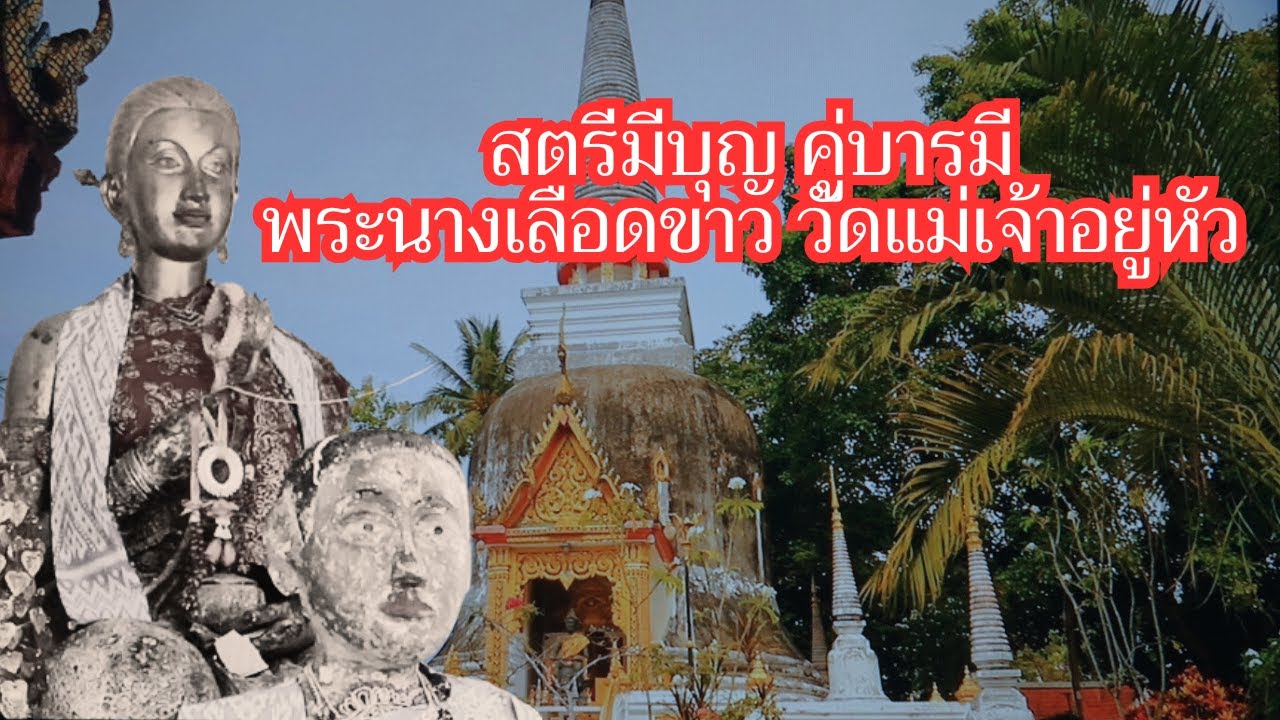
 Click to Access the Navigation Map GPS
Wat Mae Chao Yu Hua Map
Recommend

 Art, Culture and Heritage
 Historical Sites and Monuments(9)
 Landmarks and Memorials(9)
 Royal Palace(1)
 Art, Craft Centres, Tradition(12)
 Museums(5)
 Educational Places
 Educational Gardens, Farm(2)
Temple(44)
Educational Gardens, Farm(2)
Temple(44)
 Mosque(2)
 Other Sacred Sites(17)
 Research and Development
 Royal Project(2)
 Suburban Living
 Village, Community(8)
 Local Market(1)
 Floating Market(1)
 Nature and Wildlife
 National Parks and Marine Reserves(6)
 Mountain (Doi)(11)
 Dam, Reservoir, Lake(10)
 Waterfalls(43)
 Hot Springs(1)
 Caves(13)
 River, Canal(3)
 Bays and Beaches(29)
 Islands(2)
 Other natural attractions(3)
 Entertainment and Agricultural
 Farms, Parks and Ecotourism(3)
 Outdoor and Adventure Activities(4)
 Travel Articles, Recipes
 Travel Review, Food Review(1)
 Southern Food Menu, Southern Food Recipes(18)


