
lovethailand home >South Travel Attractions >Nakhon Si Thammarat Travel Attractions >Mueang NaKhon Si Thammarat >Tha Wang > Century-Old Kuti
TL;DR: Century-Old Kuti is located at Wat Wang Tawan Tok, Ratchadamnoen Road, Mueang Nakhon Si Thammarat District, Nakhon Si Thammarat Province, open Daily, hours 08.30 – 16.30.
Century-Old Kuti
Open Days: Daily
Opening Hours: 08.30 – 16.30
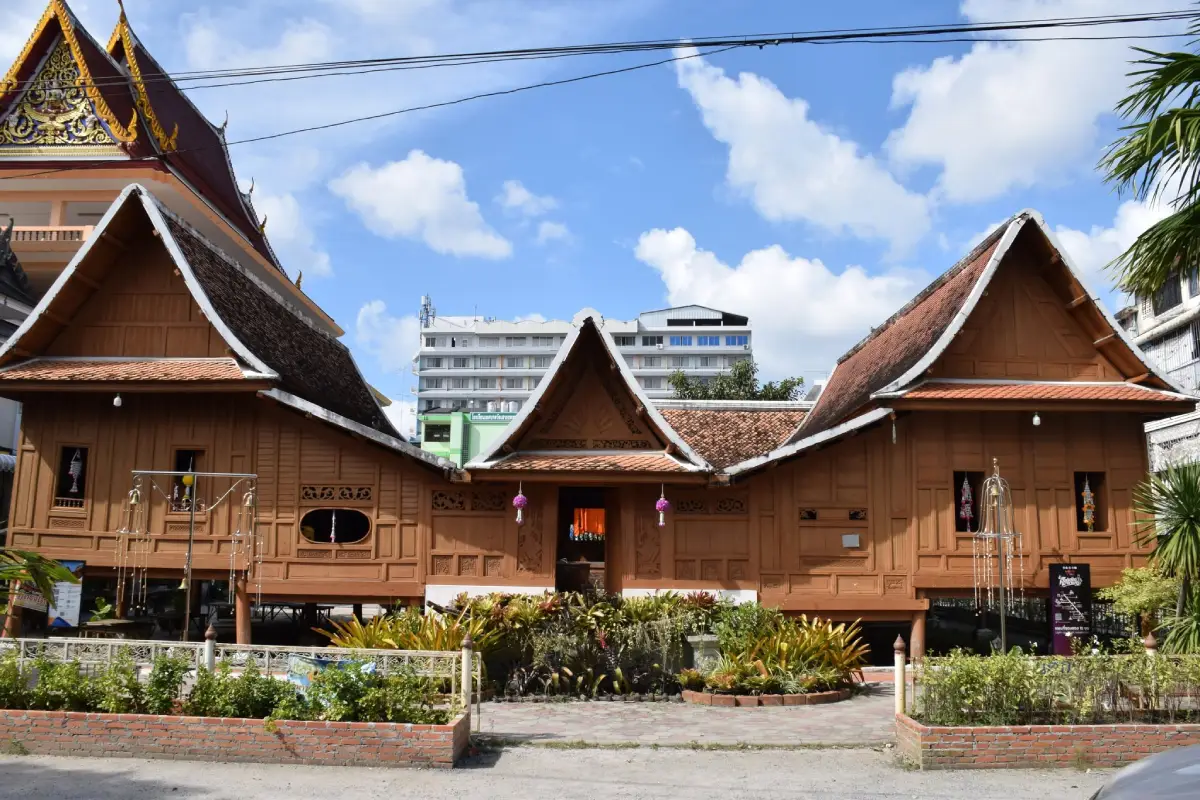
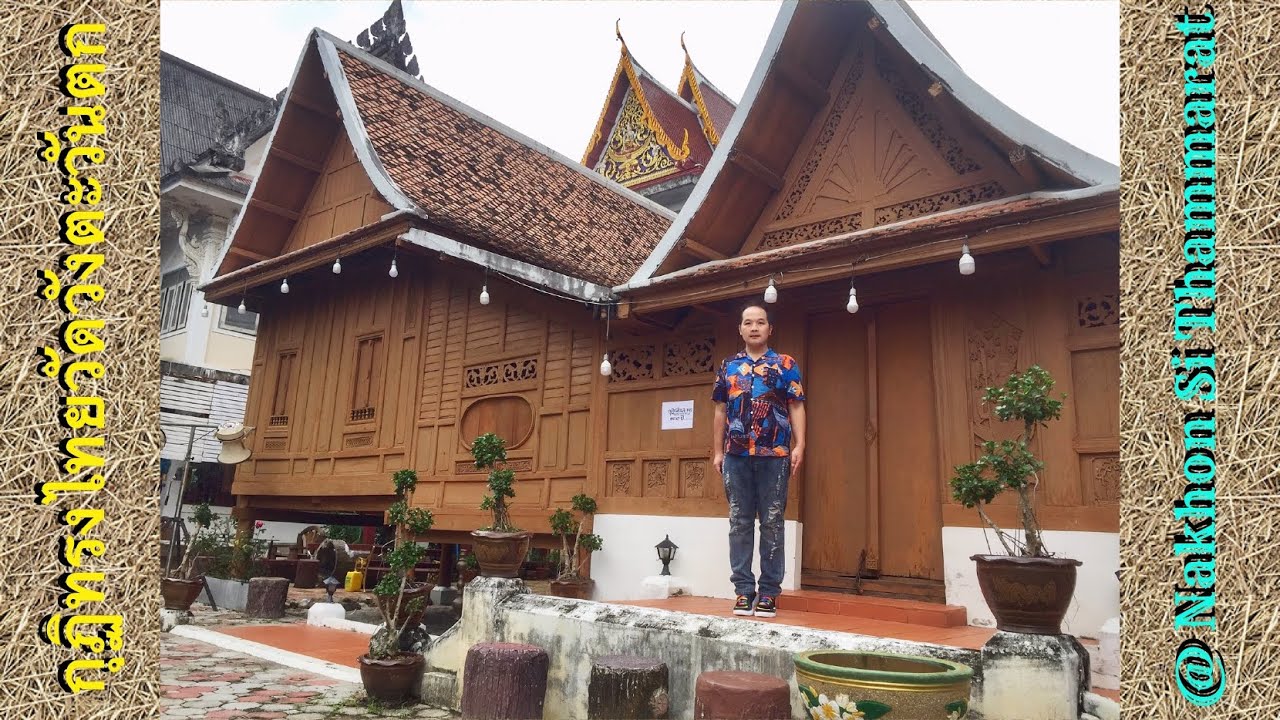
The Traditional Thai Kuti, also known as the Century-Old Kuti at Wat Wang Tawan Tok, is one of the most valuable wooden architectural landmarks in the historic city of Nakhon Si Thammarat. Located inside Wat Wang Tawan Tok on Ratchadamnoen Road in Mueang Nakhon Si Thammarat District, this remarkable structure is a group of 3 connected traditional wooden monk residences. Its gabled roofs, wooden wall panels, carved doors, windows, and ventilated openings reflect the distinctive craftsmanship of Nakhon Si Thammarat. Visitors can see the temple grounds and admire the exterior of the kuti during regular opening hours, while access to the interior should be arranged in advance with the temple or the abbot.
This century-old kuti is not simply an old wooden building. It is a living record of local architectural knowledge, religious devotion, and the refined skills of southern Thai craftsmen. Every part of the structure shows a practical response to the climate of southern Thailand, from raised wooden floors and covered walkways to carefully placed ventilation panels. The building was designed for real monastic use, yet its details transform it into a cultural monument. Its beauty comes from proportion, rhythm, craftsmanship, and the quiet presence of aged timber within a temple compound.
When visitors enter Wat Wang Tawan Tok, the atmosphere changes from the busy city street to a calmer religious space. The kuti stands within a temple that is closely connected to the old urban fabric of Nakhon Si Thammarat. Ratchadamnoen Road, nearby temples, old city landmarks, local markets, and administrative areas all form part of the same historical setting. Because the kuti is located in the city center, it is easy to include in a short cultural visit, yet the site offers enough depth for travelers who want to understand local architecture and heritage more seriously.
The name of Wat Wang Tawan Tok is connected with the word “wang”, meaning palace or former residence, reflecting the historical character of this part of the city. The area is also related to Wat Wang Tawan Ok, located nearby, and to Ratchadamnoen Road, which later became an important route through the old city. Wat Wang Tawan Tok is therefore more than a single temple site. It represents the transformation of an important historical area into a Buddhist space and a community landmark that has served local religious life for generations.
The main highlight of the Century-Old Kuti is its 3-part wooden structure. The buildings are connected by covered platforms, creating a balanced composition of timber, rooflines, and usable space. Each section has a gabled roof, while the connecting roofed areas allow movement between the structures. From a distance, the roof rhythm gives the kuti an elegant silhouette. Up close, visitors can observe the craftsmanship of the wooden panels, door frames, window frames, carved details, and ventilation openings that make the building unique.
The structure belongs to the tradition of Thai timber construction in which wooden components are carefully cut, joined, fitted, and assembled into a strong architectural system. This type of construction requires precision and deep knowledge of wood. Posts, beams, floorboards, wall panels, openings, and roof structures must work together. The kuti is therefore an excellent example of a building created through skilled craftsmanship rather than modern industrial materials. It shows how traditional builders achieved durability, comfort, and beauty through knowledge passed down through generations.
The wooden wall panels are among the details worth studying carefully. They are not merely surfaces that enclose the building; they create rhythm, structure, and visual order. When viewed together with the windows, doors, and ventilation panels, the walls reveal how practical design and beauty are combined. These architectural features helped the building breathe in a hot and humid environment while also giving it a refined appearance. For foreign travelers, this is an excellent opportunity to understand how Thai wooden architecture responds to climate, religion, and daily life.
The carved elements on the doors, windows, and ventilation panels express the local identity of Nakhon Si Thammarat. They are delicate but not excessive, graceful yet grounded. Their purpose is both decorative and practical, allowing airflow and filtering light while enriching the building’s appearance. The play of light and shadow around these carved openings is one of the quiet pleasures of visiting the site. Visitors who take time to look closely will see that the beauty of the kuti lies in details rather than spectacle.
The construction of the kuti took 13 years, a period that reflects the patience and care required for such a wooden structure. This was not a rushed building project. Timber had to be selected, prepared, shaped, joined, and finished with great attention. The long construction period also shows the devotion of the monks, local supporters, and craftsmen involved. The result is a wooden monastic residence that continues to serve as an important example of southern Thai architecture and conservation.
The Traditional Thai Kuti at Wat Wang Tawan Tok has been recognized by the Association of Siamese Architects under Royal Patronage as an outstanding conservation building in the category of religious buildings and temples. This recognition confirms its architectural, historical, and conservation value. Old wooden temple buildings that preserve this level of craftsmanship are increasingly rare, especially in urban areas where development and climate can threaten traditional structures. The kuti remains an important reminder of the need to protect local heritage.
One of the most meaningful aspects of the kuti is that its history can be read through the building itself. Visitors do not need to begin with a long explanation to sense its importance. The roofline, carved wood, raised floors, shaded spaces, and temple surroundings all communicate the relationship between craftsmanship, Buddhism, community life, and the natural environment. The building does not stand apart from the temple. It belongs naturally to the religious landscape around it.
For travelers interested in architecture, this kuti is a valuable case study of southern Thai wooden monastic design. The 3 connected buildings create different types of space, including central areas, semi-open transitional areas, and more private sections. This differs from a single detached wooden house because the layout must coordinate multiple structures, circulation routes, and visual balance. The building is both functional and graceful, showing how traditional Thai architecture often achieves harmony through proportion rather than decoration alone.
The kuti also reflects the devotion of the local community and the temple in earlier times. A wooden residence that took many years to complete would have required cooperation, support, and commitment from many people. It was not only a residence for monks but also a visible expression of faith. The beauty that visitors see today is therefore the result of religious devotion translated into timber, craftsmanship, and architecture.
Visitors should take time to view the building slowly. It is best to start by observing the overall composition from the outside, looking at the roof rhythm and the arrangement of the 3 connected sections. After that, visitors can pay attention to the wooden panels, doorways, windows, ventilation openings, and structural joints. This way of viewing the site helps travelers appreciate both the overall form and the fine details. Photography is possible, but visitors should avoid disturbing monks, worshippers, or any restricted areas.
The Century-Old Kuti is suitable for many types of travelers. History lovers can see how the temple relates to the older urban landscape of Nakhon Si Thammarat. Architecture enthusiasts can study wooden construction and local design. Cultural travelers can experience a quieter temple setting in the old city. Visitors with limited time can still include the site in a short city route, as it is close to other important landmarks such as the City Pillar Shrine, the Old City Wall, Wat Phra Mahathat Woramahawihan, and the Nakhon Si Thammarat National Museum.
It is important to understand that the kuti remains part of an active temple compound. It is not a museum where every room is open to visitors at all times. Seeing the exterior can be done during regular visiting hours, but entering the interior should be arranged with the temple or the abbot. This helps protect the wooden structure, maintains order within the temple, and ensures that cultural tourism takes place with respect for the religious setting.
Visitors should dress politely and behave respectfully. This is a Buddhist temple, not only a tourist attraction. Speaking softly, keeping the area clean, avoiding unnecessary touching of the wooden structure, and following temple guidance are all important. A heritage building made of wood is sensitive to wear, moisture, and human contact. Respectful behavior helps preserve the site for future visitors.
The atmosphere around Wat Wang Tawan Tok is calm despite its central location. The contrast between the city outside and the temple space inside is part of the experience. Visitors should not rush through the site only for photographs. Taking a few extra minutes to observe the old timber, shaded rooflines, and quiet surroundings will make the visit more meaningful. The value of the kuti is best understood through attentive looking.
The site can easily be included in a one-day cultural itinerary in central Nakhon Si Thammarat. From Wat Wang Tawan Tok, travelers can continue to the City Pillar Shrine, the Old City Wall, Wat Phra Mahathat Woramahawihan, the National Museum, and local food areas. This route brings together wooden architecture, sacred landmarks, old city history, and southern Thai food culture in a compact and practical travel plan.
Nakhon Si Thammarat is a city where many cultural sites are located within a reasonable distance of one another. The Century-Old Kuti should therefore be seen as part of a wider heritage network. It represents monastic wooden architecture and temple life, while the City Pillar Shrine represents urban faith, the Old City Wall represents ancient city planning, and Wat Phra Mahathat Woramahawihan represents one of the most important Buddhist centers in southern Thailand.
For Thai visitors, the site shows that valuable heritage is not found only in large monuments or nationally famous temples. A wooden building inside a temple can also contain deep architectural and historical meaning. For foreign travelers, the kuti offers a different view of Thai temple culture. It shows the residential and daily-life side of monastic architecture, beyond ordination halls, stupas, and Buddha images. This makes the site especially useful for understanding Thai Buddhist heritage in a fuller way.
The kuti is also well suited for educational visits. Parents can bring children to learn about traditional wooden buildings, ventilation, roof design, and local craftsmanship. Teachers can use the site to explain Thai architecture, conservation, and the relationship between religion and community life. Photography lovers can find many quiet details, from rooflines and timber textures to carved panels and the surrounding temple atmosphere.
Conservation is an ongoing responsibility. Wooden buildings are vulnerable to humidity, rain, sunlight, insects, and inappropriate handling. Visitors who understand these limitations help reduce risk to the structure. Preserving a building like this is not only the responsibility of the temple or public agencies. Every visitor contributes by observing carefully, avoiding damage, and treating the site as a cultural asset.
The travel experience here is different from a lively market or a highly commercial attraction. The Century-Old Kuti offers a quiet, reflective, and detailed experience. Its appeal lies in aged wood, proportion, shaded walkways, craftsmanship, and a sense of continuity between past and present. This quiet character is exactly what makes the site memorable.
The best time to visit is in the morning or late afternoon, when the light is softer and the weather is more comfortable for walking. Natural light also helps reveal the texture of the wood and the relief of carved details. Visitors should plan within the regular opening hours of 08.30 to 16.30 and allow enough time to view the building respectfully rather than rushing through the temple grounds.
There is no admission fee to visit the site. This makes it accessible to solo travelers, families, students, elderly visitors, and cultural groups. However, free admission does not mean the site should be treated casually. The kuti is an old wooden heritage building inside a temple, so cleanliness, respect, and careful behavior are essential.
Travelers who wish to see the interior should contact the temple in advance, especially if visiting as a group, conducting academic study, filming, or requesting special access. Advance coordination allows the temple to manage the visit properly and protect the building while giving visitors a better experience.
Phra Khru Phromkhet Khanarak, Ph.D., is the abbot of Wat Wang Tawan Tok according to the latest verified temple and provincial Buddhist office information. This is useful for visitors or groups who need to coordinate access to the interior of the kuti or arrange a cultural learning visit within the temple compound.
Getting There is convenient because the temple is located on Ratchadamnoen Road in central Nakhon Si Thammarat. Travelers with private cars can drive directly through the city. Public transport options include the local songthaew route between the stadium and Hua Thanon, which passes near the temple, as well as motorized tricycles and local taxis from the railway station, bus terminal, or central market areas. Staying in the city center makes it easy to visit the kuti and nearby cultural attractions in a single day.
Upon arrival, visitors should first take in the temple setting before approaching the kuti. If some areas are being used by the temple or are not open at the time of visit, visitors should follow the temple’s instructions immediately. Respectful cooperation helps keep the site open and sustainable for future cultural tourism.
The Traditional Thai Kuti, or Century-Old Kuti at Wat Wang Tawan Tok, deserves a place in any Nakhon Si Thammarat city itinerary. It offers beauty, knowledge, and a deeper understanding of the city’s heritage. The 3 connected wooden buildings, the long construction history, and the recognition as an outstanding conservation building all make it one of the most meaningful architectural sites in the city.
To make the trip more complete, visitors can combine the kuti with Wat Phra Mahathat Woramahawihan, the City Pillar Shrine, the Old City Wall, and the Nakhon Si Thammarat National Museum. Together, these places tell the story of Nakhon Si Thammarat through temple life, civic faith, ancient urban remains, Buddhist history, and local craftsmanship.
Food is also part of the city experience. After visiting the kuti, travelers can continue to local restaurants, old-style coffee shops, roti shops, southern Thai food restaurants, and contemporary dining spaces in the city center. Nakhon Si Thammarat has a strong food culture, and combining temple visits with local meals gives the trip a more complete sense of place.
Overall, the Century-Old Kuti at Wat Wang Tawan Tok is a site that should not be overlooked. It is an old wooden architectural treasure, an outstanding conservation building, a Buddhist temple site, and a learning space for local craftsmanship. A respectful visit allows travelers to understand the heritage of Nakhon Si Thammarat more fully and helps support the long-term preservation of this important cultural landmark.
| Name | Traditional Thai Kuti, or Century-Old Kuti at Wat Wang Tawan Tok |
| Location | Wat Wang Tawan Tok, Ratchadamnoen Road, Mueang Nakhon Si Thammarat District, Nakhon Si Thammarat Province |
| Address | Ratchadamnoen Road, Khlang Subdistrict, Mueang Nakhon Si Thammarat District, Nakhon Si Thammarat 80000, Thailand |
| Coordinates | 8.4419011, 99.9617619 |
| Highlights | A group of 3 connected traditional wooden monk residences with gabled roofs, wooden wall panels, carved doors, windows, and ventilation openings in the local Nakhon Si Thammarat style |
| History | Construction began in 1888 and took 13 years. The building has been recognized as an outstanding conservation building in the religious buildings and temples category by the Association of Siamese Architects under Royal Patronage. |
| Name Origin | The name “Traditional Thai Kuti” refers to its Thai wooden architectural form, while “Century-Old Kuti” reflects its age and local recognition as a long-standing wooden temple residence. |
| Distinctive Features | Three connected timber buildings, covered walkways, raised wooden structures, traditional wall panels, and finely crafted local decorative elements |
| Travel Information | Accessible by private car via Ratchadamnoen Road, by local songthaew on the stadium – Hua Thanon route, or by motorized tricycle and local taxi from the railway station or bus terminal |
| Current Status | Open for visitors to see the temple grounds and exterior architecture during regular hours. Interior access should be arranged in advance with the temple or the abbot. |
| Open Days | Daily |
| Opening Hours | 08.30 – 16.30 |
| Fees | No admission fee |
| Facilities | Parking within or near the temple area, exterior viewing space, basic temple facilities, and convenient access to nearby city attractions |
| Main Areas / Zones | 1. Group of 3 traditional wooden kuti buildings 2. Covered connecting platform 3. Central hall-like wooden residence 4. Raised side-wing residences 5. Exterior viewing area for wall panels, doors, windows, and ventilation details 6. Wat Wang Tawan Tok temple grounds |
| Abbot / Caretaker | Phra Khru Phromkhet Khanarak, Ph.D., Abbot of Wat Wang Tawan Tok |
| Main Contact Number | 075-358261 |
| Nearby Tourist Attractions | 1. Wat Wang Tawan Ok, about 0.2 km 2. Nakhon Si Thammarat City Pillar Shrine, about 1 km 3. Old City Wall of Nakhon Si Thammarat, about 1 km 4. Ho Phra Isuan and the City Swing Area, about 2 km 5. Wat Phra Mahathat Woramahawihan, about 3 km 6. Nakhon Si Thammarat National Museum, about 4 km |
| Nearby Restaurants | 1. Ka Jeab Khao Mok Kai in Front of Wat Wang, about 0.1 km 2. Nam Tao Hu Kratha Thong at Wat Wang Tawan Tok Intersection, about 0.2 km 3. Kopi 1942, City Hall / City Branch, about 1 km, Tel. 089-7017777 4. Roti Pa Nom, Branch 1 on Ratchadamnoen Road, about 2 km, Tel. 080-5212913 5. Day & Night of Nakhon Si Thammarat, about 2 km, Tel. 075-808386 |
| Nearby Accommodations | 1. Thai Hotel, about 0.2 km, Tel. 075-356505, 075-356451, 075-341509 2. Mandy Nok Hotel, about 1 km, Tel. 075-830666 3. @24 Boutique Hotel, about 1 km, Tel. 083-5029553, 075-340910 4. Grand Park Hotel, about 2 km, Tel. 075-317666 5. Navakitel Design Hotel, about 2 km, Tel. 075-450959, 075-450969, 080-3939339 6. The Twin Lotus Hotel, about 4 km, Tel. 075-323777 |
Frequently Asked Questions (FAQ)
Q: Where is the Traditional Thai Kuti at Wat Wang Tawan Tok located?
A: It is located inside Wat Wang Tawan Tok on Ratchadamnoen Road in Mueang Nakhon Si Thammarat District, Nakhon Si Thammarat Province.
Q: What are the opening days and hours?
A: The site is open daily from 08.30 to 16.30. Visitors can see the temple grounds and exterior architecture during these hours, while interior access should be arranged with the temple in advance.
Q: Is there an admission fee?
A: No. There is no admission fee to visit the temple grounds and view the kuti from the outside.
Q: What makes the Century-Old Kuti special?
A: It is a group of 3 connected traditional wooden monk residences with gabled roofs, wooden wall panels, carved openings, and local Nakhon Si Thammarat craftsmanship. It is also recognized as an outstanding conservation building.
Q: Can visitors enter the interior of the kuti?
A: Interior access should be arranged in advance with the temple or the abbot because the kuti is an old wooden heritage building inside an active temple compound.
Q: What should visitors wear?
A: Visitors should dress politely because the site is inside a Buddhist temple. They should also speak quietly, avoid touching the wooden structure, and follow temple guidance.
Q: Can travelers reach the site by public transport?
A: Yes. Local songthaews on the stadium – Hua Thanon route pass near the temple. Motorized tricycles and local taxis are also available from the railway station, bus terminal, and central city areas.
Q: What nearby attractions can be visited after the kuti?
A: Nearby attractions include Wat Wang Tawan Ok, the Nakhon Si Thammarat City Pillar Shrine, the Old City Wall, Wat Phra Mahathat Woramahawihan, and the Nakhon Si Thammarat National Museum.
 Category: ●Art, Culture and Heritage
 Group: ●Historical Sites and Monuments
Last Update : 3 MonthAgo
 Last Update : 3 MonthAgo
 Click to Access the Navigation Map GPS
Century-Old Kuti Map
Recommend
 Historical Sites and Monuments(9)
 Landmarks and Memorials(9)
 Royal Palace(1)
 Art, Craft Centres, Tradition(12)
 Museums(5)
 Educational Places
 Educational Gardens, Farm(2)
 University
 Public university(1)
 Autonomous Universities(3)
 Rajamangala University of Technology(2)
 Rajabhat University(1)
 Private University(1)
 Places of Worship
 Temple(45)
 Mosque(2)
 Other Sacred Sites(17)
 Research and Development
 Royal Project(2)
 Suburban Living
 Village, Community(8)
 Local Market(1)
 Floating Market(1)
 Nature and Wildlife
 National Parks and Marine Reserves(6)
 Mountain (Doi)(11)
 Dam, Reservoir, Lake(10)
 Waterfalls(43)
 Hot Springs(1)
 Caves(13)
 River, Canal(3)
 Bays and Beaches(29)
 Islands(2)
 Other natural attractions(3)
 Entertainment and Agricultural
 Farms, Parks and Ecotourism(3)
 Outdoor and Adventure Activities(4)
 Shopping
 Department Store(2)
 Travel Articles, Recipes
 Travel Review, Food Review(6)
 Southern Food Menu, Southern Food Recipes(18)


