
lovethailand home >South Travel Attractions >Krabi Travel Attractions >Koh Lanta >Koh Lanta Noi > Chao Lay Boat Floating Ceremony
TL;DR: Chao Lay Boat Floating Ceremony, Krabi attractions : Art, Culture and Heritage, Art, Craft Centres, Tradition.
Chao Lay Boat Floating Ceremony
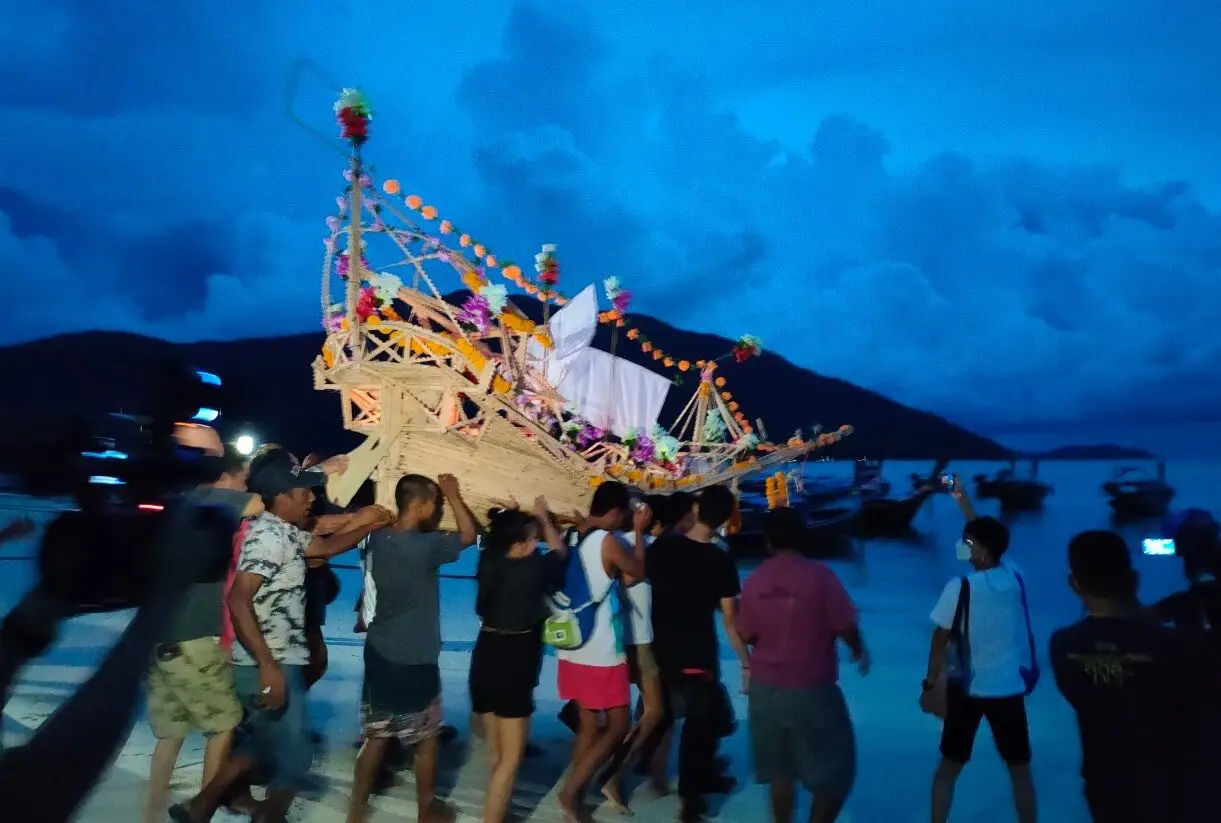
Open Days: To Ba Liu Village and Ban Saladan are living community areas that can be visited respectfully, while the Chao Lay boat-floating ceremony is held twice a year from the 13th to the 15th nights of the waxing moon in the 6th and 11th lunar months
Opening Hours: Ceremony times follow the annual schedule announced by Sala Dan Subdistrict Municipality, To Ba Liu community leaders, and local ritual leaders
The Chao Lay Boat Floating Ceremony on Ko Lanta, Krabi is one of the most meaningful cultural traditions of southern Thailand’s Andaman coast. Closely associated with the Urak Lawoi sea people of Ko Lanta, especially the communities around Ban Saladan and To Ba Liu Village, the ceremony is held twice a year to release misfortune, cleanse the community, honor ancestral spirits, and ask for protection from the sea and sacred forces. It is not simply a seasonal festival; it is a living spiritual practice that preserves the memory, identity, and unity of the Chao Lay community.
In brief, the Chao Lay Boat Floating Ceremony on Ko Lanta is a traditional Urak Lawoi ritual held twice a year, around the 13th to 15th nights of the waxing moon in the 6th and 11th lunar months. Villagers build a small ritual boat, often called a pla jak or pajak boat, place symbolic misfortune and offerings inside it, and release it into the sea. The act represents the removal of illness, suffering, bad luck, and spiritual impurities from individuals, families, and the entire community.
The key cultural setting for this tradition in the Sala Dan area is To Ba Liu Village, located near the route to Ban Saladan Pier in Ko Lanta District, Krabi Province. The village is home to the Urak Lawoi, a sea-oriented indigenous community whose traditional way of life is linked to fishing, boats, tides, winds, and ancestral beliefs. The To Ba Liu Shrine is a spiritual anchor for the community, while the toh mor, the respected ritual leader and spiritual specialist, plays an essential role in important ceremonies.
The Urak Lawoi people have lived with the Andaman Sea for generations. Their culture preserves a deep maritime worldview in which the sea is not only a source of food and livelihood but also a spiritual realm connected to ancestors and seasonal change. Some ramana songs used in boat-floating ceremonies refer to a journey from Lanta toward Gunung Jerai, reflecting memories of ancestral movement across the waters of the Andaman Sea and the Malay Peninsula. This gives the ceremony a strong sense of historical depth and ethnic identity.
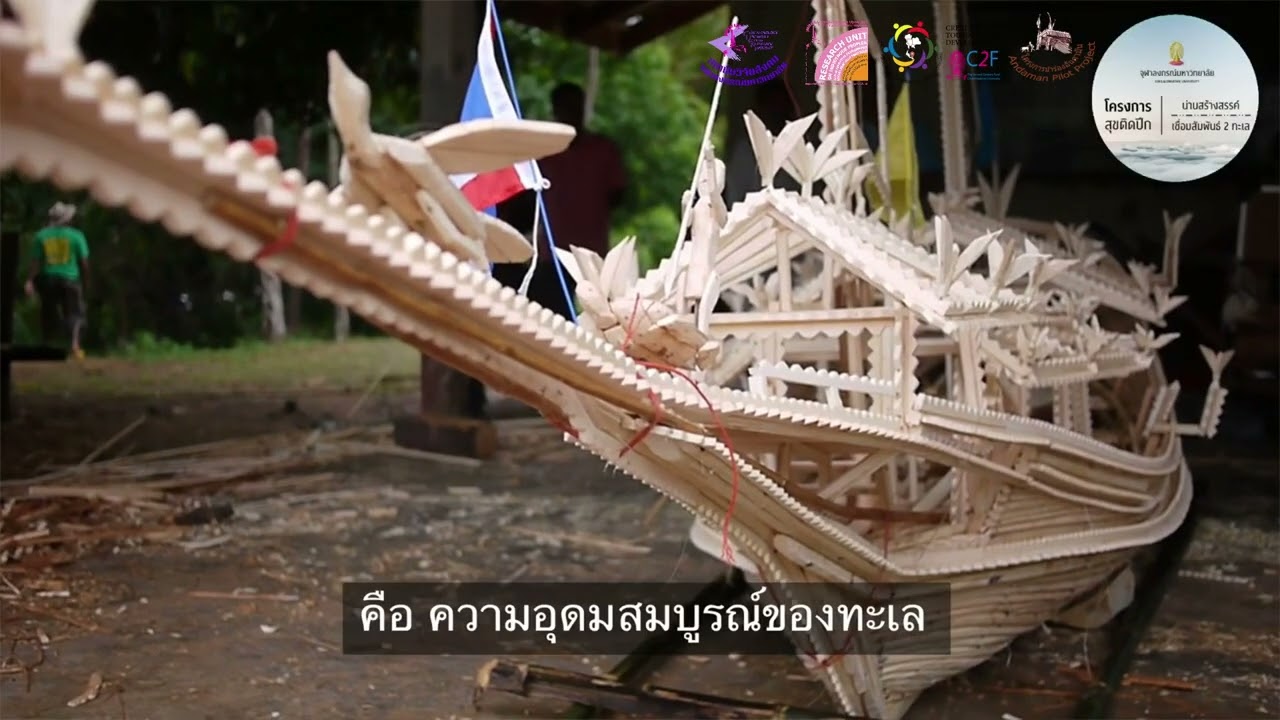
At the heart of the ceremony is the ritual boat known as the pla jak or pajak boat. Traditionally made from devil tree wood and rakam wood, the boat is crafted by members of the community and decorated with symbolic forms. It is not an ordinary small boat. In ritual meaning, it is a vessel that carries away misfortune, sickness, grief, conflict, and harmful forces from the community. Once the boat is sent out to sea, the community symbolically begins a renewed cycle of life.
Offerings, food, household items, and symbolic objects are placed inside the boat. In some practices, small rakam-wood figures represent members of families, allowing personal and household misfortune to travel away with the boat. The release of the boat into the sea is therefore both an individual and collective act of cleansing. It gives people emotional relief, spiritual reassurance, and a renewed sense of safety before the next sea-season cycle begins.
The decoration of the pajak boat contains layers of meaning. Carved rakam-wood pieces may include birds, fish-tooth patterns, serpentine motifs, and other symbolic forms connected to ancestral figures. A bird motif at the bow is associated with To Bu Rong, an ancestral figure believed to have power over wind and rain. Fish-tooth motifs refer to To Bi Kong, an ancestor linked with sharks, while serpent patterns refer to To Akho Beratai, another important ancestral figure in Urak Lawoi belief. Every part of the boat carries cultural meaning, not merely decoration.
Preparation for the ceremony begins before the actual floating. Community members agree on the ritual schedule, prepare the ceremonial space, gather wood, build the boat, arrange offerings, and prepare music and food. Men commonly take part in woodwork and boat construction, women help prepare offerings and food, while elders and ritual specialists guide the correct sequence of ceremonial actions. These preparations make the ceremony an intergenerational event in which cultural knowledge is passed on through practice.
The toh mor is central to the ritual. As the community’s spiritual leader, the toh mor communicates with ancestral spirits, recites ritual formulas, leads the cleansing process, and guides the order of events. The role reflects an inherited knowledge system that includes language, songs, ritual memory, healing ideas, and community discipline. Without the toh mor and the elders, the ceremony would lose much of its original meaning.
On the ceremonial days, Urak Lawoi families gather at the ritual area. The atmosphere can be lively, but it remains rooted in sacred intention. There are candles, incense, offerings, ancestral invocations, prayers for safety, and requests for prosperity in fishing and family life. The ritual boat is carried in procession, accompanied by ramana drumming, traditional songs, and dance. These elements help connect the community with its ancestors and with the sea.
Music and dance are among the most memorable features of the boat-floating ceremony. The rhythm of the ramana drum and the melodies associated with rong-ngeng-style performance create a festive atmosphere, but the performance is more than entertainment. Dancing around the boat expresses unity, respect for ancestors, and the collective wish to drive away harmful forces. Joy and sacredness exist together in the ceremony, giving it both emotional power and cultural beauty.
The most important moment comes when the ritual boat is released into the sea. For the community, this is the symbolic departure of misfortune. Suffering, illness, bad luck, conflict, and negative spiritual influences are sent away with the moving tide. The floating boat represents a new beginning for the village, the families, and the fishing season ahead.
The timing of the ceremony in the 6th and 11th lunar months is closely related to seasonal changes in the Andaman Sea. These periods mark transitions in wind, waves, and sea conditions. For a maritime community, such changes affect fishing, travel, household income, and safety. The ceremony helps restore spiritual balance before the community enters a new period of sea life.
The ceremony also functions as a reunion for Chao Lay families. People who live or work away from the village often return to participate. Older generations show younger people how the boat is built, how offerings are prepared, how songs are performed, and how respect is shown to the shrine and ancestors. Through this process, the tradition continues as lived knowledge rather than as a museum display.
Within the wider context of southern Thai culture, the Chao Lay Boat Floating Ceremony shows the ethnic and cultural diversity of the Andaman coast. Southern Thailand is often described through Buddhist, Muslim, and coastal trading histories, but the Urak Lawoi tradition reveals another layer: the maritime culture of the sea people, with its own language, ritual specialists, ancestral geography, musical forms, and relationship with nature.
Ban Saladan is now known as one of Ko Lanta’s main arrival points, with its pier, travel services, restaurants, and access to beaches and resorts. Yet the area also contains older Chao Lay communities that existed before mass tourism. Visiting the boat-floating ceremony helps travelers see Ko Lanta beyond beaches and hotels. It reveals an island shaped by old settlements, fishing life, ancestral shrines, and cultural resilience.
Visitors who wish to observe the ceremony should do so respectfully. This is a community ritual, not a tourist show. Visitors should dress modestly, avoid standing in the way of the procession, ask permission before photographing people at close range, and never touch the ritual boat, offerings, shrine objects, or ceremonial items without permission. Following local guidance helps protect both the dignity of the community and the meaning of the ritual.
During the ceremony, visitors may see the ritual boat, offerings, music, dance, shrine activities, and family gatherings. The most important point is to understand the meaning behind these actions: the release of suffering, gratitude toward ancestors, respect for the sea, and the renewal of balance between people and nature. The ceremony is powerful because it remains tied to real community life.
Getting There to Ban Saladan and To Ba Liu Village is straightforward from Krabi. Travelers can drive or take a van toward Ko Lanta, use the car ferry route to Ko Lanta Noi, cross the Siri Lanta Bridge to Ko Lanta Yai, and continue to Sala Dan Subdistrict. Travelers arriving by boat during the tourist season can reach Saladan Pier and continue by local transport. During ceremony periods, it is best to allow extra time because the local roads and community areas can become busy.
A visit to the ceremony can be combined with nearby attractions such as Saladan Pier, Klong Dao Beach, Phra Ae Beach, Lanta Animal Welfare, Thung Yee Pheng community tourism area, and Lanta Old Town. These places show different sides of Ko Lanta: port life, beaches, animal welfare, mangrove-based community tourism, and historic settlement along the island’s east coast.
The Chao Lay Boat Floating Ceremony on Ko Lanta is a valuable living heritage of the Urak Lawoi people and southern Thailand. It preserves maritime belief, ethnic memory, ancestral respect, music, dance, craft, and social unity. Protecting this tradition means respecting the people who keep it alive, their cultural space, their language, their ritual knowledge, and their long relationship with the Andaman Sea.
| Name | Chao Lay Boat Floating Ceremony on Ko Lanta |
| Location | To Ba Liu Village and Ban Saladan community area, Sala Dan Subdistrict, Ko Lanta District, Krabi Province |
| Address | Moo 1, Sala Dan Subdistrict, Ko Lanta District, Krabi 81150, Thailand |
| Coordinates | Ban Saladan community area: approximately 7.647851780722803, 99.03553520228111 |
| Highlights | A ritual pajak boat is floated into the sea to carry away misfortune, honor ancestors, and renew protection for the Urak Lawoi community |
| History | An old Urak Lawoi tradition on Ko Lanta and nearby Andaman islands, preserved through ancestral belief, maritime life, and seasonal transition rituals |
| Name Origin | The name refers to the floating of a ritual boat, or pajak boat, which symbolically carries bad luck and harmful forces away from the community |
| Distinctive Features | Ritual boat building, ancestral offerings, toh mor ritual leadership, procession, ramana drumming, rong-ngeng-style dance, and the release of the boat into the sea |
| Travel Information | From Krabi town, travel toward Ko Lanta, use the car ferry route to Ko Lanta Noi, cross Siri Lanta Bridge to Ko Lanta Yai, and continue to Sala Dan Subdistrict and To Ba Liu Village near Ban Saladan Pier |
| Current Status | A living community tradition still preserved among the Urak Lawoi communities of Ko Lanta and recognized as an important cultural identity of Sala Dan Subdistrict |
| Open Days | The community area can be visited respectfully; the ceremony is held twice a year from the 13th to the 15th nights of the waxing moon in the 6th and 11th lunar months |
| Opening Hours | Ceremony times follow the annual schedule announced by Sala Dan Subdistrict Municipality, To Ba Liu community leaders, and local ritual leaders |
| Main Areas / Zones | To Ba Liu Shrine To Ba Liu Village Ban Saladan community area Route to Ban Saladan Pier Procession and ceremony area Coastal boat-floating area |
| Caretaker / Ritual Leader | The toh mor, Urak Lawoi community leaders, and Sala Dan Subdistrict Municipality as the local public body promoting the area |
| Main Contact Number | Sala Dan Subdistrict Municipality, Tel. 075-667-230 |
| Official Website / Official Page | Sala Dan Subdistrict Municipality Website |
| Nearby Tourist Attractions | 1. Ban Saladan Pier, about 1 km 2. Klong Dao Beach, about 3 km 3. Phra Ae Beach, about 6 km 4. Lanta Animal Welfare, about 8 km, Tel. 084-304-4331 5. Thung Yee Pheng Community Tourism Area, about 11 km, Tel. 089-590-9173 6. Lanta Old Town, about 20 km |
| Nearby Restaurants | 1. Saladan Seafood, about 1 km, Tel. 086-951-5615 2. Laanta Seafood, about 1 km, Tel. 075-668-411, 081-787-1549 3. Sea View Lanta Restaurant And Bar, about 1 km, Tel. 075-668-047, 086-748-8375 4. Sala Lanta in Town, about 2 km, Tel. 084-241-5666, 094-845-6324 5. Krua Dan Tai, about 5 km, Tel. 093-619-3592 |
| Nearby Accommodations | 1. Avani+ Koh Lanta Krabi Resort, about 3 km, Tel. 075-626-999, 075-626-890 2. Chada Lanta Beach Resort, about 3 km, Tel. 075-668-124 3. Lanta Pura Beach Resort, about 1 km 4. Lanta Residence & Spa, about 1 km, Tel. 075-668-331 5. Andaman Lanta Resort, about 4 km 6. Lanta Sand Resort & Spa, about 5 km, Tel. 075-684-633 |
Frequently Asked Questions (FAQ)
Q: When is the Chao Lay Boat Floating Ceremony on Ko Lanta held?
A: It is held twice a year from the 13th to the 15th nights of the waxing moon in the 6th and 11th lunar months.
Q: Where does the ceremony take place?
A: The main area is around To Ba Liu Village and Ban Saladan community area in Sala Dan Subdistrict, Ko Lanta District, Krabi Province, along with other Urak Lawoi community areas on Ko Lanta.
Q: What is a pajak boat?
A: A pajak boat is a ritual boat made from local wood such as devil tree wood and rakam wood. It symbolically carries bad luck, suffering, illness, and harmful forces away from the community.
Q: Why is the ceremony important to the Chao Lay community?
A: The ceremony removes misfortune, honors ancestors, respects the sea, renews protection, and strengthens unity among the Urak Lawoi people.
Q: Can travelers observe the ceremony?
A: Travelers may observe the ceremony respectfully. They should dress modestly, avoid disturbing the ritual, never touch the boat or offerings without permission, and ask before taking close-up photos of people.
Q: How do travelers get to Ban Saladan and To Ba Liu Village?
A: Travel from Krabi toward Ko Lanta, use the car ferry route to Ko Lanta Noi, cross Siri Lanta Bridge to Ko Lanta Yai, and continue to Sala Dan Subdistrict and To Ba Liu Village near Ban Saladan Pier.
Q: Should visitors check the schedule before traveling?
A: Yes. The ceremony follows the lunar calendar, so visitors should check the annual schedule from Sala Dan Subdistrict Municipality or local community leaders before traveling.
Q: What nearby places can be visited on the same trip?
A: Nearby places include Ban Saladan Pier, Klong Dao Beach, Phra Ae Beach, Lanta Animal Welfare, Thung Yee Pheng Community Tourism Area, and Lanta Old Town.
 Category: ●Art, Culture and Heritage
 Group: ●Art, Craft Centres, Tradition
Last Update : 3 MonthAgo
 Last Update : 3 MonthAgo

 Historical Sites and Monuments(1)
 Landmarks and Memorials(7)
Art, Craft Centres, Tradition(2)
 Museums(2)
 Educational Places
 Educational Gardens, Farm(1)
 University
 Public university(1)
 Places of Worship
 Temple(3)
 Mosque(2)
 Other Sacred Sites(2)
 Research and Development
 Royal Project(1)
 Suburban Living
 Village, Community(6)
 Nature and Wildlife
 National Parks and Marine Reserves(5)
 Mountain (Doi)(3)
 Dam, Reservoir, Lake(3)
 Waterfalls(12)
 Hot Springs(3)
 Caves(20)
 River, Canal(3)
 Bays and Beaches(36)
 Islands(23)
 Other natural attractions(7)
 Entertainment and Agricultural
 Farms, Parks and Ecotourism(1)
 Outdoor and Adventure Activities(1)
 Shopping
 Department Store(4)
 Travel Articles, Recipes
 Travel Review, Food Review(2)
 Southern Food Menu, Southern Food Recipes(1)


