
lovethailand home >Northeastern Travel Attractions >Yasothon Travel Attractions >Muang Yasothon >Nai Muang > Wat Si Thammaram (Wat Luang Ta Phuang)
TL;DR: Wat Si Thammaram (Wat Luang Ta Phuang) is located at Witthaya Thamrong Road, Nai Mueang Subdistrict, Mueang Yasothon District, Yasothon Province, open Daily, hours 08.00 – 17.00.
Wat Si Thammaram (Wat Luang Ta Phuang)
Open Days: Daily
Opening Hours: 08.00 – 17.00
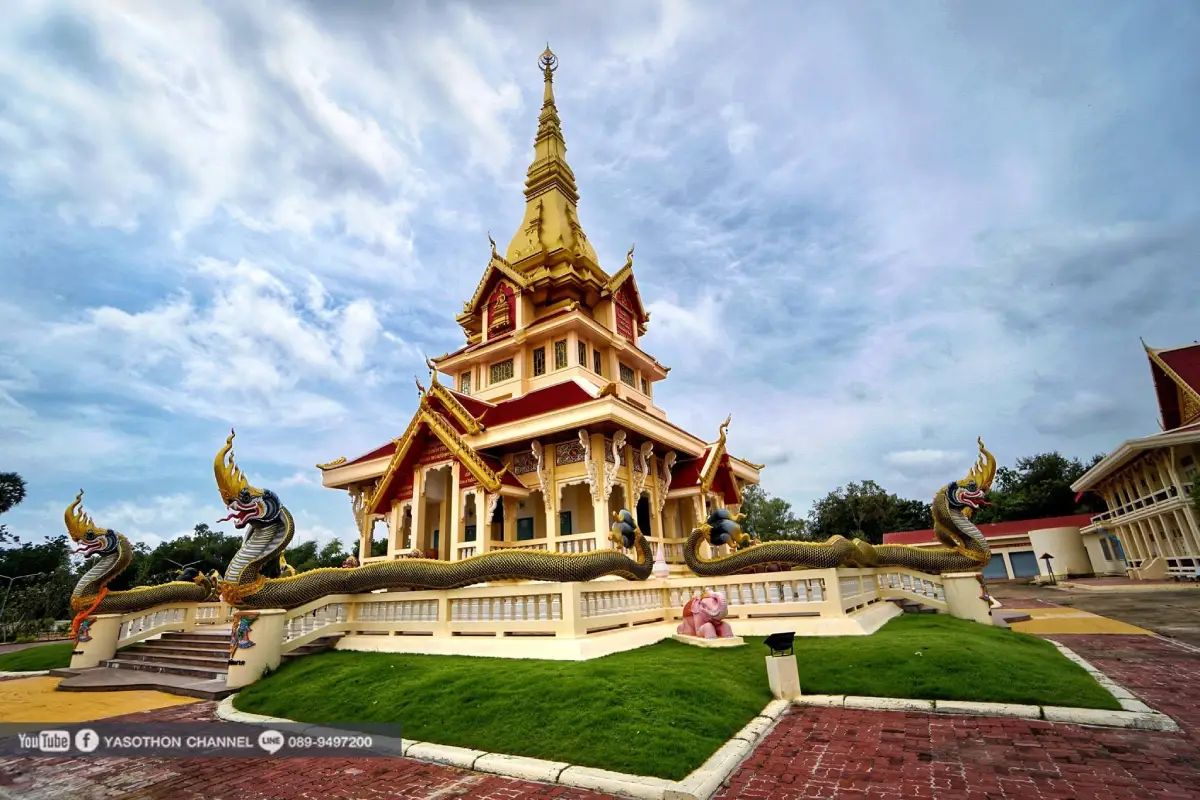
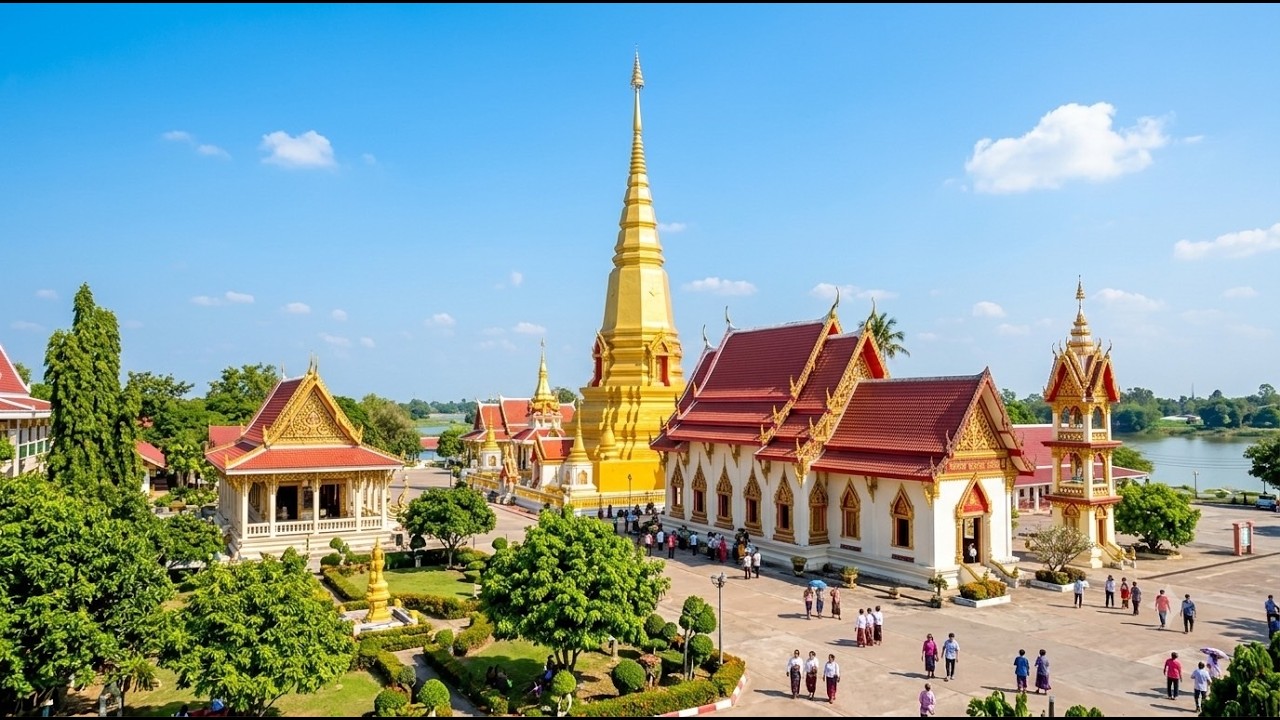
Wat Si Thammaram (Wat Luang Ta Phuang) in Yasothon is an important royal temple located on Witthaya Thamrong Road in Nai Mueang Subdistrict, Mueang Yasothon District, Yasothon Province. It is a third-class royal temple under the Dhammayuttika order and is closely connected with Ban Sing Tha, one of Yasothon’s historic communities. The temple is especially meaningful because it was the residence of Luang Ta Phuang Sukhinthariyo, a respected meditation master in the lineage of Luang Pu Mun Bhuridatto. With its peaceful atmosphere, riverside setting near the Chi River, important Buddha image, old boundary stones, and Luang Ta Phuang Museum, the temple offers a calm and culturally rich experience for both Thai visitors and foreign travelers.
Wat Si Thammaram is one of the places where the religious, historical, and spiritual identity of Yasothon can be understood clearly. It is not only a temple for local worship, but also a significant site connected with the city’s Buddhist heritage. The temple enshrines Phra Phuttha Mongkhon Rung Rot, also known as Luang Pho Phra Suk, an important Buddha image revered as one of Yasothon’s sacred city images. The image reflects Lan Xang artistic influence, linking Yasothon with the wider cultural world of the Mekong and Lao-Isan Buddhism.
The temple has a long history dating back to the reign of King Rama IV. It was founded around 1852 to 1853 and had several earlier names, including Wat Tha Chi, Wat Nok, Wat Tha Khaek, Wat Si Tham Ha Yai Sok, Wat Asokaram, and Wat Sang Sok Kasem San before becoming Wat Si Thammaram. These name changes show how the temple passed through different historical periods and remained active within the social and spiritual life of Yasothon. Its current name reflects a place of Dharma, peace, and spiritual grace.
The origin story of Wat Si Thammaram is closely tied to a sorrowful event in the history of old Yasothon. Local historical accounts connect the temple’s foundation with the death of members of the families of Chao Upparat But and Chao Kham Muan, relatives of Phra Sunthon Ratchawong, also known as Chao Fai But, the third ruler of Yot Sunthon. The temple was built as an act of remembrance and merit-making for those who had died in a tragic event associated with a fiery prison. This background gives the temple a deeper emotional and historical meaning. It was not built merely as a religious structure, but also as a memorial space for loss, merit, and community memory.
In 1873, Phra Sunthon Ratchawong, also known as Chao Men, led the people of Yot Sunthon to restore the temple and renamed it Wat Si Tham Ha Yai Sok. Later, when Prince Damrong Rajanubhab visited Yot Sunthon, the temple became known as Wat Asokaram. It was later renamed Wat Sang Sok Kasem San by Somdet Phra Maha Samana Chao Krom Phraya Vajirananavarorasa. In 1957, Phra Khru Phisan Silakhun, then abbot of the temple, restored it and renamed it Wat Si Thammaram, the name still used today.
Because the temple is located in Yasothon city but close to the Chi River, it has a noticeably peaceful atmosphere. In the morning and late afternoon, the air feels fresh and calm, making it suitable for worship, quiet walking, meditation, and reflection. The temple is easy to reach from the city center, yet the riverside setting makes it feel more serene than many urban temples. This balance between accessibility and calmness is one of the reasons why visitors continue to value the temple.
Luang Ta Phuang Sukhinthariyo, also known by his ecclesiastical title Phra Thep Sangwon Yan, is central to the modern identity of Wat Si Thammaram. He was a respected meditation monk in the lineage of Luang Pu Mun Bhuridatto, the great master of the Thai forest tradition. Luang Ta Phuang’s practice emphasized simplicity, discipline, mindfulness, and inner development. His residence at Wat Si Thammaram made the temple a meaningful place for disciples and laypeople who respected the forest meditation tradition.
Luang Ta Phuang Museum is one of the most important areas inside the temple. It preserves and presents the life, practice, teachings, and contributions of Luang Ta Phuang to Buddhism in Yasothon and northeastern Thailand. For visitors interested in Thai Buddhist practice, the museum helps explain why the temple is widely known as Wat Luang Ta Phuang. It also gives foreign travelers a clearer understanding of how the Thai forest meditation lineage remains meaningful in local temple life.
The annual memorial activities for Luang Ta Phuang show that his legacy is still alive. Devotees gather for merit-making, almsgiving, chanting, and remembrance ceremonies. These events honor his role as a respected teacher and spiritual guide. They also show that Wat Si Thammaram is not simply an old temple or a heritage site. It remains a living center of faith, practice, and community participation.
Phra Phuttha Mongkhon Rung Rot, or Luang Pho Phra Suk, is the temple’s most important Buddha image. It is associated with Lan Xang Buddhist art and is revered as a sacred image of Yasothon. The Buddha image is admired for its graceful proportions and old, dignified appearance. It is connected with the broader tradition of important Lao-Isan Buddha images, including the well-known group of Phra Suk, Phra Soem, and Phra Sai. Visitors usually pay respect to Luang Pho Phra Suk as a central part of their visit.
The importance of Luang Pho Phra Suk is not limited to artistic value. The image carries cultural memory and local devotion. In northeastern Thailand, Lan Xang-style Buddha images often represent the relationship between communities, Buddhism, and the Mekong cultural world. At Wat Si Thammaram, Luang Pho Phra Suk functions as a spiritual anchor of the temple and a symbol of Yasothon’s Buddhist heritage.
The temple also preserves old stone boundary markers associated with the Dvaravati period. These boundary stones are important because they reflect early Buddhist culture in northeastern Thailand. Boundary stones were traditionally used to mark sacred ritual space, especially areas connected with ordination or religious ceremonies. Their presence at Wat Si Thammaram adds an archaeological and historical layer to the temple, showing that the region’s Buddhist culture has deep roots beyond the modern city period.
The ordination hall and stupa area are also worth visiting. The ordination hall is the sacred area where important monastic ceremonies take place, while the stupa represents Buddhist devotion and remembrance. The temple compound is not overly crowded, allowing visitors to walk slowly and appreciate the layout, trees, quiet courtyards, and religious structures. The experience is different from a temple that functions mainly as a tourist attraction. Wat Si Thammaram remains a working temple with a calm and respectful atmosphere.
The location beside the Chi River gives the temple a distinctive feeling. The Chi River is one of the major rivers of northeastern Thailand and has supported communities, agriculture, trade, and settlement for generations. At Wat Si Thammaram, the riverside atmosphere adds natural calm to the religious environment. Morning visits feel fresh and contemplative, while late afternoon visits are gentle and quiet. This makes the temple suitable for travelers who want a peaceful stop in Yasothon city.
Wat Si Thammaram continues to play an active role in provincial Buddhist ceremonies. Important activities include royal Kathin ceremonies, candlelight processions on major Buddhist days, and memorial events for Luang Ta Phuang. These ceremonies connect the temple with local residents, provincial administration, monks, disciples, and visitors. The temple is therefore both a heritage site and a living religious institution.
For cultural travelers, the area around Wat Si Thammaram is especially useful because it can be combined with Ban Sing Tha Old Town. Ban Sing Tha is one of Yasothon’s historic quarters and contains old shophouses, the city pillar shrine, Singha Tha Museum, Wat Sing Tha, and nearby Wat Mahathat. This makes Wat Si Thammaram part of a compact cultural route in the city center. Travelers can visit the temple, then continue to old-town architecture, museums, city shrines, and local cafés without traveling far.
A good route is to begin at Wat Si Thammaram in the morning, pay respect to Luang Pho Phra Suk, visit Luang Ta Phuang Museum, and walk around the ordination hall, stupa, and old boundary stones. After that, continue to Ban Sing Tha Old Town, Singha Tha Museum, Wat Mahathat, and Yasothon City Pillar Shrine. Travelers with more time can add Phaya Thaen Park, the Giant Toad Museum, and That Kong Khao Noi. This route gives a clear view of Yasothon’s Buddhist heritage, old-town history, local legends, and modern cultural landmarks.
There is no admission fee to visit Wat Si Thammaram. Visitors should dress modestly, speak quietly, remove shoes before entering sacred buildings, and avoid touching religious objects or museum items without permission. Because the temple is associated with Luang Ta Phuang and the forest meditation tradition, visitors should maintain a calm and respectful manner, especially inside the museum and worship areas.
The best time to visit is in the morning or late afternoon. Morning is suitable for merit-making and quiet walking, while late afternoon is good for a relaxed visit before continuing to restaurants or cafés in Yasothon city. The temple’s riverside location makes these times especially pleasant. Visitors who enjoy photography should choose soft light and take photos respectfully from appropriate public areas.
Getting There is easy because Wat Si Thammaram is located in Yasothon city on Witthaya Thamrong Road. From Yasothon Bus Terminal, visitors can take a local vehicle, hired car, or city transport to the temple. Travelers driving by private car can enter Yasothon city via Chaeng Sanit Road and continue toward Witthaya Thamrong Road. Useful landmarks include Wat Si Thammaram, Wat Luang Ta Phuang, Ban Sing Tha Old Town, Wat Mahathat, and Singha Tha Museum.
Once at the temple, visitors should park only in permitted areas around the temple or nearby community spaces. The temple can be explored on foot. Start with Luang Pho Phra Suk, continue to the ordination hall, stupa, old boundary stones, and Luang Ta Phuang Museum, then continue to nearby old-town attractions. Distances between the main cultural sites in central Yasothon are short, making the area suitable for a half-day or full-day itinerary.
Food options nearby are convenient because the temple is located in the city. Travelers can stop at cafés in Ban Sing Tha, restaurants near the municipal market, or local Isan restaurants. Vachi Old Town is a suitable café for visitors who want an old-town atmosphere. Arabus Experience Café is convenient for coffee near the municipal market. Khao Tom Yok Yasothon, Tud Ting Lap Ped, and Baan Khun Ya Rim Thuan are practical options for meals in the city.
Accommodation is also easy to arrange in Yasothon city. Hotels within a practical distance include BM Grand Hotel, JP Emerald Hotel, The Colour Hotel Yasothon, The Green Park Grand Hotel Yasothon, The Zen Hotel Yasothon, and Big Elephant Hotel. Staying in the city allows visitors to reach Wat Si Thammaram, Ban Sing Tha, Wat Mahathat, Phaya Thaen Park, restaurants, and cafés without changing accommodation.
For Thai visitors, Wat Si Thammaram is a place for worship, merit-making, remembrance of Luang Ta Phuang, and connection with Yasothon’s Buddhist identity. For foreign travelers, the temple offers an accessible introduction to Lao-Isan Buddhist art, the Thai forest meditation lineage, royal temple culture, local religious life, and the calmer side of Yasothon city. It is a valuable stop for travelers who want more than a quick landmark visit.
Overall, Wat Si Thammaram (Wat Luang Ta Phuang) is one of the most meaningful temples in Yasothon. It combines a revered city Buddha image, a respected meditation master’s legacy, a museum, old boundary stones, a peaceful riverside atmosphere, and a convenient location near Ban Sing Tha Old Town. The temple is suitable for worship, cultural learning, quiet reflection, and a well-rounded exploration of Yasothon’s historical and spiritual landscape.
| Name | Wat Si Thammaram (Wat Luang Ta Phuang) |
| Official Name | Wat Si Thammaram Royal Temple |
| Location | Witthaya Thamrong Road, Nai Mueang Subdistrict, Mueang Yasothon District, Yasothon Province |
| Address | Witthaya Thamrong Road, Nai Mueang Subdistrict, Mueang Yasothon District, Yasothon 35000 |
| Coordinates | 15.80239, 104.13965 |
| Highlights | Phra Phuttha Mongkhon Rung Rot or Luang Pho Phra Suk, Luang Ta Phuang Sukhinthariyo Museum, Dvaravati-period stone boundary markers, ordination hall, stupa, and peaceful riverside atmosphere near the Chi River |
| History | Founded around 1852 – 1853 during the reign of King Rama IV. The temple had several earlier names, including Wat Tha Chi, Wat Nok, Wat Tha Khaek, Wat Si Tham Ha Yai Sok, Wat Asokaram, and Wat Sang Sok Kasem San before becoming Wat Si Thammaram in 1957 |
| Name Origin | The name Wat Si Thammaram reflects a place of Dharma, peace, and auspiciousness, and has been used since the temple restoration in 1957 |
| Distinctive Features | A third-class royal temple under the Dhammayuttika order, located in the Ban Sing Tha community, near the Chi River, and closely associated with Luang Ta Phuang Sukhinthariyo in the lineage of Luang Pu Mun Bhuridatto |
| Travel Information | Located in central Yasothon on Witthaya Thamrong Road. Travelers can use Wat Si Thammaram, Wat Luang Ta Phuang, Ban Sing Tha Old Town, or Wat Mahathat as landmarks. Accessible by private car, rental car, hired vehicle, or local city transport |
| Current Status | Open To Visitors And Active As A Royal Temple For Buddhist Ceremonies, Merit-Making, And Important Religious Activities In Yasothon |
| Open Days | Daily |
| Opening Hours | 08.00 – 17.00 |
| Fees | Free Admission |
| Facilities | Worship areas, ordination hall, Luang Ta Phuang Museum, temple walking areas, temple courtyard, permitted parking nearby, and convenient access to city restaurants and cafés |
| Main Areas / Zones | 1. Ordination Hall 2. Phra Phuttha Mongkhon Rung Rot Or Luang Pho Phra Suk 3. Stupa Area 4. Luang Ta Phuang Sukhinthariyo Museum 5. Dvaravati-Period Stone Boundary Markers 6. Merit-Making And Worship Areas 7. Chi River Riverside Quiet Area |
| Abbot / Caretaker | Phra Khru Prasit Silakhun (Prasit Kantasilo) |
| Tradition / Important Ceremony | Luang Ta Phuang Sukhinthariyo Memorial Day, Royal Kathin Ceremony, candlelight processions on major Buddhist days, and merit-making activities of Yasothon Buddhist communities |
| Nearby Tourist Attractions | 1. Ban Sing Tha Old Town, About 0.8 km 2. Wat Mahathat Royal Temple, About 1 km 3. Yasothon City Pillar Shrine, About 1 km 4. Singha Tha Museum, About 1.1 km 5. Wat Sing Tha, About 1.2 km 6. Phaya Thaen Park / Giant Toad Museum, About 3 km 7. That Kong Khao Noi, About 11 km |
| Nearby Restaurants | 1. Vachi Old Town, About 0.8 km, Tel. 098-428-5246, 062-994-2559 2. Arabus Experience Café Yasothon Municipal Market, About 1 km, Tel. 098-280-5288 3. Khao Tom Yok Yasothon, About 1.2 km, Tel. 093-329-3779 4. Tud Ting Lap Ped, About 1.8 km, Tel. 045-711-600 5. Baan Khun Ya Rim Thuan, About 2 km, Tel. 095-231-2221 6. PunThai Coffee Road 23 Yasothon, About 2.2 km |
| Nearby Accommodations | 1. BM Grand Hotel, About 1 km, Tel. 045-712-333 2. JP Emerald Hotel, About 1.4 km, Tel. 045-714-456 3. The Colour Hotel Yasothon, About 1.6 km, Tel. 045-971-794 4. The Green Park Grand Hotel Yasothon, About 2 km, Tel. 045-714700-1 5. The Zen Hotel Yasothon, About 2.5 km, Tel. 045-711-455 6. Big Elephant Hotel, About 3 km, Tel. 045-711-123 |
Frequently Asked Questions (FAQ)
Q: Where Is Wat Si Thammaram Located?
A: Wat Si Thammaram is located on Witthaya Thamrong Road in Nai Mueang Subdistrict, Mueang Yasothon District, Yasothon Province, near Ban Sing Tha Old Town, Wat Mahathat, and Yasothon City Pillar Shrine.
Q: What Are The Opening Hours Of Wat Si Thammaram?
A: The temple is open daily from 08.00 to 17.00.
Q: Is There An Admission Fee?
A: No. Visitors can enter the temple, pay respect, make merit, and visit important areas without an admission fee.
Q: What Are The Main Highlights Of Wat Si Thammaram?
A: The main highlights are Phra Phuttha Mongkhon Rung Rot or Luang Pho Phra Suk, Luang Ta Phuang Sukhinthariyo Museum, the ordination hall, stupa, Dvaravati-period stone boundary markers, and the peaceful riverside atmosphere near the Chi River.
Q: How Is Wat Si Thammaram Connected With Luang Ta Phuang?
A: Wat Si Thammaram was the residence of Luang Ta Phuang Sukhinthariyo, a respected meditation master in the lineage of Luang Pu Mun Bhuridatto. The temple also has Luang Ta Phuang Museum, which preserves his life, practice, and spiritual legacy.
Q: What Nearby Places Can Be Visited With Wat Si Thammaram?
A: Nearby places include Ban Sing Tha Old Town, Wat Mahathat, Yasothon City Pillar Shrine, Singha Tha Museum, Wat Sing Tha, Phaya Thaen Park, the Giant Toad Museum, and That Kong Khao Noi.
Q: Is Wat Si Thammaram Suitable For Foreign Travelers?
A: Yes. The temple is easy to reach, located in the city, and offers a meaningful introduction to Lao-Isan Buddhist art, the Thai forest meditation lineage, royal temple culture, and the living religious life of Yasothon.
Q: When Is The Best Time To Visit Wat Si Thammaram?
A: Morning and late afternoon are the best times to visit because the riverside air is pleasant, the temple is calm, and the light is suitable for respectful photography and quiet walking.
 Category: ●Places of Worship
 Group: ●Temple
Last Update : 3 MonthAgo
 Last Update : 3 MonthAgo
 Click to Access the Navigation Map GPS
Wat Si Thammaram (Wat Luang Ta Phuang) Map

 Art, Culture and Heritage
 Historical Sites and Monuments(6)
 Landmarks and Memorials(1)
 Art, Craft Centres, Tradition(4)
 Museums(1)
 Historic Homes and Cities(1)
Temple(22)
 Church(1)
 Other Sacred Sites(10)
 Research and Development
 Royal Project(2)
 Suburban Living
 Village, Community(3)
 Local Market(1)
 Nature and Wildlife
 National Parks and Marine Reserves(2)
 Mountain (Doi)(2)
 Dam, Reservoir, Lake(7)
 River, Canal(2)
 Bays and Beaches(1)
 Other natural attractions(2)
 Entertainment and Agricultural
 Farms, Parks and Ecotourism(1)
 Travel Articles, Recipes
 Travel Review, Food Review(2)


