
lovethailand home >Northeastern Travel Attractions >Yasothon Travel Attractions >Kham Khuan Kaeo >Song Pueai > Replica of the Buddha Footprint
TL;DR: Replica of the Buddha Footprint is located at Wat Ban Song Pueai / Ban Song Pueai Archaeological Area, Song Pueai Subdistrict, Kham Khuean Kaeo District, Yasothon Province, open Daily, hours 08.00 – 17.00.
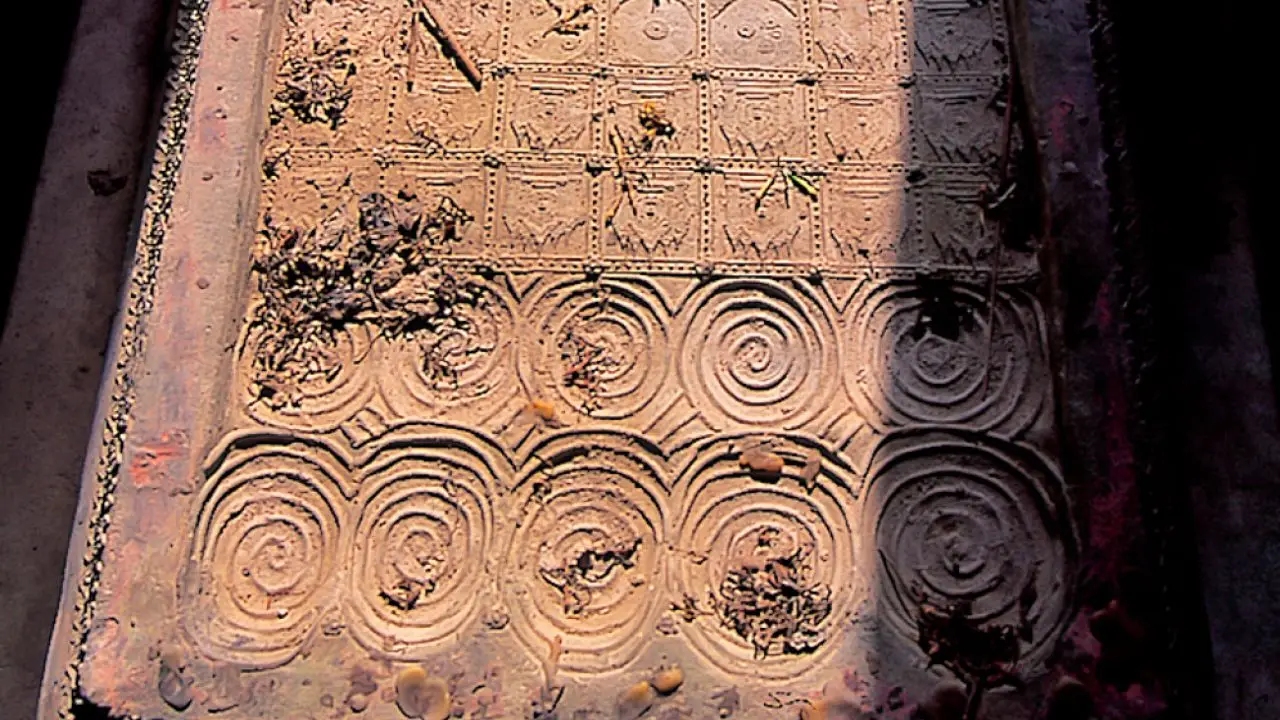
Replica of the Buddha Footprint
Open Days: Daily
Opening Hours: 08.00 – 17.00
The Replica of the Buddha Footprint at Ban Song Pueai is an important sacred site within Wat Ban Song Pueai and the Ban Song Pueai Archaeological Area in Song Pueai Subdistrict, Kham Khuean Kaeo District, Yasothon Province. It is a meaningful destination for travelers who want to explore local Buddhist devotion, community heritage, and ancient cultural landscapes in northeastern Thailand. Every year during Songkran, many local people come to bathe the replica footprint as an act of worship, blessing, and cultural continuity.
The replica Buddha footprint was built under the patronage of Field Marshal Plaek Phibunsongkhram and his wife. This makes the site significant not only as a Buddhist object of devotion, but also as a place where national history and local faith intersect. In Thai Buddhist culture, a Buddha footprint is a sacred symbol representing the presence, path, and teaching of the Buddha. For worshippers, paying respect to the footprint is a way to remember the Buddha and to reflect on the path of Dhamma in daily life.
Ban Song Pueai is an old community in Kham Khuean Kaeo District. The village is closely connected with Dong Mueang Toei, an ancient archaeological site located near the community. The wider area contains traces of ancient settlement, earthen moats, brick religious remains, pottery fragments, inscriptions, and sacred Buddhist objects. A visit to the replica Buddha footprint should therefore be understood as part of a larger cultural route, not merely as a single worship stop.
Within Wat Ban Song Pueai, visitors can find several important sacred and cultural sites. One of them is the large Buddha image in the ordination hall of Wat Song Pueai. This image is made of brick and stucco, with a lap width of about 3 meters and a height of about 8 meters. It is more than 200 years old and is deeply respected by local people. Another important site is the pagoda containing soil from the 4 major Buddhist holy places in India: the place of the Buddha’s birth, enlightenment, first sermon, and passing into final nirvana.
The relationship between the pagoda containing sacred soil and the replica Buddha footprint gives Wat Ban Song Pueai a deep spiritual identity. The sacred soil connects this local temple with the life of the Buddha in India, while the Buddha footprint gives local worshippers a visible and accessible symbol of devotion. Together, these sacred objects show how a rural Isan community links its own religious landscape to the wider Buddhist world.
The replica Buddha footprint is especially important during Songkran, the traditional Thai New Year. During this period, local people come to bathe the footprint as an act of respect and merit-making. This ritual is not only a religious activity, but also a community event. It brings people back to the temple, connects generations, and keeps the sacred memory of the place alive. For visitors, Songkran at Ban Song Pueai reveals a quieter and more meaningful side of the festival beyond water play.
The annual bathing of the Buddha footprint reflects the way Buddhist faith is practiced in local Thai communities. Water is associated with purification, blessing, and renewal. When worshippers pour water over the sacred footprint, they express respect for the Buddha and ask for auspiciousness in the new year. This act also shows the continued role of Wat Ban Song Pueai as a spiritual center for the village.
Another important point of interest in the area is the Antique Museum of Ban Song Pueai. The museum collects ancient objects found in and around Dong Mueang Toei, an old Khmer-period town. Items associated with the museum include local tools, ancient objects, a stone bed believed to be connected with an old ruler, and inscriptions. The museum helps visitors understand the history of the wider area and shows that Ban Song Pueai is not only a religious site, but also a place of archaeological and cultural value.
Dong Mueang Toei is located south of Ban Song Pueai, about 1 km from the village and around 7 km from Kham Khuean Kaeo District center. It contains remains of an ancient settlement, including temple ruins, ponds, walls, moats, and brick structures. The site is associated with the Chenla-Dvaravati period and with cultural influences that spread through the Mun-Chi river basin. Because the replica Buddha footprint is located near this archaeological landscape, visitors can experience both living Buddhist worship and older layers of regional history in one trip.
Travelers interested in history should explore Ban Song Pueai as a connected cultural area. The large Buddha image reflects the continuing Buddhist faith of the community. The pagoda containing sacred soil links the village to the main holy places of Buddhism. The replica Buddha footprint represents devotion to the Buddha through a sacred symbol. The Antique Museum preserves local material culture. Dong Mueang Toei reveals the deeper ancient roots of the area. These elements together make Ban Song Pueai one of the most meaningful cultural sites in Yasothon Province.
In Thai Buddhist art and belief, Buddha footprints are important symbols of reverence. They represent the spiritual presence of the Buddha without portraying him in human form. Worshipping a Buddha footprint reminds followers to walk in the path of the Buddha’s teaching. At Ban Song Pueai, this meaning is strengthened by the annual Songkran ritual and by the continued participation of the local community.
The temple atmosphere is simple and local. This is not a large commercial attraction, and that is part of its value. Visitors who enjoy quiet temples, community heritage, and authentic cultural places will find the site rewarding. It provides a direct view of how Buddhist devotion, local memory, and archaeological heritage coexist in rural Isan.
A respectful visit should begin with paying homage to the replica Buddha footprint. Visitors may offer prayers, make merit, and observe the surrounding temple area quietly. The footprint should be treated as a sacred object. Visitors should not step on it, touch it unnecessarily, or disturb people who are worshipping. Modest dress and calm behavior are important throughout the temple grounds.
The best way to understand the site is to explore it together with other nearby points inside Ban Song Pueai. Visitors can begin at Wat Ban Song Pueai and the replica Buddha footprint, then see the large Buddha image, the pagoda containing sacred soil, the Antique Museum of Ban Song Pueai, and finally continue to Dong Mueang Toei. This route gives a complete picture of the village’s religious, historical, and cultural identity.
Getting There is most convenient by private car. From Yasothon city, follow Highway 23 on the Yasothon-Kham Khuean Kaeo-Ubon Ratchathani route for about 25 km, then turn toward Song Pueai Subdistrict for about 10 km. The site is located within the Ban Song Pueai area. Travelers coming from Kham Khuean Kaeo District center can continue toward Song Pueai Subdistrict and follow local signs to Wat Ban Song Pueai and the archaeological area.
A private vehicle is recommended because it allows visitors to explore several points in one day. Public transport is less flexible for this route. Travelers without a private car should first reach Kham Khuean Kaeo District center, then hire a local vehicle to Ban Song Pueai. This is especially useful for those who want to visit both the temple and Dong Mueang Toei on the same trip.
The site is open daily from 08.00 to 17.00, and there is no admission fee. Morning is the best time for worship and photography because the temperature is more comfortable. Afternoon visits are suitable for combining the temple with the museum and Dong Mueang Toei. Visitors should avoid arriving too late in the day, especially if they plan to walk around archaeological areas where lighting may be limited.
During Songkran, the replica Buddha footprint becomes especially lively. Many local people come to bathe the footprint, make merit, and gather with family and community members. Travelers visiting during this period will see a meaningful local tradition, but should be mindful of temple etiquette. Photography should be done respectfully, without blocking worshippers or interrupting rituals.
The site is suitable for families, elderly visitors, students, cultural travelers, Buddhist pilgrims, and foreign visitors interested in local traditions. Families can use the visit to explain the meaning of Buddha footprints, Buddhist holy places, Songkran rituals, and local temple etiquette to children. Students and cultural travelers can connect the site with the archaeology of Dong Mueang Toei and the wider history of the Chi River basin.
For foreign travelers, the replica Buddha footprint at Ban Song Pueai is best understood as a living sacred symbol. It is not only an old object or a tourist attraction. It is a place where local people continue to practice devotion, especially during Songkran. The ritual of bathing the footprint shows that Thai New Year traditions are closely connected with merit-making, gratitude, purification, and respect for sacred things.
Photography is possible in the temple area, but visitors should remain respectful. Good subjects include the temple atmosphere, the large Buddha image, the pagoda, the museum area, and the general landscape of Ban Song Pueai. Visitors should avoid stepping onto sacred platforms, touching religious objects, or taking close photographs of people during rituals without permission.
A one-day cultural route can include the replica Buddha footprint, Wat Ban Song Pueai, the Antique Museum of Ban Song Pueai, Dong Mueang Toei, Phra That Ku Chan, and local restaurants in Kham Khuean Kaeo District. Travelers with more time can continue to Yasothon city to visit Phra That Kong Khao Noi, Phaya Thaen Public Park, Wat Mahathat, and the old Ban Sing Tha quarter. This route offers a broad view of Yasothon’s Buddhist heritage, archaeology, local traditions, and community life.
In terms of community value, the replica Buddha footprint helps preserve the Songkran tradition of Ban Song Pueai. Every year, the ritual brings people back to the temple and strengthens the connection between the sacred site and the local community. It is a reminder that heritage is not preserved only through buildings or objects, but also through repeated acts of faith and participation.
Although the replica Buddha footprint is modest in size, its cultural meaning is significant. It reflects devotion to the Buddha, the historical connection between national patronage and local sacred sites, the living Songkran tradition, and the wider archaeological context of Ban Song Pueai. Visitors who take time to explore the area will find that the site is part of a rich cultural landscape combining temple, village, museum, pagoda, ancient remains, and community memory.
In summary, the Replica of the Buddha Footprint at Ban Song Pueai is a worthwhile cultural and spiritual stop in Kham Khuean Kaeo District, Yasothon Province. Built under the patronage of Field Marshal Plaek Phibunsongkhram and his wife, the footprint remains a sacred object of local worship, especially during the annual Songkran bathing ritual. Its location within the Ban Song Pueai cultural area, near the large Buddha image, the pagoda containing sacred soil, the Antique Museum, and Dong Mueang Toei, makes it an excellent destination for travelers seeking a deeper understanding of Yasothon’s Buddhist heritage and ancient history.
| Name | Replica of the Buddha Footprint at Ban Song Pueai |
| Location | Wat Ban Song Pueai / Ban Song Pueai Archaeological Area, Song Pueai Subdistrict, Kham Khuean Kaeo District, Yasothon Province |
| Address | Song Pueai Subdistrict, Kham Khuean Kaeo District, Yasothon 35110, Thailand |
| Nearby Area Coordinates | Ban Song Pueai Archaeological Site, Dong Mueang Toei: 15.644884483, 104.254178736 |
| Highlights | A replica Buddha footprint built under the patronage of Field Marshal Plaek Phibunsongkhram and his wife, worshipped by local people during Songkran each year |
| History | The footprint is part of the important sacred and cultural sites of Ban Song Pueai, together with the large Buddha image, the pagoda containing soil from Buddhist holy places, the Antique Museum, and Dong Mueang Toei. |
| Distinctive Features | A sacred replica Buddha footprint used for worship and Songkran bathing rituals, reflecting Buddhist devotion and local Isan community faith |
| Traditions / Rituals | Every Songkran, many local people come to bathe the replica Buddha footprint as an act of worship and blessing. |
| Related Heritage Sites | Large Buddha image in Wat Song Pueai Pagoda containing soil from Buddhist holy places Antique Museum of Ban Song Pueai Ancient remains of Dong Mueang Toei |
| Travel Information | From Yasothon city, follow Highway 23 on the Yasothon-Kham Khuean Kaeo-Ubon Ratchathani route for about 25 km, then turn toward Song Pueai Subdistrict for about 10 km to reach Wat Ban Song Pueai and the Ban Song Pueai cultural area. |
| Current Status | Open for worship and visits during operating hours |
| Open Days | Daily |
| Opening Hours | 08.00 – 17.00 |
| Fees | No admission fee |
| Facilities | Temple courtyard, worship area, parking area, temple restroom, local museum, and nearby archaeological walking areas |
| Main Areas / Zones | Replica Buddha footprint Large Buddha image in Wat Song Pueai Pagoda containing soil from Buddhist holy places Antique Museum of Ban Song Pueai Ban Song Pueai community area Dong Mueang Toei ancient remains nearby |
| Caretaker | Wat Ban Song Pueai and Song Pueai community |
| Heritage Information Contact | Yasothon Local Unit for Conservation of Natural and Cultural Environment, Tel. 0-4571-1655-6 |
| Nearby Tourist Attractions | 1. Dong Mueang Toei, about 1 km 2. Antique Museum of Ban Song Pueai, about 1 km 3. Phra That Ku Chan, about 17 km 4. Phra That Phon Than, about 23 km 5. Wat Phra Phutthabat Yasothon, about 33 km 6. Phra That Kong Khao Noi, about 35 km 7. Phaya Thaen Public Park, about 38 km |
| Nearby Restaurants | 1. Local restaurants in Ban Song Pueai, about 1 km 2. Kai Yang Pa Win Restaurant, about 11 km, Tel. 062-8958375, 099-9269504 3. Kalam Ice Cream Cafe Kham Khuean Kaeo, about 15 km, Tel. 090-2575081 4. Krua Kan Eng Kham Khuean Kaeo, about 15 km 5. KAO NA COFFEE Yasothon, about 16 km, Tel. 083-8054169 6. Restaurants in Kham Khuean Kaeo town, about 15 km |
| Nearby Accommodations | 1. Ruen Lamool Hotel Kham Khuean Kaeo, about 16 km, Tel. 063-0236989 2. Namthip Resort Kham Khuean Kaeo, about 16 km, Tel. 093-5317435 3. Sukhon Nakhon Hotel Kham Khuean Kaeo, about 16 km, Tel. 081-7254262 4. Chamchuri Resort Kham Khuean Kaeo, about 17 km 5. Huai Chan Resort, about 18 km 6. Kaew Kham Resort Kham Khuean Kaeo, about 17 km |
Frequently Asked Questions (FAQ)
Q: Where is the Replica of the Buddha Footprint at Ban Song Pueai located?
A: It is located within Wat Ban Song Pueai and the Ban Song Pueai Archaeological Area in Song Pueai Subdistrict, Kham Khuean Kaeo District, Yasothon Province.
Q: Who built the replica Buddha footprint?
A: The replica Buddha footprint was built under the patronage of Field Marshal Plaek Phibunsongkhram and his wife.
Q: What are the opening hours?
A: The site is open daily from 08.00 to 17.00.
Q: Is there an admission fee?
A: No. Visitors can enter, worship, and explore the site without an admission fee.
Q: What happens during Songkran at the replica Buddha footprint?
A: Every Songkran, many local people come to bathe the replica Buddha footprint as an act of worship, blessing, and community tradition.
Q: What nearby sites should be visited together with the footprint?
A: Visitors should also see the large Buddha image, the pagoda containing soil from Buddhist holy places, the Antique Museum of Ban Song Pueai, and Dong Mueang Toei.
Q: How can travelers get there?
A: From Yasothon city, follow Highway 23 toward Kham Khuean Kaeo, then turn toward Song Pueai Subdistrict to reach Wat Ban Song Pueai and the archaeological area.
Q: How should visitors behave at the site?
A: Visitors should dress modestly, keep a respectful manner, avoid stepping on or touching sacred objects unnecessarily, keep the area clean, and respect local worshippers.
 Category: ●Places of Worship
 Group: ●Other Sacred Sites
Last Update : 1 MonthAgo
 Last Update : 1 MonthAgo
 Click to Access the Navigation Map GPS
Replica of the Buddha Footprint Map

 Art, Culture and Heritage
 Historical Sites and Monuments(6)
 Landmarks and Memorials(1)
 Art, Craft Centres, Tradition(4)
 Museums(1)
 Historic Homes and Cities(1)
 Temple(22)
 Church(1)
Other Sacred Sites(9)
Church(1)
Other Sacred Sites(9)
 Research and Development
 Royal Project(2)
 Suburban Living
 Village, Community(3)
 Local Market(1)
 Nature and Wildlife
 National Parks and Marine Reserves(2)
 Mountain (Doi)(2)
 Dam, Reservoir, Lake(7)
 River, Canal(2)
 Bays and Beaches(1)
 Other natural attractions(2)
 Entertainment and Agricultural
 Farms, Parks and Ecotourism(1)


