
lovethailand home >Northeastern Travel Attractions >Yasothon Travel Attractions >Pa Tiu >Si Than > Ban Si Than Khit Pillow Village
TL;DR: Ban Si Than Khit Pillow Village is located at Si Than Subdistrict, Pa Tio District, Yasothon Province, open Daily, hours 08.00 – 17.00.

Ban Si Than Khit Pillow Village
Open Days: Daily
Opening Hours: 08.00 – 17.00
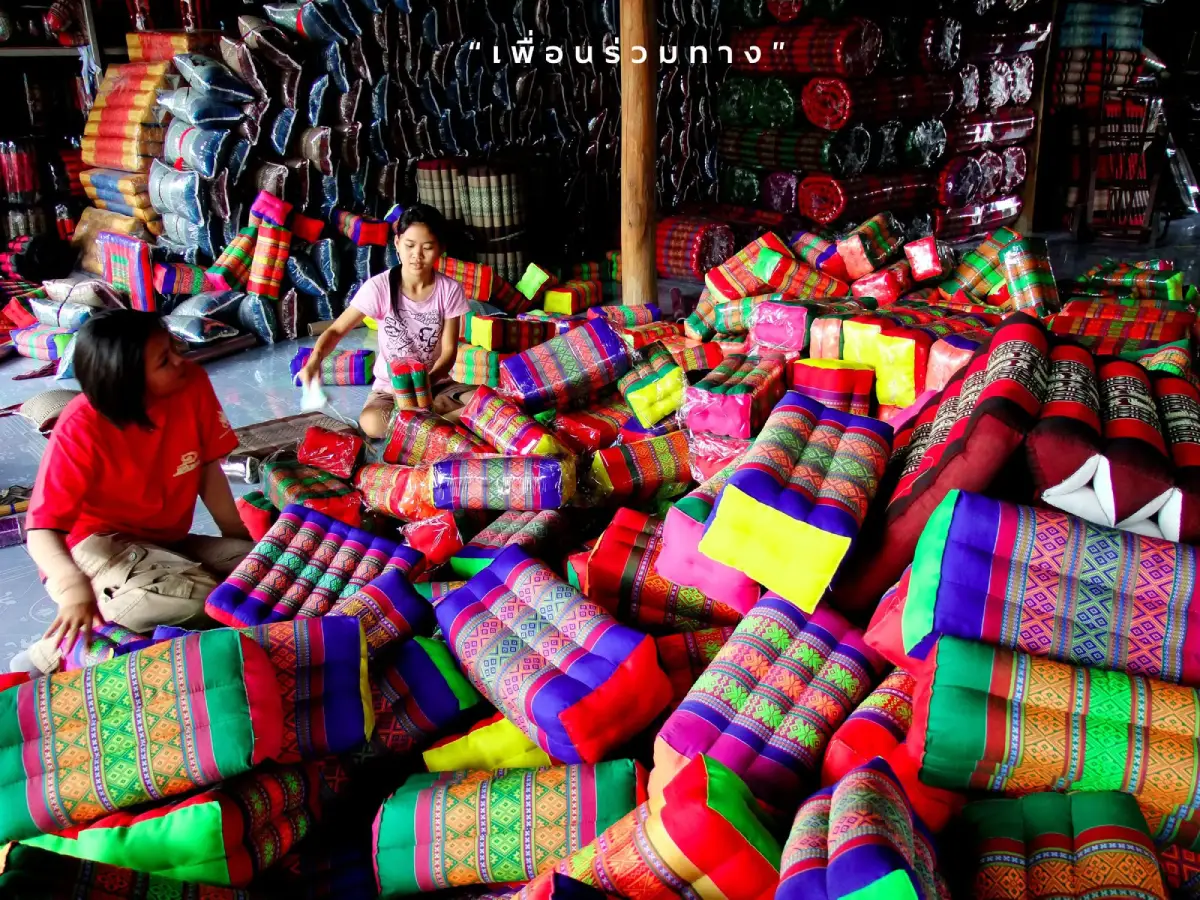
Ban Si Than Khit Pillow Village in Yasothon Province is one of the most distinctive handicraft communities in Pa Tio District. Located in Si Than Subdistrict, about 20 kilometers from Yasothon city along Highway 202 on the Yasothon-Pa Tio-Amnat Charoen route, the village is widely known for making traditional khit pillows, especially axe-shaped khit pillows, triangular pillows, folding mattresses, roll mattresses, neck pillows, back pillows, cushions, and other textile products made from Isan khit fabric. This community is not only a place to buy souvenirs, but also a living craft village where visitors can observe local production, understand household-based work, and see how textile knowledge continues to support rural livelihoods.
Ban Si Than is an old agricultural community in Pa Tio District. Most households are connected with rice farming, while khit pillow making has become an important supplementary occupation after the rice-growing season. This rhythm gives the village a strong rural identity. Farming remains the foundation of life, but handicraft production allows families to earn additional income without leaving the community. Visitors who enter the village will see that craft is not separated from daily life. Homes, family labor, local materials, and product sales are closely connected in a real community setting.
The word “khit” refers to a traditional weaving technique that creates raised patterns on fabric by lifting selected threads during the weaving process. Khit cloth is known for its geometric motifs, floral patterns, repeated lines, and rich colors. When this cloth is turned into pillows, the final product carries both practical and cultural value. A Ban Si Than khit pillow is therefore more than a cushion. It is a household object, a piece of textile heritage, a community product, and a symbol of Yasothon’s local wisdom.
In the past, villagers made khit pillows mainly for household use. Pillows were used for sleeping, resting, receiving guests, and participating in local ceremonies. They were also offered to monks, used in merit-making events, given as gifts to relatives, and exchanged for daily necessities before cash-based trade became more common. As the popularity of khit pillows grew, the people of Ban Si Than gradually developed the craft into serious household production. Designs became more varied, colors became more attractive, shapes became more practical, and marketing channels expanded beyond the village.
The best-known product is the axe-shaped khit pillow. Its form is distinctive, practical, and visually memorable. It can be used as a backrest, neck support, headrest, or decorative item. Other popular forms include triangular pillows, folding mattresses, roll mattresses, bone-shaped pillows, neck pillows, cushions, and pillow sets. These products show how traditional craft can adapt to modern needs while preserving its original identity. A pillow that once served mainly local households can now be used in homes, guesthouses, resorts, cultural spaces, and as meaningful souvenirs.
The making of a khit pillow begins with fabric preparation. Artisans select fabric according to pattern, color, thickness, and intended form. The fabric is then cut according to the desired shape. After that, the pieces are sewn into a pillow cover and shaped into the correct structure. Cotton or kapok-like filling is prepared and inserted into the pillow. The filling stage requires experience because the pillow must be firm enough to keep its form but not so hard that it becomes uncomfortable. The artisan must spread the filling evenly into every corner and curve.
After filling, the pillow is closed, stitched, checked, and shaped again by hand. Every step matters. A poorly sewn seam can reduce durability. Uneven filling can distort the shape. A weak structure can make the pillow collapse over time. Skilled makers control all these details with their hands and eyes. This is why handmade khit pillows from Ban Si Than carry value beyond their material cost. Each piece represents time, technique, local knowledge, and careful labor.
Ban Si Than is also important as an example of community product development. What began as a household object gradually became a recognized OTOP product and a well-known Yasothon souvenir. The village has developed many forms of products to meet different needs: small pillows for easy carrying, larger pillow sets for home use, folding mattresses for resting, decorative cushions for interior spaces, and traditional axe-shaped pillows for cultural gifts. This variety helps the craft remain relevant in contemporary markets.
The colors of Ban Si Than khit pillows are part of their identity. Common colors include red, blue, green, yellow, brown, black, and gold tones. These colors are often combined with patterned khit panels to create contrast and rhythm. The result is a product that looks bold, warm, and culturally grounded. The beauty of a khit pillow comes from the relationship between pattern, color, form, and function. It is not only decorative; it also reflects the visual language of Isan textiles.
A visit to Ban Si Than is most meaningful when travelers take time to observe the making process. Visitors may see fabric cutting, sewing, pillow shaping, filling, and final finishing. Watching these steps helps visitors understand that a pillow is not simply a finished object on a shelf. It is the result of many decisions and repeated skills. This direct experience gives greater meaning to buying a pillow from the village, because the buyer understands the hands and knowledge behind the product.
For travelers interested in handicrafts, Ban Si Than should be explored slowly. The village is not a conventional museum or a staged tourist show. It is a real community where people live and work. Some households may be involved in sewing, some in filling, some in finishing, and some in selling products. This household production system allows income to circulate within the village. It also keeps craft knowledge active within families and across generations.
The economic value of khit pillow making is especially important after the rice-farming season. When agricultural work becomes less intensive, villagers can produce pillows and textile products to earn supplementary income. This helps reduce seasonal unemployment and allows elderly people, women, and family members to participate in work close to home. The craft supports household income while allowing people to remain in their community rather than migrating for work.
Culturally, Ban Si Than khit pillows reflect the Isan idea that useful objects can also be beautiful. In traditional homes, pillows are used for resting, receiving guests, and joining ritual or merit-making activities. A khit pillow therefore belongs to both daily life and ceremonial culture. When offered to monks or given as a gift, it carries respect and goodwill. When used at home, it carries comfort and identity. This dual meaning makes the pillow one of the most expressive household crafts of Yasothon.
Visitors should approach Ban Si Than with respect because it is a living village. They should ask before taking close photographs of people or production processes, avoid entering private homes without permission, handle products gently, and respect the time and labor of artisans. Supporting local products directly is one of the best ways to help preserve the craft. Every purchase helps maintain household income and encourages younger generations to see value in local wisdom.
Choosing a good khit pillow requires attention to detail. Visitors should look at the neatness of seams, the firmness of the filling, the balance of the shape, the cleanliness of the fabric, the alignment of the pattern, and the suitability of the pillow for intended use. Those buying for home use may choose a larger and firmer form, while those buying souvenirs may prefer compact designs that are easier to carry. Decorative buyers may choose colors and patterns that match their interior spaces.
For international travelers, Ban Si Than offers a clear view of Isan textile culture. A khit pillow is not just a colorful cushion. It connects weaving, farming seasons, family labor, Buddhist giving, gift culture, rural income, and community identity. Seeing the product made in its village context helps foreign visitors understand that many Thai handicrafts come from lived experience rather than factory-style production. The village is a strong example of how local knowledge becomes a cultural product.
For families with children, the village functions as an outdoor classroom. Children can see how fabric becomes a pillow, how filling changes the shape of an object, and how handmade products require patience and precision. They can also learn that everyday objects have stories and that rural communities create value through skill and cooperation. This kind of learning is practical, memorable, and directly connected with real people.
Ban Si Than is also suitable for study groups, community enterprise groups, women’s groups, students, and visitors interested in local product development. The village offers lessons in seasonal livelihood planning, household industry, product diversification, community marketing, textile heritage, OTOP development, and the role of craft in rural economies. These lessons make the village useful not only for tourism, but also for community development studies.
The village can be included in a broader Yasothon cultural route. From Yasothon city, travelers can follow Highway 202 to Ban Si Than in the morning, observe khit pillow making, and buy community products. After that, they can return to Yasothon city to visit Ban Sing Tha Old Quarter, Singha Tha Museum, Wat Mahathat Yasothon, Phaya Thaen Public Park, the Toad Museum, and Phra That Kong Khao Noi. This route connects rural craft with old-town history and provincial landmarks.
Getting There is easiest by private car. From Yasothon city, take Highway 202 on the Yasothon-Pa Tio-Amnat Charoen route for about 20 kilometers. Around kilometer markers 18-19, turn right and continue for about 3 kilometers to reach Ban Si Than. The route is suitable for a half-day visit or a full-day cultural trip. Groups planning an organized visit should contact the local administration or craft groups in advance so that demonstrations and community learning activities can be arranged properly.
The recommended visiting hours are 08.00 to 17.00. Morning to early afternoon is especially suitable for observing village activity, speaking with local producers, and choosing products. Visitors who want to see active production may prefer the period after the rice-farming season, when villagers have more time for handicraft work. However, the village remains accessible for community visits and product purchases throughout the year during appropriate hours.
There is no admission fee for general community areas. Visitors can walk through appropriate areas, observe the community atmosphere, and buy products directly from local sellers. Costs mainly depend on purchased products or special arrangements for demonstrations and study visits. Since the products are handmade, prices should be understood in relation to skill, time, and labor rather than compared only with factory-made goods.
Visitors should allow enough time for the visit. Those buying large pillow sets should prepare enough space in the vehicle because some forms are bulky, especially triangular pillow sets and folding mattresses. Those buying for gifts or resale should ask the producers directly about size, color, pattern, quantity, packaging, and transport options. Direct communication with the village helps buyers receive products that fit their needs while supporting the makers fairly.
The value of Ban Si Than lies not in large buildings or spectacular scenery, but in the living continuity of craft. Fabric, thread, filling, needles, hands, and experience come together to create products that are useful, beautiful, and culturally meaningful. A visit to the village is therefore a way to understand Yasothon through a handmade object that carries memory, work, and local pride.
In summary, Ban Si Than Khit Pillow Village is a key handicraft destination in Pa Tio District, Yasothon Province. Its highlights include axe-shaped khit pillows, triangular pillows, folding mattresses, roll mattresses, neck pillows, cushions, and other khit fabric products. The village has a long history of household craft production, strong links with rice-farming life, and a recognized role as an important OTOP craft community. It is suitable for travelers who want to see living local wisdom, buy meaningful handmade souvenirs, and understand Yasothon through the craft traditions of a real rural community.
| Name | Ban Si Than Khit Pillow Village / Ban Si Than Axe-Shaped Khit Pillow Village |
| Type | Handicraft Village, Khit Pillow Production Community, Local Wisdom Learning Site, And Community Tourism Destination |
| Location | Si Than Subdistrict, Pa Tio District, Yasothon Province |
| Address | Ban Si Than, Si Than Subdistrict, Pa Tio District, Yasothon 35150, Thailand |
| Coordinates | 15.777464158, 104.33647581 |
| Highlights | Axe-shaped khit pillows, triangular pillows, folding mattresses, roll mattresses, bone-shaped pillows, neck pillows, cushions, and khit fabric products made from Ban Si Than local wisdom |
| Community Importance | An old rural agricultural community with a long tradition of khit pillow making, now recognized as an important OTOP product community of Si Than Subdistrict and a household industry that supports income after rice farming |
| Main Products | Axe-Shaped Khit Pillows Triangular Pillows Folding Mattresses Roll Mattresses Bone-Shaped Pillows Neck Pillows Cushions Seat Pads Khit Fabric Souvenirs |
| Suitable Activities | Observing pillow-cover sewing, pillow shaping, filling, finishing work, buying khit pillows, learning about khit fabric, studying household industry, photographing handicraft work, and joining community study visits |
| Travel Information | From Yasothon city, take Highway 202 on the Yasothon-Pa Tio-Amnat Charoen route for about 20 km. Around kilometer markers 18-19, turn right and continue for about 3 km to Ban Si Than. |
| Current Status | Open as a handicraft community, khit pillow production village, souvenir source, and local wisdom learning site of Pa Tio District |
| Open Days | Daily |
| Opening Hours | 08.00 – 17.00 |
| Fees | No admission fee for general community areas |
| Facilities | Road access to the community, khit pillow product areas, local craft groups, Si Than Subdistrict Administrative Organization coordination point, restaurants in Pa Tio and Yasothon city, and hotels in Yasothon city |
| Main Areas / Zones | Ban Si Than Community Zone Khit Pillow Production Group Zone Pillow Cover Sewing And Shaping Zone Pillow Filling And Finishing Zone Khit Pillow And Textile Product Sales Zone Rural Agricultural Lifestyle Learning Zone Don Pu Ta Local Belief Area Si Than Subdistrict Administrative Organization Coordination Zone |
| Caretaker / Related Agencies | Si Than Subdistrict Administrative Organization, Ban Si Than Khit Pillow Craft Groups, and Si Than local community |
| Local Contact Number | Si Than Subdistrict Administrative Organization, Tel. 045-582089 |
| Nearby Tourist Attractions | 1. Wat Pa Si Than Nai, about 1 km 2. Pa Tio District Center, about 12 km 3. Ban Sing Tha Old Quarter, about 24 km 4. Singha Tha Museum, about 24 km 5. Wat Mahathat Yasothon, about 24 km 6. Phaya Thaen Public Park, about 25 km 7. Toad Museum, about 25 km 8. Phra That Kong Khao Noi, about 29 km |
| Nearby Restaurants | 1. Local Restaurants In Pa Tio District Center, about 12 km 2. Ban Khun Ya Yasothon, about 24 km, Tel. 045-721141 3. Samrit Restaurant Yasothon, about 24 km, Tel. 086-2492508 4. Rasniyom Boat Noodles Yasothon, about 24 km, Tel. 098-7997269 5. Rai Hug Kuk Yasothon, about 25 km, Tel. 099-2896554, 061-9501942 6. Jib Fae Ban Nuea, about 24 km, Tel. 085-0241324 7. Oi 3 Korean BBQ, about 26 km, Tel. 090-8239100, 085-6310918, 088-1291200 |
| Nearby Accommodations | 1. Lam Se Bai Resort Pa Tio, about 13 km, Tel. 064-8109572 2. The Green Park Grand Hotel Yasothon, about 24 km, Tel. 045-714700-1 3. JP Emerald Hotel Yasothon, about 24 km, Tel. 045-714456 4. The Zen Hotel Yasothon, about 24 km, Tel. 045-711455 5. BM Grand Hotel Yasothon, about 24 km, Tel. 045-712333 6. RP City Hotel, about 25 km, Tel. 045-711648 7. Botanic Garden Hotel, about 26 km, Tel. 045-712064 |
Frequently Asked Questions (FAQ)
Q: Where is Ban Si Than Khit Pillow Village located?
A: Ban Si Than Khit Pillow Village is located in Si Than Subdistrict, Pa Tio District, Yasothon Province, about 20 km from Yasothon city along Highway 202, with a further 3 km turn into the village.
Q: What is Ban Si Than known for?
A: Ban Si Than is known for khit pillow making, especially axe-shaped khit pillows, triangular pillows, folding mattresses, roll mattresses, neck pillows, cushions, and other khit fabric products.
Q: What are the opening hours?
A: The village is open daily from 08.00 to 17.00. Morning to afternoon is suitable for observing local craft work and buying community products.
Q: Is there an admission fee?
A: There is no admission fee for general community areas. Visitors can walk through appropriate areas and buy khit pillow products during visiting hours.
Q: What products can visitors buy from Ban Si Than?
A: Visitors can buy axe-shaped khit pillows, triangular pillows, folding mattresses, roll mattresses, bone-shaped pillows, neck pillows, cushions, seat pads, and khit fabric souvenirs.
Q: How should visitors choose a good khit pillow?
A: Visitors should check the neatness of seams, firmness of filling, balance of shape, cleanliness of fabric, alignment of patterns, and suitability for use.
Q: How can travelers get to Ban Si Than?
A: From Yasothon city, take Highway 202 toward Pa Tio and Amnat Charoen. Around kilometer markers 18-19, turn right and continue about 3 km to the village.
Q: What nearby attractions can be visited on the same trip?
A: Nearby attractions include Pa Tio District Center, Wat Pa Si Than Nai, Ban Sing Tha Old Quarter, Singha Tha Museum, Wat Mahathat Yasothon, Phaya Thaen Public Park, the Toad Museum, and Phra That Kong Khao Noi.
 Category: ●Suburban Living
 Group: ●Village, Community
Last Update : 1 MonthAgo
 Last Update : 1 MonthAgo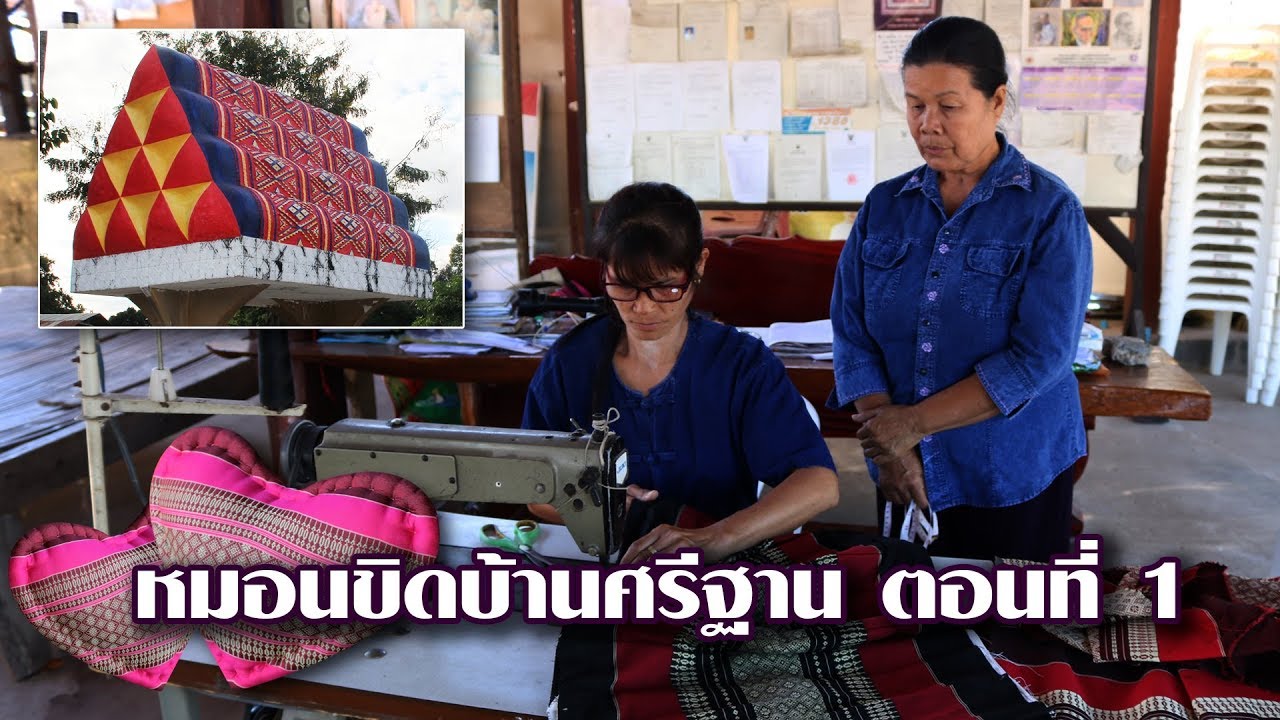
 Click to Access the Navigation Map GPS
Ban Si Than Khit Pillow Village Map

 Art, Culture and Heritage
 Historical Sites and Monuments(6)
 Landmarks and Memorials(1)
 Art, Craft Centres, Tradition(4)
 Museums(1)
 Historic Homes and Cities(1)
 Places of Worship
 Temple(22)
 Church(1)
 Other Sacred Sites(9)
 Research and Development
 Royal Project(2)
Village, Community(3)
Royal Project(2)
Village, Community(3)
 Local Market(1)
 Nature and Wildlife
 National Parks and Marine Reserves(2)
 Mountain (Doi)(2)
 Dam, Reservoir, Lake(7)
 River, Canal(2)
 Bays and Beaches(1)
 Other natural attractions(2)
 Entertainment and Agricultural
 Farms, Parks and Ecotourism(1)


