
lovethailand home >Northeastern Travel Attractions >Udon Thani Travel Attractions >Na Yung >Ban Kong > Wat Pa Phu Kon
TL;DR: Wat Pa Phu Kon is located at Ban Na Kham Yai, Ban Kong Subdistrict, Na Yung District, Udon Thani Province, Thailand, open Daily, hours 08.30 – 17.00.
Wat Pa Phu Kon
Open Days: Daily
Opening Hours: 08.30 – 17.00
Wat Pa Phu Kon in Udon Thani is located at Ban Na Kham Yai, Ban Kong Subdistrict, Na Yung District, Udon Thani Province, within the Na Yung and Nam Som National Reserved Forest area. The temple stands near the border region of three provinces: Udon Thani, Loei, and Nong Khai. It is one of the most remarkable forest temples in northeastern Thailand because it combines Buddhist faith, contemporary sacred art, forest conservation, mountain scenery, and meditation practice in one place. Visitors come here to pay respect to the white marble reclining Buddha, visit the grand vihara, worship at the great stupa, and experience the quiet atmosphere of a forest monastery surrounded by preserved watershed forest.
The origin of Wat Pa Phu Kon is closely connected with the protection of natural forest. The temple was created by Buddhist devotees who recognized the great value of forest, water sources, wildlife, and native plants at a time when the area was under threat from logging. The purpose of establishing the temple was not only to build a religious site, but also to preserve the forest for future generations. In this sense, Wat Pa Phu Kon is both a Buddhist temple and a living example of how faith can support environmental conservation.
In 1984, the family of Khun Olan and Khun Piyawan Weerawan, together with their group, traveled for forest meditation practice in northeastern Thailand. They became deeply inspired by the conduct of Thai forest monks. Later, Phra Ajarn Inthawai Santussako of Wat Pa Nakham Noi took the group to see the Phu Kon forest, which was still rich and fertile but was about to be marked for timber concession. The devotees decided to establish a temple there to protect the forest and invited Phra Ajarn Chali Thiradhammo, now known as Phra Khru Jittaphavanayan, to serve as the spiritual leader and source of encouragement for the project.
Wat Pa Phu Kon received permission to use 15 rai of national reserved forest land for temple construction on January 9, 1987. Permission to build the temple was granted on July 3, 1987, and the temple was officially established as Wat Pa Phu Kon on November 11, 1987. On June 22, 1988, permission was granted to use 1,000 rai of surrounding national reserved forest as a Buddhist park named Phuttha Utthayan Maha Rukkhaparichat Phu Kon. Later, the temple was entrusted with caring for additional surrounding forest areas, making the conserved area more than 3,000 rai.
This forest setting gives Wat Pa Phu Kon a meaning that goes far beyond ordinary sightseeing. The temple functions as a sacred Buddhist space, a meditation environment, and a forest conservation area. The surrounding woodland protects water sources, shelters wildlife, preserves native trees, and creates a quiet atmosphere for Dhamma practice. The journey up to the temple gradually brings visitors away from busy daily life and into a landscape where faith and nature are closely connected.
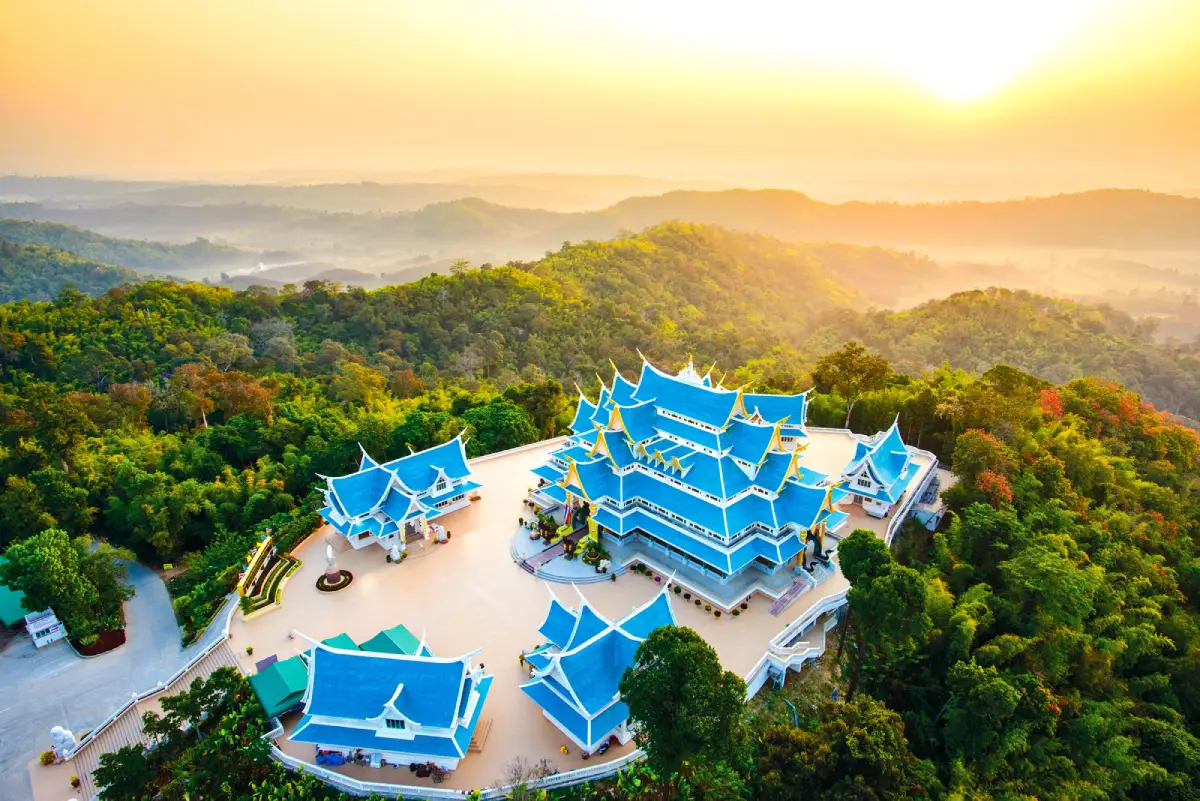
The main sacred building is the Vihara Sangkhapidok, a grand Thai applied architectural structure of the Rattanakosin style. Set among forested hills, the vihara stands out beautifully against the green mountain background. Inside, the walls are richly decorated with Buddhist stories. There are 22 bronze bas-relief panels presenting the Buddha’s life and the Ten Jataka stories, while passages from the Itipiso chant are carved above the panels on white marble. The result is a space that is both visually impressive and deeply connected with Buddhist teaching.
Inside the vihara is Phra Phuttha Saiyat Lokkanat Satsada Maha Muni, the famous white marble reclining Buddha of Wat Pa Phu Kon. The image is 20 meters long and carved from fine white marble from Italy. It took six years to complete, from 2006 to 2012. The image was created to commemorate the auspicious occasion of King Bhumibol Adulyadej the Great’s 84th birthday anniversary in 2011. It is therefore both a sacred Buddha image and a major work of contemporary Buddhist art associated with the reign of King Rama IX.
The reclining Buddha has a calm and gentle expression. The white marble surface reflects the light softly inside the vihara, creating a peaceful atmosphere for worship. The base of the image contains artistic scenes related to the Mahaparinibbana Sutta, encouraging visitors to reflect on the final passing of the Buddha and the Buddhist teaching of impermanence. For many visitors, this image is the emotional and spiritual center of the entire temple.
Another important sacred site is Phra Pathom Rattana Buraphachan Maha Chedi. The upper level enshrines the Buddha’s relics. The second level contains images of revered past meditation masters, while the first level contains images of contemporary teachers. The great stupa therefore connects devotion to the Buddha, the Dhamma, the Sangha, and the forest meditation masters of northeastern Thailand. Visitors who climb to worship at the stupa also gain wider views of the surrounding forest and mountain landscape.
The great stupa was built as a suitable place to enshrine the Buddha’s relics and to express gratitude toward the Triple Gem and the lineage of forest meditation teachers. Its meaning is not only architectural. It represents the union of forest, mountain, faith, meditation, and teacher lineage. For this reason, the stupa is one of the most meaningful places in the temple for those interested in Thai forest Buddhism.
Wat Pa Phu Kon is strongly connected with the Thai forest meditation tradition. Its founding involved respected forest teachers, including Phra Ajarn Inthawai Santussako and Phra Ajarn Chali Thiradhammo. The forest is not treated as empty land or a resource to be consumed. It is a suitable environment for meditation, a teacher in itself, and a living support for morality, concentration, and wisdom.
The current abbot of Wat Pa Phu Kon is Phra Khru Palad Suwat Wichitkhun Adun Sangkhanunayok Tripitaka Dhamma Wichit, also known as Phra Phutthiphong Aphichato. He has been closely connected with the temple since its early construction period, as his family was among the devotees who helped establish the temple and protect the forest. He was appointed abbot of Wat Pa Phu Kon on March 1, 2018. Under the temple’s continuing leadership, the work of religious practice, sacred-site care, and forest preservation remains active.
The main areas inside the temple include the Vihara Sangkhapidok, the white marble reclining Buddha, Phra Pathom Rattana Buraphachan Maha Chedi, the Buddha relic area, the images of meditation masters, viewing terraces, the ordination hall, monastic residences, meditation areas, walking paths, and the surrounding conservation forest. A meaningful visit should begin at the vihara and the reclining Buddha, continue to the great stupa, and then move outward to the viewpoints and forest areas.
The viewpoints around the temple are among the reasons Wat Pa Phu Kon is widely admired. From the upper areas, visitors can see layers of forested mountains and the preserved landscape around the temple. Morning and late afternoon are especially suitable for visiting because the light is softer, the air is cooler, and the scenery is more pleasant. The white vihara, marble Buddha, golden details, and green forest together create one of the most memorable temple landscapes in Udon Thani.
Getting There from Udon Thani city covers about 125 kilometers. The main route follows Highway 2 toward Nong Khai. At around kilometer marker 13, turn left onto Highway 2021 toward Ban Phue and Na Yung District. Continue to Ban Na Kham Yai, where the access road leads up to Wat Pa Phu Kon. Travel time is usually about 1 hour and 45 minutes to 2.5 hours, depending on road and traffic conditions. The final section climbs through mountain terrain, so a private car, rental car, or chartered vehicle in good condition is recommended.
Visitors traveling by public transport can take a bus to Na Yung District, which is about 8 kilometers from the temple, and then continue by local hired vehicle. This is possible, but visitors who want to combine Wat Pa Phu Kon with Na Yung-Nam Som National Park, Sangkhom District, or Ban Phue attractions will find a private vehicle more practical. The temple is located in a mountain forest area, so travel time should be planned carefully.
The best times to visit are in the morning and late afternoon. Morning visits are cooler and more peaceful. Late afternoon offers softer light for viewing the vihara and surrounding mountains. On long weekends and religious holidays, visitors should allow extra time because the temple receives many worshippers and travelers. Modest clothing, drinking water, and comfortable walking shoes are useful.
Wat Pa Phu Kon is a sacred Buddhist temple and a meditation environment. Visitors should dress modestly, speak quietly, remove shoes before entering designated buildings, avoid climbing restricted areas, and respect temple rules. Photography should be done respectfully, especially inside the vihara and around the white marble reclining Buddha. The temple has specific rules for still photography, video, and documentary work in certain areas, so visitors should follow temple instructions carefully.
For nature-oriented visitors, Wat Pa Phu Kon is a strong example of Buddhist conservation. The forest around the temple helps protect watershed areas, reduce encroachment, prevent forest fire risk, and preserve local biodiversity. The sight of the grand vihara rising from a green mountain landscape is not only beautiful. It is also a symbol of the balance between faith and nature.
For international visitors, Wat Pa Phu Kon offers a clear view of contemporary Thai Buddhism. It combines sacred architecture, a monumental marble Buddha image, meditation tradition, and environmental protection. The temple shows that Thai Buddhist places are not only ceremonial buildings. They can also be living spaces where art, Dhamma, forest, and community responsibility meet.
Considering its forest-conservation origin, white marble reclining Buddha, great stupa, connection with Thai forest meditation teachers, and mountain scenery, Wat Pa Phu Kon is one of the most important places to visit in Udon Thani. Visitors can pay respect, make merit, study Buddhist art, learn about forest preservation, and experience the quiet power of a forest temple surrounded by nature.
| Name | Wat Pa Phu Kon, Udon Thani |
| Location | Ban Na Kham Yai, Ban Kong Subdistrict, Na Yung District, Udon Thani Province, Thailand |
| Address | Ban Na Kham Yai, Ban Kong Subdistrict, Na Yung District, Udon Thani 41380, Thailand |
| Highlights | The 20-Meter White Marble Reclining Buddha, Vihara Sangkhapidok, Phra Pathom Rattana Buraphachan Maha Chedi, Buddha relics, forest meditation heritage, over 3,000 rai of conservation forest, and mountain views near the border region of Udon Thani, Loei, and Nong Khai |
| History | Established from the intention to protect watershed forest and create a meditation temple in the national reserved forest. Permission to use the land was granted on January 9, 1987, permission to build the temple on July 3, 1987, and the temple was officially established as Wat Pa Phu Kon on November 11, 1987. On June 22, 1988, the surrounding 1,000 rai Buddhist park was approved under the name Phuttha Utthayan Maha Rukkhaparichat Phu Kon |
| Name Origin | The name Wat Pa Phu Kon reflects the temple’s forest-monastery character and its location on Phu Kon Mountain. The Buddhist park name emphasizes the temple’s role in forest preservation and Buddhist practice |
| Distinctive Features | A Dhammayut local forest temple combining monumental Buddhist art, forest meditation heritage, a sacred relic stupa, and conservation of fertile watershed forest |
| Travel Information | From Udon Thani city, take Highway 2 toward Nong Khai. At around kilometer marker 13, turn left onto Highway 2021 toward Ban Phue and Na Yung District. Continue to Ban Na Kham Yai and turn into the temple access road. The total distance from Udon Thani city is about 125 km, with a travel time of about 1 hour 45 minutes to 2.5 hours depending on conditions |
| Current Status | Open for worshippers and visitors to pay respect to the reclining Buddha, Buddha relics, vihara, great stupa, viewpoints, and forest-monastery grounds during visiting hours |
| Open Days | Daily |
| Opening Hours | Vihara Gate Open 08.30 – 17.00 |
| Fees | No General Admission Fee |
| Facilities | Parking area, vihara, worship courtyard, restrooms, viewpoints, temple walking paths, contact area, ordination hall, monks’ residences, kitchen, lay accommodation buildings, and mountain water system |
| Main Areas / Zones | Vihara Sangkhapidok Phra Phuttha Saiyat Lokkanat Satsada Maha Muni Phra Pathom Rattana Buraphachan Maha Chedi Buddha Relic Area Images Of Forest Meditation Masters Mountain View Courtyard Ordination Hall Monastic Area And Monks’ Residences Meditation Area Phuttha Utthayan Maha Rukkhaparichat Phu Kon Surrounding Watershed Conservation Forest |
| Abbot / Caretaker | Phra Khru Palad Suwat Wichitkhun Adun Sangkhanunayok Tripitaka Dhamma Wichit, also known as Phra Phutthiphong Aphichato, Abbot of Wat Pa Phu Kon |
| Important Teachers In Temple History | Phra Ajarn Inthawai Santussako, who introduced the Phu Kon forest area to the founding devotees Phra Ajarn Chali Thiradhammo, also known as Phra Khru Jittaphavanayan, who served as a spiritual leader and source of encouragement for the temple construction |
| Main Contact Number | 082-835-0668, 097-097-2229, 089-111-9119, 086-243-7864 |
| Official Website / Official Page | Wat Pa Phu Kon Official Website And Contact Channels |
| Nearby Tourist Attractions | 1. Na Yung District Town, about 8 km 2. Na Yung-Nam Som National Park, about 25 km, Tel. 085-646-1352 3. Yung Thong Waterfall, about 25 km 4. Pha Daeng Viewpoint, about 25 km 5. Sangkhom District, Nong Khai Province, about 32 km 6. Nam Som District, about 40 km 7. Wat Phu Na Lao / Wat Pa Phu Na Lao, about 50 km 8. Phu Phrabat Historical Park, about 80 km, Tel. 042-219-837 9. Udon Thani City, about 125 km |
| Nearby Restaurants | 1. Im Suk Jai Restaurant, Temple Access Road, about 2 km, Tel. 097-097-2229 2. Thai-Isan Restaurant Phi Top Nong Nat, near Ban Na Kham Noi School, about 6 km, Tel. 082-315-9430 3. Best View Phukon, about 2 km 4. Kai Yang Kru Phayao Wat Pa Phu Kon, about 2 km 5. Khrua Rom Mai, Route Toward Sangkhom District, about 25 km, Tel. 087-862-0556, 095-660-7127 6. My Home Coffee Namsom, Nam Som District, about 40 km, Tel. 091-058-1041 7. Ma Kin Nee Nam Som, Nam Som District, about 40 km, Tel. 080-755-0244 8. Thian Chai Restaurant, Nam Som District, about 40 km, Tel. 042-287-088 |
| Nearby Accommodations | 1. Ban Phak Suai Huai Nam Sai, about 10 km, Tel. 099-170-3004 2. Thapthim Resort Nam Som, about 35 km, Tel. 089-274-2200 3. Wilarwaree Resort, Nam Som District, about 35 km, Tel. 089-417-2222 4. Jiranan Resort, Nam Som District, about 40 km, Tel. 042-287-453 5. Kiang Dao Resort, Nam Som District, about 40 km, Tel. 084-933-0540 6. Wutthichok Hotel Nam Som, about 40 km, Tel. 062-676-4848 7. Accommodations In Sangkhom District, Nong Khai Province, about 32 km 8. Accommodations In Udon Thani City, about 125 km |
Frequently Asked Questions (FAQ)
Q: Where is Wat Pa Phu Kon in Udon Thani located?
A: Wat Pa Phu Kon is located at Ban Na Kham Yai, Ban Kong Subdistrict, Na Yung District, Udon Thani Province, within the Na Yung and Nam Som National Reserved Forest area near the border region of Udon Thani, Loei, and Nong Khai.
Q: What are the opening days and hours of Wat Pa Phu Kon?
A: Wat Pa Phu Kon is open daily. The vihara gate is open from 08.30 to 17.00, so visitors should arrive with enough time to worship and explore the temple before late afternoon.
Q: Is there an admission fee for Wat Pa Phu Kon?
A: There is no general admission fee for Wat Pa Phu Kon. Visitors can pay respect to the reclining Buddha, visit the vihara, the great stupa, and the temple grounds during opening hours.
Q: What is the main highlight of Wat Pa Phu Kon?
A: The main highlights are the 20-meter white marble reclining Buddha, Vihara Sangkhapidok, Phra Pathom Rattana Buraphachan Maha Chedi, Buddha relics, forest meditation heritage, and mountain scenery.
Q: Who is the abbot of Wat Pa Phu Kon?
A: The abbot of Wat Pa Phu Kon is Phra Khru Palad Suwat Wichitkhun Adun Sangkhanunayok Tripitaka Dhamma Wichit, also known as Phra Phutthiphong Aphichato.
Q: Why is the white marble reclining Buddha important?
A: The white marble reclining Buddha was created to commemorate King Bhumibol Adulyadej the Great’s 84th birthday anniversary in 2011. It is a major contemporary Buddhist artwork of the Rama IX period.
Q: How can travelers get to Wat Pa Phu Kon?
A: From Udon Thani city, take Highway 2 toward Nong Khai. At around kilometer marker 13, turn left onto Highway 2021 toward Ban Phue and Na Yung. Continue to Ban Na Kham Yai and follow the temple access road. The total distance is about 125 km.
Q: What nearby places can visitors combine with Wat Pa Phu Kon?
A: Nearby places include Na Yung-Nam Som National Park, Yung Thong Waterfall, Pha Daeng Viewpoint, Sangkhom District, Wat Phu Na Lao, Phu Phrabat Historical Park, and Udon Thani city.
 Category: ●Places of Worship
 Group: ●Temple
Last Update : 1 MonthAgo
 Last Update : 1 MonthAgo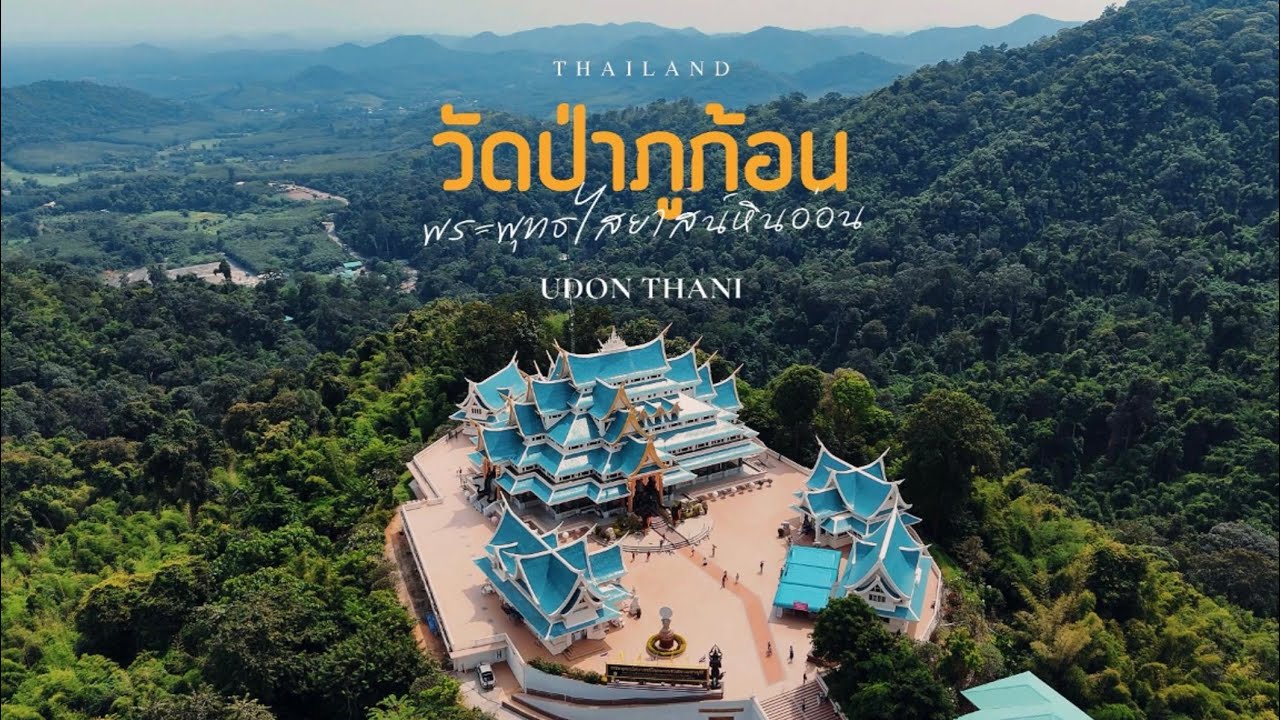
 Click to Access the Navigation Map GPS
Wat Pa Phu Kon Map
Gellery
Recommend

 Art, Culture and Heritage
 Historical Sites and Monuments(1)
 Landmarks and Memorials(1)
 Art, Craft Centres, Tradition(2)
 Museums(2)
Temple(21)
Museums(2)
Temple(21)
 Other Sacred Sites(8)
 Suburban Living
 Village, Community(3)
 Nature and Wildlife
 National Parks and Marine Reserves(3)
 Mountain (Doi)(1)
 Dam, Reservoir, Lake(8)
 Waterfalls(6)
 Caves(1)
 River, Canal(4)
 Islands(1)
 Other natural attractions(1)
 Entertainment and Agricultural
 Farms, Parks and Ecotourism(3)
 Waterpark(1)
 Shopping
 Shopping and Night Market(1)


