
lovethailand home >Northeastern Travel Attractions >Udon Thani Travel Attractions >Nong Han >Ban Chiang > Ban Chiang National Museum
TL;DR: Ban Chiang National Museum is located at Moo 13, Sutthiphong Road, Ban Chiang Subdistrict, Nong Han District, Udon Thani Province, open Wednesday – Sunday, Closed On Mondays And Tuesdays, hours 09.00 – 16.00.
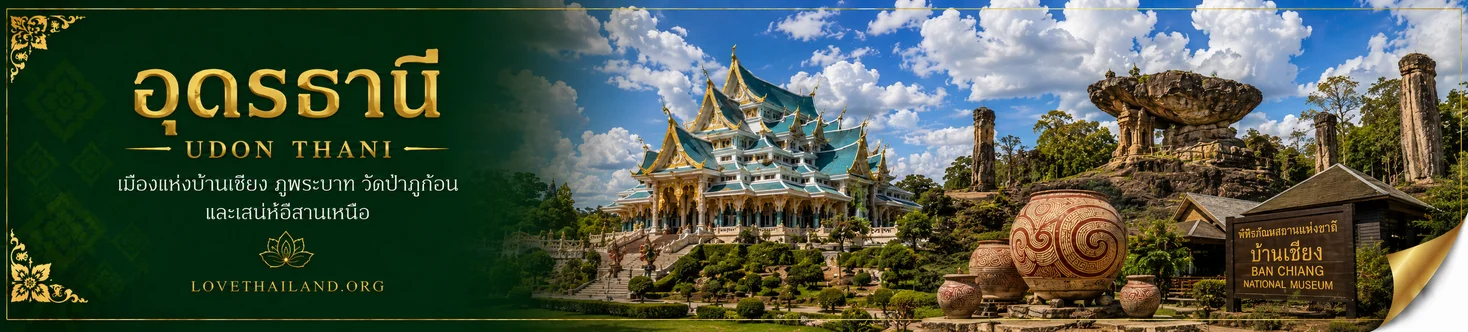
Ban Chiang National Museum
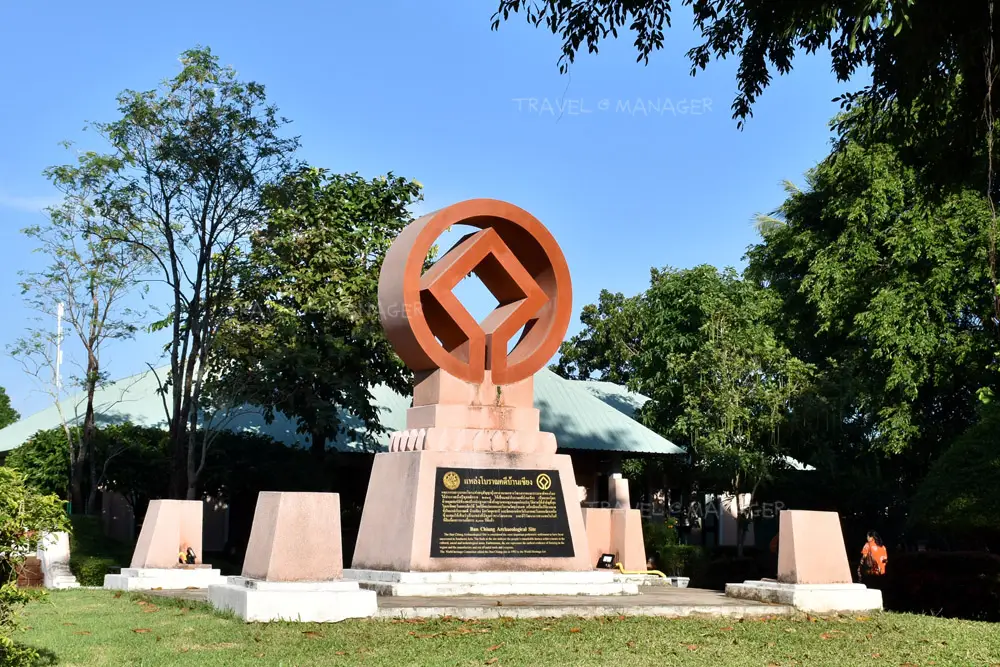
Open Days: Wednesday – Sunday, Closed On Mondays And Tuesdays
Opening Hours: 09.00 – 16.00
Ban Chiang National Museum in Udon Thani Province is one of Thailand’s most important archaeological and cultural learning centers. Located at Moo 13 on Sutthiphong Road in Ban Chiang Subdistrict, Nong Han District, the museum presents the story of Ban Chiang Archaeological Site, a UNESCO World Heritage cultural site inscribed in 1992. The site is internationally significant because it preserves evidence of prehistoric settlement, wet-rice agriculture, pottery production, domesticated animals, bronze technology, burial practices, and long-term cultural development in Southeast Asia.
Ban Chiang National Museum is not only a place to see the famous red-painted pottery associated with Ban Chiang. It is a museum where visitors can understand how prehistoric people lived, farmed, made tools, used bronze, created ceramics, practiced rituals, and buried their dead. The museum combines excavated objects, archaeological interpretation, an open excavation site, educational exhibitions, and local Thai Phuan cultural heritage. This makes Ban Chiang one of the most meaningful destinations for travelers who want to understand Thailand beyond temples, beaches, and modern cities.
The archaeological importance of Ban Chiang became clear after systematic exploration and excavation. The Fine Arts Department conducted major archaeological work at Ban Chiang between 1974 and 1975. The evidence found during these excavations included pottery, tools, ornaments, bronze objects, human skeletons, burial goods, and settlement layers. These discoveries changed the understanding of prehistoric Southeast Asia because they showed that communities in this region had already developed complex knowledge of ceramics, agriculture, metallurgy, and ritual life thousands of years ago.
Ban Chiang Archaeological Site lies on a large earthen mound within an agricultural landscape in Ban Chiang Subdistrict. The mound was formed by long-term human habitation. Over time, layers of soil, pottery fragments, bones, tools, and daily-life remains accumulated one above another. Archaeologists read these layers to understand the sequence of occupation, burial practices, settlement behavior, and technological change. The site therefore allows visitors to see human history through the ground itself.
UNESCO recognizes Ban Chiang as an archaeological site of outstanding universal value. The site contains early evidence for settled farming life in Southeast Asia, including rice agriculture, animal domestication, ceramic production, and bronze tool-making. Its archaeological sequence shows the development of a society that became more complex over time. This makes Ban Chiang an important reference point for understanding the origins and development of prehistoric agricultural communities in the region.
The best-known visual symbol of Ban Chiang is its red-painted pottery. The vessels often feature flowing spiral lines, geometric motifs, wave-like patterns, and distinctive forms. These ceramics are important not only because they are beautiful, but also because they reveal technical skill, material knowledge, firing methods, surface decoration, and social meaning. Some pottery vessels were found in burial contexts, showing that they were connected not only with daily use but also with ideas about death, memory, and ritual.
The museum’s exhibition area is divided into 2 major parts. The first part is on the right side of the entrance, within Wat Pho Si Nai. This area is an open museum and excavation pit where visitors can see archaeological remains in context. Human skeletons, pottery, and other objects are displayed in relation to soil layers, helping visitors understand how archaeologists study the past. This is one of the most important parts of the visit because it shows that archaeological interpretation depends on the position and relationship of evidence in the ground.
The excavation pit at Wat Pho Si Nai makes Ban Chiang National Museum different from many ordinary museums. Visitors do not see only objects removed from their original context and placed in glass cases. They also see the excavation area where the evidence was found. Seeing pottery vessels associated with human remains helps explain burial practices and gives a clearer sense of how prehistoric people treated the dead. The site makes archaeology visible and easier to understand.
The second major part of the museum is the main exhibition building on the left side of the entrance. This area presents the history and culture of Ban Chiang through archaeological objects, educational panels, tools, pottery, bronze evidence, burial information, and exhibitions related to Ban Chiang displays that were once presented abroad. The main building provides the broader explanation needed to understand what visitors see in the excavation pit.
The main exhibition explains Ban Chiang on several levels. First, it introduces prehistoric settlement and daily life. Second, it presents technology, including pottery-making and bronze use. Third, it explains society and ritual, especially burial practices and grave goods. Fourth, it presents Ban Chiang’s international recognition as a site that made scholars and visitors rethink the depth and sophistication of Southeast Asian prehistory.
Another meaningful part of the museum complex is the Thai Phuan exhibition and traditional house area. This section connects the ancient archaeological past with the living community of Ban Chiang today. The present community has strong Thai Phuan cultural roots, including language, food, weaving, pottery painting, local crafts, and community-based tourism. This part helps visitors understand that Ban Chiang is not only an ancient site beneath the ground. It is also a living village with its own identity.
A good visit to Ban Chiang should include both the archaeological and community dimensions. The excavation pit and ancient artifacts explain the distant past. The Thai Phuan house, local crafts, and community activities explain the living present. Together, they show that a World Heritage site can be both an archaeological landscape and a living cultural community.
Ban Chiang is also an excellent educational destination. Students, families, researchers, Thai travelers, and international visitors can learn how archaeological evidence is studied and interpreted. The museum introduces soil layers, burial contexts, ceramics, bronze technology, settlement history, and cultural change in a way that is accessible to general visitors. It is especially useful for anyone interested in archaeology, human history, cultural heritage, and Southeast Asian civilization.
Historically, Ban Chiang shows that upper northeastern Thailand was home to sophisticated prehistoric communities. People in this area selected elevated land near water and agricultural zones, produced their own ceramics, practiced burial rituals, used tools and ornaments, and transmitted technological knowledge across generations. These traces show that Ban Chiang was not an isolated village but part of a wider cultural development in the Mekong and Southeast Asian region.
One of the most valuable aspects of the museum is the way it encourages visitors to ask questions about prehistoric life. How did people cook food? What kind of vessels did they use? What animals did they raise? How did they make bronze tools? Why were some objects placed with the dead? What can burial evidence tell us about social life? The museum answers these questions through material evidence rather than imagination alone.
For travelers interested in pottery and crafts, Ban Chiang is a major source of inspiration. The red-painted pottery style has influenced modern community products, souvenirs, ceramic reproductions, and local craft designs. Seeing the original archaeological context before buying local products gives those objects greater meaning. Visitors can understand that the patterns are not merely decorative. They are linked with one of the most important prehistoric traditions in Thailand.
The village around the museum also offers cultural experiences. Community homestays, pottery-painting groups, weaving groups, basketry groups, souvenir shops, and Thai Phuan cultural activities allow visitors to connect the museum with local life. Travelers with more time can stay overnight in the community, taste local food, learn about Thai Phuan traditions, watch craft demonstrations, and explore the village beyond the museum buildings.
Nearby sites within the community include Wat Pho Si Nai, the excavation pit, the Thai Phuan Ban Chiang Museum, local pottery and souvenir groups, and Ban Chiang community areas. These can be combined into a short walking or driving route. A full visit to Ban Chiang is more rewarding when visitors take time to experience the museum, the excavation site, the temple area, community crafts, and local products together.
Getting There from Udon Thani city is straightforward. The museum is about 55 to 60 kilometers from the city. Take Highway 22 from Udon Thani toward Sakon Nakhon. Around kilometer 50, near the entrance to Ban Pu Lu, turn toward Ban Chiang and continue along Highway 2225 for about 6 kilometers to reach the museum. A private car, rental car, or hired vehicle is the most convenient way to visit.
Visitors should plan at least half a day for Ban Chiang. A good itinerary begins in the morning from Udon Thani city, includes the main museum building and the Wat Pho Si Nai excavation pit, and then continues with lunch in Ban Chiang or Nong Han District. Travelers with more time can add local craft groups, community homestays, Kham Chanot, the Red Lotus Sea, or a return route to Udon Thani city.
Travelers without a private car can use public transport toward Nong Han District and then continue by local transport to Ban Chiang. However, a rental car or hired vehicle is more practical, especially for families, groups, and travelers who want to visit several attractions in one day. The museum is not difficult to reach, but transport planning makes the trip smoother.
The admission fee is 30 baht for Thai visitors and 200 baht for foreign visitors. Exemptions apply to students in uniform, people with disabilities, Thai senior citizens, monks, novices, and religious practitioners. Visitors should allow enough time for both the main exhibition and the excavation pit because both parts are essential for understanding Ban Chiang properly.
Visitors should respect museum rules. Do not touch archaeological objects, do not climb over barriers at the excavation pit, do not use flash photography where it is prohibited, do not make loud noise in exhibition areas, and do not buy or sell genuine antiquities. Ban Chiang is a World Heritage site, and respectful behavior helps protect it for future generations.
The best time to visit is from morning to early afternoon because the museum closes at 16.00. Visitors should allow at least 2 hours, while those who want a detailed experience should allow 2 to 3 hours. Groups should contact the museum in advance, especially if they need educational support or coordinated services.
For international travelers, Ban Chiang National Museum offers a deeper understanding of Thailand as part of prehistoric Southeast Asian civilization. It shows that Thailand’s heritage is not limited to royal capitals, Buddhist temples, or natural attractions. The museum presents a much older story of human settlement, farming, technology, and cultural development.
For Thai visitors, Ban Chiang is a place that reveals the depth of local wisdom and national heritage. The pottery, skeletons, tools, and excavation layers are not lifeless old objects. They are evidence of people who once lived, worked, made families, practiced rituals, and built communities on this land. Visiting the museum is therefore a way to understand human roots in Thailand at a very deep level.
Overall, Ban Chiang National Museum is one of the most important cultural destinations in Udon Thani. It brings together a UNESCO World Heritage archaeological site, an open excavation pit, a main museum exhibition, red-painted pottery, bronze technology, burial evidence, Thai Phuan culture, and community heritage. Travelers who want to understand Udon Thani in depth should not miss Ban Chiang. It is not just a museum stop; it is a gateway to the prehistoric civilization of Southeast Asia.
| Name | Ban Chiang National Museum |
| Location | Moo 13, Sutthiphong Road, Ban Chiang Subdistrict, Nong Han District, Udon Thani Province |
| Address | Moo 13, Sutthiphong Road, Ban Chiang Subdistrict, Nong Han District, Udon Thani 41320, Thailand |
| Highlights | UNESCO World Heritage Archaeological Site, Wat Pho Si Nai Excavation Pit, Red-Painted Pottery, Human Skeletons, Tools, Bronze Technology, And Thai Phuan Cultural Exhibition |
| History | A prehistoric archaeological site occupied for thousands of years. The Fine Arts Department excavated the site in 1974–1975, and Ban Chiang was inscribed as a UNESCO World Heritage cultural site in 1992. |
| Significance | Important evidence of prehistoric settlement, agriculture, pottery production, bronze technology, burial practices, and social development in Southeast Asia. |
| Name Origin | The name Ban Chiang comes from the local community in Ban Chiang Subdistrict, Nong Han District, where the archaeological site and Ban Chiang cultural evidence were discovered. |
| Distinctive Features | The museum combines a main exhibition building with an open excavation pit, allowing visitors to see both archaeological objects and their original archaeological context. |
| Main Areas / Zones | 1. Main Exhibition Building 2. Kalyani Vadhana Building And Ban Chiang Cultural Exhibition Area 3. Thai Phuan Exhibition Building And Traditional Thai Phuan House 4. Wat Pho Si Nai Excavation Pit 5. Exhibition Room And Lecture Room 6. Educational Service Area 7. Souvenir And Community Product Area 8. Ban Chiang Community And Local Craft Route |
| Caretaker | The Fine Arts Department, Ministry Of Culture, Through Ban Chiang National Museum |
| Travel Information | From Udon Thani city, take Highway 22 toward Sakon Nakhon. Around kilometer 50 near Ban Pu Lu, turn into Highway 2225 and continue for about 6 km to Ban Chiang. The total distance from Udon Thani city is about 55–60 km. |
| Current Status | Open To Visitors During Official Museum Hours |
| Open Days | Wednesday – Sunday, Closed On Mondays And Tuesdays |
| Opening Hours | 09.00 – 16.00 |
| Admission Fee | Thai Visitors 30 Baht / Foreign Visitors 200 Baht |
| Admission Exemptions | Students In Uniform, People With Disabilities, Thai Senior Citizens, Monks, Novices, And Religious Practitioners |
| Facilities | Exhibition Building, Exhibition Rooms, Lecture Room, Educational Service Area, Sheltered Excavation Pit, Parking Area, Community Area, And Nearby Souvenir Shops |
| Main Contact Number | 042-235-040 |
| Nearby Tourist Attractions | 1. Wat Pho Si Nai Excavation Pit, About 500 m 2. Thai Phuan Ban Chiang Museum, About 500 m 3. Ban Chiang Pottery And Souvenir Craft Groups, About 1 km 4. Ban Chiang Municipality And Thai Phuan Community Area, About 1 km, Tel. 042-235-001 5. Nong Han District Town, About 15 km 6. Kham Chanot, About 55 km 7. Red Lotus Sea, Nong Han Kumphawapi, About 65 km |
| Nearby Restaurants | 1. Kaprao Narok Sakon Nakhon 2 Ban Chiang, About 300 m, Tel. 063-823-2806, 095-687-2677, 096-253-1922 2. Lap Ped Ban Chiang, About 1 km, Tel. 090-583-3437 3. Khao Pad Kha Local Meal At Ban Chiang Homestay Community, About 1 km, Tel. 081-485-1864 4. Local Restaurants In Ban Chiang Community, About 1 km 5. Mum Aroi At Nong Han, About 16 km 6. Restaurants In Nong Han District Market Area, About 16 km |
| Nearby Accommodations | 1. Ban Chiang Cultural Conservation Homestay Community Enterprise, About 500 m, Tel. 081-485-1864 2. R Homestay Ban Chiang, About 1 km 3. Huen Phon Prakai Homestay Ban Chiang, About 1 km 4. Ban Chiang Winery Homestay, About 1 km 5. Nong Han Grand Hotel And Resort, About 20 km, Tel. 042-111-408, 098-175-1235 6. Accommodations In Udon Thani City, About 55 km |
Frequently Asked Questions (FAQ)
Q: Is Ban Chiang National Museum open to visitors?
A: Yes. The museum is open Wednesday to Sunday from 09.00 to 16.00 and is closed on Mondays and Tuesdays.
Q: How much is the admission fee?
A: The admission fee is 30 baht for Thai visitors and 200 baht for foreign visitors. Exemptions apply to students in uniform, people with disabilities, Thai senior citizens, monks, novices, and religious practitioners.
Q: Where is Ban Chiang National Museum located?
A: It is located at Moo 13, Sutthiphong Road, Ban Chiang Subdistrict, Nong Han District, Udon Thani Province, about 55–60 km from Udon Thani city.
Q: Why is Ban Chiang important?
A: Ban Chiang is a UNESCO World Heritage prehistoric archaeological site with important evidence of settlement, agriculture, pottery production, bronze technology, and burial practices in Southeast Asia.
Q: How is the museum divided?
A: The museum has 2 main parts: the Wat Pho Si Nai open excavation site and the main exhibition building that presents Ban Chiang culture, artifacts, tools, and educational exhibitions.
Q: How long should visitors spend at Ban Chiang National Museum?
A: Visitors should allow at least 2 to 3 hours to see the main museum, the Wat Pho Si Nai excavation pit, and the nearby community areas properly.
Q: Can visitors go to Ban Chiang without a private car?
A: It is possible by public transport to Nong Han District and then local transport to Ban Chiang, but a private car, rental car, or hired vehicle is more convenient.
Q: What nearby places can visitors go to after Ban Chiang?
A: Nearby places include Wat Pho Si Nai Excavation Pit, Thai Phuan Ban Chiang Museum, Ban Chiang pottery craft groups, Kham Chanot, the Red Lotus Sea, and Udon Thani city attractions.
Tel : 042208340-1
 Tel : 042208340-1
 Category: ●Art, Culture and Heritage
 Group: ●Museums
Last Update : 2 MonthAgo
 Last Update : 2 MonthAgo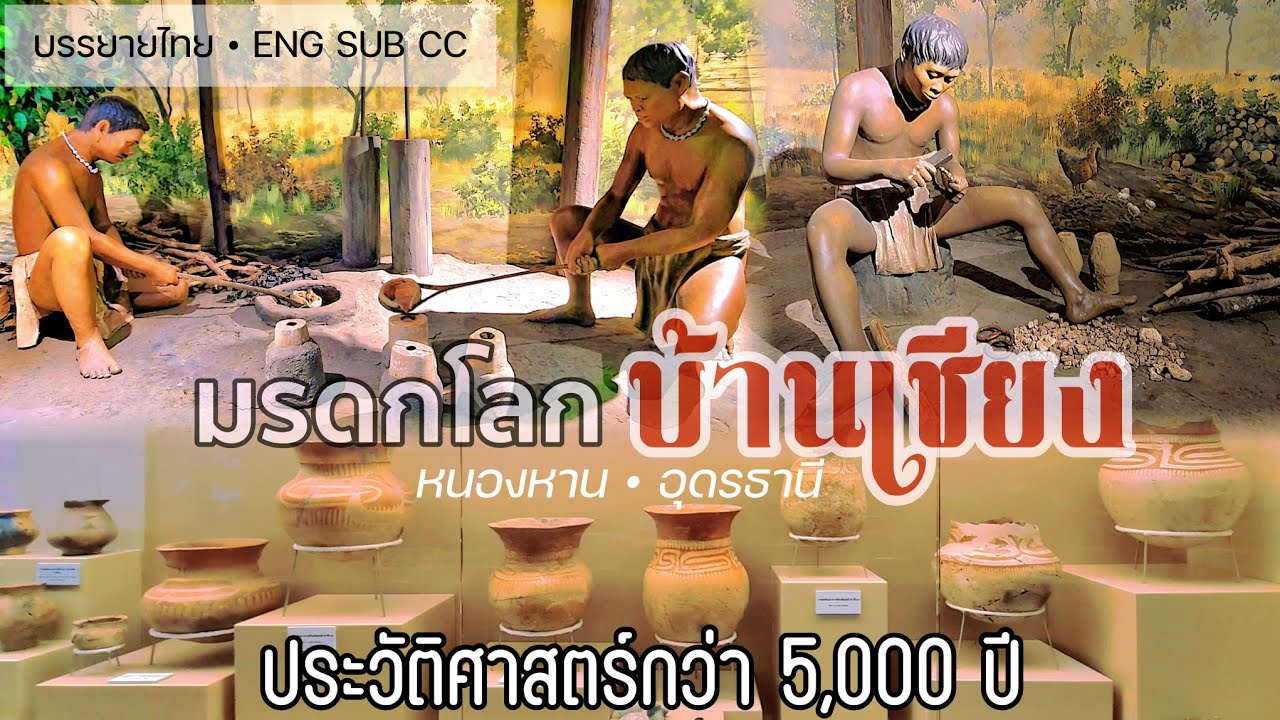
 Click to Access the Navigation Map GPS
Ban Chiang National Museum Map
Recommend

 Historical Sites and Monuments(1)
 Landmarks and Memorials(1)
 Art, Craft Centres, Tradition(2)
Museums(2)
Art, Craft Centres, Tradition(2)
Museums(2)
 Places of Worship
 Temple(21)
 Other Sacred Sites(8)
 Suburban Living
 Village, Community(3)
 Nature and Wildlife
 National Parks and Marine Reserves(3)
 Mountain (Doi)(1)
 Dam, Reservoir, Lake(8)
 Waterfalls(6)
 Caves(1)
 River, Canal(4)
 Islands(1)
 Other natural attractions(1)
 Entertainment and Agricultural
 Farms, Parks and Ecotourism(3)
 Waterpark(1)
 Shopping
 Shopping and Night Market(1)


