
lovethailand home >Northeastern Travel Attractions >Ubon Ratchathani Travel Attractions >Muang Samsip >Yang Sak Kra Pholum > Nong Chang Yai Reservoir
TL;DR: Nong Chang Yai Reservoir is located at Around the boundary between Ban Samran, Hua Ruea Subdistrict, Mueang Ubon Ratchathani District, and Ban Na Di, Yang Sak Krapho Lum, open Daily, hours 08.00 – 17.00.
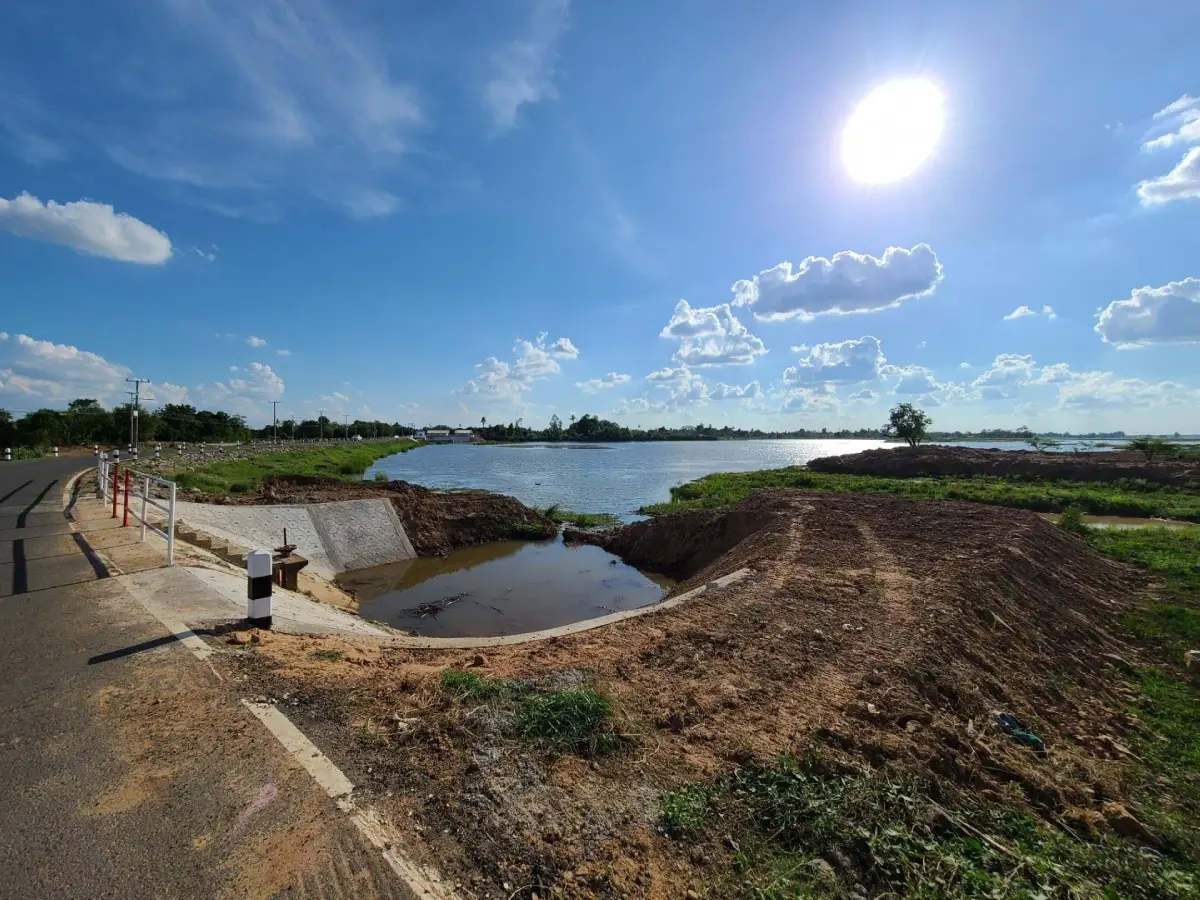
Nong Chang Yai Reservoir
Open Days: Daily
Opening Hours: 08.00 – 17.00
Nong Chang Yai Reservoir is one of the important large reservoirs in Ubon Ratchathani Province, located around the boundary between Ban Samran in Hua Ruea Subdistrict, Mueang Ubon Ratchathani District, and Ban Na Di in Yang Sak Krapho Lum Subdistrict, Muang Sam Sip District. The reservoir is significant not only as a water storage area but also as a community landscape connected with agriculture, local fishing, rural livelihoods, and nature-based travel near Ubon Ratchathani city.
For travelers looking for a quiet natural attraction in Ubon Ratchathani, Nong Chang Yai Reservoir offers a calm and spacious setting with wide water views, open skies, fresh air, agricultural surroundings, and the everyday rhythm of local communities. It is a destination for people who want to slow down, enjoy the landscape, take photographs, and understand the relationship between water, land, and rural life in northeastern Thailand.
The reservoir covers about 7,500 rai and holds approximately 7.675 million cubic meters of water. Most of the water comes from rainfall collected in this lowland basin and is used for daily consumption, agriculture, fishing, and community livelihoods. This makes Nong Chang Yai Reservoir more than a scenic place. It is a practical and valuable water source that supports the people living around Hua Ruea and Yang Sak Krapho Lum.
What makes Nong Chang Yai Reservoir especially meaningful is its position as a shared community space. It connects several villages and supports different forms of local life. Farmers depend on the water for nearby fields, villagers use the reservoir for fishing, and visitors come to enjoy the peaceful scenery. This combination gives the reservoir a genuine local character. It is not a staged tourist site, but a living landscape where tourism, agriculture, and community life meet naturally.
The name “Nong Chang Yai” reflects both the geography and the memory of the place. The Thai word “nong” refers to a natural pond or wetland, while “chang yai” evokes the image of a large elephant and a broad natural area. The name helps preserve a sense of the original landscape, even though the area has developed into an important reservoir and community attraction. For foreign travelers, this name also adds cultural depth to the visit, showing how Thai place names often carry stories of land, animals, and local memory.
Nong Chang Yai Reservoir is best experienced at a slow pace. In the morning, the air is cooler and the light is soft, making it a pleasant time for walking, photography, and quiet observation. In the late afternoon, the water surface reflects the changing sky, and the open view makes the reservoir a good place to watch the sunset. During the rainy season and the early cool season, the landscape becomes fresher, the surrounding fields turn greener, and the reservoir looks especially lively when the water level is high.
The reservoir is closely connected with local agriculture. Water from the reservoir supports rice fields, farmland, and cultivated areas around the community. When the farming season arrives, the surrounding scenery includes rice fields, rural roads, small agricultural plots, and the daily work of local villagers. For travelers interested in deeper cultural travel, this area offers a clear view of how water shapes rural life in Isan, the northeastern region of Thailand.
Local fishing is another important part of the reservoir’s identity. Fish found in Nong Chang Yai Reservoir include species such as yisok, tilapia, common carp, hampala barb, and other freshwater fish. Villagers use traditional fishing tools such as nets, traps, bamboo fish traps, scoops, and hooks. These practices reflect practical local knowledge passed down through generations. Seeing these tools and activities in a real setting helps visitors understand the value of the reservoir as a working community water source.
The community also manages the reservoir’s natural resources according to the seasons. Fishing is suspended during June and July to allow fish to spawn and reproduce. This seasonal practice helps maintain the balance of the reservoir and supports sustainable local fishing. For visitors, this detail adds an important layer to the experience: Nong Chang Yai Reservoir is not simply a place to look at water, but a living ecosystem that local people use, protect, and manage together.
From a travel perspective, Nong Chang Yai Reservoir is suitable for several types of visitors. Nature lovers can enjoy the open scenery and quiet atmosphere. Families can stop by for a relaxing outdoor break. Photographers can capture the wide water surface, rural skyline, and sunset views. Travelers interested in community-based tourism can use the reservoir as an entry point to understand local farming and fishing life near Ubon Ratchathani city.
The reservoir has also gained importance as a potential area for outdoor recreation and health-oriented travel. The open landscape, wide views, and breezy surroundings make it suitable for a simple nature break. In recent years, development efforts have focused on improving the reservoir’s landscape, water storage efficiency, and potential as a local attraction. These improvements help the area serve both water management needs and public recreation.
When arriving at the reservoir, the first impression is the sense of space. The water stretches across a broad area, bordered by rural land and community routes. Unlike busy tourist attractions, the reservoir remains quiet and understated. This makes it appealing for travelers who prefer calm places with authentic local surroundings. On a clear day, the open sky, long waterline, and soft rural atmosphere create a simple but memorable view.
The main areas around Nong Chang Yai Reservoir can be understood in several zones. The central water area is the main scenic feature. The lakeside areas are used for viewing, resting, and photography. The surrounding agricultural areas show how the reservoir supports farming. The fishing areas reveal local livelihood practices. The connecting community routes link Ban Samran, Ban Na Di, Hua Ruea Subdistrict, and Yang Sak Krapho Lum Subdistrict. Together, these zones create a complete picture of the reservoir as both a natural and community-based destination.
Visitors should treat the reservoir as a shared local space. Keeping the area clean, avoiding litter, respecting fishing and farming activities, and staying cautious near the water’s edge are important parts of responsible travel. The reservoir is a community resource, and respectful behavior helps preserve its calm atmosphere and natural value for residents and future visitors.
Getting There is convenient from Ubon Ratchathani city by private car, motorcycle, or rental car. The route heads toward Hua Ruea Subdistrict and the boundary area between Mueang Ubon Ratchathani District and Muang Sam Sip District. Because the reservoir is not far from the city, it can be visited as a half-day trip or combined with nearby restaurants, cultural sites, and accommodations in Ubon Ratchathani.
Planning the visit around the right time of day improves the experience. Morning visits are good for cooler weather and soft light. Late afternoon visits are ideal for scenic photography and sunset views. Midday visits are possible, but travelers should bring a hat, drinking water, sun protection, and suitable footwear because many lakeside areas are open and exposed to the sun.
Travelers who want a deeper experience should spend more than a few minutes at the site. Walking slowly, observing the water, looking at the farmland, watching local activities, and listening to the quiet sounds of the landscape reveal the reservoir’s real character. The value of Nong Chang Yai Reservoir lies in its calmness, openness, and the relationship between people and water.
For Thai visitors living in Ubon Ratchathani or nearby provinces, Nong Chang Yai Reservoir is an accessible natural retreat for a short holiday. For foreign travelers, it offers a different view of Ubon Ratchathani beyond famous temples, candle festival culture, and Mekong River destinations. Here, visitors can see a more local side of Isan: farmland, freshwater ecology, rural roads, community fishing, and the practical importance of water in daily life.
The reservoir can be combined with several nearby attractions. Travelers interested in nature can continue to Ubon Ratchathani Zoo. Those interested in culture and religion can visit Wat Phra That Nong Bua, Thung Si Mueang, Ubon Ratchathani National Museum, Wat Supattanaram Worawihan, and Wat Nong Pah Pong. Adding Nong Chang Yai Reservoir to a travel route gives the trip a stronger natural and rural dimension.
Restaurants near the reservoir are located around Hua Ruea, Yang Sak Krapho Lum, and the route back toward Ubon Ratchathani city. Visitors can stop at local restaurants, barbecue restaurants, cafés, and city restaurants depending on their travel route. The most convenient accommodations are in Ubon Ratchathani city, while community-based stays are available in some nearby local areas for travelers who want a closer connection with village life.
The reservoir is connected with several responsible agencies and local administrative bodies. Water infrastructure and reservoir management relate to irrigation authorities in Ubon Ratchathani, while the surrounding community areas are connected with Yang Sak Krapho Lum Subdistrict Administrative Organization and Hua Ruea Subdistrict Administrative Organization. This shared responsibility reflects the importance of Nong Chang Yai Reservoir as a public water resource and a community landscape.
Nong Chang Yai Reservoir is therefore a worthwhile destination for travelers who want to understand Ubon Ratchathani more deeply. It is not only a scenic stop, but also a place that tells the story of water management, rural livelihoods, agriculture, local fishing, and the quiet beauty of Isan landscapes. The reservoir is best appreciated by visitors who enjoy slow travel, meaningful local details, and natural places that remain closely connected to everyday life.
As a travel destination, Nong Chang Yai Reservoir answers many practical questions for visitors: where it is located, when to go, what to see, who it is suitable for, how to get there, and what other places can be included in the same trip. When these details are brought together, the reservoir becomes more than a quiet body of water. It becomes an insightful destination that reveals the connection between community, landscape, and local culture in Ubon Ratchathani Province.
| Name | Nong Chang Yai Reservoir |
| Location | Around the boundary between Ban Samran, Hua Ruea Subdistrict, Mueang Ubon Ratchathani District, and Ban Na Di, Yang Sak Krapho Lum Subdistrict, Muang Sam Sip District, Ubon Ratchathani Province |
| Address | Ban Na Di, Moo 2, Yang Sak Krapho Lum Subdistrict, Muang Sam Sip District, Ubon Ratchathani Province, with adjoining area near Ban Samran, Hua Ruea Subdistrict, Mueang Ubon Ratchathani District |
| Coordinates | 15.397931, 104.829282946 |
| Highlights | Large reservoir covering about 7,500 rai, with a water capacity of about 7.675 million cubic meters; suitable for scenic views, photography, relaxation, and learning about local water-based livelihoods |
| History | An important community water source used for agriculture, daily consumption, local fishing, and public recreation in the Hua Ruea and Yang Sak Krapho Lum areas |
| Name Origin | The name reflects a large wetland landscape and local memory connected with the original geography of the area |
| Distinctive Features | Wide water views, open sky, quiet rural atmosphere, surrounding farmland, local fishing practices, and a natural landscape near Ubon Ratchathani city |
| Travel Information | Travel from Ubon Ratchathani city toward Hua Ruea Subdistrict and the boundary between Mueang Ubon Ratchathani District and Muang Sam Sip District; suitable for private car, motorcycle, or rental car |
| Current Status | Open as a community water source, local recreation area, and nature-based attraction in Ubon Ratchathani Province |
| Open Days | Daily |
| Opening Hours | 08.00 – 17.00 |
| Facilities | Access routes to the lakeside area, scenic viewing spots, outdoor resting areas, and nearby local communities |
| Main Areas / Zones | Main water area, lakeside viewing area, local fishing area, surrounding agricultural landscape, and community routes linking Ban Samran and Ban Na Di |
| Caretaker | Local irrigation authorities in Ubon Ratchathani, together with Yang Sak Krapho Lum Subdistrict Administrative Organization and Hua Ruea Subdistrict Administrative Organization for the surrounding community areas |
| Main Contact Number | Yang Sak Krapho Lum Subdistrict Administrative Organization, Tel. 045-341031 Hua Ruea Subdistrict Administrative Organization, Tel. 045-950-330 |
| Official Website / Official Page | Yang Sak Krapho Lum Subdistrict Administrative Organization website and Hua Ruea Subdistrict Administrative Organization website |
| Nearby Tourist Attractions | 1. Ubon Ratchathani Zoo, 20 km 2. Wat Phra That Nong Bua, 21 km 3. Thung Si Mueang, Ubon Ratchathani, 24 km 4. Ubon Ratchathani National Museum, 25 km 5. Wat Supattanaram Worawihan, 25 km 6. Wat Nong Pah Pong, 35 km |
| Nearby Restaurants | 1. Jim Jum Moo Kratha Klang Thung, 8 km, Tel. 088-120-2977 2. Anna Coffee Roasters Huaruea, 13 km, Tel. 080-639-8588 3. Im-Em, 12 km, Tel. 096-115-5761 4. Kokna Cafe & Farm, 14 km 5. Home Kuai Tiao Ruea, 18 km, Tel. 080-898-8893 |
| Nearby Accommodations | 1. Pa-Ao Homestay, 18 km, Tel. 085-613-4713 2. HOP INN Ubon Ratchathani, 21 km, Tel. 02-080-2222 3. V Hotel Ubon Ratchathani, 22 km, Tel. 097-334-4480 4. Sunee Grand Hotel, 23 km, Tel. 045-283-999 5. Rapeepanvill Hotel, 23 km, Tel. 045-312841 |
Frequently Asked Questions (FAQ)
Q: Where is Nong Chang Yai Reservoir located?
A: Nong Chang Yai Reservoir is located around the boundary between Ban Samran in Hua Ruea Subdistrict, Mueang Ubon Ratchathani District, and Ban Na Di in Yang Sak Krapho Lum Subdistrict, Muang Sam Sip District, Ubon Ratchathani Province.
Q: What are the opening days and opening hours of Nong Chang Yai Reservoir?
A: The reservoir is open daily from 08.00 to 17.00.
Q: What is the main highlight of Nong Chang Yai Reservoir?
A: The main highlights are its large water area, peaceful rural atmosphere, open sky views, local fishing lifestyle, and its important role as a community water source.
Q: When is the best time to visit Nong Chang Yai Reservoir?
A: Morning and late afternoon are the best times for scenery and photography. The rainy season through the early cool season offers especially fresh views when the reservoir and surrounding landscape are full of life.
Q: Who is Nong Chang Yai Reservoir suitable for?
A: It is suitable for nature lovers, families, photographers, slow travelers, and visitors who want to see local rural life in Ubon Ratchathani.
Q: How can visitors travel from Ubon Ratchathani city to Nong Chang Yai Reservoir?
A: Visitors can travel by private car, motorcycle, or rental car from Ubon Ratchathani city toward Hua Ruea Subdistrict and the boundary area between Mueang Ubon Ratchathani District and Muang Sam Sip District.
Q: Are there attractions near Nong Chang Yai Reservoir?
A: Yes. Nearby attractions include Ubon Ratchathani Zoo, Wat Phra That Nong Bua, Thung Si Mueang, Ubon Ratchathani National Museum, Wat Supattanaram Worawihan, and Wat Nong Pah Pong.
Q: Who takes care of Nong Chang Yai Reservoir?
A: The reservoir is connected with local irrigation authorities in Ubon Ratchathani, while the surrounding community areas are associated with Yang Sak Krapho Lum Subdistrict Administrative Organization and Hua Ruea Subdistrict Administrative Organization.
 Category: ●Nature and Wildlife
 Group: ●Dam, Reservoir, Lake
Last Update : 2 MonthAgo
 Last Update : 2 MonthAgo
 Click to Access the Navigation Map GPS
Nong Chang Yai Reservoir Map
Gellery
Recommend

 Art, Culture and Heritage
 Historical Sites and Monuments(5)
 Landmarks and Memorials(2)
 Royal Palace(1)
 Art, Craft Centres, Tradition(7)
 Museums(3)
 Places of Worship
 Temple(37)
 Other Sacred Sites(4)
 Research and Development
 Royal Project(2)
 Suburban Living
 Village, Community(2)
 Local Market(4)
 National Parks and Marine Reserves(5)
 Mountain (Doi)(6)
Dam, Reservoir, Lake(8)
Mountain (Doi)(6)
Dam, Reservoir, Lake(8)
 Waterfalls(12)
 Hot Springs(1)
 Caves(2)
 River, Canal(11)
 Bays and Beaches(8)
 Islands(2)
 Other natural attractions(6)
 Entertainment and Agricultural
 Zoos and Aquariums(1)
 Animal camps and shows(1)
 Farms, Parks and Ecotourism(1)


