
lovethailand home >Northeastern Travel Attractions >Ubon Ratchathani Travel Attractions >Muang Ubon Ratchathani >Nai Muang > Ubon Ratchathani Candle Festival
TL;DR: Ubon Ratchathani Candle Festival, open Held Annually During Buddhist Lent Season (2026 Program: July 13 – August 17, hours According To Official Program; Daytime Processions Start At 08.30 And Night.
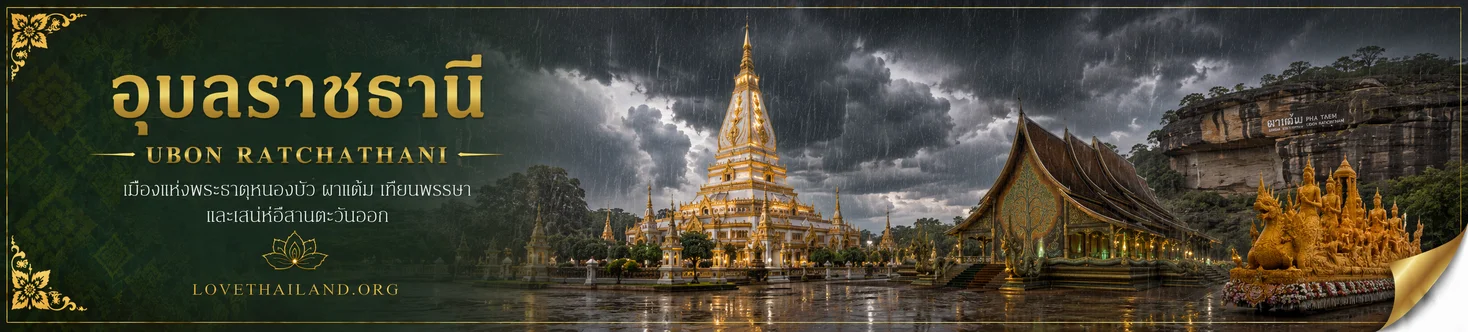
Ubon Ratchathani Candle Festival
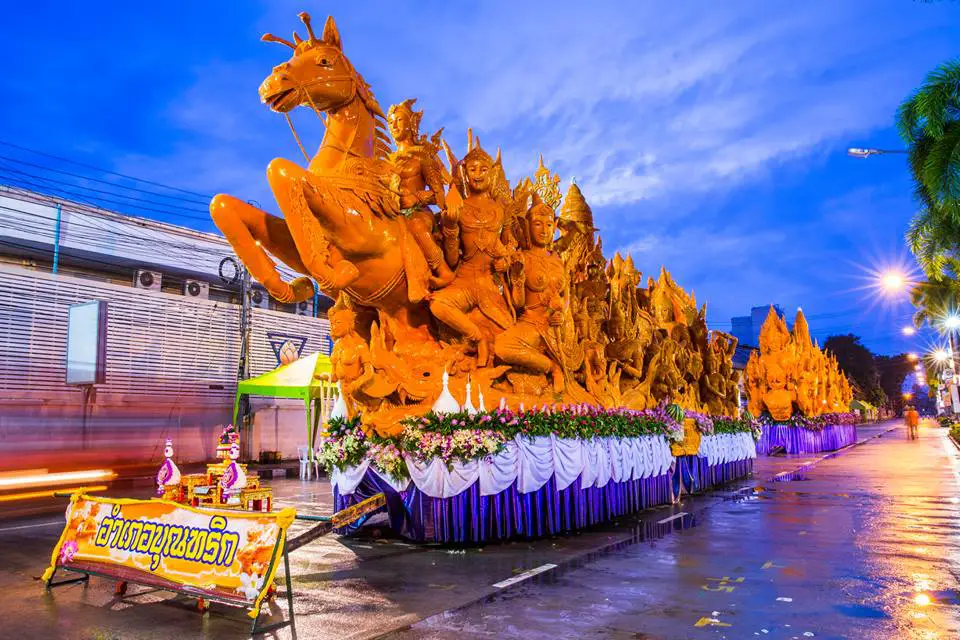
Open Days: Held Annually During Buddhist Lent Season (2026 Program: July 13 – August 17, 2026)
Opening Hours: According To Official Program; Daytime Processions Start At 08.30 And Night Processions Start At 19.00
Ubon Ratchathani Candle Festival is one of the most spectacular Buddhist cultural festivals in Thailand and the most iconic annual event of Ubon Ratchathani Province. It is held during the Buddhist Lent season, with the main venue at Thung Si Mueang in Mueang Ubon Ratchathani District. The festival brings together Buddhist faith, candle craftsmanship, temple communities, Isan performing arts, music, dance, local food, and public celebration. Its most famous highlight is the grand procession of large wax candles, created by temples and local communities, then displayed and paraded through the city in both daytime and nighttime processions.
The Ubon Ratchathani Candle Festival is not simply a tourist event. It is rooted in a deep Buddhist tradition. In the past, Buddhist devotees offered candles to monks for use during the three-month rainy-season retreat, when monks remained in their temples to study, meditate, and perform religious duties. Before electricity became common, candles were essential for temple life. Over time, the simple act of offering candles developed into the making of large ceremonial candles, then into elaborate wax sculptures and public processions. Today, the festival preserves this original religious meaning while presenting it through large-scale public art.
The festival expresses the close relationship between temples and local communities. Each temple community, locally called a khum wat, prepares its own candle float. Villagers, monks, lay supporters, candle artisans, students, dancers, and sponsors work together for weeks or months. They donate wax, melt candles, design the sculpture, carve or mold wax decorations, prepare costumes, rehearse dance performances, decorate the float, and organize the team. Each candle float is therefore not only an artwork. It is a collective expression of faith, effort, skill, and community identity.
Thung Si Mueang is the central stage of the festival. During the event, large candle floats from different temple communities are gathered around the area for display, judging, and procession preparation. The candle gathering night is one of the best times to see the details of the works up close. Visitors can walk around the floats, observe the carving, photograph the sculptures, and see the differences between candle styles before the official procession days.
In 2026, the festival program runs from July 13 to August 17. From July 13 to 27, visitors can join community-based activities and visit candle-making communities. July 28 is the candle gathering day at Thung Si Mueang. July 29 and 30 are the main daytime and nighttime candle processions. July 31 to August 1 is the post-procession candle viewing period, while August 3 to 17 features the extended program called “Thian Ubon Yon Dai Talot Duean,” held at Wat Phra That Nong Bua. This extended program allows visitors who miss the main parade to continue experiencing Ubon candle art after the procession days.
The development of the Ubon Ratchathani Candle Festival shows how a local Buddhist tradition became a national cultural event. It began as a village and temple practice, then grew with support from government agencies, merchants, private businesses, temple communities, and local residents. In 1976, Ubon Ratchathani Province invited the Tourism Organization of Thailand to observe the event. From 1977 onward, the Tourism Authority of Thailand supported the festival as a national tradition. Since 1979, the royal candle has been graciously presented as the leading candle of the procession and then offered to a royal temple in Ubon Ratchathani on a rotating annual basis.
The festival gained even wider recognition during the Amazing Thailand tourism years of 1998 – 1999, when it was promoted as one of Thailand’s outstanding cultural events for international visitors. The combination of giant wax sculptures, refined craftsmanship, elegant processions, Buddhist devotion, Isan music, and mass participation made the festival one of Thailand’s most recognizable Buddhist celebrations. Today, it is widely associated with Ubon Ratchathani’s identity as the City of Candle Festival.
The candle floats are created in several major styles. Carved candles are made by sculpting wax into complex reliefs and figures such as Buddha stories, devas, nagas, garudas, kinnaris, floral scrolls, and mythological creatures. Molded candles use repeated wax motifs produced from molds and arranged into larger decorative compositions. Traditional candle floats preserve simpler forms linked to older donation customs. This variety makes the competition and procession rich in both artistic technique and cultural meaning.
The candle-making process is one of the deepest parts of the festival. Artisans begin with the concept and design, then build the internal structure of the float. Wax is melted, prepared, shaped, carved, molded, and attached layer by layer. Every detail must balance beauty, weight, durability, and visibility during the procession. A large candle float is both a sculpture and a moving structure. It requires religious knowledge, artistic skill, engineering sense, patience, and teamwork.
The daytime procession allows visitors to appreciate details clearly under natural light. The texture of wax, carved faces, floral patterns, mythical animals, and decorative bases are easy to see. Dancers and musicians lead or accompany the floats, adding rhythm and ceremonial grace. Costumes often use Isan textiles, local patterns, and colors that match the theme of each candle float. For photography and detail study, the daytime procession is especially rewarding.
The nighttime procession offers a different atmosphere. Lights create shadows and depth on the wax surfaces, making the sculptures appear more dramatic. Music, light, sound, and performance give the procession a theatrical quality while still preserving its Buddhist core. Watching both daytime and nighttime processions gives visitors two different experiences of the same tradition: one focused on detail and craftsmanship, the other on atmosphere and spectacle.
Performing arts are another important part of the festival. Thousands of performers, students, community members, and local artists join the procession through dance and music. Isan instruments such as khaen, phin, pong lang, drums, and mor lam rhythms help bring the candle floats to life. The festival is therefore not only visual art. It is also sound, movement, costume, rhythm, and public emotion.
The role of temple communities is central. Each khum wat becomes a cultural production unit during the festival. Some people make wax pieces, some carve, some cook for the team, some prepare costumes, some rehearse dances, and others support with funds or materials. This shared process passes knowledge from older artisans to younger generations and keeps the tradition alive within the community rather than separating it into professional performance alone.
The religious meaning of the festival is directly connected with Buddhist Lent. Buddhist Lent begins when monks remain in their temples for three months during the rainy season. This tradition prevents monks from traveling through fields and harming young crops or small living creatures during the growing season. Lay Buddhists use this period for merit-making, offering candles and rain-bathing cloths, keeping precepts, listening to sermons, and strengthening spiritual practice. The candle procession is therefore grounded in Buddhist merit-making.
Candles also carry symbolic meaning. A candle gives light in darkness, just as wisdom gives clarity to the mind. When many small candles or donations are combined into one large candle, the result becomes a powerful symbol of shared faith. Each person may contribute only a small part, but together the community creates something beautiful, visible, and meaningful. This symbolism explains why the festival remains emotionally powerful for Ubon people.
During the festival, Thung Si Mueang becomes lively throughout the day and night. Visitors can view candle floats, watch performances, photograph wax details, enjoy local food, buy products, and experience the festive atmosphere of Ubon Ratchathani city. The location is close to important temples, the Ubon Ratchathani National Museum, restaurants, hotels, and the old town area, making it easy to build a cultural itinerary around the festival.
The festival also extends into candle-making communities. Visiting workshops before the main procession helps travelers understand the effort behind the finished floats. Each temple and community has its own artisans, stories, patterns, and methods. Seeing people carve, mold, attach wax, or decorate floats gives visitors a deeper appreciation when the completed works appear in the procession.
The festival has a strong local economic impact. Hotels, restaurants, cafés, souvenir shops, transport providers, local markets, and candle-making communities benefit from the arrival of visitors. Yet the central value of the festival remains cultural and religious. It is a good example of how a local tradition can support tourism and local economy while preserving its original identity.
First-time visitors should plan carefully because the festival attracts large crowds. Accommodation in Ubon Ratchathani city should be reserved early, especially near Thung Si Mueang. Visitors should arrive before procession time to secure a good viewing point. Comfortable clothing, drinking water, a hat, an umbrella, and rain protection are useful because Buddhist Lent season falls during the rainy season. Walking is often more practical than driving close to the procession route, as traffic changes are common during festival days.
The best time to visit depends on the experience desired. Visitors who want to study candle details should attend the candle gathering day and the daytime procession. Those who want atmosphere, light, sound, and performance should attend the nighttime procession. Those who prefer a less crowded viewing experience can visit during the post-procession display period or the extended candle program after the main parade.
The extended program at Wat Phra That Nong Bua gives the festival a longer cultural life after the main procession. Wat Phra That Nong Bua is one of Ubon Ratchathani’s most important temples, known for its striking Phra That Chedi Si Maha Pho. Displaying candle art in this temple setting connects the festival back to its Buddhist foundation and allows visitors more time to appreciate Ubon candle craftsmanship.
The Ubon candle tradition is also an important form of local art education. Candle artisans tell Buddhist stories, Jataka tales, mythological scenes, and sacred symbols through wax. They must understand sculpture, proportion, religious imagery, float structure, and material behavior. The festival therefore stands at the intersection of religion, sculpture, folk art, design, and community management.
For international visitors, the Ubon Ratchathani Candle Festival is one of the clearest ways to understand Thai culture. It brings Buddhism, community cooperation, public art, music, dance, food, temples, and city life together in one event. Foreign travelers can see that Thai traditions are not confined to temple interiors. They can become large public expressions of faith and creativity involving an entire city.
Compared with other Buddhist Lent celebrations in Thailand, Ubon Ratchathani’s festival is distinguished by the scale and refinement of its candle floats and the strength of its temple-community system. Other provinces also offer candles, but Ubon has developed this tradition into a major artistic procession with competition, performance, and community pride. This continuity gives the province its strong identity as Thailand’s leading candle festival city.
Travel to the festival is convenient. Ubon Ratchathani can be reached by plane, train, interprovincial bus, or private car. The airport is close to the city center, while the railway station is in nearby Warin Chamrap District. From within the city, visitors can reach Thung Si Mueang by taxi, hired vehicle, local transport, or walking from nearby accommodation. Extra travel time should be allowed during procession days because some roads may be closed or redirected.
Visitors should dress respectfully, especially when entering temples or participating in religious activities. They should not climb on candle floats, touch wax carvings, block procession routes, cross in front of performers, or disturb official areas. These simple rules protect the artwork and respect the effort of communities that spend weeks or months creating each candle float.
Nearby attractions help complete the Ubon cultural experience. Wat Thung Si Mueang is close to Thung Si Mueang and is known for its over-water scripture hall. Ubon Ratchathani National Museum provides deeper historical context. Wat Maha Wanaram houses the revered Phra Chao Yai In Plaeng Buddha image. Wat Phra That Nong Bua is one of the city’s most photogenic temples. These sites allow visitors to connect the candle festival with the wider Buddhist and historical identity of Ubon Ratchathani.
The Ubon Ratchathani Candle Festival brings many layers of meaning together. It begins with the simple Buddhist act of offering light to monks. It grows into a community craft tradition. It becomes a citywide procession and a national cultural event. Even as the festival has expanded with tourism, light, sound, competitions, and modern organization, its center remains Buddhist faith, community unity, and the offering of light during the rainy-season retreat.
Anyone who wants to understand Ubon Ratchathani should experience this festival at least once. It reveals the province as a Buddhist city, a city of candle artisans, a city of temple communities, a city of Isan music and dance, and a city that continues to connect religion with daily life. Standing among giant candle floats, Isan music, dancers, and crowds of visitors, one can see why this festival is not just an annual event, but a cultural heart of Ubon Ratchathani.
| Festival Name | Ubon Ratchathani Candle Festival |
| Main Venue | Thung Si Mueang, Mueang Ubon Ratchathani District, Ubon Ratchathani Province, with related activities in temple communities around the city |
| Main Address | Thung Si Mueang, Upparat Road / Ratchabut Road, Nai Mueang Subdistrict, Mueang Ubon Ratchathani District, Ubon Ratchathani 34000, Thailand |
| Highlights | Large candle floats, day and night candle processions, candle float competitions, candle gathering night, light and sound performances, Isan dances, temple-community craftsmanship, and candle-making community visits |
| History | Originated from the Buddhist practice of offering candles to monks during Buddhist Lent; later developed into a community procession, received TAT support as a national tradition from 1977, and has included a royal candle as the leading candle of the procession since 1979 |
| Cultural Significance | A national-level Buddhist cultural festival combining faith, candle craftsmanship, Isan art, temple communities, performing arts, and cultural tourism in Ubon Ratchathani |
| Candle Types | Carved candle floats, molded candle floats, traditional candle floats, and candle works created by temple communities in Ubon Ratchathani |
| 2026 Program | July 13 – 27, 2026: Candle-making community visits July 28, 2026: Candle gathering at Thung Si Mueang July 29 – 30, 2026: Day and night candle processions July 31 – August 1, 2026: Post-procession candle viewing August 3 – 17, 2026: Extended candle display program at Wat Phra That Nong Bua |
| Open Days | Held annually during Buddhist Lent season; 2026 activities run from July 13 to August 17, 2026 |
| Opening Hours | According to the official program; daytime processions start at 08.30 and nighttime processions start at 19.00 |
| Fees | No admission fee for public procession and display areas. Personal expenses depend on food, accommodation, transport, and other services. |
| Current Status | Held continuously as an important annual cultural festival of Ubon Ratchathani; the 2026 program continues through August 17, 2026 |
| Main Areas / Zones | Thung Si Mueang zone, candle gathering zone, daytime procession zone, nighttime procession zone, performance stage zone, candle competition zone, candle-making community zone, Wat Phra That Nong Bua extended display zone, and food/vendor zone |
| Facilities | Public viewing areas, candle display areas, performance stages, public restrooms, tourist information points, food vendors, shops, outer parking areas, and city transport services depending on annual event management |
| Organizers / Caretakers | Ubon Ratchathani Province, Ubon Ratchathani Municipality, Tourism Authority of Thailand Ubon Ratchathani Office, government agencies, private sector, temple communities, and local communities in Ubon Ratchathani |
| Contact | Tourism Authority of Thailand, Ubon Ratchathani Office, Tel. 045-243-770, 045-250-714 Ubon Ratchathani Municipality, Tel. 045-246-061 |
| Travel Information | The main venue is in central Ubon Ratchathani. Visitors can travel by plane, train, bus, private car, hired vehicle, or local transport. Ubon Ratchathani International Airport is about 5 km from Thung Si Mueang. |
| Nearby Tourist Attractions | 1. Thung Si Mueang, about 0 km 2. Wat Thung Si Mueang, about 0.5 km 3. Ubon Ratchathani National Museum, about 0.8 km, Tel. 045-251-015 4. Wat Maha Wanaram, about 1 km 5. Wat Phra That Nong Bua, about 4 km 6. Kanchanaphisek Arts and Cultural Center, about 4 km 7. Ubon Zoo, about 10 km |
| Nearby Restaurants | 1. S.P. House, Ratchabut Road, about 0.4 km, Tel. 045-261-121 2. Baan Khanom Jeen Ubon, Ratchathani Soi 3, about 1.5 km, Tel. 089-757-2756 3. Santi Pochana, about 1.8 km, Tel. 045-240-233 4. Santi Phochana, Chawalanok Road, about 1.8 km, Tel. 045-262-533, 081-879-7423 5. Ricco Caf Ubon Ratchathani, about 4 km, Tel. 086-868-7888 6. Santi Photchana Congee, about 1.8 km, Tel. 045-240-233, 045-262-533 |
| Nearby Accommodations | 1. YUU HOTEL & Cafe Ubon Ratchathani, about 0.5 km, Tel. 085-614-1111 2. Ubon Best Place, about 0.7 km, Tel. 089-928-8694 3. Tohsang Heritage Ubon Hotel, about 1 km, Tel. 045-245-531 4. Sunee Grand Hotel & Convention Center, about 3 km, Tel. 081-265-3388, 081-955-2992 5. Rapeepan Ville Hotel, about 4 km, Tel. 045-312-841, 087-458-2700 6. V Hotel Ubon, about 4 km, Tel. 097-334-4480 |
Frequently Asked Questions (FAQ)
Q: Where is the Ubon Ratchathani Candle Festival held?
A: The main venue is Thung Si Mueang in Mueang Ubon Ratchathani District, Ubon Ratchathani Province, with related activities in temple communities around the city.
Q: When is the Ubon Ratchathani Candle Festival 2026 held?
A: The 2026 program runs from July 13 to August 17. The main activities at Thung Si Mueang are held from July 28 to 30, and the extended candle display continues from August 3 to 17 at Wat Phra That Nong Bua.
Q: What time do the candle processions start?
A: In the 2026 main program, daytime processions start at 08.30 and nighttime processions start at 19.00.
Q: Is there an admission fee?
A: No. There is no admission fee for public procession and display areas. Personal expenses depend on food, accommodation, transport, and other services.
Q: What is the main highlight of the festival?
A: The main highlights are large wax candle floats, detailed candle carving, daytime and nighttime processions, Isan dances, candle competitions, and the participation of temple communities across Ubon Ratchathani.
Q: Why is Ubon Ratchathani famous for the Candle Festival?
A: Ubon Ratchathani has a long tradition of candle offering and temple-community candle making. The festival later became a national cultural event known for refined craftsmanship, large-scale processions, and strong community participation.
Q: What is the best time to visit the festival?
A: Visitors who want to see candle details should attend the candle gathering day and daytime procession. Visitors who want atmosphere, light, sound, and performances should attend the nighttime procession. The post-procession display period is suitable for less crowded viewing.
Q: What nearby places can be visited after the festival?
A: Nearby places include Wat Thung Si Mueang, Ubon Ratchathani National Museum, Wat Maha Wanaram, Wat Phra That Nong Bua, Kanchanaphisek Arts and Cultural Center, and Ubon Zoo.
 Category: ●Art, Culture and Heritage
 Group: ●Art, Craft Centres, Tradition
Last Update : 2 MonthAgo
 Last Update : 2 MonthAgo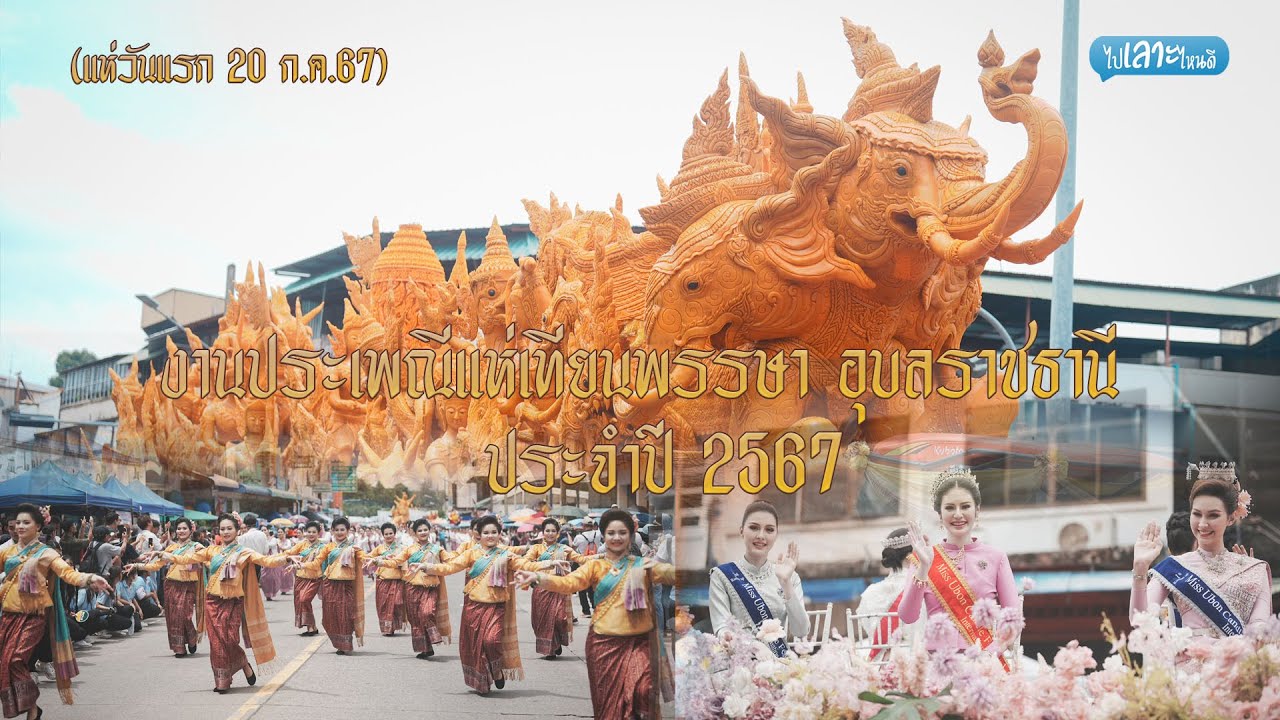
 Click to Access the Navigation Map GPS
Ubon Ratchathani Candle Festival Map
Gellery
Recommend

 Historical Sites and Monuments(5)
 Landmarks and Memorials(2)
 Royal Palace(1)
Art, Craft Centres, Tradition(7)
Royal Palace(1)
Art, Craft Centres, Tradition(7)
 Museums(3)
 Places of Worship
 Temple(37)
 Other Sacred Sites(4)
 Research and Development
 Royal Project(2)
 Suburban Living
 Village, Community(2)
 Local Market(4)
 Nature and Wildlife
 National Parks and Marine Reserves(5)
 Mountain (Doi)(6)
 Dam, Reservoir, Lake(8)
 Waterfalls(12)
 Hot Springs(1)
 Caves(2)
 River, Canal(11)
 Bays and Beaches(8)
 Islands(2)
 Other natural attractions(6)
 Entertainment and Agricultural
 Zoos and Aquariums(1)
 Animal camps and shows(1)
 Farms, Parks and Ecotourism(1)


