
lovethailand home >Northeastern Travel Attractions >Ubon Ratchathani Travel Attractions >Khong Chiam >Napho Klang > Thung Na Mueang Waterfall
TL;DR: Thung Na Mueang Waterfall is located at Ban Thung Na Mueang, Na Pho Klang Subdistrict, Khong Chiam District, Ubon Ratchathani Province, inside Pha Taem National Park, open Daily, hours 08.00 – 17.00.

Thung Na Mueang Waterfall
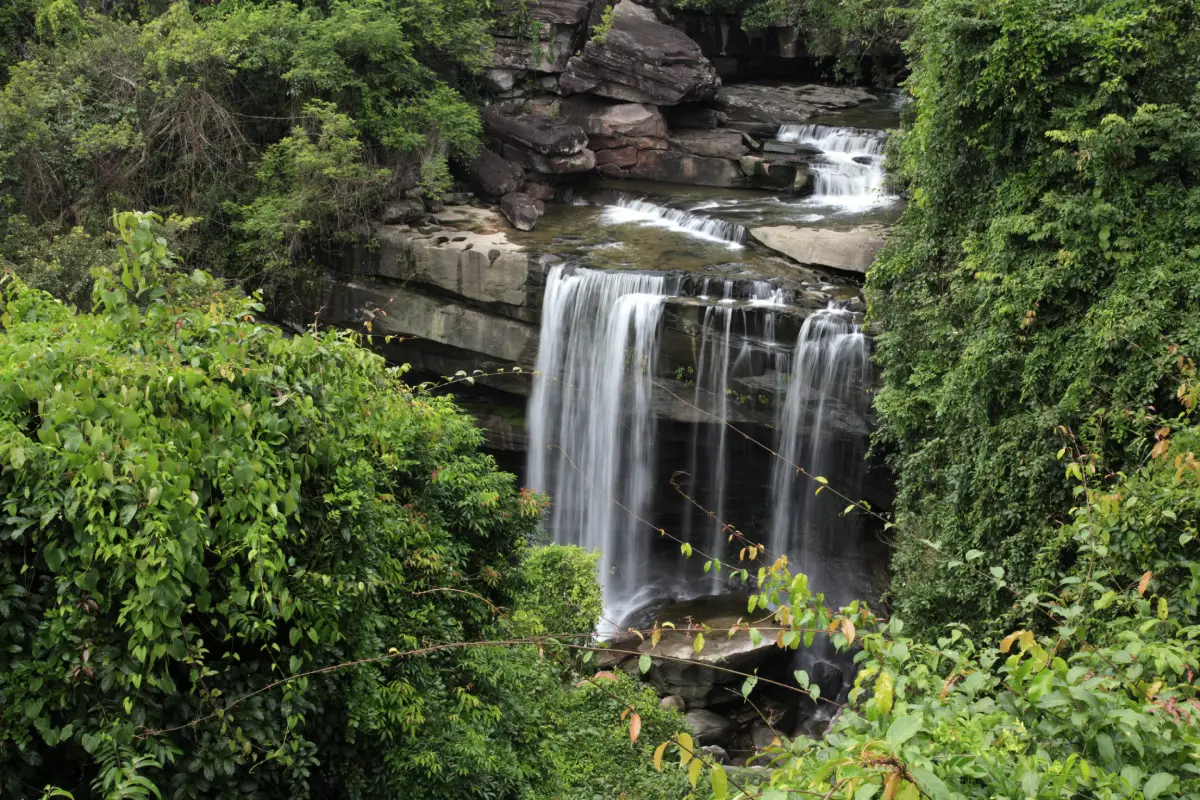
Open Days: Daily
Opening Hours: 08.00 – 17.00
Thung Na Mueang Waterfall in Ubon Ratchathani Province is a distinctive seasonal waterfall inside Pha Taem National Park, Khong Chiam District. It is closely connected with Ban Thung Na Mueang, where an overflow weir stores water flowing down from the surrounding highland, hills, and forest. When the water level rises, the overflow moves across layers of sandstone, passes through rock channels and hidden gaps, drops into the lower valley, and eventually continues toward the Mekong River. This makes Thung Na Mueang Waterfall more than a simple cascade; it is a natural system where village water management, sandstone terrain, forest, and seasonal water work together in one landscape.
The waterfall is also locally known as Long Ru Waterfall, a name that can cause some confusion with Saeng Chan Waterfall, another famous waterfall nearby. The character of Thung Na Mueang is different. At Saeng Chan Waterfall, water drops through a hole in a sandstone overhang from above. At Thung Na Mueang Waterfall, the stream travels through hidden rock channels, slips through gaps and crevices, then emerges beneath a large stone slab that resembles a cave-like gorge before falling in front of the rock. This unusual movement of water gives the site its special identity.
The beauty of Thung Na Mueang Waterfall comes from the journey of the water. The stream does not simply fall from a cliff edge. It flows from the overflow weir, travels along rock levels, disappears into shaded stone passages, and reappears below a large rock formation. Visitors can see water moving across the sandstone in several forms: thin sheets over smooth rock, small cascades through channels, hidden flow beneath stone, and stronger falling water at the front. This layered movement gives the waterfall a sense of depth and mystery.
Thung Na Mueang Waterfall is part of the broader natural landscape of Pha Taem National Park. The park is known for sandstone cliffs, prehistoric rock paintings, Sao Chaliang rock formations, dry dipterocarp forest, seasonal wildflowers, waterfalls, and Mekong viewpoints. Within this setting, Thung Na Mueang represents the water-and-rock side of the park. It shows how seasonal rain, sandstone structure, village water storage, and forested slopes combine to create a waterfall that changes visibly through the year.
During the rainy season, the waterfall becomes most impressive. Water from the highland and surrounding forest fills the weir and flows strongly over the rock layers. The surrounding vegetation becomes greener, the air feels cooler, and the sound of water is clearer. From the rainy season into the early cool season, visitors can see the waterfall in its liveliest form. During drier periods, the water level decreases, but the exposed rock layers, channels, potholes, and cave-like stone structure become easier to observe.
The sandstone around the waterfall is one of its most interesting natural features. Water flowing repeatedly across sandstone can slowly polish the rock, deepen channels, form potholes, and create small natural basins. Around Thung Na Mueang Waterfall, visitors can see many rock hollows and pools, some holding clear water that reflects the sky. These details show that the place is not only scenic but also valuable for understanding erosion and landscape formation.
The area around the waterfall has both open rock terraces and patches of forest. Some sections are exposed sandstone, while other sections are shaded by trees, vines, and local vegetation. This contrast gives the site a varied atmosphere. Visitors can experience the brightness of open rock plains, the coolness of shaded stream areas, and the quiet feeling of a natural watercourse hidden among stones. The environment is simple, local, and not overly commercialized.
Thung Na Mueang Waterfall is a good destination for travelers who enjoy observing details. The main attraction is not only the falling water but also the way the water enters, disappears, and returns through the rock. The site rewards visitors who walk slowly, look carefully at the sandstone surface, listen to the stream, and notice how the landscape changes from one section to another. It is a place for quiet nature travel rather than hurried sightseeing.
The waterfall is suitable for visiting together with Saeng Chan Waterfall, located nearby. Saeng Chan is famous for its water-through-hole formation, while Thung Na Mueang is known for water emerging from beneath a large rock slab after passing through hidden channels. Visiting both waterfalls helps travelers understand the diversity of sandstone waterfalls in Pha Taem National Park. Even in the same general area, water has created very different natural forms.
Soi Sawan Waterfall is another important nearby attraction. It is a larger waterfall formed by two streams flowing from separate cliff faces and joining below like a necklace. When combined with Thung Na Mueang, travelers can experience a complete range of waterfall landscapes: cave-like water emergence, hole-in-the-rock water flow, and a broad cliff waterfall with two joining streams. This makes the Pha Taem waterfall route especially rich for nature travelers.
Pha Taem Cliff and Sao Chaliang also belong naturally in the same itinerary. Pha Taem is known for prehistoric rock paintings and Mekong River views, while Sao Chaliang shows mushroom-like sandstone formations shaped by erosion over a very long time. Together with Thung Na Mueang Waterfall, these places reveal the same underlying theme: sandstone, water, wind, time, seasonal change, and human memory in the same protected landscape.
From a geographical perspective, Thung Na Mueang Waterfall explains that Khong Chiam is not only about the Mekong River and high cliffs. It also contains smaller seasonal water systems that begin in the highlands and forested areas before flowing down through rock layers toward the Mekong basin. The waterfall therefore helps visitors understand the connection between local village landscapes, hills, waterfalls, and the larger river system of eastern Ubon Ratchathani.
The late rainy season and early cool season are especially attractive because this is also the period when wildflowers often appear on nearby sandstone plains. These small flowers grow in thin soil pockets over rock surfaces and depend on seasonal moisture. Visitors should stay on marked paths and avoid stepping on wildflower areas. The flowers are delicate, and repeated footsteps can damage the fragile soil layer that supports them.
For photographers, Thung Na Mueang Waterfall offers several strong compositions: water emerging from under a rock slab, layered sandstone, cave-like shadows, pools and potholes, vines, forest edges, and textured rock surfaces. Morning light is usually good for soft contrast, while early afternoon can bring out the details of the water and stone. After safe rainfall, the waterfall becomes more active, but slippery surfaces require extra care.
Families can visit Thung Na Mueang Waterfall, but children should be supervised closely. The area includes wet stones, uneven ground, rock basins, and water channels. It is a useful natural classroom where children can learn how water flows, why some rocks have holes, how seasonal waterfalls work, and why sandstone landscapes change over time. The visit becomes more meaningful when adults help children observe the place carefully.
For international travelers, Thung Na Mueang Waterfall offers a view of Thailand that is very different from beaches, islands, and large urban attractions. It represents the lower-Isan landscape through sandstone, seasonal water, dry forest, village-linked water systems, and a protected natural area near the Mekong borderland. It helps foreign visitors see that Ubon Ratchathani has subtle natural beauty beyond its most famous viewpoints.
Getting There is most convenient by private car or rental car. From Khong Chiam District, take Highway 2112 along the Pha Taem National Park route toward Na Pho Klang and Ban Thung Na Mueang. After reaching the parking area, visitors walk about 200 meters to the waterfall. From Ubon Ratchathani city, travel first to Khong Chiam, then continue along the national park route. A private vehicle is practical because several attractions can be combined in one trip.
Travelers without a private vehicle can first reach Khong Chiam town and then hire local transport to the waterfall route. This requires planning because small natural attractions may not have frequent public transport directly to the entrance. For groups, hiring a local vehicle is often the best option because it allows visits to Thung Na Mueang Waterfall, Saeng Chan Waterfall, Soi Sawan Waterfall, Sao Chaliang, and Pha Taem Cliff in a flexible schedule.
A one-day trip from Khong Chiam can begin at Thung Na Mueang Waterfall in the morning, continue to Saeng Chan Waterfall nearby, and then move on to Soi Sawan Waterfall or Sao Chaliang in the afternoon. After the nature route, visitors can return to Khong Chiam for riverside food. This route gives a balanced experience of waterfalls, sandstone formations, forest, and the Mekong-side district atmosphere.
A two-day itinerary provides a deeper experience. On the first day, visitors can explore Pha Taem Cliff, prehistoric rock paintings, Sao Chaliang, and Mekong viewpoints before staying in Khong Chiam. On the second day, they can visit Thung Na Mueang Waterfall, Saeng Chan Waterfall, and Soi Sawan Waterfall. This slower plan reduces rushing and allows more time for walking, photography, and observing the seasonal landscape.
The entrance fee follows the Pha Taem National Park rate. Thai adults pay 40 Baht, Thai children pay 20 Baht, foreign adults pay 200 Baht, and foreign children pay 100 Baht. Vehicle fees also apply by vehicle type. Travelers should prepare a suitable payment method before entering the park area, especially because mobile signal and payment systems may not be equally reliable at every natural site.
Food options directly at waterfall areas can be limited, so most visitors eat in Khong Chiam town or along the Mekong riverside before or after the nature route. Restaurants in Khong Chiam commonly serve Mekong fish, Isan food, Thai dishes, river prawns, fish soup, fried river fish, fish larb, papaya salad, and local dishes. Calling restaurants ahead can help on weekends and public holidays.
Accommodation options suitable for visiting Thung Na Mueang Waterfall include designated national park accommodation or camping areas where available, as well as hotels and riverside resorts in Khong Chiam. Staying in Khong Chiam is convenient for travelers who want private rooms, food services, river views, and easy access to several Pha Taem attractions.
Safety should be taken seriously. Wet sandstone can be slippery, especially after rain. Visitors should avoid climbing rock slabs, standing near strong water channels, stepping into unknown pools, or walking outside marked paths. During heavy rain, water levels can change quickly. The best waterfall experience comes from choosing safe weather and respecting the natural condition of the site.
Responsible travel is also important. Visitors should take all rubbish out, avoid using soap or chemicals in water channels, avoid writing on rocks, avoid picking plants, and avoid disturbing wildflower areas. The waterfall’s beauty depends on clean water, intact sandstone, healthy vegetation, and careful visitor behavior. Small actions protect the place for both local communities and future travelers.
Overall, Thung Na Mueang Waterfall is a meaningful natural attraction for travelers who want to understand Ubon Ratchathani in depth. Its identity comes from an overflow weir, seasonal water, sandstone channels, cave-like rock formations, potholes, forest, and the connection to the Mekong basin. It is suitable for rest, photography, camping in designated areas, and nature learning. When visited in the right season and with proper care, the waterfall offers a quiet, layered, and memorable experience inside Pha Taem National Park.
| Name | Thung Na Mueang Waterfall / Long Ru Waterfall |
| Location | Ban Thung Na Mueang, Na Pho Klang Subdistrict, Khong Chiam District, Ubon Ratchathani Province, inside Pha Taem National Park |
| Address | Pha Taem National Park area, Ban Thung Na Mueang, Na Pho Klang Subdistrict, Khong Chiam District, Ubon Ratchathani 34220 |
| Coordinates / Navigation Point | Thung Na Mueang Waterfall, Na Pho Klang Subdistrict, Khong Chiam District, Ubon Ratchathani; access via the Pha Taem National Park route and Highway 2112 toward Ban Thung Na Mueang |
| Distinctive Features | A seasonal waterfall formed by overflow water from Ban Thung Na Mueang weir, flowing across sandstone layers, through hidden rock channels, under a large cave-like stone slab, and down toward the lower valley and Mekong River basin |
| Name Origin | The name Thung Na Mueang is connected with Ban Thung Na Mueang. The local name Long Ru refers to water passing through rock gaps and emerging beneath a large stone slab before falling in front of it. |
| Natural Formation | A sandstone waterfall landscape with seasonal water, rock layers, potholes, natural pools, hidden channels, open rock plains, dry forest, and water flow that changes with rainfall. |
| Travel Information | From Khong Chiam, follow Highway 2112 along the Pha Taem National Park route toward Na Pho Klang and Ban Thung Na Mueang. From the parking area, walk about 200 meters to the waterfall. |
| Current Status | Open as a natural attraction inside Pha Taem National Park |
| Open Days | Daily |
| Opening Hours | 08.00 – 17.00 |
| Fees | Thai visitors: Adult 40 Baht, Child 20 Baht Foreign visitors: Adult 200 Baht, Child 100 Baht Car: 30 Baht per vehicle Motorcycle: 20 Baht per vehicle |
| Facilities | Parking area, walking route to the waterfall, resting spots, some shelters, toilets and basic park services in designated areas, and camping or overnight-use areas where permitted by the park |
| Main Areas / Zones | Parking And Walking Trail Zone Ban Thung Na Mueang Overflow Weir Zone Hidden Rock Channel Zone Large Stone Slab And Cave-Like Gorge Zone Long Ru Waterfall Zone Rock Layer, Pothole And Natural Pool Zone Rock Plain And Native Plant Zone Resting And Designated Camping Zone |
| Caretaker | Pha Taem National Park, Department of National Parks, Wildlife and Plant Conservation, together with local authorities in Na Pho Klang Subdistrict |
| Main Contact Number | Pha Taem National Park, Tel. 0 4525 2581 Fax 0 4525 2582 Tel. 089-810-5532 |
| Best Time To Visit | Rainy season to early cool season for waterfall flow; after safe rainfall for stronger water; late rainy to early cool season for nearby sandstone plains, wildflowers, and other Pha Taem waterfall routes |
| Safety Notes | Be careful of slippery sandstone after rain, seasonal runoff, strong water channels, rock gaps, and uneven ground. Stay on official paths and follow park staff instructions. |
| Nearby Tourist Attractions | 1. Saeng Chan Waterfall / Long Ru Waterfall, 2 km, Tel. 0 4525 2581 2. Soi Sawan Waterfall, 13 km, Tel. 0 4525 2581 3. Sao Chaliang, Pha Taem National Park, 40 km, Tel. 0 4525 2581 4. Pha Taem Cliff And Prehistoric Rock Paintings, 41 km, Tel. 0 4525 2581 5. Pha Taem Mekong Viewpoint, 41 km, Tel. 0 4525 2581 6. Two-Color River, Khong Chiam, 42 km 7. Wat Tham Khuha Sawan, 43 km |
| Nearby Restaurants | 1. Khrua Khong Chiam, 42 km, Tel. 045-351-027, 062-829-3697 2. Larb Pla Khong Chiam, 42 km, Tel. 045-351-283 3. Boeng Tawan Restaurant, 42 km, Tel. 089-717-7627 4. Chandara Khong Chiam, 43 km, Tel. 098-242-4464 5. Mae Nam Song Si Khong Chiam Restaurant, 42 km, Tel. 083-720-7706 |
| Nearby Accommodations | 1. Pha Taem National Park Accommodation And Camping Area, 41 km, Tel. 0 4525 2581 2. Khong Chiam Hotel, 42 km, Tel. 086-468-7431 3. View Khong Khong Chiam Hotel, 42 km, Tel. 065-242-3392 4. Baan Kieng Tawan Khong Chiam, 43 km, Tel. 099-039-4290 5. Tohsang Heritage Khongjiam, 47 km, Tel. 081-860-5905, 045-351-174-6 6. Khong Chiam Orchid Riverside Resort, 48 km, Tel. 098-916-8771 |
Frequently Asked Questions (FAQ)
Q: Where is Thung Na Mueang Waterfall located?
A: Thung Na Mueang Waterfall is located at Ban Thung Na Mueang, Na Pho Klang Subdistrict, Khong Chiam District, Ubon Ratchathani Province, inside Pha Taem National Park.
Q: What are the opening days and hours?
A: Thung Na Mueang Waterfall is open daily from 08.00 to 17.00.
Q: Is there an entrance fee?
A: Yes. The Pha Taem National Park entrance fee is 40 Baht for Thai adults, 20 Baht for Thai children, 200 Baht for foreign adults, and 100 Baht for foreign children.
Q: Why is Thung Na Mueang Waterfall also called Long Ru Waterfall?
A: It is called Long Ru because the stream flows through hidden rock channels and emerges beneath a large stone slab before falling in front of it like a waterfall passing through rock.
Q: When is the best time to visit Thung Na Mueang Waterfall?
A: The rainy season to early cool season is the best time for waterfall flow. After safe rainfall, the water is stronger, while the dry period reveals more sandstone structure.
Q: How far is the walk from the parking area to the waterfall?
A: Visitors walk about 200 meters from the parking area to the waterfall. Shoes with good grip are recommended because rocks and paths may be slippery after rain.
Q: What attractions can be visited together with Thung Na Mueang Waterfall?
A: Nearby attractions include Saeng Chan Waterfall, Soi Sawan Waterfall, Sao Chaliang, Pha Taem Cliff, Mekong viewpoints, the Two-Color River, and Wat Tham Khuha Sawan.
Q: What should visitors prepare before going?
A: Visitors should bring non-slip shoes, drinking water, a hat, mosquito repellent, a personal trash bag, waterproof protection for phones or cameras, and should check weather conditions before traveling during the rainy season.
 Category: ●Nature and Wildlife
 Group: ●Waterfalls
Last Update : 1 MonthAgo
 Last Update : 1 MonthAgo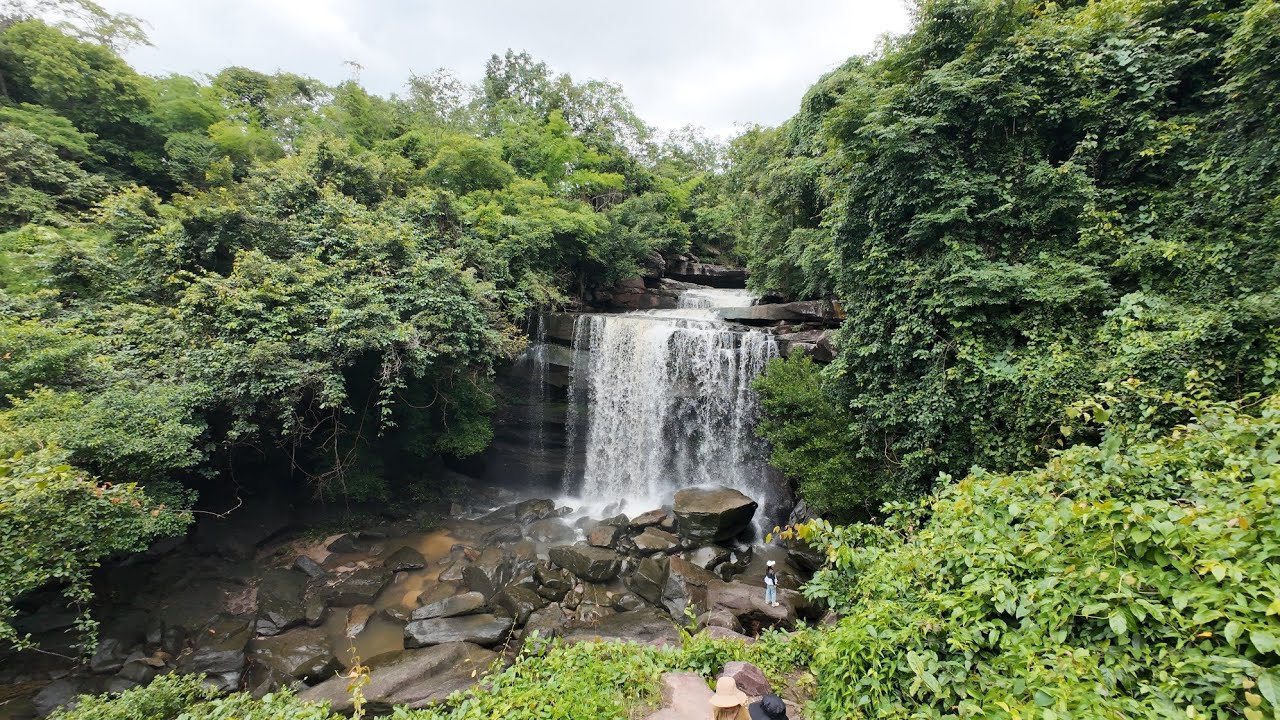
 Click to Access the Navigation Map GPS
Thung Na Mueang Waterfall Map
Recommend

 Art, Culture and Heritage
 Historical Sites and Monuments(5)
 Landmarks and Memorials(2)
 Royal Palace(1)
 Art, Craft Centres, Tradition(7)
 Museums(3)
 Places of Worship
 Temple(37)
 Other Sacred Sites(4)
 Research and Development
 Royal Project(2)
 Suburban Living
 Village, Community(2)
 Local Market(4)
 National Parks and Marine Reserves(5)
 Mountain (Doi)(6)
 Dam, Reservoir, Lake(8)
Waterfalls(12)
Dam, Reservoir, Lake(8)
Waterfalls(12)
 Hot Springs(1)
 Caves(2)
 River, Canal(11)
 Bays and Beaches(8)
 Islands(2)
 Other natural attractions(6)
 Entertainment and Agricultural
 Zoos and Aquariums(1)
 Animal camps and shows(1)
 Farms, Parks and Ecotourism(1)


