
lovethailand home >Northeastern Travel Attractions >Ubon Ratchathani Travel Attractions >Sirinthon >Chong Mek > Chong Mek
TL;DR: Chong Mek is located at Chong Mek Subdistrict, Sirindhorn District, Ubon Ratchathani Province, open Daily, hours 06.00 – 20.00.
Chong Mek
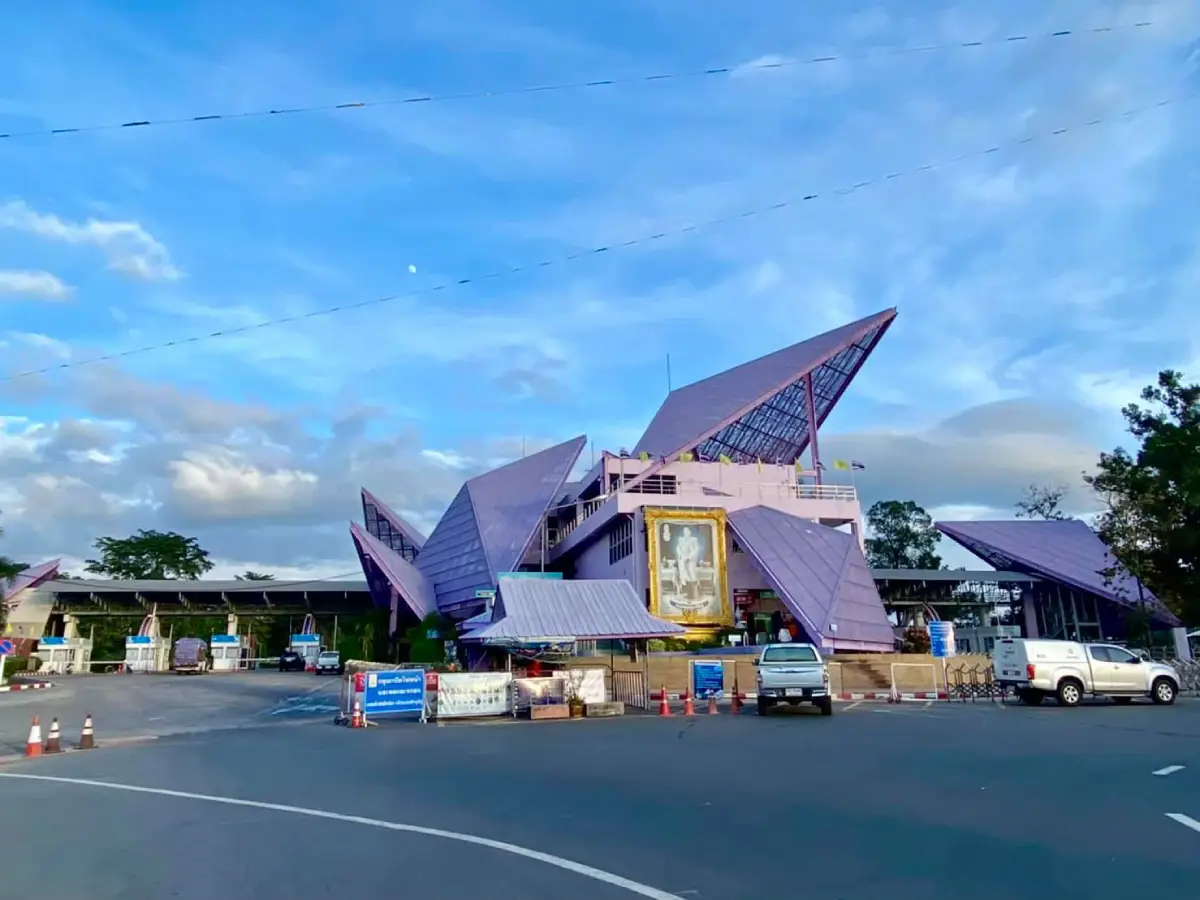
Open Days: Daily
Opening Hours: 06.00 – 20.00
Chong Mek in Ubon Ratchathani is one of the most important permanent border crossings between Thailand and Laos in Northeastern Thailand. Located in Chong Mek Subdistrict, Sirindhorn District, Ubon Ratchathani Province, it serves as an overland gateway from Thailand into Champasak Province in southern Laos. The checkpoint connects directly with the Wang Tao International Checkpoint on the Lao side and is the practical starting point for many travelers heading to Pakse, Wat Phu, Si Phan Don, Li Phi Waterfall, and Khone Phapheng Waterfall. For both Thai and foreign travelers who want to explore southern Laos from Thailand by road, Chong Mek is one of the clearest and most convenient gateways.
Chong Mek is not only a place for passport stamping. It is also a living border area where official procedures, local trade, travel services, and community life meet in one compact zone. Around the checkpoint, visitors will find the immigration area, customs facilities, a Thai-side border market, small shops, food stalls, parking areas, money exchange services, and local transport connections. Beyond the Thai immigration area, the road continues toward the Lao side, where visitors can access Wang Tao and continue onward to Pakse, the main city of Champasak Province.
What makes Chong Mek especially interesting is that it is an overland crossing. Many other Thai – Lao border crossings in the Northeast involve crossing the Mekong River by bridge or boat, but Chong Mek sits on a land connection between the two countries. The road from Ubon Ratchathani ends at the Thai border and continues into Laos, creating a direct travel corridor between southern Isan and southern Laos. This geographic character makes the checkpoint highly important for tourism, trade, logistics, and local movement between the two countries.
For travelers, the atmosphere at Chong Mek is a mix of border administration and local market life. On one side, there are official buildings, passport control, customs inspection, and controlled routes for pedestrians, vehicles, tour buses, and transport trucks. On the other side, there are shops selling goods, local vendors offering snacks and drinks, travelers preparing to cross into Laos, and local residents who use the border in their everyday routines. This contrast gives Chong Mek a strong sense of place. It is formal because it is an international border, but it is also human, practical, and rooted in local life.
The Thai-side border market is a useful stop even for visitors who do not plan to cross into Laos. The market area offers general goods, clothing, bags, shoes, travel items, local products, snacks, and souvenirs. Some shops serve travelers preparing to cross the border, while others serve local residents and visitors who simply want to experience the atmosphere of a border market. The market is not defined by luxury or elaborate design. Its value lies in its everyday border character, where language, currency, trade, and movement come together naturally.
Chong Mek operates daily from 06.00 to 20.00. These hours make it possible to cross early in the morning, continue to Pakse or other destinations in Champasak, and return to Thailand on the same day when the itinerary is carefully planned. However, travelers going to places farther away, such as Wat Phu or Si Phan Don, should allow more time and consider staying overnight in Laos. Those who only want to explore the Thai-side market and border atmosphere can visit during the late morning or afternoon without needing to complete immigration procedures.
For Thai travelers, documents may include a passport, border pass, or temporary border pass depending on the type of journey and the official conditions that apply. A passport allows travel through a permanent border checkpoint according to the period of stay granted by the destination country. Border passes and temporary border passes are used under specific Thai – Lao border agreements and are subject to designated areas and periods. Travelers should prepare identification documents before arriving at the checkpoint, especially during weekends, holidays, or group travel periods.
For foreign travelers, a valid passport is the primary travel document when crossing at Chong Mek. Entry into Laos must follow Lao immigration requirements according to nationality and travel purpose. Foreign travelers should make sure their passport is valid, has blank pages for stamps, and is accompanied by any required visa or entry document based on their nationality. It is also useful to prepare the name of accommodation in Laos, travel plans, and enough cash for transport, food, and local services after crossing the border.
The distance from Ubon Ratchathani city to Chong Mek is about 90 km. The main route follows Highway 217 through the direction of Warin Chamrap, Phibun Mangsahan, and Sirindhorn District before reaching the border. By private car, the trip usually takes around 1.5 to 2 hours depending on traffic and stops along the way. The road is an important provincial route and also functions as a major trade corridor linking Ubon Ratchathani with Champasak Province in Laos. Travelers without a private vehicle can use buses, vans, or local transport heading toward Chong Mek and continue from the border according to their onward plans.
For travelers who want to go onward to Pakse, Chong Mek is the most practical gateway from Ubon Ratchathani. Pakse is about 38 km from the border and functions as the main transport and tourism hub of southern Laos. From Pakse, travelers can continue to Wat Phu, the Bolaven Plateau, Si Phan Don, Li Phi Waterfall, and Khone Phapheng Waterfall. Many travelers use Chong Mek as the starting point of a southern Laos itinerary because it links directly with Pakse and offers access to some of the most important cultural and natural attractions in Champasak Province.
Wat Phu is one of the major cultural destinations connected with travel through Chong Mek. Located in Champasak Province, this ancient Khmer temple complex is an important historical, religious, and architectural site. Travelers interested in Khmer heritage can connect sites in southern Isan with Wat Phu in Laos, creating a deeper cultural route across the border. A trip from Ubon Ratchathani through Chong Mek to Wat Phu is especially meaningful for those who want to understand the wider historical landscape shared by the lower Mekong region.
Si Phan Don, also known as the Four Thousand Islands, is another important destination that can be reached from southern Laos after crossing at Chong Mek. This area of the Mekong River is famous for its broad river landscape, islands, waterfalls, and relaxed riverside villages. Key places include Don Det, Don Khon, Li Phi Waterfall, and Khone Phapheng Waterfall. Although Si Phan Don is farther than Pakse and requires more travel time, Chong Mek remains one of the most useful Thai-side gateways for reaching this part of Laos.
Travelers who do not want to cross into Laos can still use Chong Mek as part of a strong Sirindhorn District itinerary. Nearby places on the Thai side include Wat Sirindhorn Wararam Phu Prao, Sirindhorn Dam, Pattaya Noi, Kaeng Tana National Park, and routes continuing toward Khong Chiam. Wat Sirindhorn Wararam Phu Prao is especially popular in the evening because of the glowing Tree of Life mural behind the ordination hall. Combining the border market at Chong Mek with this temple creates a balanced route that includes local trade, border atmosphere, temple architecture, and scenic viewpoints.
Sirindhorn Dam and Pattaya Noi are also good places to combine with Chong Mek. The dam area offers wide reservoir views and a calmer atmosphere, while Pattaya Noi is known for raft restaurants and lakeside leisure. These places are suitable for families, road trippers, and travelers who want to spend a relaxed day around Sirindhorn District without crossing into Laos. A convenient one-day route from Ubon Ratchathani can include Sirindhorn Dam, Pattaya Noi, Chong Mek Border Market, and Wat Sirindhorn Wararam Phu Prao in the evening.
The main zones at Chong Mek can be understood by function. The immigration zone is used for checking travel documents. The customs zone handles goods, vehicles, and cross-border procedures. The Thai-side market zone is used for shopping and food. The parking and transport zone supports private cars, vans, tour vehicles, and onward local transfers. The pedestrian and vehicle routes connect travelers toward Wang Tao on the Lao side. First-time visitors should follow signs carefully and use only the areas designated for their travel purpose.
Travelers should remember that Chong Mek is a border checkpoint with active government operations. Even if visitors only want to take photos or shop at the market, they should respect official areas. Avoid photographing officers, immigration counters, documents, inspection points, or restricted zones. In the market, normal photography is usually acceptable when done politely, but asking permission before photographing people at close range is always appropriate. Respecting these rules helps make the visit smooth and safe.
Crossing with a private vehicle requires more preparation than crossing as a pedestrian or passenger. Vehicle documents, customs procedures, and permission to take a vehicle across the border may be required. Many travelers therefore leave their car on the Thai side and use vans, shuttles, or local transport to continue to Pakse. This option reduces paperwork and is often more convenient for short trips to southern Laos. Those who plan to drive into Laos should prepare vehicle documents in advance and allow extra time at the border.
Food around Chong Mek is practical and traveler-oriented. Visitors can find Thai food, simple local meals, rice dishes, noodles, coffee, and drinks before or after border procedures. Restaurants in the area serve both locals and travelers heading to Laos. For a more relaxed meal, visitors can eat on the Thai side before crossing or continue to Pakse after entering Laos. Those who are staying around Sirindhorn District can also find restaurants near the route to Wat Phu Prao and Sirindhorn Dam.
Accommodation near Chong Mek is useful for travelers who want to cross the border early the next morning or return from Laos close to the checkpoint. Small resorts and local hotels in Chong Mek and Sirindhorn District provide a convenient base for road trips, border travel, and visits to Wat Sirindhorn Wararam Phu Prao. Staying near the checkpoint also reduces stress for travelers who need to manage border opening hours or who plan to leave their car on the Thai side before heading to Laos.
For foreign travelers, Chong Mek is a practical crossing when documents are prepared correctly. The border facilities are designed for international movement, and transport options to Pakse are available on the Lao side. The most important points are to complete exit and entry stamps correctly, keep immigration documents safe, and remain aware of the operating hours. Carrying Thai baht and some cash suitable for exchange is useful, as border areas and onward transport may still rely on cash payments.
Chong Mek also has strong economic importance. It is not only a tourist gateway but also a trade route for goods moving between Thailand and Laos. Trucks and commercial vehicles pass through the area regularly, making the border one of Ubon Ratchathani’s important economic links. The checkpoint’s role as a trade corridor helps explain why the area has customs facilities, logistics activity, shops, and services that support both travel and commerce.
Culturally, Chong Mek shows the closeness between Thai and Lao communities. Food, language, goods, accents, and daily habits often feel familiar on both sides of the border. The national boundary is important administratively, but the people of the region have long shared cultural connections through trade, movement, kinship, and the Mekong basin. Walking through Chong Mek allows travelers to see this relationship in a simple and direct way.
Travel planning depends on the purpose of the visit. If the goal is only to see the Thai-side market, 1 to 2 hours may be enough. If the goal is to cross to Pakse, travelers should start early and allow time for immigration, transport, and onward movement. If the goal is to visit Wat Phu or Si Phan Don, an overnight or multi-day plan is more suitable. Chong Mek can serve as a short stop, a half-day border experience, or the starting point for a longer cross-border journey.
Before traveling, visitors should prepare identification documents, cash, comfortable shoes, drinking water, sun protection, and a clear itinerary. Those crossing the border should organize passport, visa or entry requirements, transport, and accommodation information. Those staying on the Thai side can focus on the market, nearby attractions, and restaurants around Sirindhorn District. During long weekends and holidays, extra time should be allowed because the checkpoint and market can be busier than usual.
There is no admission fee for visiting the Thai-side checkpoint area or border market as a local travel attraction. However, border crossing, travel documents, transport services, vehicle procedures, exchange services, and onward trips into Laos involve separate costs depending on the service and official requirements. Visitors should distinguish between sightseeing at the market and the administrative or travel costs involved in crossing into another country.
Overall, Chong Mek is more than a border checkpoint. It is a gateway where travel, trade, local markets, government operations, and Thai – Lao cultural connections meet. Visitors who stop only to shop will see a lively border market. Those who cross into Laos will begin a journey toward Pakse and Champasak. Those who study the area more deeply will understand how Ubon Ratchathani functions as a border province connected to the lower Mekong region. Chong Mek is therefore one of the most meaningful places in Ubon Ratchathani for travelers interested in border life, regional movement, and the connection between Thailand and southern Laos.
| Name | Chong Mek / Chong Mek Boundary Post |
| Location | Chong Mek Subdistrict, Sirindhorn District, Ubon Ratchathani Province |
| Address | Chong Mek Customs House, No. 586, Village No. 13, Chong Mek Subdistrict, Sirindhorn District, Ubon Ratchathani 34350 |
| Coordinates | 15.1337, 105.4657 |
| Highlights | A permanent overland Thai – Lao border crossing linking Ubon Ratchathani with Champasak Province, with a border market, immigration checkpoint, customs area, and road access to Pakse |
| History / Importance | An important permanent checkpoint for travel, trade, tourism, and logistics between Thailand and southern Laos, connecting with Wang Tao International Checkpoint in Champasak Province |
| Name Origin | Named after Ban Chong Mek and Chong Mek Subdistrict, the border community at the end of Highway 217 |
| Distinctive Features | Overland border checkpoint, Thai-side border market, money exchange services, immigration and customs facilities, and onward road access to Pakse in Champasak Province |
| Travel Information | From Ubon Ratchathani city, take Highway 217 toward Phibun Mangsahan and Sirindhorn District. The distance to Chong Mek is about 90 km. |
| Current Status | Open as a permanent Thai – Lao border crossing and border-market travel area in Sirindhorn District |
| Open Days | Daily |
| Opening Hours | 06.00 – 20.00 |
| Fees | No admission fee for the Thai-side checkpoint area and border market |
| Facilities | Immigration checkpoint, customs facilities, border market, parking area, shops, restaurants, money exchange services, and onward transport to Laos |
| Main Areas / Zones | Chong Mek boundary post building Immigration control area Customs inspection area Thai-side border market Parking and passenger transfer area Route connecting to Wang Tao International Checkpoint in Laos Lao-side duty-free shopping area |
| Caretaker | Chong Mek Customs House, Chong Mek Immigration Checkpoint, Chong Mek Subdistrict Municipality, and related border authorities |
| Main Contact Number | Chong Mek Customs House, Tel. 0-4521-0485 Chong Mek Immigration Checkpoint, Tel. 045-485-107 Ubon Ratchathani Provincial Office, Tel. 045-255505, 045-254218 |
| Official Website / Official Page | Chong Mek Customs House / Chong Mek Subdistrict Municipality / Local immigration authorities |
| Travel Documents | Passport, border pass, or temporary border pass depending on traveler type and official conditions |
| Nearby Tourist Attractions | 1. Wat Sirindhorn Wararam Phu Prao / Glowing Temple, about 5 km 2. Sirindhorn Dam, about 15 km 3. Pattaya Noi Ubon Ratchathani, about 20 km 4. Kaeng Tana National Park, about 35 km, Tel. 045-252-722 5. Pakse, Champasak Province, Laos, about 38 km 6. Wat Phu, Champasak Province, Laos, about 85 km |
| Nearby Restaurants | 1. Kook Kik Restaurant Chong Mek, about 2 km, Tel. 086-263-1558 2. Mukda Hainanese Chicken Rice Chong Mek Branch, about 1 km, Tel. 081-524-4595 3. Winner Inter Plas PTT Chong Mek, about 3 km 4. Café Amazon Wang Tao, about 2 km 5. Local food stalls at Chong Mek Border Market, about 1 km |
| Nearby Accommodations | 1. Ban Kiang Fah Resort Chongmek, about 2 km, Tel. 099-249-8916 2. Got Baan Suan Resort Chong Mek, about 4 km, Tel. 086-244-1129 3. Phu Khiang Nam Resort, about 5 km, Tel. 062-785-4811 4. Suan Rim Khuean Resort, about 15 km, Tel. 045-366-055 5. Nature Resort Sirindhorn, about 15 km |
Frequently Asked Questions (FAQ)
Q: What time does Chong Mek open?
A: Chong Mek is open daily from 06.00 to 20.00. These hours are suitable for border crossing, visiting the Thai-side market, and returning to Thailand on the same day with proper planning.
Q: Where is Chong Mek located?
A: Chong Mek is located in Chong Mek Subdistrict, Sirindhorn District, Ubon Ratchathani Province. It connects Thailand with Wang Tao International Checkpoint in Champasak Province, Laos.
Q: Is there an admission fee for Chong Mek?
A: No. There is no admission fee for the Thai-side checkpoint area and border market. Border crossing, documents, transport, and onward travel services involve separate costs.
Q: What documents do Thai travelers need at Chong Mek?
A: Thai travelers can use a passport or border-crossing documents according to official conditions. Identification and travel documents should be prepared before arriving at the checkpoint.
Q: Can foreign travelers cross at Chong Mek?
A: Yes. Foreign travelers can cross with a valid passport and must follow the immigration requirements of Thailand and Laos according to nationality and travel purpose.
Q: How far is Pakse from Chong Mek?
A: Pakse in Champasak Province is about 38 km from Chong Mek, making it one of the most popular onward destinations after crossing the border.
Q: Can visitors travel to Chong Mek without crossing into Laos?
A: Yes. Visitors can explore the Thai-side border market, shop for local goods, see the border atmosphere, and continue to nearby attractions without crossing into Laos.
Q: What attractions can be combined with Chong Mek?
A: Chong Mek can be combined with Wat Sirindhorn Wararam Phu Prao, Sirindhorn Dam, Pattaya Noi, Kaeng Tana National Park, Pakse, and Wat Phu depending on the available time and travel plan.
 Category: ●Suburban Living
 Group: ●Local Market
Last Update : 2 MonthAgo
 Last Update : 2 MonthAgo
 Click to Access the Navigation Map GPS
Chong Mek Map
Gellery
Recommend

 Art, Culture and Heritage
 Historical Sites and Monuments(5)
 Landmarks and Memorials(2)
 Royal Palace(1)
 Art, Craft Centres, Tradition(7)
 Museums(3)
 Places of Worship
 Temple(37)
 Other Sacred Sites(4)
 Research and Development
 Royal Project(2)
 Village, Community(2)
Local Market(4)
Village, Community(2)
Local Market(4)
 Nature and Wildlife
 National Parks and Marine Reserves(5)
 Mountain (Doi)(6)
 Dam, Reservoir, Lake(8)
 Waterfalls(12)
 Hot Springs(1)
 Caves(2)
 River, Canal(11)
 Bays and Beaches(8)
 Islands(2)
 Other natural attractions(6)
 Entertainment and Agricultural
 Zoos and Aquariums(1)
 Animal camps and shows(1)
 Farms, Parks and Ecotourism(1)


