
lovethailand home >Northeastern Travel Attractions >Ubon Ratchathani Travel Attractions >Muang Ubon Ratchathani >Kham Yai > Ban Kan Lueang Open Museum
TL;DR: Ban Kan Lueang Open Museum is located at Wat Ban Kan Lueang, Kham Yai Subdistrict, Mueang Ubon Ratchathani District, Ubon Ratchathani Province, open Daily, hours 06.00 – 18.00.

Ban Kan Lueang Open Museum
Open Days: Daily
Opening Hours: 06.00 – 18.00
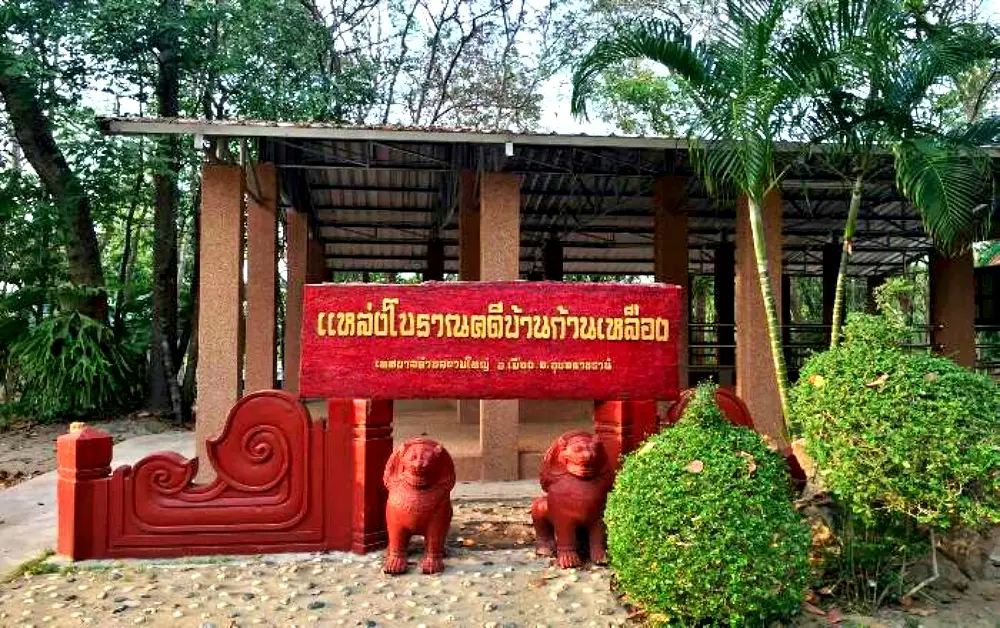
Ban Kan Lueang Open Museum in Ubon Ratchathani, also known as Ban Kan Lueang Archaeological Site Museum, is an important archaeological learning site located inside Wat Ban Kan Lueang in Kham Yai Subdistrict, Mueang Ubon Ratchathani District, Ubon Ratchathani Province. The site is distinctive because it preserves and displays an actual archaeological excavation pit in an open-air museum setting. Visitors can see large earthenware jars, pottery fragments, beads, bronze bells, iron axes, metal slag, rice husks and other archaeological evidence in a setting that remains closely connected to the original site. These finds reveal that Ban Kan Lueang was once an ancient community dating from the late prehistoric period into the early historic period, approximately 2,800 to 1,500 years ago.
This museum is an excellent place for travelers who want to understand the deeper history of Ubon Ratchathani before visiting the old city, major temples and cultural attractions. Ban Kan Lueang is not simply a place where old objects are displayed; it is a field-based archaeological site that allows visitors to imagine how ancient people lived, farmed, made tools, produced pottery and performed rituals related to death. The evidence found here connects agriculture, metallurgy, pottery production and belief systems in the Mun-Chi River basin. Although the site is modest in size, it carries great historical value for the study of southern Isan culture.
Ban Kan Lueang Archaeological Site is located on a large mound within Wat Ban Kan Lueang. The surrounding landscape belongs to the Mun River basin, with smaller waterways linked to Huai Wang Nong and the Mun River. This natural environment was important for ancient settlement because access to water supported rice cultivation, daily living, craft production and long-term community formation. Evidence such as rice husks, charcoal, burned clay and traces of metalworking helps explain how people lived here thousands of years ago. The site shows that ancient communities in this area were not temporary groups, but settled agricultural societies with technological knowledge and ritual life.
The name Ban Kan Lueang is linked to a local tree known as kan lueang, a hardwood tree with yellowish heartwood that once grew abundantly in the area. The name therefore preserves the memory of the original landscape before the area developed into a modern village, temple, road network and suburban community. Visiting the museum today is like entering a place where several layers of time overlap: the natural landscape of the past, the prehistoric community, the Buddhist temple, and the present-day learning centre maintained for public education.
The Fine Arts Department studied, surveyed and excavated the Ban Kan Lueang area during the 1990s after archaeological objects had been discovered and the site became vulnerable to damage from modern development, housing expansion and illegal digging. The area inside Wat Ban Kan Lueang became especially important because it still preserved archaeological deposits. The Fine Arts Department, local authorities and the temple worked together to study, conserve and present the excavation pit as an open-air museum. This allows visitors to see archaeological evidence in the landscape where it was found, rather than only viewing selected artefacts in a large indoor museum.
The most striking feature of the site is the excavation pit where large earthenware vessels remain displayed in their original context. These vessels are associated with secondary burial practices, a ritual tradition found at several late prehistoric archaeological sites in the Mun-Chi River basin. Although complete human skeletons were not found inside the vessels at Ban Kan Lueang, scientific examination of the soil inside the jars supported the interpretation that they were linked to decomposed human bone material. This makes the site important for understanding ancient beliefs about death, ancestors and the relationship between the living community and the deceased.
Secondary burial is a key theme in the interpretation of Ban Kan Lueang. It shows that ancient people in this region did not treat death as a simple end to life. They had ritual practices, social memory and a structured way of caring for the dead. Placing human remains or related materials inside large pottery vessels suggests a belief in ancestors and a meaningful connection between the dead and the living community. Seeing these vessels in an actual excavation pit gives visitors a powerful sense of how archaeology can reveal ancient belief systems through objects, soil and spatial arrangement.
Other finds from Ban Kan Lueang add more detail to the story. Glass beads, bronze bells, iron axes, metal fragments, slag from metal smelting, pottery tools, fired clay pieces and large quantities of pottery fragments indicate that this was a community with craft knowledge and technological skill. The people of Ban Kan Lueang knew how to work with metal, produce useful tools, make pottery and use different materials in daily life. The evidence of rice husks is equally important because it connects the site with early agriculture. Rice was not only food; it was the basis for settlement, social stability, craft specialization and ritual development.
The museum area includes a roofed structure that protects the excavation pit from rain and weather. Around the pit are interpretation panels in Thai and English, providing information on the archaeological finds, the cultural periods and the significance of the site. The displays are simple, but the strength of the site lies in its authenticity. Visitors can look directly into the excavation pit, observe the positions of the large pottery vessels and see how archaeological evidence remains connected to the land. This gives the museum a different character from a conventional indoor museum with glass cases and polished exhibition design.
Wat Ban Kan Lueang itself adds another layer of meaning to the visit. The archaeological pit stands within an active Buddhist temple, where local religious life continues alongside archaeological conservation. Important areas within the temple include the excavation shelter, the museum hall, the Ho Phra Bat Sawan building, monks’ residences, a small wooden sim and places for paying respect to Buddha images and revered monks. Wat Ban Kan Lueang is a local temple under the Maha Nikaya order, and Phra Khru Udom Sangkakit serves as the abbot. The place therefore combines living Buddhism, local community identity and ancient archaeology in one setting.
A visit to Ban Kan Lueang Open Museum is different from a visit to a large national museum. Travelers do not walk through air-conditioned galleries filled with elaborate displays. Instead, they enter a temple compound, walk to a roofed excavation area, read the interpretation panels and look into a real archaeological pit. The atmosphere is quiet, direct and local. This makes the site especially suitable for travelers who enjoy field-based history, local heritage and places where the past remains visible in the present landscape.
For families, students and educational groups, Ban Kan Lueang is a useful place to explain what archaeology means in practice. Archaeology is not only about finding old objects. It is about reading layers of soil, object positions, material remains, pottery forms and traces of human activity. Small pieces of evidence such as rice husks, metal slag or pottery fragments can reveal farming, technology, food, ritual and social organization. The site helps make ancient history easier to understand because visitors can see the relationship between objects, space and interpretation.
The site is also important as an example of archaeological conservation within a growing urban area. Parts of the wider Ban Kan Lueang archaeological area were damaged by modern settlement, construction and illegal digging, but the area inside the temple remained available for conservation and public display. Preserving this excavation pit protects a rare window into the deep past of Ubon Ratchathani. Even though the museum is small, it shows that important archaeological heritage can survive within a local temple and continue to serve the public as a learning site.
Visitors should behave respectfully because the museum is located within a temple and protects real archaeological evidence. It is important to stay within the visitor areas, avoid climbing over barriers, never touch or remove anything from the excavation area, dress politely and keep noise low. Photography is suitable for learning and travel documentation, especially images of the excavation shelter, interpretation panels and temple surroundings. The site is simple, but its value comes from the authenticity of the place and the archaeological evidence it preserves.
The best time to visit is in the morning or late afternoon because the site is open-air and Ubon Ratchathani can be hot during the middle of the day. Most visitors should allow about 45 minutes to 1 hour to read the information panels, view the excavation pit and walk around the nearby temple area. The museum can easily be combined with other cultural attractions in the city, such as Wat Phra That Nong Bua, Ubon Ratchathani National Museum, Thung Si Mueang, Wat Thung Si Mueang and Wat Maha Wanaram. Travelers interested in archaeology may want to visit Ban Kan Lueang first and then continue to the national museum for a broader view of the province’s cultural history.
Admission to Ban Kan Lueang Open Museum is free. The site is open daily from 06.00 to 18.00, making it easy to include in a half-day cultural route around Ubon Ratchathani. Visitors traveling in groups or seeking additional information can contact the listed local number or coordinate through Wat Ban Kan Lueang, Kham Yai Municipality and the agencies involved in the conservation of the archaeological site. Because the museum is located inside a temple, visitors should plan their visit with the same manners expected at Buddhist religious sites in Thailand.
Getting There is convenient from Ubon Ratchathani city centre. From the city, take Chayangkun Road northward past the Ubon Ratchathani Rajabhat University area for about 3.3 km. At the intersection with the bypass road, turn right onto Highway 231 and continue for about 1.5 km. Wat Ban Kan Lueang will be on the left-hand side. From Thung Si Mueang, travelers can use Upparat Road, continue onto Chayangkun Road and then connect to the bypass road. The total distance from Thung Si Mueang is about 6.5 km. Travelers without a private car can use a taxi, local hired vehicle or ride-hailing service from the city.
For travelers interested in history, Ban Kan Lueang Open Museum works well as the first stop in an archaeology-focused route. After seeing the actual excavation pit, visitors can continue to Ubon Ratchathani National Museum, where broader provincial history and major artefacts are presented in a more formal museum setting. Visiting both places helps create a fuller picture of Ubon Ratchathani: Ban Kan Lueang shows the field site and local archaeological context, while the national museum explains the wider history of the city and the province.
Ban Kan Lueang Open Museum is a valuable stop for travelers who want to go beyond ordinary sightseeing in Ubon Ratchathani. Within a small area inside Wat Ban Kan Lueang, the site preserves evidence of ancient people, pottery vessels, metal tools, beads, rice husks and a real excavation pit that remains connected to the original landscape. When visitors leave the excavation shelter and look back at the temple and surrounding community, they can see the continuity of life on the same land from the ancient past to the present. That continuity is the special character of Ban Kan Lueang: it is an open-air museum where archaeology remains part of a living community.
| Name | Ban Kan Lueang Open Museum / Ban Kan Lueang Archaeological Site Museum |
| Location | Wat Ban Kan Lueang, Kham Yai Subdistrict, Mueang Ubon Ratchathani District, Ubon Ratchathani Province |
| Address | Wat Ban Kan Lueang, Bypass-Trakan Road, Moo 3, Ban Kan Lueang, Kham Yai, Mueang Ubon Ratchathani, Ubon Ratchathani 34000, Thailand |
| Coordinates | 15.278368, 104.855330 |
| Highlights | An open-air archaeological museum displaying a real excavation pit with large earthenware jars, pottery fragments, beads, bronze bells, iron axes, metal slag and rice husk evidence |
| History | A late prehistoric to early historic archaeological site dating to around 2,800 – 1,500 years ago. The Fine Arts Department studied, surveyed and excavated the site during the 1990s before it was conserved and displayed as an open-air museum. |
| Name Origin | The name comes from kan lueang, a hardwood tree with yellowish heartwood that once grew abundantly in the area. |
| Distinctive Features | A field-based archaeological learning site where artefacts remain close to their original context, illustrating an ancient agricultural-metalworking community and secondary burial practice. |
| Travel Information | From Ubon Ratchathani city, take Chayangkun Road north for about 3.3 km, turn right onto Highway 231 at the bypass intersection, then continue for about 1.5 km. Wat Ban Kan Lueang is on the left. |
| Current Status | Open To Visitors As An Open-Air Museum Inside Wat Ban Kan Lueang |
| Open Days | Daily |
| Opening Hours | 06.00 – 18.00 |
| Fees | Free Admission |
| Facilities | Roofed excavation shelter, Thai and English interpretation panels, temple parking area, restrooms and Buddhist worship areas inside the temple |
| Main Areas / Zones | Roofed Archaeological Excavation Shelter Open Excavation Pit With Large Earthenware Vessels Thai And English Interpretation Panels Wat Ban Kan Lueang Museum Hall Ho Phra Bat Sawan Wooden Sim Of Wat Ban Kan Lueang Buddha Image And Worship Areas Inside The Temple |
| Caretaker | Wat Ban Kan Lueang, Kham Yai Municipality And The Fine Arts Department |
| Abbot | Phra Khru Udom Sangkakit |
| Main Contact Number | 081-265-0421 |
| Official Website / Official Page | Ban Kan Lueang archaeological information from the Fine Arts Department and Kham Yai Municipality |
| Nearby Tourist Attractions | 1. Wooden Sim Of Wat Ban Kan Lueang, About 0.1 km 2. Wat Phra That Nong Bua, About 4 km 3. Ubon Ratchathani Zoo, About 7 km 4. Ubon Ratchathani National Museum, About 6 km 5. Thung Si Mueang, About 7 km 6. Wat Thung Si Mueang, About 7 km |
| Nearby Restaurants | 1. A-Lon Papaya Salad 2, Ban Kan Lueang Branch, About 0.1 km, Tel. 084-515-2732 2. Isan Moo Kratha Ban Kan Lueang Market, About 0.2 km, Tel. 064-664-4462 3. Isan Zab Ver Kan Lueang Market, About 0.4 km, Tel. 063-390-6278 4. Nittaya Fresh Orange Juice Kan Lueang Market, About 0.4 km, Tel. 093-074-6815 5. Belgian Waffle Kan Lueang Market, About 0.4 km, Tel. 064-608-7405 6. Tam Sang Khot Saep Kham Yai, About 3 km, Tel. 092-767-2448, 094-534-6060 |
| Nearby Accommodations | 1. Tripper Hotel, About 3 km, Tel. 045-953-113 2. Chatsuree Boutique Resort, About 4 km, Tel. 095-562-6624 3. My Home Hostel, About 4 km, Tel. 062-191-1757 4. Preme Village, About 5 km, Tel. 093-498-3224 5. Kanghun Vintage Resort, About 7 km, Tel. 062-946-5954 6. Nichravee Resort Ubon Ratchathani, About 4 km |
Frequently Asked Questions (FAQ)
Q: Where is Ban Kan Lueang Open Museum located?
A: It is located inside Wat Ban Kan Lueang in Kham Yai Subdistrict, Mueang Ubon Ratchathani District, Ubon Ratchathani Province, along Highway 231.
Q: When is Ban Kan Lueang Open Museum open?
A: The museum is open daily from 06.00 to 18.00.
Q: Is there an admission fee?
A: No. Visitors can enter the archaeological excavation area free of charge.
Q: What can visitors see at Ban Kan Lueang Open Museum?
A: Visitors can see an archaeological excavation pit, large earthenware vessels, pottery fragments, beads, bronze bells, iron axes, rice husk evidence, Thai and English interpretation panels, and important areas inside Wat Ban Kan Lueang.
Q: How old is Ban Kan Lueang Archaeological Site?
A: The site dates to around 2,800 to 1,500 years ago, from the late prehistoric period into the early historic period.
Q: Who should visit this museum?
A: It is suitable for general travelers, families, students, archaeology enthusiasts, history lovers and visitors who want to understand the deeper cultural background of Ubon Ratchathani.
Q: How do travelers get to Ban Kan Lueang Open Museum?
A: From Ubon Ratchathani city, take Chayangkun Road north, turn right onto Highway 231 at the bypass intersection, and continue for about 1.5 km. Wat Ban Kan Lueang is on the left.
Q: What nearby attractions can be visited after Ban Kan Lueang Open Museum?
A: Nearby attractions include Wat Phra That Nong Bua, Ubon Ratchathani Zoo, Ubon Ratchathani National Museum, Thung Si Mueang and Wat Thung Si Mueang.
 Category: ●Art, Culture and Heritage
 Group: ●Museums
Last Update : 6 DayAgo
 Last Update : 6 DayAgo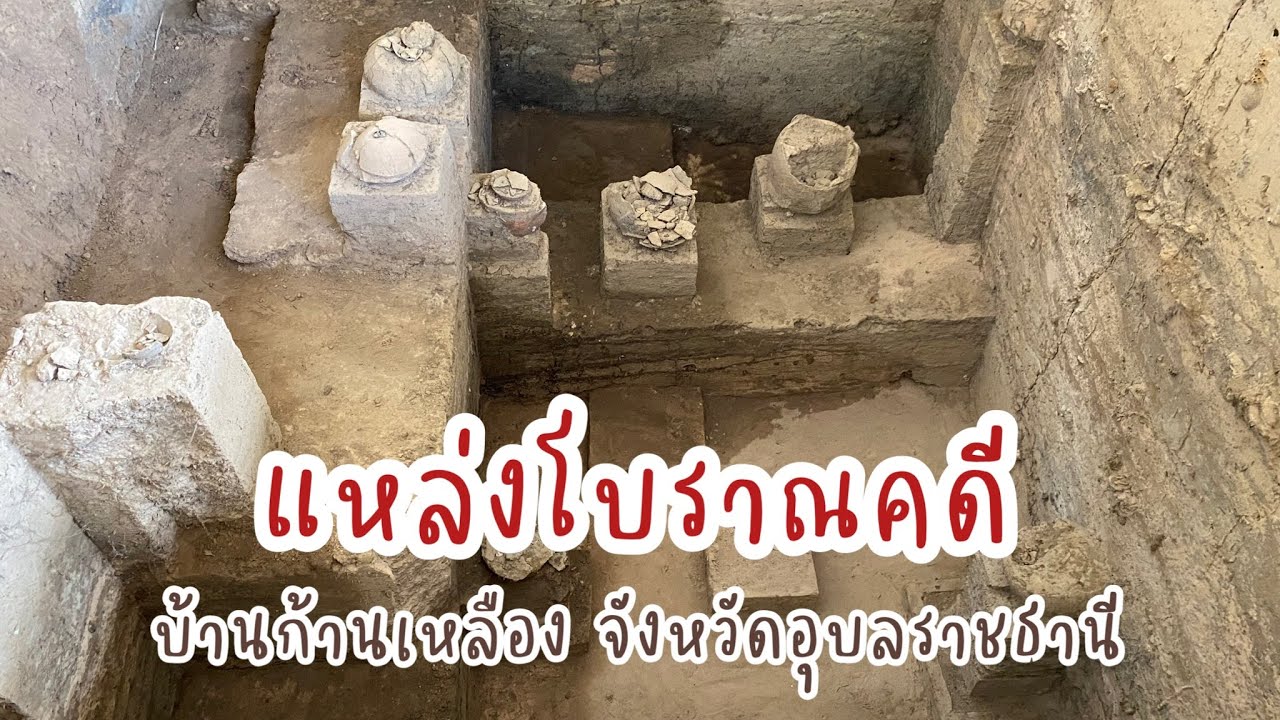
 Click to Access the Navigation Map GPS
Ban Kan Lueang Open Museum Map
Recommend

 Historical Sites and Monuments(5)
 Landmarks and Memorials(2)
 Royal Palace(1)
 Art, Craft Centres, Tradition(7)
Museums(3)
Art, Craft Centres, Tradition(7)
Museums(3)
 Places of Worship
 Temple(37)
 Other Sacred Sites(4)
 Research and Development
 Royal Project(2)
 Suburban Living
 Village, Community(2)
 Local Market(4)
 Nature and Wildlife
 National Parks and Marine Reserves(5)
 Mountain (Doi)(6)
 Dam, Reservoir, Lake(8)
 Waterfalls(12)
 Hot Springs(1)
 Caves(2)
 River, Canal(11)
 Bays and Beaches(8)
 Islands(2)
 Other natural attractions(6)
 Entertainment and Agricultural
 Zoos and Aquariums(1)
 Animal camps and shows(1)
 Farms, Parks and Ecotourism(1)


