
lovethailand home >Northeastern Travel Attractions >Surin Travel Attractions >Muang Surin >Tha Sawang > Chan Soma Gold Brocade Silk Weaving Village
TL;DR: Chan Soma Gold Brocade Silk Weaving Village is located at Ban Tha Sawang, Moo 1, Tha Sawang Subdistrict, Mueang Surin District, Surin Province 32000, open Daily, hours 08.00 – 17.00.

Chan Soma Gold Brocade Silk Weaving Village
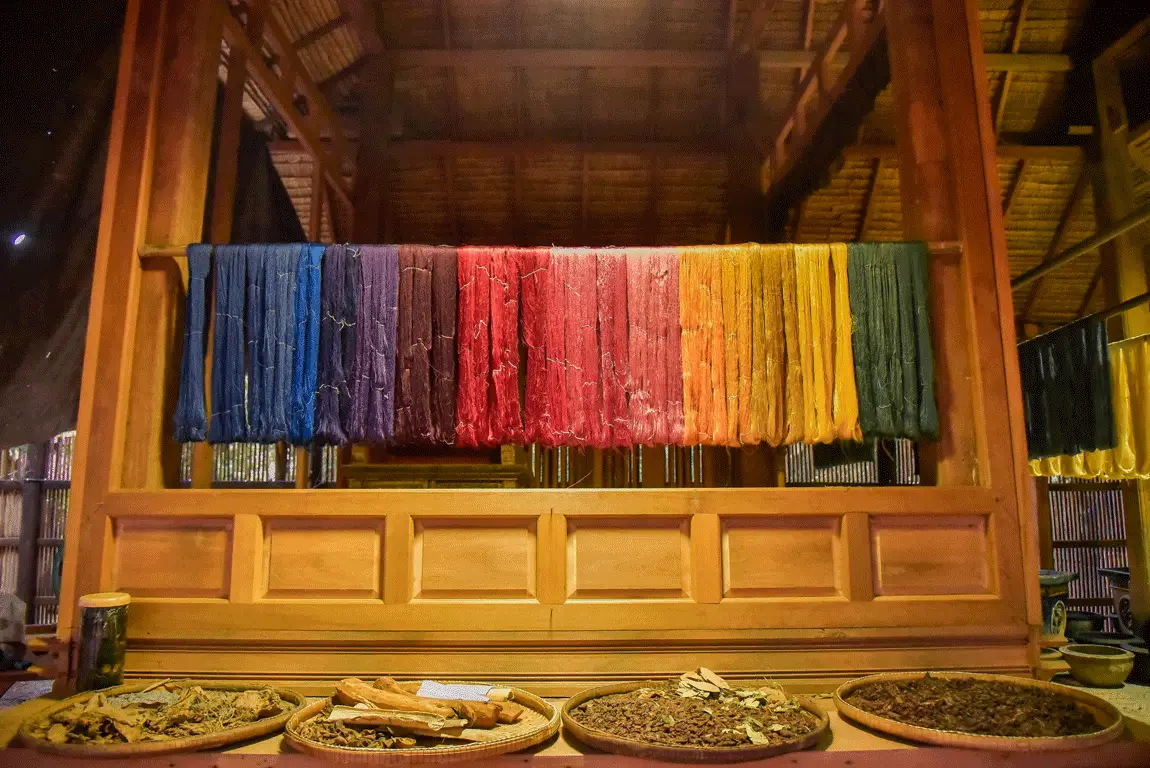
Open Days: Daily
Opening Hours: 08.00 – 17.00
Chan Soma Gold Brocade Silk Weaving Village Surin, also known as Ban Tha Sawang Ancient Gold Brocade Silk Weaving Village, is one of the most important high-level silk craft destinations in Surin Province. Located in Ban Tha Sawang, Moo 1, Tha Sawang Subdistrict, Mueang Surin District, the village is internationally known for preserving and reviving the royal Thai tradition of gold brocade silk weaving. Its most celebrated identity is the extraordinary weaving technique involving 1,416 heddles, a level of complexity that makes the village one of Thailand’s most remarkable living textile communities. This is not simply a place to buy silk. It is a living school of design, natural dyeing, gold-thread brocade, handloom engineering, and collective artisan skill.
Ban Tha Sawang was originally a rural farming community where villagers worked in the fields and wove silk during free time from agricultural duties. The foundation of the village craft came from local weaving wisdom, family transmission, and the long relationship between Surin people and silk. When the Chan Soma Gold Brocade Silk Weaving Group was formed, this local wisdom developed into a highly refined form of textile art. Traditional village techniques were combined with the revival of royal Thai court brocade weaving, creating silk that is at once local, ceremonial, artistic, and nationally significant.
The rise of Ban Tha Sawang is closely connected with Master Weeratham Trakul-ngernthai, the key figure behind Chan Soma. Born and raised in a community of silk weavers, he absorbed the knowledge of thread, color, looms, rhythm, and hand skill from early life. His background in Thai art and traditional design allowed him to bring royal court motifs, Thai decorative principles, and advanced brocade structures into dialogue with the village weaving techniques of Ban Tha Sawang. The result is a form of silk that is visually majestic, technically complex, and deeply rooted in community craftsmanship.
The importance of Chan Soma lies in its conservation and revival of ancient royal Thai gold brocade silk. This type of textile requires knowledge far beyond ordinary weaving. Artisans must understand fabric structure, Thai motifs, natural dyes, fine silk preparation, supplementary weft techniques, and the use of gold thread. Gold brocade silk is not woven with simple repeated patterns. Its designs rise above the ground cloth through special weft threads and a complex heddle system. The greater the number of heddles, the more detailed the pattern and the more precise the teamwork required.
The phrase “1,416 heddles” has become a symbol of Ban Tha Sawang’s technical mastery. Heddles control the lifting of silk threads according to the design structure. When the number of heddles becomes extremely high, weaving cannot be done by one person in the ordinary way. Several assistants must work together to lift heddles, insert wooden rods, control sequence, and coordinate with the main weaver. One piece of fabric is therefore the result of collective skill, discipline, patience, and rhythm shared by several people working as one team.
The quality of Chan Soma silk begins with the selection of fine “mai noi” silk thread. This fine silk is small, lightweight, soft, and suitable for delicate brocade structures. The silk must be carefully cleaned, boiled, prepared, dyed, and arranged before weaving. Fine silk allows the final fabric to remain elegant without becoming too heavy, even when gold thread and complex patterns are added. The completed textile has softness, shine, structure, and refinement in balanced proportion.
Natural dyeing is one of the most important features of Ban Tha Sawang silk. The main traditional colors are red from lac, yellow from kaelae heartwood, and indigo blue from indigo. These natural colors are deep, calm, refined, and different from flat industrial color. Natural dyeing requires experience in controlling concentration, temperature, timing, washing, and drying. Red from lac gives warmth and dignity, yellow from kaelae gives gentle brightness, and indigo gives depth and serenity. Together, these colors create the old-style character associated with high-quality Surin silk.
The gold thread used in Chan Soma brocade is another crucial element. It is made by rolling real silver into very fine strips and twisting it together with thread for use as a supplementary weft. This gives the fabric a subtle golden shimmer rather than a harsh metallic shine. The use of precious metal requires careful handling throughout the weaving process because the material is valuable and delicate. The final effect is dignified, ceremonial, and luminous under light.
The loom used for Chan Soma gold brocade is not an ordinary village loom. Because the heddle system is so long and complex, the space beneath the loom must be adapted to support the hanging heddles. In some cases, the earth under the loom is dug into a pit 2 to 3 meters deep so that the heddles can hang in proper order and assistants can stand or work below to insert the correct wooden rods. This deep loom-pit system is one of the most striking features of Ban Tha Sawang and gives visitors a direct view of how extraordinary the weaving process is.
One piece of gold brocade silk may require 4 to 5 people working together. There may be 2 to 3 assistants lifting heddles, one person inserting rods, and one main weaver controlling the weaving rhythm. All must coordinate precisely. If one movement falls out of sequence, the pattern may shift and the mistake can be difficult to correct. This is why production is slow. In one day, the fabric may advance only a few centimeters. Yet every centimeter carries concentration, discipline, and accumulated skill.
The refinement of Chan Soma gold brocade distinguishes it clearly from ordinary silk. Each piece requires planning, pattern calculation, silk preparation, color control, heddle sequencing, team coordination, and long weaving time. Its beauty lies not only in visible motifs, but also in the hidden structure behind the fabric. Looking closely, visitors can see the density of the silk, the order of the pattern, the clarity of the supplementary brocade, and the delicate glow of the gold thread.
The work that made Ban Tha Sawang nationally and internationally famous was its selection by the Thai government to weave silk for shirts for leaders and shawls for spouses of leaders from 21 economies attending the APEC Leaders’ Meeting in late 2003. This achievement made Ban Tha Sawang widely known as the “APEC silk weaving village.” It also showed that local community craftsmanship could represent Thailand on an international stage with dignity and excellence.
The APEC silk project was more than a production assignment. It brought community wisdom into global visibility. A textile woven in Ban Tha Sawang became a cultural representative of Thai artistry, Surin silk heritage, and the extraordinary ability of local Thai artisans. The event changed the way many people viewed Surin silk. It was no longer seen only as a local souvenir, but as a world-class craft with artistic and cultural value.
Chan Soma has also been recognized as a leading OTOP 5-star product and as a craft-based tourism community. Visitors can explore the Thai-style house, the weaving workshop, silk displays, museum-style collections, and product sales areas. A visit is therefore not limited to shopping. It is a direct encounter with looms, silk threads, natural color, gold-thread brocade, traditional Thai design, and living artisans.
Important areas within Ban Tha Sawang include Ban Chan Soma, where visitors can observe gold brocade weaving techniques inside a traditional Thai house. The workshop allows visitors to see special looms, complex heddles, and silk products of different levels. There are also other community weaving groups, including Sala Thai weaving areas and women’s silk groups, offering both high-level brocade and more accessible local silk products. This variety makes the village suitable for collectors, designers, students, general travelers, and silk lovers.
One of the benefits of visiting Ban Tha Sawang is seeing different levels of silk in one community. Chan Soma gold brocade is a high-level craft that requires advanced techniques and long production time. Other community products may include matmi silk, plain weave silk, scarves, shawls, sarong cloth, tailoring silk, and processed silk items suitable as gifts. This range allows visitors to appreciate both museum-level craft and practical silk products made by local artisans.
The patterns of Chan Soma silk combine royal Thai design with local weaving skill. Many patterns convey dignity, sacredness, order, and elegance. Thai decorative lines are arranged across the fabric in carefully balanced compositions. The result is textile that can be used for formal ceremonies, important occasions, high-level clothing, or cultural collections. These pieces function as both fabric and art.
From a cultural perspective, Ban Tha Sawang also reveals the relationship between women, family knowledge, and textile craft. Many weaving skills are learned gradually at home. Younger people may begin by helping elders prepare silk, wind thread, arrange the loom, or watch the weaving rhythm before becoming skilled weavers themselves. This kind of learning keeps craft knowledge alive in daily community life rather than separating it into formal institutions alone.
Ban Tha Sawang also represents a strong community economy. Many villagers maintain agriculture as their main livelihood, while silk weaving creates supplementary income and local pride. The sale of silk, craft demonstrations, group visits, and cultural tourism help income circulate within the community. Silk therefore preserves heritage and supports local economic resilience at the same time.
A visit to Chan Soma is suitable for travelers interested in Thai silk, textile design, high-level craft, community wisdom, Surin culture, and traditional Thai art. General visitors may spend around 1 to 2 hours seeing the workshop and shopping. Study groups or serious textile learners should allow 2 to 3 hours to observe the loom, listen to explanations, examine fabric details, and understand the full structure of the work.
There is no admission fee for ordinary visits. Visitors may enter, observe, and purchase silk products during opening hours. Costs depend on product purchases or pre-arranged group activities. Silk prices vary according to silk type, pattern complexity, amount of gold thread, size, technique, and production time. High-level gold brocade silk has high value because it requires rare skill, expensive materials, and long labor.
When choosing silk, visitors should consider texture, color, motif balance, edge finishing, weave density, and intended use. Formal garments require suitable length and color. Scarves and shawls are practical gifts. High-level brocade pieces are suitable for ceremonial use or collection. Buying directly from the community gives visitors the chance to learn the story of the cloth and support the artisans who made it.
Gold brocade silk should be cared for carefully. Hand-washing should be gentle, using mild detergent. Avoid strong rubbing, long soaking, bleach, and direct harsh sunlight. Brocade pieces with gold thread should be stored in a dry, well-ventilated place and wrapped in clean cotton cloth. If ironing is needed, use low heat and a protective cloth. Proper care allows silk to retain its beauty and become a family heirloom.
Visitors should behave respectfully in the weaving area. Ask permission before photographing people or looms. Do not touch silk threads, heddles, wooden rods, or unfinished cloth without permission. Do not enter private household areas. Speak quietly around working artisans. At this level of weaving, concentration is essential, and even a small disturbance can affect work that may have taken weeks or months to create.
Getting There to Chan Soma Gold Brocade Silk Weaving Village is most convenient by private car, rental car, or chartered vehicle. From Surin city, take Rural Road SR 4026 or the Ko Loi – Mueang Ling route toward Ban Tha Sawang. The distance is about 10 km, and the road is paved throughout. The village is close enough for a half-day trip from Surin city and can be combined with other craft and cultural attractions.
Visitors using navigation should search for “Ban Tha Sawang Ancient Gold Brocade Silk Weaving Village,” “Ban Chan Soma,” or “Chan Soma Gold Brocade Silk Weaving Group, Ban Tha Sawang.” Since Surin has many silk weaving villages, including the name Tha Sawang, Tha Sawang Subdistrict, and Mueang Surin District helps avoid confusion. Groups planning a study visit should coordinate in advance.
A well-balanced route can begin at Ban Tha Sawang in the morning, followed by Surin city attractions such as Surin City Pillar Shrine, Wat Burapharam, Phraya Surin Phakdi Si Narong Changwang Monument, and Surin National Museum. Travelers can also combine the visit with Ban Butom Basketry Village or other textile communities. This route gives a broad understanding of Surin through silk, belief, history, and local craft.
Restaurants near Ban Tha Sawang include small local options along the community route and more varied dining choices in Surin city. Since the village is only about 10 km from the city, visitors can return to town for Thai, Isan, Vietnamese, café, and hotel-restaurant options. Groups should plan meals in advance if they need a restaurant with enough seating.
Accommodation for visiting Ban Tha Sawang is best found in Surin city. The village is close to the city, and staying in town gives convenient access to restaurants, markets, hotels, the railway station, Surin City Pillar Shrine, Wat Burapharam, and transport services. Travelers arriving by train or bus can stay in central Surin and arrange a short ride to the village.
For international visitors, Chan Soma offers a deep introduction to Thai textile culture. Thai silk here is not simply a beautiful product in a shop. It is a complete knowledge system involving fine silk selection, natural dyeing, Thai pattern design, heddle engineering, team weaving, gold-thread brocade, and intergenerational craft transmission. A single piece of gold brocade silk is therefore an artwork, a cultural document, and evidence of extraordinary patience.
International visitors should observe with care and curiosity. Gold brocade silk should not be viewed only as an expensive souvenir, but as a sophisticated craft comparable to high art. Seeing the loom, the number of people involved, and the slow progress of weaving helps visitors understand why Chan Soma silk has such high cultural and material value. The village is suitable for textile lovers, designers, students, collectors, craft entrepreneurs, and travelers who want to understand Thailand through living craftsmanship.
Overall, Chan Soma Gold Brocade Silk Weaving Village is more than a community attraction. It is a living preservation site for royal Thai brocade weaving, a working craft village, a cultural learning center, and a symbol of Surin’s textile excellence. It connects the past with the present, royal patterns with local skill, and a small Surin village with the global stage through the power of handmade silk.
In summary, Chan Soma Gold Brocade Silk Weaving Village Surin, or Ban Tha Sawang Ancient Gold Brocade Silk Weaving Village, is one of Thailand’s most important silk craft destinations. Located in Tha Sawang Subdistrict, Mueang Surin District, about 10 km from Surin city, it is open daily with no general admission fee. Its highlights include royal Thai-style gold brocade weaving, fine mai noi silk, natural dyes, gold thread, complex heddle systems, team weaving, APEC silk heritage from 2003, and the leadership of Master Weeratham Trakul-ngernthai. A visit here offers a complete view of Surin silk through history, technique, beauty, and living community culture.
| Name | Chan Soma Gold Brocade Silk Weaving Village Surin / Ban Tha Sawang Ancient Gold Brocade Silk Weaving Village / Ban Chan Soma |
| Location | Ban Tha Sawang, Moo 1, Tha Sawang Subdistrict, Mueang Surin District, Surin Province 32000 |
| Address | Chan Soma Gold Brocade Silk Weaving Group, Ban Tha Sawang, Moo 1, Tha Sawang Subdistrict, Mueang Surin District, Surin Province 32000 |
| Highlights | Royal Thai-style gold brocade silk, 1,416-heddle weaving, APEC silk in 2003, Chan Soma weaving group, Master Weeratham Trakul-ngernthai, large traditional looms, natural dyes, gold thread from real silver, and OTOP silk craft village |
| History | Ban Tha Sawang was a farming and silk-weaving community. Master Weeratham Trakul-ngernthai later gathered local weavers and revived royal Thai gold brocade weaving through the Chan Soma group. The village became famous after weaving silk for leaders and spouses of leaders from 21 APEC economies in 2003 |
| Name Origin | Chan Soma is the name of the gold brocade silk weaving group that revived high-level royal Thai brocade weaving, while Ban Tha Sawang is the village base of the artisans and the craft learning site |
| Distinctive Features | The group uses fine mai noi silk, natural dyes from lac, kaelae heartwood, and indigo, supplementary gold thread made from real silver, a complex heddle system, and a team of 4 – 5 artisans working together on each piece |
| Travel Information | From Surin city, take Rural Road SR 4026 or the Ko Loi – Mueang Ling route to Ban Tha Sawang. The distance is about 10 km on a paved road. Private cars, rental cars, and chartered vans are convenient options |
| Current Status | Open for cultural visits, gold brocade silk learning, silk product purchases, and community craft study. It remains one of Surin’s key craft tourism destinations |
| Open Days | Daily |
| Opening Hours | 08.00 – 17.00 |
| Fees | No Admission Fee For Ordinary Visits. Costs Depend On Silk Purchases Or Pre-Arranged Group Activities |
| Facilities | Gold brocade weaving workshop, traditional Thai house, silk display area, product sales area, loom observation area, demonstration area when arranged in advance, local parking, toilets, and basic community services |
| Main Areas / Zones | 1. Ban Chan Soma And Traditional Thai House 2. Royal Thai-Style Gold Brocade Silk Workshop 3. 1,416-Heddle Loom And Loom-Pit Area 4. Silk Preparation, Boiling, And Natural Dyeing Area 5. Gold Thread And Brocade Learning Area 6. Ancient Silk And Craft Collection Area 7. Chan Soma Silk Product Display And Sales Area 8. Sala Thai Weaving Group Area 9. Ban Tha Sawang Women’s Silk Group And Community Market 10. Ban Tha Sawang Community Route And Homestay Area |
| Important Products | Gold brocade silk, matmi silk, raised-pattern silk, shawls, scarves, tailoring silk, sarong cloth, pha sin, processed silk products, and ceremonial or collectible silk pieces |
| Silk Care | Hand-wash gently with mild detergent, avoid strong rubbing and bleach, do not soak for too long, dry in shade with airflow, store in a dry place, and iron with low heat through a protective cloth |
| Community Traditions / Lifestyle | Farming and weaving during free time, family-based craft transmission, natural dyeing, gold brocade silk for ceremonial use, silk in merit-making and auspicious events, and community-based craft tourism |
| Caretaker / Community Group | Chan Soma Gold Brocade Silk Weaving Group, with Master Weeratham Trakul-ngernthai as the key figure in conserving and reviving royal Thai-style gold brocade silk weaving |
| Group / Community Contact | Chan Soma Gold Brocade Silk Weaving Group, Tel. 087-509-9507 |
| Tourism Information Contact | Tourism Authority of Thailand, Surin Office, Tel. 044-514-447, 044-514-448 |
| Nearby Tourist Attractions | 1. Khwao Sinarin Silver Handicraft Village, about 8 km 2. Surin City Pillar Shrine, about 10 km 3. Wat Burapharam Royal Temple, about 10 km 4. Phraya Surin Phakdi Si Narong Changwang Monument, about 11 km 5. Surin Railway Station And City Market Area, about 11 km 6. Surin National Museum, about 15 km, Tel. 044-513-272, 044-513-274 7. Ban Butom Basketry Village, Mueang Thi Subdistrict, about 18 km 8. Huai Saneng Reservoir, about 18 km 9. Sikhoraphum Sanctuary, Sikhoraphum District, about 40 km |
| Nearby Restaurants | 1. Five Star PTT Tha Sawang, about 3 km, Tel. 082-998-3765 2. Cook Tha Sawang, Liap Khlong Weerawat, about 6 km, Tel. 098-416-7319 3. Starbeam Restaurant, Mueang Surin District, about 10 km, Tel. 044-519-629, 086-877-4447 4. Sawasdee Surin On Sirirat Road, about 10 km, Tel. 085-637-7707 5. Kon Khmer Namnueng Surin, about 10 km, Tel. 083-385-5599, 086-497-7958 6. Big Bite Restaurant At Thong Tarin Hotel, about 11 km, Tel. 088-103-2383 |
| Nearby Accommodations | 1. HOP INN Surin, about 10 km, Tel. 065-518-9784 2. The Lion Residence Surin, about 10 km, Tel. 044-062-502 3. Maneerote Hotel Surin, about 10 km, Tel. 044-514-569 4. The Wood Surin, about 11 km, Tel. 063-023-7999 5. Thong Tarin Hotel, about 11 km, Tel. 044-514-281, 085-300-8858 6. Sorin Boutique Hotel, about 11 km, Tel. 044-060-188 7. Slive Hotel Surin, about 12 km, Tel. 044-060-322, 044-060-323 |
Frequently Asked Questions (FAQ)
Q: Where Is Chan Soma Gold Brocade Silk Weaving Village Located?
A: Chan Soma Gold Brocade Silk Weaving Village is located in Ban Tha Sawang, Moo 1, Tha Sawang Subdistrict, Mueang Surin District, Surin Province, about 10 km from Surin city via Rural Road SR 4026 or the Ko Loi – Mueang Ling route.
Q: When Is Chan Soma Gold Brocade Silk Weaving Village Open?
A: The village is open daily from 08.00 to 17.00.
Q: Is There An Admission Fee?
A: No. There is no admission fee for ordinary visits. Costs depend on silk purchases or pre-arranged group activities.
Q: What Is The Main Highlight Of Chan Soma Gold Brocade Silk?
A: The main highlight is royal Thai-style gold brocade silk weaving using fine mai noi silk, natural dyes, gold thread made from real silver, and a complex heddle system. The village is especially known for its 1,416-heddle weaving achievement.
Q: Who Is The Key Figure Behind Chan Soma?
A: Master Weeratham Trakul-ngernthai is the key figure behind Chan Soma and the person who gathered Ban Tha Sawang villagers to revive and preserve high-level royal Thai gold brocade weaving.
Q: Why Is Ban Tha Sawang Called The APEC Silk Weaving Village?
A: The village became widely known as the APEC silk weaving village after Chan Soma was selected to weave silk for leaders and spouses of leaders from 21 economies attending the APEC Leaders’ Meeting in 2003.
Q: What Nearby Places Can Be Visited With Chan Soma Gold Brocade Silk Weaving Village?
A: Nearby places include Khwao Sinarin Silver Handicraft Village, Surin City Pillar Shrine, Wat Burapharam, Phraya Surin Phakdi Si Narong Changwang Monument, Surin National Museum, Ban Butom Basketry Village, Huai Saneng Reservoir, and Sikhoraphum Sanctuary.
Q: How Should Visitors Prepare For A Visit?
A: Visitors should dress modestly, ask permission before photographing people or looms, avoid touching silk threads, heddles, wooden rods, or unfinished cloth without permission, and contact the group in advance for study visits or group demonstrations.
 Category: ●Suburban Living
 Group: ●Village, Community
Last Update : 3 MonthAgo
 Last Update : 3 MonthAgo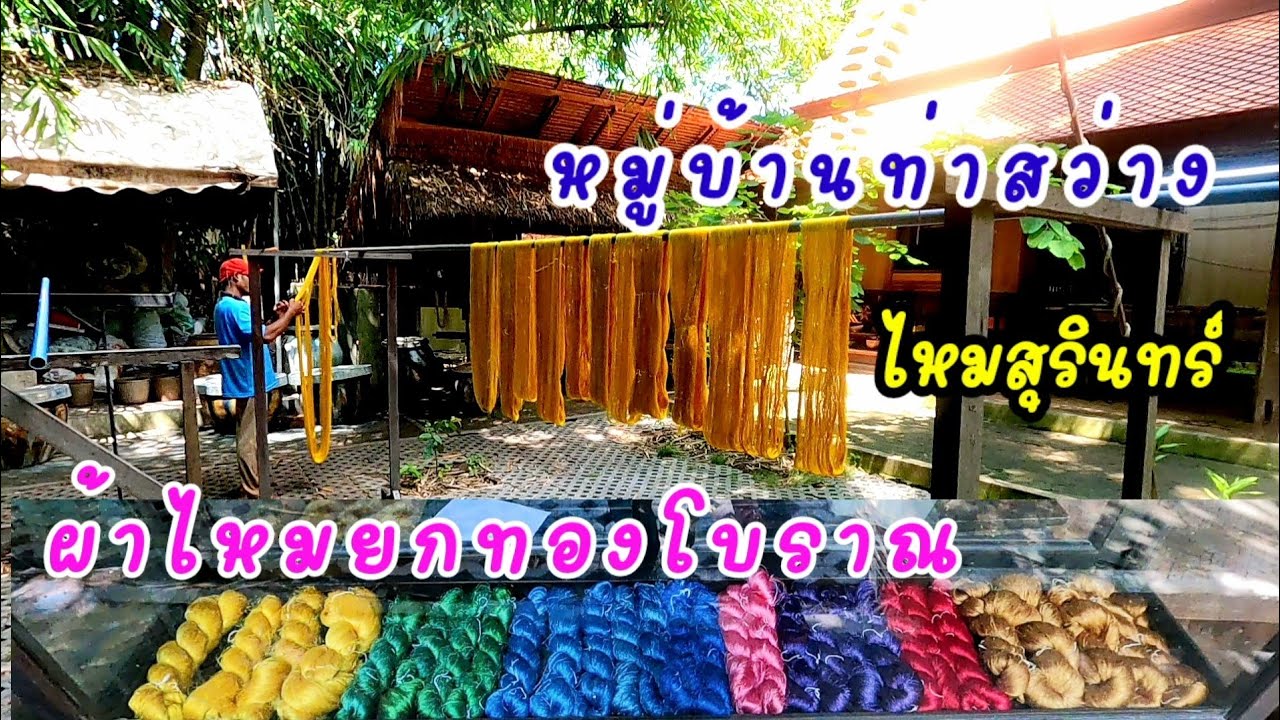
 Click to Access the Navigation Map GPS
Chan Soma Gold Brocade Silk Weaving Village Map
Recommend

 Art, Culture and Heritage
 Historical Sites and Monuments(11)
 Landmarks and Memorials(2)
 Art, Craft Centres, Tradition(5)
 Museums(1)
 Places of Worship
 Temple(15)
 Other Sacred Sites(1)
Village, Community(9)
Other Sacred Sites(1)
Village, Community(9)
 Local Market(1)
 Nature and Wildlife
 National Parks and Marine Reserves(2)
 Mountain (Doi)(2)
 Dam, Reservoir, Lake(6)
 Waterfalls(1)
 River, Canal(2)
 Other natural attractions(4)
 Entertainment and Agricultural
 Animal camps and shows(1)
 Farms, Parks and Ecotourism(2)
 Travel Articles, Recipes
 Travel Review, Food Review(1)


