
lovethailand home >Northeastern Travel Attractions >Si Sa Ket Travel Attractions >Muang Si Sa Ket >Pho > Chalermkarnchana University
TL;DR: Chalermkarnchana University, open Tuesday – Sunday (Office of Registration and Evaluation, According to the, hours 09:00 – 12:00 and 13:00 – 16:30 (Office of Registration and Evaluation).

Chalermkarnchana University
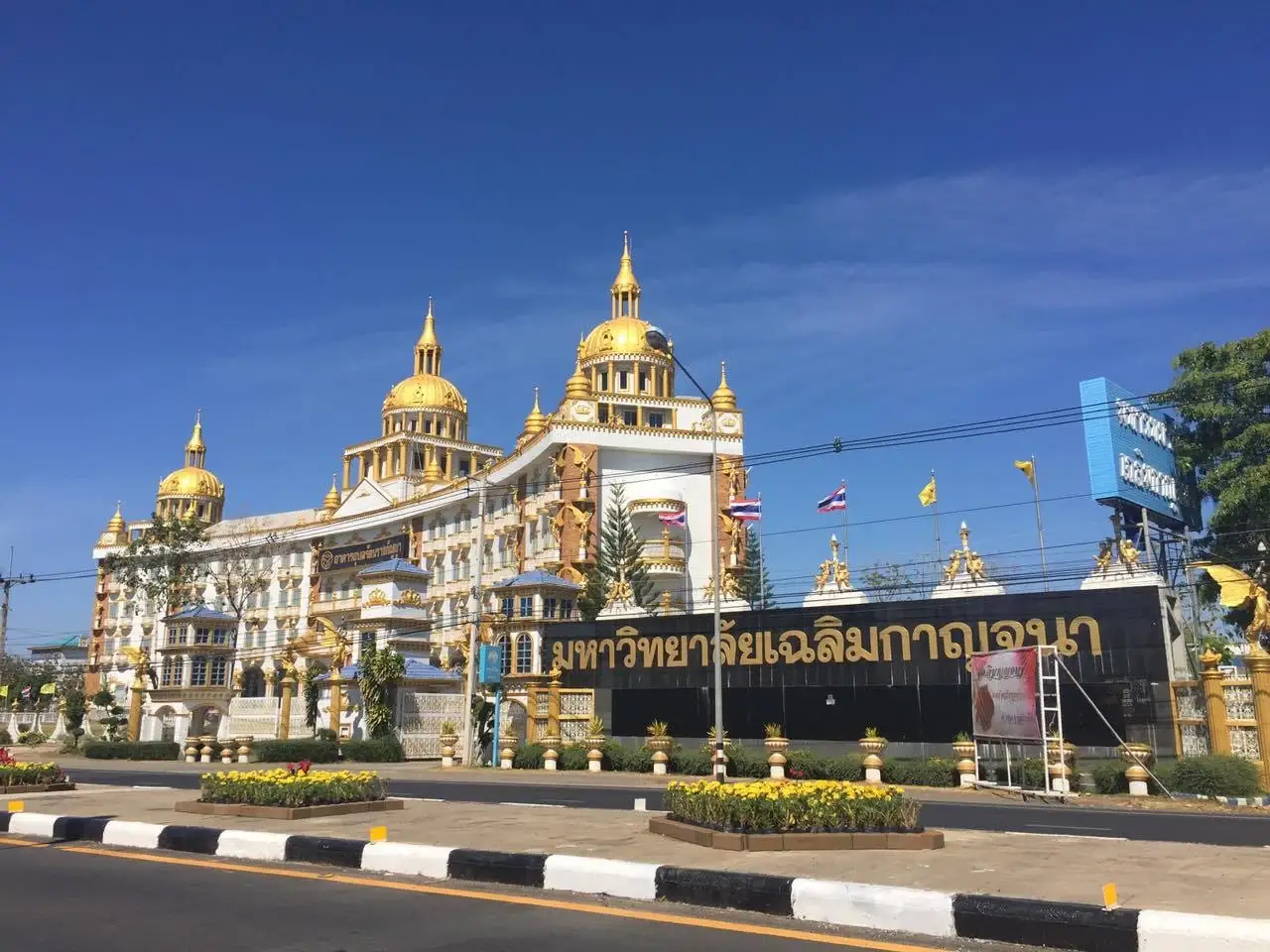
Open Days: Tuesday – Sunday (Office of Registration and Evaluation, According to the University's Published Handbook)
Opening Hours: 09:00 – 12:00 and 13:00 – 16:30 (Office of Registration and Evaluation)
Chalermkarnchana University (มหาวิทยาลัยเฉลิมกาญจนา) is a private higher education institution in Thailand, with its main location at 99 Moo 6, Si Sa Ket–Ubon Ratchathani Road, Pho Subdistrict, Mueang Si Sa Ket District, Si Sa Ket Province. Originally established as Chalermkarnchana College on September 7, 2004, the institution received permission to change its status to a university on January 14, 2014. It is particularly associated with career-oriented higher education, including nursing, public health, traditional Thai medicine, law, political science, and business administration. The university also maintains an educational network involving locations in several regions of Thailand. Guided by its philosophy, "Building a Future of Excellence," the institution emphasizes academic knowledge, professional competence, interpersonal skills, ethical conduct, and social responsibility.
Chalermkarnchana University occupies an important position in expanding access to private higher education for students in Si Sa Ket and other regions of Thailand. Its establishment reflected increasing demand for diverse university-level educational opportunities, particularly among students seeking professional qualifications, secondary school graduates considering further study, and working adults wishing to improve their knowledge or develop new career paths.
The development of higher education in Si Sa Ket has been closely connected with the province's changing social and economic conditions. The province includes urban communities, agricultural districts, businesses, and numerous government agencies. These sectors require personnel with qualifications in healthcare, administration, law, and other professional disciplines. The availability of a local private university therefore provides another educational option for people who would otherwise need to travel to larger cities to pursue higher education.
The university's main campus is situated in Pho Subdistrict along the route connecting Si Sa Ket and Ubon Ratchathani. Highway 226 provides an important road connection to the area. The campus is distinguished by white-and-gold academic buildings, some featuring prominent domes and elaborate decorative elements. Their appearance makes the campus visually different from many conventional educational buildings in Thailand.
One of the most recognizable architectural features of Chalermkarnchana University is its use of white facades with gold ornamentation and domed roof structures. The buildings create a distinctive institutional image that corresponds with the university's crown emblem. The architecture expresses themes of dignity, achievement, and educational excellence, giving the campus a recognizable character.
The institution's history began on September 7, 2004, when it was established as Chalermkarnchana College, a private higher education institution. Its founding purpose was to develop qualified graduates with academic and professional skills, moral integrity, and responsibility toward society. During its early years, the college concentrated on programs related to practical employment needs and professional development.
The educational philosophy behind the college's establishment placed importance on the wider development of students rather than academic qualifications alone. Its objectives included professional competence, analytical thinking, communication, teamwork, interpersonal relationships, and ethical behavior. These ideas became important foundations of the institution's identity and its approach to graduate development.
Important figures in its early administration included Professor Dr. Wichit Srisa-an, who served as chairman of the university council during the institution's formative period, and Dr. Sucheeraporn Thuwanon, the license holder and president. Their leadership was associated with the development of the institution's academic structure, administration, staffing, facilities, and educational opportunities.
Professor Dr. Wichit Srisa-an was a prominent figure in Thai higher education with extensive experience in university administration and educational development. His position as council chairman connected the institution's early development with expertise in academic governance and organizational planning. Dr. Sucheeraporn Thuwanon played a significant role in directing institutional operations and expanding access to educational programs for students in different regions.
During the 2004 academic year, Chalermkarnchana College began offering undergraduate programs in law, administration, business computing, and accounting. Some of these early programs included both standard and continuing-degree formats. The subjects reflected the need for professionally trained personnel in legal services, business operations, financial management, and organizational administration.
In the 2005 academic year, the institution expanded its teaching activities to include management, political science, and communication arts. It also developed graduate-level education in fields related to educational administration. This expansion marked an important stage in its development from a college focused on business and legal education toward a broader institution serving additional academic and professional fields.
The 2006 academic year was especially important because the institution introduced the Bachelor of Nursing Science program and expanded its postgraduate education. Nursing marked a significant development into health sciences, a field requiring theoretical understanding, practical clinical skills, professional standards, and ethical responsibilities toward patients and the wider community.
The addition of nursing education influenced the university's subsequent academic direction. Health sciences became an increasingly important part of its educational profile. Nursing programs require cooperation among academic lecturers, healthcare professionals, hospitals, and related organizations to provide appropriate learning and clinical training opportunities. Such programs must prepare students to make decisions, communicate effectively, and provide safe care in professional environments.
Public health education followed in the 2007 academic year, and by 2010 the institution had expanded into occupational health and safety, together with postgraduate study related to public health administration. This progression reflected growing demand for qualified personnel capable of contributing to community health, disease prevention, workplace safety, and health-related administration.
January 14, 2014, marked a major milestone when Chalermkarnchana College received permission to change its institutional category to Chalermkarnchana University. This transition took place within Thailand's legal framework governing private higher education institutions. University status represented an important change in the institution's formal identity and reflected the development of its academic organization and range of disciplines.
Two dates are therefore particularly important when examining the university's history. September 7, 2004, marks the founding of the original institution, while January 14, 2014, marks the change to university status. As of 2026, the institution has a 22-year history since its original establishment and has held university status for 12 years.
The university's emblem incorporates a crown surrounded by a circular design, together with the institution's name and the words "Building a Future of Excellence." The crown represents dignity, honor, and achievement, while the surrounding circle symbolizes the continuous pursuit of knowledge and learning throughout life.
Beyond its decorative appearance, the emblem expresses the institution's concept of excellence in several dimensions. These include academic ability, professional skills, ethical responsibility, and strong interpersonal relationships. The university's understanding of success therefore extends beyond academic performance to include the constructive use of knowledge and the ability to contribute to society.
The university's institutional colors are red, white, and blue. Red symbolizes the light of wisdom, white represents purity of mind, and blue signifies strength and courage. Its symbolic flower is the Sala flower, as identified in the university's institutional handbook. Together, these symbols form part of the university's identity and ceremonial traditions.
The philosophy "Building a Future of Excellence" emphasizes four areas of student development: academic knowledge, professional skills, interpersonal relationships, and morality. The university seeks to prepare students to apply knowledge in real-life situations, work effectively with others, and make responsible decisions in their professional and personal lives.
The university's stated missions include teaching, research, academic services, and the preservation of arts and culture. These responsibilities are intended to support the development of graduates whose knowledge responds to community and national needs. Research and community services connect academic learning with practical social challenges, while cultural activities encourage students to recognize and appreciate local heritage.
The faculties presented on the university's official website include the Faculty of Nursing, Faculty of Public Health, Faculty of Law, Faculty of Political Science, and Faculty of Administration. Each faculty focuses on different academic or professional disciplines. The programs and admission arrangements available at individual educational locations may vary according to the university's academic operations and applicable permissions.
The Faculty of Nursing provides education in the nursing profession through the Bachelor of Nursing Science and a Nursing Assistant Certificate program. Nursing education involves anatomy and physiology, health assessment, patient care, nursing processes, and clinical practice. Students are expected to develop not only professional knowledge but also communication, critical thinking, teamwork, and ethical responsibility toward patients and their families.
The university's published revised Bachelor of Nursing Science curriculum, dated 2022, consists of 131 credits. Its structure includes general education, professional foundations, nursing-related courses, and electives. Nursing education combines academic study with professional preparation and practical learning under appropriate supervision. The program's structure reflects the importance of clinical reasoning, patient safety, and responsible decision-making.
The Nursing Assistant Certificate program provides an alternative educational pathway for individuals interested in healthcare support roles. It emphasizes fundamental care skills, interpersonal communication, teamwork, and professional ethics. Graduates are prepared for duties within the appropriate scope of nursing assistant work under the relevant healthcare supervision and professional arrangements.
The Faculty of Public Health covers Community Public Health, Occupational Health and Safety, and Traditional Thai Medicine. Community Public Health emphasizes health promotion, disease prevention, and community-based health assessment. Occupational Health and Safety focuses on workplace hazards, risk prevention, safe working environments, and the protection of workers from occupational accidents and illnesses.
Traditional Thai Medicine connects Thailand's longstanding healing knowledge with structured professional education. Its areas of study involve holistic approaches to wellbeing, traditional medical concepts, herbal knowledge, and healthcare practices associated with Thai traditional medicine. Students must develop knowledge and practical skills within the requirements of their curriculum and the applicable professional standards.
The Faculty of Law offers education in legal principles, legal reasoning, statutory interpretation, and the rule of law. Students develop analytical skills through the examination of legal problems and the application of legal concepts to factual circumstances. Legal education also emphasizes professional integrity, fairness, and responsibility in the use of legal knowledge.
The Faculty of Political Science offers a field related to Local Government. This discipline concerns political structures, local administration, public institutions, and the responsibilities of government agencies in community development. Such knowledge is relevant to careers in local government organizations, public administration, policy-related work, and community development.
The Faculty of Administration offers fields associated with Management, Business Computing, and Accounting. These subjects provide foundations for organizational planning, resource management, information technology in business, financial records, and business decision-making. Their practical relevance extends to private enterprises, public organizations, and individuals planning to establish or manage businesses.
Chalermkarnchana University also publishes information about a regional network of educational and coordination locations. The provinces listed on its website include Si Sa Ket, Surin, Buriram, Nakhon Si Thammarat, Phetchabun, Rayong, Chachoengsao, Surat Thani, and Nakhon Ratchasima. These locations do not necessarily have the same administrative status, teaching permissions, or range of available programs. Prospective students should therefore refer to the admission announcement for their intended program and location.
Regional educational services are connected to the university's objective of widening access to learning opportunities. Students living outside major cities may benefit from academic services or coordination closer to home. However, the presence of a regional coordination center does not automatically mean that all university degree programs are taught at that location. Teaching arrangements, educational delivery, and admission eligibility must be confirmed for each program.
University traditions and student activities are particularly visible in nursing education. The institution publishes information about nursing cap-band ceremonies, the presentation of institutional pins, and nursing assistant cap ceremonies. These occasions have symbolic significance because they mark important stages in professional development and recognize the responsibilities students will assume when caring for patients and working in healthcare environments.
In Thai nursing education, cap ceremonies are associated with professional identity, ethical responsibility, and pride in the nursing profession. They provide occasions for students, lecturers, and families to recognize progress through the educational journey. The ceremonies also reinforce the importance of compassion, discipline, patient safety, and personal dedication in healthcare work.
The university also promotes activities related to Thai cultural traditions, religion, and respect for important historical figures. One example presented in its public communications concerns a ceremony for installing a representation of King Chulalongkorn, Rama V, at its Nakhon Si Thammarat location. Such activities reflect the institution's engagement with Thai cultural identity alongside its educational functions.
Research forms another element of the university's stated mission. Chalermkarnchana University has published the Chalermkarnchana Academic Journal and maintains research-related information resources. Academic research supports the development of teaching and encourages lecturers and students to examine problems systematically, evaluate evidence, and develop knowledge that can contribute to professional practice and society.
Health sciences provide particularly direct connections between academic knowledge and community needs. Community health promotion, disease prevention, care for older adults, and workplace safety all concern the wellbeing of local populations. The use of research and academic expertise to address such issues supports the university's broader commitment to academic services and public benefit.
The university also publicizes academic training and seminars, including activities concerning the application of artificial intelligence to academic work and organizational efficiency. These initiatives illustrate its engagement with emerging technologies and the development of digital knowledge among students, lecturers, and other personnel.
Important facilities at the Si Sa Ket campus include buildings associated with the faculties of Law, Political Science, Nursing, and Public Health, together with the Traditional Thai Medicine Building and the Ubolratana Rajakanya Building. These structures appear in the university's published campus layout. They serve teaching, administrative, and professional training functions, and access to individual buildings depends on the university's operational requirements.
The Ubolratana Rajakanya Building, also referred to as the curved building, is an important administrative location. The university's advisor handbook identifies the Office of Registration and Evaluation on its ground floor. This office manages student registration and issues important academic documents, including certificates of student status, academic records, and other documents related to study and graduation.
According to the university's published advisor handbook, the Office of Registration and Evaluation has administrative service hours from Tuesday to Sunday, 09:00 to 12:00 and 13:00 to 16:30. This schedule applies specifically to the office named in the handbook. It should not be interpreted as a universal opening schedule for academic buildings, laboratories, or public access throughout the university.
Visitors interested in architecture will find the Si Sa Ket campus recognizable for its white-and-gold buildings and distinctive domes. These architectural features create a memorable institutional image and provide an opportunity to appreciate a different style of educational building in northeastern Thailand. Photography and access to interior spaces should follow university rules, especially in classrooms, laboratories, and professional training facilities.
The university also engages in activities beyond classroom teaching. Its website highlights student participation in blood donation activities and other forms of community support. These activities are consistent with the institution's stated emphasis on social responsibility and the development of graduates who can contribute constructively to their communities.
From an educational tourism perspective, Chalermkarnchana University offers insight into the development of private higher education in Si Sa Ket Province. Its history, professional education, and distinctive architecture make it relevant to people interested in academic institutions and educational development. Visitors wishing to arrange an academic study visit or enter specialized facilities should coordinate with the university rather than assuming that the campus functions as an unrestricted tourist attraction.
Other attractions in Mueang Si Sa Ket District can be included in the same journey. These include Wat Maha Puttharam, also known as Wat Phra To, the Si Sa Ket City Pillar Shrine, Koh Klang Nam Park, the Si Sa Ket Aquarium, and Wat Phra That Rueang Rong. Together, they provide opportunities to explore local religious traditions, urban recreation, aquatic life, architecture, and the region's cultural heritage.
Getting There Chalermkarnchana University's main location is at 99 Moo 6, Si Sa Ket–Ubon Ratchathani Road, Pho Subdistrict, Mueang Si Sa Ket District, Si Sa Ket Province. Visitors traveling from Si Sa Ket city center can follow Highway 226 toward Ubon Ratchathani. Private cars and local hired transport are practical travel options. Those arriving by train or intercity bus can continue from central Si Sa Ket using local transport. Students attending classes or admission activities at regional locations should confirm the correct campus and building before traveling.
Prospective students should distinguish between programs published on the university's website and programs accepting new applicants during a particular admission period. Academic eligibility, selection procedures, clinical or practical training, study locations, and schedules may vary among faculties. This is particularly important for nursing and other healthcare professions, where educational delivery is connected to professional requirements and the standards of relevant regulatory organizations.
Chalermkarnchana University is therefore part of the development of private higher education in northeastern Thailand. From its beginnings as a college in 2004 to its transition into a university in 2014, it has expanded its academic activities across several professional disciplines. Its institutional history reflects the importance of educational access, professional preparation, and social responsibility. Beyond its buildings and degree programs, its broader contribution lies in providing opportunities for individuals to develop knowledge and skills that can benefit their careers, families, communities, and society.
| University Name | Chalermkarnchana University (มหาวิทยาลัยเฉลิมกาญจนา) |
| Former Name | Chalermkarnchana College |
| University Type | Private University |
| Main Campus Address | 99 Moo 6, Si Sa Ket–Ubon Ratchathani Road, Pho Subdistrict, Mueang Si Sa Ket District, Si Sa Ket Province 33000, Thailand |
| Founding Date | September 7, 2004 |
| University Status Date | January 14, 2014 |
| Institutional Age in 2026 | 22 Years Since Establishment and 12 Years Since University Status |
| Historical Figures | Professor Dr. Wichit Srisa-an, Early Council Chairman; Dr. Sucheeraporn Thuwanon, License Holder and President |
| President Listed by the University | Dr. Sucheeraporn Thuwanon |
| Philosophy | Building a Future of Excellence |
| University Colors | Red, White, and Blue |
| University Flower | Sala Flower |
| University Emblem | Crown Within a Circular Design, Symbolizing Honor, Achievement, and the Continuous Pursuit of Knowledge |
| Faculties | 1. Faculty of Nursing 2. Faculty of Public Health 3. Faculty of Law 4. Faculty of Political Science 5. Faculty of Administration |
| Listed Regional Locations | Si Sa Ket, Surin, Buriram, Nakhon Si Thammarat, Phetchabun, Rayong, Chachoengsao, Surat Thani, and Nakhon Ratchasima; Teaching and Coordination Status Varies by Location |
| Academic Strengths | Nursing, Public Health, Traditional Thai Medicine, Law, Local Government, Management, and Accounting |
| Important Campus Buildings | 1. Ubolratana Rajakanya Building 2. Faculty of Nursing Building 3. Faculty of Public Health Building 4. Faculty of Law Building 5. Faculty of Political Science Building 6. Traditional Thai Medicine Building |
| Institutional Activities | Nursing Cap and Insignia Ceremonies, Nursing Assistant Cap Ceremonies, Thai Cultural Events, Academic Seminars, and Community Activities |
| Registry Open Days in University Handbook | Tuesday – Sunday |
| Registry Opening Hours in University Handbook | 09:00 – 12:00 and 13:00 – 16:30 |
| Campus Access | Academic Buildings and Laboratories Are Subject to University Regulations; Educational Visits Should Be Arranged in Advance |
| Getting There | Follow Highway 226 from Si Sa Ket City Toward Ubon Ratchathani; Accessible by Private Car or Local Hired Transport |
| Attractions in Mueang Si Sa Ket District | 1. Wat Maha Puttharam (Wat Phra To) 2. Si Sa Ket City Pillar Shrine 3. Koh Klang Nam Park 4. Si Sa Ket Aquarium 5. Wat Phra That Rueang Rong |
| Restaurants in Si Sa Ket City | 1. Kalamang Restaurant – Tel. +66 93 320 0595 2. Baan Klang Soi – Tel. +66 99 414 5315 3. Permphon 2506 – Tel. +66 86 879 7974 4. KODAWARI Japanese Fusion Food – Tel. +66 99 782 5663 5. MA LA TANG Sisaket – Tel. +66 99 038 3619 |
| Hotels in Mueang Si Sa Ket District | 1. Babaline Hotel – Tel. +66 45 960 452 2. Gallery Design Hotel – Tel. +66 61 696 9789 3. Vijit Nakorn Hotel Sisaket – Tel. +66 83 747 8854 4. Tree House Hotel – Tel. +66 80 477 7854 5. Siriville Hotel – Tel. +66 98 656 1245 |
| Main Campus Telephone | +66 45 617 971 – 972 |
| Official Website | https://www.cnu.ac.th/ |
| Current Status | Operating Private University Publishing Academic and Activity Information for 2026 |
Academic Programs and Fields of Study at Chalermkarnchana University, Academic Year 2026 This table presents programs and fields listed on the university's official website during the 2026 academic year. Their inclusion does not imply that every program is accepting new students at every educational location or during every admission period. English field names are descriptive translations unless stated in official curriculum documents.
| Faculty | Programs and Fields of Study |
| Faculty of Nursing | Bachelor's Degree 1. Bachelor of Nursing Science Certificate 1. Nursing Assistant Certificate |
| Faculty of Public Health | Bachelor's Degree Fields 1. Community Public Health 2. Occupational Health and Safety 3. Bachelor of Thai Traditional Medicine |
| Faculty of Law | Bachelor's Degree 1. Bachelor of Laws |
| Faculty of Political Science | Bachelor's Degree Field 1. Local Government |
| Faculty of Administration | Bachelor's Degrees and Fields 1. Management 2. Business Computing 3. Bachelor of Accountancy |
Frequently Asked Questions (FAQ)
Q: Where is Chalermkarnchana University located?
A: Its main campus is located at 99 Moo 6, Si Sa Ket–Ubon Ratchathani Road, Pho Subdistrict, Mueang Si Sa Ket District, Si Sa Ket Province 33000, Thailand.
Q: What are the opening days and hours of Chalermkarnchana University?
A: The university's published handbook lists the Office of Registration and Evaluation as operating Tuesday through Sunday, 09:00–12:00 and 13:00–16:30. Other offices and campus buildings may have different schedules.
Q: When was Chalermkarnchana University founded?
A: The institution was established as Chalermkarnchana College on September 7, 2004, and received permission to become a university on January 14, 2014.
Q: Is Chalermkarnchana University public or private?
A: Chalermkarnchana University is a private higher education institution operating within Thailand's regulatory framework for private universities.
Q: What faculties does Chalermkarnchana University have?
A: The university's website lists the Faculty of Nursing, Faculty of Public Health, Faculty of Law, Faculty of Political Science, and Faculty of Administration.
Q: What is Chalermkarnchana University known for?
A: It is particularly associated with career-oriented education in nursing, public health, traditional Thai medicine, law, local government, and business-related disciplines.
Q: Does Chalermkarnchana University have educational centers in other provinces?
A: The university publishes information about regional educational and coordination locations in several provinces. Their teaching arrangements and program availability vary.
Q: Does Chalermkarnchana University offer nursing programs?
A: Yes. The university lists a Bachelor of Nursing Science and a Nursing Assistant Certificate program. Applicants should follow the current admission announcements and relevant program requirements.
Q: How can I travel to Chalermkarnchana University in Si Sa Ket?
A: Follow Highway 226 from Si Sa Ket city toward Ubon Ratchathani. The campus can be reached by private car or local hired transport.
 Category: ●University
 Group: ●Private University
Last Update : 6 DayAgo
 Last Update : 6 DayAgo

 Click to Access the Navigation Map GPS
Chalermkarnchana University Map

 Art, Culture and Heritage
 Historical Sites and Monuments(12)
 Landmarks and Memorials(1)
 Art, Craft Centres, Tradition(8)
 Public university(2)
 Rajabhat University(1)
Private University(1)
 Places of Worship
 Temple(13)
 Other Sacred Sites(3)
 Suburban Living
 Village, Community(2)
 Nature and Wildlife
 National Parks and Marine Reserves(2)
 Dam, Reservoir, Lake(7)
 Waterfalls(5)
 River, Canal(5)
 Bays and Beaches(2)
 Entertainment and Agricultural
 Zoos and Aquariums(1)
 Farms, Parks and Ecotourism(3)
 Travel Articles, Recipes
 Travel Review, Food Review(1)


