
lovethailand home >Northeastern Travel Attractions >Si Sa Ket Travel Attractions >Muang Si Sa Ket >Pho > Sisaket Rajabhat University
TL;DR: Sisaket Rajabhat University, Si Sa Ket attractions : University, Rajabhat University.

Sisaket Rajabhat University
Open Days: Monday – Sunday (Except Public Holidays)
Opening Hours: 08:30 – 16:30 (Hours published on the university's main contact page; individual offices and facilities may follow different schedules)
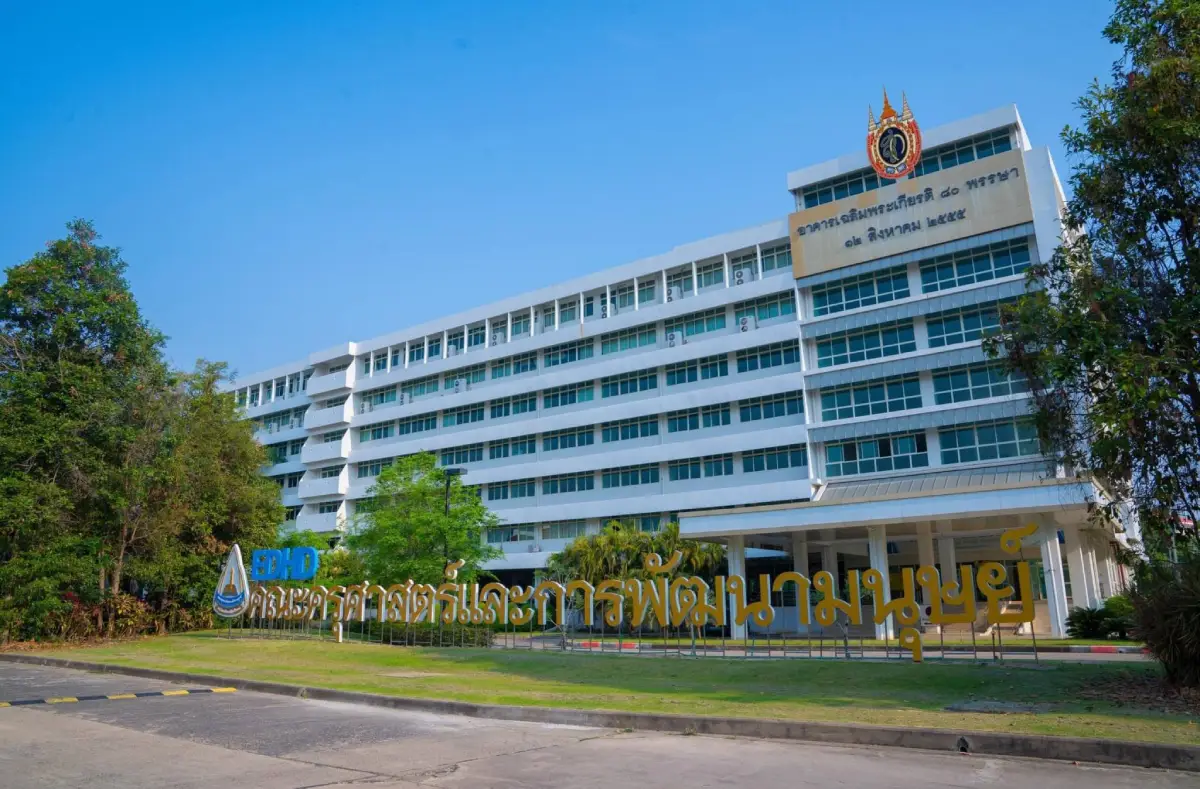
Sisaket Rajabhat University is a public university in Sisaket Province, northeastern Thailand. Located at 319 Thaiphantha Road, Pho Subdistrict, Mueang Sisaket District, the institution originated from a government-approved project to establish Sisaket Rajabhat Institute on April 29, 1997. It welcomed its first students on June 21, 1999, and became Sisaket Rajabhat University in 2004. Today, the university plays an important role in higher education, teacher preparation, professional training, research, community development, and the preservation of local arts and culture. Its academic disciplines cover education, humanities, social sciences, science and technology, business administration, accounting, law, public administration, and nursing. Through these fields, the university seeks to connect academic learning with the practical needs of local communities and the sustainable development of Sisaket Province.
The university occupies an important place in the history of higher education in lower northeastern Thailand. Its establishment represented more than the opening of another educational institution. It reflected a sustained effort to make higher education more accessible to students from Sisaket and surrounding provinces. In earlier decades, many students seeking university-level qualifications had to leave their home communities for larger educational centers. Establishing a public university in Sisaket created additional opportunities for local families while supporting the development of a skilled workforce connected to the province's economy and society.
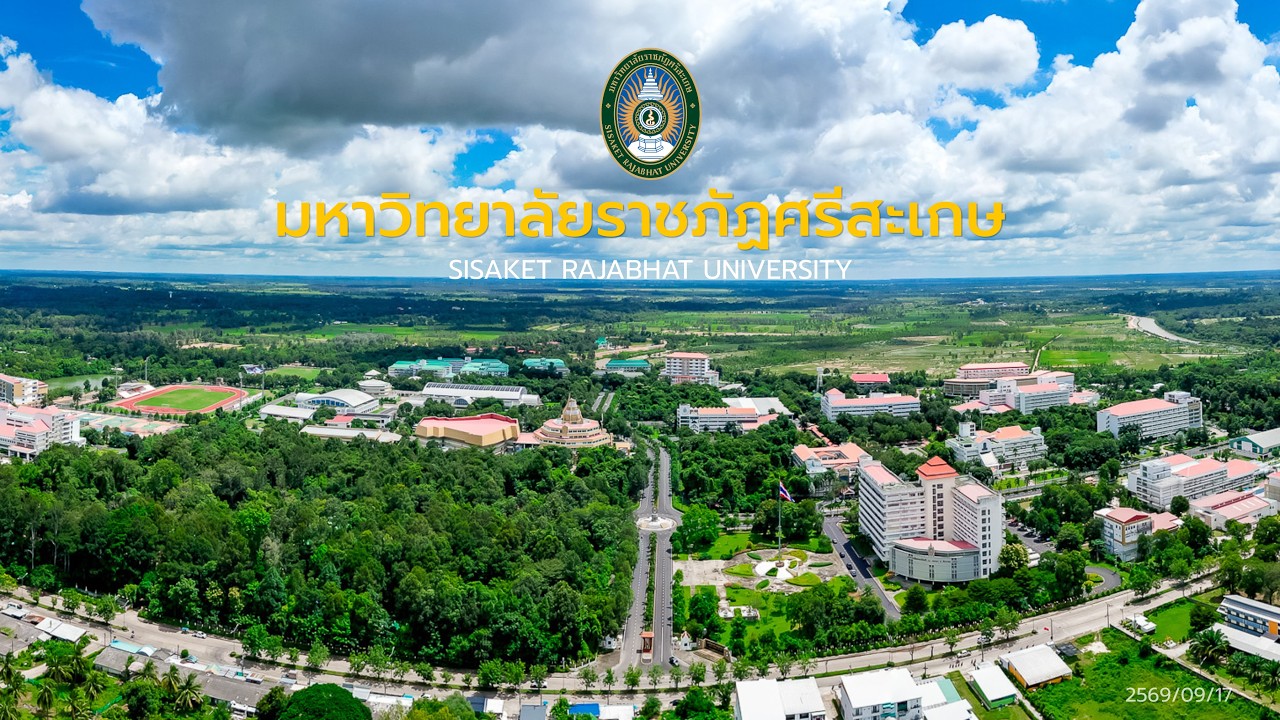
The university campus stands on land formerly known as the Non Bak Ba public land area, covering approximately 525 rai, 2 ngan, and 32 square wah within Sisaket Municipality. Over time, the site developed into an extensive educational campus with academic buildings, administrative offices, learning centers, meeting facilities, sports areas, and spaces for student activities. This transformation illustrates how the establishment of a university can influence urban development, land use, local employment, and access to educational services over several decades.
The physical organization of the campus reflects its educational mission. Faculties and academic departments occupy facilities designed for different fields of study, while central administrative buildings provide student services and institutional support. Specialized classrooms, laboratories, and professional training areas accommodate practical learning in science, technology, education, and health-related disciplines. Libraries, meeting halls, sports facilities, and shared spaces support academic work as well as extracurricular activities and university traditions.
The historical background of Sisaket Rajabhat University is closely connected with the expansion of Thailand's Rajabhat higher education system. During the late twentieth century, increasing numbers of secondary school graduates created growing demand for educational opportunities beyond the country's major university cities. Sisaket, with its substantial population and need for professional development, was identified as a suitable location for an additional higher education institution. The proposed Rajabhat institute was intended to improve access to university education while supporting local development.
One of the most influential figures in the university's establishment was Boonchong Weesamaj, a former member of the Thai House of Representatives for Sisaket Province and a former senator. On June 24, 1994, he submitted a formal request to the provincial governor proposing the establishment of a higher education institution on the Non Bak Ba public land area. On July 12, 1994, he submitted a further request to the Ministry of Education concerning the proposed Sisaket Rajabhat Institute. These initiatives were important early steps in the process that eventually led to the university's establishment.
Boonchong Weesamaj was born on March 13, 1931, and died on April 19, 2003. During his public career, he served several terms as a member of parliament for Sisaket, as well as holding positions in the Senate and national government. His public service included responsibilities as secretary-general to the prime minister and deputy speaker of the House of Representatives. His efforts to establish a higher education institution in his home province remain an important part of the university's institutional history.
On November 25, 1996, the Ministry of Education formally submitted a proposal concerning the establishment of additional Rajabhat institutes. The Thai Cabinet subsequently approved the establishment of Sisaket Rajabhat Institute on April 29, 1997. The institution was included among the first group of newly proposed Rajabhat institutes during the 1997–1999 budget period. This decision initiated the development of the campus, the preparation of academic programs, and the establishment of administrative and educational systems.
The criteria for establishing new Rajabhat institutes included provincial population, the number of secondary school graduates, the need for local higher education, economic and tourism potential, and the availability of suitable land. Sisaket met these conditions and offered an opportunity to expand the reach of higher education into an area with considerable demand for professional and academic qualifications. The new institution was therefore expected to serve both educational and regional development objectives.
The first regular student intake was announced on May 25, 1999, and teaching officially began on June 21, 1999. During its initial period, the institution operated under the supervision of Surindra Rajabhat Institute. Its first three associate-degree fields were Computer Studies, Construction, and Business Administration. These subjects reflected the need for practical professional skills in computing, construction-related industries, and business management.
The institution's early teaching activities helped establish essential academic and administrative foundations. Student registration, curriculum management, staff recruitment, and academic services had to be developed alongside the physical campus. Starting with a relatively small number of programs allowed the institution to build these foundations before gradually expanding into a more comprehensive university offering qualifications in different academic and professional disciplines.
On June 12, 2001, the Cabinet approved the draft royal decree concerning the establishment of Sisaket Rajabhat Institute. The relevant royal decree was enacted on July 12, 2001, and its establishment was announced in the Royal Gazette on July 20, 2001. These legal developments gave the institution a formal administrative foundation and strengthened its capacity to operate independently within Thailand's higher education system.
Following the formal establishment, Assistant Professor Kanok Tosurat was appointed acting president on July 21, 2001. Students who had previously studied under the supervision of Surindra Rajabhat Institute were transferred to Sisaket Rajabhat Institute on November 1, 2001. This administrative transition represented a major step toward the institution's full organizational independence.
On May 20, 2002, Assistant Professor Kanok Tosurat was formally appointed president of Sisaket Rajabhat Institute. Later that year, on November 21, 2002, Boonchong Weesamaj was appointed chairman of the institute council. These appointments helped establish the institution's governance structure and supported its development into a fully functioning higher education organization.
The passage of the Rajabhat University Act in 2004 introduced an important transformation across Thailand's Rajabhat institutions. Sisaket Rajabhat Institute was upgraded to Sisaket Rajabhat University, with the university's official historical chronology identifying July 12, 2004, as an important date in this transition. University status expanded the institution's role in higher education, research, academic services, graduate development, and the preservation of arts and culture.
Understanding the university's history requires distinguishing between several important dates. The year 1997 marks the Cabinet decision to establish the institution, 1999 marks the beginning of teaching, 2001 marks its formal establishment under the royal decree, and 2004 marks its transition into a university. Each date represents a different stage of institutional development rather than a competing founding date.
The university's name combines the Rajabhat identity associated with Thailand's network of regional public universities and the name Sisaket, identifying the province it serves. This connection is especially significant in a region characterized by diverse communities, languages, traditions, and cultural heritage. The institution's name therefore reflects both its position within the Thai higher education system and its continuing commitment to the people of Sisaket Province.
The university's leadership history includes Assistant Professor Kanok Tosurat, who played an important role during its formative period, and Associate Professor Dr. Prakasit Anuphap Saenyakorn, who was appointed president in 2013 and is listed as president on the university's leadership information available in 2026. Successive university administrations have been responsible for developing academic faculties, improving educational services, expanding research opportunities, and strengthening cooperation with local and national organizations.
The official university colors are white and gold. White represents intellectual purity and moral integrity, while gold is associated with knowledge, wisdom, and academic achievement. The Lamduan flower is the university's symbolic flower, reflecting the province's association with the flower and its cultural identity as the city of Lamduan blossoms.
The university's emblem is associated with the royal seal tradition of Thailand's Rajabhat institutions. Its symbolic colors include blue, representing the monarchy; green, representing nature and the environment; gold, representing intellectual prosperity; orange, representing the development of local arts and culture; and white, representing purity of thought. Together, these symbols express the university's relationship with education, the Thai nation, local communities, and cultural heritage.
The university emphasizes knowledge, ethics, teacher development, applied research, and social responsibility. Its institutional identity is expressed through the concept of a Green University, reflecting the importance of a pleasant, clean, environmentally responsible campus suitable for learning. Its student identity emphasizes graduates with public spirit, encouraging responsibility, community participation, ethical conduct, and contributions to society beyond individual professional success.
The organizational values represented by the initials SSKRU emphasize synergy, service to society, knowledge and ethics, social responsibility, and shared achievement. These principles are reflected in the university's teaching, research, and community engagement activities. The intention is to ensure that academic knowledge contributes to practical improvements in education, public services, local economic development, and quality of life.
University traditions form an important part of student life at Sisaket Rajabhat University. One of the most significant is the Thai Wai Khru ceremony, in which students express respect and gratitude to their teachers. In the 2026 academic year, the university scheduled its Wai Khru ceremony for July 2, 2026, at the Sri Phruet Thetsawon Theatre. Individual faculties also organized related activities reflecting their respective academic and professional traditions.
The Wai Khru ceremony has a meaning extending beyond the expression of respect. It reinforces the value of knowledge, gratitude, ethical conduct, and the responsibilities associated with professional education. Some faculties also incorporate scholarships, certificates, and student recognition awards into their ceremonies. These activities connect traditional Thai educational culture with the recognition of academic achievement and service to the university community.
The anniversary of the university's establishment is another major institutional occasion. In 2026, the university published a program involving the ceremonial presentation of the royal emblem, the presentation of university pins to new students, and foundation anniversary activities. The ceremony was associated with the Royal Emblem Roundabout and the Sri Phruet Thetsawon Theatre. Such activities reinforce the university's history and create a sense of shared identity among students, academic staff, employees, and alumni.
Other cultural activities include events associated with Thai heritage, Songkran traditions, language learning, and the promotion of local arts and cultural knowledge. The university's Institute of Language, Arts and Culture supports activities that connect classroom learning with cultural heritage and community participation. These activities are particularly relevant in Sisaket, a province with a rich mixture of local traditions and cultural identities.
Academically, the university has six principal teaching units: the Faculty of Education and Human Development, Faculty of Humanities and Social Sciences, Faculty of Liberal Arts and Sciences, Faculty of Business Administration and Accounting, College of Law and Government, and Faculty of Nursing. Together, these faculties and the college offer educational pathways in professional, scientific, social, cultural, and administrative fields that support the province's development needs.
The Faculty of Education and Human Development specializes in teacher preparation and educational development. Its undergraduate fields include Early Childhood Education, Elementary Education, Mathematics, Computer Education, Social Studies, Thai Language, English, General Science, Physical Education, Music Education, Chinese Language Teaching, and Thai Dramatic Arts Education. The faculty also offers graduate-level study and professional qualifications related to teaching and educational administration, contributing to the development of both new and practicing educators.
The Faculty of Humanities and Social Sciences concentrates on language, communication, community development, history, creative practice, and social understanding. Its academic subjects include Business English, Chinese, Japanese, Community Development, History, Thai for Communication, Art and Design, and Communication Arts. These fields support employment in education, public communication, tourism, business services, cultural organizations, and community-based development.
The Faculty of Liberal Arts and Sciences covers a broad range of disciplines, including science, technology, engineering, health-related studies, and design. Its fields include Computer Science, Computer and Digital Technology, Software Engineering and Artificial Intelligence, Logistics Engineering, Agricultural Technology, Sports Science, Occupational Health and Safety, and Civil and Architectural Technology. These fields contribute to the development of specialized skills relevant to technology, industry, agriculture, and modern professional practice.
The Faculty of Business Administration and Accounting provides education in management, marketing, digital business, accounting, tourism, and hospitality. Its programs help students develop knowledge of business operations, organizational management, financial processes, and the use of technology in commercial environments. These skills are relevant to both local enterprises and organizations operating across wider domestic and international markets.
The College of Law and Government provides academic education in Law, Political Science, and Public Administration. These disciplines examine legal systems, political institutions, public policy, government administration, and organizational responsibilities. Graduates may pursue careers related to legal practice, government agencies, local administration, public service, and other fields requiring knowledge of law and governance.
The Faculty of Nursing focuses on nursing education and health-related professional development. Its principal degree is the Bachelor of Nursing Science, and the university also offers a nursing assistant certificate program. Nursing education combines academic study, practical skills training, and professional preparation, with particular emphasis on patient care, ethical responsibility, and effective communication in healthcare settings.
Beyond undergraduate education, Sisaket Rajabhat University supports graduate studies and lifelong learning. Postgraduate education contributes to advanced professional development, research, and educational leadership. Lifelong learning services provide opportunities for working adults and community members to develop additional knowledge and skills in response to changing professional and social needs.
One of the university's important learning facilities is the Office of Academic Resources and Information Technology, located in the Bannarat Nakharin Building. It provides access to educational resources, information services, and facilities for academic study. The office also publishes service hours and borrowing arrangements, allowing students and other eligible users to plan visits according to the university's academic calendar and announcements.
The university's arts and cultural facilities support its responsibility to preserve and promote local heritage. These spaces are used for academic and cultural activities related to language, traditional knowledge, artistic expression, and community traditions. Their importance extends beyond campus life because the university operates in a province with distinctive cultural diversity and significant opportunities for the documentation and transmission of local knowledge.
Meeting halls and ceremonial spaces such as the Sri Phruet Thetsawon Theatre, faculty meeting rooms, and the Royal Emblem Roundabout support university ceremonies, conferences, student orientations, and other institutional events. These spaces are important not only as physical facilities but also as places where university traditions and shared institutional memories are maintained.
The university also operates the Sisaket Rajabhat University Demonstration School. The university council approved its establishment in 2014, and the school began admitting pupils in the 2015 academic year. The demonstration school is connected to the university's educational mission and helps link higher education with learning development for children, teacher preparation, and educational practice.
Sports facilities and the Sports Science Building support physical education, professional learning, exercise, and student development. Such facilities provide opportunities for students to develop teamwork, maintain physical wellbeing, and participate in organized sports activities. They also support practical learning in disciplines concerned with sports, health, and physical performance.
Another notable campus facility is the Boonchong Weesamaj Multipurpose Academic Training Center, also associated with the Sri Phruetthalai Rajabhat Seminar complex. It provides facilities connected with practical training, meetings, and institutional activities. The center's name also commemorates the public figure whose efforts contributed significantly to the university's establishment.
Research and innovation are central components of the university's academic mission. The Research and Development Institute supports research activities and the application of academic knowledge to community needs. Areas of interest include grassroots economic development, education, local culture, social development, and the improvement of community wellbeing. These activities reflect the role of a regional public university in generating knowledge that can be applied beyond the academic environment.
Examples of the university's community engagement include projects examining local cultural identity, the development of community knowledge, and collaborative educational work with partner schools. Research focused on local issues is especially important because it connects academic methods with practical challenges faced by communities. In this approach, the value of research lies not only in publication but also in its potential to support informed decisions, improve livelihoods, and strengthen local organizations.
In 2026, the university was also involved in organizing academic events, including the eighth National Academic Conference, which addressed grassroots economic development and the BCG economic model. Such conferences create opportunities for researchers, lecturers, and students to present findings, exchange ideas, and build cooperation across academic disciplines and institutions.
The university's wider contribution to Sisaket is visible through its graduates and professional networks. Teachers contribute to schools and educational institutions, healthcare graduates support community wellbeing, business graduates bring knowledge to enterprises and organizations, and graduates in humanities, social sciences, and law support communication, administration, cultural development, and public service. These connections reinforce the university's importance within the province's long-term development.
For visitors interested in educational tourism, Sisaket Rajabhat University offers an opportunity to understand the history of higher education in the province and the relationship between universities and regional development. Visitors may learn about the institution through public events, exhibitions, or arranged study visits. Access to academic buildings, laboratories, the demonstration school, and specialized facilities is governed by university regulations and the requirements of the responsible departments.
The university can also be included in a broader exploration of Sisaket town. Nearby city attractions include Wat Maha Puttharam, commonly called Wat Phra To, the municipal aquarium, Sisaket Tower, and the public park area around Koh Klang Nam. Together, these destinations offer opportunities to discover the city's religious heritage, public recreation spaces, and cultural landscape.
Getting There Sisaket Rajabhat University is located at 319 Thaiphantha Road, Pho Subdistrict, Mueang Sisaket District, Sisaket Province. It can be reached by private car or local hired transport from the city center. Travelers arriving in Sisaket by train or intercity bus may continue to the university using local transport. For navigation, the university's published coordinates are 15.116440, 104.3595. Visitors attending meetings, applying for admission, or taking part in university events should confirm the relevant building and meeting location before departure.
Visitors should distinguish between the university's published general contact hours and the operating hours of individual departments. The official university contact page lists 08:30 to 16:30 from Monday through Sunday, excluding public holidays. However, certain faculty offices and academic service departments operate from Monday to Friday. The Office of Academic Resources and Information Technology publishes separate schedules, including weekend service during applicable academic periods, subject to holidays and university announcements.
Today, Sisaket Rajabhat University continues to serve as an important public higher education institution in northeastern Thailand. From its beginnings on the Non Bak Ba public land area to its development into a university with multiple faculties and professional programs, its history demonstrates the importance of expanding educational opportunity and linking academic knowledge with the development of local communities. The university remains both an educational institution and a significant part of Sisaket Province's modern social and educational history.
| University Name | Sisaket Rajabhat University (มหาวิทยาลัยราชภัฏศรีสะเกษ) |
| University Type | Public Rajabhat University |
| Address | 319 Thaiphantha Road, Pho Subdistrict, Mueang Sisaket District, Sisaket Province 33000, Thailand |
| Coordinates | 15.116440, 104.3595 |
| Campus Area | Approximately 525 Rai, 2 Ngan, and 32 Square Wah |
| Initial Establishment | April 29, 1997 – Cabinet approval to establish Sisaket Rajabhat Institute |
| First Day of Teaching | June 21, 1999 |
| Legal Establishment | July 20, 2001 – Publication of the institute's establishment in the Royal Gazette |
| University Status | 2004, under the Rajabhat University Act B.E. 2547 |
| Institutional Age in 2026 | 29 years since the initial Cabinet approval; 22 years since university status |
| Important Figures | Boonchong Weesamaj, a leading advocate for the institution's establishment; Assistant Professor Kanok Tosurat, an important early president |
| President | Associate Professor Dr. Prakasit Anuphap Saenyakorn |
| University Colors | White and Gold |
| University Flower | Lamduan Flower |
| Institutional Identity | Green University |
| Student Identity | Graduates with Public Spirit |
| Faculties and College | 1. Faculty of Education and Human Development 2. Faculty of Humanities and Social Sciences 3. Faculty of Liberal Arts and Sciences 4. Faculty of Business Administration and Accounting 5. College of Law and Government 6. Faculty of Nursing |
| Important Supporting Units | Office of the President; Office of Academic Affairs and Lifelong Learning; Office of Academic Resources and Information Technology; Research and Development Institute; Institute of Language, Arts and Culture |
| Important Campus Facilities | 1. Bannarat Nakharin Building and University Library 2. Arts and Cultural Center 3. Royal Emblem Roundabout 4. Sri Phruet Thetsawon Theatre 5. Sisaket Rajabhat University Demonstration School 6. Sports Science Building and Sports Facilities 7. Sri Phruetthalai Rajabhat Seminar Complex |
| Important Traditions | Wai Khru Ceremony, Royal Emblem Ceremony, University Foundation Anniversary, New Student Orientation, and Cultural Preservation Activities |
| Academic Strengths | Teacher Education, Applied Research, Science and Technology, Community Development, Humanities, Business, Law, and Nursing |
| Open Days Listed on University Contact Page | Monday – Sunday, Except Public Holidays |
| Published University Opening Hours | 08:30 – 16:30; Office and facility schedules may differ |
| Faculty Office Hours | Certain faculty offices: Monday – Friday, 08:30 – 16:30, Except Public Holidays |
| Library Service Hours | Monday – Sunday, 08:30 – 16:30, Subject to Academic Calendar, Public Holidays, and University Announcements |
| Visitor Access | Access to teaching buildings, laboratories, the demonstration school, and specialized facilities is subject to university regulations and departmental permission |
| Facilities | Academic Buildings, Library, Food Centers, Sports Facilities, Meeting Rooms, Parking Areas, and Practical Training Facilities |
| Getting There | Private car or local transport from Sisaket city center, via Thaiphantha Road |
| Attractions in Sisaket City | 1. Wat Maha Puttharam (Wat Phra To) 2. Sisaket Municipal Aquarium 3. Sisaket Tower 4. 80th Birthday Anniversary Park 5. Koh Klang Nam Park |
| Nearby Restaurants and Cafes | 1. Pa Muay, University Food Center – Tel. 093-456-6958 2. Pa Auan, Near the University Entrance – Tel. 099-442-4125 3. Sampao Boat Noodles, Near Sisaket Rajabhat University – Tel. 087-869-4246 4. OK Sushi Sisaket, Thaiphantha Road – Tel. 094-454-9478 5. Krua Zaab Dee, Thaiphantha Road – Tel. 063-026-0771 |
| Hotels and Accommodation | 1. Sri Phruetthalai Rajabhat Seminar Complex, On Campus 2. Sri Lamduan Hotel 3. Babaline Hotel 4. Gallery Design Hotel 5. Vijit Nakorn Hotel Sisaket |
| University Telephone | +66 45 643 600 – 606 |
| Admissions Telephone | +66 45 643 622 |
| saraban@sskru.ac.th | |
| Official Website | https://www.sskru.ac.th/ |
| Current Status | Operating Public University with Academic Programs and Student Admissions |
Academic Programs and Fields of Study at Sisaket Rajabhat University, Academic Year 2026 The following table summarizes degree programs and fields published by the university and its academic units, including programs with academic-year 2026 information. Inclusion in the table does not mean that every field is accepting new students in every admission round. English program names are descriptive translations where an official English title was not independently established.
| Faculty / College | Degree Programs and Fields of Study |
| Faculty of Education and Human Development | Bachelor of Education 1. Early Childhood Education 2. Elementary Education 3. Mathematics 4. Computer Education 5. Social Studies 6. Thai Language 7. English 8. General Science 9. Physical Education 10. Music Education 11. Chinese Language Teaching 12. Thai Dramatic Arts Education Graduate Diploma 1. Teaching Profession Higher Graduate Diploma 1. Research and Innovation in Learning Management Master of Education 1. Educational Administration Doctor of Education 1. Educational Administration |
| Faculty of Humanities and Social Sciences | Bachelor of Arts 1. Community Development 2. Business English 3. Japanese 4. Chinese 5. Digital Information Management 6. Art and Design 7. History 8. Thai for Communication Bachelor of Communication Arts 1. Communication Arts |
| Faculty of Liberal Arts and Sciences | Bachelor of Science 1. Computer Science 2. Computer and Digital Technology 3. Community Public Health 4. Sports Science 5. Agricultural Technology 6. Food Technology and Innovation 7. Occupational Health and Safety Bachelor of Engineering 1. Software Engineering and Artificial Intelligence 2. Logistics Engineering 3. Industrial and Environmental Management Engineering Bachelor of Technology 1. Product Design and Materials Innovation 2. Civil and Architectural Technology |
| Faculty of Business Administration and Accounting | Bachelor of Business Administration 1. Management 2. Marketing 3. Digital and Business Computing 4. International Business Administration 5. Modern Trade Business Management Bachelor of Accountancy 1. Accounting Bachelor of Arts 1. Tourism and Hotel Management |
| College of Law and Government | Bachelor's Degrees 1. Bachelor of Laws 2. Bachelor of Political Science 3. Bachelor of Public Administration |
| Faculty of Nursing | Bachelor's Degree 1. Bachelor of Nursing Science Professional Certificate 1. Nursing Assistant Certificate |
Frequently Asked Questions (FAQ)
Q: Where is Sisaket Rajabhat University located?
A: Sisaket Rajabhat University is located at 319 Thaiphantha Road, Pho Subdistrict, Mueang Sisaket District, Sisaket Province 33000, Thailand.
Q: What are the opening days and hours of Sisaket Rajabhat University?
A: The university's main contact page lists Monday through Sunday, 08:30 to 16:30, excluding public holidays. Certain faculty offices operate only from Monday to Friday, and individual facilities may have separate access arrangements.
Q: When was Sisaket Rajabhat University founded?
A: The Cabinet approved the establishment of Sisaket Rajabhat Institute on April 29, 1997. Teaching began on June 21, 1999, and the institution became a university in 2004.
Q: Who played an important role in founding Sisaket Rajabhat University?
A: Boonchong Weesamaj was a leading advocate for establishing the institution, beginning with formal proposals in 1994. Assistant Professor Kanok Tosurat played an important role in the institute's early administration.
Q: How many faculties does Sisaket Rajabhat University have?
A: The university has five faculties and one college, offering studies in education, humanities, social sciences, science and technology, business, accounting, law, public administration, and nursing.
Q: What is Sisaket Rajabhat University known for?
A: The university is known for its role in teacher education, professional training, applied research, community development, and the promotion of local culture and knowledge.
Q: Can tourists visit Sisaket Rajabhat University?
A: Visitors should follow university access regulations. For educational tours, library visits, or access to specialized facilities, contacting the appropriate university department in advance is recommended.
Q: How can I get to Sisaket Rajabhat University?
A: The university can be reached by private car or local hired transport from Sisaket city center. Its published coordinates are 15.116440, 104.3595.
Q: How can prospective students check programs and admission requirements?
A: Prospective students can visit https://www.sskru.ac.th/ and the university's academic affairs and admissions announcements. The admissions office can be contacted at +66 45 643 622.
 Category: ●University
 Group: ●Rajabhat University
Last Update : 6 DayAgo
 Last Update : 6 DayAgo
 Click to Access the Navigation Map GPS
Sisaket Rajabhat University Map

 Art, Culture and Heritage
 Historical Sites and Monuments(12)
 Landmarks and Memorials(1)
 Art, Craft Centres, Tradition(8)
 Public university(2)
Rajabhat University(1)
 Private University(1)
 Places of Worship
 Temple(13)
 Other Sacred Sites(3)
 Suburban Living
 Village, Community(2)
 Nature and Wildlife
 National Parks and Marine Reserves(2)
 Dam, Reservoir, Lake(7)
 Waterfalls(5)
 River, Canal(5)
 Bays and Beaches(2)
 Entertainment and Agricultural
 Zoos and Aquariums(1)
 Farms, Parks and Ecotourism(3)
 Travel Articles, Recipes
 Travel Review, Food Review(1)


