
lovethailand home >Northeastern Travel Attractions >Sakon Nakhon Travel Attractions >Kut Bak >Kut Bak > Wax Castle Procession Festival
TL;DR: Wax Castle Procession Festival, Sakon Nakhon attractions : Art, Culture and Heritage, Art, Craft Centres, Tradition.
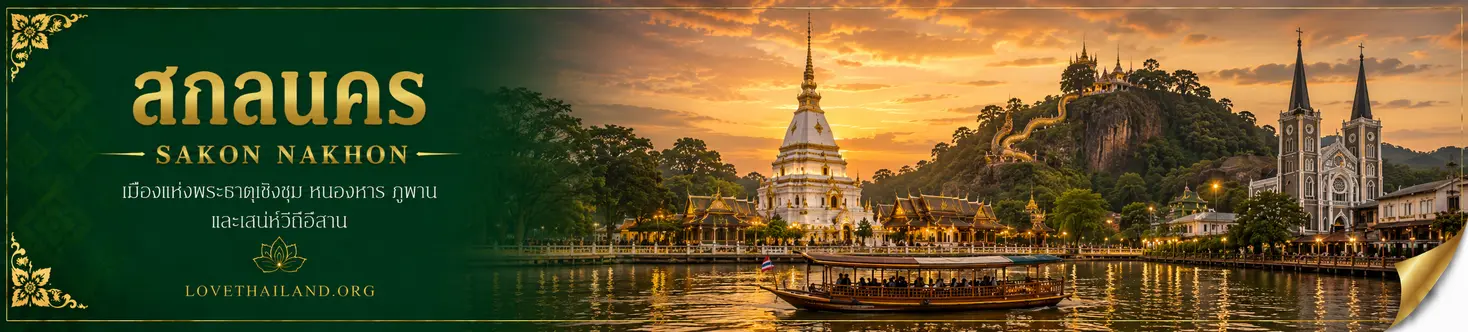
Wax Castle Procession Festival
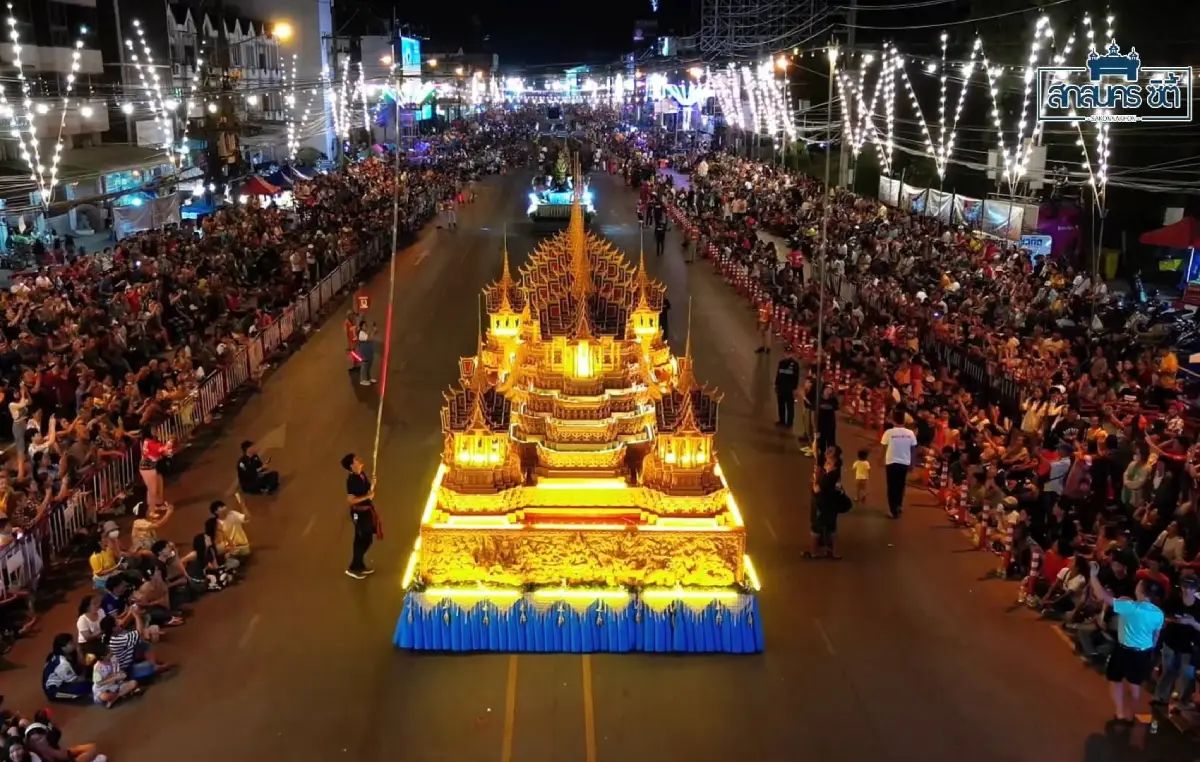
Open Days: Held Annually During The End Of Buddhist Lent, Around Lunar Days 12 - 15 Of The 11th Lunar Month, According To Sakon Nakhon Province’s Annual Schedule
Opening Hours: According To The Annual Event Program, With Main Activities Held In The Morning, Evening, And Night
The Wax Castle Procession Festival Of Sakon Nakhon is one of the most distinctive and important Buddhist festivals in Northeastern Thailand. Held annually during the end of Buddhist Lent, around lunar days 12 - 15 of the 11th lunar month, the festival takes place mainly in Sakon Nakhon Municipality, around Wat Phra That Choeng Chum Worawihan, Ming Mueang Ground, the government-center road area, the Clock Tower intersection, and Nong Han Lake. The tradition developed from older forms of wax offerings known as ton phueng and ho phueng, which were created for Buddhist devotion, merit-making, and dedication of merit to deceased relatives. Over time, these small ritual offerings grew into large wax castles, elaborate processions, cultural performances, and one of the most visually impressive festivals in Thailand.
The festival is remarkable because it combines faith, craftsmanship, community identity, and public celebration in one event. The wax castles are built by temple communities and local groups, using large wooden or structural frames covered with detailed wax patterns. At night, when lights illuminate the golden wax surfaces, the castles appear majestic and ceremonial. Alongside them are dancers in traditional clothing, musicians, community processions, ethnic costumes, local products, temple ceremonies, and the atmosphere of a city that becomes fully alive during the Buddhist Lent-ending season. For foreign travelers, the festival is one of the clearest ways to understand Sakon Nakhon as a province of Buddhism, craft tradition, community unity, and deep local pride.
The historical roots of the festival are connected with the making of wax trees and wax pavilions in Isan communities. In earlier times, villagers made small wax offerings for funeral-related merit-making and for dedicating merit to deceased family members. Men helped cut bamboo, prepare wood, split strips, and create the structures, while women helped prepare food and ritual items. A wax tree was usually made from a small banana trunk decorated with wax flowers. The wax flowers were created by melting beeswax and dipping molds into the liquid wax. When the wax cooled in water, it formed floral shapes that were later attached to the banana trunk. These early ritual objects were simple, but they carried strong religious and emotional meaning.
The ho phueng, or wax pavilion, became an important step in the development of the present festival. Traditional wax pavilions were often shaped like a tiered tray or ritual pavilion. They were made from bamboo frames, banana sheaths, banana stems, and wax flowers. Some had 2 layers of similar size, while others had a wider lower tier and a smaller upper tier. The inside of the frame could hold offerings or monk requisites. These wax pavilions were carried to temples during merit-making ceremonies, especially ceremonies connected with dedicating merit to the deceased. In this way, the object served as a bridge between family memory, Buddhist faith, and community ritual.
In Isan tradition, the end of Buddhist Lent is an especially important time for merit-making. It is associated with Maha Pavarana and with the day when Buddhists remember the Buddha’s descent from Tavatimsa heaven after teaching his mother. This belief gives the period a sacred character. Villagers regarded it as a suitable time to make offerings, dedicate merit, and gather with relatives and neighbors. As these local customs developed around Sakon Nakhon, wax pavilions and wax offerings became increasingly connected with Wat Phra That Choeng Chum, the most important sacred site of the city.
Wat Phra That Choeng Chum Worawihan gives the festival its spiritual center. The temple is deeply respected by the people of Sakon Nakhon and is associated with the sacred identity of the city. Offering wax castles at this temple is understood as an act of Buddhist devotion and a way of honoring the sacred stupa. The procession therefore has a clear destination and religious meaning. The wax castles are not made only for display or competition; they are ultimately created to be offered as an act of faith.
As the tradition developed, the form of the wax offering changed from simple wax pavilions into small castle-like structures, and later into large prasat-shaped wax castles with multi-tiered roofs, spires, and elaborate decorative patterns. Modern wax castles are often built in a cruciform or four-sided design, with a tall central roof and projecting sections on each side. Their surfaces are decorated with wax motifs such as floral patterns, Buddhist scenes, mythic figures, and Thai ornamental designs. This transformation shows how a community ritual became a major form of local art.
Creating a contemporary wax castle requires months of preparation. Each temple community or neighborhood group must plan the design, build the frame, make molds, cast or carve wax pieces, prepare lighting, organize decorative elements, and arrange the procession. Skilled carpenters, wax artisans, designers, electricians, flower arrangers, dancers, musicians, and young volunteers all take part. The beauty of the final castle comes from both individual craftsmanship and collective labor. The festival is therefore a living workshop where art, devotion, and community work are inseparable.
Traditional-style wax castles remain important because they preserve the older roots of the festival. These works use natural materials such as banana sheaths, bamboo, banana stems, and wax flowers. Their scale may be smaller than that of large contemporary floats, but their meaning is strong. They allow visitors to see the connection between the original wax-tree and wax-pavilion practices and the present grand procession. The coexistence of traditional and contemporary wax castles helps the festival honor the past while continuing to evolve.
The modern festival includes many activities over several days. These include demonstrations of wax castle making, displays of traditional and contemporary wax castles, bai si tray contests, cultural performances, the Wax Castle Queen contest, longboat races at Nong Han Lake, local-product markets, and the grand illuminated wax castle procession. The festival also features Buddhist ceremonies, including worship of Phra That Choeng Chum and the final offering of wax castles at Wat Phra That Choeng Chum Worawihan. This wide range of activities makes the festival more than a parade. It is a complete cultural season for the city.
The opening rituals are highly meaningful. The worship of Phra That Choeng Chum and the sacred objects of Sakon Nakhon sets the religious tone of the festival. The city-welcoming dance, often performed by large groups in traditional dress, expresses the unity of the people of Sakon Nakhon. It also shows the participation of communities from across the province. Through these opening activities, the city announces its readiness to host visitors and to honor one of its most important traditions.
The display and competition nights are among the best times for visitors to appreciate the details of the wax castles. Before the main procession, castles are placed in public areas so people can walk around them, observe the layers of wax decoration, study the craftsmanship, and take photographs. At night, the lighting adds depth to the wax patterns and makes the castles glow in gold and amber tones. This close viewing allows visitors to understand how much labor and skill are invested in each work.
The grand procession is the heart of the festival. Wax castle floats move through major streets in Sakon Nakhon Municipality toward Wat Phra That Choeng Chum Worawihan. Each procession includes the wax castle, dancers, musicians, ethnic costumes, local cultural groups, and community representatives. The streets become a ceremonial route filled with movement, color, rhythm, and devotion. For visitors, this is the most memorable moment of the festival because it shows the entire city working together in one shared act of cultural expression.
When the wax castles arrive at Wat Phra That Choeng Chum, the festival returns to its religious core. The castles are offered as Buddhist devotion. This moment completes the journey from craftsmanship to merit-making. The structures that were designed, built, decorated, and paraded with great effort are finally presented in front of the sacred temple. The offering reminds visitors that the festival’s beauty is not only visual; it is rooted in faith and merit.
The longboat races at Nong Han Lake are another important part of the festival. Nong Han is one of Sakon Nakhon’s most important natural landmarks. Holding boat races during the same festival connects the religious activities in the city with the lake landscape and community life around the water. Visitors who stay for more than one day can enjoy the boat races during the day and the wax castle displays or procession at night, creating a fuller festival experience.
The festival also supports local products and community economy. During the event, stalls sell GI and OTOP products, indigo-dyed textiles, clothing, bags, souvenirs, local food, and processed agricultural products. Sakon Nakhon is especially known for indigo textiles and local crafts. Buying from community producers helps income circulate locally and supports the continuation of traditional skills. In this way, the festival links merit-making, cultural preservation, tourism, and local economy.
The belief behind wax castle offerings is connected with Buddhist narratives and ideas of merit. One important story tells of a monkey offering honey to the Buddha and receiving great merit from the act. This story helped shape the belief that offerings related to honey and beeswax carry high spiritual value. The end of Buddhist Lent also carries the meaning of the Buddha’s descent from heaven, making it a powerful time for religious devotion. The wax castle therefore represents both beauty and merit.
The festival also functions as an important form of art education. Experienced artisans teach younger generations how to build frames, prepare wax, make molds, attach wax patterns, balance colors, arrange lighting, and protect the castle during movement. Young people may begin by helping carry materials, organize decorations, or join the procession. Over time, they learn more complex skills. This process keeps local craftsmanship alive and ensures that the festival continues as a living tradition rather than a static display.
Community unity is another central value. Each temple neighborhood must organize people, funds, materials, food, work schedules, dancers, and procession management. Elders, adults, young people, monks, temple committees, and local supporters all have roles. Even though the festival now includes formal contests and large public events, its strength still comes from the willingness of local communities to work together. The wax castle is therefore both an artwork and a symbol of shared effort.
Travelers should plan at least 2 days and 1 night to experience the festival properly. On the first day, visitors can see wax castle displays, night lighting, community markets, and cultural performances. On the second day, they can watch the longboat races during the day and the grand procession in the evening. This schedule allows visitors to experience the preparation, public display, procession, and religious offering, rather than seeing only one part of the festival.
The best time for photography is in the evening and at night, when the wax castles are illuminated. Visitors should arrive early to find a suitable viewing point and avoid blocking the procession route. In temple areas, modest dress and respectful behavior are important. Visitors should not touch wax decorations, climb display platforms, interrupt dancers, or stand in areas reserved for officials, monks, or procession participants. Respectful conduct helps preserve the dignity of the festival.
Getting There is convenient by private car, rental car, local taxi, or city transport within Sakon Nakhon. The main festival areas are in Sakon Nakhon Municipality, especially Wat Phra That Choeng Chum Worawihan, Ming Mueang Ground, the government-center road, the Clock Tower intersection, and Nong Han Lake. Travelers arriving at Sakon Nakhon Airport can reach the city center within a short drive. During the procession day, some roads are closed for the parade, so visitors should allow extra time for parking and walking.
Staying in the city center is the most practical choice because many festival activities take place near temples, government roads, and central public spaces. Hotels near Wat Phra That Choeng Chum, Suk Kasem Road, Charoen Mueang Road, and the government-center area are suitable for visitors who want to walk or use short local transport to reach the festival. Because this is a major annual event, accommodation should be booked in advance.
Food is easy to find during the festival because the event includes local food stalls and community-product markets. Visitors can also eat at restaurants near Wat Phra That Choeng Chum, the city center, or the Lotus Sakon Nakhon area. Planning meals in advance is useful, especially on the procession day when crowds are large and traffic is restricted. Local foods, indigo textile products, and souvenirs make the festival a good opportunity to experience Sakon Nakhon’s cultural economy.
The Wax Castle Procession Festival is ideal for travelers interested in Buddhist culture, local art, photography, folk performance, and festival tourism. It offers a complete view of Sakon Nakhon at one of its most active and meaningful times of year. The event is visually spectacular, but its deepest value lies in the faith and cooperation behind the spectacle.
Overall, the Wax Castle Procession Festival of Sakon Nakhon shows how art can grow from faith and how faith can bring a whole city together. From small wax trees and ritual pavilions to towering illuminated wax castles, the tradition tells the story of Sakon Nakhon’s religious devotion, artisan skill, and community spirit. Visitors who see the festival in person will understand that its greatness is not measured only by the size of the castles, but by the hands that build them, the hearts that offer them, and the city memory that carries the tradition forward each year.
| Tradition Name | Wax Castle Procession Festival Of Sakon Nakhon / Wax Castle Procession And Royal Trophy Longboat Race |
| Main Event Area | Sakon Nakhon Municipality, Wat Phra That Choeng Chum Worawihan, Ming Mueang Ground, Government Center Road, King Rama V Monument Area, Clock Tower Intersection, And Nong Han Longboat Race Area |
| Address | That Choeng Chum Subdistrict, Mueang Sakon Nakhon District, Sakon Nakhon 47000, Thailand |
| Highlights | Contemporary And Traditional Wax Castle Floats, Wax Castle Contest, Light And Sound Procession, Phra That Choeng Chum Worship Ceremony, Folk Dance, Nong Han Longboat Race, And Wax Castle Offering At Wat Phra That Choeng Chum Worawihan |
| History / Importance | Developed From The Making Of Wax Trees And Wax Pavilions For Buddhist Devotion And Merit Dedication, Then Became A Major Sakon Nakhon Festival Expressing Faith, Craftsmanship, And Community Unity |
| Name Origin | “Wax Castle” Refers To A Castle-Like Offering Decorated With Beeswax Flowers Or Wax Patterns, Created For Buddhist Devotion And Merit-Making During The End Of Buddhist Lent |
| Distinctive Features | Large Multi-Tiered Wax Castles, Detailed Wax Patterns, Night Illumination, Folk Dance Processions, And The Final Offering At Wat Phra That Choeng Chum Worawihan |
| Travel Information | Travel To Central Sakon Nakhon By Private Car, Rental Car, Local Taxi, Or City Transport. Main Viewing Areas Are Near Wat Phra That Choeng Chum, Ming Mueang Ground, Government Center Road, And The Clock Tower Area |
| Current Status | Still Organized Annually In Sakon Nakhon During The End Of Buddhist Lent, With Participation From Provincial Agencies, Local Administrative Organizations, Temples, Communities, And Temple Neighborhood Groups |
| Festival Period | End Of Buddhist Lent, Around Lunar Days 12 - 15 Of The 11th Lunar Month, According To Sakon Nakhon Province’s Annual Schedule |
| Opening Hours | According To The Annual Event Program, With Activities In The Morning, Evening, And Night; The Main Wax Castle Procession Is Usually Held From Evening To Night |
| Fees | No Standard Admission Fee For The Public Festival |
| Facilities | Procession Viewing Areas, Main Stage, Wax Castle Display Points, Food And Product Areas, Temporary Parking, Public Restrooms, Information Points, And Event Staff |
| Main Areas / Zones | Wat Phra That Choeng Chum Worawihan Ming Mueang Ground King Rama V Monument Area Government Center Road Clock Tower Intersection Sakon Nakhon City Gate And Ruam Jai Thai Square Nong Han Longboat Race Area GI/OTOP And Community Product Zone |
| Caretaker / Organizers | Sakon Nakhon Province, Sakon Nakhon Municipality, Sakon Nakhon Provincial Administrative Organization, Sakon Nakhon Provincial Cultural Office, Wat Phra That Choeng Chum Worawihan, Temple Communities, Private Sector, And Local Communities |
| Local Contact Numbers | Sakon Nakhon Municipality Tel. 0-4271-1203 Sakon Nakhon Provincial Administrative Organization Tel. 0-4271-7098 Sakon Nakhon Provincial Public Relations Office Tel. 042-733770 |
| Visitor Guidelines | Dress Respectfully In Temple Areas, Do Not Block The Procession Route, Do Not Touch Wax Castle Decorations, Do Not Climb Display Areas, And Follow Annual Road Closure And Parking Announcements |
| Nearby Tourist Attractions | 1. Wat Phra That Choeng Chum Worawihan, About 0 km 2. Ming Mueang Ground, About 1 km 3. Suan Somdet Phra Srinagarindra Sakon Nakhon And Sa Phang Thong, About 1 km 4. Nong Han Lake, About 2 km 5. Wat Pa Sutthawat, About 3 km 6. Sakon Nakhon City Gate And Ruam Jai Thai Square, About 3 km 7. Phra That Narai Cheng Weng, About 6 km |
| Nearby Restaurants | 1. Ma-kin Behind Wat Phra That Choeng Chum, About 1 km 2. Mae Lek Pad Thai Beside Wat Phra That Choeng Chum, About 1 km 3. Tiew Tai Wat Boat Noodles, Wat Phra That Choeng Chum Branch, About 1 km 4. Café Amazon PTT Pratu Mueang, About 3 km, Tel. 084-031-4920 5. MK Restaurants Lotus Sakon Nakhon, About 3 km, Tel. 042-722-645 6. Tummour PTT Pratu Mueang Sakon Nakhon, About 3 km, Tel. 098-979-7397 |
| Nearby Accommodations | 1. The Majestic Sakon Nakhon Hotel, About 1 km, Tel. 042-733-771 2. Imperial Sakon Hotel, About 1 km, Tel. 042-711-119 3. Dusit Hotel Sakon Nakhon, About 1 km, Tel. 042-711-198 4. Hop Inn Sakon Nakhon, About 3 km, Tel. 042-716-399 5. The Room Boutique Hotel, About 3 km, Tel. 099-262-9269 6. Sakol Grand Palace Hotel, About 4 km, Tel. 042-714-886 |
Frequently Asked Questions (FAQ)
Q: When is the Wax Castle Procession Festival in Sakon Nakhon held?
A: It is held during the end of Buddhist Lent, around lunar days 12 - 15 of the 11th lunar month, with the main procession scheduled according to Sakon Nakhon Province’s annual event program.
Q: Where does the festival take place?
A: The main festival areas are in Sakon Nakhon Municipality, especially Wat Phra That Choeng Chum Worawihan, Ming Mueang Ground, Government Center Road, the King Rama V Monument area, the Clock Tower intersection, and Nong Han Lake.
Q: What is a wax castle?
A: A wax castle is a castle-like religious offering decorated with beeswax flowers or detailed wax patterns. It is made for Buddhist devotion, merit-making, and dedication of merit during the end of Buddhist Lent.
Q: Is there an admission fee?
A: No. The public festival has no standard admission fee, and visitors can watch the procession, displays, and community activities in the areas arranged by the organizers.
Q: What are the main highlights of the festival?
A: The highlights include contemporary and traditional wax castle displays, the illuminated wax castle procession, folk dance, light and sound performances, the offering ceremony at Wat Phra That Choeng Chum, and longboat races at Nong Han Lake.
Q: What is the best time to visit?
A: Evening and night are ideal for viewing the illuminated wax castles and main procession, while daytime is suitable for longboat races and community activities.
Q: How should visitors prepare for the festival?
A: Visitors should check the annual schedule, wear respectful clothing in temple areas, allow extra time for parking and walking, and avoid blocking the procession route.
Q: What nearby places can visitors see after the festival?
A: Nearby places include Wat Phra That Choeng Chum Worawihan, Suan Somdet Phra Srinagarindra, Nong Han Lake, Wat Pa Sutthawat, Sakon Nakhon City Gate, and Phra That Narai Cheng Weng.
 Category: ●Art, Culture and Heritage
 Group: ●Art, Craft Centres, Tradition
Last Update : 2 MonthAgo
 Last Update : 2 MonthAgo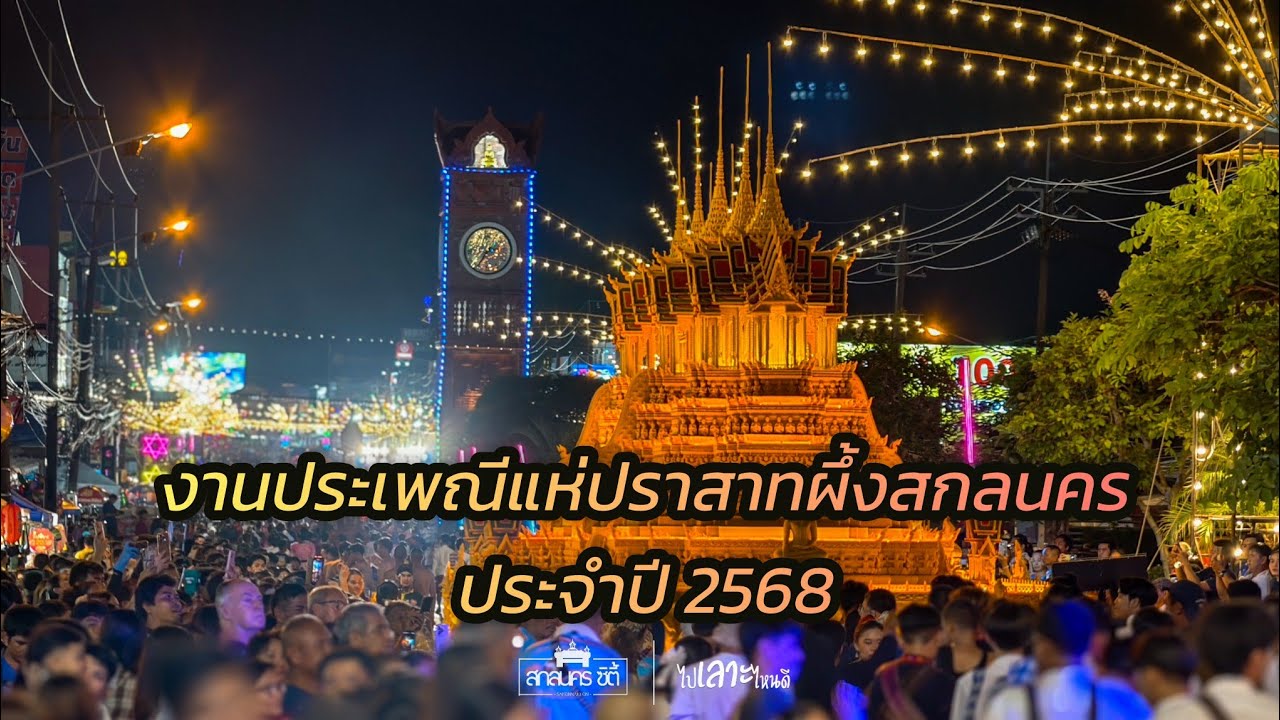

 Historical Sites and Monuments(9)
 Landmarks and Memorials(2)
 Royal Palace(1)
Art, Craft Centres, Tradition(8)
Royal Palace(1)
Art, Craft Centres, Tradition(8)
 Museums(3)
 Educational Places
 Educational Gardens, Farm(2)
 Places of Worship
 Temple(18)
 Church(2)
 Other Sacred Sites(4)
 Research and Development
 Royal Project(3)
 Suburban Living
 Village, Community(7)
 Nature and Wildlife
 National Parks and Marine Reserves(4)
 Mountain (Doi)(3)
 Dam, Reservoir, Lake(14)
 Waterfalls(4)
 Caves(4)
 River, Canal(9)
 Bays and Beaches(1)
 Islands(1)
 Other natural attractions(5)
 Entertainment and Agricultural
 Zoos and Aquariums(1)
 Farms, Parks and Ecotourism(4)
 Outdoor and Adventure Activities(1)


