
lovethailand home >Northeastern Travel Attractions >Sakon Nakhon Travel Attractions >Phanna Nikhom >Sawang > Wat Kham Pramong
TL;DR: Wat Kham Pramong is located at 95 Moo 4, Sawang Subdistrict, Phanna Nikhom District, Sakon Nakhon 47130, Thailand, open Open Daily, hours 08.00 - 17.00.
Wat Kham Pramong
Open Days: Open Daily
Opening Hours: 08.00 - 17.00
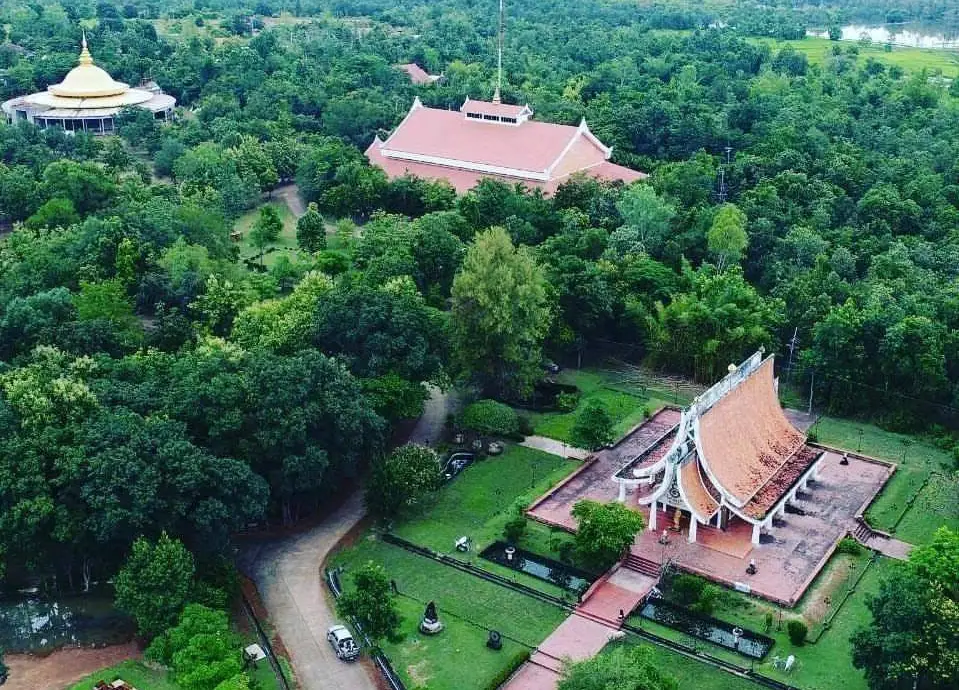
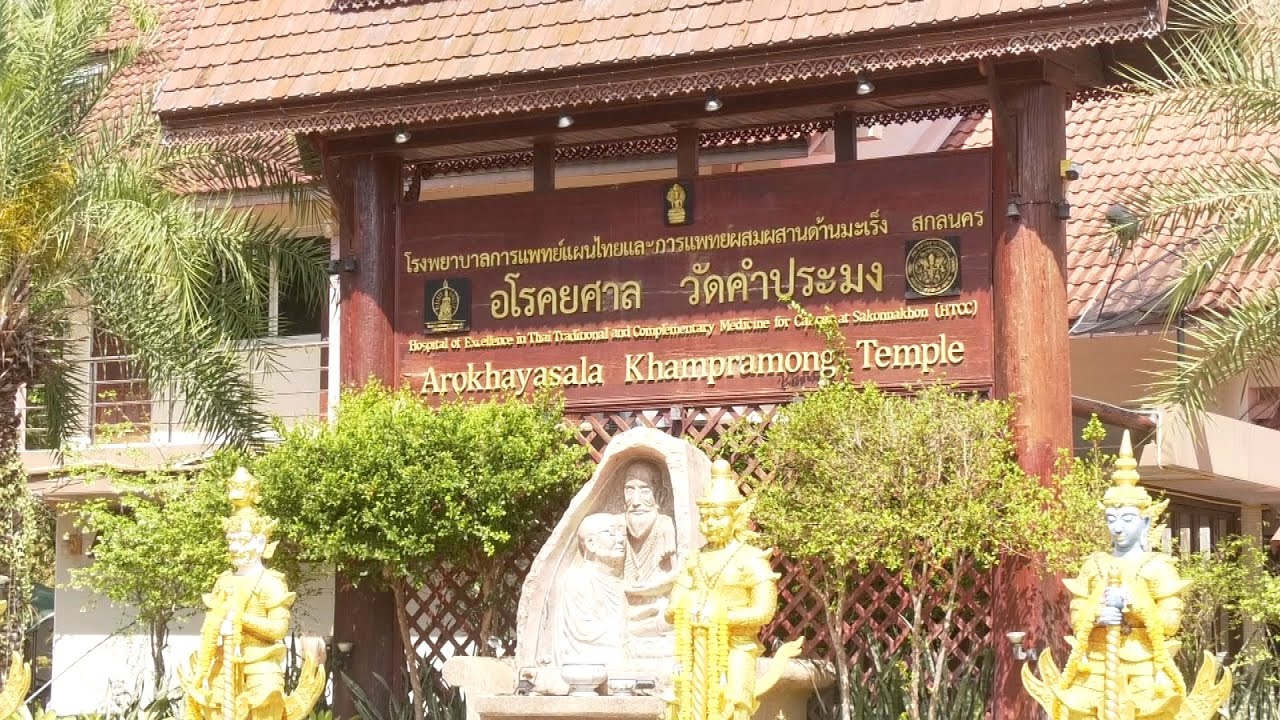
Wat Kham Pramong In Sakon Nakhon is located at Ban Kham Pramong, Moo 4, Sawang Subdistrict, Phanna Nikhom District, Sakon Nakhon Province. It is a forest temple, a meditation site, and one of Thailand’s most distinctive Buddhist-based holistic care centers. The temple is widely known as Arokayasala Wat Kham Pramong, a model palliative and integrative care center that supports cancer patients and end-of-life patients through a combination of Buddhist practice, meditation, Thai traditional medicine, integrative care, healthy food, herbal knowledge, nature, volunteer work, and compassionate community support. For visitors, this temple is not simply a place to make merit. It is a living example of how Buddhism, local wisdom, health care, and human dignity can meet in one peaceful rural setting.
The origin of Wat Kham Pramong is closely connected with Phra Ajahn Paphonphat Jirathammo, a disciple of Luang Pu Sim Buddhacaro, one of Thailand’s respected meditation masters. In 1986, when Phra Ajahn Paphonphat was practicing in the Sakon Nakhon area, a local village headman offered land in the name of Luang Pu Sim. After inspecting the first plot, Phra Ajahn Paphonphat found that it was too close to the village and not suitable for a forest temple. He was then shown a more remote area known as Don Kham, near the Nam Un River. The place was quiet, undeveloped, and surrounded by nature. This became the foundation of Wat Kham Pramong.
The temple received permission to use the name Wat Kham Pramong on 30 January 1987. Before the development of the temple, the area was difficult to access. Paths were rough, utilities were limited, and the land had to be gradually improved. Over time, Phra Ajahn Paphonphat and local supporters developed the road, water, electricity, temple structures, meditation areas, and later the Arokayasala care facilities. What began as a quiet forest retreat became a national model for compassionate care and Buddhist holistic healing.
The name Kham Pramong is connected with the local village and its moral meaning. Ban Kham Pramong was historically linked with Ban Na Kham and the Nam Un River. The community depended on water, land, farming, and local relationships. The temple became a light of Dhamma for the village, just as water nourishes physical life. This meaning gives the name Wat Kham Pramong a deeper identity. It is a temple that helps people cross suffering through mindfulness, wisdom, compassion, and shared support.
The surrounding community is also important. Ban Kham Pramong is known as a community of indigo-dyed cotton weaving, part of Sakon Nakhon’s wider textile identity. A visit to the temple therefore reveals more than a Buddhist site. It introduces visitors to a rural Isan community where temple life, craft culture, farming, family networks, and local wisdom remain closely connected. This setting gives Wat Kham Pramong an atmosphere that is grounded, human, and deeply local.
Phra Ajahn Paphonphat Jirathammo is central to the temple’s story. Born on 22 March 1954, he first trained in irrigation engineering at Kasetsart University and later served in the Royal Irrigation Department, where his work was connected with Nam Un Dam in Sakon Nakhon. He ordained in 1979 and studied meditation under the tradition of Ajahn Mun Bhuridatto and Luang Pu Sim Buddhacaro. His background combines technical knowledge, rural development experience, and the discipline of the Thai Forest Tradition. This combination shaped the way he later developed Wat Kham Pramong.
Phra Ajahn Paphonphat did not build the temple as a ceremonial space alone. He developed it as a place for meditation, learning, service, and compassionate care. The temple gradually gained a main viharn, meditation areas, prayer halls, Arokayasala buildings, patient accommodation, herbal preparation areas, gardens, and a network of staff and volunteers. The temple’s physical development reflects its spiritual mission: to support those who suffer, especially people facing serious illness, through Dhamma, nature, and human kindness.
A major turning point came from Phra Ajahn Paphonphat’s own illness. In 1996, he became ill with nasopharyngeal cancer and underwent modern medical treatment, including chemotherapy and radiation. His experience with illness gave him direct understanding of physical pain, fear, uncertainty, and the emotional burden faced by patients and their families. He later turned deeply to meditation practice and Thai herbal knowledge. This personal experience became the foundation for the compassionate care approach later developed at Arokayasala Wat Kham Pramong.
Arokayasala Wat Kham Pramong was founded around late 2004 as a place of care and recovery for cancer patients. The word Arokayasala refers to a place for the care of the sick and has historical roots in the ancient concept of healing houses associated with the Khmer period of King Jayavarman VII. In the context of Wat Kham Pramong, Arokayasala means a place where patients are supported through Dhamma, nature, Thai traditional medicine, integrative care, and holistic living. The purpose is not limited to disease management. It also focuses on peace of mind, dignity, quality of life, and meaningful time with loved ones.
The Arokayasala approach does not reject modern medicine. Patients are encouraged to bring important medical records, pathology reports, blood-test results, imaging records, surgical history, chemotherapy history, and information about existing medication. These documents help the care team understand the patient’s condition and history. The system also requires family involvement. Each patient should have at least one caregiver to help with daily activities, food preparation, emotional support, and participation in therapy activities.
Life at Arokayasala is different from life in a conventional hospital. The atmosphere is open, natural, peaceful, and close to temple life. Patients and caregivers live within a setting of prayer, meditation, simple daily routines, herbal preparation, healthy food, community activity, and nature. The design of the place reduces the feeling of isolation. Patients are surrounded by monks, staff, relatives, volunteers, and other patients who understand the same journey. This creates a supportive environment where the sick are not treated as cases, but as whole human beings.
Activities at Arokayasala include chanting, meditation, Dhamma listening, music therapy, art therapy, gentle movement, laughter therapy, healthy food practice, and mental training. These activities help patients and caregivers learn how to live with illness more calmly. The approach looks at the body, mind, family, community, and spiritual life together. It gives patients a space where they can face illness with dignity and less fear.
The main viharn of Wat Kham Pramong is an important ceremonial and communal space. It is used for major merit-making events, robe-offering ceremonies, chanting, gatherings, and activities that support the mission of Arokayasala. For visitors, the main viharn helps explain that Wat Kham Pramong is still a Buddhist temple at its core. Its health-care mission grows from the temple’s spiritual foundation rather than existing apart from it.
Metta Dhamma Sala is one of the most memorable architectural features of the temple. Its distinctive red building, influenced by Chinese-style elements and blended with local Buddhist atmosphere, serves as a place of worship, rest, and reflection. The structure gives the temple a unique visual identity while still expressing the central message of compassion. The word “metta” means loving-kindness, and this meaning is present throughout the temple.
The Arokayasala buildings and patient-care areas form the heart of the temple’s social mission. These areas include patient accommodation, caregiver spaces, daily activity areas, herbal preparation points, and coordination areas for staff and volunteers. Visitors should understand that these are active care spaces. They must be entered respectfully and only where permitted. The dignity and privacy of patients are always important.
The herbal preparation area is another meaningful part of Wat Kham Pramong. It reflects the role of Thai traditional medicine and local plant knowledge within the temple’s care system. Herbs are not treated as casual folk remedies, but as part of an organized care process that requires preparation, cleanliness, discipline, and responsibility. Visitors who are permitted to observe this area can better understand why the temple is also a learning site for traditional and integrative care.
The herbal garden and natural landscape of the temple are equally important. Trees, plants, walking areas, and green spaces support a peaceful atmosphere for patients, caregivers, monks, and visitors. The garden is not only decorative. It connects people with nature and helps soften the emotional weight of illness. For many patients and families, the natural environment becomes part of the healing experience.
The meditation foundation of the temple remains central. Although Arokayasala is widely known, Wat Kham Pramong is still a forest temple rooted in Buddhist practice and the Thai Forest Tradition. Meditation, chanting, mindfulness, simplicity, and reflection on impermanence are part of the temple’s daily spirit. This is why the care model emphasizes not only physical comfort, but also mental clarity and acceptance.
Wat Kham Pramong has also become nationally recognized as a model site for palliative and holistic care. Arokayasala has been developed into a Thai traditional and integrative medicine hospital for cancer care and later recognized as a model living-well and end-of-life care site within Thailand’s public health system. This makes the temple important not only as a religious destination, but also as a case study in the cooperation between Buddhism, local wisdom, volunteer networks, and health-care systems.
Patients and families who want to receive care at Arokayasala should contact the center in advance. They need to prepare medical records, medication information, personal items, and a caregiver. The care process involves daily routines, food preparation, prayer, meditation, and group activities. General visitors who come to make merit or learn about the place should visit during opening hours and follow temple rules carefully.
Getting There from Sakon Nakhon city is straightforward by private car, rental car, or pre-arranged local transport. Take Highway 22 on the Sakon Nakhon - Udon Thani route toward Phanna Nikhom District for about 37 km, then turn toward Akat Amnuai District and continue to Ban Kham Pramong for another 10 - 15 km. The total distance from the city is about 45 - 50 km, and the journey usually takes around 1 hour to 1 hour 15 minutes depending on traffic and road conditions.
Visitors coming from Akat Amnuai can connect to Sawang Subdistrict and Ban Kham Pramong more directly. When using online maps, search for Wat Kham Pramong or Arokayasala Wat Kham Pramong and confirm that the destination is in Sawang Subdistrict, Phanna Nikhom District, Sakon Nakhon Province. Daytime travel is recommended because some sections are rural roads.
Wat Kham Pramong can be combined with nearby cultural and community destinations. Visitors may include Ban Kham Pramong indigo-weaving community, Ban Don Koi indigo textile area, Phanna Nikhom town, Ajahn Fan Acharo Museum at Wat Pa Udom Somphon, Nam Un Dam, Wat Tham Kham, and Wat Phra That Choeng Chum Worawihan in a wider Sakon Nakhon route. This allows travelers to connect Dhamma, community health care, indigo textiles, local food, forest temples, and provincial history.
Ban Kham Pramong’s textile identity gives the visit another cultural layer. The community is known for indigo-dyed cotton weaving, one of Sakon Nakhon’s important craft traditions. For international visitors, this connection between temple, care center, craft community, farming landscape, and local wisdom makes the area especially meaningful. It shows how rural Thai communities can combine faith, livelihood, and mutual support.
Visitors should allow at least 1 - 2 hours for a respectful visit. This gives time to pay respect, see the main viharn, observe Metta Dhamma Sala, walk through permitted areas, understand the Arokayasala mission, and experience the atmosphere of the forest temple. Educational visits or visits connected with health care should allow more time and should be coordinated in advance.
Proper conduct is essential. Wat Kham Pramong is both a sacred temple and a care environment for patients. Visitors should dress modestly, speak softly, avoid photographing patients or patient-care areas without permission, avoid entering restricted areas, avoid touching herbs or care materials, and respect chanting, meditation, and daily care activities. Respectful conduct protects both the sacred atmosphere of the temple and the dignity of patients.
Those who wish to support the temple can make voluntary donations through the temple’s official channels or contribute needed items according to the center’s current requests. Donations support the temple’s care mission, herbal supplies, medical and daily-use materials, food, maintenance, and the living needs of patients and caregivers. Making merit at Wat Kham Pramong is therefore also a way to support compassionate care for people facing serious illness.
Wat Kham Pramong is suitable for people interested in forest temples, Thai traditional medicine, palliative care, volunteer work, Buddhist practice, rural health care, Thai herbs, and cultural travel. It helps visitors see that a temple can serve society in many ways: as a place of worship, a meditation center, a community center, a learning site, and a compassionate care space.
For international visitors, Wat Kham Pramong is a clear example of Buddhist holistic care in Thailand. Here, Buddhism is not limited to rituals or architecture. It becomes part of patient care, emotional support, end-of-life dignity, and community service. The temple shows how Thai Buddhist culture can support the body, mind, family, and spirit in the face of illness.
Overall, Wat Kham Pramong is one of the most meaningful destinations in Sakon Nakhon. Its value comes from its forest-temple origin, its connection with Luang Pu Sim Buddhacaro, the life work of Phra Ajahn Paphonphat Jirathammo, the Arokayasala care model, the herbal garden, the meditation atmosphere, and the support of the Ban Kham Pramong community. Visitors who come with respect will encounter more than a temple. They will encounter a living space of compassion.
Wat Kham Pramong should therefore be visited slowly and respectfully. It is a place where faith, Dhamma, herbs, medicine, family care, volunteer work, and human kindness are woven together. For travelers seeking to understand Sakon Nakhon beyond major temples and scenic landmarks, Wat Kham Pramong offers a deep and human view of Buddhist life in Northeastern Thailand.
| Place Name | Wat Kham Pramong Sakon Nakhon / Arokayasala Wat Kham Pramong |
| Place Type | Local Dhammayut Buddhist Temple, Forest Meditation Temple, Model Palliative Care Site, And Learning Center For Holistic Cancer Care |
| Main Location | Ban Kham Pramong, Moo 4, Sawang Subdistrict, Phanna Nikhom District, Sakon Nakhon Province |
| Address | 95 Moo 4, Sawang Subdistrict, Phanna Nikhom District, Sakon Nakhon 47130, Thailand |
| Approximate Coordinates | 17.3731, 104.0160 |
| Highlights | Arokayasala Wat Kham Pramong, Main Viharn, Metta Dhamma Sala, Herbal Garden, Meditation Areas, Herbal Preparation Area, Holistic Patient-Care Space, And Peaceful Forest-Temple Atmosphere Near Ban Kham Pramong Indigo-Weaving Community |
| History / Importance | The Temple Began From Forest Land Offered To Phra Ajahn Paphonphat Jirathammo In The Name Of Luang Pu Sim Buddhacaro In 1986. It Received The Name Wat Kham Pramong On 30 January 1987 And Later Developed Into A Forest Temple, Meditation Site, And Arokayasala Holistic Care Center |
| Name Origin | The Name Is Connected With Ban Kham Pramong And The Moral Meaning Of The Temple As A Light Of Dhamma For The Community, Comparable To Water That Nourishes Physical Life |
| Important Monk Connected With The Temple | Luang Pu Sim Buddhacaro, A Respected Meditation Master Whose Spiritual Influence Is Closely Connected With The Origin Of Wat Kham Pramong |
| Arokayasala | A Model Palliative And Holistic Care Site For Cancer And End-Of-Life Patients, Combining Thai Traditional Medicine, Integrative Care, Meditation, Chanting, Dhamma Therapy, Healthy Food, Palliative Care, Volunteers, And Family Support |
| Travel Information | From Sakon Nakhon City, Take Highway 22 Toward Phanna Nikhom District For About 37 km, Then Turn Toward Akat Amnuai And Ban Kham Pramong For Another 10 - 15 km. The Total Distance Is About 45 - 50 km And The Trip Usually Takes Around 1 Hour To 1 Hour 15 Minutes |
| Current Status | Open As A Forest Temple, Meditation Site, Model Palliative Care Center, And Learning Site For Holistic Patient Care With Continuing Activities |
| Open Days | Open Daily |
| Opening Hours | 08.00 - 17.00 For General Visits; Contact With Arokayasala And Educational Visits Should Be Arranged In Advance |
| Fees | No Admission Fee; Donations Can Be Made Voluntarily |
| Patient-Care Fees | Arokayasala Wat Kham Pramong Provides Care Under Its Mission Without Charging Patients According To The Temple’s Stated Approach |
| Facilities | Parking Area, Main Viharn, Metta Dhamma Sala, Arokayasala Buildings, Patient Accommodation, Therapy Activity Areas, Herbal Preparation Area, Herbal Garden, Restrooms, Merit-Making Areas, And Arokayasala Coordination Staff |
| Main Areas / Zones | Main Viharn Of Wat Kham Pramong Metta Dhamma Sala Arokayasala / Model Palliative Care Site Patient And Caregiver Accommodation Herbal Preparation And Herbal Decoction Area Herbal Garden And Forest Landscape Chanting, Meditation, And Therapy Activity Areas Forest Meditation And Monastic Areas Arokayasala Contact Counter And Donation Area |
| Annual Merit-Making / Important Activities | Merit-Making For Phra Ajahn Paphonphat Jirathammo, Robe-Offering Activities To Support Arokayasala, Buddhist Holy Days, Volunteer Activities, Chanting, Meditation Therapy, And Patient-Care Activities According To The Arokayasala System |
| Caretaker / Abbot | Phra Ajahn Paphonphat Jirathammo, Abbot Of Wat Kham Pramong And President Of Apinya Arokayasala Foundation |
| Arokayasala Director | Ms. Wilailak Tantitrakul, Director Of Arokayasala Wat Kham Pramong Model Palliative Care Site |
| Contact Numbers | Wat Kham Pramong / Arokayasala Tel. 042-704-880, 081-111-7107 Arokayasala Model Palliative Care Director Tel. 091-054-8008 |
| Visitor Guidelines | Dress Respectfully, Speak Softly, Do Not Photograph Patients Or Care Areas Without Permission, Do Not Enter Patient Accommodation Or Monastic Areas Without Permission, Do Not Pick Herbs, And Respect Chanting, Meditation, And Patient-Care Activities |
| Nearby Tourist Attractions | 1. Ban Kham Pramong Indigo-Dyed Cotton Community, About 1 km 2. Ban Don Koi Indigo Textile Area, Sawang Subdistrict, About 8 km 3. Phanna Nikhom Town, About 25 km 4. Ajahn Fan Acharo Museum At Wat Pa Udom Somphon, About 32 km 5. Nam Un Dam, About 35 km 6. Wat Tham Kham / Thesaka Chedi Thesarangsi Memorial, About 45 km 7. Wat Phra That Choeng Chum Worawihan, Mueang Sakon Nakhon, About 48 km |
| Nearby Restaurants | 1. Cafe MA-NA, Akat Amnuai, About 18 km, Tel. 084-953-1972, 089-572-1533, 092-969-4042 2. The House Cafe&bar, Akat Amnuai, About 20 km, Tel. 084-719-9057 3. BAMBOO CAFE’, Akat Amnuai, About 20 km, Tel. 081-384-5299, 089-538-9308 4. PunThai Coffee Rat Phatthana Road, Akat Amnuai, About 20 km, Tel. 098-282-1284 5. Jungle Cafe Phanna Nikhom Branch, About 25 km, Tel. 092-984-1412 6. Tiger Basil Pure Beef, Phanna Nikhom, About 25 km, Tel. 093-485-7266 7. Tam Zab, Phanna Nikhom, About 26 km, Tel. 099-614-4956 |
| Nearby Accommodations | 1. Sa-at Dee Resort, Akat Amnuai District, About 20 km, Tel. 081-911-5045 2. Akat Dee Resort, Akat Amnuai District, About 21 km, Tel. 042-799-066 3. Huen Yoi Resort, Akat Amnuai District, About 21 km, Tel. 042-799-069 4. Wana Phu Thai Resort, Phanna Nikhom District, About 25 km, Tel. 081-873-5411 5. Na Khwan Resort, Phanna Nikhom District, About 26 km, Tel. 081-964-6996 6. L & L Resort, Phanna Nikhom District, About 27 km, Tel. 085-355-4113 7. Ban Suan Phanna, Phanna Nikhom District, About 28 km, Tel. 081-954-0874 |
Frequently Asked Questions (FAQ)
Q: Where Is Wat Kham Pramong Located?
A: Wat Kham Pramong is located at Ban Kham Pramong, Moo 4, Sawang Subdistrict, Phanna Nikhom District, Sakon Nakhon Province, along the route connecting Phanna Nikhom and Akat Amnuai districts.
Q: What Are The Opening Days And Hours?
A: The temple is open daily from 08.00 to 17.00 for general visits. Contact With Arokayasala, patient-care coordination, and educational visits should be arranged in advance.
Q: Is There An Admission Fee?
A: No. There is no admission fee. Visitors may make merit and support the temple’s mission through voluntary donations.
Q: What Is Arokayasala Wat Kham Pramong?
A: Arokayasala Wat Kham Pramong is a model palliative and holistic care site for cancer and end-of-life patients, combining Thai traditional medicine, integrative care, meditation, chanting, Dhamma therapy, healthy food, and compassionate care.
Q: Who Is The Abbot Of Wat Kham Pramong?
A: The abbot is Phra Ajahn Paphonphat Jirathammo, who founded and developed Arokayasala Wat Kham Pramong.
Q: What Should Patients Prepare Before Seeking Care At Arokayasala?
A: Patients should contact Arokayasala in advance, prepare medical records, hospital test results, existing medication, personal items, and have at least one caregiver to support daily routines and participate in the center’s activities.
Q: Is Wat Kham Pramong Suitable For General Visitors?
A: Yes. It is suitable for visitors who want to make merit, learn about a forest temple, understand Arokayasala’s holistic care model, see the herbal garden, and experience a peaceful Buddhist environment while respecting patient-care areas.
Q: What Nearby Places Can Visitors See After Wat Kham Pramong?
A: Nearby places include Ban Kham Pramong indigo-weaving community, Ban Don Koi, Phanna Nikhom town, Ajahn Fan Acharo Museum, Nam Un Dam, Wat Tham Kham, and Wat Phra That Choeng Chum Worawihan.
 Category: ●Places of Worship
 Group: ●Temple
Last Update : 4 MonthAgo
 Last Update : 4 MonthAgo
 Click to Access the Navigation Map GPS
Wat Kham Pramong Map
Recommend

 Art, Culture and Heritage
 Historical Sites and Monuments(9)
 Landmarks and Memorials(2)
 Royal Palace(1)
 Art, Craft Centres, Tradition(8)
 Museums(3)
 Educational Places
 Educational Gardens, Farm(2)
 University
 Public university(1)
 Rajamangala University of Technology(1)
 Rajabhat University(1)
Temple(18)
 Church(2)
 Other Sacred Sites(4)
 Research and Development
 Royal Project(3)
 Suburban Living
 Village, Community(7)
 Nature and Wildlife
 National Parks and Marine Reserves(4)
 Mountain (Doi)(3)
 Dam, Reservoir, Lake(14)
 Waterfalls(4)
 Caves(4)
 River, Canal(9)
 Bays and Beaches(1)
 Islands(1)
 Other natural attractions(5)
 Entertainment and Agricultural
 Zoos and Aquariums(1)
 Farms, Parks and Ecotourism(4)
 Outdoor and Adventure Activities(1)
 Shopping
 Department Store(2)
 Travel Articles, Recipes
 Travel Review, Food Review(1)


