
lovethailand home >Northeastern Travel Attractions >Sakon Nakhon Travel Attractions >Tao Ngoi >Tao Ngoi > Pha Sam Phan Pi Rock Carvings at Phu Pha Yon
TL;DR: Pha Sam Phan Pi Rock Carvings at Phu Pha Yon is located at Ban Na Phang, Kok Pla Sio Subdistrict, Phu Phan District, Sakon Nakhon Province, open Open daily during Phu Pha Yon National Park operating days, hours 08.00 – 16.30.

Pha Sam Phan Pi Rock Carvings at Phu Pha Yon
Open Days: Open daily during Phu Pha Yon National Park operating days
Opening Hours: 08.00 – 16.30
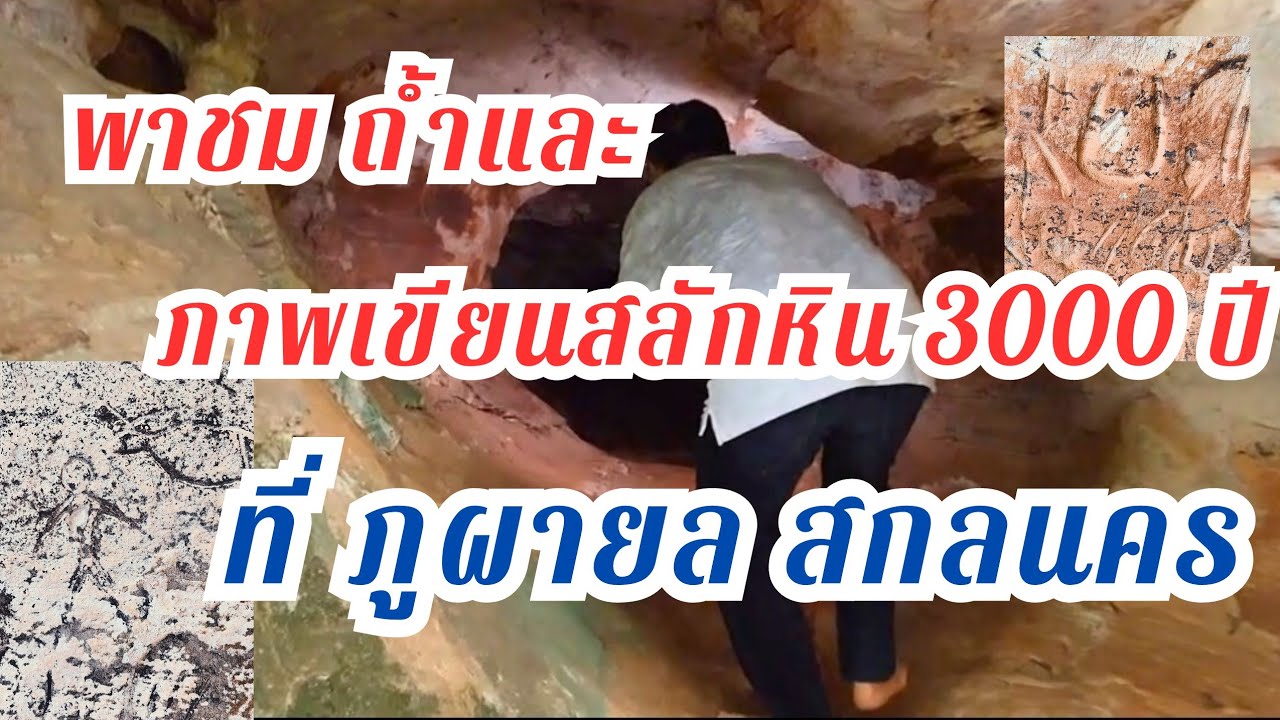
Pha Sam Phan Pi Rock Carvings at Phu Pha Yon in Sakon Nakhon Province are one of the most meaningful prehistoric archaeological attractions in northeastern Thailand. The site is located at Ban Na Phang, Kok Pla Sio Subdistrict, Phu Phan District, about 38 km from Sakon Nakhon city. Phu Pha Yon is a sandstone mountain area on the Phu Phan range, with a monastic retreat in the same area and ancient carvings on a cliff face. The carvings were made by scratching or engraving the rock surface with hard objects, creating images of people, animals, fields, handprints, and geometric patterns. These ancient marks reflect the lives, environment, and symbolic world of prehistoric communities that once lived in relation to the forests, mountains, and water sources of Sakon Nakhon.
The value of Phu Pha Yon lies in the fact that the prehistoric carvings remain within a living natural landscape. They are not separated from the forest, the mountain, or the local spiritual setting. The rock carvings are approximately 3,000 years old and are important evidence of human expression before the use of written language. Animal figures record the natural world seen by ancient people. Human figures show the place of people within the community. Field-like images point to livelihood and land use, while handprints and geometric patterns reveal a symbolic language that carried meaning beyond realistic depiction. Together, these marks make the cliff face a rare cultural record carved directly into stone.
Phu Pha Yon is not just a rock wall with old carvings. It is a place where prehistoric history, mountain ecology, and local spirituality meet. The surrounding landscape consists of forested hills, sandstone formations, natural rock shelters, and scenic viewpoints. The route toward the cliff includes stopping points where visitors can rest and look across the surrounding terrain. This setting helps explain why ancient communities selected this high sandstone landscape as a place to record images. A visit to Phu Pha Yon is therefore both an archaeological experience and a journey into the natural environment that shaped early human life in the region.
The carvings at Phu Pha Yon are different from painted rock art. They are petroglyphs created by scratching or engraving the rock surface. This method required hard tools, repeated pressure, and a clear understanding of the rock surface. The result is a set of durable lines, forms, and symbols preserved on the cliff face. The technique itself shows that prehistoric people had control over tools, composition, and visual communication. Each engraved line is both an artistic trace and evidence of the physical action of the person who created it. The rock surface became a public space of memory long before paper, books, or written records existed.
The human figures at Phu Pha Yon are especially important because they reveal how prehistoric people represented themselves. The artists did not carve only animals or natural objects; they also carved human forms. These figures show that ancient communities recognized their own role within the world and used images to express identity, movement, and group life. A carved human figure is not simply a drawing. It is a statement of presence. It says that people were here, that they acted together, and that they wanted something about their lives to remain on the stone.
Animal figures such as deer, cattle, and buffalo add another important layer to the site. These animals relate to forest life, hunting, domestication, agriculture, transport, labor, and fertility. Deer connect the site with the surrounding forest and wild environment, while cattle and buffalo are linked with fields, settlement, and agricultural life. The animal carvings therefore turn the cliff into a record of ecology as well as culture. They show that the people who made these carvings lived closely with animals and understood their importance in both practical and symbolic ways.
The field-like patterns at Phu Pha Yon are highly significant for understanding the relationship between people and land. They suggest that early communities were not only gathering food from nature but were also organizing space for cultivation and settlement. These images point to the development of land use, food production, and community memory. They make the cliff face a record of place: a place where people lived, worked, observed, and remembered. The carvings show how landscape and livelihood became part of a shared cultural story.
Handprints and geometric patterns are among the most powerful symbolic elements at Phu Pha Yon. A handprint is the most direct sign of human presence, while geometric patterns show the ability to create repeated forms, organize thought, and communicate abstract meaning. These markings are not merely decorative. They show a level of symbolic thinking that is central to prehistoric art. Within the same cliff surface, visitors can see people, animals, fields, hands, and abstract patterns. This combination makes Phu Pha Yon a rich visual archive of prehistoric thought.
The name “Phu Pha Yon” suits the landscape well. “Phu” refers to a mountain, “pha” refers to a cliff or rock face, and “yon” suggests seeing or viewing. The name fits a place defined by mountains, cliff surfaces, carved images, and scenic viewpoints. When visitors climb toward the cliff, they encounter not only the ancient carvings but also the wider view of the forested Phu Phan range. The name, the geography, and the archaeological value of the site all support one another naturally.
The area also includes a monastic retreat, giving the site a calm and respectful atmosphere. Visitors should dress politely, speak quietly, and respect the spiritual use of the area. Phu Pha Yon is both an archaeological site and a living local place connected with religious practice and community life. This is one of the site’s most distinctive qualities. It is not an isolated ruin, but a cultural landscape where ancient memory, forest nature, and present-day spiritual life coexist.
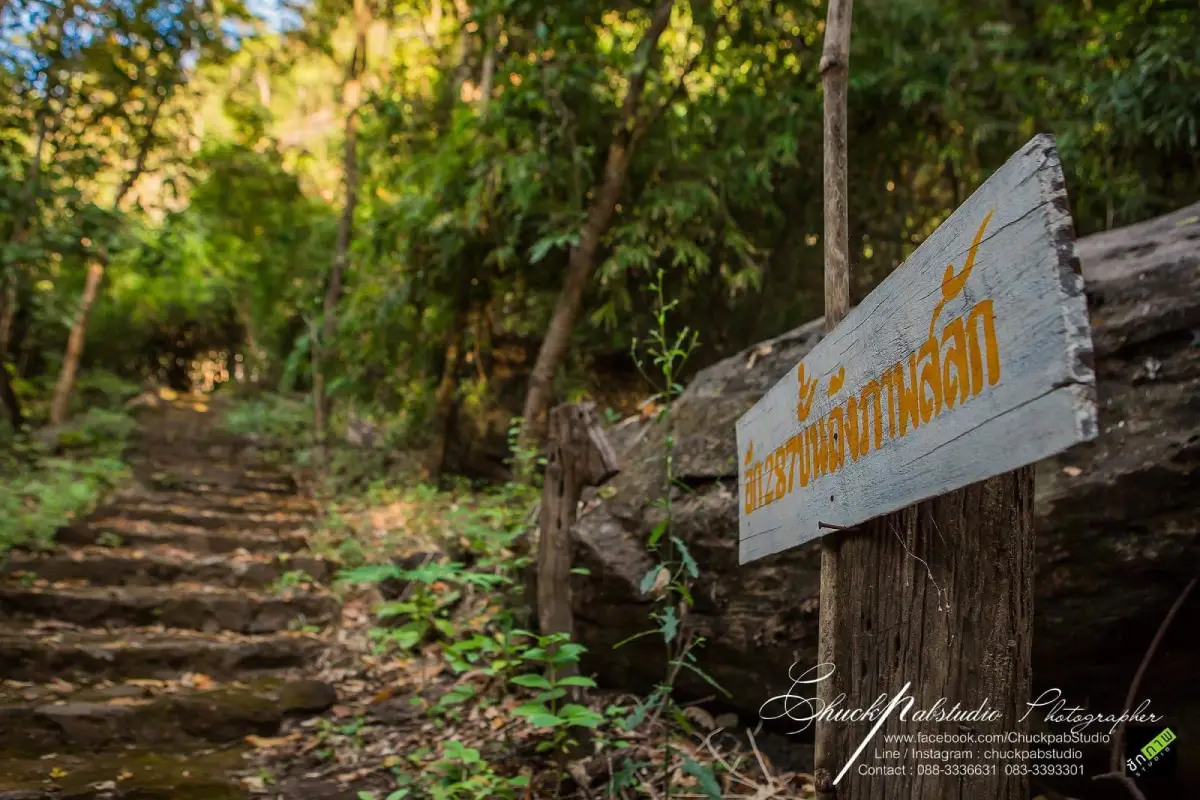
Traveling to Phu Pha Yon is most convenient by private car, rental car, or hired local vehicle. From Tao Ngoi District, take the Tao Ngoi–Si Wicha route for about 5 km, then enter the Ban Muang–Na Ang route and continue through Ban Phon Bok, Ban Phon Phaeng, and Ban Na Phang. The total distance is about 35 km. From Ban Na Phang, the road toward Phu Pha Yon is paved up to the cliff area. Visitors then climb a staircase of about 238 steps to reach the upper cliff area. Public transport to the site is limited, so independent transport is the most practical choice.
The staircase is part of the travel experience. It leads visitors from the village setting up into the elevated sandstone landscape. Along the way are rest points and natural sandstone rocks, some shaped like shelters, seats, or stone platforms. These formations add visual interest to the climb and help visitors understand the character of the mountain. Good walking shoes, drinking water, and sun protection are recommended. After rain, some surfaces may become slippery, so visitors should walk carefully and take time to rest at viewpoints along the route.
At the rock carving area, visitors should keep a respectful distance from the cliff surface. Prehistoric carvings can be damaged by touching, scratching, rubbing, smoke, moisture, and careless climbing. Once the stone surface is damaged, it cannot be restored to its original prehistoric condition. Visitors should not touch the carvings, write on the rock, climb near the carved panels, leave litter, or create new marks. Responsible behavior is essential because the site belongs not only to present visitors, but also to the local community and future generations.
Phu Pha Yon National Park is a large protected area on the Phu Phan mountain range. It covers parts of Sakon Nakhon, Nakhon Phanom, and Mukdahan provinces. The landscape includes sandstone mountains, highland plateaus, mixed deciduous forest, dry dipterocarp forest, dry evergreen forest, streams, waterfalls, reservoirs, and viewpoints. This environment gives the park both ecological and cultural significance. The prehistoric rock carvings are one of its most important cultural highlights, while the surrounding forest and mountain scenery make the journey even more rewarding.
Beyond the rock carvings, Phu Pha Yon National Park offers several natural attractions that can be included in the same trip. These include Huai Huat Reservoir, Kham Nam Sang Waterfall, Pha Phueng Waterfall, Rak Sai Yoi Waterfall, Pha Phaya Tao Ngoi, Lan Dusita, Tham Heep Phu Pha Nang, Tham Saowapha, Dong Noi Reservoir, and Tham Phra Wet. The late rainy season and cool season are especially attractive because the forest is greener, waterfalls are more active, wildflowers appear on rock terraces, and the weather is more comfortable for walking.
Huai Huat Reservoir is one of the major attractions near the national park headquarters. It has viewpoints along the dam and nearby cliffs, making it suitable for photography and relaxation. Lan Dusita is another well-known area, with small seasonal wildflowers such as dusita, silver button flowers, soi suwan flowers, en-a flowers, and sundew growing across the rock terrace during the right season. The park provides walking paths in sensitive areas so that visitors can enjoy the flowers without stepping on them. These attractions add botanical and scenic value to a visit that begins with the prehistoric carvings at Phu Pha Yon.
Phu Pha Yon is also attractive for nature photography. The site offers cliff faces, sandstone formations, forested slopes, viewpoints, stairway scenes, and atmospheric rock surfaces. Morning is the best time to climb and view the carvings because the weather is cooler and there is enough time to continue to other attractions. Late afternoon is suitable for scenic views and softer light, but visitors should descend before the park closes. The rainy and cool seasons offer the most pleasant conditions, while the hot season requires more preparation for sun and heat.
The site is managed within the area of Phu Pha Yon National Park under the Department of National Parks, Wildlife and Plant Conservation. Seasonal closures or partial closures may be announced for conservation and visitor safety. During the open period, visitors can enter during the usual operating hours of 08.00 to 16.30 and pay the national park entrance fee. Thai adults pay 20 baht, Thai children 10 baht, foreign adults 100 baht, and foreign children 50 baht. Vehicle fees are charged separately. Visitors who wish to stay overnight should contact the park in advance for accommodation or camping availability.
Main facilities in the park include a visitor service area, national park accommodation, camping areas, welfare shops, food service, toilets, parking areas, and viewpoints in open zones. Visitors who bring their own tent pay a camping area fee of 30 baht per person per night. Those who prefer easier access to restaurants and general services can stay in Tao Ngoi District or Sakon Nakhon city and visit Phu Pha Yon as a day trip. Staying closer to the park allows a quieter morning visit, while staying in the city provides more hotel and dining options.
Phu Pha Yon is suitable for families, students, cultural travelers, archaeology enthusiasts, and nature lovers. It helps make prehistoric history visible and understandable. Children and young travelers can see that ancient people truly used rock surfaces to communicate. History-focused visitors can study early symbolic expression in the upper northeast. Nature travelers can enjoy cliffs, forest, and viewpoints. The combination of archaeology and landscape makes Phu Pha Yon more than a sightseeing spot; it is an outdoor classroom of human history and natural heritage.
A practical day trip can begin in Sakon Nakhon city in the morning, continue to Phu Pha Yon for the rock carvings and viewpoints, and then extend to Pha Phaya Tao Ngoi, Huai Huat Reservoir, or waterfalls inside the national park depending on the season. Visitors who prefer a slower trip can stay overnight in the park area or Tao Ngoi District. This makes it possible to enjoy the forest and mountain atmosphere without rushing and to explore both prehistoric heritage and natural scenery in greater depth.
Good visitor etiquette is essential at Pha Sam Phan Pi Rock Carvings. Visitors should respect both the archaeological site and the monastic area, avoid loud noise, avoid climbing on the carved rock face, avoid placing food or objects near the carvings, avoid lighting fires or incense in restricted places, and carry all waste out of the area. Cultural travel is most meaningful when visitors help preserve the original condition of the site. The carvings were made once in the prehistoric past and cannot be recreated with the same meaning today.
In summary, Pha Sam Phan Pi Rock Carvings at Phu Pha Yon are among the most valuable prehistoric cultural sites in Sakon Nakhon. The province is known for Buddhist heritage, forest temples, Nong Han Lake, and Phu Thai culture, but Phu Pha Yon extends its story much further back in time. The carvings of people, animals, fields, handprints, and geometric patterns reveal that communities lived, observed, worked, and created symbolic meaning in this landscape thousands of years ago. For foreign travelers seeking a quiet, authentic, and historically rich destination in northeastern Thailand, Phu Pha Yon deserves a place on the itinerary.
| Name | Pha Sam Phan Pi Rock Carvings at Phu Pha Yon |
| Location | Ban Na Phang, Kok Pla Sio Subdistrict, Phu Phan District, Sakon Nakhon Province |
| Address | Ban Na Phang, Moo 5, Kok Pla Sio Subdistrict, Phu Phan District, Sakon Nakhon Province, Thailand |
| Highlights | Prehistoric rock carvings approximately 3,000 years old, showing people, animals, fields, handprints, and geometric patterns amid the forested Phu Phan mountain landscape |
| History | Prehistoric period, approximately 3,000 years old, representing symbolic communication by ancient communities in Sakon Nakhon |
| Name Origin | “Phu” means mountain, “pha” means cliff or rock face, and “yon” suggests seeing or viewing, matching the site’s character as a mountain cliff and viewpoint |
| Distinctive Features | Petroglyph-style carvings scratched into the rock face with hard objects, depicting people, deer, cattle, buffalo, fields, handprints, and geometric motifs |
| Key Evidence | Rock carvings that reflect prehistoric livelihood, animals, land use, symbolic thought, and the relationship between people and the mountain landscape |
| Travel Information | From Tao Ngoi District, take the Tao Ngoi–Si Wicha route for about 5 km, continue through Ban Muang–Na Ang, Ban Phon Bok, Ban Phon Phaeng, and Ban Na Phang for about 35 km. From Ban Na Phang, a paved road reaches the cliff area, followed by about 238 steps up to the upper cliff. |
| Current Status | Open during Phu Pha Yon National Park operating hours and managed within the national park and local monastic area |
| Open Days | Open daily during Phu Pha Yon National Park operating days |
| Opening Hours | 08.00 – 16.30 |
| Fees | Thai adults 20 baht, Thai children 10 baht Foreign adults 100 baht, foreign children 50 baht Motorcycle 20 baht, car 30 baht Camping area fee for visitors bringing their own tent: 30 baht/person/night |
| Facilities | Visitor service area, national park accommodation, camping area, welfare shop and restaurant, toilets, parking areas, and viewpoints in open zones |
| Main Areas / Zones | 1. Rock carving cliff area 2. Monastic retreat / Wat Non Sung area at Phu Pha Yon 3. Stairway route to the upper cliff 4. Rest stops and viewpoints along the trail 5. Natural sandstone formations 6. Route connecting Ban Na Phang with Phu Pha Yon National Park |
| Caretaker / Related Authorities | Phu Pha Yon National Park, Department of National Parks, Wildlife and Plant Conservation, together with the local monastic area / Wat Non Sung at Ban Na Phang |
| Main Contact Number | Phu Pha Yon National Park, Tel. 042-707-214, 083-835-9096 |
| Official Website / Official Page | Phu Pha Yon National Park - Phuphayon National Park and Amazing Thailand database |
| Nearby Tourist Attractions | 1. Monastic retreat / Wat Non Sung, Tham Phu Pha Yon area, about 0 km 2. Phu Pha Yon / Pha Lai viewpoint, about 1 km 3. Phaya Tao Ngoi, about 33 km 4. Huai Huat Reservoir, Phu Pha Yon National Park, about 35 km 5. Kham Nam Sang Waterfall, about 37 km 6. Lan Dusita, Phu Pha Yon National Park, about 36 km 7. Tham Pha Phaya Tao Ngoi, about 36 km |
| Nearby Restaurants | 1. Phu Pha Yon National Park welfare restaurant, about 35 km, Tel. 083-835-9096 2. Yum Mee Zing 19 Baht Sakon Nakhon, Tao Ngoi branch, about 33 km, Tel. 088-686-6844 3. Cha Payom Cafe Tao Ngoi, about 33 km, Tel. 093-696-2922 4. Farm Hug Sakon Nakhon, about 42 km, Tel. 098-929-3565, 088-572-6288 5. The Morning Taste Garden-Cafe Sakon Nakhon, about 40 km, Tel. 085-597-4931 6. Little Farm Hug, about 42 km, Tel. 095-646-5851 |
| Nearby Accommodations | 1. Phu Pha Yon National Park accommodation and camping area, about 35 km, Tel. 042-707-214, 083-835-9096 2. Tao Ngoi Resort, about 33 km, Tel. 086-631-9289 3. Pang Pond Resort, Tao Ngoi District, about 33 km, Tel. 081-799-6511 4. Dusit Hotel Sakon Nakhon, about 40 km, Tel. 042-711-198, 042-711-199, 042-712-200, 042-712-201 5. HOP INN Sakon Nakhon, about 42 km, Tel. 02-080-2222 6. The Room Boutique Hotel Sakon Nakhon, about 42 km, Tel. 099-262-9269 |
Frequently Asked Questions (FAQ)
Q: Where are the Pha Sam Phan Pi Rock Carvings at Phu Pha Yon located?
A: They are located at Ban Na Phang, Kok Pla Sio Subdistrict, Phu Phan District, Sakon Nakhon Province, about 38 km from Sakon Nakhon city and within the Phu Pha Yon National Park area.
Q: What makes Phu Pha Yon interesting?
A: The highlight is a set of prehistoric rock carvings about 3,000 years old, showing people, animals, fields, handprints, and geometric patterns, surrounded by forested mountain scenery.
Q: Is there an entrance fee for Phu Pha Yon?
A: Yes. The site follows Phu Pha Yon National Park entrance fees: Thai adults 20 baht, Thai children 10 baht, foreign adults 100 baht, and foreign children 50 baht. Vehicle fees are charged separately.
Q: What are the opening hours of Phu Pha Yon?
A: The site is open during Phu Pha Yon National Park operating hours, from 08.00 to 16.30.
Q: How do travelers get to Phu Pha Yon?
A: From Tao Ngoi District, take the Tao Ngoi–Si Wicha route for about 5 km, continue through Ban Muang–Na Ang, Ban Phon Bok, Ban Phon Phaeng, and Ban Na Phang for about 35 km, then climb the staircase to the cliff area.
Q: Who should visit Phu Pha Yon?
A: It is ideal for travelers interested in archaeology, rock carvings, forest landscapes, viewpoints, and the prehistoric history of Sakon Nakhon.
Q: What should visitors prepare before seeing the carvings?
A: Visitors should wear comfortable walking shoes, bring drinking water, a hat, and sun protection, stay on the designated path, avoid touching the carvings, and avoid climbing on the rock face.
Q: What nearby places can be visited with Phu Pha Yon?
A: Nearby places include Phaya Tao Ngoi, Huai Huat Reservoir, Kham Nam Sang Waterfall, Lan Dusita, Tham Pha Phaya Tao Ngoi, and other attractions inside Phu Pha Yon National Park.
 Category: ●Art, Culture and Heritage
 Group: ●Historical Sites and Monuments
Last Update : 4 MonthAgo
 Last Update : 4 MonthAgo
 Click to Access the Navigation Map GPS
Pha Sam Phan Pi Rock Carvings at Phu Pha Yon Map
Recommend
 Historical Sites and Monuments(9)
 Landmarks and Memorials(2)
 Royal Palace(1)
 Art, Craft Centres, Tradition(8)
 Museums(3)
 Educational Places
 Educational Gardens, Farm(2)
 University
 Public university(1)
 Rajamangala University of Technology(1)
 Rajabhat University(1)
 Places of Worship
 Temple(18)
 Church(2)
 Other Sacred Sites(4)
 Research and Development
 Royal Project(3)
 Suburban Living
 Village, Community(7)
 Nature and Wildlife
 National Parks and Marine Reserves(4)
 Mountain (Doi)(3)
 Dam, Reservoir, Lake(14)
 Waterfalls(4)
 Caves(4)
 River, Canal(9)
 Bays and Beaches(1)
 Islands(1)
 Other natural attractions(5)
 Entertainment and Agricultural
 Zoos and Aquariums(1)
 Farms, Parks and Ecotourism(4)
 Outdoor and Adventure Activities(1)
 Shopping
 Department Store(2)
 Travel Articles, Recipes
 Travel Review, Food Review(1)


