
lovethailand home >Northeastern Travel Attractions >Sakon Nakhon Travel Attractions >Sawang Daen Din >Phan Na > Prasat Ban Phanna (Ku Panna)
TL;DR: Prasat Ban Phanna (Ku Panna) is located at Ban Phanna, Phan Na Subdistrict, Sawang Daen Din District, Sakon Nakhon Province, open Daily, hours Open throughout the day; recommended visiting hours are 08.00 – 18.30.

Prasat Ban Phanna (Ku Panna)
Open Days: Daily
Opening Hours: Open throughout the day; recommended visiting hours are 08.00 – 18.30
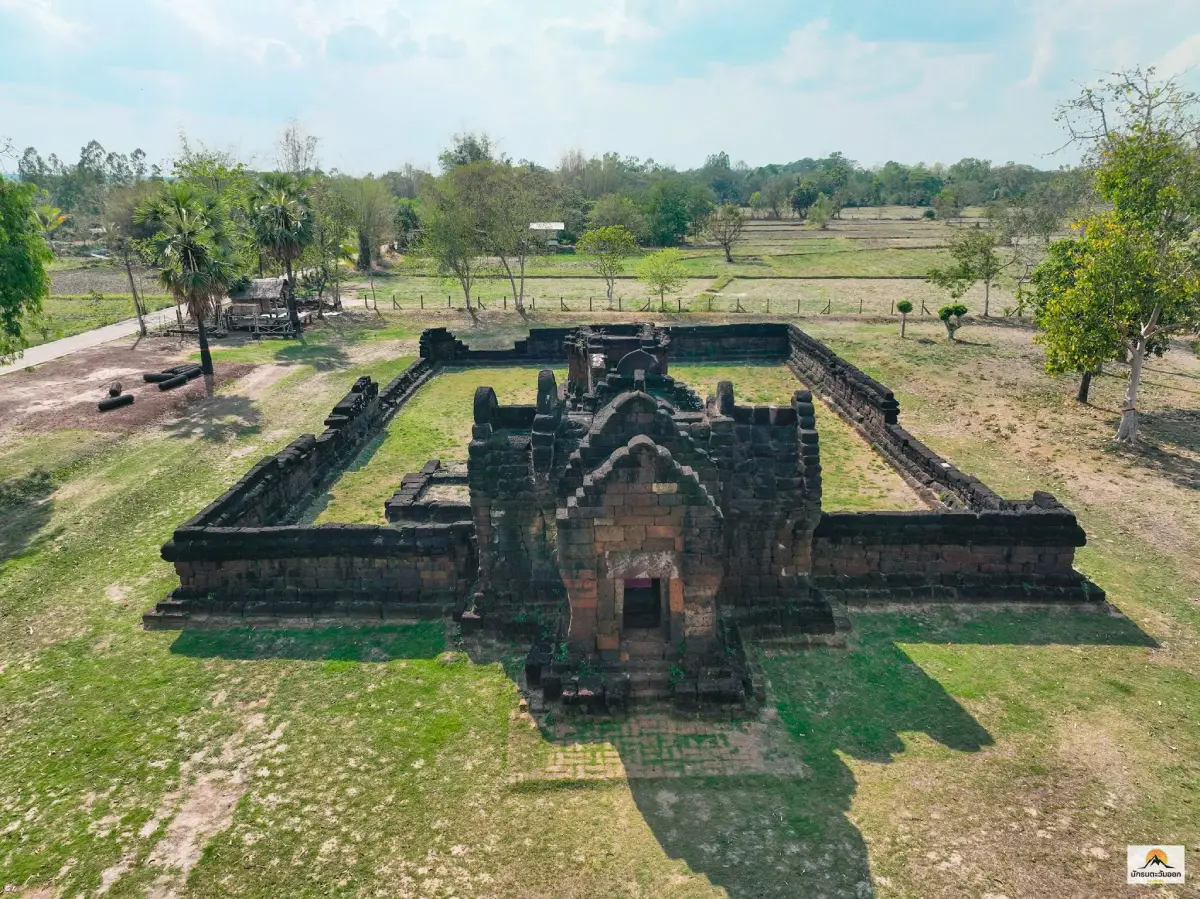
Prasat Ban Phanna, also known as Ku Phanna, is a compact but historically significant Khmer laterite sanctuary in Ban Phanna, Phan Na Subdistrict, Sawang Daen Din District, Sakon Nakhon Province. Located along the Sakon Nakhon–Udon Thani route, about 70 km from Sakon Nakhon city and about 11 km from Sawang Daen Din town, this ancient site is an excellent destination for travelers interested in Khmer history, Bayon-style art, Mahayana Buddhism, and quiet cultural attractions in northeastern Thailand. Its most distinctive features are the single-towered laterite sanctuary, rectangular plan, enclosing laterite wall, eastern gateway, remaining base of a secondary structure, and a laterite-lined pond near the sanctuary.
Prasat Ban Phanna is better known locally as Ku Phanna. In the Isan cultural context, the word “ku” is often used for an ancient masonry sanctuary or Khmer religious structure, while “Phanna” comes from the name of the local village and subdistrict. The name therefore directly identifies the site as the ancient sanctuary of Ban Phanna. Unlike the grand Khmer monuments of Phanom Rung or Phimai, Ku Phanna is modest in scale, easy to explore, and highly readable as an archaeological site. Visitors can still see the relationship between the main sanctuary, the laterite enclosure, the gateway, the secondary building, and the pond, which together reveal the original layout of the site.
The importance of Prasat Ban Phanna lies in its original role as an Arogayasala, a religious sanctuary attached to an ancient hospital during the reign of King Jayavarman VII of the Khmer Empire in the 18th Buddhist century. Jayavarman VII was one of the most influential Khmer kings, known for establishing religious monuments, roads, rest houses, and hospital shrines across the empire. These Arogayasala sites were not merely places associated with medical care in a modern sense. They were spaces where healing, religious devotion, royal authority, and Mahayana Buddhist belief were closely connected.
Upon entering the site, the first impression is the deep reddish-brown tone of the laterite blocks. The rough texture of the stone, shaped by centuries of weathering, gives the sanctuary a solemn and powerful atmosphere. The main shrine stands within a laterite enclosure and faces east, following the traditional orientation of Khmer sacred architecture. The principal entrance is on the eastern side, while the other sides include blind door elements or closed walls that create architectural balance. Even though some upper portions have deteriorated with time, the overall form of the sanctuary remains clear enough for visitors to understand its sacred function.
The main sanctuary is a square laterite structure with a projecting porch and a single tower. Laterite was used as the primary building material, while sandstone was likely used in specific architectural elements that required greater precision and durability. The interior chamber is relatively small, indicating that the building was intended primarily for ritual use and the placement of sacred images rather than for accommodating large numbers of people. Visitors should begin by observing the overall plan from outside the enclosure before moving closer to study the base, doorway, wall surfaces, and remaining architectural details.
The eastern side of the complex includes the laterite wall and the gopura, or entrance gateway. This gateway once served as a symbolic transition from the ordinary outside world into the sacred interior space. Passing through the eastern gateway allows visitors to experience the site in a sequence similar to its original ritual approach: first the outer boundary, then the gateway, and finally the central sanctuary. This spatial order is one of the most valuable aspects of Ku Phanna because it helps travelers understand that the monument was carefully planned, not simply built as an isolated tower.
To the southeast of the main sanctuary are the remains of another structure, often interpreted as a vihara or a library-like building known in Khmer architecture as a bannalai. Although only parts of the base remain today, its position is important for understanding the site as a complete religious compound. The main sanctuary, gateway, enclosure wall, secondary structure, and pond all worked together as elements of a sacred and functional landscape. For this reason, Ku Phanna should be explored as a whole site rather than as a single ruined tower.
The laterite-lined pond near the sanctuary is another key feature. Its rectangular form and layered laterite construction reflect the importance of water in Khmer sacred landscapes. In the context of an Arogayasala, water was associated with purification, ritual use, and the broader idea of healing. The pond helps reinforce the identity of Ku Phanna as a hospital shrine connected with both physical and spiritual well-being. Travelers should make time to view the pond together with the sanctuary, as it gives a fuller picture of how the original site functioned.
Archaeological work at the site in 1999 uncovered several important objects, including the head of Vajradhara, fragments of Vajrapani riding Garuda, Yama riding a buffalo, and a fragment of the arm of Avalokitesvara. These discoveries link the site clearly with Mahayana Buddhism and Bayon-style Khmer art. They also show that Prasat Ban Phanna was not simply a local ruin, but part of a larger religious and administrative network established during the Khmer period. The sculptures associated with compassion, protection, and healing fit well with the site’s identity as an Arogayasala.
Bayon-style art is strongly connected with the reign of King Jayavarman VII, a period when Mahayana Buddhist imagery became central to Khmer royal ideology. Hospital shrines such as Ku Phanna reflected a system in which religion, state power, public welfare, and healing were integrated. Although the monument is small, its historical meaning is substantial. It tells the story of a community located within an ancient cultural route and reveals how Khmer influence extended into the upper northeastern region of present-day Thailand.
Prasat Ban Phanna was registered as a national ancient monument on 8 March 1935, confirming its archaeological and historical value at the national level. The protected area covers 4 rai, 1 ngan, and 33 square wah. This formal recognition means that the site should be treated not only as a tourist attraction but also as a protected cultural heritage place. Visitors should avoid climbing on the walls, moving stones, touching fragile sections, or leaving litter anywhere within the site.
The atmosphere around Ku Phanna is quiet and open. The sanctuary stands amid grass, trees, and the rural surroundings of Ban Phanna. This simplicity is one of the site’s strongest charms. It is not crowded, overly commercialized, or visually overwhelmed by modern buildings. Early morning and late afternoon are the best times for photography, as the soft sunlight enhances the reddish-brown tone of the laterite and gives depth to the wall surfaces. During the rainy season, the grass becomes greener and the pond area feels more alive, while the cool season offers the most comfortable walking conditions.
For history-focused travelers, the best way to explore the site is to begin at the eastern gateway, enter the enclosure, view the main sanctuary from a distance, and then slowly approach the base and doorway. After that, walk toward the remains of the secondary structure in the southeast and continue to the laterite pond outside the enclosure. This route helps visitors understand the site as a planned religious compound. It also gives a better sense of the symbolic movement from the outer world into the sacred center.
Even travelers without specialist knowledge of archaeology will find Ku Phanna accessible and rewarding. The site is not large, and its main elements can be understood within a short visit. It is ideal as a cultural stop on the Sakon Nakhon–Udon Thani route or as part of a half-day trip around Sawang Daen Din. Nearby places such as Phanna Buri, Phra Borommathat Chedi Si Mongkhon at Wat Mai Ban Tan, See Stars & Forest Resort, and the Ban Chiang archaeological area can be combined with Ku Phanna to create a broader cultural route.
The surrounding area of Sawang Daen Din is historically rich. In addition to Khmer-period remains, the wider region is associated with several layers of culture, including prehistoric communities, Ban Chiang culture, Dvaravati, Lopburi, and Lan Xang influences. The presence of Ku Phanna therefore helps show that Sakon Nakhon was not merely a provincial passageway but an important historical landscape shaped by movement, belief, settlement, and cultural exchange over many centuries.
For practical travel planning, most visitors spend about 30 minutes to 1 hour at Prasat Ban Phanna. Those who enjoy photography, architecture, or archaeology may want to stay longer. The site is mainly outdoors, so visitors should bring a hat, drinking water, comfortable shoes, and sun protection. In the rainy season, the ground may be slippery, while in the hot season, the midday sun can be strong. A respectful, slow visit is the best way to appreciate the site and help preserve it for future travelers.
Getting There is most convenient by private car, rental car, or a hired local vehicle. From Sakon Nakhon city, follow Highway 22 toward Udon Thani for about 70 km. Near Ban Phanna, turn off the main road and continue for about 2 km to reach the sanctuary. From Sawang Daen Din town, the site is about 11 km away. Travelers using public transport can get to Sawang Daen Din first and then hire local transport to Ban Phanna, but having a private vehicle makes it easier to combine Ku Phanna with nearby restaurants, cafes, hotels, and other attractions.
One of the most appealing aspects of Ku Phanna is its close relationship with the local community. The monument is not isolated in a large tourist complex; it remains part of the living landscape of Ban Phanna. Visitors therefore experience both ancient heritage and local rural atmosphere at the same time. This makes respectful behavior especially important. The site is not merely a photo backdrop, but a surviving piece of history standing within a real community.
As a learning destination, Ku Phanna is an excellent example of an Arogayasala in northeastern Thailand. Students, cultural travelers, and anyone interested in Khmer art can study the layout of the sanctuary, the use of laterite, the placement of the pond, the relationship between Mahayana Buddhism and Khmer royal power, and the function of ancient hospital shrines. Seeing the monument in person gives a much clearer understanding than reading about it only from books or photographs.
In summary, Prasat Ban Phanna (Ku Phanna) is one of the most worthwhile historical stops in Sawang Daen Din District, Sakon Nakhon Province. Its value lies not in monumental scale but in its clear identity as a Khmer Arogayasala from the reign of King Jayavarman VII. The laterite sanctuary, enclosure wall, eastern gateway, secondary building remains, and ancient pond together create a compact but meaningful cultural landscape. For foreign travelers seeking a quiet, authentic, and historically rich destination in northeastern Thailand, Ku Phanna is a place that deserves time and attention.
| Name | Prasat Ban Phanna (Ku Phanna) |
| Location | Ban Phanna, Phan Na Subdistrict, Sawang Daen Din District, Sakon Nakhon Province |
| Address | Phan Na Subdistrict, Sawang Daen Din District, Sakon Nakhon 47240, Thailand |
| Coordinates | 17.442589, 103.557364 |
| Highlights | A compact Khmer laterite Arogayasala with a main sanctuary, enclosing wall, eastern gateway, secondary structure remains, and an ancient laterite pond |
| History | Built around the 18th Buddhist century during the reign of King Jayavarman VII as a religious sanctuary attached to an ancient hospital |
| Name Origin | “Ku” is a local term often used for ancient Khmer religious structures, while “Phanna” refers to the village and subdistrict where the monument is located |
| Distinctive Features | Single-towered laterite sanctuary facing east, surrounded by a laterite wall with an eastern gopura |
| Key Evidence | Archaeological finds include the head of Vajradhara, fragments of Vajrapani riding Garuda, Yama riding a buffalo, and a fragment of Avalokitesvara, linking the site with Mahayana Buddhism and Bayon-style Khmer art |
| Travel Information | From Sakon Nakhon city, take Highway 22 toward Udon Thani for about 70 km, then turn into Ban Phanna for about 2 km. From Sawang Daen Din town, the site is about 11 km away. |
| Current Status | Open to visitors; registered as a national ancient monument and recognized as a historical attraction in Sawang Daen Din District |
| Open Days | Daily |
| Opening Hours | Open throughout the day; recommended visiting hours are 08.00 – 18.30 |
| Fees | No admission fee |
| Facilities | Parking area, walking area around the ancient monument, and open outdoor space for photography |
| Main Areas / Zones | 1. Main laterite sanctuary 2. Eastern gopura or gateway 3. Laterite enclosure wall 4. Remains of the secondary structure or bannalai 5. Ancient laterite pond 6. Open archaeological grounds |
| Caretaker / Related Authorities | Phanna Subdistrict Municipality and the Fine Arts Department for ancient monument conservation |
| Main Contact Number | Phanna Subdistrict Municipality, Tel. 0 4272 9392 |
| Official Website / Official Page | Phanna Subdistrict Municipality and Amazing Thailand database |
| Nearby Tourist Attractions | 1. Phanna Buri, about 6 km 2. Phra Borommathat Chedi Si Mongkhon at Wat Mai Ban Tan, about 20 km 3. Phra That Mee Chai Museum, about 21 km 4. See Stars & Forest Resort and airplane cafe, about 17 km 5. Ban Chiang Archaeological Site, Udon Thani Province, about 37 km |
| Nearby Restaurants | 1. BEVERAGE CRAFT Phannaburi, about 6 km, Tel. 061-892-9161 2. See Stars & Forest Resort Restaurant / Cafe, about 17 km, Tel. 042-722-188 3. Ban Suan Swetkamol, about 17 km, Tel. 042-721-652 4. Kokhun Khun Ek Sawang Daen Din, about 15 km, Tel. 042-722-266 5. Kafae Ban Suan Phop Ploy, about 15 km, Tel. 086-305-0358 |
| Nearby Accommodations | 1. Rachiga Hotel Grand Resort, about 5 km, Tel. 064-325-5255 2. Resotel Ban Sanuk, about 9 km 3. Chuanthanapanya Resort, about 12 km, Tel. 042-737-744 4. Prakaithong Hotel Sawang Daen Din, about 15 km, Tel. 084-656-8241 5. See Stars & Forest Resort, about 17 km, Tel. 042-722-188 |
Frequently Asked Questions (FAQ)
Q: Where is Prasat Ban Phanna located?
A: Prasat Ban Phanna, also known as Ku Phanna, is located in Ban Phanna, Phan Na Subdistrict, Sawang Daen Din District, Sakon Nakhon Province, about 70 km from Sakon Nakhon city.
Q: Why is Ku Phanna historically important?
A: Ku Phanna was an Arogayasala, a religious sanctuary attached to an ancient hospital, built around the 18th Buddhist century during the reign of King Jayavarman VII of the Khmer Empire.
Q: Is there an admission fee for Prasat Ban Phanna?
A: No. Visitors can enter Prasat Ban Phanna without paying an admission fee.
Q: What is the best time to visit Ku Phanna?
A: Morning and late afternoon are the best times to visit because the weather is more comfortable and the light is better for viewing and photographing the laterite structure.
Q: What are the main highlights of Prasat Ban Phanna?
A: The main highlights are the single-towered laterite sanctuary, laterite enclosure wall, eastern gopura, secondary structure remains, and the ancient laterite pond.
Q: How do travelers get to Prasat Ban Phanna?
A: From Sakon Nakhon city, take Highway 22 toward Udon Thani for about 70 km, then turn into Ban Phanna for about 2 km. Traveling by private car is the most convenient option.
Q: How long should visitors spend at Ku Phanna?
A: Most visitors spend about 30 minutes to 1 hour. Travelers interested in photography or archaeology may want to stay longer.
Q: What nearby places can be combined with a visit to Ku Phanna?
A: Nearby places include Phanna Buri, Phra Borommathat Chedi Si Mongkhon at Wat Mai Ban Tan, Phra That Mee Chai Museum, See Stars & Forest Resort, and Ban Chiang Archaeological Site.
 Category: ●Art, Culture and Heritage
 Group: ●Historical Sites and Monuments
Last Update : 2 MonthAgo
 Last Update : 2 MonthAgo
 Click to Access the Navigation Map GPS
Prasat Ban Phanna (Ku Panna) Map
Recommend
 Historical Sites and Monuments(9)
 Landmarks and Memorials(2)
 Royal Palace(1)
 Art, Craft Centres, Tradition(8)
 Museums(3)
 Educational Places
 Educational Gardens, Farm(2)
 Places of Worship
 Temple(18)
 Church(2)
 Other Sacred Sites(4)
 Research and Development
 Royal Project(3)
 Suburban Living
 Village, Community(7)
 Nature and Wildlife
 National Parks and Marine Reserves(4)
 Mountain (Doi)(3)
 Dam, Reservoir, Lake(14)
 Waterfalls(4)
 Caves(4)
 River, Canal(9)
 Bays and Beaches(1)
 Islands(1)
 Other natural attractions(5)
 Entertainment and Agricultural
 Zoos and Aquariums(1)
 Farms, Parks and Ecotourism(4)
 Outdoor and Adventure Activities(1)


