
lovethailand home >Northeastern Travel Attractions >Nong Bua Lamphu Travel Attractions >Na Klang >Kut Hae > Ban Kut Hae Silk Weaving Group
TL;DR: Ban Kut Hae Silk Weaving Group is located at Ban Pho Kham, Moo 2, Kut Hae Subdistrict, Na Klang District, Nong Bua Lam Phu Province, open Daily, hours 08.00 – 17.00.
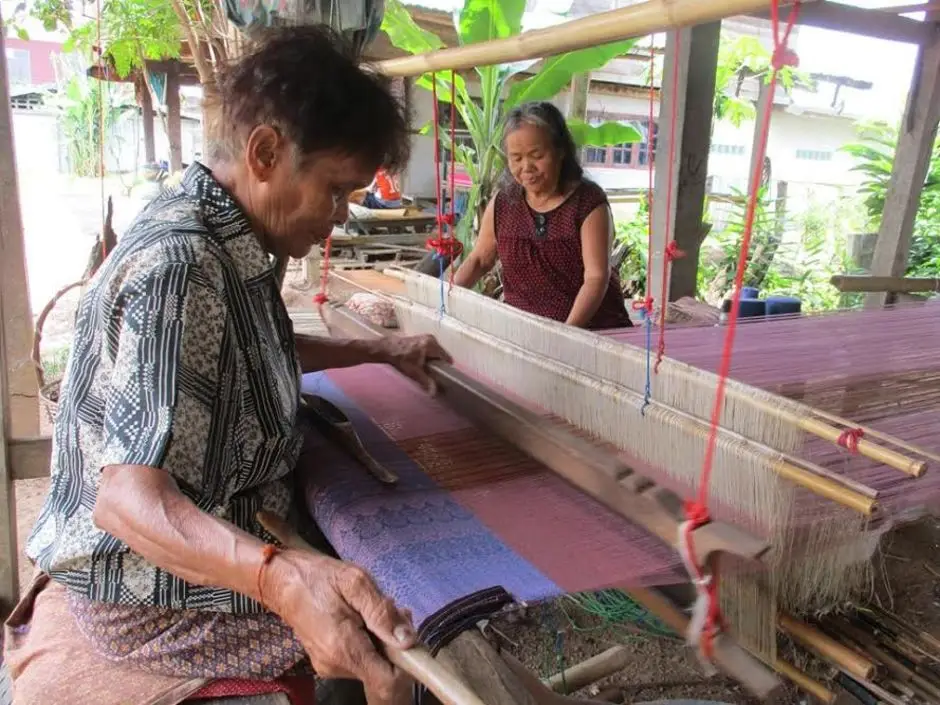
Ban Kut Hae Silk Weaving Group
Open Days: Daily
Opening Hours: 08.00 – 17.00
Ban Kut Hae Silk Weaving Group, also known as the Ban Pho Kham Khit Silk Weaving Group or Mae Kru Lamduan Khit Silk Group, is one of the most respected silk craft communities in Nong Bua Lam Phu Province. Located in Kut Hae Subdistrict, Na Klang District, this community-based attraction is an important destination for travelers who want to understand Thai silk beyond ordinary shopping. It offers a close look at Isan textile heritage, women-led craftsmanship, intricate khit weaving techniques, and the cultural meanings woven into silk patterns that have made Ban Kut Hae famous at the national level.
The group is located at Ban Pho Kham, Moo 2, Kut Hae Subdistrict, Na Klang District, Nong Bua Lam Phu Province. From Nong Bua Lam Phu town, visitors travel about 35 km to Na Klang District Office, continue about 2 km to the Ban Nong Dan intersection, then turn right for about 3 km into Ban Kut Hae. The route is best suited for travelers with a private car, rental car, or a local cultural itinerary. Because the village is in a rural area, the journey itself helps visitors see the agricultural landscape and slower rhythm of northeastern Thailand before arriving at the weaving community.
What makes Ban Kut Hae silk distinctive is the khit weaving technique. In northeastern Thai textile culture, khit refers to a method of lifting or picking selected threads to create raised patterns in the fabric structure. The patterns are not printed after weaving; they are built into the textile by controlling warp and weft threads with great accuracy. This means each motif requires planning, counting, rhythm, and concentration. In some complex designs, more than one weaver is needed. One person controls the weaving and khit lifting, while another helps pass the shuttle and maintain the rhythm of the pattern. After weaving, the fabric must be carefully finished, with knots and loose silk fibers removed neatly.
The heritage of Ban Kut Hae khit silk developed from older local textile knowledge. In the past, khit patterns were commonly seen on household objects such as traditional pillows, ritual cloths, and domestic textiles. When the women’s weaving group was established, these traditional motifs were developed into refined khit silk fabrics suitable for clothing, ceremonial use, collectors, and high-quality souvenirs. This transformation allowed household knowledge to become a community product with stronger economic value while still preserving the identity of the original craft.
The group is closely associated with Mrs. Lamduan Nantasutha, a respected local weaving teacher and group leader. Her name has become strongly connected with Ban Kut Hae khit silk because of her role in developing, preserving, and promoting the community’s textile knowledge. Under this local leadership, Ban Kut Hae silk has gained recognition in competitions and product selections, becoming known as a high-quality 5-star OTOP product of the northeastern region. This recognition reflects not only beauty but also technical skill, consistency, and cultural value.
The beauty of Ban Kut Hae silk comes from both design and meaning. Many patterns draw inspiration from flowers, auspicious animals, local beliefs, Isan traditions, and symbols of Nong Bua Lam Phu Province. Well-known patterns include dok phikun, hua nak, kunjae chin, inthawa, bua sawan, krathong thong, soi sangwan, moradok thai, phet mani, and other locally developed motifs. These designs turn silk into a visual language. A fabric is not merely a decorative object; it becomes a story of place, belief, memory, and identity.
One of the most important creative achievements of Ban Kut Hae is the adaptation of Nong Bua Lam Phu’s provincial motto into a silk pattern. The motto refers to key local entities such as the King Naresuan the Great Shrine, Phu Kao-Phu Phan Kham National Park, the land of Luang Pu Khao, Erawan Cave, the historical town of Khuean Khan, and the symbolic lotus of Nong Bua Lam Phu. When these elements are translated into woven motifs, the fabric becomes a cultural map of the province. This makes the khit silk pattern not only beautiful but also deeply connected to local history, faith, landscape, and memory.
The weaving process requires both hand skill and pattern memory. A weaver must understand silk preparation, warp setting, color arrangement, pattern structure, and the rhythm of lifting threads. A small error can disturb the balance of an entire motif. This is why khit silk is considered a demanding textile form. The weaver must coordinate hands, eyes, and concentration over a long period of time. Every finished piece represents personal skill as well as knowledge inherited within the community.
Silk quality is central to the beauty of the fabric. Fine silk gives softness, weight, and natural sheen. When used in khit weaving, the raised motifs become more dimensional than those on ordinary fabric. Collectors and textile lovers often look carefully at the clarity of the pattern, the balance of colors, the smoothness of the edges, and the finishing on both sides of the fabric. A good khit silk piece should feel complete in structure, not only attractive from a distance.
For visitors, Ban Kut Hae offers an opportunity to understand how one piece of silk is created through many stages. The process includes selecting silk threads, preparing the warp, arranging the design, weaving, finishing, and caring for the completed textile. Visitors can view different silk patterns, choose fabrics directly from the source, and ask about use, meaning, and maintenance. Buying directly from the weaving community gives travelers a clearer understanding of where the fabric comes from and supports the local economy more directly than buying from a distant retail shop.
Ban Kut Hae khit silk can be used in many ways. Larger fabrics are suitable for Thai dresses, contemporary outfits, shawls, ceremonial wear, and formal occasions. Smaller pieces may be chosen as souvenirs, textile samples, or decorative items. Highly detailed patterns are especially suitable for collectors or people seeking silk for weddings, cultural ceremonies, official events, or meaningful gifts. More contemporary color combinations can be used in modern fashion while still preserving the essence of Isan textile heritage.
Choosing khit silk requires attention to pattern, color, texture, and purpose. If the fabric will be tailored into clothing, visitors should ask about length and suitability for the intended design. If it is bought as a collectible, patterns with cultural meaning or high technical complexity are especially valuable. If it is bought as a gift, a pattern with an easy-to-explain meaning may be ideal. Direct conversation with the group also helps buyers understand how to wash, fold, store, and protect silk from strong sunlight and moisture.
Culturally, Ban Kut Hae khit silk is an example of how women, community, and local economy are connected through craft. Weaving knowledge that once existed mainly in households has become a source of income, pride, and cultural continuity. The women’s weaving group helps preserve old skills while creating economic opportunities for families. In this sense, weaving is not only a craft but also a livelihood, an art form, and a system of cultural preservation.
The success of Ban Kut Hae also helps younger generations see the value of local knowledge. When woven fabrics win awards, receive recognition, and attract travelers, the community gains motivation to continue improving designs, colors, quality, and presentation. At the same time, the core of traditional khit weaving must remain intact. The strength of Ban Kut Hae silk lies in this balance between preservation and adaptation. It is heritage that continues to live, not heritage kept only as a memory.
Travelers interested in design, fashion, textiles, or Thai handicrafts will find many details worth studying here. The village shows how local symbols can be transformed into fabric patterns, how colors create rhythm across the cloth, and how old motifs can be adapted to contemporary taste. A single piece of khit silk can be read as design, craftsmanship, community economy, and cultural documentation at the same time.
The atmosphere of visiting Ban Kut Hae is simple and community-based. It is not a large tourist complex or a formal museum. Its value lies in seeing real products, meeting the people involved, observing patterns closely, and understanding the intention behind the work. This kind of visit rewards travelers who take time to look carefully. Khit silk cannot be fully understood in a quick glance. The more one observes the pattern, texture, and story, the more meaningful the fabric becomes.
For community-based travel, Ban Kut Hae reveals an important side of Nong Bua Lam Phu. The province is not only known for temples, caves, mountains, and archaeological sites. It also has strong textile heritage and living craft communities. In Ban Kut Hae, weaving is part of everyday life. It is connected to farming households, local women, community cooperation, and the desire to preserve knowledge while earning income. This gives the destination a human dimension that many major tourist attractions cannot provide.
For families, the weaving group is a useful learning destination. Children can see that fabric does not simply come from shops; it begins with fiber, skill, patience, and human labor. They can learn about color, pattern, counting, rhythm, and the value of handmade work. Adults can understand the role of textiles in local livelihood and cultural continuity. This makes the visit educational as well as enjoyable.
For international travelers, Ban Kut Hae is a clear example of the difference between general Thai silk and Isan khit silk. Khit patterns are created through the woven structure rather than surface printing. The motif rises from the arrangement of threads, which makes the fabric technically and culturally rich. Visitors familiar with weaving traditions from other countries can easily connect this technique with global textile knowledge, while still recognizing its distinct Thai and Isan identity.
A visit to Ban Kut Hae can be combined with attractions in Na Klang District and nearby areas. Travelers can begin from Nong Bua Lam Phu town, continue to the weaving group, then visit Wat Pa Tham Wiwek at Ban Yang Luang, Phu Ing Than, Tham Pha Cho, Wat Tham Erawan, or the 150 Million Years Stone Shell Museum and Dinosaur Non Than. This route offers a mix of craft, faith, nature, geology, and local culture, making it suitable for a one-day or two-day trip.
The best time to visit is during daytime opening hours, when natural light makes it easier to see the colors and fine details of the silk. Visitors who want to choose fabric should allow at least 1 hour to compare patterns, ask questions, and understand the use of each textile. Those who want a deeper learning experience should contact the group in advance, especially if traveling as a group, because weaving activities depend on the daily work rhythm of the community.
Good manners are important when visiting a working craft community. Visitors should ask before photographing people, looms, or private working areas. Silk should be handled carefully, especially high-value or finely woven pieces. Hands should be clean and dry before touching fabric. Respectful behavior helps protect the textiles and shows appreciation for the time and labor invested in each piece.
After buying silk, proper care is essential. Silk should be washed gently or professionally cleaned when appropriate. It should not be twisted strongly, dried in harsh sunlight, or stored in damp conditions. Collectible silk should be folded carefully and occasionally refolded to avoid permanent creases. With proper care, high-quality khit silk can last for many years and become both clothing and a family keepsake.
Overall, Ban Kut Hae Silk Weaving Group offers more than a shopping experience. It allows visitors to see Thai textile heritage through real people, real materials, and real processes. The value of the place lies in the creativity of the patterns, the cooperation of local women, the preservation of inherited skills, and the reputation that Ban Kut Hae silk has brought to Nong Bua Lam Phu. If one sees the fabric only as a beautiful object, one sees only the surface. Looking deeper reveals people, faith, landscape, memory, and local wisdom woven into every thread.
Getting There from Nong Bua Lam Phu town, travel about 35 km to Na Klang District. From the district area, continue about 2 km to the Ban Nong Dan intersection, then turn right for about 3 km into Ban Kut Hae. The weaving group is located in Ban Pho Kham, Kut Hae Subdistrict. A private car or rental car is the most convenient option because it allows visitors to explore nearby attractions and spend enough time choosing silk without rushing. Group visitors should contact the weaving group in advance to arrange a suitable visit time.
In summary, Ban Kut Hae Silk Weaving Group is a meaningful destination for travelers interested in Thai silk, Isan khit weaving, local handicrafts, community livelihoods, and high-quality cultural souvenirs. Its highlights include intricate khit silk patterns, technically demanding weaving, designs inspired by Nong Bua Lam Phu identity, and the leadership of Mae Kru Lamduan Nantasutha. Visitors can come daily from 08.00 to 17.00 to view, purchase, and learn about silk directly from the community where it is made.
| Name | Ban Kut Hae Silk Weaving Group / Mae Kru Lamduan Khit Silk Group |
| Location | Ban Pho Kham, Moo 2, Kut Hae Subdistrict, Na Klang District, Nong Bua Lam Phu Province |
| Address | 231 Moo 2, Kut Hae Subdistrict, Na Klang District, Nong Bua Lam Phu Province 39170, Thailand |
| Highlights | Nationally recognized khit silk from Ban Kut Hae, known for award-winning patterns and 5-star OTOP quality in the northeastern region |
| History | Developed from traditional khit textile knowledge and old pillow motifs into refined silk fabrics recognized at the national level |
| Name Origin | Named after Ban Kut Hae and the Ban Pho Kham khit silk community, an important silk weaving source in Kut Hae Subdistrict |
| Distinctive Features | Intricate khit silk patterns; some designs require 2 or more weavers to coordinate shuttle passing, thread lifting, and detailed finishing |
| Signature Patterns | Dok Phikun, Hua Nak, Chinese Key Pattern, Inthawa, Bua Sawan, Krathong Thong, Soi Sangwan, Moradok Thai, and Nong Bua Lam Phu Motto Pattern |
| Travel Information | From Nong Bua Lam Phu town, travel about 35 km to Na Klang District, continue about 2 km to Ban Nong Dan intersection, then turn right for about 3 km into Ban Kut Hae |
| Current Status | Open for visitors to view and purchase khit silk directly from the weaving community |
| Open Days | Daily |
| Opening Hours | 08.00 – 17.00 |
| Facilities | Silk viewing and shopping area, discussion area with group members, weaving learning area, and community parking space depending on local conditions |
| Main Areas / Zones | Khit silk sales area, pattern display area, loom learning area, conversation area with weavers and group leaders, and silk souvenir selection area |
| Caretaker / Group Leader | Mrs. Lamduan Nantasutha |
| Main Contact Number | 042-359-370, 087-219-8231 |
| Official Website / Official Page | Listed in the Queen Sirikit Department of Sericulture shop database and local Kut Hae community information sources |
| Nearby Tourist Attractions | 1. Wat Pa Tham Wiwek, Ban Yang Luang, about 12 km 2. Phu Ing Than, Dan Chang, about 18 km 3. Tham Pha Cho, about 22 km 4. Wat Tham Erawan, about 32 km 5. 150 Million Years Stone Shell Museum And Dinosaur Non Than, about 38 km |
| Nearby Restaurants | 1. ROUTE210-Hotpot, about 7 km, Tel. 094-556-9688 2. Kodang Bingsu @ Na Klang, about 8 km, Tel. 065-464-7234 3. Por Piang Cafe Na Klang, about 9 km, Tel. 089-896-9487 4. Jungle Cafe Kut Din Chi Branch, about 17 km, Tel. 065-689-9744 5. Mao Mao Street Food, about 40 km, Tel. 099-871-0780 |
| Nearby Accommodations | 1. Sakaethong Resort, about 7 km, Tel. 089-861-4433 2. Pialo Resort Naklang, about 8 km, Tel. 089-841-1535 3. Khamkoon Resort, about 12 km, Tel. 099-180-0750 4. Tontan Resort Nong Bua Lam Phu, about 13 km, Tel. 098-280-7099 5. Nordic House And Coffee, about 42 km, Tel. 080-313-4564 |
Frequently Asked Questions (FAQ)
Q: Where is Ban Kut Hae Silk Weaving Group located?
A: It is located at Ban Pho Kham, Moo 2, Kut Hae Subdistrict, Na Klang District, Nong Bua Lam Phu Province.
Q: What are the opening days and hours?
A: The group is open daily from 08.00 to 17.00.
Q: What makes Ban Kut Hae khit silk special?
A: It is known for intricate khit silk patterns woven with great precision. Some patterns require 2 or more weavers and reflect the cultural identity of Nong Bua Lam Phu.
Q: Who is the leader of the weaving group?
A: The group leader is Mrs. Lamduan Nantasutha, an important local weaving teacher associated with Ban Kut Hae khit silk.
Q: What patterns are available?
A: Well-known patterns include Dok Phikun, Hua Nak, Chinese Key Pattern, Inthawa, Bua Sawan, Krathong Thong, Soi Sangwan, and the Nong Bua Lam Phu Motto Pattern.
Q: Can travelers buy silk directly from the group?
A: Yes. Visitors can buy khit silk directly from the community and ask about patterns, usage, and silk care.
Q: How do travelers get there from Nong Bua Lam Phu town?
A: Travel about 35 km to Na Klang District, continue about 2 km to Ban Nong Dan intersection, then turn right for about 3 km into Ban Kut Hae.
Q: What nearby attractions can be combined with this visit?
A: Visitors can combine the trip with Wat Pa Tham Wiwek, Phu Ing Than, Tham Pha Cho, Wat Tham Erawan, and the 150 Million Years Stone Shell Museum and Dinosaur Non Than.
 Category: ●Suburban Living
 Group: ●Village, Community
Last Update : 2 MonthAgo
 Last Update : 2 MonthAgo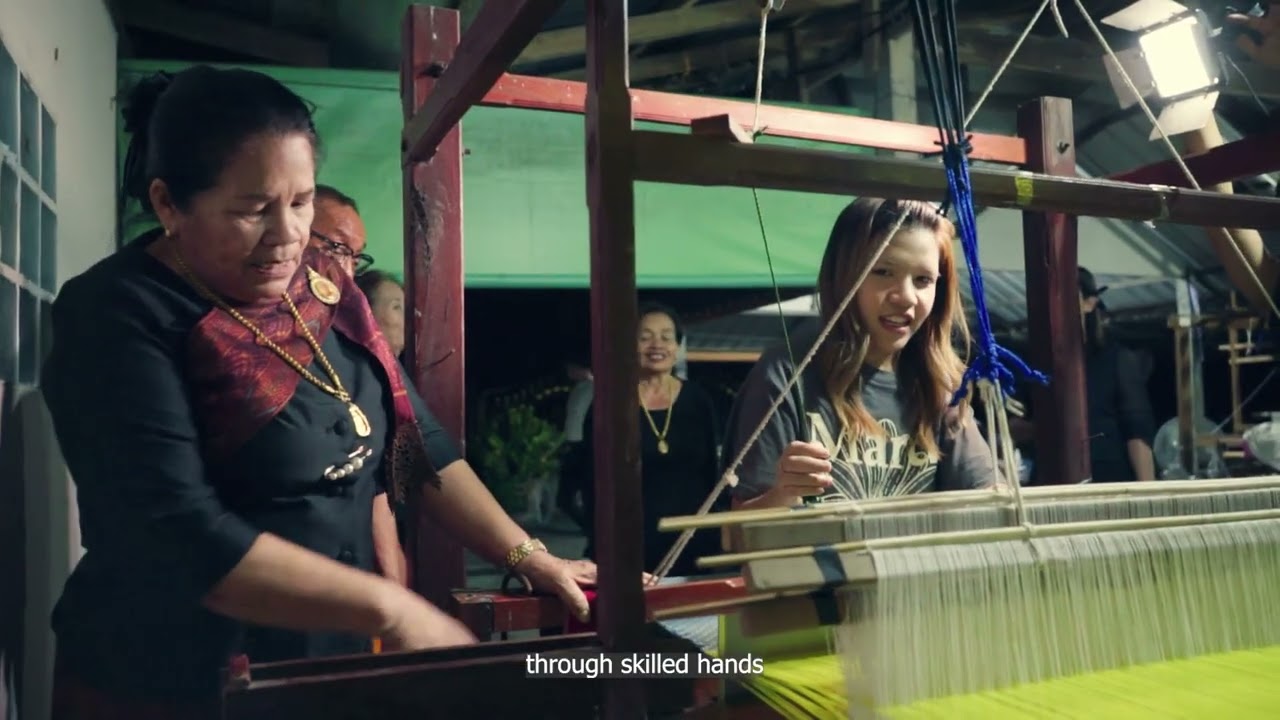
 Click to Access the Navigation Map GPS
Ban Kut Hae Silk Weaving Group Map

 Art, Culture and Heritage
 Historical Sites and Monuments(4)
 Landmarks and Memorials(1)
 Art, Craft Centres, Tradition(1)
 Museums(3)
 Places of Worship
 Temple(10)
 Other Sacred Sites(6)
Village, Community(3)
Other Sacred Sites(6)
Village, Community(3)
 Nature and Wildlife
 National Parks and Marine Reserves(3)
 Mountain (Doi)(5)
 Dam, Reservoir, Lake(5)
 Waterfalls(1)
 Caves(6)
 River, Canal(2)
 Bays and Beaches(1)
 Other natural attractions(3)


