
lovethailand home >Northeastern Travel Attractions >Nakhon Ratchasima Travel Attractions >Muang Nakhon Ratchasima >Nai Muang > Nakhonratchasima Rajabhat University
TL;DR: Nakhonratchasima Rajabhat University, Nakhon Ratchasima attractions : University, Rajabhat University.
Nakhonratchasima Rajabhat University
Open Days: Monday – Friday (Administrative Offices; Excluding Public Holidays and University-Announced Holidays)
Opening Hours: 08:30 – 16:30 (Administrative Office Hours, Not the Opening Hours of the Entire Campus)
Nakhon Ratchasima Rajabhat University (NRRU) is a public university in northeastern Thailand with an important place in the history of teacher education and regional development. It is located at 340 Suranarai Road, Nai Mueang Subdistrict, Mueang Nakhon Ratchasima District, Nakhon Ratchasima Province. The university traces its origins to the Agricultural Elementary Teacher Training School of Nakhon Ratchasima Monthon, established by Thailand's Ministry of Public Instruction in 1923. It subsequently developed through the Nakhon Ratchasima Teacher Training School, Nakhon Ratchasima Teachers College, and Nakhon Ratchasima Rajabhat Institute before receiving university status on June 15, 2004. Today, NRRU comprises seven faculties covering education, humanities and social sciences, management sciences, science and technology, industrial technology, public health, and nursing. Its strengths include teacher preparation, community development, scientific research, healthcare education, and the preservation of Korat's cultural heritage. The university also houses Korat Museum and the traditional Korat House, providing opportunities for visitors to explore local history and culture.
Nakhon Ratchasima Rajabhat University has longstanding connections with its home province because it developed from an institution dedicated to preparing teachers for schools throughout northeastern Thailand. Its establishment took place during a period when the national education system was expanding and teachers were needed in communities beyond Bangkok. Teacher training therefore involved more than preparing individuals for employment. It was part of a larger effort to improve educational opportunities for children and young people across the region.
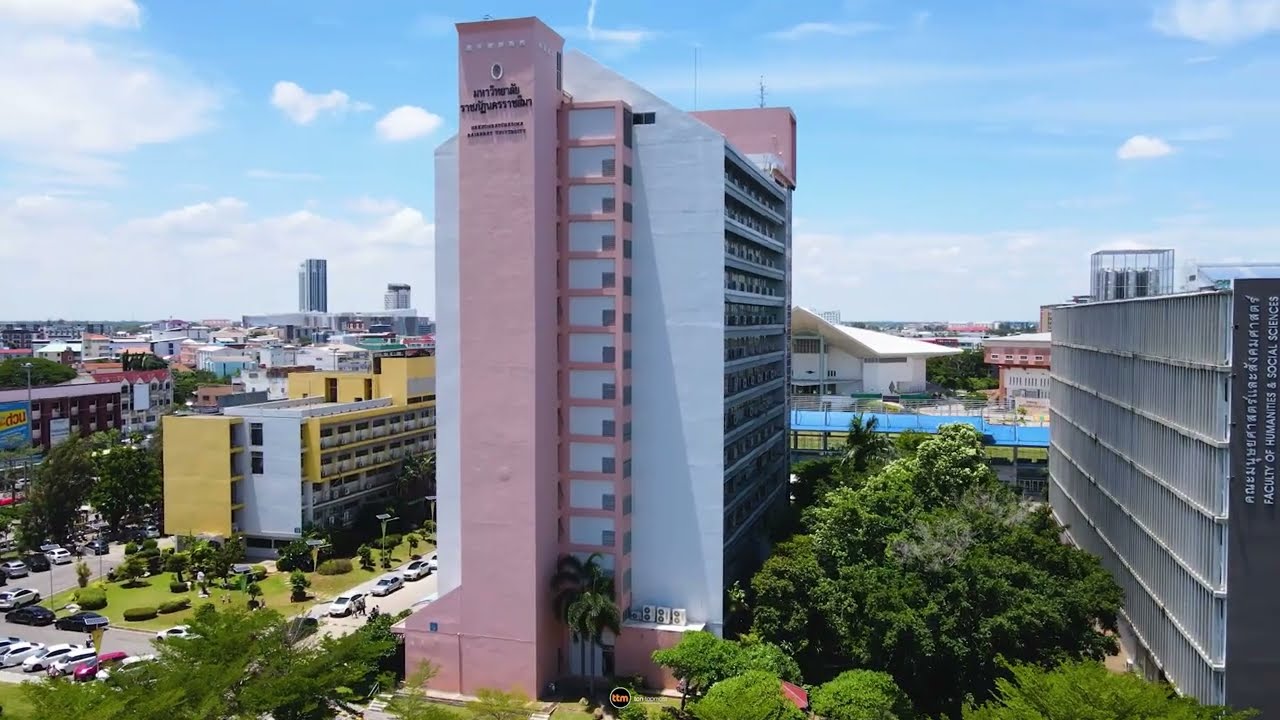
The university's present campus is situated on Suranarai Road in the urban area of Nakhon Ratchasima. It contains academic buildings, administrative offices, a library, practical training facilities, auditoriums, sports grounds, green spaces, and cultural learning centers associated with Korat's heritage. Its location near residential neighborhoods and commercial districts connects university activities with the daily life of the city through education, public transportation, professional services, and community events.
A defining characteristic of the university is its combination of teacher education heritage and contemporary multidisciplinary learning. In its earliest years, the institution focused on preparing teachers for elementary schools. As Thailand's society and economy changed, it expanded into science, business management, languages, law, technology, public health, and nursing while retaining the mission of regional development that is central to the Rajabhat university system.
The history of teacher training in the Nakhon Ratchasima administrative region began before the establishment of the present institution. In 1914, the Ministry of Public Instruction introduced elementary teacher training at the regional model school, preparing graduates for employment as teachers. This early educational initiative helped establish the foundations for a dedicated teacher training institution in Nakhon Ratchasima.
In 1923, the Ministry of Public Instruction established the Agricultural Elementary Teacher Training School of Nakhon Ratchasima Monthon near Wat Pho in Pho Klang Subdistrict, Mueang Nakhon Ratchasima District. The school provided teacher training through elementary teaching and provincial teacher certificate programs. Its establishment reflected Thailand's growing emphasis on training teachers who could support the expansion of formal education in provincial communities.
Nakhon Ratchasima was an appropriate location for such an institution because of its role as a regional center of transportation, commerce, and government administration. Graduates could bring their knowledge to schools in Nakhon Ratchasima and neighboring provinces, contributing to educational access in communities far from the national capital.
In 1935, the institution was renamed the Nakhon Ratchasima Provincial Teacher Certificate Training School and concentrated on the provincial teacher certificate curriculum. This change reflected adjustments to teacher qualifications and the national educational system during that period.
In 1938, the school moved from central Nakhon Ratchasima to Non Sung District. It was renamed the Non Sung Elementary Teacher Training School in 1942 and offered several teacher training pathways, including provincial teacher certificates, community school teaching qualifications, and elementary teacher education. These changes reflected efforts to adapt the teacher preparation system to the needs of schools and local communities.
In 1947, the institution returned to Mueang Nakhon Ratchasima District and occupied the area that would become its present university campus. It adopted the name Nakhon Ratchasima Teacher Training School. This relocation was an important milestone because it established a lasting home for the institution, allowing its academic buildings and educational services to expand over subsequent decades.
Further curriculum reforms took place during the 1950s. In 1952, the school discontinued several earlier programs and introduced an elementary teacher certificate qualification. In 1954, this was replaced by a certificate in education. These changes reflected the increasing professionalization of teacher training and the development of educational standards.
In 1959, Nakhon Ratchasima Teacher Training School was upgraded to Nakhon Ratchasima Teachers College. The new college offered a higher certificate in education, providing opportunities for students to develop more advanced teaching qualifications. This was an important step in the institution's transition toward higher education.
Under the Teachers College Act of 1975, the college became a higher education institution and expanded its teacher training programs to the bachelor's degree level. The change was significant because it enabled students to study education, educational psychology, curriculum development, teaching methods, and assessment within a university-level academic framework.
In 1977, the college introduced a professional development program for practicing teachers and other education personnel. The initiative later evolved into educational programs designed for working adults and the wider public. This expanded the institution's role beyond initial teacher preparation, allowing existing teachers to improve their qualifications and professional knowledge.
In 1984, Nakhon Ratchasima Teachers College began offering fields outside teacher education at the diploma level, later expanding them into bachelor's degree programs. This was a major turning point in the institution's development. It gradually became a multidisciplinary higher education institution responding to workforce needs in business, technology, public administration, and other professional sectors.
On February 14, 1992, King Bhumibol Adulyadej bestowed the name Rajabhat upon the teacher colleges of Thailand. The term is associated with service to the King and became an important element of the identity of these educational institutions. Following the Rajabhat Institute Act B.E. 2538 (1995), Nakhon Ratchasima Teachers College became Nakhon Ratchasima Rajabhat Institute.
The transition to Rajabhat Institute status enabled further development of postgraduate education. In 1998, the institution introduced a master's degree program in Educational Administration. Between 1999 and 2002, additional graduate fields were developed, including Educational Technology and Communications, Geographic Information Systems, Curriculum and Instruction, and subjects associated with social development and community health.
On June 15, 2004, Nakhon Ratchasima Rajabhat Institute became Nakhon Ratchasima Rajabhat University under the Rajabhat University Act B.E. 2547. The transition strengthened the institution's responsibilities in higher education, research, academic services, and cultural preservation while maintaining its role as a university dedicated to local and regional development.
Important figures in the university's history include administrators from its teacher training period and leaders involved in its transition to university status. The official historical register identifies Khun Supphalak Sueksakon, also known as Chiam Supphalak, as the institutional head from 1923 to 1933. Assistant Professor Dr. Saowanit Saonanont played a major role during the transformation from Rajabhat Institute to university and became the first rector following the change in legal status.
In 2026, Associate Professor Dr. Adisorn Naowanond served as Rector of Nakhon Ratchasima Rajabhat University. The institution continued to develop teacher education, lifelong learning, research, local development, and collaborative activities with communities. The year 2026 marked 103 years since the establishment of its original teacher training school and 22 years since it attained university status.
The university's philosophy is expressed in Thai as Laeng Wichakan Sangsan Khon Di Mi Khunnatham Nam Sangkhom, emphasizing academic knowledge, the development of good and ethical people, and leadership in society. The principle reflects an educational approach that combines knowledge with moral responsibility and service to the community. University education is regarded not only as a pathway to a qualification but also as preparation for problem-solving, lifelong learning, and contributing to the public good.
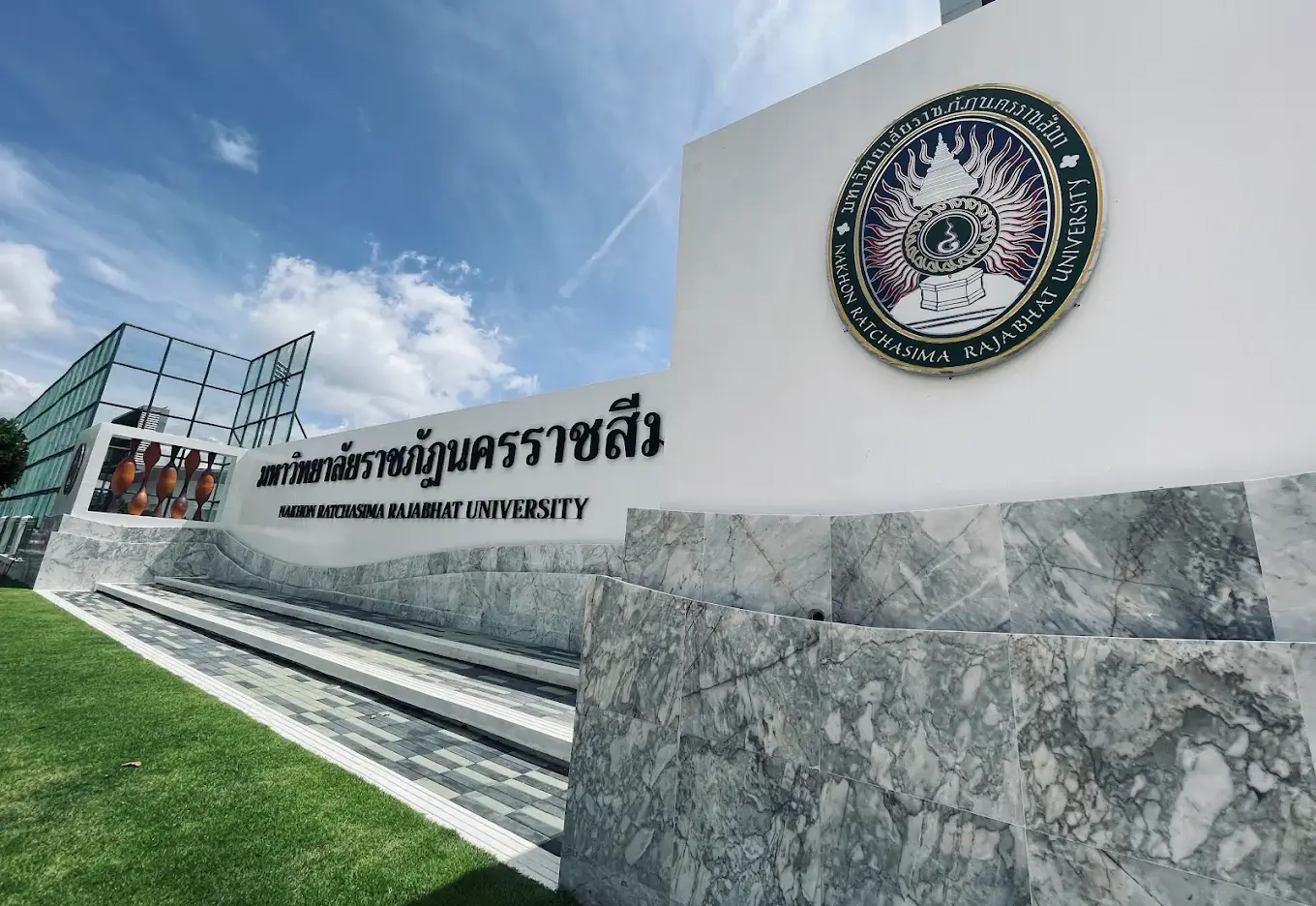
The university emblem incorporates the royal insignia of King Rama IX. Its central elements include the eight-directional royal throne, a circular emblem, the royal numeral nine, and a seven-tiered white umbrella. The university's name appears around the emblem in Thai and English. Its five colors are blue, green, gold, red, and white, symbolizing the monarchy, the natural environment, intellectual development, local arts and culture, and purity of thought.
The official university colors are green and yellow, which appear in institutional ceremonies and university identity. Its symbolic flower is the Golden Shower Tree flower, known in Thai as Ratchaphruek or Khun. The tree produces clusters of bright yellow flowers and is associated with auspiciousness in Thai culture. It represents both natural beauty and the shared identity of the university community.
The university also maintains institutional songs, including Rak Haeng Rajabhat Ratchasima and the Rajabhat Ratchasima March. These songs contribute to a sense of belonging and institutional pride during ceremonies, celebrations, and student activities. Together, the songs, colors, and emblem provide a shared identity for students and alumni from different faculties.
The Faculty of Education is the direct successor to the university's original teacher training mission. Its bachelor's degree programs cover Early Childhood Education, Special Education, Elementary Education, Thai, English, Chinese, Mathematics, General Science, Physics, Chemistry, Biology, Computer Education, Social Studies, Buddhist Studies, Physical Education, Art Education, Music Education, and Thai Classical Dance. Other fields include Educational Technology and Communications, Counseling and Guidance Psychology, and Industrial Arts Education.
The Faculty of Education is particularly important in preparing teachers to work with students of different ages, interests, abilities, and educational needs. Teacher preparation combines subject-specific knowledge with educational psychology, curriculum development, assessment, and professional experience in schools. It therefore requires academic knowledge, ethical responsibility, communication, and practical teaching competence.
Special Education is another significant area of the university's educational work. Its support services and academic expertise contribute to inclusive education for learners with diverse needs. This involves developing teachers who can adapt educational approaches to individual learners while cooperating with families, schools, and communities to support appropriate learning opportunities.
The Faculty of Humanities and Social Sciences offers education in Thai, Chinese, Japanese, English, Business English, Law, Political Science, Public Administration, Social Development Innovation, Information Science and Learning Resource Management, Visual Arts, and Visual Communication Design. These subjects develop communication skills, social understanding, legal and administrative knowledge, and the ability to preserve and interpret cultural heritage.
The faculty has a particularly relevant role in Nakhon Ratchasima, a province with a rich historical landscape, regional language traditions, and changing social conditions. Language and communication programs support tourism and international business, while law, political science, and public administration prepare students for work involving public institutions, social issues, and community governance.
The Faculty of Management Sciences prepares graduates for business, finance, and service industries. Its academic fields include Management, Modern Entrepreneurship, Finance, Marketing, Logistics and Supply Chain Management, Human Resource Management, Modern Trade, Business Computing, Accounting, Business Economics, Digital Communication, Hotel Management and Service Innovation, and Tourism, Meetings and Exhibition Management.
These subjects are directly relevant to the economy of Nakhon Ratchasima, which serves as a major center of commerce, transportation, and services in northeastern Thailand. Students can apply accounting to financial analysis, use marketing to develop businesses, introduce digital systems into organizational processes, and improve supply chains and logistics operations. Management education therefore supports both professional employment and entrepreneurship.
The Faculty of Science and Technology offers a broad range of fundamental and applied science disciplines. Its programs include Agriculture, Home Economics, Chemistry, Biology, Physics, Information Technology, Veterinary Technology, Geography and Geoinformatics, Management Information Systems, Computer Science, Food Technology, Sports and Exercise Science, Environmental Science and Technology, Applied Statistics and Data Management, and Digital Media Technology.
The combination of fundamental scientific subjects and applied technology allows the faculty to develop graduates with expertise in experimentation, data analysis, and scientific problem-solving. Environmental studies and geoinformatics are particularly relevant to natural resource management, land-use planning, and the study of environmental conditions in Nakhon Ratchasima Province.
The Faculty of Industrial Technology develops professionals in industrial and engineering disciplines. Its academic fields include Industrial Product Design, Construction, Transportation and Logistics Engineering, Industrial Management Engineering, Industrial Electrical Engineering, Architecture, and Electric Vehicle Engineering. Programs emphasize design skills, practical technical knowledge, modern technologies, and industrial management.
The development of electric vehicle engineering and modern industrial management reflects changes in production technology and the growing demand for workers with specialized expertise. Students in these fields need to understand scientific principles, electrical systems, machinery, safety requirements, and practical engineering methods that can be applied in workshops and industrial workplaces.
The Faculty of Public Health plays an important role in preparing professionals concerned with community wellbeing and environmental health. Its undergraduate fields include Community Public Health, Environmental Health, and Occupational Health and Safety. These disciplines address health promotion, disease prevention, environmental conditions affecting health, and the management of risks in workplaces.
Community Public Health emphasizes health knowledge and collaboration at the local level. Environmental Health concerns physical and environmental factors that influence wellbeing, while Occupational Health and Safety focuses on workplace hazards and preventive management. Together, these programs prepare students for work with healthcare organizations, local authorities, and workplace safety institutions.
The Faculty of Nursing offers a Bachelor of Nursing Science program and also provides a nursing assistant certificate pathway. Its academic facilities include practical nursing laboratories and a simulated clinical training center. Nursing education combines health sciences, professional ethics, patient assessment, and practical care skills. Structured training is essential for preparing students to work responsibly in clinical environments.
Beyond undergraduate education, NRRU provides graduate programs, especially in Educational Administration, Curriculum and Instruction, Educational Technology and Communications, and Human Potential Development. Master's and doctoral programs in these fields were included in the university's 2026 academic admissions announcements. Graduate education supports the development of teachers, school administrators, researchers, and professionals seeking advanced specialist knowledge.
The university also promotes lifelong learning through departments responsible for professional short courses, training programs, and skill development. These opportunities respond to working adults seeking additional qualifications or new knowledge, including digital skills, business management, product development, service industries, and other subjects relevant to contemporary economic and social change.
Research at Nakhon Ratchasima Rajabhat University focuses on academic disciplines connected with the needs of communities and the region. These include education, public health, culture, the environment, and science. The Research and Development Institute supports research activities and helps connect academic expertise with local organizations. Applying research findings to community challenges is an important part of the university's mission.
One of the university's best-known research organizations is the Northeastern Research Institute of Petrified Wood and Mineral Resources, which operates museums and scientific learning facilities dedicated to fossilized wood, prehistoric elephants, and dinosaurs. The institute is located in the Krok Duean Ha area, away from the main university campus on Suranarai Road. Visitors should therefore plan a separate journey when visiting the Petrified Wood Museum.
Paleontology and geological resource studies are particularly relevant to Nakhon Ratchasima because the province contains important fossil discoveries. Research into ancient plant and animal remains helps reveal environmental conditions and biological changes over millions of years. This expertise also contributes to natural heritage conservation and science-based tourism in the province.
The Office of Arts and Culture plays an important role in preserving and communicating the region's cultural history. It manages Korat Museum, located in Building 10 within the university. The museum presents the historical development of Nakhon Ratchasima through archaeological evidence, artwork, architecture, and accounts of local life. It is an important educational destination for visitors interested in regional history.
Korat Museum traces the development of the area from the origins of civilization through the Dvaravati, Lopburi, Ayutthaya, and Rattanakosin periods. Other exhibitions explore the development of Nakhon Ratchasima as a major northeastern city and the distinctive cultural products of Korat. The chronological presentation helps visitors understand connections between ancient communities, historical kingdoms, and the modern province.
The traditional Korat House is another cultural learning site associated with the university. It preserves aspects of vernacular architecture and local wisdom, illustrating traditional residential design and ways of life in the Korat region. Studying the house provides insights into building materials, spatial organization, climate adaptation, and the relationship between architecture and regional culture.
Korat Museum and the traditional Korat House make the university a valuable destination for educational tourism. Although NRRU's primary purpose is higher education, these learning spaces allow school groups, university students, residents, and visitors to explore local heritage. Korat Museum provides free admission, while visitors should check the museum's current service schedule before traveling, particularly during holidays or special events.
Rajabhat Rangsarit Auditorium is an important venue for major university gatherings, including academic conferences, formal university ceremonies, and events attended by large groups. In 2026, it was used for important activities associated with graduation and degree ceremonies. The auditorium therefore holds both functional and emotional significance for the university community.
The 70th Anniversary Memorial Auditorium is another major university venue, used for freshman registration and other events involving large numbers of students and visitors. Bhat Pirom Building, the Office of the President, and the various faculty buildings serve administrative and academic purposes. These facilities demonstrate the institution's development from a small teacher training school into a multidisciplinary public university.
In 2026, the university developed a new Education Innovation and Practice Building inspired by traditional Korat architecture. The design incorporated a paired-building layout resembling a traditional twin house, connected spaces, and architectural details derived from local heritage. Materials and decorative elements associated with Dan Kwian clay were incorporated into the building's appearance. The facilities were designed for teacher development, educational technology, learning laboratories, and the university demonstration school.
Integrating vernacular architectural ideas into a modern educational building illustrates how the university seeks to develop contemporary facilities without abandoning local cultural heritage. The building's design gives its physical environment an educational and cultural meaning alongside its practical role in teaching and learning.
The Office of Academic Resources and Information Technology supports study and research through library services, academic resources, electronic databases, and learning technologies. Meanwhile, the Computer Center and other digital service units provide information systems and technology training. These services are essential for students and staff working across the university's different academic disciplines.
University traditions connect the Rajabhat identity with Thai cultural practices. February 14 is recognized as Rajabhat Day, commemorating the royal bestowal of the Rajabhat name upon Thailand's teacher colleges. In 2026, the university organized activities under the theme of honoring the Rajabhat heritage and expressing gratitude for the royal contribution to the institution's history.
The Wai Khru ceremony is another significant tradition. On August 13, 2026, the university organized a teacher appreciation ceremony and a tribute to retiring staff members. These activities expressed gratitude to teachers and recognized individuals who had contributed to the university. They also reinforced the educational values of respect, responsibility, and appreciation for those who pass knowledge to younger generations.
Individual faculties and departments also maintain their own forms of the Wai Khru tradition. The Faculty of Education held a ceremony on July 20, 2026, under the theme Petals of Faith, Honoring Teachers. The Buddhist Studies program organized a related ceremony and a Bai Sri Su Khwan welcoming ritual for new students in September. Such events highlight the continued significance of gratitude and personal relationships between teachers and students.
Bai Sri Su Khwan is a traditional northeastern Thai blessing ceremony incorporated into freshman welcoming events by selected university units. Its rituals include ceremonial offerings, words of blessing, and the tying of white strings around students' wrists. The practice symbolizes encouragement, good wishes, and acceptance into a new community. It also maintains a meaningful connection between university life and the cultural traditions of northeastern Thailand.
Sporting activities contribute to university culture, particularly the traditional football competition between Nakhon Ratchasima Rajabhat University and Rajamangala University of Technology Isan. The competition can be traced to football matches between teachers in 1958 and later developed into an inter-university student sporting tradition. The 55th edition took place on February 21, 2026, at Rajamangala University of Technology Isan. The event strengthens relationships among students, staff, and alumni of two major educational institutions in Korat.
The university promotes student development and volunteering, encouraging students to work with others and recognize their responsibilities toward society. This approach is associated with the Social Engineer concept, which emphasizes understanding community problems, analyzing evidence, and developing practical solutions in partnership with local residents.
Local development remains a central responsibility of Nakhon Ratchasima Rajabhat University. It works with communities and other organizations on vocational skills, product improvement, environmental management, and community-based tourism. In 2026, university activities included work with communities in the Khao Yai Thiang area, offering knowledge related to accounting and taxation while supporting environmental improvements for sustainable local tourism.
NRRU also participates in environmental and sustainability initiatives. In 2026, it joined cooperation with the wider Rajabhat university network on greenhouse gas management and emissions reduction. Such partnerships allow universities to share knowledge and develop practical approaches involving institutional management, research, and environmental responsibility.
Lifelong learning is another way the university extends education to the public. Its short courses and training programs provide opportunities for people already in employment, those seeking career changes, and individuals interested in developing new skills. This reflects the expanding role of higher education as a resource for continuous learning rather than a service limited to full-time university students.
Prospective students can apply to NRRU through the university's admissions system and, where applicable, Thailand's TCAS process. Application rounds may include Portfolio, regional quotas, centralized admission, and direct admission. Some fields offer regular and continuing education study formats. Applicants should check the official requirements, available places, admission dates, and qualifications for the relevant academic year.
In the 2026 academic year, the university offered undergraduate admission pathways across its seven faculties. Subjects included teacher education, Thai and foreign languages, business administration, fundamental and applied sciences, computer science, industrial technology, public health, and nursing. Student services are supported through registration offices, academic resources, digital systems, and programs designed to prepare graduates for professional employment.
Visitors interested in exploring the campus can begin at the main administrative area before visiting Korat Museum and the traditional Korat House. These cultural facilities provide a distinctive visitor experience linked to the history of the province. Access to faculty laboratories, clinical skills training centers, research facilities, and specialist academic buildings should be arranged with the relevant departments in advance.
Visitors can also combine a university visit with historical and religious attractions in central Nakhon Ratchasima. These include Wat Sala Loi, Wat Phra Narai Maharat, Thao Suranari Monument, Chumphon Gate, and the Nakhon Ratchasima City Pillar Shrine. The sites introduce different aspects of Korat's urban development, religious heritage, and local historical traditions.
Getting There Nakhon Ratchasima Rajabhat University is located at 340 Suranarai Road, Nai Mueang Subdistrict, Mueang Nakhon Ratchasima District, Nakhon Ratchasima 30000, Thailand. Travelers driving from Bangkok can take Highway 1 through Saraburi and continue onto Highway 2, Mittraphap Road, toward Nakhon Ratchasima. Once in the city, follow local roads to Suranarai Road using the university's exact location on a navigation service.
Travelers arriving by interprovincial bus can reach one of Nakhon Ratchasima's bus terminals and continue to the university by local transport or hired vehicle. Train passengers can arrive at Nakhon Ratchasima Railway Station and arrange transportation to Suranarai Road. Visitors attending conferences or ceremonies should confirm the correct building number and entrance with the event organizer because university facilities are distributed across different parts of the campus.
Administrative offices generally operate Monday through Friday from 08:30 to 16:30, excluding public holidays and university-announced holidays. Korat Museum, the university library, and events taking place outside regular office hours may operate on separate schedules. Visitors can contact the university at +66 44 009 009 or consult www.nrru.ac.th before traveling.
In summary, Nakhon Ratchasima Rajabhat University represents more than a century of educational development in northeastern Thailand. Originating from an agricultural elementary teacher training school in 1923, it became Nakhon Ratchasima Teacher Training School, Nakhon Ratchasima Teachers College, Nakhon Ratchasima Rajabhat Institute, and finally Nakhon Ratchasima Rajabhat University in 2004. The institution continues its teacher education mission while expanding into science, technology, business, healthcare, and local development. Korat Museum, the traditional Korat House, research into petrified wood and fossils, and educational traditions rooted in northeastern Thai culture contribute to its distinctive academic and cultural identity.
Nakhon Ratchasima Rajabhat University Summary Table
| University Name | Nakhon Ratchasima Rajabhat University |
| Thai Name | มหาวิทยาลัยราชภัฏนครราชสีมา |
| Abbreviation | NRRU |
| University Type | Public University in Thailand's Rajabhat University Network |
| Address | 340 Suranarai Road, Nai Mueang Subdistrict, Mueang Nakhon Ratchasima District, Nakhon Ratchasima 30000, Thailand |
| Original Establishment | 1923, Agricultural Elementary Teacher Training School of Nakhon Ratchasima Monthon |
| University Establishment Date | June 15, 2004 |
| Institutional Age in 2026 | 103 Years since the Original Institution; 22 Years as a University |
| Former Names | 1. Agricultural Elementary Teacher Training School of Nakhon Ratchasima Monthon 2. Nakhon Ratchasima Provincial Teacher Certificate Training School 3. Non Sung Elementary Teacher Training School 4. Nakhon Ratchasima Teacher Training School 5. Nakhon Ratchasima Teachers College 6. Nakhon Ratchasima Rajabhat Institute |
| Important Historical Figures | Khun Supphalak Sueksakon (Chiam Supphalak), Institutional Head in 1923–1933, and Assistant Professor Dr. Saowanit Saonanont, the First Rector following the Establishment of the University |
| Rector in 2026 | Associate Professor Dr. Adisorn Naowanond |
| University Philosophy | Academic Knowledge, Ethical Development, and Leadership in Society |
| University Colors | Green and Yellow |
| University Flower | Ratchaphruek or Golden Shower Tree Flower |
| University Emblem | Royal Insignia of King Rama IX, Including the Eight-Directional Royal Throne, Circular Emblem, and Seven-Tiered White Umbrella |
| Faculties | 1. Faculty of Education 2. Faculty of Humanities and Social Sciences 3. Faculty of Management Sciences 4. Faculty of Science and Technology 5. Faculty of Industrial Technology 6. Faculty of Public Health 7. Faculty of Nursing |
| Education Levels | Bachelor's Degrees, Graduate Diplomas, Master's Degrees, Doctoral Degrees, and Selected Specialist Professional Certificate Programs |
| Academic Strengths | Teacher Education, Community Development, Languages and Social Sciences, Business and Management, Science and Technology, Public Health, Nursing, and Geological and Fossil Research |
| Important Campus Facilities | 1. Korat Museum, Building 10 2. Traditional Korat House 3. Rajabhat Rangsarit Auditorium 4. 70th Anniversary Memorial Auditorium 5. Bhat Pirom Building 6. Education Innovation and Practice Building 7. Office of Academic Resources and Information Technology 8. Sports Grounds and Faculty Teaching Buildings |
| Separate University Research Attraction | Northeastern Research Institute of Petrified Wood and Mineral Resources and the Petrified Wood Museum in the Krok Duean Ha Area of Nakhon Ratchasima Province |
| University Traditions | 1. Rajabhat Day on February 14 2. Wai Khru and Retirement Tribute Ceremonies 3. Freshman Bai Sri Su Khwan Blessing Ceremonies 4. Local Development and Volunteer Activities 5. Traditional Football Competition with Rajamangala University of Technology Isan 6. Korat Arts, Culture, and Heritage Activities |
| Administrative Open Days | Monday – Friday, Excluding Public Holidays and University-Announced Holidays |
| Administrative Hours | 08:30 – 16:30 |
| Korat Museum Admission | Free Admission |
| Visiting Arrangements | Public Administrative Services and Open University Events; Korat Museum Welcomes General Visitors, while Specialist Academic Facilities Require Prior Coordination |
| Facilities | Academic Buildings, Laboratories, Library, Skills Training Centers, Auditoriums, Cafeterias, Sports Facilities, Student Accommodation, and Parking Areas |
| Getting There | Private Car via Mittraphap Road and Suranarai Road, or Bus and Train to Nakhon Ratchasima Followed by Local Transport |
| On-Campus and Nearby Attractions | 1. Korat Museum, on Campus 2. Traditional Korat House, on Campus 3. Wat Sala Loi 4. Wat Phra Narai Maharat 5. Thao Suranari Monument 6. Chumphon Gate 7. Nakhon Ratchasima City Pillar Shrine |
| Restaurants in the Suranarai Road and City Areas | 1. Tum Thai Baan E-San, Suranarai Road, Tel. +66 95 610 6599 2. Suan Mon Mookata, Soi 30 Kanya, Tel. +66 62 242 6659 3. Come Eat Sushi Korat, Suranarai Road, Tel. +66 98 665 5465 4. Sor Rueng Restaurant, Suranaree Road, Tel. +66 81 185 4040 5. Monkey Bar/Restaurant Korat, Suranaree Road, Tel. +66 65 073 2416 |
| Accommodation in the Suranarai Road and City Areas | 1. The Imperial Hotel and Convention Centre Korat, Suranarai Road, Tel. +66 44 256 629 2. Qlosest Hotel, Suranarai Road Area, Tel. +66 61 425 4289 3. Ploy Pavilion, Soi 30 Kanya Area, Tel. +66 88 580 7091 4. Zenith Residence Hotel, Mittraphap Road, Tel. +66 93 323 7096 5. HOP INN Nakhon Ratchasima City Center, Tel. +66 2 080 2222 |
| Main University Telephone | +66 44 009 009 |
| Undergraduate Admissions Telephone | +66 44 009 009, Extensions 3124 – 3125 |
| Official Website | https://www.nrru.ac.th/ |
| Admissions Website | https://entrance.nrru.ac.th/ |
| Current Status | Operating Public University and Academic and Cultural Learning Center in Nakhon Ratchasima Province |
Nakhon Ratchasima Rajabhat University Academic Programs, Academic Year 2026
| Faculty of Education | Bachelor of Education 1. Early Childhood Education 2. Special Education 3. Mathematics 4. Computer Education 5. Chemistry 6. Counseling and Guidance Psychology 7. Biology 8. Music Education (Western Music and Thai Music Concentrations) 9. Educational Technology and Communications 10. Thai Classical Dance 11. Physical Education 12. Buddhist Studies 13. Physics 14. Thai Language 15. English Language 16. General Science 17. Art Education 18. Social Studies 19. Elementary Education 20. Chinese Language Bachelor of Industrial Education 1. Industrial Arts (Civil Engineering and Construction, Electrical, and Handicraft Concentrations) Master of Education 1. Educational Administration 2. Curriculum and Instruction 3. Educational Technology and Communications Master of Arts 1. Human Potential Development Doctor of Philosophy 1. Educational Administration 2. Curriculum and Instruction 3. Human Potential Development |
| Faculty of Humanities and Social Sciences | Bachelor of Arts 1. Social Development Innovation 2. Thai Language 3. Chinese Language 4. Japanese Language 5. English Language 6. Business English 7. Information Science and Learning Resource Management Bachelor of Public Administration 1. Public Administration Bachelor of Political Science 1. Political Science Bachelor of Laws 1. Law Bachelor of Fine Arts 1. Visual Arts 2. Visual Communication Design |
| Faculty of Management Sciences | Bachelor of Business Administration 1. Management (General Management Concentration) 2. Management (Modern Entrepreneurship Concentration) 3. Finance 4. Logistics and Supply Chain Management 5. Human Resource Management 6. Marketing 7. Modern Trade 8. Business Computing Bachelor of Arts 1. Hotel Management and Service Innovation 2. Tourism, Meetings and Exhibition Management Bachelor of Economics 1. Business Economics Bachelor of Accountancy 1. Accounting Bachelor of Communication Arts 1. Digital Communication Credit-Transfer Bachelor's Pathways Listed for 2026 Admission 1. Business Computing 2. Hotel Management and Service Innovation 3. Tourism, Meetings and Exhibition Management 4. Accounting |
| Faculty of Science and Technology | Bachelor of Science 1. Agriculture 2. Home Economics 3. Chemistry 4. Biology 5. Physics 6. Information Technology 7. Veterinary Technology 8. Geography and Geoinformatics 9. Management Information Systems 10. Computer Science 11. Food Technology 12. Sports and Exercise Science 13. Environmental Science and Technology 14. Applied Statistics and Data Management 15. Digital Media Technology |
| Faculty of Industrial Technology | Bachelor of Industrial Technology 1. Industrial Product Design Bachelor of Engineering 1. Construction, Transportation and Logistics Engineering 2. Industrial Management Engineering 3. Industrial Electrical Engineering 4. Electric Vehicle Engineering Bachelor of Architecture 1. Architecture |
| Faculty of Public Health | Bachelor of Public Health 1. Community Public Health Bachelor of Science 1. Environmental Health 2. Occupational Health and Safety |
| Faculty of Nursing | Bachelor of Nursing Science 1. Nursing Science Specialist Professional Certificate 1. Nursing Assistant Certificate |
Frequently Asked Questions (FAQ)
Q: Where is Nakhon Ratchasima Rajabhat University located?
A: It is located at 340 Suranarai Road, Nai Mueang Subdistrict, Mueang Nakhon Ratchasima District, Nakhon Ratchasima 30000, Thailand.
Q: When was Nakhon Ratchasima Rajabhat University founded?
A: Its origins date to the Agricultural Elementary Teacher Training School established in 1923. It became Nakhon Ratchasima Rajabhat University on June 15, 2004.
Q: How many faculties does Nakhon Ratchasima Rajabhat University have?
A: The university has seven faculties: Education, Humanities and Social Sciences, Management Sciences, Science and Technology, Industrial Technology, Public Health, and Nursing.
Q: What academic subjects is Nakhon Ratchasima Rajabhat University known for?
A: It is especially known for teacher education, local development, languages, social sciences, business, science and technology, public health, nursing, and the preservation of Korat's cultural heritage.
Q: What are the university's administrative opening days and hours?
A: Administrative offices generally operate Monday through Friday from 08:30 to 16:30, excluding public holidays and university-announced holidays.
Q: Is there a museum inside Nakhon Ratchasima Rajabhat University?
A: Yes. Korat Museum is located in Building 10 on the university campus. It presents local history, art, culture, and traditional ways of life, and admission is free.
Q: Is the Petrified Wood Museum located on the main university campus?
A: No. It is a separate university-affiliated research and museum facility in the Krok Duean Ha area of Mueang Nakhon Ratchasima District, requiring a separate trip from the main campus on Suranarai Road.
Q: Can members of the public visit Nakhon Ratchasima Rajabhat University?
A: Members of the public can contact university offices and visit cultural learning sites that welcome visitors. Access to laboratories, specialist training facilities, and organized academic tours should be arranged with the responsible departments in advance.
 Category: ●University
 Group: ●Rajabhat University
Last Update : 6 DayAgo
 Last Update : 6 DayAgo
 Click to Access the Navigation Map GPS
Nakhonratchasima Rajabhat University Map
Recommend

 Art, Culture and Heritage
 Historical Sites and Monuments(20)
 Landmarks and Memorials(5)
 Art, Craft Centres, Tradition(7)
 Museums(6)
 Art Gallery(1)
 Educational Places
 Educational Gardens, Farm(4)
 Public university(1)
 Autonomous Universities(2)
 Rajamangala University of Technology(2)
Rajabhat University(1)
 Private University(1)
 Places of Worship
 Temple(29)
 Mosque(1)
 Other Sacred Sites(6)
 Research and Development
 Royal Project(3)
 Suburban Living
 Village, Community(6)
 Local Market(4)
 Floating Market(1)
 Nature and Wildlife
 National Parks and Marine Reserves(3)
 Mountain (Doi)(5)
 Dam, Reservoir, Lake(8)
 Waterfalls(9)
 Hot Springs(1)
 Caves(2)
 Flower Field(1)
 River, Canal(8)
 Bays and Beaches(2)
 Other natural attractions(3)
 Entertainment and Agricultural
 Zoos and Aquariums(2)
 Animal camps and shows(1)
 Farms, Parks and Ecotourism(21)
 Waterpark(4)
 Outdoor and Adventure Activities(6)
 Shopping
 Shopping and Night Market(2)
 Travel Articles, Recipes
 Travel Review, Food Review(6)


