
lovethailand home >Northeastern Travel Attractions >Nakhon Ratchasima Travel Attractions >Muang Nakhon Ratchasima >Sura Nari > Suranaree University of Technology
TL;DR: Suranaree University of Technology, Nakhon Ratchasima attractions : University, Autonomous Universities.
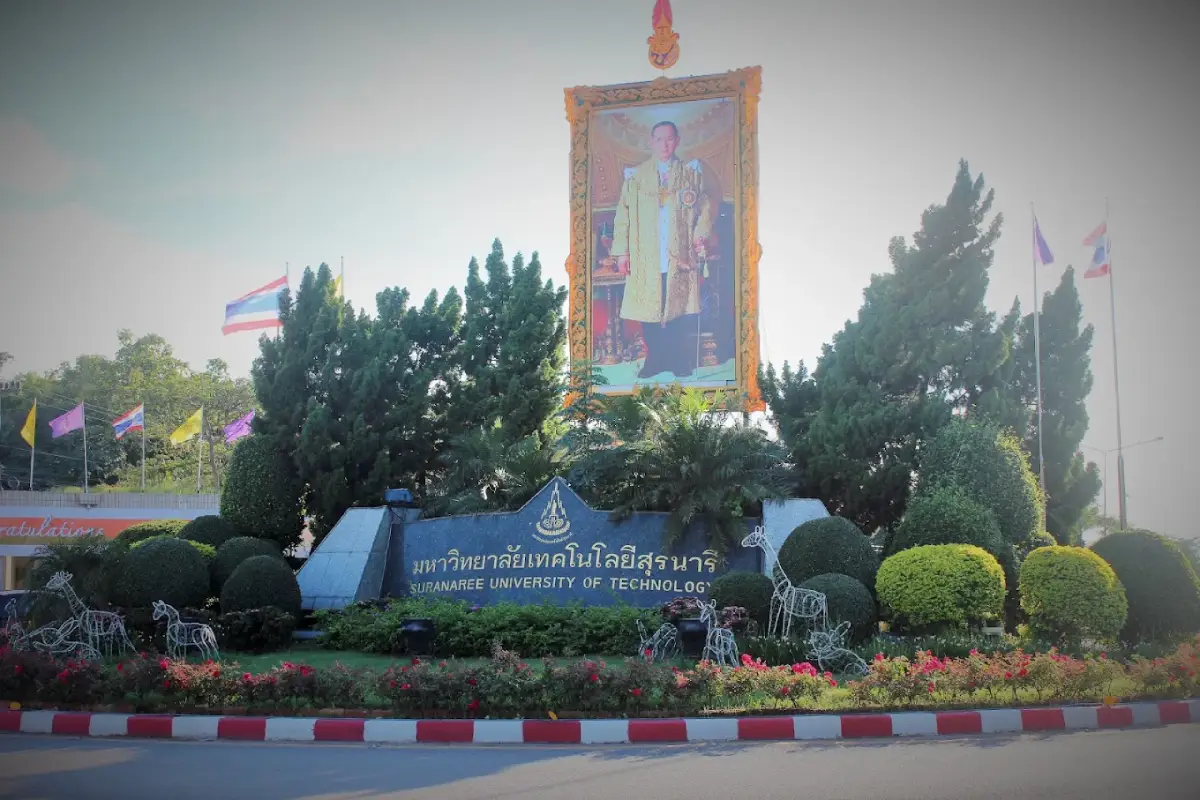
Suranaree University of Technology
Open Days: Monday – Friday (Administrative Offices; Excluding Public Holidays and University-Announced Holidays)
Opening Hours: 08:30 – 16:30 (Administrative Office Hours)
Suranaree University of Technology (SUT) is Thailand's first autonomous public university, located at 111 University Avenue, Suranari Subdistrict, Mueang Nakhon Ratchasima District, Nakhon Ratchasima Province. Officially established on July 27, 1990, the university welcomed its first students in 1993. SUT is particularly recognized for education and research in science, engineering, agricultural technology, medicine, nursing, dentistry, public health, and digital innovation. It is also a pioneering institution in Thailand's trimester academic system and cooperative education. In 2026, the university operated nine academic institutes, equivalent to faculties at other Thai universities. An official announcement in August 2026 reported 126 academic programs, comprising 51 undergraduate programs and 75 postgraduate programs.
The university is located south of Nakhon Ratchasima city on an extensive campus developed from an area of previously degraded forest near Huai Ban Yang Reservoir. Over time, the site has been transformed into a spacious university environment with academic buildings, research centers, laboratories, student residences, a university hospital, agricultural facilities, sports complexes, and landscaped green spaces. The campus was designed around the principle of shared resources, allowing academic and research units to use common infrastructure and specialized facilities efficiently.
Suranaree University of Technology holds a special place in the history of Thai higher education because of its status as the country's first autonomous public university. Unlike traditional state universities operating directly within the government administrative structure of the time, SUT was established with a management framework intended to provide greater flexibility in personnel administration, financial management, resource allocation, and academic planning, while remaining subject to public oversight through its University Council.
The origins of the university date back to 1984, when Thailand's Ministry of University Affairs proposed expanding higher education opportunities in different regions of the country. The plan included new institutions in northern, southern, eastern, and northeastern Thailand. For the Northeast, proposals included educational institutions in Ubon Ratchathani and Nakhon Ratchasima, two provinces considered important to regional development and the growing demand for highly skilled professionals.
Nakhon Ratchasima was selected because of its strategic position as a major economic and transportation center of northeastern Thailand. The province connects Bangkok and central Thailand with the wider northeastern region and has long played an important role in commerce, agriculture, industry, and regional transportation. The institution initially proposed for the province was called Suranaree College, with an early plan for it to operate under Khon Kaen University before eventually developing into an independent university.
An area near Huai Ban Yang Reservoir was selected for the new institution. The proposed site covered approximately 7,000 rai and consisted largely of degraded forest land that could be developed for academic buildings, laboratories, roads, utilities, research facilities, and future expansion. Reserving such a large area at the beginning of the project reflected a long-term vision of creating an integrated university environment capable of accommodating the changing requirements of science and technology education.
In 1988, the Thai Cabinet approved the establishment of Suranaree College in Nakhon Ratchasima under a framework associated with Khon Kaen University. The concept subsequently evolved toward the creation of a specialized science and technology university with an innovative administrative model. This shift reflected the country's increasing need for scientific expertise, engineers, technological innovation, and skilled graduates capable of supporting national economic development.
In 1989, the planning process advanced through the preparation of the university establishment project and its legal framework. Professor Dr. Wichit Srisa-an, then Permanent Secretary of the Ministry of University Affairs, served as chairman of the university establishment committee. He played a central role in shaping the university's educational philosophy, organizational structure, administrative independence, and long-term academic direction.
On July 27, 1990, His Majesty King Bhumibol Adulyadej signed the Suranaree University of Technology Act B.E. 2533. The legislation was published in the Royal Gazette on July 29 and came into force on July 30, 1990. The university recognizes July 27 as its official establishment anniversary. This event marked a significant milestone in Thailand's higher education system, creating the country's first autonomous public university and introducing a new institutional management model.
Although the university was legally established in 1990, teaching did not begin immediately. The new institution first had to develop its master plan, construct buildings, establish essential utilities, create curricula, and recruit academic and administrative personnel. The years between 1990 and 1993 were therefore a formative period during which the university's organizational foundations and physical infrastructure were established.
During its early development, some administrative activities were undertaken through a temporary office in Bangkok. This arrangement supported coordination relating to construction, staffing, university management, and academic preparation while the permanent campus was being developed in Nakhon Ratchasima. The university's shared-resource model was intended to reduce duplication in expensive scientific equipment and educational infrastructure, particularly facilities required by different scientific and engineering disciplines.
On July 24, 1992, the university announced an organizational structure comprising the Office of the Rector, academic institutes, research institutes, and service centers. The term Institute was adopted for major academic units equivalent to faculties at other universities. This approach reflected the university's preference for integrated administration and the shared use of educational and research infrastructure across academic disciplines.
SUT welcomed its first undergraduate students in May 1993. This was the beginning of its full academic operations. In its formative years, the university concentrated on scientific and technological disciplines required for national development, including science, agricultural technology, social technology, and engineering. The range of academic programs and specialist facilities subsequently expanded to reflect changing industrial, economic, and social requirements.
One of SUT's most important educational innovations is its trimester academic system. Instead of following the conventional two-semester structure used by many universities, SUT divides the academic year into three terms, each lasting approximately 13 weeks. This arrangement supports academic planning, practical learning, and longer periods of workplace training, particularly through the university's cooperative education programs.
Cooperative Education is a defining feature of the university's educational philosophy. Under this approach, students undertake structured professional placements with companies or organizations, allowing them to apply academic knowledge in authentic working environments. Professor Dr. Wichit Srisa-an was instrumental in promoting cooperative education at SUT. The system has contributed significantly to the development of work-integrated learning in Thailand.
Workplace-based learning is particularly valuable in engineering, science, agricultural technology, information technology, and management, where professional practices and technological systems continue to evolve. Cooperative education enables students to develop problem-solving skills, teamwork, communication, professional responsibility, and familiarity with the expectations of actual workplaces.
The name Suranaree University of Technology reflects both the institution's academic mission and the historical identity of Nakhon Ratchasima. Suranaree is associated with Thao Suranaree, also known as Khunying Mo or Ya Mo, the celebrated heroine of Nakhon Ratchasima. Including her name connects the university with local history, while Technology emphasizes its commitment to scientific knowledge, innovation, engineering, and practical applications of research.
The university emblem features Thao Suranaree at its center, framed on both sides by four upward-curving lines. Abstract representations of vegetation and machinery appear beneath the central figure. Thao Suranaree represents the university's respect for the historical heroine of Nakhon Ratchasima. The curved lines symbolize continuous technological advancement and achievement, while the vegetation and gear imagery represent agriculture and industry, two important foundations of Thailand's economic development.
The official university colors are orange and gold. Orange is associated with Nakhon Ratchasima Province and the historical flag of the province's Wild Tiger Corps, bestowed during the reign of King Vajiravudh. Orange is also associated with Thursday, traditionally regarded as Teachers' Day in Thai cultural symbolism. Gold represents prosperity, progress, and faith. Together, these colors connect the university's regional heritage with its academic aspirations and commitment to advancement.
The symbolic university tree is the Golden Tree Jasmine, known locally as Pi Thong, with the botanical name Radermachera ignea (Kurz) Steenis. It is a hardy, fast-growing tree with a broad canopy and distinctive orange blossoms. The university associates the tree with simplicity, resilience, progress, and a peaceful environment. The Pi Thong flower has also become an important symbol of student identity, with student cohorts traditionally referred to as Pi Thong Cho, or Golden Tree Jasmine Flower Clusters.
Music is another important expression of SUT's institutional culture. University songs include March Suranaree, the Suranaree University of Technology March, Pi Thong, and Rak Saet Thong. These songs are associated with ceremonies, student activities, sporting events, and celebrations, helping strengthen the connection between students, alumni, academic staff, and the wider university community.
Professor Dr. Wichit Srisa-an remains one of the most influential figures in the university's history. His contributions included the establishment of the university, the development of its autonomous administrative model, and the introduction of cooperative education. His work helped shape an institution designed to combine academic excellence with operational flexibility and practical relevance to Thailand's development.
In 2026, Associate Professor Dr. Sitthichai Saeng-athit served as Acting Rector of Suranaree University of Technology. The university's leadership was responsible for academic development, scientific research, innovation, international collaboration, institutional administration, and strengthening partnerships with industry and society. These responsibilities reflected SUT's ongoing ambition to be a leading institution in science, technology, and innovation.
The university's academic structure in 2026 comprised nine institutes: the Institute of Science, Institute of Social Technology, Institute of Agricultural Technology, Institute of Engineering, Institute of Medicine, Institute of Nursing, Institute of Dentistry, Institute of Public Health, and Institute of Digital Arts and Science. The use of institutes rather than conventional faculties is a distinctive feature of SUT's organizational model.
The Institute of Science provides education and research across foundational and applied sciences. Undergraduate fields include mathematics, chemistry, biology, physics, microbiology, medical science, computer science, data science and applied geoinformatics, and sports science. These disciplines help develop scientific expertise essential to research, technological innovation, data analysis, healthcare-related applications, and industrial problem-solving.
The Institute of Social Technology focuses on the relationship between management, technology, and social and economic development. Its undergraduate programs include Management Technology and Management with a specialization in Service Industry Technology Innovation. The institute also contributes to general education, language learning, and the development of professional and communication skills across the university.
The Institute of Agricultural Technology provides education in crop production technology, animal production technology and innovation, food technology, biotechnology, and innovative agricultural entrepreneurship. These subjects connect scientific knowledge with agriculture, food processing, farm management, efficient resource utilization, and the creation of higher-value agricultural products. The institute's activities are particularly relevant to northeastern Thailand, where agriculture continues to make an important contribution to regional livelihoods and economic activity.
The Institute of Engineering offers a wide range of engineering disciplines, including civil, mechanical, electrical, computer, chemical, environmental, materials, transportation and logistics, telecommunications, electronics, smart manufacturing, and agricultural and food engineering. Its academic programs emphasize technical design, analysis, technological systems, industrial problem-solving, practical training, and cooperative education. These disciplines prepare graduates for careers in engineering, manufacturing, infrastructure, transportation, and advanced technological industries.
The Institute of Medicine is responsible for medical education and related research. The Doctor of Medicine program combines basic medical sciences, preclinical education, and clinical training. Its mission is connected with SUT Hospital and affiliated healthcare institutions that support the development of medical professionals and the provision of healthcare services.
The Institute of Nursing prepares students for professional nursing careers through education in patient care, health promotion, nursing practice, and healthcare teamwork. Nursing education requires both academic knowledge and clinical competence, emphasizing patient safety, professional ethics, and the ability to respond effectively to community and hospital healthcare needs.
The Institute of Dentistry provides professional education in oral healthcare, diagnosis, prevention, and dental treatment. Students develop scientific knowledge and specialized clinical skills through structured academic and practical training. The university's 2026 admissions announcements included the Doctor of Dental Surgery program, with a separate direct admission pathway for applicants who had already completed a bachelor's degree.
The Institute of Public Health focuses on environmental health, occupational health and safety, and nutrition and dietetics. These fields contribute to disease prevention, workplace safety, health promotion, and the management of environmental conditions affecting human wellbeing. They also support the development of professionals capable of working with communities, industrial organizations, and public health systems.
The Institute of Digital Arts and Science reflects the university's response to the growing importance of digital technology and creative industries. Undergraduate programs include Digital Technology and Digital Communication Arts. These disciplines address information technology, digital communication, content production, and the creative application of technology to contemporary social and economic activities.
SUT also provides postgraduate education across a wide range of scientific, engineering, agricultural, management, and interdisciplinary subjects. Master's and doctoral programs support advanced professional knowledge and the development of research expertise. Research students work on specialized projects that contribute to academic discovery, technological development, and practical applications in society and industry.
Scientific research is central to the university's mission. The Research and Development Institute supports projects undertaken across its academic institutes and specialist facilities. Research areas include materials engineering, food technology, energy, environmental science, health sciences, biotechnology, artificial intelligence, and data analysis. These disciplines offer opportunities to develop new knowledge, improve industrial processes, and contribute to practical solutions for technological and social challenges.
The Center for Scientific and Technological Equipment provides essential research infrastructure, specialized instruments, and laboratory facilities. By allowing different academic units to share sophisticated equipment, the university reduces unnecessary duplication and creates opportunities for collaboration between disciplines. This system is particularly valuable for scientific research requiring advanced testing, measurement, analysis, and experimental capabilities.
Technopolis is another major part of the university's innovation ecosystem. It supports academic services, technology transfer, collaboration with businesses, and activities related to industrial development and innovation. Technopolis also provides facilities for conferences, professional training, workshops, and academic events, allowing external organizations to engage with the university's knowledge and technical expertise.
Suranaree University of Technology Hospital is an important institution within the university's health sciences system. It provides healthcare services while contributing to medical education and clinical training. Its connections with the Institutes of Medicine, Nursing, and related health sciences disciplines support an educational environment in which academic knowledge and healthcare practice reinforce each other.
SUT University Farm serves as a practical learning and research environment for agricultural science and technology. The farm supports educational activities relating to crop cultivation, livestock, agricultural production, and farm management. It provides students with opportunities to experience agricultural systems directly rather than learning only through classroom instruction.
The Institute of Agricultural Technology and related departments can connect farm-based learning with research and community services. Agricultural science, production technology, resource management, and practical experimentation can contribute to more effective farming systems and the development of products derived from agricultural resources. The farm therefore forms an important link between teaching, research, and practical agricultural applications.
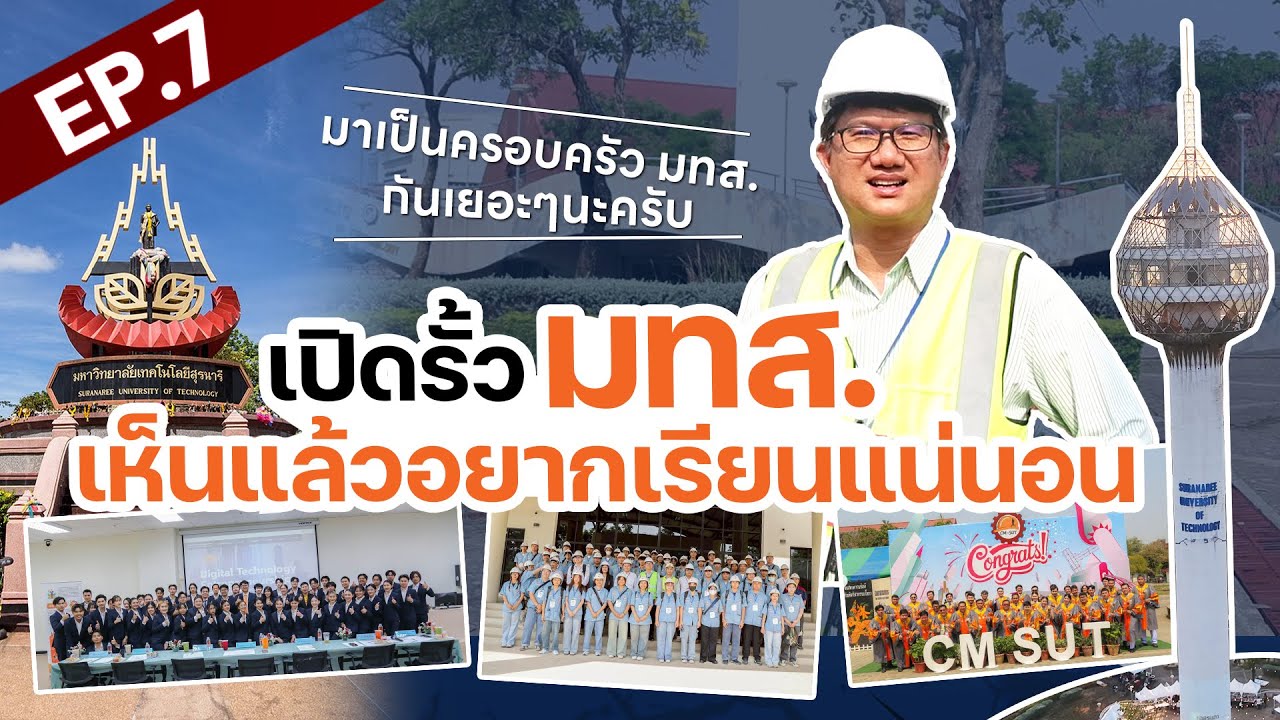
Suranapha Tower is one of the most recognizable architectural landmarks on the university campus. Its tall structure rises above surrounding academic buildings and landscaped areas, making it a prominent feature of campus photographs and university scenery. The tower contributes to the visual identity of SUT and serves as a recognizable landmark for visitors.
The University Symbol Plaza is another important campus landmark and a place of cultural significance to the SUT community. It features an image of Thao Suranaree associated with the university emblem. Ceremonies held at the site connect the university's academic identity with the history and traditions of Nakhon Ratchasima, while also strengthening the sense of belonging among students, alumni, and staff.
On July 27, 2026, SUT commemorated its 36th founding anniversary with ceremonies at the University Symbol Plaza, including a traditional tribute to Thao Suranaree and Buddhist religious activities. The anniversary observances involved university administrators, academic staff, students, alumni, and members of the public. These traditions demonstrate how the university combines regional cultural heritage with the ceremonial life of a modern scientific institution.
The Wai Khru ceremony is another important part of the university's educational culture. On June 18, 2026, SUT held its academic-year Wai Khru ceremony at Suraphat 2 Building in Technopolis as part of the activities welcoming the 34th Pi Thong student cohort. Students expressed respect and gratitude to their teachers, reinforcing a longstanding Thai educational tradition while marking the beginning of a new academic year.
Freshman welcoming activities also include a ceremony at the University Symbol Plaza and the presentation of the Pin of Pride. In 2026, the badge for the 34th Pi Thong cohort incorporated the university emblem and Golden Tree Jasmine blossoms. It represented pride in belonging to the institution and the connection between generations of students who share SUT's identity.
The university also holds professional and ethical ceremonies connected with its health sciences education. In 2026, relevant institutes organized a Buddhist merit-making ceremony honoring individuals who had donated their bodies for anatomical education. Such activities emphasize the respect and gratitude owed to body donors, who make an essential contribution to the education of future healthcare professionals.
SUT offers several places of interest for educational visitors. The University History Hall preserves documents, photographs, and archival materials relating to the institution's founding, development, and achievements. These collections provide an opportunity to learn about the establishment of Thailand's first autonomous public university and the broader evolution of higher education administration in the country.
The Center for Library Resources and Educational Media is an important academic resource, providing books, information services, educational materials, and facilities for independent study. During teaching terms, its published library schedule lists Monday through Friday from 08:30 to 20:00 and Saturday through Sunday from 09:00 to 17:00. Separate service schedules apply during examination periods and university vacations, so visitors should consult current library announcements before planning their visit.
The Ancient Thai Technology Museum, located within the university area, offers opportunities to explore the relationship between traditional Thai knowledge and historical technology. Exhibits and educational materials relating to traditional tools and production methods help visitors understand how earlier communities developed practical solutions using available natural resources and local expertise. This makes the museum relevant to students and travelers interested in technological history and Thai cultural heritage.
The Regional Observatory for the Public in Nakhon Ratchasima, also known as the King Rama IX 7th Cycle Birthday Anniversary Observatory, is located within the SUT campus area and is operated by the National Astronomical Research Institute of Thailand. It provides astronomy education and public activities involving the night sky, stars, celestial objects, and astronomical phenomena. Visiting arrangements depend on the observatory's current schedule and activities.
The presence of astronomy facilities and specialist scientific institutions around SUT adds to the educational character of the area. Travelers interested in science can combine a university visit with opportunities to learn about astronomy, technology, scientific research, and the history of engineering and innovation. Organized visits to specialist facilities should be arranged directly with the responsible institutions.
Other campus facilities include sports and health centers, athletic grounds, Suranivet student residences, dining facilities, and shared recreational spaces. These services support everyday student life and contribute to the university's aim of creating an integrated learning environment in which students can study, live, exercise, and participate in university activities.
Surasammanakhan is the university's hotel and conference facility, providing accommodation and meeting spaces for official visitors, conference delegates, and guests attending academic activities. Its location within the university is particularly convenient for travelers who need to participate in meetings, workshops, or other events on campus.
SUT's wider contribution to Nakhon Ratchasima Province is closely connected with the region's industrial, agricultural, commercial, and transportation sectors. Through graduate education, technical research, innovation, and cooperation with external organizations, the university supports the development of professional expertise and the application of knowledge to economic and social needs.
Student life also includes extracurricular activities, sports, clubs, community service, and opportunities to create technological or entrepreneurial projects. The university attracts students from different parts of Thailand, contributing to a diverse learning community. The surrounding area benefits from the presence of students, university employees, visiting families, and participants in academic events.
Travelers visiting SUT can combine their university trip with educational attractions in the surrounding area. The Regional Observatory for the Public, SUT University Farm, and Nakhon Ratchasima Zoo offer opportunities to explore science, agriculture, wildlife, and nature. These destinations can be particularly suitable for families, school groups, and visitors interested in practical learning experiences beyond the classroom.
Getting There Suranaree University of Technology is located at 111 University Avenue, Suranari Subdistrict, Mueang Nakhon Ratchasima District, Nakhon Ratchasima 30000, Thailand. Visitors traveling from Bangkok by private car can use Highway 1 toward Saraburi before joining Highway 2, Mittraphap Road, and continuing toward Nakhon Ratchasima. They can then follow the Pak Thong Chai junction route toward the university. Another option is Highway 304 through Chachoengsao and Prachin Buri. Travelers should consult up-to-date navigation services and traffic conditions before departure.
Travelers using public transportation can take an interprovincial bus to Nakhon Ratchasima and continue to SUT by local transport or hired vehicle. Those traveling by train can arrive at Nakhon Ratchasima Railway Station and arrange onward transportation. Because the university occupies a large campus, visitors should identify the correct academic building, office, or facility before arrival rather than relying only on the general university address.
For administrative inquiries, office hours are generally Monday through Friday from 08:30 to 16:30, excluding public holidays and holidays announced by the university. The main university telephone number is +66 44 223 000. Prospective students can contact the admissions office at +66 44 223 014 to 015 or +66 44 223 025 to 026. These are administrative service hours and should not be confused with campus gate hours or the separate opening schedules of the library, hospital, and other specialist facilities.
In summary, Suranaree University of Technology is a historically important institution in Thailand's higher education system. Originating from plans for Suranaree College in the 1980s, it became the country's first autonomous public university on July 27, 1990, and began admitting students in 1993. Its distinguishing features include a trimester academic structure, an emphasis on cooperative education, shared research infrastructure, and academic strengths across science, engineering, agriculture, health sciences, and digital technology. The university continues to contribute to the development of skilled professionals, scientific knowledge, innovation, and industry collaboration, while maintaining a strong historical and cultural connection with Thao Suranaree and Nakhon Ratchasima Province.
Suranaree University of Technology Summary Table
| University Name | Suranaree University of Technology (มหาวิทยาลัยเทคโนโลยีสุรนารี) |
| Abbreviation | SUT |
| University Type | Thailand's First Autonomous Public University |
| Location | Suranari Subdistrict, Mueang Nakhon Ratchasima District, Nakhon Ratchasima Province, Thailand |
| Address | 111 University Avenue, Suranari Subdistrict, Mueang Nakhon Ratchasima District, Nakhon Ratchasima 30000, Thailand |
| Official Founding Date | July 27, 1990 |
| Effective Date of Founding Act | July 30, 1990 |
| First Student Intake | 1993 |
| University Age in 2026 | 36 Years |
| Founding Legislation | Suranaree University of Technology Act B.E. 2533 (1990) |
| Important Founding Figure | Professor Dr. Wichit Srisa-an |
| University Leadership in 2026 | Associate Professor Dr. Sitthichai Saeng-athit, Acting Rector |
| University Colors | Orange and Gold |
| University Tree and Flower | Golden Tree Jasmine, Pi Thong (Radermachera ignea) |
| Academic System | Trimester System with Three Terms per Academic Year and an Emphasis on Cooperative Education |
| Number of Academic Institutes | 9 |
| Academic Institutes | 1. Institute of Science 2. Institute of Social Technology 3. Institute of Agricultural Technology 4. Institute of Engineering 5. Institute of Medicine 6. Institute of Nursing 7. Institute of Dentistry 8. Institute of Public Health 9. Institute of Digital Arts and Science |
| Number of Academic Programs in 2026 | 126 Programs: 51 Undergraduate and 75 Postgraduate, According to the August 2026 University Report |
| Academic Strengths | Science, Engineering, Technology, Innovation, Agriculture, Health Sciences, and Cooperative Education |
| Major University Units | Research and Development Institute, Center for Scientific and Technological Equipment, Center for Educational Services, Center for Library Resources and Educational Media, Technopolis, SUT University Farm, and SUT Hospital |
| Campus Landmarks | University Symbol Plaza, Suranapha Tower, University History Hall, Library, University Farm, Ancient Thai Technology Museum, Surasammanakhan, and Technopolis |
| University Traditions | University Foundation Anniversary on July 27, Thao Suranaree Tribute Ceremony, Wai Khru Ceremony, Freshman Welcoming Activities, and Pin of Pride Presentation |
| Administrative Open Days | Monday – Friday, Excluding Public Holidays and University-Announced Holidays |
| Administrative Opening Hours | 08:30 – 16:30 |
| Library Hours During Teaching Terms | Monday – Friday: 08:30 – 20:00 Saturday – Sunday: 09:00 – 17:00 Different Schedules Apply During Examination Periods and Academic Breaks |
| Getting There | Private Car via Highways 2 or 304; Interprovincial Bus or Train to Nakhon Ratchasima, Followed by Local Transport or Hired Vehicle |
| Facilities | Academic Buildings, Library, Laboratories, Student Residences, Dining Facilities, Hospital, Sports Facilities, Parking, and Conference Center |
| Nearby Attractions and Educational Sites | 1. Regional Observatory for the Public, Nakhon Ratchasima (Within the SUT Campus Area) 2. Ancient Thai Technology Museum (Within the SUT Campus) 3. SUT University Farm (Within the SUT Campus) 4. SUT University Symbol Plaza (Within the SUT Campus) 5. Nakhon Ratchasima Zoo (Mueang Nakhon Ratchasima District) |
| Nearby Restaurants | 1. Tor Restaurant, SUT Gate 1, Tel. +66 81 254 3613 2. Soraya Boat Noodles, SUT Gate 1, Tel. +66 65 664 2531 3. Steak Dek Naew by Sia Arm, SUT Gate 1, Tel. +66 98 264 7848 4. Kuen Mor Kitchen, SUT Gate 1, Tel. +66 87 414 8896 5. Go Huat 3 Noodle Shop, SUT Gate 1 Roundabout Market, Tel. +66 83 971 2666 |
| Nearby Accommodation | 1. Surasammanakhan, On Campus, Tel. +66 44 224 880 2. Thorfun Guesthouse in the Garden, University Road, Tel. +66 62 935 3661 3. Ban Nai Chang Resort, SUT Gate 1, Tel. +66 81 841 6534 4. BB Place 2, Suranari Area, Tel. +66 82 200 7641 5. Sura Court Natt, SUT Gate 1, Tel. +66 98 556 3978 |
| Main University Telephone | +66 44 223 000 |
| Admissions Telephone | +66 44 223 014 to 015 and +66 44 223 025 to 026 |
| Official Website | https://www.sut.ac.th/ |
| Current Status | Operating Autonomous Public University |
Suranaree University of Technology Academic Programs, Academic Year 2026
| Institute of Science | Bachelor's Degrees 1. Mathematics 2. Chemistry 3. Biology 4. Physics 5. Microbiology 6. Medical Science 7. Computer Science 8. Data Science and Applied Geoinformatics 9. Sports Science Master's and Doctoral Fields 1. Mathematics 2. Chemistry 3. Biology 4. Physics 5. Applied Physics 6. Microbiology 7. Biochemistry and Biochemical Technology 8. Geoinformatics 9. Biomedical Science 10. Integrated Science and Innovation |
| Institute of Social Technology | Bachelor's Degrees 1. Management Technology 2. Management (Service Industry Technology Innovation) Postgraduate Fields 1. English Studies 2. Management 3. Cooperative Education |
| Institute of Agricultural Technology | Bachelor's Degrees 1. Crop Production Technology 2. Animal Production Technology and Innovation 3. Food Technology 4. Innovative Agricultural Entrepreneurship (International Program) Postgraduate Fields 1. Crop Science 2. Animal Production Technology and Innovation 3. Biotechnology 4. Food Technology 5. Biotechnology for Aquaculture |
| Institute of Engineering | Bachelor's Degrees 1. Civil Engineering 2. Mechanical Engineering 3. Electrical Engineering 4. Computer Engineering 5. Chemical Engineering 6. Agricultural and Food Engineering 7. Environmental Engineering 8. Transportation and Logistics Engineering 9. Telecommunications and Smart Network Engineering 10. Electronics and Embedded Systems Engineering 11. Smart Manufacturing Engineering 12. Ceramic Engineering 13. Petrochemical and Polymer Engineering (International Program) 14. Industrial Electrical Engineering and Artificial Intelligence (Non-Regular Program) Postgraduate Fields 1. Chemical Engineering 2. Industrial Engineering and Logistics Management 3. Mechanical and Process Systems Engineering 4. Telecommunications and Computer Engineering 5. Materials Engineering 6. Electrical and Electronics Engineering 7. Electrical and Computer Engineering 8. Mechatronics Engineering 9. Civil Engineering 10. Environmental Engineering 11. Civil Engineering and Construction Management 12. Systems Engineering |
| Institute of Medicine | Undergraduate Professional Degree 1. Doctor of Medicine |
| Institute of Nursing | Bachelor's Degree 1. Nursing Science Certificate 1. Nursing Assistant |
| Institute of Dentistry | Undergraduate Professional Degree 1. Doctor of Dental Surgery |
| Institute of Public Health | Bachelor's Degrees 1. Environmental Health 2. Occupational Health and Safety 3. Nutrition and Dietetics |
| Institute of Digital Arts and Science | Bachelor's Degrees 1. Digital Technology 2. Digital Communication Arts |
Frequently Asked Questions (FAQ)
Q: Where is Suranaree University of Technology located?
A: SUT is located at 111 University Avenue, Suranari Subdistrict, Mueang Nakhon Ratchasima District, Nakhon Ratchasima 30000, Thailand.
Q: What are the opening days and hours of Suranaree University of Technology?
A: Administrative offices generally operate Monday through Friday from 08:30 to 16:30, excluding public holidays and university-announced holidays. The library, hospital, and other facilities have separate schedules.
Q: When was Suranaree University of Technology founded?
A: The university recognizes July 27, 1990, as its establishment date and welcomed its first students in 1993.
Q: Is Suranaree University of Technology a public or private university?
A: SUT is a public autonomous university and was the first institution of its kind established in Thailand.
Q: What is Suranaree University of Technology known for?
A: SUT is known for science, engineering, technological innovation, agricultural technology, health sciences, research, and cooperative education that connects academic learning with practical workplace experience.
Q: How many academic institutes does Suranaree University of Technology have?
A: In the 2026 academic year, SUT had nine institutes: Science, Social Technology, Agricultural Technology, Engineering, Medicine, Nursing, Dentistry, Public Health, and Digital Arts and Science.
Q: What academic system does Suranaree University of Technology use?
A: SUT uses a trimester system with three academic terms per year and places strong emphasis on cooperative education and work-integrated learning.
Q: Can members of the public visit Suranaree University of Technology?
A: Visitors can contact university offices and attend events open to the public. Educational attractions may be visited according to their individual schedules, while access to laboratories and specialist research areas requires prior authorization.
 Category: ●University
 Group: ●Autonomous Universities
Last Update : 1 WeekAgo
 Last Update : 1 WeekAgo
 Click to Access the Navigation Map GPS
Suranaree University of Technology Map
Recommend

 Art, Culture and Heritage
 Historical Sites and Monuments(20)
 Landmarks and Memorials(5)
 Art, Craft Centres, Tradition(7)
 Museums(6)
 Art Gallery(1)
 Educational Places
 Educational Gardens, Farm(4)
 Public university(1)
Autonomous Universities(2)
 Rajamangala University of Technology(2)
 Rajabhat University(1)
 Private University(1)
 Places of Worship
 Temple(29)
 Mosque(1)
 Other Sacred Sites(6)
 Research and Development
 Royal Project(3)
 Suburban Living
 Village, Community(6)
 Local Market(4)
 Floating Market(1)
 Nature and Wildlife
 National Parks and Marine Reserves(3)
 Mountain (Doi)(5)
 Dam, Reservoir, Lake(8)
 Waterfalls(9)
 Hot Springs(1)
 Caves(2)
 Flower Field(1)
 River, Canal(8)
 Bays and Beaches(2)
 Other natural attractions(3)
 Entertainment and Agricultural
 Zoos and Aquariums(2)
 Animal camps and shows(1)
 Farms, Parks and Ecotourism(21)
 Waterpark(4)
 Outdoor and Adventure Activities(6)
 Shopping
 Shopping and Night Market(2)
 Travel Articles, Recipes
 Travel Review, Food Review(7)


