
lovethailand home >Northeastern Travel Attractions >Nakhon Ratchasima Travel Attractions >Pak Chong >Khanong Phra > Rose Garden
TL;DR: Rose Garden is located at Khanong Phra Subdistrict, Pak Chong District, Nakhon Ratchasima Province, open Daily, hours 08.00 – 17.00.
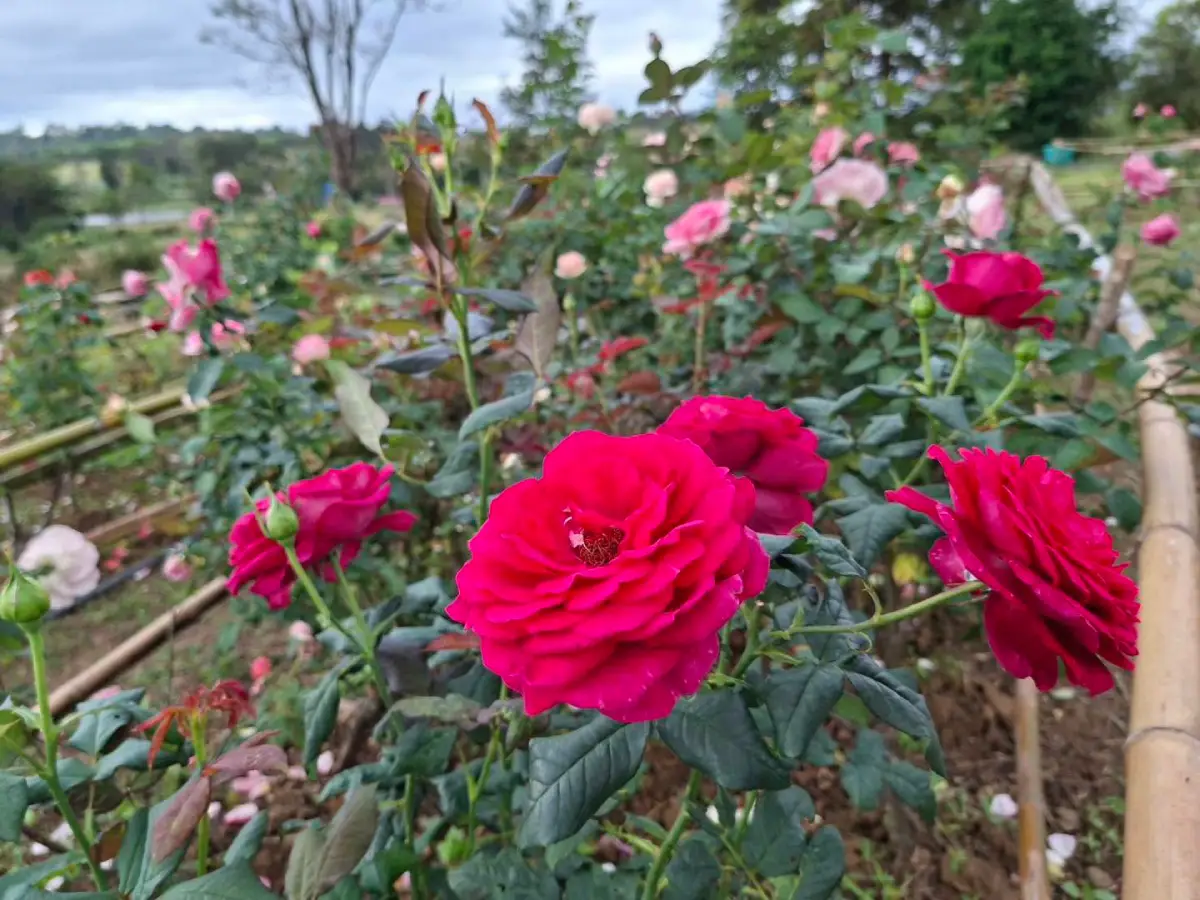
Rose Garden
Open Days: Daily
Opening Hours: 08.00 – 17.00
Rose Garden in Nakhon Ratchasima is a local agricultural attraction in Khanong Phra Subdistrict, Pak Chong District, Nakhon Ratchasima Province. Located at 171 Moo 4, Khanong Phra, it sits within one of the most active travel zones connected with Khao Yai, Pak Chong, riverside cafés, resorts, family attractions, and local farming communities. The main appeal of this place is its rose-growing identity. Rather than presenting itself as a large built attraction, the garden offers a quieter and more direct experience of flowering plants, agricultural care, and the charm of a local flower-growing area in Pak Chong. It is suitable for travelers who want to see roses, take natural photographs, learn about rose cultivation, and add a gentle flower-garden stop to a Khao Yai itinerary.
The appeal of Rose Garden comes from the way it connects beauty with agriculture. Roses are familiar flowers around the world, often associated with love, celebration, gratitude, sympathy, decoration, and special occasions. Most people encounter roses in flower shops, bouquets, hotels, restaurants, weddings, and gift arrangements. Visiting a rose-growing area gives a different understanding of the flower because travelers can see the plant itself: stems, leaves, thorns, buds, open blooms, planting beds, and the farming environment behind each cut flower. This makes the experience more meaningful than simply buying roses from a market.
Khanong Phra is one of Pak Chong’s important travel areas. It combines local farming, cafés, resorts, golf courses, riverside restaurants, family attractions, and access routes toward the wider Khao Yai region. Rose Garden is located in an area where it can be combined easily with several kinds of travel plans: a flower-focused trip, a family day trip, a café route, a resort stay, an agricultural route, or a relaxed countryside itinerary. This makes the garden useful as a small but distinctive stop for travelers who want to explore Pak Chong beyond the most common large attractions.
Roses look delicate, but rose cultivation requires close care. Growers must manage soil, water, sunlight, airflow, pruning, pest prevention, disease control, plant shape, and flower timing. A good rose bloom does not happen by chance. It is the result of continuous attention from the grower. For this reason, Rose Garden has value not only as a photo spot, but also as an agricultural learning space. Visitors can understand that the beauty of flowers depends on knowledge, patience, and daily care behind the scenes.
The atmosphere of a rose garden is best experienced slowly. Visitors can observe flower colors, petal shapes, growth stages, plant forms, and the layout of the planting beds. Red roses often feel bold and romantic, pink roses feel gentle, white roses feel clean and elegant, while yellow, orange, and mixed-color roses create a brighter impression. Walking through a garden allows visitors to experience not only color, but also light, texture, scent, and the living character of the plants. These are details that cannot be fully replaced by photographs.
For photography, Rose Garden offers a simple but warm setting. Its strength is not an artificial theme or a large decorative structure. Its strength lies in real flowers, natural light, local planting beds, and a quieter rural atmosphere. Morning is a good time for flower photography because the light is soft and the colors of the flowers appear natural. Late afternoon can also be attractive because warm light gives roses a more romantic tone. When the flowers are blooming well, the garden can be suitable for portraits, family photos, travel photos, and close-up flower images.
For families, Rose Garden can be an easy outdoor learning stop. Children can see that flowers do not come directly from a shop. They grow from plants that need soil, water, sunlight, leaves, stems, and human care. Parents can use the visit to explain plant growth, flower colors, respect for nature, and the importance of not picking flowers without permission. A short garden visit can become a practical lesson about plants and farming in a relaxed, non-classroom environment.
For travelers interested in agriculture, Rose Garden shows another side of Pak Chong. Many visitors know the area for dairy farms, vineyards, national park routes, cafés, and resorts. A rose garden adds the dimension of ornamental-flower farming. Roses are not only beautiful; they are also part of an economic system connected with cut flowers, decoration, events, hotels, restaurants, gifts, and landscape use. Seeing roses in a growing area helps visitors understand how beauty, farming, and market demand can meet in one local agricultural space.
The cut-rose identity of the place is especially important. Growing roses for viewing and growing roses for cutting are not exactly the same. Cut roses require attention to stem length, stem strength, petal condition, bud stage, bloom timing, and post-harvest durability. These details affect whether a flower can be used in arrangements, sold as a fresh cut flower, or transported to customers. Understanding this process gives travelers a deeper respect for the work behind a single rose stem.
Rose Garden is suitable for travelers who want a quieter break from the more crowded parts of Khao Yai. Khanong Phra has many cafés and resorts, but it also contains local farms and smaller places that offer a different travel rhythm. A visit to Rose Garden does not need to take a full day. It can be added to a route as a gentle stop before or after cafés, restaurants, resorts, art spaces, or family attractions. This makes the place especially useful for travelers who like flexible itineraries and prefer small local stops over heavily staged destinations.
Getting There is easiest by private car, rental car, or arranged local transport. From Nakhon Ratchasima city, travel along Mittraphap Road toward Pak Chong and continue into Khanong Phra using local roads. From Bangkok, take Mittraphap Road through Saraburi, Muak Lek, and Pak Chong, then continue toward the Khanong Phra area. Private transport is the most practical option because the garden is located inside a local travel zone rather than directly on a major public transport route. Having a car also makes it easier to combine the garden with nearby cafés, restaurants, resorts, and attractions.
The garden’s location in Khanong Phra makes it easy to combine with attractions around Lam Takhong and Khao Yai. Visitors can start with the rose garden in the morning, continue to The Raft Cafe Khaoyai or Tara Cafe Khao Yai for a riverside stop, then visit Bonanza Exotic Park or Rancho Charnvee Resort & Country Club for family activities and resort scenery. Those interested in art can continue to Khao Yai Art Museum, while travelers looking for a farm route can continue toward Farm Chokchai. This makes Rose Garden a flexible part of a broader Pak Chong travel day.
A half-day itinerary can include Rose Garden, a riverside café, and lunch nearby. A full-day itinerary can add Bonanza Exotic Park, Rancho Charnvee, Khao Yai Art Museum, Farm Chokchai, or PB Valley Khao Yai Winery. This kind of route gives visitors flowers, cafés, scenery, animals, art, food, and farming within one day without forcing them to drive too far between unrelated areas. The garden works well as the soft beginning of the day before larger attractions.
The best time to visit is in the morning or late afternoon, when the sunlight is softer and outdoor walking is more comfortable. Visitors should bring a hat, sun protection, comfortable shoes, drinking water, and a camera. Flower gardens are affected by weather, especially strong sun, heavy rain, and wind. Visiting during a pleasant part of the day gives better photographs and a more comfortable walking experience. A calm visit also allows travelers to notice the flowers in more detail.
Good garden etiquette is important. Visitors should walk only on permitted paths, avoid stepping into planting beds, avoid picking flowers, avoid touching roses too strongly, avoid moving pots or garden tools without permission, and keep the area clean. Visitors traveling with children should supervise them closely because roses have thorns and planting beds can be easily damaged. Respectful behavior helps protect the plants and keeps the garden pleasant for future visitors.
From a local economic perspective, Rose Garden shows how ornamental flowers can support tourism and local livelihoods. Roses can create value through fresh flowers, planting materials, garden visits, photography, and related services. When travelers enter Khanong Phra to visit a garden, nearby cafés, restaurants, resorts, and attractions also benefit. Agricultural tourism therefore does not only provide recreation. It helps distribute economic activity across communities that combine farming and tourism.
For international travelers, Rose Garden provides a softer and more community-based view of Khao Yai and Pak Chong. Many foreign visitors know the area through Khao Yai National Park, resorts, vineyards, or large cafés. A rose garden shows another layer: local flower cultivation. Seeing roses in a farm setting helps foreign visitors understand that this region is not only a place for leisure and mountain scenery, but also a productive agricultural area where beauty, flowers, and local enterprise are part of daily life.
Roses also carry cultural meaning that many travelers can understand immediately. Across many countries, roses are used to express love, respect, apology, celebration, farewell, and appreciation. Visiting a rose garden in Pak Chong connects this universal meaning with a specific Thai farming area. The garden does not need to be large to feel memorable because the beauty of roses comes from detail: petals, color, scent, and the atmosphere around the plants.
When combined with nearby attractions, Rose Garden can become a good starting point for a Khanong Phra route. The Raft Cafe Khaoyai and Tara Cafe Khao Yai are suitable for riverside dining and drinks. Rancho Charnvee offers resort atmosphere, golf, and activities. Bonanza Exotic Park is suitable for families with children. Khao Yai Art Museum adds contemporary art and sculpture to the route. Together, these places allow visitors to experience flowers, cafés, animals, art, and relaxation in one compact travel zone.
Nearby dining options include riverside cafés, resort restaurants, Thai restaurants, local eateries, and Khao Yai restaurants. The Raft Cafe Khaoyai is a convenient nearby choice with a waterside atmosphere. Tara Cafe Khao Yai is another option for drinks, snacks, and a relaxed setting. Krua Ya Kha Khao Yai is suitable for Thai food. Those who want a vineyard-dining experience can continue to The Great Hornbill at PB Valley or VinCotto at GranMonte. This range of restaurants makes it easy to build a meal around the garden visit.
Accommodation around Khanong Phra is also diverse. Rancho Charnvee Resort & Country Club is close to the same travel zone and combines accommodation with a golf-course environment. Parco Hotel Khaoyai is suitable for visitors planning to visit Bonanza-area attractions. The Paz Khao Yai offers a quieter hillside atmosphere. Travelers who want to continue toward Phaya Yen and vineyards can choose The Peri Hotel Khao Yai or GranMonte Wine Cottage. Since many places use the name Khao Yai, travelers should check the actual location before choosing accommodation.
For visitors planning portrait, family, travel, or pre-wedding photography, Rose Garden offers a softer mood than large activity-based attractions. Flower colors create warmth and romance, especially when photographed with natural light. Clothing in soft, neutral, or natural tones often works well with flower settings. Photography should be done carefully without stepping into planting beds, pulling flowers, or using equipment that may damage the plants or disturb other visitors.
In the wider Pak Chong travel picture, Rose Garden adds diversity to a region often associated with Khao Yai National Park, Farm Chokchai, vineyards, resorts, and cafés. A flower garden shows that Pak Chong agriculture is not only about food crops or fruit. It also includes plants grown for beauty and cultural use. The elegance of roses reflects the skill of growers and the relationship between farming and Thai flower culture. This makes the garden meaningful even as a small stop.
Overall, Rose Garden in Nakhon Ratchasima is suitable for travelers who want to experience Pak Chong at a calmer pace. It is appropriate for flower lovers, families, couples, photographers, agricultural travelers, and visitors who want a small but distinctive stop in the Khao Yai route. When combined with cafés, restaurants, resorts, and nearby attractions in Khanong Phra, the garden adds softness, color, and local agricultural character to a trip in Nakhon Ratchasima.
| Name | Rose Garden Nakhon Ratchasima |
| Location | Khanong Phra Subdistrict, Pak Chong District, Nakhon Ratchasima Province |
| Address | 171 Moo 4, Khanong Phra Subdistrict, Pak Chong District, Nakhon Ratchasima 30130, Thailand |
| Highlights | A local rose and flower garden in Khanong Phra, suitable for flower viewing, photography, rose cultivation learning, and a gentle stop on the Khao Yai and Pak Chong route |
| History / Importance | A local agritourism site associated with rose growing and flower cultivation in Khanong Phra, reflecting the ornamental-flower side of Pak Chong’s agricultural tourism |
| Name Origin | The name Rose Garden reflects the site’s identity as a garden focused on roses and flowering plants |
| Distinctive Features | Rose beds, flowering plant areas, a local agricultural atmosphere, photography spots, and learning value related to cut-rose cultivation |
| Travel Information | From Mittraphap Road, travel toward Pak Chong and continue into Khanong Phra by local roads. Private car, rental car, or arranged local transport is recommended. |
| Current Status | Open daily according to currently published travel information |
| Open Days | Daily |
| Opening Hours | 08.00 – 17.00 |
| Facilities | Rose viewing area, flower beds, photo spots, rose cultivation learning area, and agricultural garden space for visitors during opening periods |
| Main Areas / Zones | Rose bed zone, flowering plant zone, cut-rose zone, photography zone, rose-growing learning zone, and surrounding agricultural garden area |
| Caretaker | Khun Tum Hutasink |
| Nearby Tourist Attractions | 1. The Raft Cafe Khaoyai, about 5 km, Tel. 087-542-2254 2. Rancho Charnvee Resort & Country Club, about 7 km, Tel. 044-756210-3, 088-378-2324 3. Tara Cafe Khao Yai, about 8 km, Tel. 082-140-9310 4. Bonanza Exotic Park, about 12 km, Tel. 083-941-3368 5. Khao Yai Art Museum, about 20 km, Tel. 044-756-060 6. Farm Chokchai, about 22 km, Tel. 098-550-3320 7. PB Valley Khao Yai Winery, about 30 km, Tel. 081-733-8783, 085-481-1741 |
| Nearby Restaurants | 1. The Raft Cafe Khaoyai, about 5 km, Tel. 087-542-2254 2. Tara Cafe Khao Yai, about 8 km, Tel. 082-140-9310 3. Krua Ya Kha Khao Yai, about 18 km, Tel. 061-714-6666, 094-525-4226 4. The Great Hornbill Winery Restaurant, about 30 km, Tel. 081-733-8783, 085-481-1741 5. VinCotto Restaurant By GranMonte, about 35 km, Tel. 092-806-7744 6. Dairy Home Restaurant, about 35 km, Tel. 081-991-0271 |
| Nearby Accommodations | 1. Rancho Charnvee Resort & Country Club, about 7 km, Tel. 044-756210-3, 088-378-2324 2. Parco Hotel Khaoyai By Bonanza, about 12 km, Tel. 091-116-1818 3. The Paz Khao Yai, about 18 km, Tel. 044-009-921 4. The Bonanza Resort Khao Yai, about 12 km, Tel. 083-941-3368 5. The Peri Hotel Khao Yai, about 35 km, Tel. 063-196-4999 6. GranMonte Wine Cottage, about 35 km, Tel. 094-831-0909 |
Frequently Asked Questions (FAQ)
Q: Where Is Rose Garden Nakhon Ratchasima Located?
A: Rose Garden is located at 171 Moo 4, Khanong Phra Subdistrict, Pak Chong District, Nakhon Ratchasima 30130, within the travel area connected with Khao Yai and Pak Chong.
Q: What Are The Opening Days And Hours?
A: The garden is open daily from 08.00 to 17.00.
Q: Is There An Admission Fee?
A: No standard admission fee is publicly listed. Visitors pay only for products or services they choose to use inside the garden area.
Q: What Can Visitors See At Rose Garden?
A: Visitors can see rose beds, flowering plants, a local agricultural garden atmosphere, photography spots, and a rose-growing setting connected with cut-flower cultivation.
Q: How Do Travelers Get To Rose Garden?
A: From Mittraphap Road, travel toward Pak Chong and continue into Khanong Phra by local roads. Private car, rental car, or arranged local transport is the most convenient option.
Q: What Nearby Attractions Can Be Visited With Rose Garden?
A: Nearby places include The Raft Cafe Khaoyai, Tara Cafe Khao Yai, Rancho Charnvee Resort & Country Club, Bonanza Exotic Park, Khao Yai Art Museum, Farm Chokchai, and PB Valley Khao Yai Winery.
Q: Who Is Rose Garden Suitable For?
A: Rose Garden is suitable for flower lovers, families, couples, photographers, agricultural travelers, and visitors who want a gentle flower-garden stop on a Khao Yai and Pak Chong itinerary.
 Category: ●Entertainment and Agricultural
 Group: ●Farms, Parks and Ecotourism
Last Update : 2 MonthAgo
 Last Update : 2 MonthAgo
 Click to Access the Navigation Map GPS
 Art, Culture and Heritage
 Historical Sites and Monuments(20)
 Landmarks and Memorials(5)
 Art, Craft Centres, Tradition(7)
 Museums(6)
 Art Gallery(1)
 Educational Places
 Educational Gardens, Farm(4)
 Places of Worship
 Temple(29)
 Mosque(1)
 Other Sacred Sites(6)
 Research and Development
 Royal Project(3)
 Suburban Living
 Village, Community(6)
 Local Market(4)
 Floating Market(1)
 Nature and Wildlife
 National Parks and Marine Reserves(3)
 Mountain (Doi)(5)
 Dam, Reservoir, Lake(8)
 Waterfalls(9)
 Hot Springs(1)
 Caves(2)
 Flower Field(1)
 River, Canal(8)
 Bays and Beaches(2)
 Other natural attractions(3)
 Zoos and Aquariums(1)
 Animal camps and shows(1)
Farms, Parks and Ecotourism(21)
Animal camps and shows(1)
Farms, Parks and Ecotourism(21)
 Waterpark(2)
 Outdoor and Adventure Activities(6)
 Shopping
 Shopping and Night Market(2)
 Travel Articles, Recipes
 Travel Review, Food Review(6)


