
lovethailand home >Northeastern Travel Attractions >Nakhon Ratchasima Travel Attractions >Pak Thong Chai >Phu Luang > Wat Siri Aran Rukkha Wat (Wat Por Deang)
TL;DR: Wat Siri Aran Rukkha Wat (Wat Por Deang) is located at Mu 4, Ban Po Daeng, Phu Luang Subdistrict, Pak Thong Chai District, Nakhon Ratchasima Province, open Daily, hours 08.00 – 17.00.
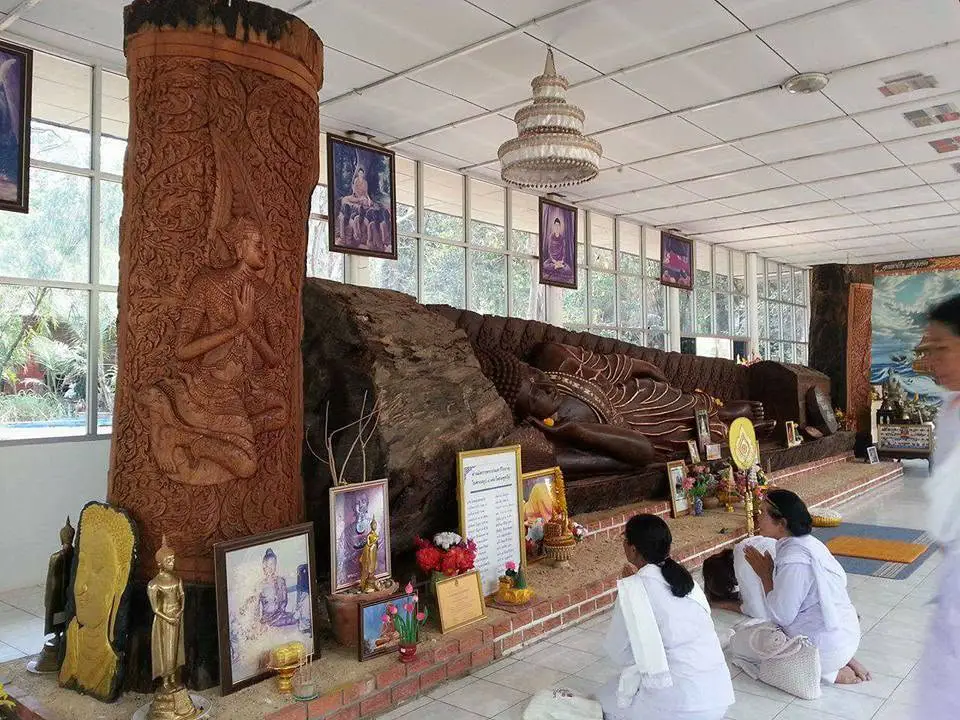
Wat Siri Aran Rukkha Wat (Wat Por Deang)
Open Days: Daily
Opening Hours: 08.00 – 17.00
Wat Siri Aran Rukkha Wat, commonly known as Wat Po Daeng, is located in Mu 4, Ban Po Daeng, Phu Luang Subdistrict, Pak Thong Chai District, Nakhon Ratchasima Province. This old community temple is one of the most important spiritual landmarks in Phu Luang. It is known not only as a local Buddhist temple, but also as a meditation center, a place of annual monastic practice, and a sacred site where local villagers regularly pay respect to an old Buddha footprint. Covering about 200 rai, the temple provides a peaceful rural setting suitable for worship, meditation, Dhamma practice, and quiet cultural travel.
For foreign travelers, Wat Po Daeng offers a meaningful introduction to a type of Thai temple that is not primarily designed as a tourist attraction. It is a living temple where Buddhism remains closely connected with daily community life. Local people come to make merit, pay respect to the Buddha footprint, support annual religious ceremonies, and take part in temple-based traditions. Monks, novices, nuns, lay practitioners, and devotees from different parts of Thailand also travel here for the annual Parivasa practice, making the temple especially important for those interested in Thai Buddhist discipline and meditation culture.
The temple is widely called Wat Po Daeng after Ban Po Daeng, the village where it is located. The formal name, Wat Siri Aran Rukkha Wat, suggests a connection with forest, serenity, and spiritual cultivation. The word “aran” evokes the idea of a forest retreat or a quiet monastic environment. This meaning suits the identity of the temple well because Wat Po Daeng is strongly associated with meditation practice, monastic training, and peaceful temple grounds. Rather than attracting visitors through grand architecture alone, the temple draws people through its atmosphere of stillness, discipline, and faith.
To understand Wat Po Daeng properly, it is useful to see it through 3 main roles. First, it is a community temple for Phu Luang Subdistrict, serving local residents through merit-making, Buddhist ceremonies, and everyday acts of worship. Second, it is a meditation and monastic practice center that welcomes monks and lay practitioners, especially during the annual Parivasa event. Third, it is a sacred site centered on an old Buddha footprint and the memory of revered meditation teachers. These roles make the temple more than a stop on a sightseeing route. It is a living religious landscape where faith, discipline, local identity, and memory continue to interact.
The old Buddha footprint is one of the temple’s most important sacred features. In Thai Buddhist culture, a Buddha footprint is not simply a religious object. It represents remembrance of the Buddha, reverence for his teaching, and the symbolic path that practitioners aspire to follow. Local residents from Phu Luang and nearby communities come to pay respect and apply gold leaf to the footprint regularly. This devotional practice turns the footprint into a continuing center of faith. Visitors who come here should approach the area quietly and respectfully, understanding that this is a sacred place used by local people in their daily spiritual life.
The act of applying gold leaf to the Buddha footprint carries deep meaning. It is a way of expressing gratitude, reverence, and devotion. Many Thai Buddhists do this while making a wish, dedicating merit, or calming the mind. At Wat Po Daeng, this simple act connects visitors with a long local tradition of worship. Foreign travelers do not need to understand every detail of the ritual to appreciate its sincerity. The important thing is to observe respectfully, dress modestly, speak softly, and follow the behavior of local devotees.
The annual Parivasa practice is one of the temple’s defining traditions. Parivasa is a monastic observance connected with Buddhist discipline and purification. At Wat Po Daeng, this annual practice takes place in the early part of the year according to the temple’s schedule. Monks, novices, nuns, laymen, laywomen, and Dhamma practitioners gather at the temple for chanting, meditation, Dhamma listening, communal discipline, and religious training. The event has helped make Wat Po Daeng well known among practitioners across Thailand.
During the Parivasa period, the atmosphere of the temple becomes especially active yet still deeply spiritual. Monks and practitioners follow a structured daily routine involving early morning chanting, meditation, alms-related activities, Dhamma talks, meals, rest periods, evening chanting, and further meditation practice. Lay supporters help by offering food, drinks, and other necessities. The temple’s large area is important because it allows space for religious ceremonies, meditation areas, lodging, kitchens, and support facilities. For visitors who are interested in Thai Buddhist practice, this period reveals the temple’s role more clearly than an ordinary day.
It is important to understand that the Parivasa event is not a festival for entertainment. It is a serious religious practice. Visitors who come during this period should behave with extra care. Avoid loud conversation, do not interrupt monks or practitioners, do not enter restricted areas, and avoid taking close photographs of people in practice without permission. The best way to visit is to support the atmosphere of discipline and respect. Those who wish to make merit can follow temple guidance and offer food or necessities in the appropriate areas.
Another important part of Wat Po Daeng is Suan Nippan, a meditation and memorial area associated with revered teachers. Within this area stands Phra Tham Chedi Sri Somboon Paripunnasilo, created to enshrine relics, preserve personal monastic items, present biographical information, and house an image of Luang Pu Somboon Paripunnasilo. This area carries strong spiritual and emotional meaning for disciples and devotees. It is a place for remembrance, gratitude, and reflection on impermanence. Visitors should treat the area with the same respect they would give to a shrine or memorial hall.
Luang Pu Somboon Paripunnasilo is closely connected with the modern spiritual identity of Wat Po Daeng. Devotees remember him as a meditation teacher associated with simplicity, kindness, discipline, and Dhamma practice. His presence in the memory of the temple gives Wat Po Daeng a deeper significance for followers who come to pay respect. The temple is therefore not only a place with sacred objects, but also a place shaped by teachers, practice lineages, and the continuing gratitude of disciples.
Wat Po Daeng is also listed as a provincial meditation practice center in Nakhon Ratchasima, with Phra Khru Yanakitkosol associated with its leadership as abbot and meditation center head. This status shows that the temple has a role beyond ordinary local worship. It functions as a recognized place for meditation, Dhamma training, and organized Buddhist practice. The temple grounds, buildings, and facilities support activities such as meditation, Dhamma talks, monastic observances, and large annual religious gatherings.
The temple’s area of about 200 rai gives it a spacious and peaceful character. Visitors will notice the difference between this temple and a crowded urban temple. There is more open space, more room for quiet movement, and a stronger sense of rural calm. The grounds allow separation between worship areas, practice areas, monastic living areas, Suan Nippan, and visitor spaces. This spatial quality is important because meditation and monastic discipline require silence, order, and enough room for people to practice without disturbing one another.
Wat Po Daeng is suitable for several types of visitors. Buddhist devotees can come to pay respect to the Buddha footprint and make merit. Meditation-oriented visitors can experience the atmosphere of a recognized practice center. Cultural travelers can learn how a rural Thai temple functions as the heart of a community. Those exploring Pak Thong Chai can include the temple in a slower cultural route with silk-related attractions, old temples, and nearby countryside. The temple is not a place to rush through; its value is best felt through quiet time and respectful observation.
Phu Luang Subdistrict lies southeast of central Pak Thong Chai. The area has a rural character while still being connected to important local routes. This makes Wat Po Daeng accessible, yet still peaceful. Travelers can visit as a half-day trip from Pak Thong Chai or include it in a full-day route through cultural and community destinations. Nearby places such as Pak Thong Chai Silk Market, Nakhon Chai Burin Silk Center, Wat Na Phra That, Wat Pathum Khongkha, and Lam Phra Phloeng Dam can be combined with the temple depending on the traveler’s interest and time.
The most convenient way to reach Wat Po Daeng is by private car or rental vehicle. From Nakhon Ratchasima city, travel toward Pak Thong Chai District, then continue to Phu Luang Subdistrict and Ban Po Daeng. From central Pak Thong Chai, the route is shorter and passes through local roads and rural communities. Visitors unfamiliar with the area should check the map before departure. Some local roads may require careful driving, especially after rain or at night.
The best time to visit is during the morning or afternoon. Morning visits are pleasant because the weather is cooler and the temple is generally quieter. It is also a good time for merit-making if the temple has scheduled activities. Afternoon visits are suitable for those who want to walk around the grounds and spend time at the Buddha footprint or Suan Nippan. During the annual Parivasa period, visitors should allow more time because the temple may be busier with monks, practitioners, and lay supporters.
Visitors should prepare appropriately for a Buddhist temple and meditation center. Modest clothing is essential. Avoid shorts, sleeveless tops, or revealing clothing. Wear comfortable shoes that can be removed easily, as footwear must be taken off in sacred areas. Bring drinking water if needed, but do not leave waste behind. When entering worship areas, move slowly, speak softly, and avoid touching sacred objects unless the temple allows it. Respectful behavior helps preserve the quiet atmosphere that makes Wat Po Daeng meaningful.
Photography should be done with discretion. General views of the temple grounds may be photographed, but close images of monks, nuns, or practitioners should not be taken without permission. This is especially important during the Parivasa event, when many people are engaged in serious practice. A respectful visit is not measured by the number of photos taken, but by the visitor’s ability to protect the calm and dignity of the place.
A meaningful route inside the temple should begin with paying respect to the Buddha footprint. After that, visitors can continue to Suan Nippan and Phra Tham Chedi Sri Somboon Paripunnasilo, then spend time walking quietly through the grounds. If monks or caretakers are available, visitors may ask politely about where to go and which areas should be avoided. This approach allows travelers to understand the temple as a living spiritual place rather than only a destination on a map.
During the annual Parivasa practice, the temple also shows the strength of local community support. Villagers and devotees help with food, drinks, kitchen work, accommodation support, and general organization. This collective support demonstrates how Thai Buddhist communities sustain religious practice through shared merit-making. For foreign travelers, this is an important cultural insight: temple life in Thailand depends not only on monks, but also on the ongoing generosity and participation of lay communities.
Wat Po Daeng also helps foreign visitors understand the difference between a sightseeing temple and a practice temple. A sightseeing temple may focus on architecture, history, or famous images. A practice temple focuses more on discipline, meditation, ritual routine, and the lived experience of Buddhism. Wat Po Daeng contains sacred features and local history, but its deeper identity lies in its practice culture. Visitors who approach it with patience will gain a more authentic view of rural Thai Buddhism.
When planning a wider trip, Wat Po Daeng can be combined with cultural sites in Pak Thong Chai. The district is famous for silk, local crafts, and old temples. Travelers can begin with Wat Po Daeng for worship and quiet reflection, then continue to Pak Thong Chai Silk Market or Nakhon Chai Burin Silk Center to learn about local textile culture. Wat Na Phra That and Wat Pathum Khongkha can add historical and architectural depth to the route. This makes the trip richer than a simple temple visit.
For overnight stays, travelers may choose accommodation in Pak Thong Chai, Taku, or along the route toward Wang Nam Khiao depending on the rest of the itinerary. Staying in Pak Thong Chai is practical for those who want to focus on temples, silk, and local food. Staying closer to Wang Nam Khiao is better for those who want cooler weather, nature, cafes, and mountain scenery. Either option can work well if the route is planned carefully.
Wat Siri Aran Rukkha Wat, or Wat Po Daeng, is therefore a valuable destination for travelers seeking a deeper cultural and spiritual experience in Nakhon Ratchasima. Its importance comes from the old Buddha footprint, the annual Parivasa practice, Suan Nippan, Phra Tham Chedi Sri Somboon Paripunnasilo, and its continuing role as a meditation center and community temple. For those exploring Pak Thong Chai beyond the usual routes, Wat Po Daeng offers a quiet, sincere, and meaningful encounter with Thai Buddhist life.
| Name | Wat Siri Aran Rukkha Wat (Wat Po Daeng) |
| Location | Mu 4, Ban Po Daeng, Phu Luang Subdistrict, Pak Thong Chai District, Nakhon Ratchasima Province |
| Address | 3 Suebsiri Road, Ban Po Daeng, Mu 4, Phu Luang Subdistrict, Pak Thong Chai District, Nakhon Ratchasima 30150, Thailand |
| Highlights | Old Buddha footprint, annual Parivasa practice, Suan Nippan, Phra Tham Chedi Sri Somboon Paripunnasilo, and a peaceful meditation center atmosphere within a temple area of about 200 rai |
| History | An old community temple of Phu Luang Subdistrict and Nakhon Ratchasima Provincial Meditation Practice Center No. 5, known for meditation practice and its annual Parivasa observance |
| Name Origin | The local name Wat Po Daeng comes from Ban Po Daeng. The formal name suggests a peaceful forest-related temple suitable for meditation and monastic practice |
| Distinctive Features | A large rural Buddhist temple suitable for worship, gold-leaf offering at the Buddha footprint, meditation, Dhamma listening, and annual Parivasa practice |
| Travel Information | From Nakhon Ratchasima city, travel toward Pak Thong Chai District, then continue to Phu Luang Subdistrict and Ban Po Daeng. Private car or rental vehicle is the most convenient option |
| Current Status | Open to visitors for worship, merit-making, Buddha footprint veneration, and meditation-related activities according to temple arrangements |
| Open Days | Daily |
| Opening Hours | 08.00 – 17.00 |
| Facilities | Large temple grounds supporting meditation activities, annual religious events, worship areas, and accommodation areas for practitioners according to temple rules |
| Main Areas / Zones | Old Buddha footprint, Suan Nippan, Phra Tham Chedi Sri Somboon Paripunnasilo, 70-Year Hall, meditation areas, chanting and Dhamma listening areas, and support areas for monks and practitioners during the Parivasa event |
| Abbot / Caretaker | Phra Khru Yanakitkosol |
| Temple / Meditation Center Contact | 087-250-0810 |
| Local Administrative Contact | Phu Luang Subdistrict Municipality, Tel. 063-023-0188, 044-003-278 |
| Nearby Tourist Attractions | 1. Pak Thong Chai Silk Market, about 17 km 2. Nakhon Chai Burin Silk Center, about 18 km 3. Wat Na Phra That (Wat Taku), about 20 km 4. Wat Pathum Khongkha (Wat Nok Ok), about 22 km 5. Lam Phra Phloeng Dam, about 35 km |
| Nearby Restaurants | 1. Sara Coffee And Eatery Pak Thong Chai, about 18 km, Tel. 080-362-3655 2. Bubble Tea & Fresh Coffee Pak Thong Chai, about 19 km, Tel. 080-196-9516 3. Wan Wang Cafe Pak Thong Chai, about 20 km, Tel. 086-309-1932 4. Mee Korat Ha Dao Pak Thong Chai, about 21 km, Tel. 084-887-7725 5. Krua Phi Ka Nong Pak Thong Chai, about 22 km, Tel. 082-536-9215, 090-918-6555 |
| Nearby Accommodations | 1. Panusa Hotel, about 14 km 2. Iretreat Pak Thong Chai, about 18 km, Tel. 089-899-5347 3. Bosswin Home Resort, about 20 km, Tel. 044-441-348, 081-923-9884 4. Mulberry House Korat, about 24 km 5. Dusit Resort Pakthongchai, about 35 km |
Frequently Asked Questions (FAQ)
Q: Where is Wat Siri Aran Rukkha Wat, or Wat Po Daeng, located?
A: The temple is located in Mu 4, Ban Po Daeng, Phu Luang Subdistrict, Pak Thong Chai District, Nakhon Ratchasima Province.
Q: What are the opening hours of Wat Po Daeng?
A: The temple is open daily from 08.00 to 17.00.
Q: What is Wat Po Daeng known for?
A: It is known for its old Buddha footprint, annual Parivasa practice, Suan Nippan, and its role as a major meditation practice temple in Phu Luang.
Q: When is the annual Parivasa practice held?
A: The annual Parivasa practice is held in the early part of the year, generally around January to February or according to the temple’s yearly schedule.
Q: Why is the Buddha footprint important?
A: The Buddha footprint is a sacred symbol that local people regularly pay respect to and apply gold leaf to as an act of devotion and remembrance of the Buddha.
Q: Who should visit Wat Po Daeng?
A: The temple is suitable for Buddhist devotees, meditation visitors, cultural travelers, and anyone who wants to experience a peaceful rural Thai temple in Pak Thong Chai.
Q: How can travelers get to Wat Po Daeng?
A: Travel from Nakhon Ratchasima city toward Pak Thong Chai District, then continue to Phu Luang Subdistrict and Ban Po Daeng. Private car or rental vehicle is the most convenient option.
Q: What nearby places can be visited on the same trip?
A: Nearby places include Pak Thong Chai Silk Market, Nakhon Chai Burin Silk Center, Wat Na Phra That, Wat Pathum Khongkha, and Lam Phra Phloeng Dam.
 Category: ●Places of Worship
 Group: ●Temple
Last Update : 3 MonthAgo
 Last Update : 3 MonthAgo
 Click to Access the Navigation Map GPS
Wat Siri Aran Rukkha Wat (Wat Por Deang) Map
Recommend

 Art, Culture and Heritage
 Historical Sites and Monuments(20)
 Landmarks and Memorials(5)
 Art, Craft Centres, Tradition(7)
 Museums(6)
 Art Gallery(1)
 Educational Places
 Educational Gardens, Farm(4)
Temple(29)
Educational Gardens, Farm(4)
Temple(29)
 Mosque(1)
 Other Sacred Sites(6)
 Research and Development
 Royal Project(3)
 Suburban Living
 Village, Community(6)
 Local Market(4)
 Floating Market(1)
 Nature and Wildlife
 National Parks and Marine Reserves(3)
 Mountain (Doi)(5)
 Dam, Reservoir, Lake(8)
 Waterfalls(9)
 Hot Springs(1)
 Caves(2)
 Flower Field(1)
 River, Canal(8)
 Bays and Beaches(2)
 Other natural attractions(3)
 Entertainment and Agricultural
 Zoos and Aquariums(2)
 Animal camps and shows(1)
 Farms, Parks and Ecotourism(21)
 Waterpark(4)
 Outdoor and Adventure Activities(6)
 Shopping
 Shopping and Night Market(2)
 Travel Articles, Recipes
 Travel Review, Food Review(6)


