
lovethailand home >Northeastern Travel Attractions >Nakhon Ratchasima Travel Attractions >Muang Nakhon Ratchasima >Nai Muang > Guan Yin Park
TL;DR: Guan Yin Park is located at Inside Wat Suthajinda Worawihan, Ratchadamnoen Road, Nai Mueang Subdistrict, Mueang Nakhon Ratchasima District, Nakhon Ratchasima Province, open Daily, hours 08.00 – 17.00.
Guan Yin Park
Open Days: Daily
Opening Hours: 08.00 – 17.00
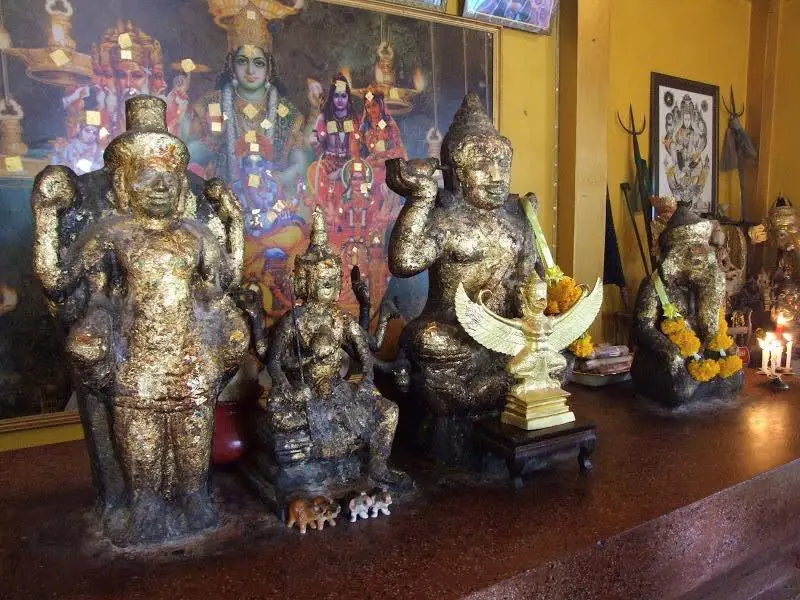
Guan Yin Park at Wat Suthajinda is located inside Wat Suthajinda Worawihan on Ratchadamnoen Road, Nai Mueang Subdistrict, Mueang Nakhon Ratchasima District, Nakhon Ratchasima Province 30000, directly opposite the Nakhon Ratchasima Provincial Hall. It is a peaceful place of worship in the city of Korat, where visitors come to pay respect to Guan Yin, the Bodhisattva of Compassion. The park is part of Wat Suthajinda Worawihan, a historic royal temple in central Nakhon Ratchasima, making the site meaningful not only as a devotional place but also as part of an important Buddhist temple compound in the heart of the city.
Wat Suthajinda Worawihan is a third-class royal temple of the Worawihan type under the Dhammayuttika Nikaya. It is located on Ratchadamnoen Road on the western side opposite the Provincial Hall of Nakhon Ratchasima. The temple has long served as a religious, educational, and community center in Korat. The presence of Guan Yin Park inside the temple adds another layer of devotion to the compound, allowing visitors to pay respect to Guan Yin, make merit, worship at the temple, and experience a calm sacred atmosphere within one accessible city location.
Guan Yin, widely known in Thailand as Chao Mae Kuan Im, is associated with compassion, mercy, and the act of listening to the suffering of living beings. In Thai society, devotion to Guan Yin appears in Chinese shrines, Mahayana Buddhist settings, Thai temples, and urban devotional spaces. Guan Yin Park at Wat Suthajinda reflects this inclusive character of Thai religious culture. It is a place where different devotional traditions can coexist peacefully within the grounds of a Thai royal temple.
The importance of Guan Yin Park is strengthened by its location inside Wat Suthajinda. The temple was formed from the merging of 2 older temples, Wat Somboon Chio Simaram and Wat Borom Jinda, and was developed as a new temple near the administrative center of Nakhon Ratchasima. The temple received its royal consecrated boundary in 1927, the boundary was completed in 1928, the consecration ceremony was held on 11–12 August 1931, and the temple was elevated to royal temple status on 23 January 1935.
This background gives Guan Yin Park a deeper meaning. It is not an isolated devotional corner, but part of a royal temple connected with the modern development of Nakhon Ratchasima. When the provincial administrative area was developed near this part of the city, local officials, merchants, citizens, and the Sangha supported the improvement of the temple so that it would stand with dignity near the provincial administrative center. Wat Suthajinda therefore carries the memory of civic cooperation, religious development, and urban growth in Korat.
The atmosphere of Wat Suthajinda is calm, orderly, and appropriate for a royal temple in the center of the city. Important temple structures include the ordination hall, sermon hall, dining hall, multipurpose hall, meditation hall, monks’ residences, bell tower, merit-making hall, and crematorium. These areas show that the temple is an active religious institution serving worship, education, ceremonies, monastic life, and the wider community. Guan Yin Park exists within this living temple setting, giving visitors a quiet place for reflection and prayer.
Guan Yin Park offers a devotional atmosphere that differs from the main Theravada Buddhist areas of the temple. The presence of Guan Yin brings a sense of gentleness, compassion, and spiritual consolation. Many visitors come to pray for health, family well-being, safe travel, work, success, and inner peace. Some stop by after making merit in the temple, while others come specifically to pay respect to Guan Yin before continuing their journey through central Korat.
The Guan Yin image represents compassion that can be understood by many kinds of visitors. Buddhists, Thai-Chinese families, local worshippers, travelers, and people interested in sacred places can all approach the site respectfully. In Thailand, devotion to Guan Yin is often open and accessible, not restricted only to one specific religious background. This makes the park a gentle and inclusive place within the broader religious landscape of Nakhon Ratchasima.
Wat Suthajinda has been led by several important abbots throughout its history. The first abbot was Somdet Phra Maha Wirawong (Uan Tisso), followed by other senior monks who continued the care and development of the temple. The current abbot is Phra Udom Theerakhun (Phawat Visutthesako), who has served as abbot since 2022 and also holds an important administrative role in the Sangha of Nakhon Ratchasima. The temple’s continued leadership helps preserve its role as a major royal temple in Korat.
The location of Guan Yin Park is highly convenient. Ratchadamnoen Road is one of the important roads in central Nakhon Ratchasima. The temple is directly opposite the Provincial Hall and close to government offices, schools, hotels, restaurants, shops, and old-city attractions. This makes the park suitable for local residents, office visitors, travelers, and tourists who want a quiet spiritual stop while staying in or passing through Korat city.
Wat Suthajinda is also close to several major attractions in Nakhon Ratchasima, including Thao Suranari Monument, Chumphon Gate, Nakhon Ratchasima City Pillar Shrine, Wat Phra Narai Maharat Worawihan, Maha Weerawong National Museum, and Korat Museum. Guan Yin Park can therefore be included in a half-day city route that combines worship, history, local culture, and old-city landmarks without requiring long travel distances.
Within Wat Suthajinda, there are several sacred and cultural objects, including Phra Phuttha Sihanat, Phra Kaew Yot Nam Khang, Buddha images in the subduing Mara posture, lacquered cabinets, decorative religious objects, Benjarong ceramics, a Dhamma and Pali studies school, a Sunday Buddhist study center, and Wat Suthajinda School. These elements show that the temple has roles in religion, education, art, and cultural preservation. Guan Yin Park is one part of this wider sacred and educational environment.
Guan Yin Park should be understood as a devotional area within Wat Suthajinda that adds the dimension of compassion and Mahayana Buddhist symbolism to a royal Theravada temple. Inside the same compound, visitors encounter Thai Theravada worship, Buddhist education, sacred images, and Guan Yin devotion. This coexistence shows the layered nature of Thai religious life, where different forms of reverence can be practiced respectfully in one place.
Visitors who come to pay respect to Guan Yin usually begin by calming the mind and reflecting on compassion. Flowers, incense, candles, or suitable offerings may be used according to local practice. Prayers often focus on peace, health, family safety, protection, and the removal of obstacles. The park offers a short but meaningful pause in the middle of the city, allowing visitors to gather their thoughts before continuing with daily life or travel.
Visitors should behave respectfully because the site is located inside a royal temple and functions as a sacred devotional space. Modest clothing is appropriate. Shoulders and knees should be covered. Visitors should speak softly, avoid blocking people who are praying, and refrain from touching the Guan Yin image or offerings unnecessarily. Photography should be done carefully and without disturbing worshippers. These manners help preserve the calm atmosphere of the temple.
For photography, Guan Yin Park and Wat Suthajinda offer a calm religious setting within the city. Suitable subjects include the Guan Yin image, temple atmosphere, architectural details, and the relationship between the temple and Ratchadamnoen Road. When worshippers are present, close-up photography and flash should be avoided. The best photographs of this place are those that preserve its quiet devotional character.
Getting There is convenient by private car, songthaew, local taxi, or app-based transport. Visitors can search for Wat Suthajinda Worawihan on Ratchadamnoen Road, opposite the Nakhon Ratchasima Provincial Hall. From Thao Suranari Monument, the drive is short. From Nakhon Ratchasima Railway Station, the bus terminal, or hotels in the city center, visitors can take local transport directly to the temple area.
Travelers driving from Bangkok or nearby provinces can enter Nakhon Ratchasima via Mittraphap Road, then continue into the city center toward Ratchadamnoen Road and the Provincial Hall. Since the area around the temple is close to government offices and important urban roads, traffic can be busy during morning and evening periods, on workdays, and during long weekends. Visiting in the morning or outside peak traffic hours makes the trip more comfortable.
A general visit to Guan Yin Park takes about 30 minutes to 1 hour for paying respect, walking through the temple grounds, and spending time in quiet reflection. Visitors who want to explore Wat Suthajinda more thoroughly, including the ordination hall, sermon hall, meditation area, Buddhist study zones, and royal temple atmosphere, may spend 1 to 2 hours in the compound.
The best time to visit is in the morning or late afternoon. Morning offers a cooler and calmer atmosphere for worship, while late afternoon is convenient for those who come after errands or sightseeing in the city. On Buddhist holy days, religious holidays, or periods connected with Chinese Buddhist devotion, more visitors may come to the temple and Guan Yin Park.
The site is suitable for visitors who want a peaceful stop in the city. Although it is located in a busy urban area, the temple grounds offer a more reflective environment. Visitors can pay respect to Guan Yin, worship within the temple, and then continue to Thao Suranari Monument, Chumphon Gate, Nakhon Ratchasima City Pillar Shrine, Wat Phra Narai Maharat, or Maha Weerawong National Museum. This route reveals several spiritual and historical layers of central Korat.
Food options around Wat Suthajinda are varied. Visitors can find Thai restaurants, local eateries, cafés, coffee shops, and restaurants around Ratchadamnoen Road, Manat Road, Phon Saen Road, Jomphon Road, and the Ya Mo area. After worshipping at Guan Yin Park, visitors can easily continue to a nearby restaurant or café within a short drive.
Accommodation near Guan Yin Park is widely available in central Nakhon Ratchasima. Visitors can choose hotels near the old city, the railway station, major shopping malls, or Mittraphap Road. Those who want to explore the old city and visit sacred places may prefer hotels near the Ya Mo area, Jomphon Road, Atsadang Road, or Terminal21 Korat. Those continuing to Phimai, Khao Yai, or other provinces may prefer hotels with easy road access.
For families, Guan Yin Park at Wat Suthajinda is a good place for children and young visitors to learn about religious diversity in Thailand. Within one temple compound, visitors can see a royal Theravada Buddhist temple, a Buddhist education setting, and a Guan Yin devotional area connected with Mahayana Buddhist and Thai-Chinese belief. Learning from a real place helps make the cultural character of Korat easier to understand.
For international visitors, Guan Yin Park helps explain an important feature of Thai religious culture: different forms of belief often coexist in the same social and sacred space. A royal Theravada temple can also contain a Guan Yin devotional area, and local people may pay respect to both Buddha images and Guan Yin with equal sincerity. This layered religious landscape is one of the distinctive cultural features of Thailand.
Guan Yin Park is also suitable for people who need a quiet pause during the day. Since it is close to government offices, schools, hospitals, restaurants, and major city roads, people can visit briefly to pray, reflect, or calm the mind. Its accessibility gives it a role in everyday city life, not only in formal tourism.
When considered with nearby sacred places, Wat Suthajinda adds another layer to the spiritual map of Nakhon Ratchasima. The City Pillar Shrine represents the city’s foundation, Thao Suranari Monument represents heroism and civic pride, Wat Phra Narai Maharat represents the old city’s Buddhist history, and Wat Suthajinda represents a royal temple near the provincial administrative center. Guan Yin Park adds the dimension of compassion and Guan Yin devotion to this wider sacred landscape.
Overall, Guan Yin Park at Wat Suthajinda is a meaningful devotional site in central Nakhon Ratchasima. Located on Ratchadamnoen Road opposite the Provincial Hall, it stands within a historic royal temple and provides a peaceful place to pay respect to Guan Yin. Visitors can worship, make merit, walk through the temple, and connect easily to other old-city attractions. The site is suitable for prayer, quiet reflection, cultural learning, and understanding the religious diversity of Korat.
| Name | Guan Yin Park at Wat Suthajinda |
| Location | Inside Wat Suthajinda Worawihan, Ratchadamnoen Road, Nai Mueang Subdistrict, Mueang Nakhon Ratchasima District, Nakhon Ratchasima Province 30000 |
| Address | Wat Suthajinda Worawihan, 774 Ratchadamnoen Road, Nai Mueang, Mueang Nakhon Ratchasima, Nakhon Ratchasima 30000, opposite Nakhon Ratchasima Provincial Hall |
| Highlights | A Guan Yin devotional area inside a royal temple in central Korat, suitable for prayer, compassion-based devotion, quiet reflection, and cultural visits |
| History | Located within Wat Suthajinda Worawihan, established in 1924, granted a royal consecrated boundary in 1927, consecrated on 11–12 August 1931, and elevated to royal temple status on 23 January 1935 |
| Name Origin | The name comes from the Guan Yin devotional area located inside Wat Suthajinda |
| Distinctive Features | A Guan Yin worship area within Wat Suthajinda Worawihan, a third-class royal temple of the Worawihan type under the Dhammayuttika Nikaya |
| Important Sacred Objects | Guan Yin image, Phra Phuttha Sihanat, Phra Kaew Yot Nam Khang, Buddha images in the subduing Mara posture, and important sacred objects within Wat Suthajinda |
| Travel Information | Accessible by private car, songthaew, local taxi, or app-based transport. Search for Wat Suthajinda Worawihan on Ratchadamnoen Road, opposite Nakhon Ratchasima Provincial Hall |
| Current Status | Open for worship and respectful visits inside Wat Suthajinda Worawihan |
| Open Days | Daily |
| Opening Hours | 08.00 – 17.00 |
| Facilities | Worship area, temple grounds, ordination hall, sermon hall, meditation hall, monks’ residences, bell tower, merit-making hall, crematorium, and parking area |
| Main Areas / Zones | Guan Yin Park, ordination hall, sermon hall, meditation hall, Dhamma and Pali studies school, Sunday Buddhist study center, and royal temple grounds |
| Abbot / Caretaker | Phra Udom Theerakhun (Phawat Visutthesako), Abbot of Wat Suthajinda Worawihan |
| Contact Number | 044-009-009 |
| Nearby Tourist Attractions | 1. Nakhon Ratchasima Provincial Hall – opposite the temple 2. Thao Suranari Monument – about 2 km 3. Chumphon Gate – about 2 km 4. Nakhon Ratchasima City Pillar Shrine – about 2 km 5. Wat Phra Narai Maharat Worawihan – about 2 km 6. Korat Museum – about 3 km – Tel. 044-009-009 ext. 1011 |
| Nearby Restaurants | 1. Jompol Boutique Cafe – about 2 km – Tel. 064-462-8787, 081-547-4906 2. Jompol Cafe – about 2 km – Tel. 081-547-4906 3. Balance Cafe & Bakery – about 2 km – Tel. 065-975-9294 4. JADE Cuisine – about 2 km – Tel. 087-644-2693 5. Ta Sushi Ya Mo Market – about 2 km – Tel. 061-974-5885 |
| Nearby Accommodations | 1. Korat Hotel – about 2 km – Tel. 093-325-7996 2. Tokyo Hotel Korat – about 2 km – Tel. 044-242-788, 092-549-9925 3. Centre Point Hotel Terminal21 Korat – about 3 km – Tel. 044-498-880 4. Siri Hotel Nakhon Ratchasima – about 3 km – Tel. 044-341-822 5. The Imperial Hotel & Convention Centre Korat – about 3 km – Tel. 044-256-629 |
Frequently Asked Questions (FAQ)
Q: Where is Guan Yin Park at Wat Suthajinda located?
A: Guan Yin Park is located inside Wat Suthajinda Worawihan on Ratchadamnoen Road, Nai Mueang Subdistrict, Mueang Nakhon Ratchasima District, Nakhon Ratchasima Province 30000, opposite the Nakhon Ratchasima Provincial Hall.
Q: What are the opening days and hours of Guan Yin Park?
A: It is open daily from 08.00 to 17.00.
Q: Is there an admission fee for Guan Yin Park?
A: No official ticketed admission fee is listed by the referenced sources. Visitors can enter the temple area for respectful worship during opening hours.
Q: What is the main highlight of Guan Yin Park at Wat Suthajinda?
A: The main highlight is the Guan Yin devotional area inside Wat Suthajinda Worawihan, a royal temple in central Korat, offering a calm place for worship, reflection, and compassion-based devotion.
Q: Why is Wat Suthajinda important?
A: Wat Suthajinda Worawihan is a third-class royal temple of the Worawihan type under the Dhammayuttika Nikaya, located opposite the Nakhon Ratchasima Provincial Hall and recognized as an important temple in Korat.
Q: How can travelers get to Guan Yin Park?
A: Travelers can search for Wat Suthajinda Worawihan on Ratchadamnoen Road, opposite the Provincial Hall. The site is accessible by private car, songthaew, local taxi, or app-based transport within Nakhon Ratchasima city.
Q: What attractions are near Guan Yin Park?
A: Nearby attractions include Nakhon Ratchasima Provincial Hall, Thao Suranari Monument, Chumphon Gate, Nakhon Ratchasima City Pillar Shrine, Wat Phra Narai Maharat Worawihan, and Korat Museum.
 Category: ●Places of Worship
 Group: ●Other Sacred Sites
Last Update : 3 MonthAgo
 Last Update : 3 MonthAgo
 Click to Access the Navigation Map GPS
 Art, Culture and Heritage
 Historical Sites and Monuments(20)
 Landmarks and Memorials(5)
 Art, Craft Centres, Tradition(7)
 Museums(6)
 Art Gallery(1)
 Educational Places
 Educational Gardens, Farm(4)
 Temple(29)
 Mosque(1)
Other Sacred Sites(6)
Mosque(1)
Other Sacred Sites(6)
 Research and Development
 Royal Project(3)
 Suburban Living
 Village, Community(6)
 Local Market(4)
 Floating Market(1)
 Nature and Wildlife
 National Parks and Marine Reserves(3)
 Mountain (Doi)(5)
 Dam, Reservoir, Lake(8)
 Waterfalls(9)
 Hot Springs(1)
 Caves(2)
 Flower Field(1)
 River, Canal(8)
 Bays and Beaches(2)
 Other natural attractions(3)
 Entertainment and Agricultural
 Zoos and Aquariums(1)
 Animal camps and shows(1)
 Farms, Parks and Ecotourism(21)
 Waterpark(2)
 Outdoor and Adventure Activities(6)
 Shopping
 Shopping and Night Market(2)
 Travel Articles, Recipes
 Travel Review, Food Review(6)


