
lovethailand home >Northeastern Travel Attractions >Nakhon Ratchasima Travel Attractions >Wang Nam Khieo >Thai Samakkhi > Soom Mai Ngam Ornamental Flower Garden
TL;DR: Soom Mai Ngam Ornamental Flower Garden is located at Ban Bu Phai, Thai Samakkhi Subdistrict, Wang Nam Khiao District, Nakhon Ratchasima Province, open Daily, hours 06.00 – 18.00.
Soom Mai Ngam Ornamental Flower Garden
Open Days: Daily
Opening Hours: 06.00 – 18.00
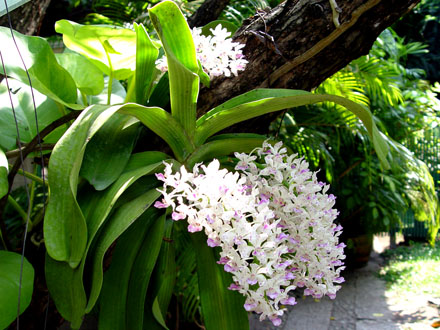
Soom Mai Ngam Ornamental Flower Garden in Nakhon Ratchasima is an agritourism flower and ornamental plant garden in Wang Nam Khiao District. Located in Ban Bu Phai, Thai Samakkhi Subdistrict, the garden sits within one of the most important highland farming areas of northeastern Thailand. Wang Nam Khiao is well known for cool air, mountain terrain, agricultural communities, flower farms, mushroom farms, fruit gardens, and community-based travel routes. Soom Mai Ngam is especially interesting because it brings together ornamental flowers, foliage plants, seasonal roses, anthuriums, chrysanthemums, decorative leaves, and seasonal fruits in one local farming space. For international travelers, the garden offers a quiet and authentic view of flower cultivation in a highland Thai community, away from large-scale theme attractions.
The garden is associated with Khun Chusak Niyomna and is located in Ban Bu Phai, Thai Samakkhi Subdistrict. Travelers can reach it by driving about 5 km beyond Wang Nam Khiao District Office, then turning left toward Ban Bu Phai for another 3 km. The surrounding area is a rural agricultural community with small roads, local homes, flower gardens, fruit trees, farms, and mountain scenery. This gives Soom Mai Ngam a different character from a large commercial flower park. It is a working garden rooted in the community, where visitors can experience flowers, foliage, seasonal fruit, and local agricultural life in a more natural rhythm.
Thai Samakkhi has a strong geographical advantage for flower and highland crop cultivation. The area is generally mountainous and hilly, with an elevation of around 400 – 700 meters above sea level. It is also located near the forested landscape of Thap Lan National Park, which helps create a cooler and more comfortable climate throughout the year. This setting supports the cultivation of flowers, ornamental plants, salad vegetables, mushrooms, and fruit crops. Soom Mai Ngam therefore belongs to a wider agricultural identity of Wang Nam Khiao, where climate, terrain, water, and local knowledge come together to create distinctive farm-based destinations.
The charm of Soom Mai Ngam comes from plant diversity. Ferns create a green, cool, and delicate atmosphere. Chrysanthemums add bright colors and connect the garden with Wang Nam Khiao’s flower-growing identity. Anthuriums bring glossy, elegant blooms that are widely used in floral arrangements and interior decoration. Roses appear during the cool-season period, especially around November and December, adding a romantic seasonal character. Cenadu leaves are cut and sold for use in vase decoration and floral arrangements. Seasonal fruits add another dimension, making the garden both a flower and fruit-growing space.
Ferns are important in ornamental gardens because they create a soft, shaded, and refreshing visual mood. Their leaf forms are more delicate than many broad-leaf plants, and they work well as decorative plants in gardens, shaded corners, and interior spaces. In Wang Nam Khiao, where cool air and highland moisture support greenery, ferns help connect the brighter colors of flowers with the calm feeling of a natural garden. For visitors, the fern area shows that an ornamental garden is not only about colorful flowers. Leaves, shapes, textures, and green structure are equally important in creating a complete garden atmosphere.
Chrysanthemums are among the flowers most closely associated with Wang Nam Khiao and Thai Samakkhi. Their many colors, including yellow, white, pink, purple, red, and mixed tones, make them suitable for garden displays, cut flowers, vases, and local flower festivals. At Soom Mai Ngam, chrysanthemums help connect the garden with the broader flower-growing reputation of the district. Visitors interested in flower routes can understand the garden as one part of the local ornamental plant economy that has helped make Wang Nam Khiao known as a flower destination in northeastern Thailand.
Anthuriums provide a different kind of beauty from chrysanthemums. Their glossy spathes, strong colors, and elegant form make them popular in hotels, restaurants, spas, reception areas, and modern flower arrangements. Growing anthuriums requires attention to light, humidity, air circulation, growing media, and water drainage. Their presence in Soom Mai Ngam adds a higher-value ornamental flower dimension to the garden. It shows that the farm is not only producing flowers for wide color displays, but also ornamental plants connected with decoration and floral business.
Cenadu is valuable as a decorative foliage plant used in vase arrangements and floral work. Although visitors may be more familiar with bright flowers, leaves like cenadu play a major role in professional arrangements. They add green structure, depth, contrast, and balance to bouquets and vases. A beautiful flower arrangement is not made only from the main flowers. It also depends on supporting leaves and foliage. Seeing cenadu in a production garden helps visitors understand the broader system behind floral design, from colorful blooms to the leaves that complete the arrangement.
Roses at Soom Mai Ngam are seasonal and are especially associated with November to December. This period falls within the cooler months of Wang Nam Khiao, making it a good time for flower travel. Roses carry a universal meaning of love, beauty, appreciation, and special occasions. In the Ban Bu Phai garden setting, roses add a softer and more romantic mood to the plant collection. Their seasonal nature also makes the garden change throughout the year. Visitors who come in the cool season may experience a different atmosphere from those who visit during the fruit season.
Soom Mai Ngam also grows seasonal fruits, including mangosteen, rambutan, lychee, santol, longkong, and sweet tamarind. The period from April to July is especially associated with fruit availability. This makes the garden more than an ornamental flower site. It is a mixed agricultural space where flowers, foliage, and fruit trees exist together. The presence of fruit crops gives the garden a year-round rhythm. Visitors in different seasons may see different plants, products, and activities depending on what is growing or ready for harvest.
Fruit season gives the garden another layer of interest. Mangosteen has a deep purple rind and a sweet-tangy flavor. Rambutan is bright red and juicy. Lychee is fragrant and refreshing. Santol has a distinctive tropical taste. Longkong is sweet and translucent. Sweet tamarind is often bought as a local souvenir. When these fruits are available, the garden becomes attractive not only for flower lovers but also for families and travelers interested in local produce. It allows visitors to see how ornamental farming and fruit farming can exist in the same community landscape.
Soom Mai Ngam received support from a Royal Project development program, reflecting its agricultural potential. Such support helped strengthen the development of highland farming, plant diversity, and production quality in suitable areas. The garden’s combination of flowers, foliage, and fruits shows that agricultural development can create both livelihood and tourism value. Visitors can see how local farmers use environmental conditions, plant knowledge, and community routes to build a garden that is productive and interesting for travelers.
As a travel stop, Soom Mai Ngam is suitable for visitors moving along the Wang Nam Khiao and Thai Samakkhi route. It does not require a full day by itself, but it works very well as part of an agricultural itinerary. Visitors can stop at the garden in the morning, continue to Wang Nam Khiao Farm for mushrooms, visit Ban Suk Somboon for community-based tourism, see the chrysanthemum fields in Ban Bu Sai, or continue to Village Farm & Winery in the afternoon. This makes the garden a flexible part of a broader route that includes flowers, vegetables, mushrooms, fruits, vineyards, and local communities.
For photography, Soom Mai Ngam offers more varied details than a single-crop fruit garden. Visitors can photograph bright flowers, green fern textures, glossy anthuriums, seasonal roses, decorative leaves, fruit trees, and local garden scenery. Morning and late afternoon are the best times because the light is softer and colors appear more natural. Close-up images work well for leaves and anthuriums, while wider shots can show planting areas and the rural setting of Ban Bu Phai.
For families, the garden is a practical outdoor classroom. Children can see that flowers and fruits do not begin in shops. They grow from plants that need soil, water, sunlight, air, and human care. Parents can explain the difference between flowers, foliage plants, and fruit trees: chrysanthemums are grown for blooms, ferns are grown for leaves, cenadu is used in arrangements, anthuriums are used for decoration, and fruits are eaten according to season. Learning in a real garden helps children understand plants more clearly than seeing pictures alone.
For agricultural learners, Soom Mai Ngam is an example of a mixed garden combining ornamental flowers, foliage, and fruit crops. Managing a garden like this requires understanding the needs of many plant groups at the same time. Some plants prefer filtered light. Some need more sun. Some require higher humidity. Some produce flowers or fruits only during certain periods. The ability to manage these differences reflects local farming knowledge and repeated experience. Visitors interested in gardening or small-scale farming can find useful inspiration here.
Thai Samakkhi is known for several types of community agriculture, including chrysanthemums, chemical-free vegetables, mushrooms, fruits, and homestays. Soom Mai Ngam adds another layer to this identity through flowers and ornamental plants in Ban Bu Phai. Travelers passing through the area will see that Thai Samakkhi is not defined by a single crop. It is a diverse farming subdistrict that uses its cool climate and highland terrain to support many kinds of production. This diversity makes the Wang Nam Khiao travel route feel more alive and more connected to local people.
Getting There is easiest by private car, rental car, or arranged local transport. From Wang Nam Khiao District Office, continue about 5 km toward Thai Samakkhi, then turn left into Ban Bu Phai and continue about 3 km to the garden. From Nakhon Ratchasima city, take Highway 304 toward Pak Thong Chai and Wang Nam Khiao, then continue into Thai Samakkhi. From Bangkok, travelers can use the Ongkharak – Nakhon Nayok – Prachin Buri – Kabin Buri route and continue on Highway 304 toward Wang Nam Khiao.
The road into Ban Bu Phai is a local community route connected with farms and village areas. Drivers should use appropriate speed, especially in the morning, late afternoon, or rainy periods. Some sections may include local traffic, agricultural vehicles, and turns into homes or gardens. Private transport makes it easier to combine Soom Mai Ngam with Wang Nam Khiao Farm, Ban Suk Somboon, the Ban Bu Sai chrysanthemum fields, Village Farm & Winery, Montana Farm, and Pha Kep Tawan.
The best time to visit is in the morning or late afternoon. Softer light is better for seeing and photographing flowers and foliage. Morning gives a fresh atmosphere, while late afternoon creates warmer tones. Those who want to see roses should plan for the November to December period. Those interested in fruits should consider April to July, when several kinds of fruit are associated with the garden. The garden changes by season, so each visit may offer a different experience.
Visitors should respect the garden as a real production area. Walk only on open paths, avoid stepping into planting beds, do not pick flowers, do not pull leaves, do not move pots or tools, and keep the area clean. Flowers and ornamental leaves can be easily damaged, and many plants have economic value for the grower. Respectful behavior helps preserve the garden for future visitors and supports the local farming community.
When buying products from the garden, visitors should choose from the areas provided by the owner or caretaker. Do not cut flowers, foliage, or fruit without permission. Garden products grow according to plant cycles and seasonal readiness. Buying directly from the grower supports local income and gives travelers a more meaningful souvenir, whether it is a flower, ornamental leaf, fruit, or potted plant connected with the place they visited.
For health and nature-focused travelers, Soom Mai Ngam adds a gentler dimension to Wang Nam Khiao. Instead of only visiting viewpoints or cafés, travelers can spend time with plants, soil, flowers, leaves, and seasonal fruit. The garden slows down the rhythm of travel and gives visitors a closer connection with the agricultural landscape. It is especially suitable for those who enjoy small local places with clear farming identity.
For international travelers, Soom Mai Ngam shows Thailand through community flower farming. Foreign visitors may know Thailand through temples, beaches, food, markets, and national parks, but this garden presents another story: ornamental plant cultivation in a mountain area of northeastern Thailand. Chrysanthemums, anthuriums, roses, ferns, and seasonal fruits all become part of a local agricultural landscape. The visit helps foreign readers understand that Wang Nam Khiao is not only a scenic destination but also a living farming region.
A half-day route can start with Soom Mai Ngam in the morning, continue to Wang Nam Khiao Farm for mushroom products, and then stop for lunch or coffee in Thai Samakkhi. A full-day route can add Ban Suk Somboon, the Ban Bu Sai chrysanthemum fields, Village Farm & Winery, Montana Farm, or Pha Kep Tawan. This creates a balanced Wang Nam Khiao itinerary with flowers, foliage plants, fruits, mushrooms, vineyards, local food, and mountain scenery in one day.
Nearby restaurants support a flexible agricultural route. Wang Nam Khiao Farm is suitable for mushroom-based products and farm food. Wang Nam Khiao Coffee Roasting is a good stop for coffee. The Old Barn at Village Farm & Winery provides a vineyard dining atmosphere. Patta Wang Nam Khiao and Na Siri Wang Nam Khiao offer wider restaurant-style menus. Krua Ton Sai and Suan Mae Mon Farm & Cafe are additional choices for travelers continuing through the district. These options make it easy to connect a garden visit with local food experiences.
Accommodation is available in several nearby zones. Travelers who want a community atmosphere can stay in Ban Suk Somboon homestays or nearby Thai Samakkhi lodgings. Those who prefer a quiet garden or hill setting can choose Kiangmok Chalet. Travelers who want a vineyard atmosphere can stay at Village Farm & Winery. Veravian Resort and other properties in central Wang Nam Khiao provide mountain-view resort options. Since Wang Nam Khiao includes community roads and hilly terrain, travelers should consider actual driving routes when choosing accommodation.
Economically, Soom Mai Ngam shows how flower and ornamental plant knowledge can support a rural community. Income can come from flowers, foliage, fruits, plants, garden products, and visitor spending. When travelers enter the area, restaurants, accommodations, cafés, and nearby attractions also benefit. Agritourism helps distribute value across the subdistrict while keeping agriculture at the center of the community identity.
Soom Mai Ngam also confirms Wang Nam Khiao’s identity as a place where nature and climate create agricultural value. Mountains, cool air, soil, water, and local farming knowledge allow flowers and ornamental plants to become both livelihood and tourism. The garden is not a large attraction built around spectacle. Its value lies in real plants, seasonal production, local care, and the continuity of a farming community.
Overall, Soom Mai Ngam Ornamental Flower Garden is suitable for flower lovers, families, photographers, ornamental plant growers, community-based travelers, and international visitors who want to see a local flower garden in Wang Nam Khiao. Its strength lies in the combination of ferns, chrysanthemums, cenadu leaves, seasonal roses, anthuriums, and seasonal fruits within Ban Bu Phai. A visit is not only about seeing a garden. It is about understanding how plant diversity can create beauty, income, and community identity in a highland farming area of Nakhon Ratchasima.
When combined with Wang Nam Khiao Farm, Ban Suk Somboon, the Ban Bu Sai chrysanthemum fields, Village Farm & Winery, Montana Farm, Flora Park, and Pha Kep Tawan, Soom Mai Ngam makes the Wang Nam Khiao route more complete. The journey can include flowers, foliage plants, fruits, mushrooms, vineyards, food, health, nature, and local communities. It is a small but meaningful stop that helps travelers experience Nakhon Ratchasima through the beauty of plants and the work of local farmers.
| Name | Soom Mai Ngam Ornamental Flower Garden |
| Location | Ban Bu Phai, Thai Samakkhi Subdistrict, Wang Nam Khiao District, Nakhon Ratchasima Province |
| Highlights | A highland ornamental flower and foliage garden in Wang Nam Khiao, featuring ferns, chrysanthemums, cenadu leaves, seasonal roses, anthuriums, and seasonal fruits in Ban Bu Phai |
| History / Importance | A flower and ornamental plant garden associated with Khun Chusak Niyomna, supported by a Royal Project development program, and part of Wang Nam Khiao’s identity as an important ornamental plant-growing area in northeastern Thailand |
| Name Origin | The name Soom Mai Ngam reflects a garden space for beautiful plants, ornamental flowers, foliage, and seasonal garden produce in Ban Bu Phai |
| Distinctive Features | A mixed garden of ornamental flowers, foliage plants, and fruits, including ferns, chrysanthemums, cenadu leaves, anthuriums, seasonal roses, mangosteen, rambutan, lychee, santol, longkong, and sweet tamarind |
| Travel Information | From Wang Nam Khiao District Office, continue about 5 km, then turn left into Ban Bu Phai for another 3 km. Private car, rental car, or arranged local transport is recommended. |
| Current Status | Open daily according to currently published travel information. Group visits are best coordinated through local community contacts before traveling. |
| Open Days | Daily |
| Opening Hours | 06.00 – 18.00 |
| Facilities | Flower and ornamental plant viewing areas, foliage plots, flower beds, seasonal fruit area, photo spots, garden product area, and parking space within the community setting |
| Main Areas / Zones | Fern Zone, Chrysanthemum Zone, Cenadu Leaf Zone, Anthurium Zone, Seasonal Rose Zone, Seasonal Fruit Zone, Floral Foliage Zone, and Garden Photo Area |
| Caretaker / Coordinator | Khun Chusak Niyomna |
| Local Administrative Contact | Thai Samakkhi Subdistrict Administrative Organization, Tel. 044-228888, 089-280-5494 |
| Nearby Tourist Attractions | 1. Wat Bu Phai / Wat Ban Rai 2, about 3 km 2. Wang Nam Khiao Farm (Mr. Mushroom), about 8 km, Tel. 044-228991 3. Ban Suk Somboon Community-Based Tourism Club, about 8 km, Tel. 093-372-3122 4. Ban Bu Sai Chrysanthemum Growers Group And Chrysanthemums In The Mist Area, about 10 km, Tel. 085-302-2785, 084-431-2745 5. Village Farm & Winery, about 12 km, Tel. 081-877-3711 6. Montana Farm Wang Nam Khiao, about 15 km, Tel. 044-228376, 098-345-1900 7. Pha Kep Tawan, Thap Lan National Park, about 20 km, Tel. 037-210340, 092-550-0172 8. Flora Park Wang Nam Khiao, about 22 km, Tel. 089-812-8851 |
| Nearby Restaurants | 1. Wang Nam Khiao Farm (Mr. Mushroom), about 8 km, Tel. 044-228991 2. Wang Nam Khiao Coffee Roasting, about 8 km, Tel. 089-054-6619 3. Old Barn Restaurant At Village Farm & Winery, about 12 km, Tel. 081-877-3711 4. Patta Wang Nam Khiao, about 12 km, Tel. 065-945-5168 5. Na Siri Wang Nam Khiao, about 14 km, Tel. 088-354-0980 6. Krua Ton Sai Wang Nam Khiao, about 16 km, Tel. 099-426-2359 7. Suan Mae Mon Farm And Cafe, about 18 km, Tel. 080-024-8434 |
| Nearby Accommodations | 1. Ban Suk Somboon Homestay, about 8 km, Tel. 093-372-3122 2. Kiangmok Chalet, about 8 km, Tel. 081-611-5515, 080-210-8033 3. Village Farm & Winery, about 12 km, Tel. 081-877-3711 4. Baan Mai Rim Than Homestay, Ban Bu Sai, about 10 km, Tel. 080-731-7439 5. Veravian Resort Wang Nam Khiao, about 20 km, Tel. 083-111-5678, 083-111-6789 6. Accommodations In Thai Samakkhi And Central Wang Nam Khiao Area, about 10 km |
Frequently Asked Questions (FAQ)
Q: Where Is Soom Mai Ngam Ornamental Flower Garden Located?
A: Soom Mai Ngam Ornamental Flower Garden is located in Ban Bu Phai, Thai Samakkhi Subdistrict, Wang Nam Khiao District, Nakhon Ratchasima Province. From Wang Nam Khiao District Office, continue about 5 km, then turn left into Ban Bu Phai for another 3 km.
Q: What Are The Opening Days And Hours?
A: The garden is open daily from 06.00 to 18.00.
Q: What Makes Soom Mai Ngam Interesting?
A: The garden combines ornamental flowers, foliage plants, and seasonal fruits in one community farming space, including ferns, chrysanthemums, cenadu leaves, anthuriums, seasonal roses, and tropical fruits.
Q: What Are The Main Products Of The Garden?
A: Main products include ferns, chrysanthemums, cenadu leaves, anthuriums, seasonal roses, and fruits such as mangosteen, rambutan, lychee, santol, longkong, and sweet tamarind.
Q: When Is The Best Time To See Fruits At Soom Mai Ngam?
A: April to July is the key period for seasonal fruits. Roses are especially associated with November to December.
Q: How Do Travelers Get To Soom Mai Ngam?
A: Travelers drive from Wang Nam Khiao District Office toward Thai Samakkhi for about 5 km, then turn left into Ban Bu Phai for about 3 km. Private car, rental car, or arranged local transport is recommended.
Q: What Nearby Attractions Can Be Visited With Soom Mai Ngam?
A: Nearby places include Wat Bu Phai / Wat Ban Rai 2, Wang Nam Khiao Farm, Ban Suk Somboon, the Ban Bu Sai chrysanthemum fields, Village Farm & Winery, Montana Farm, Pha Kep Tawan, and Flora Park Wang Nam Khiao.
Q: Who Is This Garden Suitable For?
A: It is suitable for flower lovers, families, photographers, ornamental plant growers, community-based travelers, and international visitors who want to see a local flower and ornamental plant garden in Wang Nam Khiao.
 Category: ●Entertainment and Agricultural
 Group: ●Farms, Parks and Ecotourism
Last Update : 2 WeekAgo
 Last Update : 2 WeekAgo
 Click to Access the Navigation Map GPS
Soom Mai Ngam Ornamental Flower Garden Map
Recommend

 Art, Culture and Heritage
 Historical Sites and Monuments(20)
 Landmarks and Memorials(5)
 Art, Craft Centres, Tradition(7)
 Museums(6)
 Art Gallery(1)
 Educational Places
 Educational Gardens, Farm(4)
 Places of Worship
 Temple(29)
 Mosque(1)
 Other Sacred Sites(6)
 Research and Development
 Royal Project(3)
 Suburban Living
 Village, Community(6)
 Local Market(4)
 Floating Market(1)
 Nature and Wildlife
 National Parks and Marine Reserves(3)
 Mountain (Doi)(5)
 Dam, Reservoir, Lake(8)
 Waterfalls(9)
 Hot Springs(1)
 Caves(2)
 Flower Field(1)
 River, Canal(8)
 Bays and Beaches(2)
 Other natural attractions(3)
 Zoos and Aquariums(1)
 Animal camps and shows(1)
Farms, Parks and Ecotourism(21)
Animal camps and shows(1)
Farms, Parks and Ecotourism(21)
 Waterpark(2)
 Outdoor and Adventure Activities(6)
 Shopping
 Shopping and Night Market(2)
 Travel Articles, Recipes
 Travel Review, Food Review(5)


