
lovethailand home >Northeastern Travel Attractions >Nakhon Ratchasima Travel Attractions >Muang Nakhon Ratchasima >Ban Koh > Chao Pho Chang Phueak Shrine
TL;DR: Chao Pho Chang Phueak Shrine is located at Beside the northern moat of the old city, at the corner of Manat Road and Phon Saen Road, Nai Mueang Subdistrict, Mueang Nakhon Ratchasima, open Daily, hours 08.30 – 16.30.
Chao Pho Chang Phueak Shrine
Open Days: Daily
Opening Hours: 08.30 – 16.30
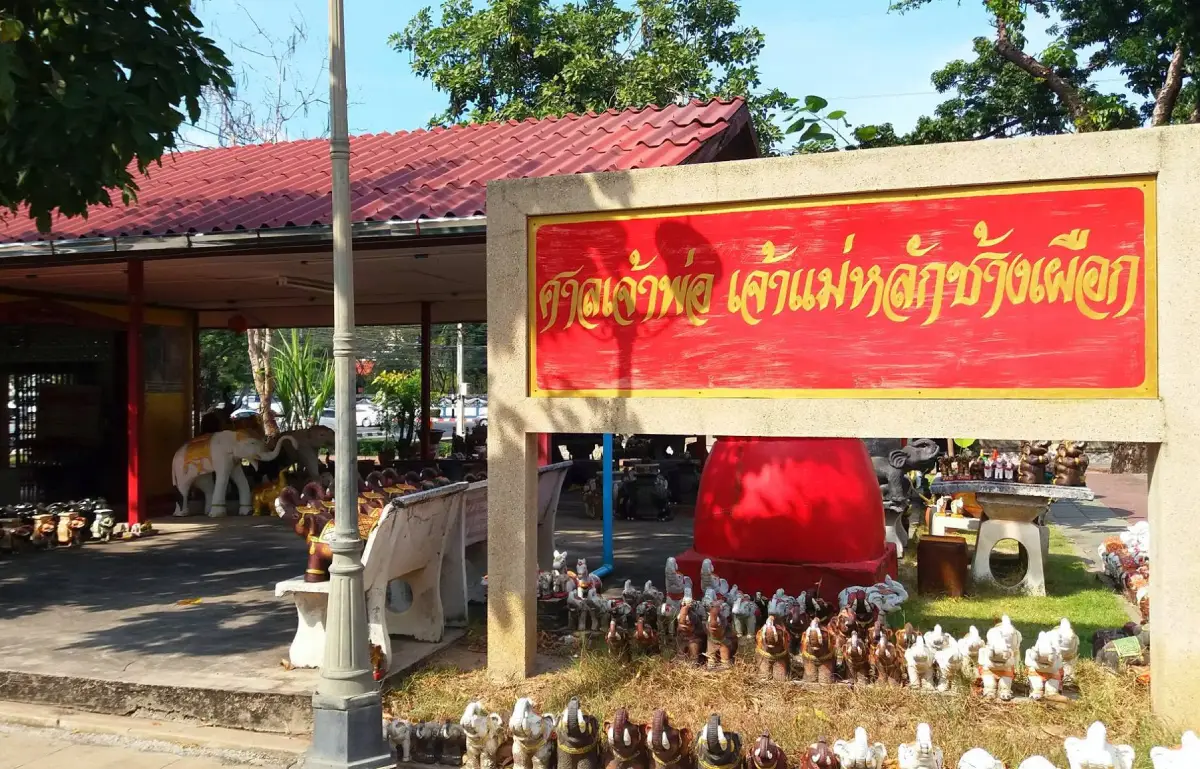
Chao Pho Chang Phueak Shrine in Nakhon Ratchasima is a small but meaningful local shrine located beside the northern moat of the old city, at the corner where Manat Road meets Phon Saen Road in Nai Mueang Subdistrict, Mueang Nakhon Ratchasima District, Nakhon Ratchasima Province 30000. The shrine stands in an old urban landscape connected with the city moat, local roads, community life, and the sacred memory of Korat. It enshrines the story of a stone-like Takian pillar associated with white elephants from Phu Khiao, and it remains one of the small sacred places respected by local people in Nakhon Ratchasima. Although the shrine is modest in size, its cultural meaning is deep because it connects white elephant legends, royal symbolism, the old city of Korat, and local faith in one compact place.
The special character of Chao Pho Chang Phueak Shrine lies in its simplicity and its close relationship with the everyday life of the city. The shrine stands near the road and the old moat, not far from residential areas, schools, cafés, local restaurants, and public spaces. People who pass through Manat Road, Phon Saen Road, or the northern side of the old city can easily notice the shrine and stop to pay respect. Its location creates a different feeling from large tourist attractions. Visitors encounter a sacred place that exists naturally beside traffic, houses, the city moat, and the municipal health park.
The main story of the shrine is connected with a Takian stone pillar. Local accounts say that this pillar was once used by people from Phu Khiao to tie white elephants so that officials from the royal elephant department could inspect their characteristics before reporting them to King Rama I, Phra Phuttha Yotfa Chulalok the Great, for possible acceptance as royal elephants. In Thai culture, a white elephant is a highly auspicious animal linked with royal merit, power, and sovereignty. This gives the shrine a symbolic meaning that goes beyond the physical structure of the building.
Another well-known local legend says that around 1772–1777, during the early Rattanakosin period, two female white elephants were captured from the area of Phu Khiao in Chaiyaphum. Their mahouts were taking the elephants toward Bangkok to offer them to the king. While passing through the Nakhon Ratchasima area, both elephants died near the Lam Takhong area at the Takian stone pillar. The elephants were later given the royal names Phra Inthra Airawat and Phra Thep Kunchon. This legend is one of the reasons the site became a place of respect and remembrance for local people.
From the perspective of urban history, the shrine’s position near the northern city moat is important. The moat is part of the old city landscape of Nakhon Ratchasima and reflects the former defensive and administrative structure of Korat. It is not only a physical feature, but also a line of memory between the historic city and the modern city. A shrine located beside the moat therefore stands at a meaningful point where history, belief, and everyday movement meet.
Local residents respect Chao Pho Chang Phueak Shrine as a sacred place connected with the white elephant legend and the Takian pillar. People come to pay respect, ask for blessings, and express gratitude. The shrine is associated with good fortune, safety, protection, and stability in life. Its importance comes not from architectural size, but from long-standing local faith and the continuation of memory from one generation to another.
The name Chao Pho Chang Phueak evokes the image of a guardian spirit connected with the sacred white elephant. In Thai local belief, a Chao Pho shrine often represents a protective sacred presence associated with a place, a community, or a significant event. Chao Pho Chang Phueak Shrine therefore combines local guardian belief, the auspicious meaning of white elephants, and the sacred memory of the old city of Korat.
The shrine is small, yet it carries a large story. Its legend reaches beyond the immediate corner of Manat Road and Phon Saen Road to Phu Khiao in Chaiyaphum, Nakhon Ratchasima, Lam Takhong, the royal elephant department, and the early Bangkok period. A visit to the shrine is not only a look at a small sacred building. It is an encounter with a local story that has traveled through geography, memory, and belief.
The shrine is located near the municipal health park of Nakhon Ratchasima, giving the surrounding area a mix of sacred and recreational character. Local people may walk, exercise, pass along the moat, and stop to pay respect at the shrine in the same route. This relationship makes the shrine part of the daily rhythm of the city. It is not separated from public life; it remains integrated into the living urban environment.
The main areas of the shrine include the worship point for Chao Pho Chang Phueak, the Takian stone pillar, the offering area, the front of the shrine, and the space connected with the old city moat. Since the shrine is compact, a visit usually takes around 15 to 30 minutes. Travelers who continue to nearby attractions in the old city can easily spend a half day exploring the area around the shrine, the moat, and central Korat.
Worship at the shrine is simple and local in character. Visitors often bring flowers, incense, candles, or auspicious offerings. Some people offer bananas, sugarcane, or coconuts, which are associated with elephants and the legend of the place. These offerings reflect both devotion and the preservation of local tradition. The act of worship is a way of connecting personal wishes with the story of the shrine and the memory of the city.
During ordinary daytime hours, the shrine has a calm atmosphere. People pass by along nearby roads, and local residents may stop briefly to pay respect before continuing their day. Some visitors come specifically to learn about the shrine and its legend. This modest rhythm gives the shrine a quiet charm. It feels like a living local sacred site rather than a staged tourist destination.
Chao Pho Chang Phueak Shrine can be included in a walking or short driving route through the old city of Korat. From the shrine, visitors can continue to Nakhon Ratchasima City Pillar Shrine, Wat Phra Narai Maharat Worawihan, Chumphon Gate, Thao Suranari Monument, and Maha Weerawong National Museum. These places together tell different aspects of Korat: guardian spirits, city foundation, Buddhism, old city gates, local heroism, and provincial history.
The Nakhon Ratchasima Rajabhat University Arts and Culture Center is another meaningful place connected with the cultural understanding of Korat. Located on Suranarai Road within Nakhon Ratchasima Rajabhat University, the center contains a two-story wooden building and a Korat traditional house. It collects information, tools, household objects, and antiquities related to the life of Korat people and northeastern Thai communities in the past. Exhibitions include themes such as the city of Korat, old documents, local occupations, Isan textiles, local products, music, and notable people of Korat.
The Korat traditional house within the university area helps visitors understand local architecture, household life, and regional wisdom. Connecting Chao Pho Chang Phueak Shrine with the Arts and Culture Center creates a fuller cultural route. The shrine represents local faith and legend, while the cultural center presents houses, tools, objects, and information that show daily life and identity in Korat. Together, they give visitors a clearer view of the city beyond major monuments.
Manat Road and Phon Saen Road are also convenient for food and cafés. The area around the shrine includes small restaurants, local cafés, Chinese food, Thai food, porridge shops, steamed bun shops, and bakery cafés. Visitors can pay respect at the shrine and then continue to nearby places for a meal or a short break. This makes the shrine easy to include in a casual old-city route without needing long-distance travel.
Nearby food options include Manat Café on Manat Road, JADE Cuisine on Phon Saen Road, Balance Cafe & Bakery near Manat Road, Sarika Salapao, Khao Tom Chor Duangjai on Manat Road, and Ming De Branch 2. The variety of local restaurants and cafés gives the area a pleasant urban character. It is suitable for travelers who want to combine a shrine visit with local food and a slower walk through Korat city.
Accommodation near Chao Pho Chang Phueak Shrine is available throughout central Nakhon Ratchasima. Visitors who want to explore the old city can stay near Atsadang Road, Jomphon Road, Pho Klang Road, the Ya Mo area, or Mittraphap Road. Staying in the city center gives convenient access to the shrine, Nakhon Ratchasima City Pillar Shrine, Thao Suranari Monument, Ya Mo Market, shopping centers, railway stations, and local restaurants.
A meaningful city route can begin at Chao Pho Chang Phueak Shrine in the morning, continue to Nakhon Ratchasima City Pillar Shrine, Wat Phra Narai Maharat, Chumphon Gate, and Thao Suranari Monument, then continue in the afternoon to Maha Weerawong National Museum, Korat Museum, or the Nakhon Ratchasima Rajabhat University Arts and Culture Center. This route gives travelers a complete view of sacred places, temples, monuments, museums, and cultural learning spaces in Korat.
Getting There is easy from central Nakhon Ratchasima. Visitors can search for the corner of Manat Road and Phon Saen Road or the municipal health park near the northern moat. From Thao Suranari Monument, the shrine can be reached by a short drive or local transport. From Nakhon Ratchasima Railway Station, the bus terminal, or hotels in the city center, travelers can use a taxi, songthaew, or app-based ride to reach Phon Saen Road and Manat Road.
Travelers driving from Mittraphap Road can enter central Korat and continue toward the northern side of the old city and Phon Saen Road. The old city has many connected streets, so navigation is useful. During evenings, weekends, and holidays, parking may be limited near the shrine because it is located in an active urban area. Parking in a nearby appropriate area and walking to the shrine is often convenient.
The best time to visit is from morning to afternoon within the general opening hours of 08.30 to 16.30. Morning offers a calmer atmosphere for worship and walking along the moat. Afternoon works well for combining the shrine with cafés, restaurants, and nearby city landmarks. For photography, softer daylight helps capture the shrine, the moat, and the surrounding urban setting more clearly.
Visitors normally dress modestly and behave calmly when entering the shrine area. The shrine is compact, so standing, taking photographs, or placing offerings should be done with awareness of other worshippers. Exterior photography is easy, while the worship area should be treated as a sacred local space. A quiet and respectful visit preserves the atmosphere of the shrine.
The shrine is also meaningful because it shows the relationship between sacred animals and Thai historical imagination. In Thai culture, the white elephant is not merely a rare animal. It represents auspiciousness, royal merit, power, and the prosperity of the land. The story of 2 white elephants from Phu Khiao passing through Korat gives the shrine symbolic importance and connects the local community with a wider royal and cultural tradition.
As part of Korat’s spiritual landscape, Chao Pho Chang Phueak Shrine adds a different layer to the city. Nakhon Ratchasima City Pillar Shrine represents the foundation of the city. Thao Suranari Monument represents heroism and civic pride. Wat Phra Narai Maharat represents Buddhist history in the old city. Chao Pho Chang Phueak Shrine represents the white elephant legend, local guardian belief, and the northern moat community. Together, these sites form a rich sacred and historical landscape.
This shrine is well suited to visitors who appreciate small places with deep stories. It does not require a long visit, yet it reveals an important layer of Korat’s local memory. The Takian stone pillar, the white elephants, Phu Khiao, Lam Takhong, the northern moat, and the old city roads all come together in one modest sacred site. Visiting the shrine feels like reading a short but meaningful chapter of local history written into the cityscape.
For families and cultural travelers, the shrine is an accessible learning point. Children and first-time visitors can understand that local history is not found only in books or museums. It also appears in shrines, roads, moats, place names, and oral traditions. The white elephant legend helps explain Thai ideas of auspicious animals and royal symbolism, while a later visit to the Arts and Culture Center can deepen understanding through objects, houses, tools, and exhibitions.
For photography, the shrine offers a modest but meaningful old-city subject. Good images can focus on the shrine itself, the Takian pillar, the city moat, Phon Saen Road, Manat Road, and the relationship between the small sacred place and daily urban life. The most meaningful photographs are not necessarily grand or dramatic; they are images that show the quiet coexistence of faith, city memory, and ordinary movement.
Overall, Chao Pho Chang Phueak Shrine in Nakhon Ratchasima is a small shrine beside the old city moat with strong historical and cultural value. Its highlights are the Takian stone pillar, the legend of white elephants from Phu Khiao, its connection with King Rama I’s period, its location on the northern side of the old city, and the continuing devotion of local people. The shrine is suitable for worship, old-city walking, learning about local legends, and combining with nearby cultural sites such as Nakhon Ratchasima City Pillar Shrine, Thao Suranari Monument, Wat Phra Narai Maharat, and the Nakhon Ratchasima Rajabhat University Arts and Culture Center. A visit to this shrine offers a quiet but meaningful way to understand Korat through faith, legend, and local memory.
| Name | Chao Pho Chang Phueak Shrine, Nakhon Ratchasima |
| Location | Beside the northern moat of the old city, at the corner of Manat Road and Phon Saen Road, Nai Mueang Subdistrict, Mueang Nakhon Ratchasima District, Nakhon Ratchasima Province 30000 |
| Address | Municipal health park area, Phon Saen Road, beside the old city moat, Nai Mueang, Mueang Nakhon Ratchasima, Nakhon Ratchasima 30000 |
| Highlights | A small shrine beside the city moat, the Takian stone pillar, the legend of white elephants from Phu Khiao, and a sacred local place respected by people in Nakhon Ratchasima |
| History / Legend | The shrine is connected with the Takian stone pillar where white elephants from Phu Khiao were tied for inspection by royal elephant officials before being reported to King Rama I. Another legend tells of 2 white elephants that died near Lam Takhong at the Takian pillar and were later named Phra Inthra Airawat and Phra Thep Kunchon |
| Name Origin | The name Chao Pho Chang Phueak comes from the white elephant legend associated with the Takian stone pillar and local belief in Korat |
| Distinctive Features | A compact local shrine beside the northern city moat, built around the Takian stone pillar and connected with the municipal health park and Phon Saen Road |
| Important Sacred Objects | Chao Pho Chang Phueak and the Takian stone pillar |
| Travel Information | Accessible from central Nakhon Ratchasima by private car, taxi, songthaew, or app-based transport. Search for the corner of Manat Road and Phon Saen Road or the municipal health park beside the old city moat |
| Current Status | Open for worship and local visits as a small sacred shrine beside the old city moat of Korat |
| Open Days | Daily |
| Opening Hours | 08.30 – 16.30 |
| Admission Fee | Free Admission |
| Facilities | Worship area, offering area, front shrine space, walkway beside the city moat, municipal health park, and nearby shops |
| Main Areas / Zones | Chao Pho Chang Phueak worship area, Takian stone pillar, front shrine area, northern moat area, and the space connected with the municipal health park |
| Caretaker | Nakhon Ratchasima Municipality and local authorities responsible for the municipal health park and city moat area |
| Nearby Tourist Attractions | 1. Nakhon Ratchasima Municipal Health Park – adjacent to the shrine 2. Nakhon Ratchasima City Pillar Shrine – about 1 km 3. Wat Phra Narai Maharat Worawihan – about 1 km 4. Chumphon Gate – about 1 km 5. Thao Suranari Monument – about 1 km 6. Nakhon Ratchasima Rajabhat University Arts and Culture Center – about 3 km – Tel. 044-009-009 |
| Nearby Restaurants | 1. Manat Café – about 200 m – Tel. 087-448-9865, 087-412-6549, 087-959-9689 2. Balance Cafe & Bakery – about 500 m – Tel. 065-975-9294 3. JADE Cuisine – about 800 m – Tel. 087-644-2693 4. Sarika Salapao – about 700 m – Tel. 081-358-4230 5. Khao Tom Chor Duangjai, Manat Road – about 900 m – Tel. 044-251-694 6. Ming De Branch 2, Manat Road – about 900 m – Tel. 081-999-8041, 086-448-7121 |
| Nearby Accommodations | 1. Korat Hotel – about 2 km – Tel. 044-341-345 2. Tokyo Hotel Korat – about 2 km – Tel. 044-242-788 3. Siri Hotel Nakhon Ratchasima – about 3 km – Tel. 044-341-822 4. Centre Point Hotel Terminal21 Korat – about 3 km – Tel. 044-498-880 5. The Imperial Hotel & Convention Centre Korat – about 4 km – Tel. 044-256-629 |
Frequently Asked Questions (FAQ)
Q: Where is Chao Pho Chang Phueak Shrine located?
A: The shrine is located beside the northern moat of the old city, at the corner of Manat Road and Phon Saen Road, Nai Mueang Subdistrict, Mueang Nakhon Ratchasima District, Nakhon Ratchasima Province 30000.
Q: What are the opening days and hours of Chao Pho Chang Phueak Shrine?
A: The shrine is open daily from 08.30 to 16.30.
Q: Is there an admission fee for Chao Pho Chang Phueak Shrine?
A: There is no admission fee. Visitors can enter and pay respect free of charge.
Q: What is the main highlight of Chao Pho Chang Phueak Shrine?
A: The main highlights are the small shrine beside the old city moat, the Takian stone pillar, and the legend of white elephants from Phu Khiao connected with King Rama I’s period.
Q: What is the white elephant legend connected with this shrine?
A: Local legend says white elephants from Phu Khiao were tied to the Takian stone pillar for inspection by royal elephant officials before being reported to the king. Another story tells of 2 white elephants that died near Lam Takhong at the Takian pillar.
Q: How can travelers get to Chao Pho Chang Phueak Shrine?
A: Travelers can go to the corner of Manat Road and Phon Saen Road or the municipal health park beside the old city moat. The shrine is accessible by private car, taxi, songthaew, or app-based transport within central Korat.
Q: What attractions are near Chao Pho Chang Phueak Shrine?
A: Nearby attractions include Nakhon Ratchasima Municipal Health Park, Nakhon Ratchasima City Pillar Shrine, Wat Phra Narai Maharat Worawihan, Chumphon Gate, Thao Suranari Monument, and the Nakhon Ratchasima Rajabhat University Arts and Culture Center.
Tel : 044253097
 Tel : 044253097
Fax : 044244739
 Fax : 044244739
 Category: ●Places of Worship
 Group: ●Other Sacred Sites
Last Update : 3 MonthAgo
 Last Update : 3 MonthAgo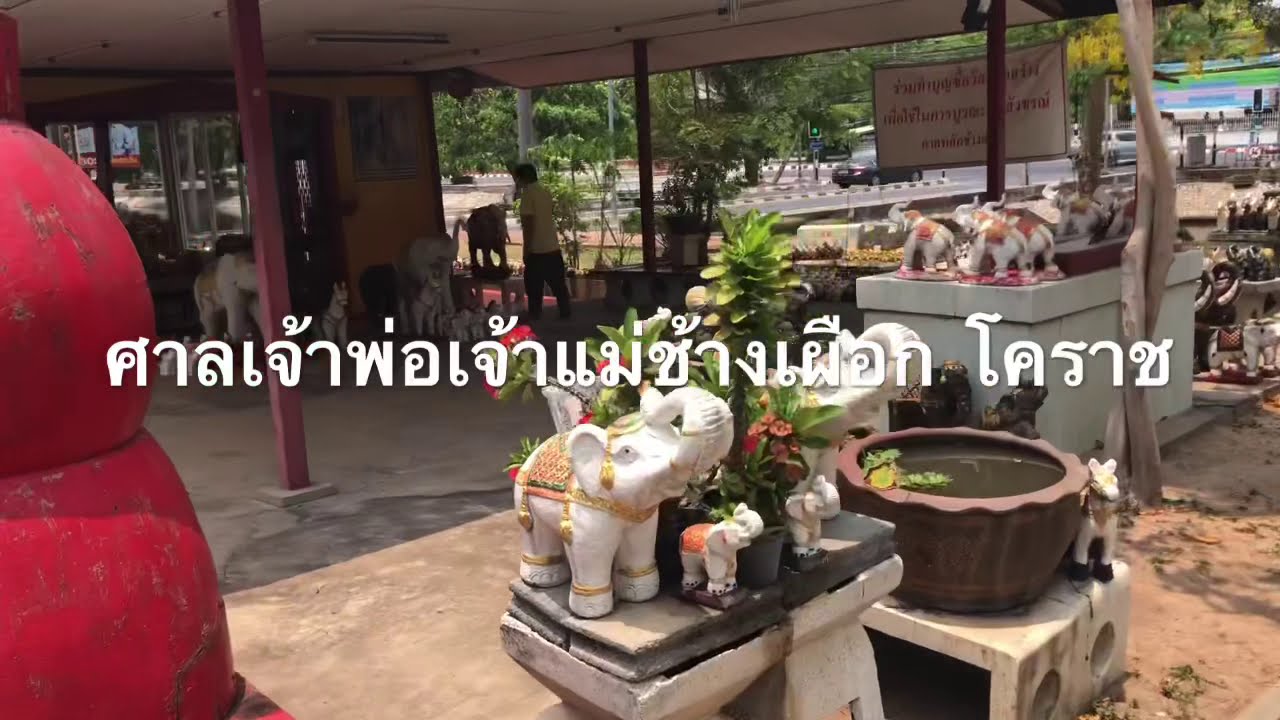
 Click to Access the Navigation Map GPS
Chao Pho Chang Phueak Shrine Map
Recommend

 Art, Culture and Heritage
 Historical Sites and Monuments(20)
 Landmarks and Memorials(5)
 Art, Craft Centres, Tradition(7)
 Museums(6)
 Art Gallery(1)
 Educational Places
 Educational Gardens, Farm(4)
 Temple(29)
 Mosque(1)
Other Sacred Sites(6)
Mosque(1)
Other Sacred Sites(6)
 Research and Development
 Royal Project(3)
 Suburban Living
 Village, Community(6)
 Local Market(4)
 Floating Market(1)
 Nature and Wildlife
 National Parks and Marine Reserves(3)
 Mountain (Doi)(5)
 Dam, Reservoir, Lake(8)
 Waterfalls(9)
 Hot Springs(1)
 Caves(2)
 Flower Field(1)
 River, Canal(8)
 Bays and Beaches(2)
 Other natural attractions(3)
 Entertainment and Agricultural
 Zoos and Aquariums(2)
 Animal camps and shows(1)
 Farms, Parks and Ecotourism(21)
 Waterpark(4)
 Outdoor and Adventure Activities(6)
 Shopping
 Shopping and Night Market(2)
 Travel Articles, Recipes
 Travel Review, Food Review(6)


