
lovethailand home >Northeastern Travel Attractions >Nakhon Ratchasima Travel Attractions >Muang Nakhon Ratchasima >Nai Muang > Maha Wirawong National Museum
TL;DR: Maha Wirawong National Museum is located at Inside Wat Sutthachinda Worawihan, Ratchadamnoen Road, Nai Mueang Subdistrict, Mueang Nakhon Ratchasima District, Nakhon Ratchasima Province, open Wednesday – Sunday, hours 09.00 – 16.00.
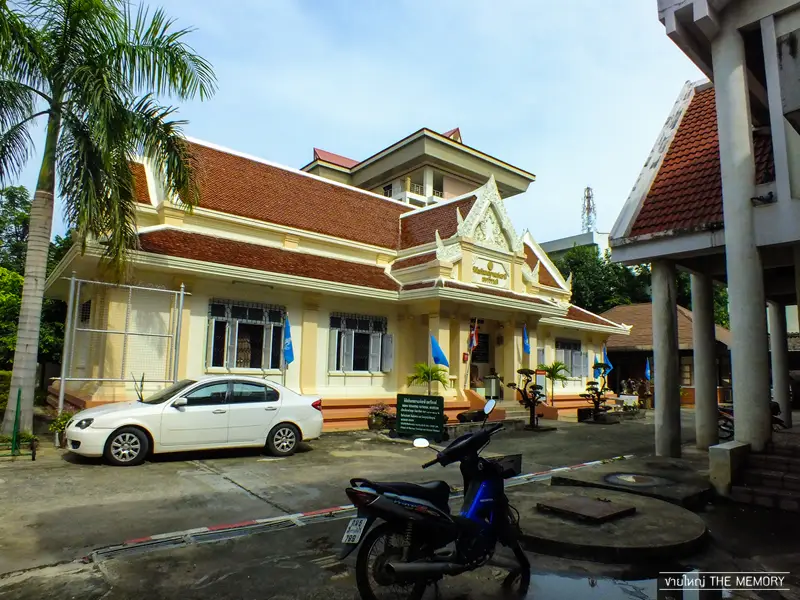
Maha Wirawong National Museum
Open Days: Wednesday – Sunday
Opening Hours: 09.00 – 16.00
Maha Weerawong National Museum is one of the most important cultural and historical learning sites in Nakhon Ratchasima. Located within the grounds of Wat Sutthachinda Worawihan on Ratchadamnoen Road in Nai Mueang Subdistrict, Mueang Nakhon Ratchasima District, the museum stands opposite the former provincial hall area and not far from the Thao Suranari Monument. It preserves and displays archaeological objects, Buddhist images, ceramics, ancient utensils, wood carvings, and local cultural materials from Nakhon Ratchasima and nearby provinces. For international visitors, this museum is one of the best places to understand Korat before exploring the old city, Khmer-period sites, Buddhist temples, and local heritage attractions.
The museum is valuable because Nakhon Ratchasima is not only a modern provincial city or a gateway to northeastern Thailand. It is a region with deep historical layers. Human communities lived in this area from prehistoric times. Later, the region absorbed Dvaravati culture, Khmer or Lopburi-period artistic influence, Ayutthaya-period political importance, and Rattanakosin-period urban development. The objects inside the museum allow visitors to see these long changes through real evidence rather than abstract explanation.
The origin of the museum is closely connected with Somdet Phra Maha Weerawong, also known as Uan Tisso, a former abbot of Wat Sutthachinda Worawihan. He collected many antiquities and art objects and later gave them to the Fine Arts Department for education, research, and preservation. For this reason, the name “Maha Weerawong” is not simply a museum title. It commemorates the role of a senior monk who understood the value of cultural heritage and helped preserve important objects for future generations.
The Fine Arts Department built the museum building within the temple grounds and opened it to the public on June 21, 1954. Its location inside Wat Sutthachinda gives the museum a distinctive atmosphere. Visitors encounter not only a collection of historical objects, but also a setting where Buddhism, old urban Korat, temple culture, and formal heritage preservation come together. This context helps foreign visitors understand how temples in Thailand have often played a role in safeguarding cultural memory.
The exhibition includes archaeological and art objects related to archaeology, art history, customs, traditions, and culture from several periods: prehistoric, Dvaravati, Lopburi, Ayutthaya, and Rattanakosin. Many items came from the collection of Somdet Phra Maha Weerawong, while others came from archaeological excavations, restoration projects, surveys, and donations from the public. Together, they form a compact but meaningful collection that explains the cultural development of Korat and the lower northeast.
As visitors walk through the museum, they can see how the region changed across time. The prehistoric section reflects early settlement through pottery, tools, and evidence of daily life. The Dvaravati and Lopburi sections show religious and artistic influence, including Buddhist and Hindu-Brahmanical ideas, Khmer-style art, sandstone sculpture, and objects connected with sacred architecture. These displays are especially useful for travelers who plan to visit Phimai Historical Park or other Khmer-period sites in Nakhon Ratchasima.
Buddha images are among the most important groups of objects in the museum. The collection includes Khmer-style Buddha images, Ayutthaya-period Buddha images, bronze Buddha images, and other Buddhist sculptures. Visitors can compare facial features, robes, gestures, body forms, materials, and artistic styles. These differences help explain how Buddhist art changed over time and how local religious expression was shaped by wider cultural networks.
Khmer-related art in the museum is particularly important because Nakhon Ratchasima has many archaeological sites linked with ancient Khmer culture. Phimai, Phanom Wan, and other sites in the province show that this region was strongly connected with Khmer religious and artistic traditions. Sandstone images, architectural fragments, sacred objects, and ceramic materials in the museum help visitors understand the broader cultural landscape behind those monuments.
Ceramics and glazed wares are also significant. They show technology, trade, taste, and everyday life. Ancient pottery, Khmer-style glazed ceramics, Chinese ceramics, and old utensils reveal that Korat was connected with networks of production, exchange, and cultural contact. Everyday objects can tell history just as powerfully as large monuments because they show how people cooked, stored, traded, worshipped, and lived.
Wood carvings and local Isan art objects add another layer to the museum. They connect the archaeological story with community life. Household objects, ritual items, local craft, and folk art show that cultural heritage is not limited to royal courts or major temples. It also includes the tools, materials, and artistic expressions of ordinary people. This makes the museum useful for understanding both elite art and local culture.
One strength of Maha Weerawong National Museum is its manageable size. It is not so large that visitors feel overwhelmed, but it is rich enough to reward slow observation. A general visit may take about one hour, while visitors interested in art history, Buddhism, ceramics, Khmer art, or local archaeology should allow 1.5 to 2 hours. Reading the labels carefully and comparing objects from different periods makes the visit more meaningful.
The museum also serves an educational role. It provides academic knowledge and guided interpretation for students, monks, novices, members of the public, and official guests. This role is important because a museum is not only a storage place for old objects. It is a learning space where real artifacts help people understand history, art, belief, and local identity. Groups that want deeper interpretation should contact the museum in advance.
For students, the museum functions as a real classroom. Pottery, bronze tools, Buddha images, inscriptions, ceramics, and wood carvings make textbook history visible and tangible. Young visitors can see that the city where they live has a long past and that ancient objects are not distant or meaningless. They are evidence of people who lived, worked, believed, created, and passed their culture forward.
For monks, novices, and people interested in Buddhism, the museum offers a clear view of Buddhist art in Nakhon Ratchasima. Buddha images from different periods show changes in religious aesthetics, artistic influence, and devotional practice. Observing these images helps visitors understand Buddhism not only through doctrine, but through form, material, craftsmanship, and historical context.
For general travelers, the museum is well placed within an old-town Korat itinerary. It is close to the Thao Suranari Monument, Chumphon Gate, the City Pillar Shrine, Wat Phra Narai Maharat Worawihan, and Wat Phayap. Visitors can start the day at the museum to gain historical background, then continue to the Ya Mo Monument and nearby old-city landmarks. This route makes the city easier to understand as a connected historical landscape.
The museum’s location on Ratchadamnoen Road makes travel convenient. Visitors staying in central Korat can reach it by local taxi, songthaew, ride-hailing service, or private car. From Nakhon Ratchasima Railway Station, the museum is a short ride into the old city area. Travelers arriving by bus can continue from the bus terminal into central Korat and then to Wat Sutthachinda. Private-car visitors should allow time for city traffic, especially during major events around the Ya Mo Monument.
Getting There from Bangkok is straightforward. Take Highway 1 through Saraburi, then continue on Highway 2, also known as Mittraphap Road, into Nakhon Ratchasima city. From the city center, head to Ratchadamnoen Road and Wat Sutthachinda Worawihan. The museum is located inside the temple grounds, opposite the former provincial hall area and not far from the Thao Suranari Monument.
The best time to visit is in the morning or early afternoon. The museum is open from 09.00 to 16.00 and closed on Monday, Tuesday, and public holidays. Morning visits allow more time to study the collection and continue to nearby attractions. Afternoon visitors should arrive early enough to avoid rushing through the galleries before closing time.
The admission fee is accessible: 10 baht for Thai visitors and 50 baht for foreign visitors. Considering the quality of the collection and the central location, the museum is a worthwhile stop for families, students, cultural travelers, and international visitors. It offers a deeper understanding of Korat at a very modest cost.
Visitors should behave respectfully inside the museum. Speak softly, do not touch objects or display cases, avoid flash photography where restricted, do not bring food or drinks into exhibition areas, and supervise children carefully. Many objects are irreplaceable cultural materials, and responsible behavior helps protect them for future visitors.
Photography rules should be checked on site. Some areas may limit flash or close-up photography. Visitors should use cameras respectfully and avoid blocking other visitors. Large equipment such as tripods should not be used in a way that obstructs walking paths or display areas. Groups should follow staff instructions to keep the visit orderly.
For foreign travelers, the museum is especially useful because it explains Korat as more than a transit point to Khao Yai or upper northeastern Thailand. The collection shows that Nakhon Ratchasima has deep archaeological, religious, and artistic roots. Visitors can see why Khmer-period sites exist in the province, how Buddhist art evolved, and how local culture developed across many centuries.
A practical travel route is to visit Maha Weerawong National Museum first, then continue to the Thao Suranari Monument, Chumphon Gate, the City Pillar Shrine, Wat Phra Narai Maharat Worawihan, and Wat Phayap. This order helps visitors understand the objects in the museum and then connect them with real places in the old city. It also makes the visit feel more coherent than visiting each site separately.
From a preservation perspective, the museum plays a vital role. Without proper collection, documentation, and care, many objects could be lost, dispersed, or damaged. As a national museum under the Fine Arts Department, it gives these artifacts a scholarly and public context. Visitors can learn from them, researchers can study them, and the province can retain visible evidence of its cultural memory.
The museum also reminds visitors that the history of Korat is not based on one event alone. It is made from many layers: prehistoric communities, Dvaravati settlements, Khmer religious influence, Ayutthaya-period frontier administration, Rattanakosin development, Buddhist heritage, and local Isan culture. Each object in the museum is a small piece of this larger picture.
For families with children, the museum can be a gentle introduction to history. Parents can encourage children to observe shapes, materials, colors, and patterns. They can compare ancient pottery with modern containers, look at the faces of Buddha images, or notice the details of old wood carvings. This makes the visit active and helps children respect cultural heritage from an early age.
Researchers, students, and writers can also use the museum as a starting point for deeper study. Topics suggested by the collection include Khmer art in Nakhon Ratchasima, Ayutthaya-period Buddhist images, ceramics and trade networks, the upper Mun River cultural landscape, local Isan material culture, and the role of Somdet Phra Maha Weerawong in heritage preservation.
Another important point is the relationship between temples and cultural preservation in Thailand. Wat Sutthachinda is not only the location of the museum. It is also connected to the origin of the collection through Somdet Phra Maha Weerawong. This shows how Buddhist institutions and national heritage agencies can work together in preserving cultural knowledge.
Overall, Maha Weerawong National Museum is best experienced slowly. It is not a place to rush through only for photographs. Visitors should read the labels, compare the objects, and connect what they see with other sites in the province, such as Phimai Historical Park, Phanom Wan, the old city of Korat, and the wider Mun River region. The museum offers a compact but meaningful foundation for understanding Nakhon Ratchasima.
In summary, Maha Weerawong National Museum is an essential cultural stop in central Nakhon Ratchasima. It brings together archaeology, Buddhist art, ceramics, ancient tools, local Isan art, and the legacy of Somdet Phra Maha Weerawong in one accessible museum. With a central location, low admission fee, and strong connection to nearby old-city attractions, it is highly suitable for Thai visitors, foreign travelers, families, students, monks, researchers, and anyone who wants to understand Korat beyond its modern city image.
| Name | Maha Weerawong National Museum |
| Location | Inside Wat Sutthachinda Worawihan, Ratchadamnoen Road, Nai Mueang Subdistrict, Mueang Nakhon Ratchasima District, Nakhon Ratchasima Province |
| Address | 772 Ratchadamnoen Road, Nai Mueang Subdistrict, Mueang Nakhon Ratchasima District, Nakhon Ratchasima 30000, Thailand |
| Highlights | A national museum displaying archaeological and art objects from prehistoric, Dvaravati, Lopburi, Ayutthaya, and Rattanakosin periods, including Buddha images, ceramics, ancient utensils, wood carvings, and Isan local art |
| History | The museum originated from antiquities and art objects collected and donated to the Fine Arts Department by Somdet Phra Maha Weerawong (Uan Tisso), a former abbot of Wat Sutthachinda Worawihan. It officially opened to the public on June 21, 1954. |
| Name Origin | Named after Somdet Phra Maha Weerawong (Uan Tisso), the senior monk whose collection became the foundation of the museum |
| Distinctive Features | A compact national museum in central Korat that connects archaeology, Buddhist art, art history, local Isan culture, and the heritage of Nakhon Ratchasima |
| Main Areas / Zones | Museum History Zone Somdet Phra Maha Weerawong Collection Zone Prehistoric Objects Zone Dvaravati Period Zone Lopburi And Khmer Art Zone Ayutthaya Period Zone Rattanakosin Period Zone Buddha Images And Religious Objects Zone Ceramics And Glazed Ware Zone Ancient Utensils And Local Isan Art Zone Academic Guidance And Visitor Service Area |
| Caretaker | Fine Arts Department, Ministry Of Culture, through Maha Weerawong National Museum |
| Travel Information | From central Nakhon Ratchasima, head to Ratchadamnoen Road and Wat Sutthachinda Worawihan. The museum is inside the temple grounds, opposite the former provincial hall area and near the Thao Suranari Monument. From Bangkok, take Mittraphap Road into Korat city, then continue to Ratchadamnoen Road. |
| Current Status | Open to visitors as a national museum and art-history learning site in central Nakhon Ratchasima |
| Open Days | Wednesday – Sunday, closed on Monday, Tuesday, and public holidays |
| Opening Hours | 09.00 – 16.00 |
| Fees | Thai Visitors 10 Baht / Foreign Visitors 50 Baht |
| Facilities | Permanent exhibitions, academic guidance for groups, indoor galleries, staff contact point, and free parking area |
| Main Contact Number | 044-242958 |
| nm_mahaweerawong@finearts.go.th | |
| Nearby Tourist Attractions | 1. Wat Sutthachinda Worawihan, about 0.1 km 2. Thao Suranari Monument, about 0.5 km, Tel. 044-234600 3. Chumphon Gate, about 0.6 km, Tel. 044-234600 4. Nakhon Ratchasima City Pillar Shrine, about 0.8 km, Tel. 044-234600 5. Wat Phra Narai Maharat Worawihan, about 1 km, Tel. 044-254069, 044-254068 6. Wat Phayap, about 1.2 km 7. Terminal 21 Korat, about 2 km |
| Nearby Restaurants | 1. Chumphon Chicken Rice, about 0.6 km, Tel. 085-860-7778 2. Jompol Boutique Cafe, about 0.6 km, Tel. 064-462-8787 3. CLASS Cafe' Chalermwattana Ya Mo, about 0.7 km, Tel. 065-240-1811 4. Yim Yim Traditional Oyster Omelet, about 0.8 km, Tel. 064-061-1640 5. 382 SPACE COFFEE & BAKERY, about 1.5 km 6. Tum Thai Baan E-san, about 2 km, Tel. 095-610-6599 |
| Nearby Accommodations | 1. Korat Hotel, about 0.7 km, Tel. 093-325-7996 2. Urban-Bamboo, about 0.8 km, Tel. 044-268800, 081-444-4213 3. Romyen Garden Place, about 1.2 km, Tel. 098-105-7978 4. Fortune Hotel Korat, about 2 km, Tel. 044-079900 5. Sansabai House Hotel, about 2 km, Tel. 081-547-3066 6. The Zenith Residence Hotel, about 2.5 km, Tel. 044-247-788, 093-323-7096 |
Frequently Asked Questions (FAQ)
Q: Where is Maha Weerawong National Museum located?
A: The museum is located inside Wat Sutthachinda Worawihan on Ratchadamnoen Road, Nai Mueang Subdistrict, Mueang Nakhon Ratchasima District, opposite the former provincial hall area and near the Thao Suranari Monument.
Q: What does the museum display?
A: It displays archaeological and art objects from prehistoric, Dvaravati, Lopburi, Ayutthaya, and Rattanakosin periods, including Khmer-style Buddha images, Ayutthaya Buddha images, bronze Buddha images, ceramics, ancient utensils, wood carvings, and local Isan art.
Q: What days is the museum open?
A: The museum is open from Wednesday to Sunday and closed on Monday, Tuesday, and public holidays.
Q: What are the opening hours?
A: The museum is open from 09.00 to 16.00.
Q: How much is the admission fee?
A: Admission is 10 baht for Thai visitors and 50 baht for foreign visitors.
Q: Why is Maha Weerawong National Museum important?
A: It preserves and presents archaeological, artistic, Buddhist, and local cultural heritage of Nakhon Ratchasima, helping visitors understand Korat from prehistoric times to the Rattanakosin period.
Q: How can travelers get to the museum?
A: From central Nakhon Ratchasima, head to Ratchadamnoen Road and Wat Sutthachinda Worawihan. From Bangkok, take Mittraphap Road into Nakhon Ratchasima city, then continue to Ratchadamnoen Road. Train travelers can get off at Nakhon Ratchasima Railway Station and continue by local transport.
Q: What nearby attractions can be visited with the museum?
A: Nearby attractions include Wat Sutthachinda Worawihan, the Thao Suranari Monument, Chumphon Gate, Nakhon Ratchasima City Pillar Shrine, Wat Phra Narai Maharat Worawihan, Wat Phayap, and the old city area of Korat.
Tel : 044242958
 Tel : 044242958
 Category: ●Art, Culture and Heritage
 Group: ●Museums
Last Update : 2 MonthAgo
 Last Update : 2 MonthAgo
 Click to Access the Navigation Map GPS
Maha Wirawong National Museum Map
Recommend

 Historical Sites and Monuments(20)
 Landmarks and Memorials(5)
 Art, Craft Centres, Tradition(7)
Museums(6)
Art, Craft Centres, Tradition(7)
Museums(6)
 Art Gallery(1)
 Educational Places
 Educational Gardens, Farm(4)
 Places of Worship
 Temple(29)
 Mosque(1)
 Other Sacred Sites(6)
 Research and Development
 Royal Project(3)
 Suburban Living
 Village, Community(6)
 Local Market(4)
 Floating Market(1)
 Nature and Wildlife
 National Parks and Marine Reserves(3)
 Mountain (Doi)(5)
 Dam, Reservoir, Lake(8)
 Waterfalls(9)
 Hot Springs(1)
 Caves(2)
 Flower Field(1)
 River, Canal(8)
 Bays and Beaches(2)
 Other natural attractions(3)
 Entertainment and Agricultural
 Zoos and Aquariums(1)
 Animal camps and shows(1)
 Farms, Parks and Ecotourism(21)
 Waterpark(2)
 Outdoor and Adventure Activities(6)
 Shopping
 Shopping and Night Market(2)
 Travel Articles, Recipes
 Travel Review, Food Review(6)


