
lovethailand home >Northeastern Travel Attractions >Nakhon Ratchasima Travel Attractions >Khong >Ban Prang > Barai Sawan Bamboo Bridge
TL;DR: Barai Sawan Bamboo Bridge is located at Ban Prang Subdistrict, Khong District, Nakhon Ratchasima Province, Thailand, open Daily, hours 08:00 – 17:30.
Barai Sawan Bamboo Bridge
Open Days: Daily
Opening Hours: 08:00 – 17:30
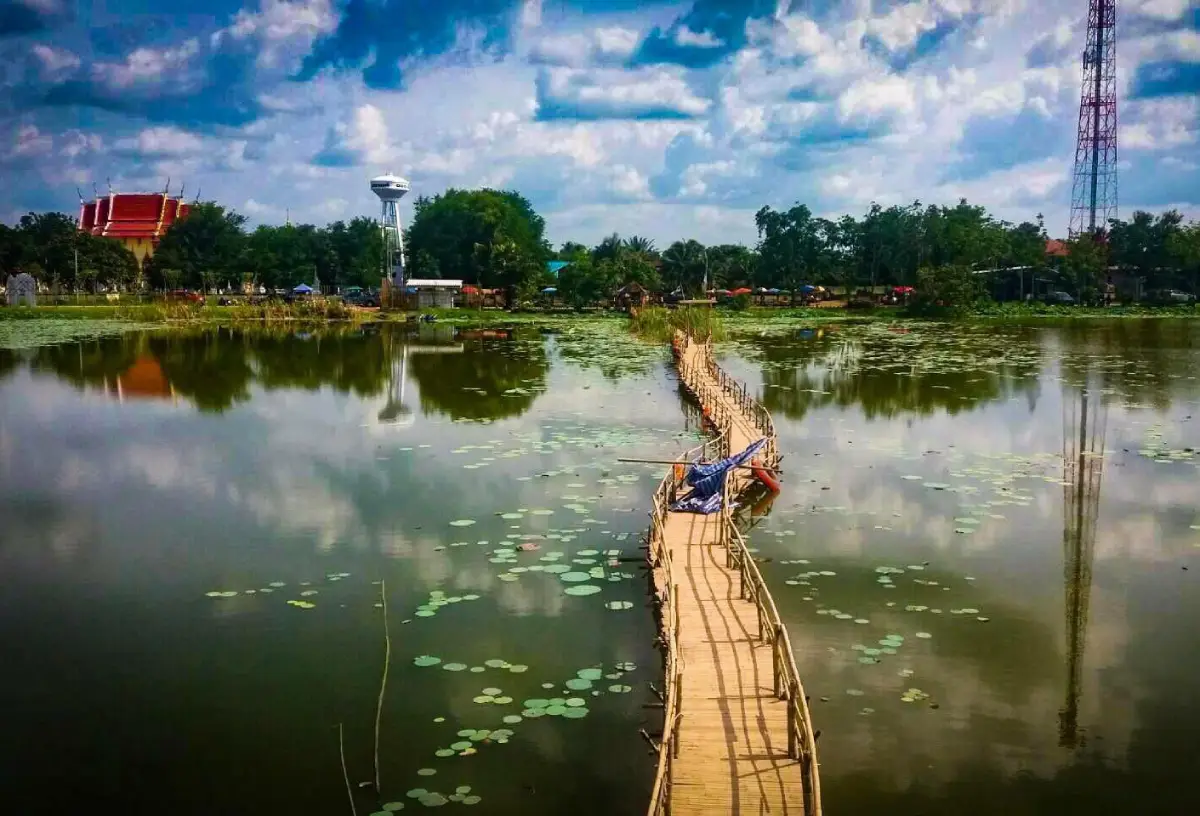
Barai Sawan Bamboo Bridge in Ban Prang Subdistrict, Khong District, Nakhon Ratchasima Province, is a community-based attraction where nature, local history, and rural culture come together in a quiet and memorable way. The main highlight is a bamboo bridge stretching for more than 300 meters across the large lotus pond of Ban Prang Nakhon. Surrounded by water, lotus plants, open sky, and natural breezes, the bridge is ideal for walking, photography, slow travel, and a deeper look at one of Korat’s lesser-known cultural communities.
This destination is not simply a bamboo walkway over water. It is a storytelling point for Ban Prang Nakhon, a historic community in Khong District that has long been connected with water sources, local beliefs, old settlement patterns, and Prasat Ban Prang, an ancient monument nearby. The name “Barai Sawan” refers to the idea of a barai, or a large traditional water reservoir, which has been part of the local landscape for generations. When the villagers came together to build the bamboo bridge, the old pond area became a meaningful travel spot where visitors could enjoy scenery while also learning about the cultural roots of the community.
The charm of Barai Sawan Bamboo Bridge lies in its simplicity. Bamboo is a familiar local material in rural Thailand and has long been used for houses, tools, fences, and everyday craftwork. Because of that, the bridge feels natural rather than intrusive. It blends gently with the pond, lotus plants, village scenery, and open fields around it. Walking across the bridge, travelers can see the water beneath their feet, lotus plants spreading across the pond, and the peaceful rural landscape of Ban Prang Nakhon. The experience is best enjoyed slowly, especially in the morning or late afternoon when the sunlight is softer and the weather is more comfortable.
The lotus pond is the heart of the visit. It gives the area a calm atmosphere that feels very different from busy commercial tourist sites. Visitors come here not for luxury facilities or large-scale entertainment, but for fresh air, still water, simple village scenery, and a quiet moment above the pond. The sound of wind, birds, and the movement of water help create a relaxed mood. For foreign travelers who want to see a more local side of Nakhon Ratchasima beyond the well-known routes of Khao Yai or the city center, Barai Sawan Bamboo Bridge offers a slow and authentic rural experience.
The origin of the name “Barai Sawan” is closely related to the old pond and the historic setting of Ban Prang Nakhon. In many ancient Khmer-influenced sites, a barai refers to a large reservoir connected with settlement, ritual, agriculture, and landscape planning. At Ban Prang Nakhon, the pond is part of the community’s memory and is also linked with Prasat Ban Prang, the ancient monument located nearby. The name of the bridge therefore carries cultural meaning. It does not only describe a beautiful bridge over water, but also reflects how the community understands its own heritage.
Ban Prang Nakhon is an old community in Ban Prang Subdistrict, Khong District. Local stories, traditional houses, community food, and the presence of an ancient monument all show that this village has a deeper cultural background than an ordinary rural settlement. The villagers speak the Korat dialect in daily life, preserve local food traditions, and welcome visitors through community-based tourism activities. Barai Sawan Bamboo Bridge should therefore be seen as part of a wider cultural route, not only as a single photo spot. When combined with Prasat Ban Prang, old Korat-style houses, local learning centers, and community meals, the bridge becomes the beginning of a richer travel experience.
Prasat Ban Prang adds historical depth to a visit here. The ancient monument stands within the Ban Prang Nakhon community and is associated with ancient Khmer art and architecture. Built with sandstone and laterite, the remains of the monument reflect the religious and cultural landscape of the region many centuries ago. Although parts of the structure have been damaged by time, the remaining architectural elements still help visitors understand the importance of the area. A visit to the bamboo bridge followed by Prasat Ban Prang creates a balanced route that connects nature, water, village life, and history.
Barai Sawan Bamboo Bridge is suitable for several types of travelers. Families can bring children to experience nature and learn about a rural community. Photography lovers can enjoy the long leading lines of the bamboo bridge, the lotus pond, and the open sky. Cultural travelers can use the bridge as a starting point before visiting Prasat Ban Prang and old Korat houses. Travelers seeking a peaceful break from the city can simply walk slowly, breathe fresh air, and enjoy the quiet mood of the pond. The attraction is modest, but that modesty is exactly what makes it memorable.
The best time to visit is in the morning or late afternoon. Morning offers fresh air, calm water, and soft light over the pond. Late afternoon is ideal for relaxed walking and photography as the sunlight becomes warmer. During the rainy season or after rain, visitors should be careful because bamboo surfaces can become wet and slippery. The cool season and the end of the rainy season are especially pleasant times to visit because the countryside feels fresh, the weather is more comfortable, and the pond scenery is more atmospheric.
Because this is a community attraction, visitors should behave respectfully. The bamboo bridge was built through local cooperation, and it is not a heavy commercial structure designed for rough use. Travelers should walk carefully, avoid jumping or shaking the bridge, avoid standing in crowded groups in one spot, and never throw rubbish into the pond. Lotus flowers and aquatic plants should not be picked or damaged. Responsible behavior helps protect both the safety of visitors and the long-term condition of the place.
What makes Barai Sawan Bamboo Bridge different from many other bamboo bridges in Thailand is its cultural context. The bridge was created to connect the pond, the old community, and the ancient monument into one travel experience. As visitors walk across the bridge, they are also walking through a local landscape shaped by water, memory, and community effort. On one side is the natural beauty of the pond; on the other is the story of Prasat Ban Prang and the village that continues to care for its heritage.
Besides the bridge and lotus pond, Ban Prang Nakhon offers several connected points of interest. Old Korat-style houses show the local architecture and way of life. Ban Mittraphap Learning Center introduces visitors to community knowledge and cultural activities. Wat Ban Prang reflects the spiritual life of the village, while Prasat Ban Prang stands as the most important historical landmark nearby. Travelers who spend half a day in the community can walk the bridge, take photographs, visit the ancient monument, see traditional houses, and enjoy local food in one route.
Local food is an important part of the Ban Prang Nakhon experience. Travelers who contact the community in advance can enjoy traditional Korat-style dishes prepared by local residents. These may include local-style fried fish cakes, Korat noodles, black bean pork leg, Korat pork chili dip, and other seasonal home-cooked dishes. The meal is not just food; it is part of the cultural experience. Ingredients, cooking techniques, and flavors reflect the lifestyle of the community. Eating local food after walking the bridge and visiting the ancient monument makes the trip more complete.
For travelers who want to stay overnight, Ban Prang Nakhon also offers community homestay experiences. A homestay is very different from a conventional hotel because it allows visitors to spend time close to local households and community life. It is most suitable for travelers who value cultural exchange, simple living, and personal connection rather than urban-style convenience. Homestays and community meals should be arranged in advance so the villagers can prepare accommodation, food, and activities properly for the number of visitors.
For a day trip from Nakhon Ratchasima city, travelers should allow enough travel time because Khong District is located some distance from the city center. A common route is to take Highway 205, also known as Suranarai Road, toward Khong District, then turn toward Ban Prang Subdistrict near Prakham Fresh Market. Once approaching Ban Prang Nakhon, the pond and the bamboo bridge serve as the main landmarks. Traveling by private car is the most convenient option because it allows visitors to continue to nearby cultural sites within the community.
Getting There from Nakhon Ratchasima city is most convenient by private car. Follow Highway 205 toward Khong District, turn near Prakham Fresh Market, and continue toward Ban Prang Nakhon in Ban Prang Subdistrict. When using navigation, search for “Barai Sawan Bamboo Bridge” or “สะพานข้ามบารายสวรรค์” and make sure the destination is in Ban Prang Subdistrict, Khong District, Nakhon Ratchasima. This helps avoid confusion with other places that may have similar names in the province.
Preparation for the visit is simple. Wear comfortable walking shoes, bring a hat or umbrella on hot days, carry drinking water, and keep the area clean. If you want to take photos, morning and late afternoon are the most suitable times because the light is better and the heat is less intense. If you plan to visit as a group, have a local meal, stay at a homestay, or request a community guide, contact the community in advance. This allows the local hosts to prepare properly and helps visitors receive a fuller and more organized experience.
Safety is important because the bridge is made of natural material. Visitors should walk carefully, especially elderly travelers, young children, and anyone visiting after rain. Avoid running, jumping, or leaning too heavily on the bridge. If other visitors are walking in the opposite direction, give way politely and avoid blocking narrow sections for too long. The pond is part of the local environment, so visitors should respect both the natural setting and the daily life of the community.
For photography, the bridge offers several attractive angles. The most popular view is the long bamboo walkway stretching across the pond, creating a strong leading line toward the water and sky. Portraits on the bridge, wide shots of the lotus pond, morning light over the water, and late-afternoon sky reflections are all worthwhile. However, photography should not interfere with other visitors or damage the bridge. Travelers should avoid climbing railings, stepping outside safe areas, or placing heavy equipment in a way that affects the structure.
The deeper value of Barai Sawan Bamboo Bridge is that it allows visitors to see how a small community can turn local heritage into a meaningful travel experience. The lotus pond provides the natural setting, the bamboo bridge connects people with the water, Prasat Ban Prang connects the present with the past, and the villagers keep the story alive through food, hospitality, and cultural activities. A visit here is therefore not only about seeing a bridge, but also about understanding Ban Prang Nakhon as a living community with history, memory, and pride.
If time is limited, 30 to 60 minutes may be enough to walk the bridge, take photos, and enjoy the pond. For a more complete experience, half a day is recommended. This gives enough time to combine the bridge with Prasat Ban Prang, old Korat houses, the local learning center, community food, and a slow walk through the village. A half-day visit helps travelers understand that Ban Prang Nakhon is not defined by a single attraction, but by a combination of nature, history, architecture, food, and local hospitality.
Barai Sawan Bamboo Bridge is a good destination for travelers looking for a quiet, meaningful, and less-commercial side of Nakhon Ratchasima. Whether you come for the bamboo bridge, the lotus pond, rural photography, community food, or the story of Prasat Ban Prang, the place offers a simple but memorable experience. It shows that a travel destination does not need to be grand to be meaningful. Sometimes, a bamboo bridge built by villagers across an old pond can reveal the identity of an entire community.
| Name | Barai Sawan Bamboo Bridge |
| Location | Ban Prang Subdistrict, Khong District, Nakhon Ratchasima Province, Thailand |
| Address | Ban Prang Nakhon Pond Area, Road 2369, Ban Prang Subdistrict, Khong District, Nakhon Ratchasima 30260, Thailand |
| Highlights | A bamboo bridge over the lotus pond of Ban Prang Nakhon, stretching for more than 300 meters in a peaceful rural setting |
| History | The pond is an old community water source connected with Prasat Ban Prang, an ancient monument associated with Khmer-influenced culture around the 17th Buddhist century |
| Name Origin | The name refers to the old barai or water reservoir that has long been part of Ban Prang Nakhon’s landscape and community memory |
| Distinctive Features | A long bamboo walkway above the water, lotus pond scenery, natural breezes, rural photography spots, and a cultural route linked to the local community |
| Travel Information | From Nakhon Ratchasima city, follow Highway 205 toward Khong District, turn near Prakham Fresh Market, and continue to Ban Prang Nakhon; the pond and bamboo bridge are the main landmarks |
| Current Status | Open as a community-based attraction of Ban Prang Nakhon in Khong District, Nakhon Ratchasima |
| Open Days | Daily |
| Opening Hours | 08:00 – 17:30 |
| Facilities | Walking area on the bamboo bridge, photo spots, community activity coordination, local meals, and homestay arrangements with advance booking |
| Main Areas / Zones | Bamboo bridge area, Ban Prang lotus pond, pondside viewpoint and photo area, Ban Prang Nakhon community route, and connected areas around Prasat Ban Prang and old Korat-style houses |
| Caretaker / Community Coordinator | Ban Prang Subdistrict Administrative Organization and Ban Prang Nakhon Community Tourism Enterprise |
| Main Contact Number | Ban Prang Subdistrict Administrative Organization, Tel. 08-9846-7980 Ban Prang Nakhon Community Tourism Coordination, Tel. 089-718-8182 |
| Official Website / Official Page | Ban Prang Subdistrict Administrative Organization, Khong District, Nakhon Ratchasima Province |
| Nearby Tourist Attractions | 1. Prang Ban Prang / Prasat Ban Prang, about 1 km 2. Old Korat-Style Houses of Ban Prang Nakhon, about 1 km 3. Ban Mittraphap Learning Center, about 1 km 4. Wat Ban Prang, about 2 km 5. Siwichai Monastic Residence (Hua Fai), about 2 km |
| Nearby Restaurants | 1. Ban Prang Nakhon Community Local Meal Service, about 1 km, Tel. 089-718-8182 2. Krua Chom View, Khong District, about 33 km, Tel. 084-323-3891 3. Krua Hom Chan, Khong District, about 34 km, Tel. 081-148-6589 4. Krua Indy Restaurant, Khong Branch, about 35 km, Tel. 080-825-5900 5. Tee Rak Cafe, Khong District, about 34 km |
| Nearby Accommodations | 1. Ban Prang Nakhon Homestay, about 1 km, Tel. 096-292-8808, 089-718-8182 2. Ban Mittraphap Homestay, about 1 km, contact through Ban Prang Nakhon Community Tourism, Tel. 089-718-8182 3. Mueang Khong Resort, Khong District, about 34 km, Tel. 097-337-3777 4. Krua Hom Chan Resort, Khong District, about 34 km, Tel. 081-148-6589 5. Prayad Resort, Khong District, about 35 km |
Frequently Asked Questions (FAQ)
Q: Where is Barai Sawan Bamboo Bridge located?
A: Barai Sawan Bamboo Bridge is located at the lotus pond of Ban Prang Nakhon in Ban Prang Subdistrict, Khong District, Nakhon Ratchasima Province.
Q: What are the opening days and hours of Barai Sawan Bamboo Bridge?
A: The bridge is open daily from 08:00 to 17:30. Morning and late afternoon are the most pleasant times for walking and photography.
Q: What makes Barai Sawan Bamboo Bridge special?
A: Its main highlight is a bamboo bridge more than 300 meters long, built by local villagers across a lotus pond connected with the history of Ban Prang Nakhon and Prasat Ban Prang.
Q: When is the best time to visit Barai Sawan Bamboo Bridge?
A: Morning and late afternoon are the best times to visit because the light is softer, the weather is cooler, and the pond scenery is more comfortable to enjoy.
Q: How can travelers get to Barai Sawan Bamboo Bridge from Nakhon Ratchasima city?
A: Travelers can drive along Highway 205 toward Khong District, turn near Prakham Fresh Market, and continue to Ban Prang Nakhon. The bridge is located near the community pond.
Q: Who is Barai Sawan Bamboo Bridge suitable for?
A: It is suitable for travelers who enjoy nature, community-based tourism, rural photography, local culture, and peaceful slow travel.
Q: What nearby places should travelers visit after the bridge?
A: Recommended nearby places include Prasat Ban Prang, old Korat-style houses of Ban Prang Nakhon, Ban Mittraphap Learning Center, Wat Ban Prang, and other community activity areas.
Q: Are there homestays and local food in the community?
A: Yes. Ban Prang Nakhon offers community homestays and local meals, but travelers should contact the community in advance to arrange food, accommodation, and activities.
 Category: ●Nature and Wildlife
 Group: ●River, Canal
Last Update : 2 MonthAgo
 Last Update : 2 MonthAgo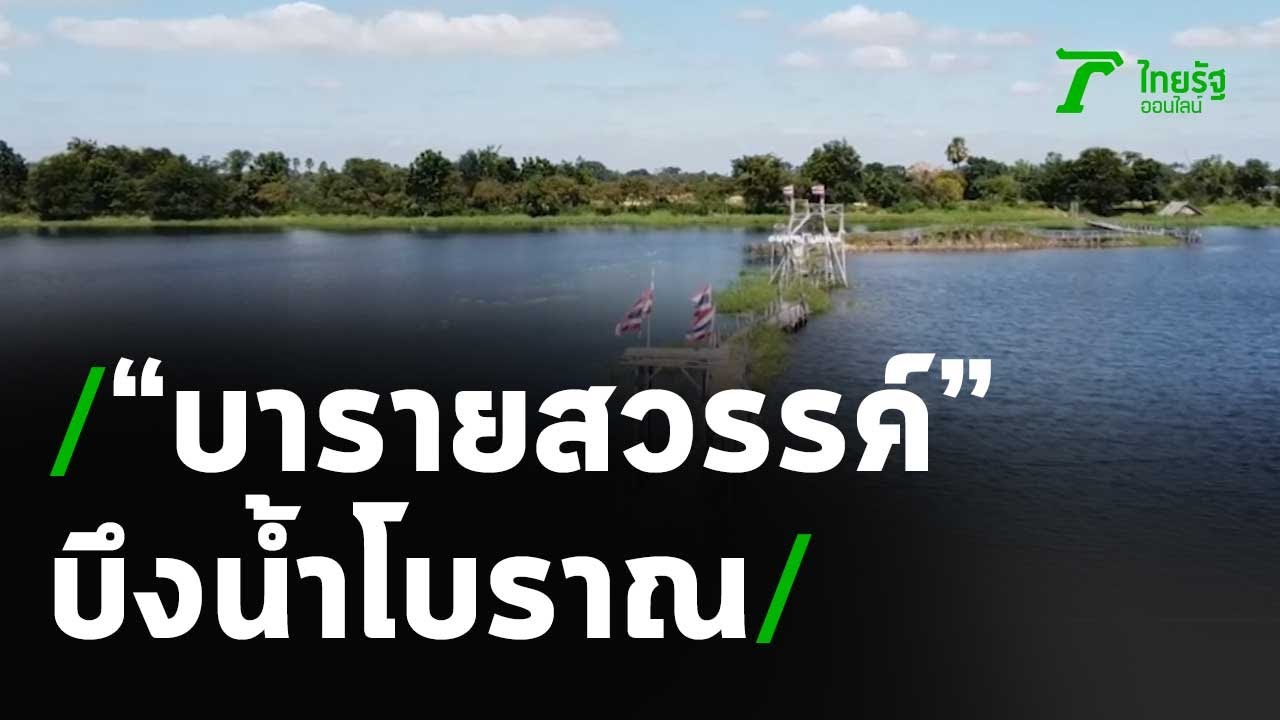
 Click to Access the Navigation Map GPS
Barai Sawan Bamboo Bridge Map
Gellery
Recommend

 Art, Culture and Heritage
 Historical Sites and Monuments(20)
 Landmarks and Memorials(5)
 Art, Craft Centres, Tradition(7)
 Museums(6)
 Art Gallery(1)
 Educational Places
 Educational Gardens, Farm(4)
 Places of Worship
 Temple(29)
 Mosque(1)
 Other Sacred Sites(6)
 Research and Development
 Royal Project(3)
 Suburban Living
 Village, Community(6)
 Local Market(4)
 Floating Market(1)
 National Parks and Marine Reserves(3)
 Mountain (Doi)(5)
 Dam, Reservoir, Lake(8)
 Waterfalls(9)
 Hot Springs(1)
 Caves(2)
 Flower Field(1)
River, Canal(8)
Flower Field(1)
River, Canal(8)
 Bays and Beaches(2)
 Other natural attractions(3)
 Entertainment and Agricultural
 Zoos and Aquariums(1)
 Animal camps and shows(1)
 Farms, Parks and Ecotourism(21)
 Waterpark(2)
 Outdoor and Adventure Activities(6)
 Shopping
 Shopping and Night Market(2)
 Travel Articles, Recipes
 Travel Review, Food Review(5)


