
lovethailand home >Northeastern Travel Attractions >Loei Travel Attractions >Chiang Khan >Chiang Khan > Wat Si Khun Mueang
TL;DR: Wat Si Khun Mueang is located at Chai Khong Road, between Si Chiang Khan Soi 6 and Si Chiang Khan Soi 7, Chiang Khan Subdistrict, Chiang Khan District, Loei Province 42110, open Daily, hours 06.00 – 18.00.
Wat Si Khun Mueang
Open Days: Daily
Opening Hours: 06.00 – 18.00
Wat Si Khun Mueang in Loei Province is one of the most important historic Buddhist temples in Chiang Khan District. It is located on Chai Khong Road around Si Chiang Khan Soi 7, close to Chiang Khan Walking Street and the old riverside community along the Mekong River. This temple is not only a place for worship but also a living cultural site where Lanna, Lan Xang, and local Mekong art traditions meet. Visitors can see a beautiful ordination hall with tiered roofing, colorful gable murals, carved wooden Buddha images, gilded wooden art, a carved teak sermon throne, a rare ritual water trough, and an old stone inscription that helps explain the long religious and cultural history of Chiang Khan.
Wat Si Khun Mueang is also known locally as Wat Yai, or the large central temple of the old town. This name reflects its role as a spiritual center for the people of Chiang Khan. Today, many visitors know Chiang Khan for its wooden houses, riverside guesthouses, morning alms-giving, and walking street. Yet the deeper identity of the town is strongly connected with temples, community life, and the Mekong River. Wat Si Khun Mueang allows travelers to understand Chiang Khan beyond tourism. It reveals the town’s Buddhist faith, local craftsmanship, Lan Xang heritage, and the long cultural exchange between communities on both sides of the Mekong.
The history of Wat Si Khun Mueang has several layers. One historical account states that the temple was established in 1656 by the monk leader Hua Khru Butdee and the lay leader Phraya Unuphinak, together with local residents who built the temple as part of the formation of the town. The temple later received its consecrated boundary in 1677. Some tourism sources mention 1942 in relation to the temple’s modern recognition as a cultural landmark, while the Wat Si Khun Mueang inscription records the year 1837 and mentions monks and nobles of Chiang Khan who jointly supported the construction of the temple and religious structures. These layers show that Wat Si Khun Mueang should be understood as a temple with a long and complex history, rather than a site connected to only one period.
The temple’s location is essential to its identity. Chai Khong Road runs along the Mekong River, which has long served as a cultural route between Thailand and Laos. The Mekong carried people, monks, merchants, art styles, religious objects, and stories across the region. Because of this, many cultural elements at Wat Si Khun Mueang are closely related to the Lan Xang world. At the same time, the temple’s tiered roof form and some decorative details also reflect Lanna influence. This mixture is not accidental. It is the natural result of Chiang Khan’s position as a Mekong riverside town shaped by movement, exchange, and shared Buddhist culture.
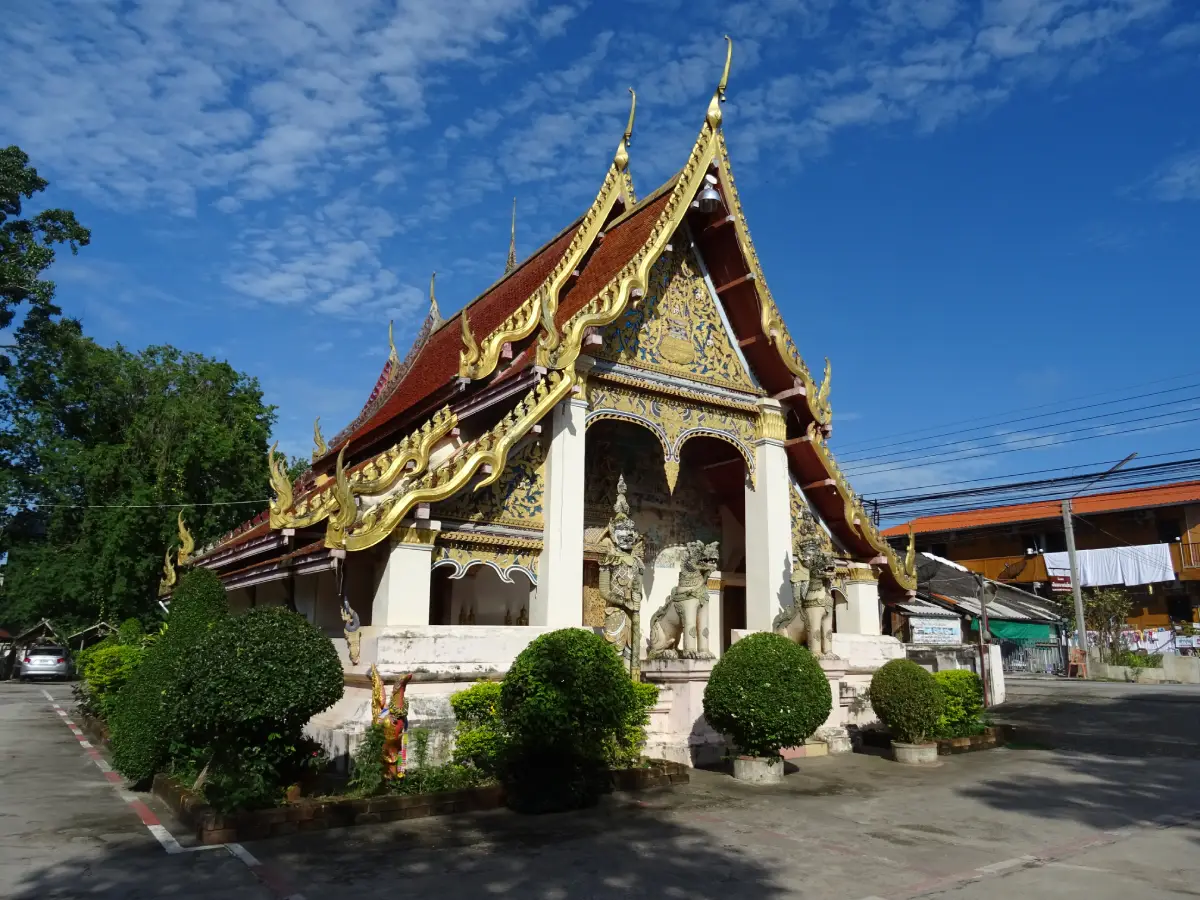
The ordination hall, or sim, is the architectural heart of the temple. Its layered roof and decorative form make it immediately different from many central Thai temple buildings. The exterior includes colorful patterns, guardian figures, mythical creatures, naga details, and a richly decorated front gable. The building functions not only as a sacred space but also as a piece of local art. Standing in front of the hall, visitors can see how architecture, painting, sculpture, and religious symbolism work together to create a temple space that is both beautiful and meaningful.
The front wall and gable of the ordination hall are covered with mural paintings showing the Ten Jataka tales. These stories describe the final ten lives of the Bodhisattva before he became the Buddha, each life representing a major virtue such as generosity, wisdom, perseverance, truthfulness, loving-kindness, and equanimity. In traditional Buddhist communities, murals were not only decoration. They were visual teaching tools that allowed people to learn moral lessons through images. At Wat Si Khun Mueang, the murals continue this role, connecting visitors with Buddhist storytelling in a direct and visual way.
One interesting detail in the mural area is the presence of modern imagery, including a tuk-tuk motif in the lower part of the painting. This suggests that parts of the mural were repainted or retouched in a later period. For visitors, this detail makes the mural lively and memorable. For cultural interpretation, it shows that temple art is not always frozen in the past. It may be restored, renewed, and adapted by later generations while still preserving the religious meaning of the original stories.
Inside the ordination hall is one of the temple’s most important sacred objects: a carved wooden Buddha image in the granting-protection posture, gilded and lacquered in the Lan Xang style. The image has a small pointed hair arrangement and long, slightly pointed ears, features associated with Lan Xang Buddhist art. It is generally dated to around the 19th to early 20th Buddhist centuries in local art-historical interpretation. This Buddha image is important because it represents not only Buddhist devotion but also the wood-carving and gilding traditions of the Mekong cultural region. Visitors should view it respectfully and avoid touching the image unless temple guidance allows it.
The temple also preserves other important Buddha images, including a standing wooden Buddha image covered with golden coating, a wooden Buddha image in a blessing posture, bronze Buddha images, and the main Buddha image within the sim. These objects show that wooden Buddhist sculpture was an important devotional tradition in Chiang Khan. Unlike bronze or stone images, wooden images are more vulnerable to moisture, insects, and age. Their survival is therefore evidence of continuing local care, faith, and preservation.
Another major object is the carved teak sermon throne, gilded and decorated with colored glass. The throne is carved on all sides, with a backrest rising into a form resembling a small palace or prasat. In a Buddhist temple, a sermon throne is not ordinary furniture. It marks the place from which monks teach the Dhamma. Its artistic richness shows the community’s respect for Buddhist teaching and the importance of listening to sermons as part of temple life.
The temple also preserves a rare ritual water trough known in Thai and Lao cultural contexts as hang hot or rang rot. It resembles a water channel and is associated with ceremonial bathing of senior monks or local rulers. Its form includes elements related to the royal barge and naga symbolism. Today, objects of this type are increasingly rare. Seeing one at Wat Si Khun Mueang helps visitors understand old ritual practices in which water, respect, blessing, and social hierarchy were connected through Buddhist ceremony.
The Wat Si Khun Mueang inscription is one of the most important historical objects at the temple. It is written in Tham Isan script on a black marble stone shaped like a boundary marker. The inscription measures about 53 centimeters wide and 51 centimeters high. Its text mentions monks and nobles in Chiang Khan who jointly built the temple and religious structures, and it also records the funds used in the construction. The inscription is dated to 1837, during the reign of King Rama III. This makes it a valuable written record for understanding Chiang Khan’s Buddhist and local history.
Several objects at Wat Si Khun Mueang have been recognized as important antiquities and art objects. These include the carved teak sermon throne decorated with colored glass, the standing wooden Buddha image covered with golden coating, the wooden Buddha image in the granting-protection posture, and the stone inscription. Together, these objects show the temple’s value as a heritage site. They cover several categories of Buddhist art: wood carving, gilding, ritual furniture, sacred sculpture, and inscription. A meaningful visit should include careful attention to each of these objects.
For art lovers, Wat Si Khun Mueang is an excellent place to study the relationship between Lanna and Lan Xang styles. The layered roof form suggests northern influence, while the wooden Buddha images, painted surfaces, and ritual objects show strong Lan Xang and Mekong Buddhist character. The temple’s beauty comes from this mixture. It reflects the reality of Chiang Khan as a riverside town that received cultural influence from multiple directions rather than from one fixed artistic school.
Wat Si Khun Mueang remains important in daily religious life. On Buddhist holy days and major Buddhist occasions, local people come to make merit, listen to sermons, and take part in temple activities. The temple’s location near the walking street creates a striking contrast between tourism and spiritual life. In the evening, the walking street may become lively, but the temple continues to hold a quiet religious presence in the old town. This contrast is part of Chiang Khan’s charm.
The first main area to visit is the ordination hall. Visitors should begin outside the hall to observe the tiered roof, the front murals, the decorative gable, guardian figures, mythical animals, and naga elements. After that, they can enter respectfully to pay homage to the Buddha images. Viewing the temple in this order helps visitors understand the relationship between architecture, painting, sculpture, and worship.
The second area is the wooden Buddha image zone inside the ordination hall. This is the spiritual and artistic core of the temple. Visitors should pay attention to the Lan Xang-style wooden Buddha image, its gilding, its posture, and its facial and ear features. These details make it different from many central Thai Buddha images and help explain Chiang Khan’s connection with the Mekong and Lao Buddhist world.
The third area is the carved teak sermon throne and ritual water trough zone. This area helps visitors understand temple life beyond the Buddha images. The sermon throne represents the teaching of Dhamma, while the hang hot shows old ceremonial practices associated with respect and ritual bathing. Together, they reveal how art, ritual, and community life were connected in the temple.
The fourth area is the inscription and heritage-object zone. Visitors interested in history should spend time with the inscription because it provides written evidence of temple construction and community support in Chiang Khan. The inscription also helps connect the temple with the wider historical context of early Rattanakosin-period Buddhist culture in the Mekong region.
The fifth area is the temple courtyard and walking-street connection. Wat Si Khun Mueang is close to guesthouses, restaurants, shops, and the Mekong riverside walking route. Visitors staying around Soi 6, Soi 7, or nearby streets can easily walk to the temple in the morning or evening. This makes the temple one of the most accessible cultural landmarks in Chiang Khan.
The sixth area is the monastic and religious activity zone. Wat Si Khun Mueang is an active temple with resident monks and regular religious functions. Visitors should not enter monks’ residences or private areas without permission. Modest dress, quiet speech, and respectful behavior are essential.
The seventh area is the route connecting the temple with other Chiang Khan attractions. From Wat Si Khun Mueang, visitors can continue to Wat Mahathat Chiang Khan, Wat Tha Khok, Chiang Khan Walking Street, Kaeng Khut Khu, Wat Tha Khaek, Phu Thok Chiang Khan, and Wat Phra Phutthabat Phu Khwai Ngoen. This makes the temple a strong starting point for a cultural itinerary in Chiang Khan.
Getting There from Bangkok can be done by taking Highway 1, Phahonyothin Road, toward Saraburi, then Highway 2, Mittraphap Road, through Pak Chong and Lam Takhong, before turning toward Sikhio in Nakhon Ratchasima and continuing on Highway 201 through Dan Khun Thot, Chaiyaphum, Khon Sawan, Kaeng Khro, Phu Khiao, Chum Phae, and onward toward Loei Province. The route passes Pha Nok Khao, Phu Kradueng, Wang Saphung, and Mueang Loei. From Loei city, continue about 48 kilometers to Chiang Khan District. The total distance from Bangkok is about 597 kilometers. Once in Chiang Khan, enter Chai Khong Road or Si Chiang Khan Soi 7 to reach the temple in the old town area.
From Mueang Loei, travelers can take Highway 201 to Chiang Khan, a distance of about 47 to 48 kilometers. In Chiang Khan town, follow the route toward Chai Khong Road and Si Chiang Khan Soi 7. The temple is easy to reach by private car, rental car, motorcycle, or local transport. Visitors staying near the walking street can walk to the temple comfortably.
Wat Si Khun Mueang is open daily from 06.00 to 18.00 and does not charge an admission fee. Morning visits are peaceful and cooler, while late afternoon visits are convenient for those who plan to continue to Chiang Khan Walking Street. Visitors should avoid entering after the opening period and should respect temple activities if ceremonies are taking place.
Although admission is free, visitors should remember that the temple is both a sacred place and a heritage site. They should keep the area clean, avoid touching sacred or fragile objects, and behave respectfully around monks and worshippers. Photography should be done carefully and without disturbing others.
The best time to visit depends on the purpose. Morning is suitable for worship and photography with soft light. Late afternoon is suitable for combining a temple visit with the walking street. Visitors who want to study art should allow enough time to look closely at the murals, the wooden Buddha images, the sermon throne, the ritual water trough, and the inscription.
Basic temple etiquette is important. Visitors should dress modestly, remove shoes before entering the ordination hall, speak softly, avoid touching Buddha images or antiquities, and avoid leaning on or climbing any architectural elements. Families with children should supervise them closely, especially inside the ordination hall and near old objects.
For families, Wat Si Khun Mueang is a useful cultural classroom. Children can learn about wooden Buddha images, Jataka murals, inscriptions, Buddhist rituals, and the relationship between Thailand and Laos along the Mekong. A visit here can make history and art easier to understand because the objects can be seen in their real setting.
For art and culture travelers, the temple deserves more time than a quick photo stop. Its roof form, murals, gilded wooden Buddha images, carved sermon throne, ritual water trough, and inscription all reveal different aspects of Chiang Khan’s heritage. Slowly observing these details makes the visit much more rewarding.
For international travelers, Wat Si Khun Mueang is one of the clearest places to understand Chiang Khan’s Mekong Buddhist culture. It combines a Lanna-style roof, a Lan Xang wooden Buddha image, Jataka murals, gilded woodwork, ritual objects, an inscription, and an active local temple community. It shows that Chiang Khan is not only a riverside walking-street town, but also a place with deep Buddhist and artistic roots.
A good itinerary can begin at Wat Si Khun Mueang in the morning, continue through the old riverside community, visit Wat Mahathat or Wat Tha Khok, and later go to Kaeng Khut Khu, Wat Tha Khaek, or Wat Phra Phutthabat Phu Khwai Ngoen. Visitors with more time can add Phu Thok Chiang Khan or Chiang Khan Skywalk. This route combines religion, local art, old-town atmosphere, Mekong scenery, and community life.
In summary, Wat Si Khun Mueang in Loei Province is one of the most important temples in Chiang Khan. It preserves an ordination hall influenced by Lanna and Lan Xang art, a carved and gilded wooden Buddha image in the Lan Xang style, Jataka murals, a carved teak sermon throne, a rare ritual water trough, and the Wat Si Khun Mueang inscription. The temple is open daily from 06.00 to 18.00 with free admission. Located near Chiang Khan Walking Street, it is an essential stop for visitors who want to understand the spiritual, artistic, and Mekong cultural identity of Chiang Khan.
| Name | Wat Si Khun Mueang, Loei Province |
| Location | Chai Khong Road, between Si Chiang Khan Soi 6 and Si Chiang Khan Soi 7, Chiang Khan Subdistrict, Chiang Khan District, Loei Province 42110, Thailand |
| Address | No. 375, Ban Chiang Khan, Chai Khong Road, Moo 1, Chiang Khan Subdistrict, Chiang Khan District, Loei Province 42110, Thailand |
| Highlights | A historic Chiang Khan temple combining Lanna and Lan Xang art, with a tiered-roof ordination hall, Jataka murals, carved and gilded wooden Buddha images, carved teak sermon throne, ritual water trough, and the Wat Si Khun Mueang inscription |
| History | Wat Si Khun Mueang, formerly known as Wat Yai or Wat Yai Klang Mueang, was established in 1656 and received its consecrated boundary in 1677. Some tourism sources also mention 1942 in connection with the temple’s modern cultural identity. The Wat Si Khun Mueang inscription is dated to 1837 and records the joint support of monks and Chiang Khan nobles in building the temple and religious structures. |
| Distinctive Features | The ordination hall has a layered Lanna-style roof with Lan Xang and local Mekong decorative details. The front gable features murals of the Ten Jataka tales, while the interior preserves important wooden Buddha images and ritual objects. |
| Key Things To See | Carved and gilded wooden Buddha image in the Lan Xang style, standing wooden Buddha image with golden coating, wooden Buddha image in blessing posture, bronze Buddha images, carved teak sermon throne with colored glass, ritual water trough, Wat Si Khun Mueang inscription, Jataka murals, and decorative details of the ordination hall |
| Important Antiquities / Art Objects | 1. Carved teak sermon throne decorated with colored glass 2. Standing wooden Buddha image with golden coating 3. Wooden Buddha image in the granting-protection posture with golden coating 4. Stone inscription 5. Hang Hot or ritual water trough used in ceremonial bathing |
| Main Areas / Zones | 1. Ordination Hall Or Sim Of Wat Si Khun Mueang 2. Carved Wooden Buddha Image And Main Buddha Images Inside The Ordination Hall 3. Carved Teak Sermon Throne And Ritual Water Trough Area 4. Wat Si Khun Mueang Inscription And Registered Heritage Objects Area 5. Temple Courtyard And Chiang Khan Walking Street Connection Area 6. Monastic And Religious Activity Area 7. Route Connection To Wat Mahathat, Wat Tha Khok, Chiang Khan Walking Street, Kaeng Khut Khu, And Wat Tha Khaek |
| Abbot / Caretaker | Managed by Wat Si Khun Mueang; the abbot is Phra Khru Siri Panyawisut |
| Travel Information | From Mueang Loei, take Highway 201 to Chiang Khan District, about 47 – 48 km. In Chiang Khan, continue to Chai Khong Road or Si Chiang Khan Soi 7. The temple is located in the old town area near Chiang Khan Walking Street and can be reached easily on foot from nearby accommodations. |
| Current Status | Open as an active Mahā Nikāya Buddhist temple and an important religious and cultural site in Chiang Khan |
| Open Days | Daily |
| Opening Hours | 06.00 – 18.00 |
| Fees | Free Admission |
| Facilities | Ordination hall, worship area, temple courtyard, parking area, connection to Chiang Khan Walking Street, and cultural-learning areas inside the temple |
| Main Contact Number | 042-821-309, 042-821-664 |
| Official Website / Official Page | Wat Si Khun Mueang Chiang Khan Walking Street Facebook Page, Thailand Inscription Database, CBT Thailand, And Loei Tourism Information Sources |
| Nearby Tourist Attractions | 1. Chiang Khan Walking Street, adjacent to the temple 2. Wat Mahathat Chiang Khan, about 500 m 3. Wat Tha Khok, about 700 m 4. Kaeng Khut Khu, about 5 km 5. Wat Tha Khaek, about 3 km 6. Phu Thok Chiang Khan, about 6 km 7. Wat Phra Phutthabat Phu Khwai Ngoen, about 12 km 8. Chiang Khan Skywalk, about 23 km |
| Nearby Restaurants | 1. Baan Yai Chum Khao Kha Moo Boran, about 100 m, Tel. 088-022-2999 2. Huen Yai Noi Na Chiang Khan, about 100 m, Tel. 081-566-6611 3. Namkluk Mae Haew, about 100 m, Tel. 063-023-5960 4. Pudbok Chiang Khan, about 200 m, Tel. 093-314-4252 5. Joom Nua Yai Pat Chiang Khan, about 700 m, Tel. 042-822-079, 087-762-9228 6. Baan Supichaya / Toffee Coffee By Baan Supichaya, about 1 km, Tel. 085-608-7557 |
| Nearby Accommodations | 1. Ruean Rak Rim Khong, about 50 m, Tel. 089-569-2530 2. Suneta Hotel Chiangkhan Soi 6, about 100 m, Tel. 086-999-9218 3. Ban Kong Rim Khong Chiang Khan, about 200 m, Tel. 094-262-9798 4. Huen Yai Noi Na Chiang Khan, about 100 m, Tel. 081-566-6611 5. Baansupichaya Hotel, about 1 km, Tel. 085-608-7557 6. Chiang Khan River Mountain Resort, about 5 km, Tel. 042-822-191, 083-616-4961 7. Riverside Chiang Khan Resort, about 6 km, Tel. 084-336-7525, 042-821-477 |
Frequently Asked Questions (FAQ)
Q: Where is Wat Si Khun Mueang located?
A: Wat Si Khun Mueang is located on Chai Khong Road around Si Chiang Khan Soi 7 in Chiang Khan Subdistrict, Chiang Khan District, Loei Province, close to Chiang Khan Walking Street and the old Mekong riverside community.
Q: What are the opening days and hours of Wat Si Khun Mueang?
A: The temple is open daily from 06.00 to 18.00.
Q: Is there an admission fee for Wat Si Khun Mueang?
A: No. Admission is free. Visitors may make merit according to their faith in designated areas.
Q: What is the main highlight of Wat Si Khun Mueang?
A: The main highlights are the Lanna and Lan Xang-style ordination hall, the carved and gilded wooden Buddha image, the Ten Jataka murals, the carved teak sermon throne, the rare ritual water trough, and the Wat Si Khun Mueang inscription.
Q: What important antiquities are preserved at the temple?
A: Important objects include the carved teak sermon throne decorated with colored glass, the standing wooden Buddha image with golden coating, the wooden Buddha image in the granting-protection posture, and the stone inscription.
Q: What is special about the wooden Buddha image inside the temple?
A: It is a carved, lacquered, and gilded wooden Buddha image in the granting-protection posture, made in the Lan Xang style. Its pointed hair form and long ears reflect Mekong-region Buddhist art.
Q: Who is the abbot of Wat Si Khun Mueang?
A: The abbot of Wat Si Khun Mueang is Phra Khru Siri Panyawisut.
Q: What nearby places can be visited after Wat Si Khun Mueang?
A: Nearby places include Chiang Khan Walking Street, Wat Mahathat Chiang Khan, Wat Tha Khok, Kaeng Khut Khu, Wat Tha Khaek, Phu Thok Chiang Khan, Wat Phra Phutthabat Phu Khwai Ngoen, and Chiang Khan Skywalk.
 Category: ●Places of Worship
 Group: ●Temple
Last Update : 3 MonthAgo
 Last Update : 3 MonthAgo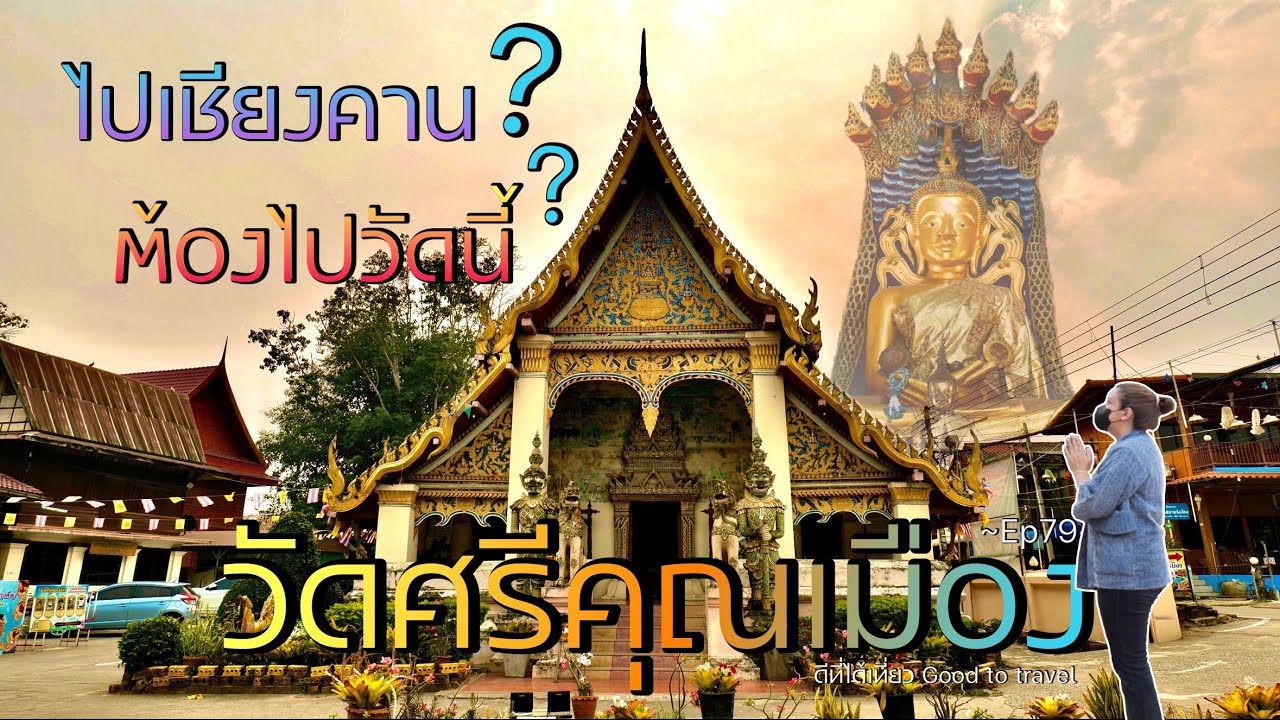
 Click to Access the Navigation Map GPS
Wat Si Khun Mueang Map
Recommend

 Art, Culture and Heritage
 Historical Sites and Monuments(2)
 Landmarks and Memorials(3)
 Art, Craft Centres, Tradition(2)
 Museums(4)
 Art Gallery(1)
 Educational Places
 Educational Gardens, Farm(2)
Temple(16)
Educational Gardens, Farm(2)
Temple(16)
 Other Sacred Sites(8)
 Research and Development
 Royal Project(3)
 Suburban Living
 Village, Community(3)
 Local Market(1)
 Nature and Wildlife
 National Parks and Marine Reserves(5)
 Mountain (Doi)(10)
 Dam, Reservoir, Lake(7)
 Waterfalls(21)
 Caves(3)
 River, Canal(5)
 Bays and Beaches(1)
 Other natural attractions(1)
 Entertainment and Agricultural
 Farms, Parks and Ecotourism(8)
 Waterpark(1)
 Outdoor and Adventure Activities(2)


