
lovethailand home >Northeastern Travel Attractions >Khon Kaen Travel Attractions >Phon >Sok Nok Ten > Sok Phi Dip Forest
TL;DR: Sok Phi Dip Forest is located at Ban Nong Bua Noi / Ban Nong Bua, Sok Nok Ten Subdistrict, Phon District, Khon Kaen Province, open Daily, hours Daytime visit recommended.
Sok Phi Dip Forest
Open Days: Daily
Opening Hours: Daytime visit recommended
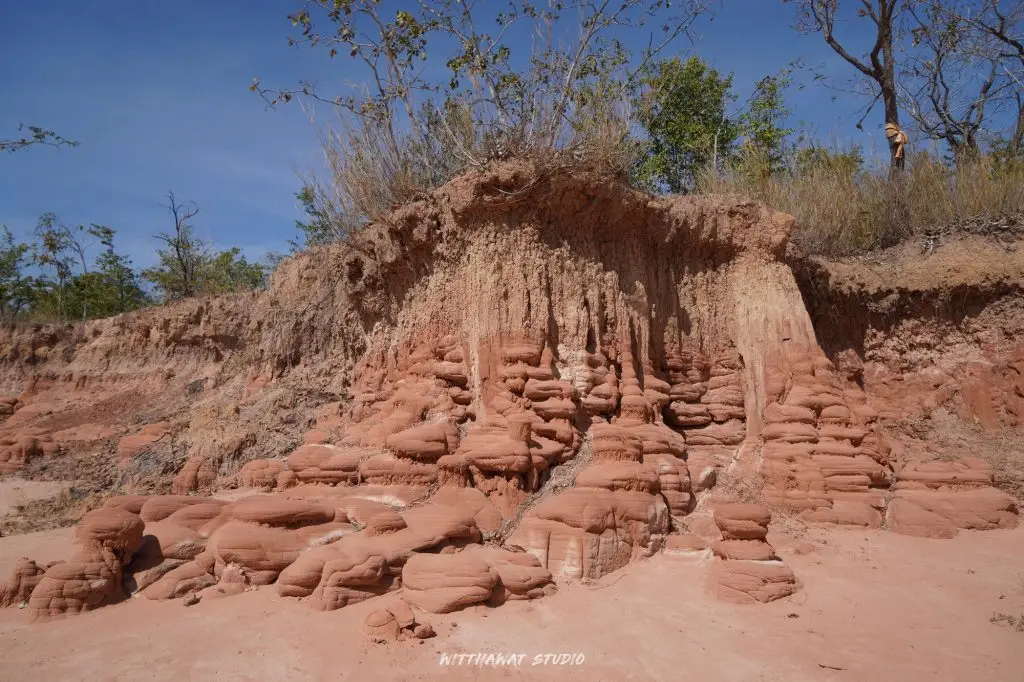
Sok Phi Dip Forest in Khon Kaen is a distinctive geological attraction located at Ban Nong Bua Noi, Sok Nok Ten Subdistrict, Phon District, Khon Kaen Province. The site is known for its sandstone walls, ancient stream channels, uneven rock surfaces, and unusual landforms shaped by natural erosion over millions of years. With sandstone formations dating back more than 65 million years, Sok Phi Dip offers travelers a rare chance to see a raw and visually striking side of northeastern Thailand. It is suitable for visitors interested in geology, nature photography, local legends, community-based travel, and lesser-known attractions in Khon Kaen.
The word “sok” in the Isan dialect refers to a deep gully, ravine, or water-eroded channel formed by the constant movement of flowing water. Over a long period of time, water gradually cut through soil, sand, and rock layers of different hardness, leaving behind a landscape of uneven ground, old stream beds, sediment walls, and sculptural sandstone surfaces. This is what gives Sok Phi Dip its strong visual character. It is not simply a forested area; it is a natural open-air record of water, weathering, erosion, and geological time.
The main beauty of Sok Phi Dip lies in its raw natural appearance. Sandstone in shades of red, brown, and soft orange forms layered walls and textured ground surfaces. In some areas, visitors can clearly see sedimentary patterns, cross-bedding, and erosion marks. When sunlight falls across the sandstone, the colors become warmer and the layers appear more pronounced, making the site feel like a natural geological museum. Walking through the area allows visitors to observe sandstone cliffs, rounded rock surfaces, old water channels, and narrow eroded passages at close range.
The rocks found at Sok Phi Dip are mainly sedimentary rocks, particularly fine-grained sandstone, dry sandstone, and mudstone. They are associated with the Khorat Group and the Phu Thok Formation, a geological unit found in northeastern Thailand. These rocks began as ancient sediments before hardening over geological time. Later, uplift, weathering, and water erosion shaped them into the walls, gullies, and rock platforms visible today. For this reason, the site is valuable not only for its unusual scenery but also for the way it helps visitors understand the long geological history of the Isan Plateau.
Unlike many well-known attractions in Khon Kaen that feature temples, reservoirs, markets, or mountain viewpoints, Sok Phi Dip is defined by its eroded sandstone terrain. Its charm is quieter and more observational. Some surfaces look rounded and weather-worn, some areas resemble small stone pillars, while other sections appear like natural walls carved by invisible hands. The landscape rewards slow exploration. Visitors who take time to notice the color, texture, cracks, sediment layers, and old water channels will gain a deeper appreciation of how nature gradually creates form through erosion and time.
The name “Sok Phi Dip” also gives the place a strong cultural identity. While “sok” refers to the eroded channel, the phrase “phi dip” carries a haunting tone in Thai and Isan storytelling. Local legends link the name to a major epidemic in the community during the late 1930s to around 1941. Many villagers became ill and died, and traditional funeral rites could not be completed in time. According to local memory, bodies were brought to this deep gully area, which later became associated with the name Sok Phi Dip. This gives the site a layered meaning: it is both a geological attraction and a place connected to the memory, fear, and resilience of the local community.
These local stories help visitors understand that Sok Phi Dip is more than a scenic natural site. It carries geological, historical, cultural, and spiritual meanings at the same time. Walking through the sandstone formations, visitors encounter not only the marks of erosion but also the stories of people who once lived through hardship and explained the landscape through memory, belief, and oral tradition. For foreign travelers, this makes Sok Phi Dip especially interesting because it connects natural science with Isan folklore and community history.
Sok Phi Dip is best explored calmly and respectfully. The sandstone surfaces in some areas can be fragile, and certain parts may become slippery after rainfall. Visitors should avoid climbing on delicate rock walls, scratching or carving names into the stone, collecting rocks, or disturbing the natural surface. Since the site is a public forest and natural rock area rather than a fully commercial tourist complex, facilities are limited. Travelers should bring drinking water, sun protection, comfortable walking shoes, and a small bag for personal trash. A daytime visit is strongly recommended for safety and visibility.
The best time of day to visit is in the morning or late afternoon. In the morning, the air is cooler and the sunlight helps reveal the color of the sandstone. In the late afternoon, angled light creates stronger shadows along the rock walls and channels, making the formations more photogenic. During the rainy season, the forest may look greener and the old water channels may appear more prominent, but visitors should be careful of slippery ground. During the dry season, walking is generally easier and the shapes of the sandstone formations are easier to observe.
For photography, Sok Phi Dip offers several interesting angles: close-up shots of sediment layers, wide views of sandstone walls, textured rock surfaces, and old stream channels surrounded by forest. The warm color of the sandstone contrasts well with the surrounding greenery. However, good photography should never come at the cost of safety or conservation. Visitors should stand only on stable ground, avoid fragile edges, and never climb onto rock surfaces that may be easily damaged. The formations took millions of years to develop, so responsible behavior is essential.
Sok Phi Dip is also a useful outdoor classroom for students, families, and travelers interested in earth science. It can help explain weathering, erosion, sedimentary rock formation, cross-bedding, and the role of flowing water in shaping landforms. Seeing these features in the real landscape can be far more memorable than learning from diagrams alone. The site makes geological processes visible and approachable for general visitors, which is why it has strong educational value as well as tourism value.
The area also reflects the identity of Ban Nong Bua Noi and Sok Nok Ten Subdistrict. Local communities in Isan often have a close relationship with forests, water channels, fields, and spirit beliefs. In local culture, a forest is not just a physical space; it may also be a place with guardians, memories, and rules of respect. Even today, the stories surrounding Sok Phi Dip remind visitors that nature and belief have long shaped community life in rural northeastern Thailand. Travelers should therefore visit with respect for both the natural environment and the cultural memory attached to the place.
Travelers can combine Sok Phi Dip with nearby destinations in Phon District and neighboring areas. A practical itinerary is to visit Sok Phi Dip in the morning, return to Phon town for lunch or coffee, then continue to cultural attractions such as Wat Sa Bua Kaeo or Prasat Pueai Noi. This route offers a balanced experience of geology, local food, Isan culture, temple art, and Khmer-influenced historical architecture. For travelers seeking a deeper view of Khon Kaen beyond the main city, this southern Khon Kaen route is highly rewarding.
Getting There is easiest by private car or rental car. From Khon Kaen city, take Mittraphap Road toward Phon District, then continue on local roads toward Sok Nok Ten Subdistrict and Ban Nong Bua Noi. The site is about 15–18 km from Phon town, depending on the route. The final section passes through rural roads, so travelers should use GPS navigation to the coordinates 15.833398, 102.691087 and plan to arrive during daylight. Public transportation can take visitors as far as Phon town, but a local transfer or hired vehicle is needed for the final leg to the site.
Visitors should wear comfortable shoes with good grip because the ground includes sand, rock, and uneven natural surfaces. Families with children should supervise them carefully near gullies, slopes, and rock edges. Elderly visitors can enjoy the site by staying on safer, flatter areas and avoiding steep or slippery sections. Bringing water, a hat, insect repellent, and a personal trash bag will make the visit more comfortable and environmentally responsible.
Sok Phi Dip is one of the most distinctive nature-based attractions in Phon District because it combines unusual sandstone formations, geological value, local legend, and community identity in one place. It is not a highly commercialized attraction, and that is part of its charm. The experience is quiet, raw, and reflective. For travelers who appreciate landscapes shaped by time, places with stories, and hidden corners of Thailand that remain closely connected to local communities, Sok Phi Dip is worth adding to a Khon Kaen travel plan.
| Name | Sok Phi Dip Forest, Khon Kaen |
| Location | Ban Nong Bua Noi / Ban Nong Bua, Sok Nok Ten Subdistrict, Phon District, Khon Kaen Province |
| Address | Public forest area north of Ban Nong Bua Noi, Sok Nok Ten Subdistrict, Phon District, Khon Kaen 40120, Thailand |
| Coordinates | 15.833398, 102.691087 |
| Highlights | Sandstone walls, old stream channels, uneven rock platforms, and natural erosion landforms |
| History / Geological Period | Late Cretaceous sandstone, more than 65 million years old, associated with the Khorat Group and Phu Thok Formation |
| Name Origin | “Sok” means a water-eroded gully or ravine in the Isan dialect, while “Phi Dip” is linked to local legends about an epidemic and bodies brought to the deep gully in the past |
| Distinctive Features | Fine-grained sandstone, dry sandstone, mudstone, sedimentary layers, erosion marks, and natural sandstone walls |
| Travel Information | From Khon Kaen city, drive along Mittraphap Road toward Phon District, then continue on local roads to Sok Nok Ten Subdistrict and Ban Nong Bua Noi; private car or rental car is recommended |
| Current Status | Open as a geological attraction and community nature site |
| Open Days | Daily |
| Opening Hours | Daytime visit recommended |
| Fees | No admission fee |
| Main Areas / Zones | 1. Sandstone wall zone 2. Uneven sandstone platform zone 3. Old stream channel and ravine zone 4. Surrounding public forest area 5. Local legend and community memory area |
| Caretaker | Sok Nok Ten Subdistrict Administrative Organization, Phon District, Khon Kaen Province |
| Main Contact Number | 043-416019 |
| Official Website / Official Page | Sok Nok Ten Subdistrict Administrative Organization and its official Facebook page |
| Nearby Tourist Attractions | 1. Khok Din Daeng Forest Learning and Plant Conservation Area, about 8 km 2. Chao Pho La Loeng Wai Shrine / Bueng La Loeng Wai, Phon town, about 16 km 3. Phumisuk Muang Phon rest stop and cafe, about 17 km 4. Wat Sa Bua Kaeo, Nong Song Hong District, about 25 km 5. Prasat Pueai Noi, Pueai Noi District, about 32 km |
| Nearby Restaurants | 1. Phumisuk Muang Phon, about 17 km, Tel. 043-414974 2. Khao Tom Muang Phon, about 18 km, Tel. 087-8648581 3. Pornthip Ahan Pa, Muang Phon Branch, about 18 km, Tel. 084-4006088 4. PIKUL Restaurant, Muang Phon, about 18 km, Tel. 063-3136721 5. CHOR Cafe Muang Phon, about 19 km, Tel. 081-1746551 6. Tigoro Coffee Muang Phon, about 18 km, Tel. 092-6517998 |
| Nearby Accommodations | 1. Sabai Dee Resort 2 Hotel & Resort, Phon, about 8 km, Tel. 065-8914471 2. Panadda Resort Muang Phon, about 18 km, Tel. 095-6616660 3. Baan Yai Muang Phon, about 18 km, Tel. 081-5467541 4. Tong Nueng Resort Muang Phon, about 19 km, Tel. 090-3175159 5. Subanan Hotel Muang Phon, about 18 km, Tel. 089-2793895 6. The Himna Resort, Phon, about 18 km, Tel. 061-6920928 |
Frequently Asked Questions (FAQ)
Q: Where is Sok Phi Dip Forest located?
A: Sok Phi Dip Forest is located in the public forest area north of Ban Nong Bua Noi, Sok Nok Ten Subdistrict, Phon District, Khon Kaen Province.
Q: What makes Sok Phi Dip interesting?
A: The site is known for sandstone walls, old stream channels, uneven rock platforms, and natural erosion formations that are more than 65 million years old.
Q: What does the word “sok” mean?
A: In the Isan dialect, “sok” means a deep gully, ravine, or channel formed by water erosion.
Q: Is there an admission fee for Sok Phi Dip?
A: No. Visitors can walk around and enjoy the natural landscape without paying an admission fee.
Q: When is the best time to visit Sok Phi Dip?
A: Morning or late afternoon is recommended because the light is better, the weather is more comfortable, and the sandstone layers are easier to see.
Q: What should visitors bring?
A: Visitors should bring drinking water, a hat, comfortable walking shoes, sun protection, and a personal trash bag.
Q: Is Sok Phi Dip suitable for families?
A: Yes, it is suitable for families interested in nature and geology, but children should be supervised closely near gullies, rock edges, and uneven ground.
Q: What nearby places can travelers visit after Sok Phi Dip?
A: Travelers can continue to Chao Pho La Loeng Wai Shrine, Phumisuk Muang Phon, Wat Sa Bua Kaeo, and Prasat Pueai Noi.
 Category: ●Nature and Wildlife
 Group: ●Other natural attractions
Last Update : 3 MonthAgo
 Last Update : 3 MonthAgo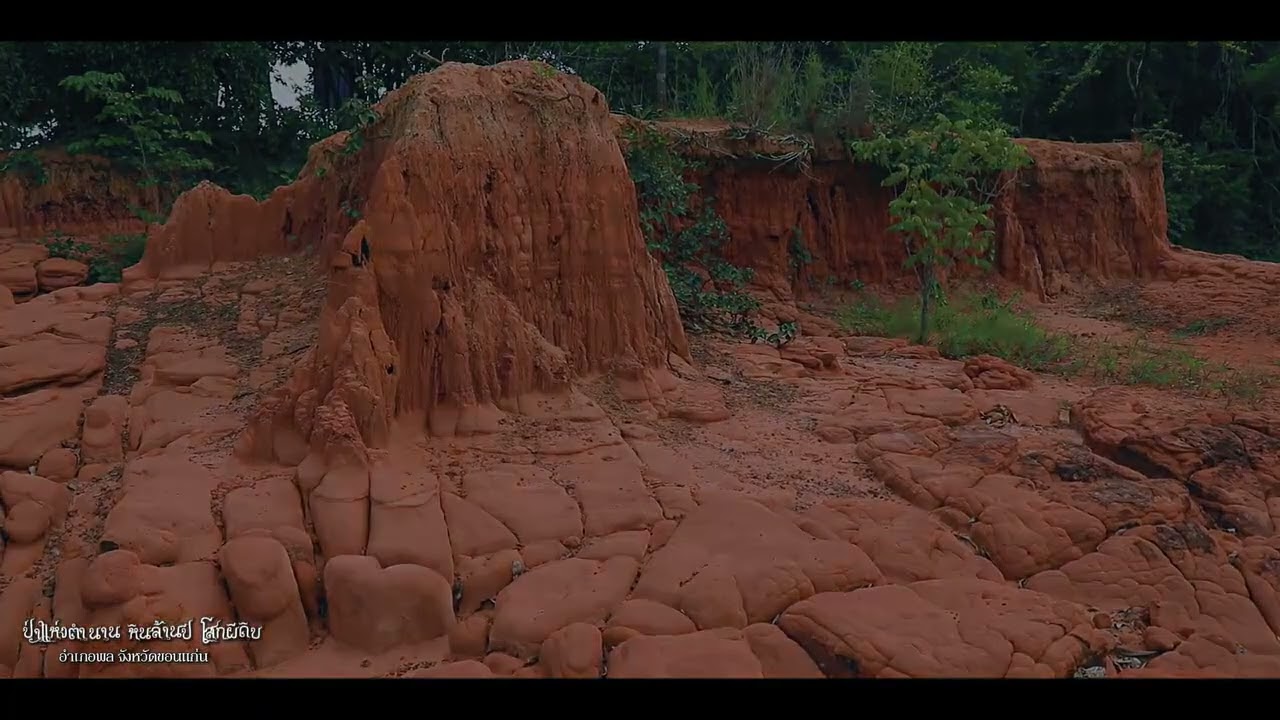
 Click to Access the Navigation Map GPS
Sok Phi Dip Forest Map
Gellery
Recommend

 Art, Culture and Heritage
 Historical Sites and Monuments(7)
 Landmarks and Memorials(3)
 Art, Craft Centres, Tradition(2)
 Museums(4)
 Educational Places
 Museum for Study(2)
 Places of Worship
 Temple(27)
 Other Sacred Sites(5)
 Suburban Living
 Village, Community(3)
 Local Market(1)
 National Parks and Marine Reserves(5)
 Mountain (Doi)(1)
 Dam, Reservoir, Lake(4)
 Waterfalls(8)
 Caves(9)
 River, Canal(10)
 Bays and Beaches(3)
 Islands(1)
Other natural attractions(5)
Islands(1)
Other natural attractions(5)
 Entertainment and Agricultural
 Zoos and Aquariums(1)
 Animal camps and shows(2)
 Farms, Parks and Ecotourism(7)
 Waterpark(2)


