
lovethailand home >Northeastern Travel Attractions >Kalasin Travel Attractions >Muang Kalasin >Kalasin > Kalasin University (KSU)
TL;DR: Kalasin University (KSU), open Monday – Friday (University Administrative Offices, Excluding Public Holidays), hours 08:30 – 16:30 (Administrative Office Hours).

Kalasin University (KSU)
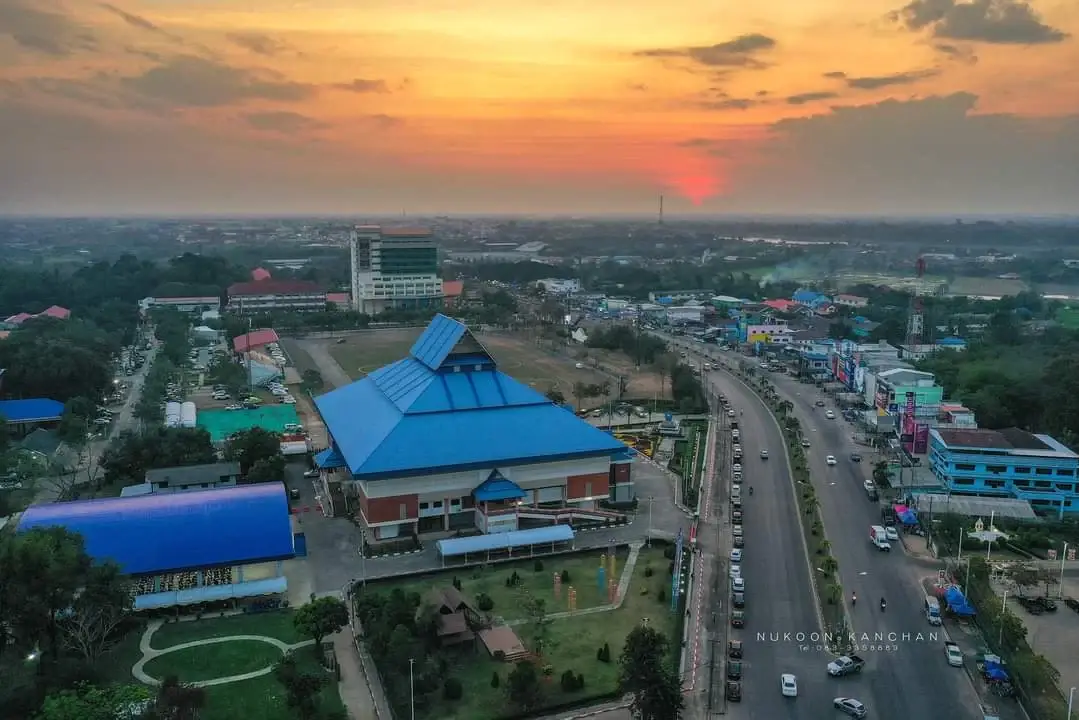
Open Days: Monday – Friday (University Administrative Offices, Excluding Public Holidays)
Opening Hours: 08:30 – 16:30 (Administrative Office Hours)
Kalasin University (KSU) is a public university in Kalasin Province, northeastern Thailand. It was established under the Kalasin University Act B.E. 2558 (2015), published in the Royal Gazette on September 8, 2015, with the university formally coming into existence on September 9, 2015. The institution resulted from the merger of Kalasin Rajabhat University and Rajamangala University of Technology Isan, Kalasin Campus. Its educational heritage extends back to the establishment of Kalasin Agricultural School in 1939 and the development of Kalasin Rajabhat Institute during the late 1990s. Today, Kalasin University operates two principal educational campuses: the city campus in Mueang Kalasin District and the Na Mon campus in Na Mon District, together with additional research and development facilities. The university comprises six academic faculties covering agricultural technology, business administration, health sciences, engineering, liberal arts, and education. Its responsibilities include producing qualified graduates, advancing research and innovation, developing professional skills, preserving cultural heritage, and supporting sustainable economic and social development in Kalasin Province and northeastern Thailand.
Kalasin University's institutional history is particularly distinctive because it was formed through the combination of two higher education institutions with different origins and academic strengths. One developed from agricultural and vocational education, emphasizing technology, practical skills, and professional training. The other emerged from the Rajabhat system, with a strong commitment to teacher education, educational access, and community development. Bringing these traditions together created a university with a broad academic foundation spanning applied sciences, technology, professional education, humanities, and social sciences.
The university's first principal educational location is the Mueang Kalasin campus, commonly called the city campus. It is located at 62/1 Kasetsomboon Road, Kalasin Subdistrict, Mueang Kalasin District, Kalasin Province 46000. The campus lies within the provincial urban center, where administrative services, transportation, and commercial activities are concentrated. Its principal academic units include the Faculty of Agricultural Technology, the Faculty of Business Administration, and the Faculty of Engineering and Industrial Technology. The campus also contains administrative buildings, student activity facilities, meeting venues, and educational support services.
The second principal location is Kalasin University's Na Mon campus at 13 Moo 14, Song Plueai Subdistrict, Na Mon District, Kalasin Province 46230. Its main academic units are the Faculty of Science and Health Technology, the Faculty of Liberal Arts, and the Faculty of Education and Educational Innovation. The Na Mon campus is particularly associated with education, public health, scientific disciplines, and social sciences. Its facilities include academic buildings, centralized educational services, lecture rooms, and venues for cultural and academic activities.
In addition to its two principal campuses, the university maintains facilities dedicated to research and regional development. One important example is the Smart Agricultural Technology and Innovation Center for Local Development, developed from the former Phu Sing Research and Training Center in Phu Din Subdistrict, Mueang Kalasin District. The university also has land and facilities associated with Kamalasai District. The distribution of university activities across several locations reflects its educational responsibilities and its continuing commitment to agricultural research, technology development, and community engagement.
Understanding the origins of Kalasin University requires looking well beyond its formal establishment in 2015. One of its predecessor institutions began in 1939 with the founding of Kalasin Agricultural School. Initially, the school provided lower-secondary agricultural education. Agriculture was the foundation of the local economy and everyday life in northeastern Thailand, making agricultural education an important means of improving professional knowledge, farming skills, and opportunities for local communities.
In 1954, Kalasin Agricultural School expanded to offer upper-secondary vocational education in agriculture. This development reflected Thailand's increasing need for educational institutions capable of producing workers with specialized professional knowledge. Agricultural education became an important mechanism for connecting scientific principles and practical skills with farming activities and regional economic development.
In 1965, the institution was upgraded to Kalasin Agricultural College under the Department of Vocational Education. It provided education at the higher vocational certificate level. This change was significant because the institution developed from a secondary agricultural school into a college offering advanced vocational training, enabling it to produce personnel with more specialized agricultural and technological knowledge.
In 1975, Kalasin Agricultural College was transferred to the College of Technology and Vocational Education and renamed the College of Technology and Vocational Education, Kalasin Agricultural Campus. The change connected the institution more closely with Thailand's wider vocational and technical education system while preserving its strengths in agriculture and hands-on professional learning.
Another important change occurred in 1988, when the College of Technology and Vocational Education became Rajamangala Institute of Technology. The Kalasin institution consequently adopted the name Rajamangala Institute of Technology, Kalasin Campus. This was part of a broader national development of technological and vocational education aimed at preparing graduates for changing agricultural, industrial, and service-sector requirements.
In 2005, Rajamangala Institute of Technology was reorganized into the Rajamangala universities of technology. The Kalasin institution consequently became Rajamangala University of Technology Isan, Kalasin Campus. It continued providing education in agricultural science, technology, and professional disciplines until its eventual merger into Kalasin University.
The university's other predecessor, Kalasin Rajabhat University, followed a different historical path. Its development began with a government policy to expand Rajabhat institutions across northeastern Thailand. On April 20, 1997, the Thai Cabinet approved a policy concerning the establishment of additional Rajabhat institutions in the region, with Kalasin among the provinces selected for expansion. The objective was to provide greater access to higher education for students wishing to study closer to home.
During its initial period, the institution operated as the Kalasin Rajabhat Institute Establishment Project. It first admitted students to associate-degree programs in the 1999 academic year and began admitting undergraduate degree students in 2001. This expansion represented an important educational opportunity for young people in Kalasin, particularly those facing financial and geographical barriers to studying in other provinces.
On July 21, 2001, a Royal Decree concerning the establishment of Rajabhat institutes supported the institution's formal development. Following the enactment of the Rajabhat University Act in 2004, Kalasin Rajabhat Institute became Kalasin Rajabhat University. It continued its responsibilities in undergraduate education, teacher development, research, and academic services for local communities.
Kalasin Rajabhat University served as an important local educational institution. Its mission emphasized teacher education, educational opportunity, and the development of knowledge in humanities, social sciences, science, and community-oriented disciplines. These characteristics later became an important part of the academic identity of Kalasin University following the merger.
The proposal to merge Kalasin Rajabhat University and Rajamangala University of Technology Isan, Kalasin Campus, developed into a national policy issue in late 2011. The government considered combining higher education institutions located within the same province to reduce administrative duplication and improve the efficiency of educational resources.
Several individuals played important roles in advancing the merger proposal. They included Decha Tantiyawarong, a former Governor of Kalasin Province; Boonruen Srithares, a former Member of Parliament for Kalasin and former Deputy Minister of Education; and Ratchadaporn Kaewsanit, a former party-list Member of Parliament. Their involvement became part of the political and administrative process leading to the establishment of the new university.
The merger proposal attracted both support and concern. Some discussions focused on the future use of existing university properties and the potential impact on surrounding communities, including businesses serving students near the original campuses. These debates illustrated that university restructuring affects not only institutional management but also the local economy, urban development, and the lives of people connected with educational institutions.
On March 3, 2015, the Cabinet approved the draft Kalasin University Act to proceed with the merger. On June 25, 2015, the National Legislative Assembly approved the legislation at its third reading by 173 votes to 1. These decisions were essential steps toward the formal creation of Kalasin University.
The Kalasin University Act B.E. 2558 was published in the Royal Gazette, Volume 132, Part 86A, on September 8, 2015. The legislation provided for the consolidation of Kalasin Rajabhat University and Rajamangala University of Technology Isan, Kalasin Campus, into a single university. The merger took legal effect the following day, September 9, 2015, which is recognized as the foundation date of Kalasin University in its present institutional form.
The establishment of Kalasin University in 2015 did not mark the beginning of higher education in Kalasin Province. Instead, it brought together institutions with substantial educational histories and accumulated professional expertise. The university's history is best understood through three major periods: the development of its agricultural and technological predecessor, the growth of its Rajabhat predecessor, and the establishment of the present university through their merger in 2015.
Section 6 of the Kalasin University Act defines the institution as an academic organization providing education and practical expertise related to professional and advanced professional fields. Its responsibilities include education, research, technological development, academic services for society, expanded educational opportunities, preservation of religion, arts and culture, promotion of sports, community development, and environmental conservation.
These responsibilities make Kalasin University more than a place of classroom instruction. It is expected to apply academic knowledge and professional expertise to the practical challenges faced by local communities. This role is especially relevant in Kalasin Province, where agriculture, agricultural products, commerce, services, tourism, and cultural traditions contribute to the local economy and society.
The university's development strategy places particular emphasis on using science, social sciences, technology, and innovation as foundations for regional development. Its long-term direction involves developing expertise that can improve the quality of life and economic opportunities of local communities. Integrating modern science and technology with traditional knowledge is therefore an important principle of its teaching, research, and community service activities.
The Kalasin University emblem reflects both the identity of the province and the historical merger of the two predecessor institutions. Its upper section resembles the top of a sema stone, inspired by the summit of Phra That Ya Khu, ancient Buddhist boundary stones, and a candle flame. These elements symbolize knowledge, wisdom, virtue, civilization, cultural achievement, and the historical heritage of Kalasin Province.
The central portion of the emblem resembles two hands joined in a traditional respectful gesture. This represents the integration of Kalasin Rajabhat University and Rajamangala University of Technology Isan, Kalasin Campus. Other elements include a water droplet symbolizing the province's natural abundance and a flame representing the combination of science, technology, and local wisdom for social development.
The university's official symbolic color is sky blue, with the specified color code #7ca3d5. It represents knowledge, wisdom, independence, inspiration, creativity, determination, and calmness. The color forms part of the university's institutional identity and expresses its commitment to developing knowledgeable graduates who can make positive contributions to society.
The symbolic tree of Kalasin University is the Mahat tree, known botanically as Artocarpus lacucha. This native tropical tree is associated with Thailand's natural environment. Its selection as the university's symbolic tree connects the institution's identity with nature and environmental awareness. University uniforms also incorporate official emblems and insignia, reinforcing a shared identity among students across faculties and campuses.
The university's philosophy is expressed through the idea that knowledge creates value and local wisdom develops society. Its institutional aspiration emphasizes developing good people who are employable and capable of contributing to social progress. The graduate identity stresses perseverance, a strong work ethic, and professional expertise. These concepts are closely connected to the university's historical strengths in applied learning, vocational skills, and regional service.
In 2026, Associate Professor Dr. Suphan Sudson serves as President of Kalasin University. Under the university's administration, academic activities, research, institutional partnerships, professional development programs, and student activities have continued across its principal educational locations.
Kalasin University comprises six academic faculties: the Faculty of Agricultural Technology, Faculty of Business Administration, Faculty of Science and Health Technology, Faculty of Engineering and Industrial Technology, Faculty of Liberal Arts, and Faculty of Education and Educational Innovation. Each faculty has its own area of expertise and contributes to the university's combined responsibilities in education, research, and academic services.
The Faculty of Agricultural Technology has a particularly close connection with the university's historical origins. One of the predecessor institutions was originally Kalasin Agricultural School, established in 1939. The faculty's academic fields include plant science, animal science, aquaculture and aquatic business, smart agriculture, veterinary technology, biological products, and food technology and culinary studies. These disciplines are directly relevant to food production, resource management, and agricultural development.
Smart agriculture provides an important example of how modern technology can be applied to traditional economic activities. It combines agricultural production, information management, technological equipment, and innovative methods to improve efficiency and sustainability. Such education has particular relevance in Kalasin Province, where agricultural activities remain closely connected to local employment and livelihoods.
Education in food technology and biological products supports the development of knowledge about food quality, safety, processing, product development, and value addition for agricultural raw materials. These fields can help community enterprises and local entrepreneurs transform regional resources into new products and strengthen their opportunities in competitive markets.
The Faculty of Business Administration prepares students for careers in business, accounting, management, marketing, business computing, and modern retail innovation. Its teaching supports the development of skills in organizational operations, financial analysis, marketing strategy, information management, and business technology.
Business education is particularly relevant to Kalasin's small and medium-sized enterprises, agricultural commerce, community businesses, and emerging digital markets. Graduates with knowledge of accounting, management, marketing, and digital business tools can contribute to the development of local enterprises and support broader economic opportunities.
The Faculty of Science and Health Technology is based at the Na Mon campus. Its academic activities include public health, medical science, health technology, medical information technology, occupational health and safety, and environmental health. Education in these disciplines contributes to public healthcare, community wellbeing, and the management of environmental and occupational risks.
Public health education focuses on health promotion, disease prevention, community health assessment, and healthcare systems. Occupational health and safety address the prevention of workplace accidents and occupational diseases, while environmental health examines environmental factors that influence public wellbeing. These fields contribute to improving the health of individuals, families, workers, and communities.
Medical information technology reflects the continuing digital transformation of healthcare. Hospitals and public health organizations must manage substantial amounts of information accurately and securely. Knowledge of information systems, data science, and artificial intelligence can support healthcare service development, medical information management, and better-informed decision-making.
The Faculty of Engineering and Industrial Technology is based at the city campus. Its academic fields include computer engineering, mechanical engineering, industrial engineering, electrical engineering, mechatronics, logistics engineering, artificial intelligence and intelligent systems engineering, and design innovation. These disciplines combine scientific knowledge with practical engineering applications and industrial development.
Artificial intelligence and intelligent systems engineering are particularly relevant to modern manufacturing and technological development. They involve data processing, automation, intelligent devices, and the design of systems capable of responding efficiently to changing requirements. Mechanical and industrial engineering remain essential to manufacturing, production management, quality improvement, and the development of industrial processes.
The Faculty of Liberal Arts, located at the Na Mon campus, provides education in humanities, languages, law, political science, public administration, tourism, and communication. University-published programs include Law, Political Science, Public Administration, Chinese, English for Business Communication, Tourism and Cruise Studies, and Digital Content Media. These fields support public administration, business communication, tourism development, and social understanding.
Language and tourism education contribute to the development of hospitality and service-sector professionals. Law and public administration provide knowledge of legal systems, government management, and public policy. Digital media education supports content production, communication through emerging platforms, and the development of professional skills required in a digital economy.
The Faculty of Education and Educational Innovation is another major academic unit at the Na Mon campus. It prepares teachers and educational professionals through programs and teaching specializations such as early childhood education, primary education, Thai, English, mathematics, general science, social studies, computer education, physical education, biology, physics, and agricultural education. Teacher education remains essential to the long-term development of Thailand's educational system.
At the graduate level, the faculty offers academic pathways in Educational Administration and Learning Management Innovation, together with relevant graduate diploma programs and advanced graduate qualifications. These programs are designed to strengthen teachers' professional capabilities, support educational leadership, and improve the development and management of learning activities.
Kalasin University provides education at several levels and through different admission routes. These include higher vocational certificates, bachelor's degrees, bachelor's degree transfer or continuing programs, master's degrees, doctoral degrees, and selected graduate diploma qualifications. This variety creates educational opportunities for students with different academic backgrounds, particularly vocational graduates seeking to continue their education at university level.
The university's admission system for the 2026 and 2027 academic years demonstrates its flexible approach to higher education. Different application rounds are available for different programs and qualifications, including regular and special study arrangements. These opportunities are relevant to secondary-school graduates, vocational graduates, and working adults seeking additional professional qualifications.
Research and innovation at Kalasin University are closely connected with the province's economic characteristics, particularly agriculture, natural resource management, food production, technology, and local entrepreneurship. Developing research that responds to practical community needs is a central aspect of the university's mission, enabling knowledge generated through teaching and laboratory work to benefit society beyond the campus.
One example of innovation-oriented collaboration in 2026 was a Non-Degree short-course initiative developed with the Kalasin Chamber of Commerce. The program aimed to support farmers in becoming agricultural entrepreneurs and was connected with the development of Kalasin's geographical indication, or GI, giant freshwater prawns as premium agricultural products.
The development of Kalasin giant freshwater prawns is important to the provincial economy because it demonstrates how a distinctive agricultural product can gain additional value through improved production, business management, product development, and marketing. Cooperation between the university and local entrepreneurs creates opportunities to strengthen economic activity by building on the province's existing resources and identity.
Another important area of development is geological education and educational tourism. On September 28, 2026, Kalasin University signed an academic cooperation agreement with Thailand's Department of Mineral Resources at the Sirindhorn Museum in Sahatsakhan District, Kalasin Province. The agreement aimed to advance cooperation in education, research, geological knowledge, and sustainable geotourism.
This collaboration has particular relevance to Kalasin's geological heritage, including the significant dinosaur fossil discoveries at Phu Kum Khao and the educational collections of Sirindhorn Museum. Connecting scientific knowledge with tourism and environmental education can strengthen the value of natural-history attractions while helping visitors understand the province's geological importance.
Academic services and community cooperation are also important dimensions of Kalasin University's activities. The university can apply knowledge from agricultural technology, engineering, business administration, public health, education, and social sciences to support community organizations, entrepreneurs, and local government agencies. This mission reflects its aspiration to develop capable professionals who can contribute to society and help improve local quality of life.
Culturally, Kalasin University is situated in a province known for its distinctive northeastern Thai heritage. Important examples include Phrae Wa silk, Phu Thai cultural traditions, Isan folk performances, Buddhist customs, and traditional agricultural knowledge. These cultural resources provide a rich environment for student activities, academic study, and projects connecting modern education with local identity.
Kalasin University's foundation anniversary is observed on September 9 each year. On September 9, 2026, the university organized Buddhist chanting and an alms-giving ceremony to commemorate its 11th anniversary. The event took place at Phayap Mok Meeting Room in the Princess Maha Chakri Sirindhorn 70th Birthday Anniversary Building at the city campus. The ceremony provided an opportunity for administrators, faculty members, staff, and students to commemorate the university's establishment and participate in cultural and religious activities together.
The Wai Khru teacher appreciation ceremony is another important university tradition. On July 16, 2026, the student organization, faculty student associations, and Student Affairs Division jointly organized the academic year's Wai Khru ceremony at the Student Affairs Building on the city campus. The event emphasized respect for teachers and the importance of gratitude in Thai educational culture.
The ceremony included offerings to the Triple Gem, Buddhist prayers, a student pledge, and the presentation of flower and incense arrangements to lecturers. The program also included a blessing ceremony for students' educational equipment and textbooks. Such traditions encourage students to appreciate knowledge, professional ethics, personal responsibility, and their relationship with the university community.
Kalasin University also organized orientation activities for new special-program and postgraduate students on June 13, 2026, at the Educational Services and Central Services Building on the Na Mon campus. The orientation introduced students to university regulations, educational procedures, available services, and methods for planning their academic development.
On September 14, 2026, the Faculty of Science and Health Technology organized a white coat and student identification ceremony for public health students at the Na Mon campus. The ceremony symbolized their progression toward a professional role in community health and emphasized ethical conduct, responsibility, and public service.
Student cultural activities also reflect the university's engagement with the wider region and international visitors. In 2026, the university hosted Vietnamese students for cultural exchange activities involving Isan folk music, traditional performances, and a festive serng procession. These activities encouraged intercultural understanding while introducing participants to the living artistic traditions of northeastern Thailand.
In October 2026, general science education students presented the seventh edition of their stage production, titled The Ghost's Due, at the Cho Tabaek Building on the Na Mon campus. The performance demonstrated how creative arts can be incorporated into student development, encouraging communication, teamwork, artistic expression, and collaborative project management.
Among the significant facilities at the city campus is the Princess Maha Chakri Sirindhorn 70th Birthday Anniversary Building, which supports university-level meetings and official activities. The Phayap Mok Meeting Room has hosted institutional ceremonies, administrative gatherings, and anniversary events involving university administrators, lecturers, staff, and students.
The Student Affairs Building at the city campus provides facilities for student development activities, the Wai Khru ceremony, student organizations, and university community events. The multipurpose auditorium also supports meetings, seminars, training programs, and large-scale activities involving the university and partner organizations.
At the Na Mon campus, the Educational Services and Central Services Building is a significant center for teaching and institutional support services. It contains lecture rooms and meeting spaces used for academic activities. The Fa Daet Song Yang Building is associated with the Faculty of Liberal Arts and supports teaching and faculty activities, while the Cho Tabaek Building has hosted academic and cultural events.
The university's practical approach to education also requires specialized training facilities, including science laboratories, engineering workshops, agricultural training areas, computer laboratories, and information technology services. Such facilities allow students to connect classroom knowledge with practical applications and professional skills, which remain central to the institution's educational heritage.
The Smart Agricultural Technology and Innovation Center for Local Development, developed from the former Phu Sing Research and Training Center, contributes to the university's work in agricultural research, technological development, and regional innovation. Dedicated research facilities provide opportunities to test ideas, develop techniques, and connect academic work with real environmental and agricultural conditions.
Kalasin University also supports students preparing to enter the workforce. In 2026, it collaborated with the Kalasin Provincial Employment Office and other organizations through the KSU Career Center and employment fair activities, helping students develop career awareness and connect with employment opportunities.
Career preparation is an essential part of higher education because a university degree is only one component of professional development. Graduates must also develop adaptability, communication, technological competence, teamwork, and the ability to continue learning as economic and social conditions change.
Prospective students can use Kalasin University's online admission system to explore faculties, academic fields, qualification levels, and application rounds. Applicants should carefully review the relevant admission requirements, educational qualifications, available places, and application procedures for their intended academic year. It is also essential to confirm the study location, since the university's principal teaching campuses are in different districts.
Choosing a program at Kalasin University involves considering personal interests and intended careers. Students interested in farming and food production can explore agricultural technology and food science, while those interested in industrial systems and emerging technologies can consider engineering. Other faculties offer educational pathways in public health, teaching, languages, business administration, law, and social sciences.
Applicants considering postgraduate study should examine their career-development objectives and research interests. Master's and doctoral programs place greater emphasis on advanced inquiry, analysis, and the creation of specialized knowledge. The details of study plans, regular and special programs, and admission arrangements are determined by the university's official announcements for each academic year.
For visitors interested in educational tourism, the city campus is located in the urban center of Kalasin, which contains important historical, religious, and cultural attractions such as Wat Klang Royal Monastery, Kalasin Museum, and Kalasin City Pillar Shrine. Visiting the Na Mon campus offers a different perspective, with a stronger connection to rural communities and the agricultural landscape of the province. Relevant destinations and services are included in the summary table below.
Visitors wishing to tour academic facilities or participate in educational visits should contact the relevant faculty or administrative office in advance. This is particularly important for laboratories, vocational training areas, and research facilities, where access may be restricted to students and authorized personnel during teaching and research activities.
In 2026, Kalasin University celebrated its 11th anniversary since its legal establishment in 2015. Although the present university is relatively young compared with some long-established Thai institutions, its agricultural predecessor dates to 1939, and its Rajabhat predecessor contributed to the expansion of regional higher education from the late 1990s. The different educational traditions of these institutions have become an important strength, enabling Kalasin University to offer education in a broad range of professional and academic disciplines.
Kalasin University is therefore significant to the province's history, education, economy, society, culture, and human resource development. By combining agricultural and technological expertise with community-oriented education and regional development, the university prepares graduates with academic knowledge, practical professional skills, and social responsibility. Its continuing work in research, innovation, cultural preservation, and community partnerships contributes to the sustainable development of Kalasin Province and Thailand.
Getting There Travelers visiting Kalasin University must first identify the correct campus. The city campus is located at 62/1 Kasetsomboon Road, Kalasin Subdistrict, Mueang Kalasin District, and can be reached by private car or local transport within Kalasin city. The Na Mon campus is located at 13 Moo 14, Song Plueai Subdistrict, Na Mon District, a separate district from the city campus. Visitors arriving from other provinces can travel to Kalasin Province and continue to the appropriate campus. Those using intercity buses should arrange onward transport from their arrival point. Before traveling, visitors should confirm the relevant faculty, study location, or event venue. University administrative offices can generally be contacted Monday to Friday, 08:30–16:30, excluding public holidays.
| University Name | Kalasin University |
| Thai Name | มหาวิทยาลัยกาฬสินธุ์ |
| Abbreviation | KSU |
| Institution Type | Public University |
| City Campus Address | 62/1 Kasetsomboon Road, Kalasin Subdistrict, Mueang Kalasin District, Kalasin Province 46000, Thailand |
| Na Mon Campus Address | 13 Moo 14, Song Plueai Subdistrict, Na Mon District, Kalasin Province 46230, Thailand |
| Province | Kalasin, Northeastern Thailand |
| Historical Origins | Kalasin Agricultural School, Established in 1939, and the Development of Kalasin Rajabhat Institute Beginning in 1997 |
| University Act Publication | September 8, 2015 |
| Foundation Date | September 9, 2015 |
| Institutional Age in 2026 | 11 Years Since Its Establishment in 2015 |
| Predecessor Institutions | 1. Kalasin Rajabhat University 2. Rajamangala University of Technology Isan, Kalasin Campus |
| Key Figures in the Merger | Decha Tantiyawarong, Boonruen Srithares, and Ratchadaporn Kaewsanit |
| University President in 2026 | Associate Professor Dr. Suphan Sudson |
| Philosophy | Knowledge Creates Value, Local Wisdom Develops Society |
| Institutional Aspiration | Developing Good People, Supporting Employment, and Leading Social Progress |
| Graduate Identity | Perseverance, Strong Work Ethic, and Professional Expertise |
| University Color | Sky Blue (#7ca3d5) |
| University Tree | Mahat Tree (Artocarpus lacucha) |
| University Emblem | A Stylized Sema Stone, Joined Hands, Water Droplet, and Candle Flame, Symbolizing Kalasin's Cultural Heritage and the Integration of Two Predecessor Institutions |
| Academic Faculties | 1. Faculty of Agricultural Technology 2. Faculty of Business Administration 3. Faculty of Science and Health Technology 4. Faculty of Engineering and Industrial Technology 5. Faculty of Liberal Arts 6. Faculty of Education and Educational Innovation |
| City Campus Faculties | Agricultural Technology, Business Administration, and Engineering and Industrial Technology |
| Na Mon Campus Faculties | Science and Health Technology, Liberal Arts, and Education and Educational Innovation |
| Research And Development Facilities | Smart Agricultural Technology and Innovation Center for Local Development (Former Phu Sing Research and Training Center), and University Property in Kamalasai District |
| Academic Strengths | Smart Agriculture, Food Technology, Business Administration, Health Sciences, Engineering, Artificial Intelligence, Languages, Tourism, and Teacher Education |
| Important Campus Facilities | 1. Princess Maha Chakri Sirindhorn 70th Birthday Anniversary Building 2. Student Affairs Building, City Campus 3. Multipurpose Auditorium, City Campus 4. Educational Services and Central Services Building, Na Mon Campus 5. Fa Daet Song Yang Building 6. Cho Tabaek Building 7. Smart Agricultural Technology and Innovation Center for Local Development |
| Traditions And Cultural Activities | Foundation Anniversary on September 9, Wai Khru Ceremony, Student Orientation, Public Health White Coat Ceremony, Isan Cultural Performances, and Student Development Activities |
| Administrative Office Days | Monday – Friday, Excluding Public Holidays |
| Administrative Office Hours | 08:30 – 16:30 |
| Educational Visits | Advance Contact Recommended for Campus Tours, Laboratories, Research Facilities, and Specialized Training Areas |
| Facilities And Services | Registrar Services, Student Affairs, Meeting Rooms, Computer Centers, Lecture Rooms, Academic Support Units, and Practical Training Facilities |
| Getting There | The City Campus Is on Kasetsomboon Road in Mueang Kalasin District; the Na Mon Campus Is in Song Plueai Subdistrict, Na Mon District. Confirm the Correct Campus Before Traveling. |
| Attractions in Mueang Kalasin And Surrounding Areas | 1. Wat Klang Royal Monastery 2. Kalasin Museum 3. Kalasin City Pillar Shrine 4. Wat Klang Museum 5. Lam Pao Dam |
| Restaurants in Mueang Kalasin District | 1. Kalasino Pizza Pasta Bakery, Tel. 063-468-9040 2. Boe Roe Shabu Buffet, Kalasin 3. KOICHI Japanese Restaurant, Tel. 092-246-9365 4. Baan Pho Restaurant, Tel. 093-923-1954 5. Mala Tang Kalasin, Tel. 084-205-4024 |
| Hotels in Mueang Kalasin District | 1. Supak Hotel, Tel. 043-811-595 2. Farisa Garden Hotel, Tel. 088-563-2044 3. The Grace Hotel, Tel. 081-303-2298 4. Rom Sai Tong Hotel, Tel. 099-332-2002 5. Romlaphass Boutique Villa, Tel. 095-265-4289 |
| Services Near the Na Mon Campus | 1. U-Square KSU Coffee Shop 2. Na Mon University Night Market 3. Sukharat Resort, Tel. 081-424-1167 4. Reela Hotel Na Mon, Tel. 092-478-2516 |
| City Campus Telephone | 043-811128, 086-458-4360 |
| Na Mon Campus Telephone | 043-602-055 |
| Faculty of Agricultural Technology Contact | 086-458-4361 |
| Faculty of Business Administration Contact | 086-458-4362 |
| Faculty of Engineering Contact | 088-574-2199 |
| Faculty of Science and Health Technology Contact | 043-602-058 |
| Faculty of Liberal Arts Contact | 043-602-057 |
| Faculty of Education Contact | 043-602-038 |
| Official Website | www.ksu.ac.th and th.ksu.ac.th |
| 2026 Academic Status | Active Public University Providing Higher Education, Research, Academic Services, and Student Activities |
Academic Programs And Fields Of Study at Kalasin University, Academic Year 2026
| Faculty / Campus | Degree Programs And Fields Listed in the University's Academic and Admissions Database |
| Faculty of Agricultural Technology (City Campus) | Higher Vocational Certificate 1. Animal Science 2. Bachelor of Science in Aquaculture and Aquatic Business 3. Bachelor of Science in Plant Science 4. Bachelor of Science in Animal Science 5. Bachelor of Science in Smart Agriculture 6. Bachelor of Science in Veterinary Technology 7. Bachelor of Science in Biological Product Technology 8. Bachelor of Science in Food Technology and Culinary Studies 9. Aquaculture and Aquatic Business 10. Animal Science 11. Smart Agriculture 12. Plant Production Technology 13. Food Technology and Innovation 14. Master of Science in Agricultural Technology 15. Doctor of Philosophy in Agricultural Technology |
| Faculty of Business Administration (City Campus) | Higher Vocational Certificates 1. Management 2. Accounting 3. Bachelor of Accountancy 4. Bachelor of Business Administration in Marketing Management 5. Bachelor of Business Administration in Business Computing 6. Bachelor of Business Administration in Modern Retail Business Innovation 7. Bachelor of Business Administration in Management (Management and Logistics and Supply Chain Management Majors, Depending on Study Route) 8. Master of Business Administration 9. Master of Accountancy |
| Faculty of Science and Health Technology (Na Mon Campus) | Bachelor's Degrees 1. Bachelor of Science, Occupational Health and Safety Major 2. Bachelor of Science, Environmental Health Major 3. Bachelor of Science in Medical Information Technology (Medical Information Technology and Medical Data Science and Artificial Intelligence Tracks) 4. Bachelor of Public Health in Public Health 5. Bachelor of Science in Medical Science and Health Technology 6. Master of Science in Information Technology Innovation Management 7. Master of Science in Environmental Health and Natural Resource Management 8. Master of Public Health 9. Doctor of Philosophy in Environmental Health and Natural Resource Management |
| Faculty of Engineering and Industrial Technology (City Campus) | Higher Vocational Certificates 1. Automotive Technology 2. Electrical Power 3. Bachelor of Engineering in Artificial Intelligence and Intelligent Systems Engineering 4. Bachelor of Engineering in Computer Engineering 5. Bachelor of Engineering in Industrial Engineering 6. Bachelor of Engineering in Mechanical Engineering 7. Bachelor of Architecture in Design Innovation 8. Design Innovation 9. Computer Engineering 10. Industrial Engineering 11. Mechanical Engineering 12. Mechatronics Engineering 13. Logistics Engineering 14. Electrical Engineering |
| Faculty of Liberal Arts (Na Mon Campus) | Bachelor's Degrees 1. Bachelor of Laws 2. Bachelor of Communication Arts in Digital Content Media 3. Bachelor of Political Science (Politics and Government, and Private Administration and Entrepreneurship Tracks) 4. Bachelor of Public Administration (Public Administration and Police Administration Tracks) 5. Bachelor of Arts in Tourism and Cruise Studies 6. Bachelor of Arts in Chinese 7. Bachelor of Arts in English for Business Communication 8. Master of Public Administration in Development Administration 9. Doctor of Public Administration in Development Administration |
| Faculty of Education and Educational Innovation (Na Mon Campus) | Bachelor's Degree Teaching Majors 1. Bachelor of Education, Primary Education 2. Bachelor of Education, Early Childhood Education 3. Bachelor of Education, Mathematics 4. Bachelor of Education, Computer Education 5. Bachelor of Education, Biology 6. Bachelor of Education, Physical Education 7. Bachelor of Education, Physics 8. Bachelor of Education, English 9. Bachelor of Education, Thai Language 10. Bachelor of Education, General Science 11. Bachelor of Education, Social Studies 12. Bachelor of Education, Agricultural Education 13. Master of Education in Educational Administration 14. Master of Education in Learning Management Innovation 15. Doctor of Education in Learning Management Innovation 16. Graduate Diploma in Learning Management Innovation (Teaching Profession) 17. Advanced Graduate Diploma in Learning Management Innovation |
Frequently Asked Questions (FAQ)
Q: Where is Kalasin University located?
A: Kalasin University has two principal educational campuses. The city campus is at 62/1 Kasetsomboon Road, Mueang Kalasin District, Kalasin Province, while the Na Mon campus is at 13 Moo 14, Song Plueai Subdistrict, Na Mon District, Kalasin Province.
Q: When was Kalasin University established?
A: Kalasin University was formally established on September 9, 2015, through the merger of Kalasin Rajabhat University and Rajamangala University of Technology Isan, Kalasin Campus. Its agricultural educational heritage extends back to 1939.
Q: What are the opening days and hours of Kalasin University?
A: The university's administrative offices generally operate Monday to Friday, from 08:30 to 16:30, excluding public holidays. Teaching schedules and university activities may differ from normal office hours.
Q: How many faculties does Kalasin University have?
A: Kalasin University has six faculties: Agricultural Technology, Business Administration, Science and Health Technology, Engineering and Industrial Technology, Liberal Arts, and Education and Educational Innovation.
Q: What is the difference between the city campus and the Na Mon campus?
A: The city campus houses Agricultural Technology, Business Administration, and Engineering and Industrial Technology. The Na Mon campus houses Science and Health Technology, Liberal Arts, and Education and Educational Innovation. They are located in different districts.
Q: What are the official color and symbolic tree of Kalasin University?
A: The university's official color is sky blue, while its symbolic tree is the Mahat tree. The university emblem represents Kalasin's cultural heritage and the integration of its two predecessor institutions.
Q: What are Kalasin University's main academic strengths?
A: Its academic strengths include agriculture, food technology, engineering, business administration, health sciences, languages, social sciences, teacher education, and innovation for local development.
Q: How can visitors contact Kalasin University?
A: The city campus can be contacted at 043-811128 or 086-458-4360. The Na Mon campus can be contacted at 043-602-055. Further information is available on the official university website at www.ksu.ac.th.
 Category: ●University
 Group: ●Rajamangala University of Technology
Last Update : 7 DayAgo
 Last Update : 7 DayAgo

 Click to Access the Navigation Map GPS
Kalasin University (KSU) Map

 Art, Culture and Heritage
 Historical Sites and Monuments(2)
 Landmarks and Memorials(3)
 Art, Craft Centres, Tradition(4)
 Museums(3)
 Art Gallery(1)
 Educational Places
 Educational Gardens, Farm(1)
Rajamangala University of Technology(1)
 Places of Worship
 Temple(21)
 Other Sacred Sites(7)
 Suburban Living
 Village, Community(3)
 Nature and Wildlife
 National Parks and Marine Reserves(3)
 Mountain (Doi)(2)
 Dam, Reservoir, Lake(5)
 Waterfalls(4)
 Caves(2)
 River, Canal(3)
 Bays and Beaches(1)
 Other natural attractions(2)
 Entertainment and Agricultural
 Animal camps and shows(1)
 Farms, Parks and Ecotourism(2)
 Travel Articles, Recipes
 Travel Review, Food Review(1)


