
lovethailand home >Northeastern Travel Attractions >Buri Ram Travel Attractions >Muang Buri Ram >Samet > Wat Pa Rerai
TL;DR: Wat Pa Rerai is located at Nang Rong Subdistrict, Nang Rong District, Buriram Province, open Daily, hours 06.00 – 18.00.
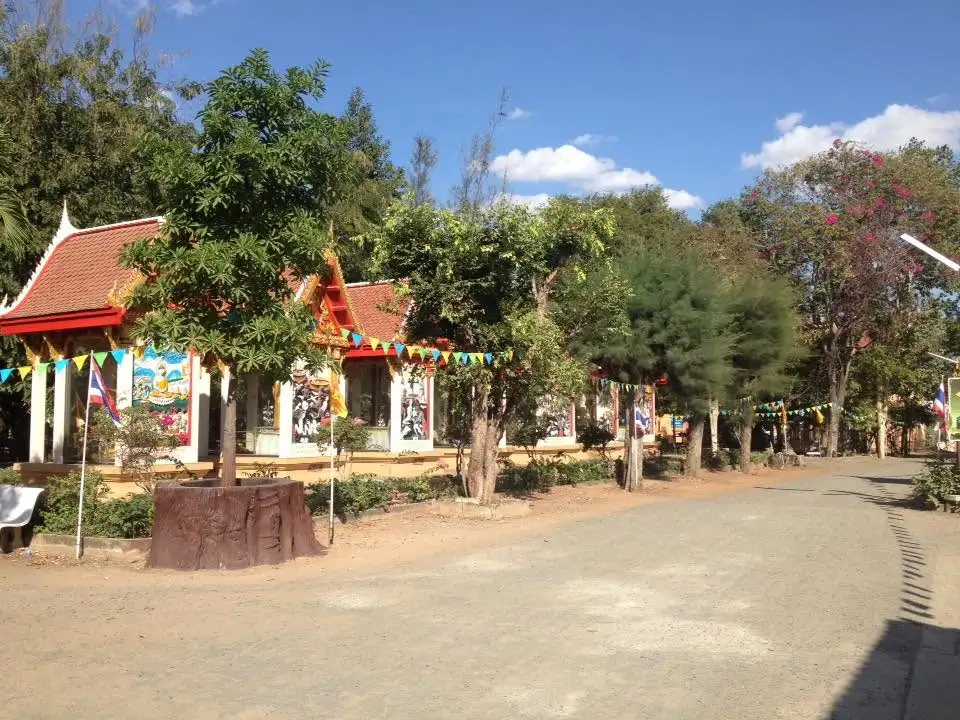
Wat Pa Rerai
Open Days: Daily
Opening Hours: 06.00 – 18.00
Wat Pa Rerai, also known locally as “Wat Chot,” is an old Buddhist temple in the heart of Nang Rong District, Buriram Province. For travelers arriving at Nang Rong Bus Station, this temple is one of the easiest cultural places to visit because it is located only about 1 km from the bus station area. The temple is suitable for a short merit-making visit, a quiet stop before continuing to Phanom Rung Historical Park, or a deeper cultural walk through old Nang Rong. Wat Pa Rerai is not a large tourist complex, but it offers something more meaningful: a long local history, a close connection with the community, important Buddhist objects, and a peaceful atmosphere that reflects the everyday religious life of northeastern Thailand.
For foreign travelers searching for how to get from Nang Rong Bus Station to Wat Pa Rerai, the route is simple and practical. The temple is close enough to reach by local motorcycle taxi, small local transport, private car, or even on foot when the weather is comfortable. A motorcycle taxi or local ride usually takes about 3 – 5 minutes, while walking is best done in the morning or late afternoon because Nang Rong can be hot during the day. The route passes through a living town area with shops, schools, local food places, and community streets, making the visit feel like part of a real local experience rather than a separated tourist attraction.
Wat Pa Rerai is located in Nang Rong Subdistrict, Nang Rong District, Buriram Province. It is a community temple under the Mahanikaya Buddhist order and stands within the older urban area of Nang Rong. The town itself is an important transport and commercial center in southern Buriram. Many travelers use Nang Rong as a base for visiting Phanom Rung Historical Park, Wat Khao Angkhan, Wat Phu Man Fah, and other attractions in the nearby districts. Because of this convenient location, Wat Pa Rerai is a useful first stop for travelers who arrive by bus and want to understand the local cultural setting before heading to larger historical sites.
The historical value of Wat Pa Rerai comes from its foundation in 1667, during the Ayutthaya period. Local records and temple history describe the temple as formerly known as Wat Chot and, in an earlier period, Wat Chai Mongkhon. A local legend connects the area with soldiers from the time of King Naresuan the Great. According to this tradition, a military group that had traveled toward the Cambodian frontier later returned and rested in the Nang Rong area. The landscape was considered suitable for a religious site, and a temple was established. Over the generations, local residents continued to maintain and support the temple, allowing it to remain part of Nang Rong’s spiritual and historical identity.
The name Wat Chot is still remembered by local people, while the present name Wat Pa Rerai is widely used today. The existence of several names reflects the long life of the temple and the changing character of Nang Rong from an older settlement into a modern district town. For visitors, this makes Wat Pa Rerai more than a place to take photographs. It is a cultural marker that helps explain how Buddhist temples, local memory, and town development are connected in the lower northeastern region of Thailand.
The temple compound contains several important religious structures and objects. The ordination hall was built in 1959 and is a reinforced concrete structure influenced by traditional temple architecture. Inside is a principal Buddha image in the Mara Vijaya posture, a form associated with the Buddha’s victory over temptation and the moment of enlightenment. Other structures include a sermon hall, monks’ residences, vihans, a multipurpose hall, a funeral pavilion, a Tripitaka hall, a chedi, a bell tower, and other areas used for Buddhist and community ceremonies. These elements show that Wat Pa Rerai functions not only as a temple for worship but also as a center for education, ceremonies, and local community life.
Important sacred objects within Wat Pa Rerai include the principal Buddha image, Phra Sangkachai, a wooden Buddha image, a square-shaped chedi, crystal-style vihans, relics of the Buddha, and old artistic objects such as a carved wooden swan, wooden boundary-marker elements, and carved wooden pillars. For travelers interested in Buddhist art and local history, these details are valuable because they reflect the way local people preserved religious objects across different periods. The temple is therefore a useful stop for understanding how faith, craftsmanship, and community memory are transmitted in provincial Thailand.
Phra Sangkachai is one of the sacred figures that many Thai visitors like to pay respect to. In Thai Buddhist belief, Phra Sangkachai is associated with abundance, good fortune, kindness, and prosperity. Visitors should pay respect calmly and dress modestly when entering the temple area. If monks or local residents are performing religious activities, travelers should avoid disturbing them. This is especially important for foreign visitors who may be unfamiliar with temple etiquette in Thailand.
Wat Pa Rerai remains an active Buddhist temple. It has monks in residence and continues to host regular Buddhist activities such as merit-making on Buddhist holy days, offerings to monks, candlelight processions on important Buddhist days, and the Kathin robe-offering ceremony after Buddhist Lent. Recent temple information lists Phra Maha Saichon Kanatasiso as the abbot and records 7 monks in residence. The abbot and resident monks play an important role in maintaining the temple compound, preserving religious activities, and keeping the temple connected with the surrounding community.
The atmosphere of Wat Pa Rerai is simple and local. It does not present itself as a grand tourist monument, but that is part of its value. Visitors can see how a temple works within a real Thai town: close to schools, markets, transport routes, and residential areas. This makes the visit particularly meaningful for travelers who want to understand the everyday relationship between Buddhism and Thai community life. The temple is used for merit-making, ordination ceremonies, funerals, annual Buddhist events, and community gatherings, so the site carries both spiritual and social significance.
Wat Pa Rerai is also suitable for travelers who enjoy temple routes and faith-based travel. Nearby places include Wat Klang Nang Rong, Wat Khun Kong, Wat Hua Saphan, Saint Mary Perpetual Help Church Nang Rong, local markets, and several restaurants in the town area. A short visit to Wat Pa Rerai can easily be combined with food stops and other cultural locations in Nang Rong. Travelers with more time can continue onward to Wat Phu Man Fah, Phanom Rung Historical Park, or Wat Khao Angkhan.
Getting There from Nang Rong Bus Station is straightforward. After arriving at the bus station, visitors can take a motorcycle taxi or local transport to Wat Pa Rerai. The distance is about 1 km, and the ride normally takes only a few minutes. If traveling with luggage, elderly companions, or during hot weather, taking local transport is the most comfortable option. Travelers who prefer walking should go in the morning or late afternoon and use a map application for navigation. Local people may also recognize the temple by its older name, Wat Chot.
The best time to visit Wat Pa Rerai is in the morning or late afternoon. The temperature is usually more comfortable, and the atmosphere is better for paying respect, walking around the compound, and taking photographs without disturbing religious activities. Morning is suitable for travelers who have just arrived in Nang Rong and want to begin the day with merit-making. Late afternoon works well for visitors returning from Phanom Rung or other attractions before checking in at a hotel in town.
Visitors should dress respectfully when visiting Wat Pa Rerai. Shoulders and knees should be covered, and clothing should not be too revealing. Shoes should be removed before entering sacred buildings. Photography is acceptable in suitable areas, but visitors should avoid taking close-up photographs of monks without permission. A small cash donation may be offered according to personal faith, although the temple is not operated like a ticketed tourist attraction.
For travelers planning a half-day route, a practical itinerary is to start from Nang Rong Bus Station, visit Wat Pa Rerai, continue to Wat Klang Nang Rong or Wat Khun Kong, and then stop at a local restaurant or market. With a full day, visitors can combine the temple with Wat Phu Man Fah, Phanom Rung Historical Park, or Wat Khao Angkhan. This route gives a balanced view of local temples, living town culture, and the historic landscape of Buriram.
Wat Pa Rerai is therefore a valuable stop for anyone who wants to understand Nang Rong beyond its role as a transport town. It is close to the bus station, easy to access, rich in local history, and connected to other attractions, restaurants, and accommodations. For foreign travelers, the temple provides a calm and authentic introduction to Buddhist life in Buriram Province and helps make a journey through Nang Rong more meaningful.
| Name | Wat Pa Rerai, also known as Wat Chot |
| Location | Nang Rong Subdistrict, Nang Rong District, Buriram Province |
| Address | Ban Nang Rong, Narong Raksa Khet Road, Moo 18, Nang Rong Subdistrict, Nang Rong District, Buriram 31110, Thailand |
| Highlights | An old temple of Nang Rong founded in 1667, locally known as Wat Chot, with a history linked to local legends from the time of King Naresuan the Great |
| History | Founded in 1667 during the Ayutthaya period. The temple was formerly called Wat Chot and was once known as Wat Chai Mongkhon. |
| Name Origin | The temple is still remembered by locals as Wat Chot, while the current name Wat Pa Rerai reflects its identity as an old community temple in Nang Rong. |
| Distinctive Features | A Mahanikaya community temple with an ordination hall, sermon hall, monks’ residences, vihans, multipurpose hall, Tripitaka hall, chedi, bell tower, and ritual spaces for the local community |
| Important Sacred Objects | Principal Buddha image in the Mara Vijaya posture, Phra Sangkachai, wooden Buddha image, square-shaped chedi, crystal-style vihans, Buddha relics, carved wooden swan, wooden boundary-marker elements, and carved wooden pillars |
| Travel Information | About 1 km from Nang Rong Bus Station. Local motorcycle taxi or local transport takes around 3 – 5 minutes. Walking is possible in the morning or late afternoon. |
| Current Status | Active community Buddhist temple with resident monks and regular Buddhist activities |
| Open Days | Daily |
| Opening Hours | 06.00 – 18.00 |
| Facilities | Worship areas, multipurpose hall, funeral pavilion, Buddhist ceremony spaces, and parking areas within the temple compound where available |
| Main Areas / Zones | Ordination hall, sermon hall, monks’ residences, crystal-style vihans, chedi, Tripitaka hall, bell tower, multipurpose hall, and worship areas |
| Abbot / Caretaker | Phra Maha Saichon Kanatasiso |
| Official Website / Official Page | Chumchon Mueang Wat Pa Rerai, Nang Rong, Buriram Facebook page |
| Nearby Tourist Attractions | 1. Wat Klang Nang Rong, about 1 km 2. Wat Khun Kong, about 2 km 3. Wat Hua Saphan, about 2 km 4. Saint Mary Perpetual Help Church Nang Rong, about 2 km 5. Sa Ya Ma Market, about 2 km 6. Nang Rong Walking Street, about 2 km 7. Wat Phu Man Fah, about 16 km 8. Phanom Rung Historical Park, about 27 km |
| Nearby Restaurants | 1. Kai Tod Lung Maew in front of Wat Pa Rerai, about 0.1 km, Tel. 085-312-5001, 095-742-0351 2. Jing Nam Kha Moo, about 1 km, Tel. 044-631-473 3. TRI Cafe'&Restaurant, about 2 km, Tel. 044-631-168 4. SOFIT Cafe' Nang Rong, about 2 km, Tel. 044-632-099, 080-488-4333 5. Tawan Ngam Restaurant, about 3 km, Tel. 086-264-0212 6. Kafae Hom & Steak House, about 3 km, Tel. 098-235-3665, 095-645-1654 |
| Nearby Accommodations | 1. Nang Rong Hotel, about 1 km, Tel. 044-631-014, 064-941-4641 2. Pob Suk Resort, about 1 km, Tel. 044-624-660 3. S.S.Hotel Nangrong, about 2 km, Tel. 044-631-288, 090-271-5887 4. Socool Grand Hotel, about 2 km, Tel. 044-632-333 5. Phanomrungpuri Hotel, about 3 km, Tel. 044-632-222, 086-336-6618 6. Akelada Hotel, about 4 km, Tel. 084-825-9214, 044-622-199 |
Frequently Asked Questions (FAQ)
Q: Where is Wat Pa Rerai located?
A: Wat Pa Rerai is located in Nang Rong Subdistrict, Nang Rong District, Buriram Province, close to Nang Rong Bus Station.
Q: How far is Wat Pa Rerai from Nang Rong Bus Station?
A: The temple is about 1 km from Nang Rong Bus Station. A local motorcycle taxi or local transport usually takes around 3 – 5 minutes.
Q: What was the original name of Wat Pa Rerai?
A: The temple was locally known as Wat Chot and was once known as Wat Chai Mongkhon.
Q: Why is Wat Pa Rerai historically important?
A: Wat Pa Rerai was founded in 1667 during the Ayutthaya period and is linked to local legends from the time of King Naresuan the Great.
Q: What important sacred objects can visitors see at Wat Pa Rerai?
A: Visitors can see the principal Buddha image, Phra Sangkachai, a wooden Buddha image, a square-shaped chedi, crystal-style vihans, Buddha relics, and old wooden artistic objects.
Q: Is there an admission fee for Wat Pa Rerai?
A: Wat Pa Rerai is a community Buddhist temple. Visitors may enter for worship and can make donations according to personal faith.
Q: What nearby attractions can be visited with Wat Pa Rerai?
A: Nearby places include Wat Klang Nang Rong, Wat Khun Kong, Wat Hua Saphan, Saint Mary Perpetual Help Church Nang Rong, local markets, Wat Phu Man Fah, and Phanom Rung Historical Park.
Q: When is the best time to visit Wat Pa Rerai?
A: Morning or late afternoon is the best time to visit because the weather is more comfortable for worship, walking around the temple, and continuing to other places in Nang Rong.
 Category: ●Places of Worship
 Group: ●Temple
Last Update : 2 MonthAgo
 Last Update : 2 MonthAgo
 Click to Access the Navigation Map GPS
 Art, Culture and Heritage
 Historical Sites and Monuments(14)
 Landmarks and Memorials(2)
 Art, Craft Centres, Tradition(6)
 Museums(3)
 Educational Places
 Museum for Study(1)
Temple(74)
Museum for Study(1)
Temple(74)
 Other Sacred Sites(5)
 Suburban Living
 Village, Community(3)
 Nature and Wildlife
 National Parks and Marine Reserves(2)
 Mountain (Doi)(1)
 Dam, Reservoir, Lake(14)
 River, Canal(1)
 Bays and Beaches(1)
 Other natural attractions(2)
 Entertainment and Agricultural
 Animal camps and shows(1)
 Stadium(2)
 Farms, Parks and Ecotourism(2)
 Waterpark(1)


