
lovethailand home >Northeastern Travel Attractions >Buri Ram Travel Attractions >Non Din Daeng >Non Din Daeng > Rao Su Monument
TL;DR: Rao Su Monument is located at Non Din Daeng Subdistrict, Non Din Daeng District, Buri Ram Province, open Daily, hours Open 24 Hours.
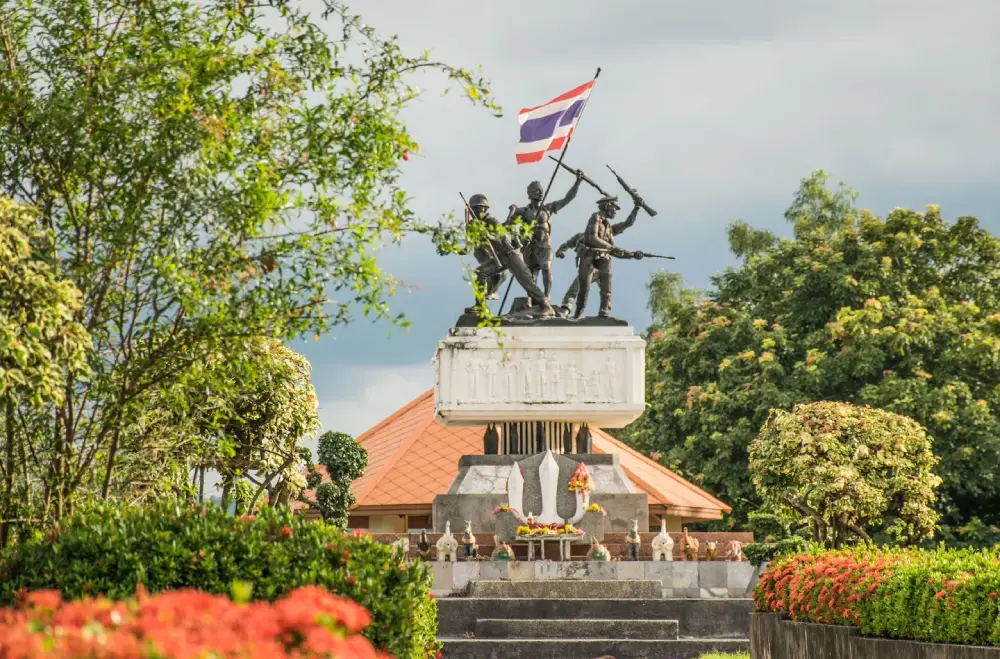
Rao Su Monument
Open Days: Daily
Opening Hours: Open 24 Hours
Rao Su Monument in Buri Ram Province is an important historical memorial located beside Highway 348, the Lahan Sai-Ta Phraya route, in Non Din Daeng District. It was built to honor the courage and sacrifice of local people, civil officers, police, soldiers, volunteers, and all those who lost their lives during the struggle against communist insurgents who obstructed the construction of this strategic road. For travelers, this is not just a roadside landmark. It is a powerful place of memory that tells the story of bravery, unity, public sacrifice, and the difficult history behind a road that is now part of everyday travel in southern Isan.
Visitors who want to understand Buri Ram beyond its ancient Khmer temples, football stadium, racing circuit, and modern cafés should consider stopping at Rao Su Monument. The site connects local history with Thailand’s national security history in a direct and meaningful way. The monument stands on a route that links Lahan Sai District in Buri Ram with Ta Phraya District in Sa Kaeo Province, close to the Thai-Cambodian border region. In the past, this road was a strategic route that played an important role in transportation, border development, and national security. Standing here helps travelers see the modern road in front of them not merely as infrastructure, but as a route built through hardship, danger, and human loss.
Rao Su Monument was constructed in 1979 and completed in about one year. The opening ceremony took place on 26 August 1980. The name “Rao Su,” meaning “We Fight” or “We Struggle,” was graciously bestowed by His Majesty King Bhumibol Adulyadej. The name carries deep emotional weight because it reflects the spirit of the people who stood together during a difficult period, protecting their communities, supporting the construction of the road, and defending the security of the nation. Visiting the monument is therefore more than viewing a sculpture. It is a moment of standing before a symbol of courage, pain, resilience, and hope.
The most distinctive feature of Rao Su Monument is the sculptural group placed on a raised base. The figures represent civilians, officers, and fighters standing together with determination. Their dark-toned forms, the Thai national flag, weapons, and the posture of people standing back to back immediately communicate the meaning of unity in a time of danger. Around the base, relief panels help narrate the story of local people, road construction, and the joint effort to protect the area. This gives the monument historical, artistic, and community value, making it a meaningful stop for travelers who appreciate places with strong stories.
The monument is closely tied to the history of the Lahan Sai-Ta Phraya road, a strategic route linking Buri Ram with Sa Kaeo and the eastern region of Thailand. In the period when local transportation was still difficult, building this road was important not only for travel and logistics, but also for access to remote communities and for national security along the border. Communist insurgents obstructed the road construction, causing casualties among civilians and state officers. Rao Su Monument was created as a permanent reminder of those sacrifices and as a way for later generations to understand that the road they use today carries a history far deeper than its asphalt surface.
Non Din Daeng District itself has a strong historical character. In the past, the area was connected to borderland routes, forested landscapes, and security-sensitive terrain. Building a road here was not simply an engineering project. It was a mission involving people’s lives, local communities, and the future of the region. Workers and residents faced geographical challenges, remoteness, and violent conflict. The successful completion of the road therefore became a symbol of shared effort. Rao Su Monument preserves that memory and prevents the story from fading with time.
The atmosphere at Rao Su Monument is different from that of a typical tourist attraction. Many visitors stop only briefly, yet the emotional impact can be strong. The monument stands in an open roadside area, easily visible from Highway 348. Seeing the sculptural figures while traffic continues to move along the road creates a clear contrast between the past and the present. A route that once represented danger and conflict is now used by families, local residents, travelers, and commuters. This transformation makes the site a symbol not only of sacrifice, but also of peace, development, and continuity.
Rao Su Monument is also a convenient starting point for exploring the Non Din Daeng area. It is located close to Lam Nang Rong Dam, one of the district’s best-known recreational sites. The dam offers wide water views, a relaxed lakeside atmosphere, local restaurants, and scenic areas suitable for family visits. Many travelers stop at the monument first to pay respect and learn about the local history before continuing to Lam Nang Rong Dam or Prasat Nong Hong. This makes the area suitable for a half-day or full-day trip, especially for those traveling by private car from Nang Rong, Lahan Sai, Pakham, or Sa Kaeo.
Lam Nang Rong Dam is very close to the monument and is part of a development project linked to security and local livelihoods. Its large reservoir has become a place for relaxation, sightseeing, and local dining. The road along the dam offers open views, especially in the late afternoon. Combining Rao Su Monument with Lam Nang Rong Dam allows visitors to understand Non Din Daeng from several perspectives: historical memory, national security, rural development, water management, and the natural landscape of southern Isan.
Another nearby site worth visiting is Prasat Nong Hong, a small Khmer archaeological site in Non Din Daeng District. The monument and the ancient sanctuary together create a more complete travel route because they represent different historical layers of Buri Ram. Prasat Nong Hong consists of three brick towers built on a shared base, reflecting the ancient Khmer cultural influence in the area. A trip that includes Rao Su Monument, Lam Nang Rong Dam, and Prasat Nong Hong gives travelers a deeper understanding of the district, from ancient civilization to modern local history.
For visitors interested in living local traditions, 27 August of every year is observed as a memorial day for Rao Su Monument. Local authorities and related organizations hold merit-making ceremonies, wreath-laying activities, and commemorative events to honor those who sacrificed their lives. This annual remembrance shows that the monument is not a static object. It remains a living place of memory for the community and continues to connect present-day residents with the courage of earlier generations.
From a travel perspective, Rao Su Monument is suitable for several types of visitors. History enthusiasts can learn about the construction of a strategic road and the security situation of the past. Travelers using Highway 348 can stop conveniently to rest, pay respect, and take photographs. Families can use the site as a place to explain sacrifice, civic duty, and local history to younger generations. Documentary photographers may also find the sculptural composition and roadside setting meaningful because the site has a distinct atmosphere that differs from commercial attractions.
Visiting the monument is straightforward because it is an outdoor roadside memorial. There is no admission fee, and travelers can stop to view and pay respect every day. The important point is to behave respectfully. This is a memorial connected to people who lost their lives, so visitors should avoid climbing on the base, making excessive noise, or using the area in a way that conflicts with the solemn meaning of the site. Photography is suitable when done respectfully.
The best time to visit is in the morning or late afternoon, when the weather is more comfortable and the natural light is better for photography. If the trip continues to Lam Nang Rong Dam, late afternoon is particularly pleasant because the lakeside atmosphere becomes more scenic. Travelers driving from Buri Ram city, Nang Rong, or Sa Kaeo should check their vehicle condition and fuel before the trip, as some sections are inter-district roads where careful driving is necessary, especially at night or during rainy weather.
Getting There is easiest by private car. Follow Highway 348 on the Lahan Sai-Ta Phraya route. Travelers coming from Nang Rong can drive toward Pakham and Non Din Daeng, then continue to the monument beside Highway 348. Those traveling from Sa Kaeo or Ta Phraya can approach the area from the opposite direction. Because the monument is located beside a main road, drivers should slow down as they approach the site and be careful when entering or leaving the roadside area.
A practical full-day route can begin at Rao Su Monument, continue to Lam Nang Rong Dam and Lam Nang Rong Beach, then move on to Prasat Nong Hong and Chao Pho Nong Hong Shrine. Afterward, visitors can dine around the dam or in Non Din Daeng town. This itinerary is suitable for slow travel and for visitors who want to experience a quieter part of Buri Ram. It also supports local restaurants, accommodations, and small businesses in the district.
For travelers who plan to stay overnight, accommodation options are available in Non Din Daeng, Pakham, Lahan Sai, and Nang Rong. Staying in Non Din Daeng is convenient for visiting Rao Su Monument and Lam Nang Rong Dam, while Nang Rong offers more choices for those who plan to continue to Phanom Rung Historical Park, Prasat Muang Tam, or other major attractions in Buri Ram. Planning the route in advance helps visitors use their time more efficiently and enjoy the area without rushing.
What makes Rao Su Monument more valuable than a simple photo stop is its ability to make visitors think about local history. Many people use Highway 348 without realizing that this road was once part of a strategic corridor and that many people sacrificed their lives during its construction. After learning the story of the monument and seeing the road passing nearby, travelers often look at the landscape differently. The road becomes not only a transport route, but also a result of shared effort by local people, officers, and the state during a difficult chapter in Thai history.
For the people of Buri Ram, Rao Su Monument is a symbol of local pride. It honors ordinary people who played important roles in protecting their homes and supporting the country. These included villagers, civil officers, police, soldiers, volunteers, and community members who contributed in different ways. By commemorating them through a public monument, the history of the area is not limited to national leaders or major political events. It also gives space to local people whose courage and sacrifice helped shape the future of the region.
Visitors should spend at least 20 to 30 minutes at the site to observe the sculpture, understand the meaning of the base reliefs, and consider the monument’s position beside Highway 348. If time allows, continue to Lam Nang Rong Dam to see how the historical landscape connects with a later development project and a recreational area for the community. Around the dam, local restaurants serve food that matches the relaxed lakeside setting, including Isan dishes, grilled fish, and simple meals suitable for travelers.
For writers, researchers, or travelers interested in historical tourism, three details are especially important: the monument’s location beside Highway 348, the sculptural image of united civilians and officers, and the annual remembrance ceremony held in late August. These elements make the story of Rao Su Monument more complete than a short description of a roadside memorial. The true value of the site lies in the connection between history, community memory, and the real landscape of Non Din Daeng.
Although the monument is not a large attraction and does not require a long visit, its compactness is part of its strength. Travelers going to Lam Nang Rong Dam or continuing toward Sa Kaeo can stop briefly, pay respect, take photographs, and learn the story of the area within a short time. Even a few minutes at the monument can change how visitors understand the road and the communities around it. This is the value of a small historical attraction: it can turn an ordinary journey into a meaningful encounter with local memory.
Rao Su Monument is therefore highly recommended for visitors who want a deeper experience of Buri Ram. It is especially suitable for those interested in local history, borderland routes, southern Isan development, the Thai-Cambodian frontier, and the lives of people affected by ideological conflict in the past. The monument expands the image of Buri Ram beyond Khmer temples and sports tourism, showing the province as a place of memory, sacrifice, and resilience. Together with Lam Nang Rong Dam and Prasat Nong Hong, Rao Su Monument forms a small but meaningful route filled with history, reflection, and local character.
| Name | Rao Su Monument |
| Location | Non Din Daeng Subdistrict, Non Din Daeng District, Buri Ram Province |
| Address | Beside Highway 348, Lahan Sai-Ta Phraya Route, Ban Non Din Daeng, Non Din Daeng District, Buri Ram 31260 |
| Map Search Code | 7PXV+M28, Non Din Daeng, Non Din Daeng District, Buri Ram |
| Highlights | A historical memorial honoring civilians, police, soldiers, and officers who sacrificed their lives during the conflict surrounding the construction of the Lahan Sai-Ta Phraya strategic road |
| History | Built in 1979, completed in about one year, and officially opened on 26 August 1980 |
| Name Origin | The name “Rao Su” was graciously bestowed by His Majesty King Bhumibol Adulyadej |
| Distinctive Features | A dark-toned sculptural group on a raised base, showing civilians and officers standing together, with relief panels around the base narrating the story of local people and the strategic road construction |
| Travel Information | Best reached by private car via Highway 348 on the Lahan Sai-Ta Phraya route. From Nang Rong, drive toward Pakham and Non Din Daeng before continuing to the monument beside the highway |
| Current Status | Open to visitors as an important historical landmark of Non Din Daeng District, Buri Ram Province |
| Open Days | Daily |
| Opening Hours | Open 24 Hours |
| Fees | No Admission Fee |
| Facilities | Parking Area, Memorial Courtyard, Respect Area, And Roadside Rest Stop |
| Main Areas / Zones | Main Sculptural Group On The Monument Base Relief Panels Around The Base Front Respect Area Roadside Stop Area Along Highway 348 |
| Memorial Ceremony | 27 August Of Every Year Is Observed As A Memorial Day For Rao Su Monument, With Merit-Making And Wreath-Laying Ceremonies To Honor The Sacrifices Of The Fallen |
| Caretaker / Route Coordinator | Route Coordinator: Watchirapong Chansoon, Tel. 082-193-2524 |
| Nearby Tourist Attractions | 1. Lam Nang Rong Dam, About 1 km 2. Lam Nang Rong Beach, About 2 km 3. Prasat Nong Hong, About 2 km 4. Chao Pho Nong Hong Shrine, About 2 km 5. Pha Khoi Nang, About 3 km |
| Nearby Restaurants | 1. Preecha Pla Phao Lam Nang Rong Dam, About 1 km, Tel. 099-502-7489 2. Ping Pong Restaurant Lam Nang Rong Dam, About 1 km, Tel. 092-159-2158 3. Pan Rung Restaurant Lam Nang Rong Dam, About 1 km, Tel. 065-778-1645 4. Krua Lung Laem Lam Nang Rong Dam, About 1 km, Tel. 082-153-3640 5. Pirum Restaurant And Coffee, About 3 km, Tel. 092-541-7889 |
| Nearby Accommodations | 1. DOO KHAO, About 3 km, Tel. 088-899-8247 2. Mukda Accommodation, About 6 km, Tel. 086-596-9951 3. Suan Mon Accommodation Non Din Daeng, About 8 km, Tel. 086-254-3433 4. Nonthong Resort & Hotel, About 9 km, Tel. 087-088-8636 5. Pakham Gardens Resort, About 24 km, Tel. 092-714-4899 |
Frequently Asked Questions (FAQ)
Q: Where is Rao Su Monument located?
A: Rao Su Monument is located beside Highway 348 on the Lahan Sai-Ta Phraya route in Non Din Daeng District, Buri Ram Province.
Q: Why was Rao Su Monument built?
A: It was built to honor the bravery and sacrifice of local people, civil officers, police, soldiers, and others who joined the struggle against communist insurgents during the construction of the Lahan Sai-Ta Phraya strategic road.
Q: When is Rao Su Monument open to visitors?
A: The monument is open daily and, as an outdoor roadside memorial, is accessible 24 hours a day.
Q: Is there an admission fee for Rao Su Monument?
A: No. There is no admission fee to visit, pay respect, or take photographs at the monument.
Q: What is the best time to visit Rao Su Monument?
A: Morning and late afternoon are the best times because the weather is more comfortable and the natural light is better for photography. Visitors can also continue to Lam Nang Rong Dam afterward.
Q: What attractions can be visited near Rao Su Monument?
A: Nearby attractions include Lam Nang Rong Dam, Lam Nang Rong Beach, Prasat Nong Hong, Chao Pho Nong Hong Shrine, and Pha Khoi Nang.
Q: Who should visit Rao Su Monument?
A: It is suitable for history lovers, cultural travelers, families, documentary photographers, and anyone traveling along Highway 348 who wants to understand an important historical landmark of Buri Ram.
 Category: ●Art, Culture and Heritage
 Group: ●Landmarks and Memorials
Last Update : 3 MonthAgo
 Last Update : 3 MonthAgo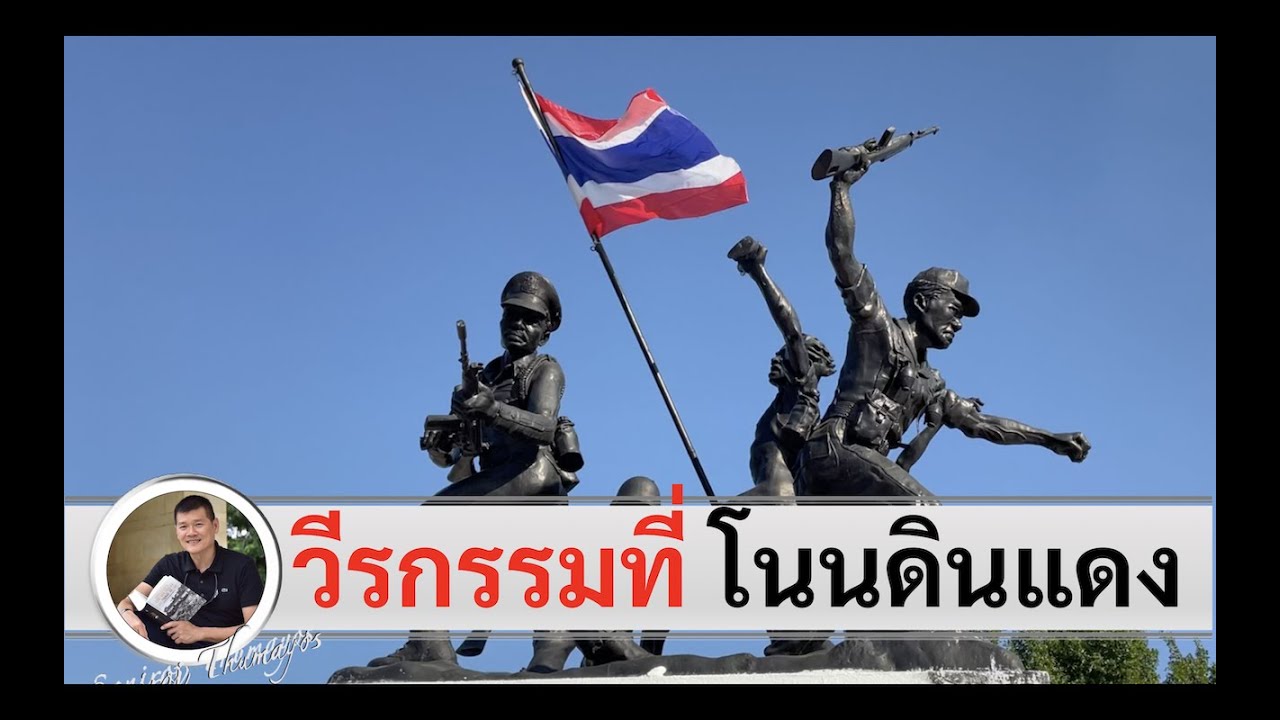
 Click to Access the Navigation Map GPS
Rao Su Monument Map
Recommend

 Historical Sites and Monuments(14)
Landmarks and Memorials(2)
Historical Sites and Monuments(14)
Landmarks and Memorials(2)
 Art, Craft Centres, Tradition(6)
 Museums(3)
 Educational Places
 Museum for Study(1)
 Places of Worship
 Temple(74)
 Other Sacred Sites(5)
 Suburban Living
 Village, Community(3)
 Nature and Wildlife
 National Parks and Marine Reserves(2)
 Mountain (Doi)(1)
 Dam, Reservoir, Lake(14)
 River, Canal(1)
 Bays and Beaches(1)
 Other natural attractions(2)
 Entertainment and Agricultural
 Animal camps and shows(1)
 Stadium(2)
 Farms, Parks and Ecotourism(2)
 Waterpark(1)


