
lovethailand home >Central Travel Attractions >Suphan Buri Travel Attractions >Nong Ya Sai >Nong Ya Sai > Wat Banlang
TL;DR: Wat Banlang is located at Nong Ya Sai Subdistrict, Nong Ya Sai District, Suphan Buri Province, open Daily, hours Daytime hours are recommended for worship and visiting the temple grounds.
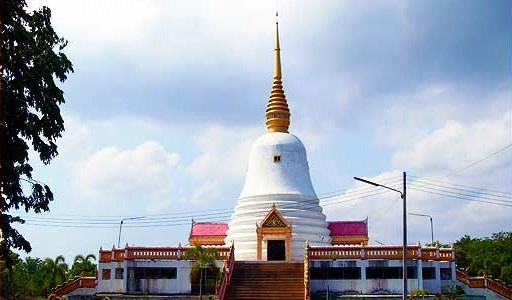
Wat Banlang
Open Days: Daily
Opening Hours: Daytime hours are recommended for worship and visiting the temple grounds
Wat Banlang in Suphan Buri Province is an old rural Buddhist temple in Nong Ya Sai Subdistrict, Nong Ya Sai District. The temple was formerly known as Wat Banlang Thong, but when official registration of rural temples was introduced, the word “Thong” was removed to make the name shorter and simpler. Since then, the temple has been known as Wat Banlang. It was founded in Ban Pa Rang in 1923 and is deeply connected with a local sacred legend involving a laterite stone platform, a large termite mound, wild animals, and the faith of the villagers who later built the temple at this site.
The origin story of Wat Banlang is one of the most interesting aspects of the temple. It did not begin as a formal planned monastery, but as a sacred place discovered in a dense rang forest. In the past, the area was thick with forest and full of wild animals. Hunters often entered the forest. According to local tradition, one hunter chased a rabbit that escaped onto a large termite mound. Strangely, the hunter could not shoot the rabbit. He also noticed that many animals gathered around the same mound. This unusual event led people to believe that the place was protected by a sacred power.
Later, villagers discovered a square laterite platform partly emerging from the termite mound. This stone platform became an object of local devotion. People came to pay respect, make vows, and ask for blessings. Many believed their wishes were fulfilled after worshiping at the site. As faith grew, the villagers decided that this sacred place should become a Buddhist temple. Wat Banlang was therefore founded on the very ground associated with the laterite platform and the termite mound, transforming a wild forest area into a place of worship, merit, and moral practice.
The name Banlang carries symbolic meaning. In Thai, banlang means a throne, seat, or elevated platform associated with dignity and sacred authority. When connected with the square laterite platform found in the termite mound, the name suggests a sacred seat or foundation of faith. The former name, Wat Banlang Thong, added the word thong, or gold, giving the temple an even more auspicious meaning. Although the official name was shortened, the original sense of sacred dignity remains central to the temple’s identity.
Wat Banlang was established in the Year of the Pig, 1923, in Ban Pa Rang, Nong Ya Sai Subdistrict, Nong Ya Sai District, Suphan Buri Province. The temple received its royal consecrated boundary on 1 December 1994 and held its boundary consecration ceremony on 27 December 1997. The temple occupies a large area, reported in local sources as about 160 rai, while some records mention about 196 rai. Its spacious grounds allow for religious activity areas, monk residences, worship spaces, and a forest practice zone.
The granting of a consecrated boundary was an important milestone for Wat Banlang. It allowed the temple to conduct formal monastic ceremonies according to Buddhist discipline. The later boundary ceremony in 1997 further strengthened the temple’s religious status. This development shows how a place that began with a local sacred belief gradually became a fully functioning Buddhist temple with recognized ritual space and a permanent role in the community.
One of the temple’s visible highlights is its beautiful ordination hall decorated with colored glass. Colored glass decoration is often used in Thai Buddhist architecture to create brightness, reflection, and a sense of auspicious beauty. When sunlight touches the glass, the building appears lively and radiant. This makes the ordination hall of Wat Banlang one of the notable religious structures in Nong Ya Sai District, combining community craftsmanship with Buddhist devotion.
Wat Banlang is also associated with Luang Pho Phayung Suntharo, a respected local monk and teacher in Suphan Buri. Historical accounts of the temple mention that after a period without an abbot, villagers invited Phra Athikan Phayung Suntharo to become abbot. He played an important role in developing the temple and strengthening local faith. For many people in Nong Ya Sai, the memory of Luang Pho Phayung remains part of the temple’s spiritual identity.
In Thai local culture, respected monks are not only ritual leaders. They are moral guides, community teachers, and sources of emotional support. The connection between Wat Banlang and Luang Pho Phayung therefore gives the temple a deeper social meaning. It links the temple’s sacred origin story with a later period of monastic leadership and community development.
Today, Wat Banlang is led by Phra Khru Phothisila Wat, according to recent Kathin information. The temple remains active with resident monks, merit-making activities, Kathin ceremonies, robe offerings, and regular community religious life. It is therefore not merely a historical place with an old legend, but a living Buddhist temple that continues to serve the people of Nong Ya Sai District.
The temple’s large grounds allow several zones to function together. These include the main temple area, ordination hall, worship areas, monk residences, merit-making spaces, and an aranyavasi or forest practice zone. The forest practice area is especially meaningful because the temple itself originated in a dense forest. In this way, Wat Banlang preserves part of its original character as a quiet forest-related sacred space.
The atmosphere of Wat Banlang differs from that of urban temples. Visitors can sense the openness of the grounds, the slower rhythm of rural life, and the quietness of a farming community. Such temples are ideal for travelers who want to experience local faith rather than only famous landmarks. Wat Banlang offers a view of how Buddhism in rural Thailand grows from the relationship between forest, community, sacred belief, and monastic practice.
As a piece of local cultural heritage, the most important story of Wat Banlang is the laterite platform inside the termite mound. This story reflects a common pattern in rural Thai belief. When people encounter something unusual in nature, they may interpret it as a sign of sacred presence. When worship or vows appear to bring results, faith grows. Over time, the natural site becomes a religious site. Wat Banlang is a clear example of this transformation from forest belief to Buddhist institution.
The laterite platform itself is culturally meaningful. Laterite has been used in many ancient structures and sacred sites in Thailand. It is strong, durable, and often associated with old religious or settlement areas. Although the temple legend emphasizes its sacred nature, the presence of a laterite platform also makes the site interesting for those who study local history and cultural landscapes.
The story of the rabbit and the hunter is also powerful. A rabbit escaping onto the termite mound and surviving because the hunter could not shoot it suggests that the area had become a place of protection. The gathering of wild animals around the mound strengthened this belief. Symbolically, the story shows the transformation of a hunting ground into a Buddhist place of compassion. A forest once associated with hunting became a temple where non-harming, merit, and moral practice are emphasized.
Wat Banlang can therefore be understood as a place of symbolic transformation. It changed from a forest of wild animals and hunters into a sacred Buddhist space. This gives the temple a moral message: a place of taking life can become a place of protecting life. For visitors, this background adds depth to the experience of worship and makes the temple more meaningful than a simple rural stop.
For cultural travelers, Wat Banlang is best visited slowly. Visitors can pay respect in the ordination hall, observe the colored glass decoration, learn the story of the sacred laterite platform, and appreciate the quiet rural setting. Those interested in local monks and Suphan Buri spiritual history can also learn about Luang Pho Phayung Suntharo and his role in the temple’s development.
Wat Banlang is also suitable for a temple route in Nong Ya Sai District. It is included among local temples associated with the district’s faith route. Travelers can combine it with Wat Nong Luang, Wat Nong Sai, Wat Bo Kru, Wat Lam Phan Bong, Wat Tri Wisutthitham, Wat Don Rai, and the Nong Ratchawat Archaeological Site. This route provides a fuller picture of the temples, community faith, and local cultural heritage of rural Suphan Buri.
Getting There is most convenient by private car. From Suphan Buri town, travel toward Nong Ya Sai District, then continue to Nong Ya Sai Subdistrict and Ban Pa Rang. Navigation apps can be used by searching for Wat Banlang, Nong Ya Sai District, Suphan Buri Province. Daytime travel is recommended because the temple is located in a rural area and visitors may wish to combine the trip with nearby temples or local restaurants.
Visitors should dress respectfully, speak quietly in worship areas, and avoid entering monk residences or meditation areas without permission. They should not climb on structures or disturb restricted areas. Photography should be done politely without interrupting monks, worshippers, or meditation practice. Wat Banlang is a living community temple, so travel here should be based on respect rather than only photography.
For international visitors, Wat Banlang is an excellent example of a rural Buddhist temple shaped by local sacred belief. Its appeal is not in monumental scale, but in its origin story: a sacred laterite platform in a termite mound, a protected rabbit, the transformation of a forest into a temple, and the continuing role of the temple in village life. It helps foreign travelers understand that many Thai temples are born from the relationship between nature, community, Buddhism, and oral tradition.
In summary, Wat Banlang is a meaningful cultural and religious site in Nong Ya Sai District, Suphan Buri Province. Its story includes the former name Wat Banlang Thong, the founding in 1923, the consecrated boundary in 1994, the boundary ceremony in 1997, the sacred laterite platform, the beautiful colored-glass ordination hall, the forest practice area, and the memory of Luang Pho Phayung Suntharo. It is a valuable destination for travelers seeking a quiet, deeper, and more local experience of Buddhist culture in Suphan Buri.
| Name | Wat Banlang, formerly Wat Banlang Thong |
| Location | Nong Ya Sai Subdistrict, Nong Ya Sai District, Suphan Buri Province |
| Address | Ban Pa Rang, Nong Ya Sai Subdistrict, Nong Ya Sai District, Suphan Buri Province |
| Highlights | An old temple founded from the legend of a sacred laterite platform in a large termite mound, a colored-glass ordination hall, a forest practice zone, and links with Luang Pho Phayung Suntharo |
| History | Founded in 1923, received its royal consecrated boundary on 1 December 1994, and held its boundary consecration ceremony on 27 December 1997 |
| Name Origin | Originally named Wat Banlang Thong. The word Thong was later removed during official rural temple registration to make the name shorter, leaving the name Wat Banlang |
| Distinctive Features | A rural Buddhist temple with spacious grounds, a beautiful ordination hall, a meditation forest area, and a sacred origin story involving a laterite platform in a termite mound |
| Importance | A spiritual center of Nong Ya Sai community and one of the important temples on the district’s local worship route |
| Travel Information | Travel by private car toward Nong Ya Sai District, then continue to Nong Ya Sai Subdistrict and Ban Pa Rang. Navigation apps can be used to search for Wat Banlang, Nong Ya Sai District, Suphan Buri Province |
| Current Status | A Buddhist temple under the Mahanikaya order and an active community temple in Nong Ya Sai District |
| Open Days | Daily |
| Opening Hours | Daytime hours are recommended for worship and visiting the temple grounds |
| Fees | No admission fee |
| Facilities | Parking area, ordination hall, pavilion, merit-making area, forest practice zone, and community religious activity areas |
| Main Areas / Zones | Colored-glass ordination hall Sacred laterite platform area Temple courtyard and merit-making area Aranyavasi forest practice zone Monk and novice residence area Community religious activity area |
| Abbot / Caretaker | Phra Khru Phothisila Wat |
| Nearby Tourist Attractions | 1. Wat Nong Luang, about 5 km 2. Wat Nong Sai, about 6 km 3. Wat Bo Kru, about 8 km 4. Wat Lam Phan Bong, about 9 km 5. Nong Ratchawat Archaeological Site, about 13 km 6. Bueng Chawak Chaloem Phrakiat, about 35 km |
| Nearby Restaurants | 1. Ban Mae Khun Boat Noodles, about 3 km 2. Mee Kam Rai, about 5 km 3. Krua Pa Yaya, about 5 km 4. Jungle Cafe Nong Ya Sai, about 6 km 5. Café Amazon at Chanphen Station, about 7 km |
| Nearby Accommodations | 1. ChanZhao Resort, about 10 km, Tel. 081-771-1266 2. Suan Nong Nut Resort Nong Ya Sai, about 10 km 3. Sukkij Camping, Accommodation And Pool Area, about 12 km 4. Baan Lanna Rommai Riverside Resort, about 28 km 5. Accommodations in Sam Chuk District, about 30 km |
Frequently Asked Questions (FAQ)
Q: Where is Wat Banlang located?
A: Wat Banlang is located in Ban Pa Rang, Nong Ya Sai Subdistrict, Nong Ya Sai District, Suphan Buri Province. It is a Buddhist temple under the Mahanikaya order.
Q: What was the former name of Wat Banlang?
A: The former name was Wat Banlang Thong. The word Thong was later removed during rural temple registration to make the name shorter.
Q: When was Wat Banlang founded?
A: Wat Banlang was founded in 1923, received its consecrated boundary on 1 December 1994, and held the boundary consecration ceremony on 27 December 1997.
Q: Why was Wat Banlang built in the old forest area?
A: Villagers discovered a sacred square laterite platform emerging from a large termite mound. After people worshiped there and believed their wishes were fulfilled, they decided to build a temple at the site.
Q: What are the highlights of Wat Banlang?
A: Highlights include the sacred laterite platform legend, the colored-glass ordination hall, the forest practice area, and the connection with Luang Pho Phayung Suntharo.
Q: Is there an admission fee at Wat Banlang?
A: No admission fee is collected. Visitors can pay respect, make merit, and visit the temple grounds respectfully.
Q: What nearby places can be visited with Wat Banlang?
A: Nearby places include Wat Nong Luang, Wat Nong Sai, Wat Bo Kru, Wat Lam Phan Bong, Nong Ratchawat Archaeological Site, and Bueng Chawak Chaloem Phrakiat.
 Category: ●Places of Worship
 Group: ●Temple
Last Update : 5 MonthAgo
 Last Update : 5 MonthAgo
 Click to Access the Navigation Map GPS

 Art, Culture and Heritage
 Historical Sites and Monuments(2)
 Landmarks and Memorials(4)
 Art, Craft Centres, Tradition(2)
 Museums(5)
 Educational Places
 Educational Gardens, Farm(4)
 Training Center(2)
 University
 Public university(1)
 Rajamangala University of Technology(1)
Temple(36)
 Other Sacred Sites(4)
 Suburban Living
 Village, Community(6)
 Local Market(7)
 Floating Market(1)
 Nature and Wildlife
 National Parks and Marine Reserves(4)
 Mountain (Doi)(2)
 Dam, Reservoir, Lake(3)
 Caves(1)
 Bays and Beaches(1)
 Entertainment and Agricultural
 Farms, Parks and Ecotourism(6)
 Theater(1)
 Travel Articles, Recipes
 Travel Review, Food Review(1)


